The best summer kitchen decorating ideas run from a $3 printable to a full cabinet repaint, and the right pick depends on how much of your normal routine you are willing to rearrange.
What trips most people up is the gap between what photographs well and what survives a humid July afternoon: that rattan stool loosens, the unsealed trivet rings, and the herb you bought for the windowsill rots in a mason jar with no drainage hole.
The kitchens that actually feel relaxed in August are the ones that planned for grease near the range and steam above the dishwasher before the decor ever went up.
1. Chinoiserie Decor
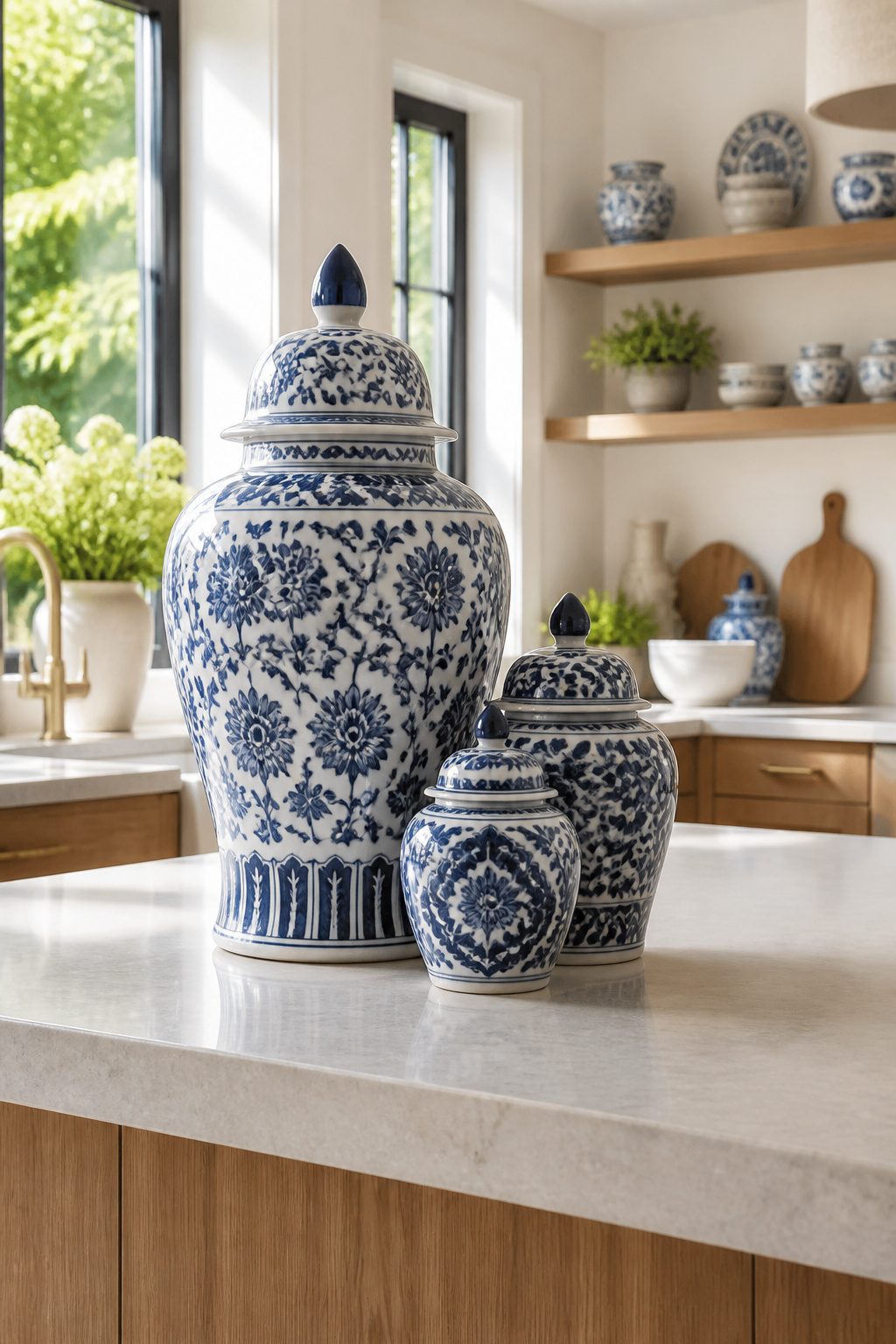
Crisp blue and white chinoiserie reads summer instantly, and the pieces are easier to find than their fancy name suggests.
Thrift stores and estate sales turn up porcelain vases and ginger jars for a fraction of retail; the chips and crazing only add character if the shape is right.
A light neutral kitchen lets the blue sing loudest, though dark wood cabinets give the same pieces a moodier, more collected feel.
The island or peninsula is the natural stage. A single tall jar or a cluster of three vessels at varying heights anchors the space without blocking sightlines across the room.
Mirror that accent once more, perhaps on a windowsill or open shelf near the sink, and the room starts to feel intentional rather than decorated.
If the collection grows slowly, that is the point.
The sources that look lived-in are built over seasons, not ordered in a single haul. Start with one solid piece by the stove or a lamp near the sink, then let the rest find you.
2. Fresh Flowers and Greenery
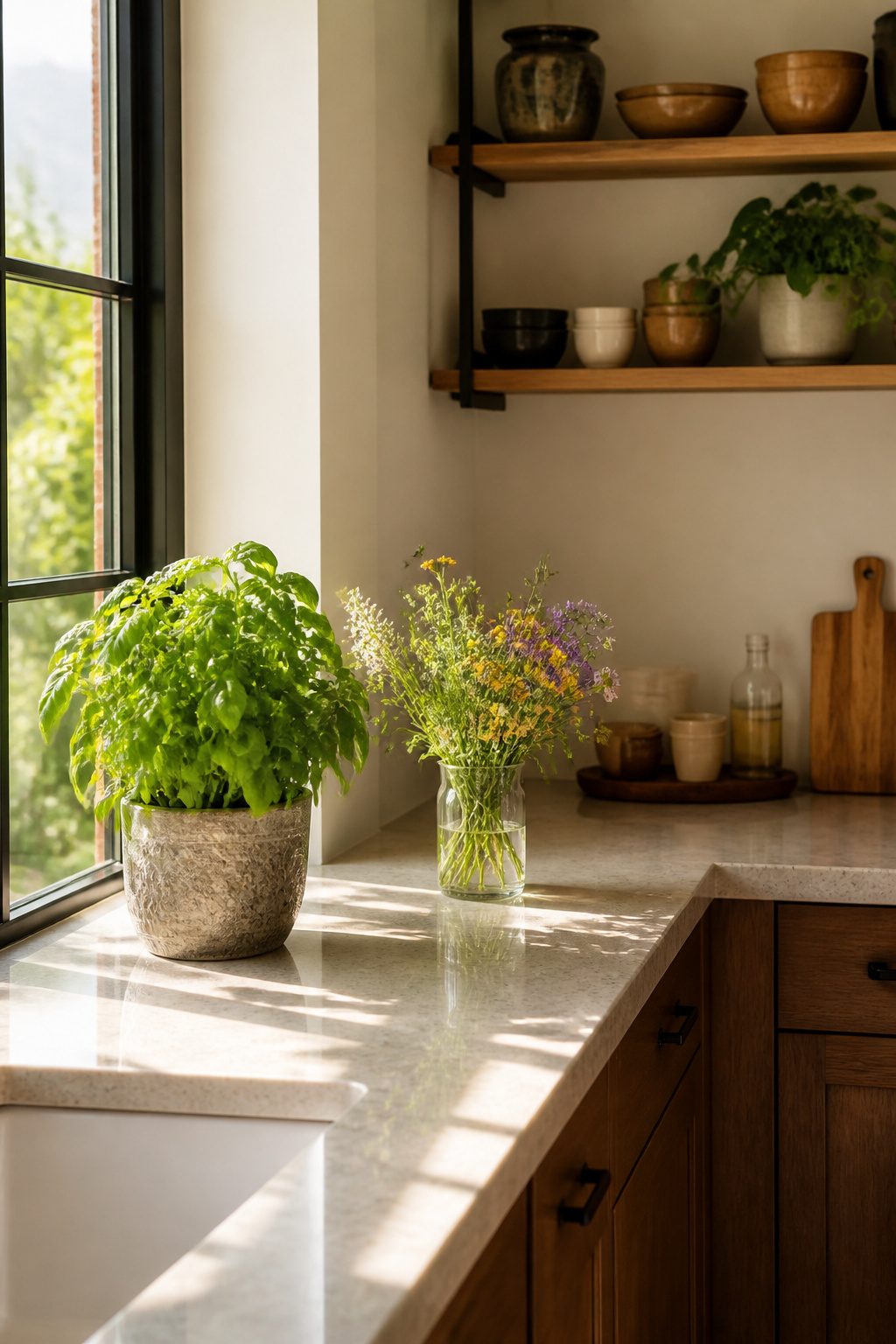
A lush basil plant on the windowsill does more than look good; it survives summer heat that wilts cut flowers in a day.
The leaves stay full for weeks with water and sun, and the kitchen smells like something happened there.
Cut stems from the yard work too, though they need replacing every few days.
Faux snowball hydrangeas in light green bridge the gap if you travel or just forget to swap the water. Mine have cycled through several summers and still read as fresh against the counters.
Self-watering planters cut the daily fuss even further.
Two of my regular containers still need hand-watering, but the rest handle July on their own. The herbs stay alive, the arrangement stays upright, and the weekend project does not become a weekend chore.
3. Colorful Linens
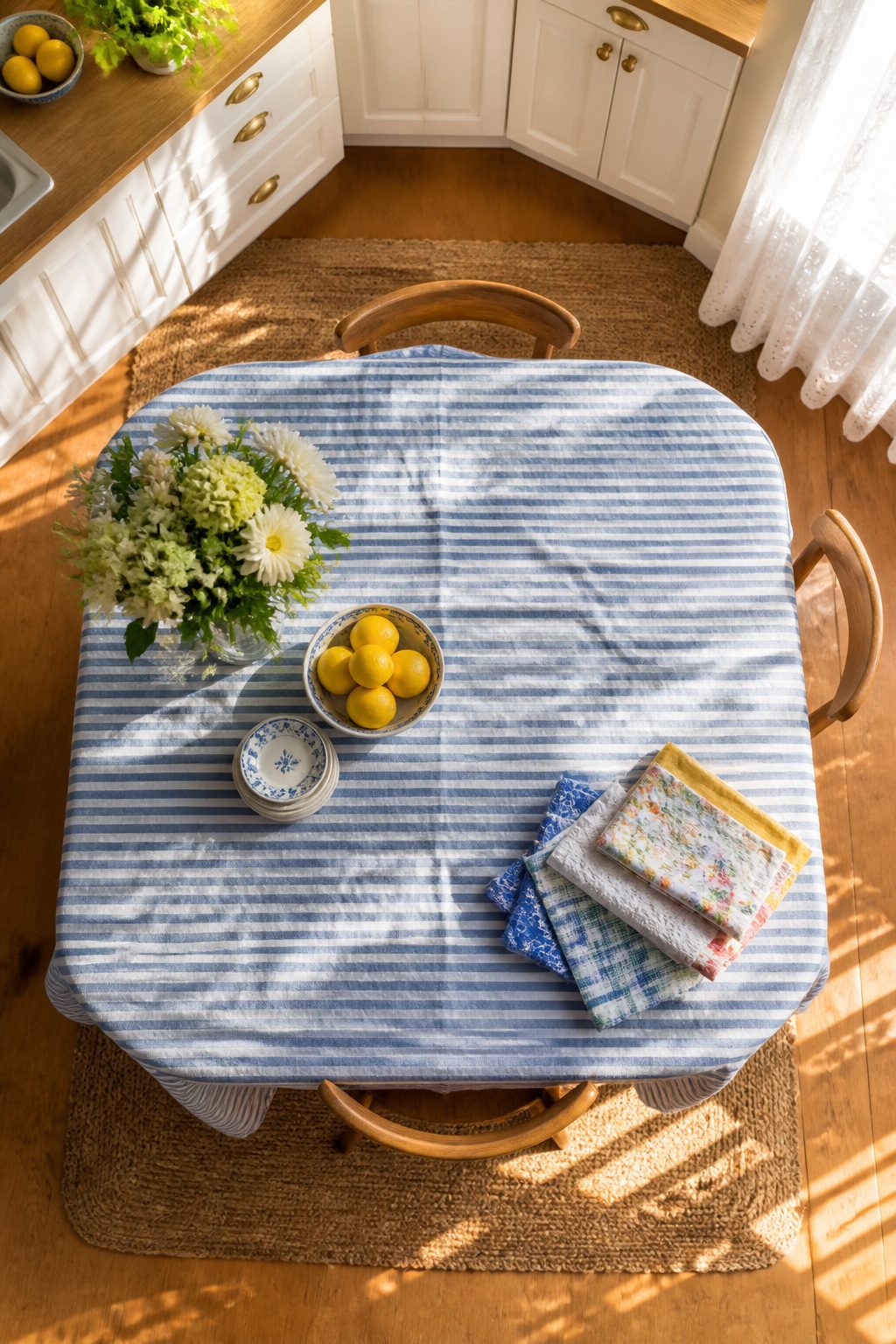
Swapping out kitchen linens for the season is the fastest way to shift the room’s mood without touching a paint can.
Last year I pulled out a blue and white seersucker tablecloth I’d forgotten about, and the whole kitchen felt like a different space by dinner.
The weave keeps that slightly rumpled, just-came-in-from-the-line look even straight from the dryer, which is half the point of summer styling.
White eyelet works on the same principle, only lighter; a set of café curtains in the pattern filters afternoon sun without blocking it, and the cutwork reads as detail you chose, not detail you paid extra for.
The harder part in a small kitchen is what happens to the November-through-April stack. Off-season linens live in the gap above the refrigerator or flattened inside a lasagna pan in the cabinet you never use.
Both spots stay dry and out of the daily rotation, which is all storage needs to do when the swap itself takes under ten minutes.
4. Herb Planters
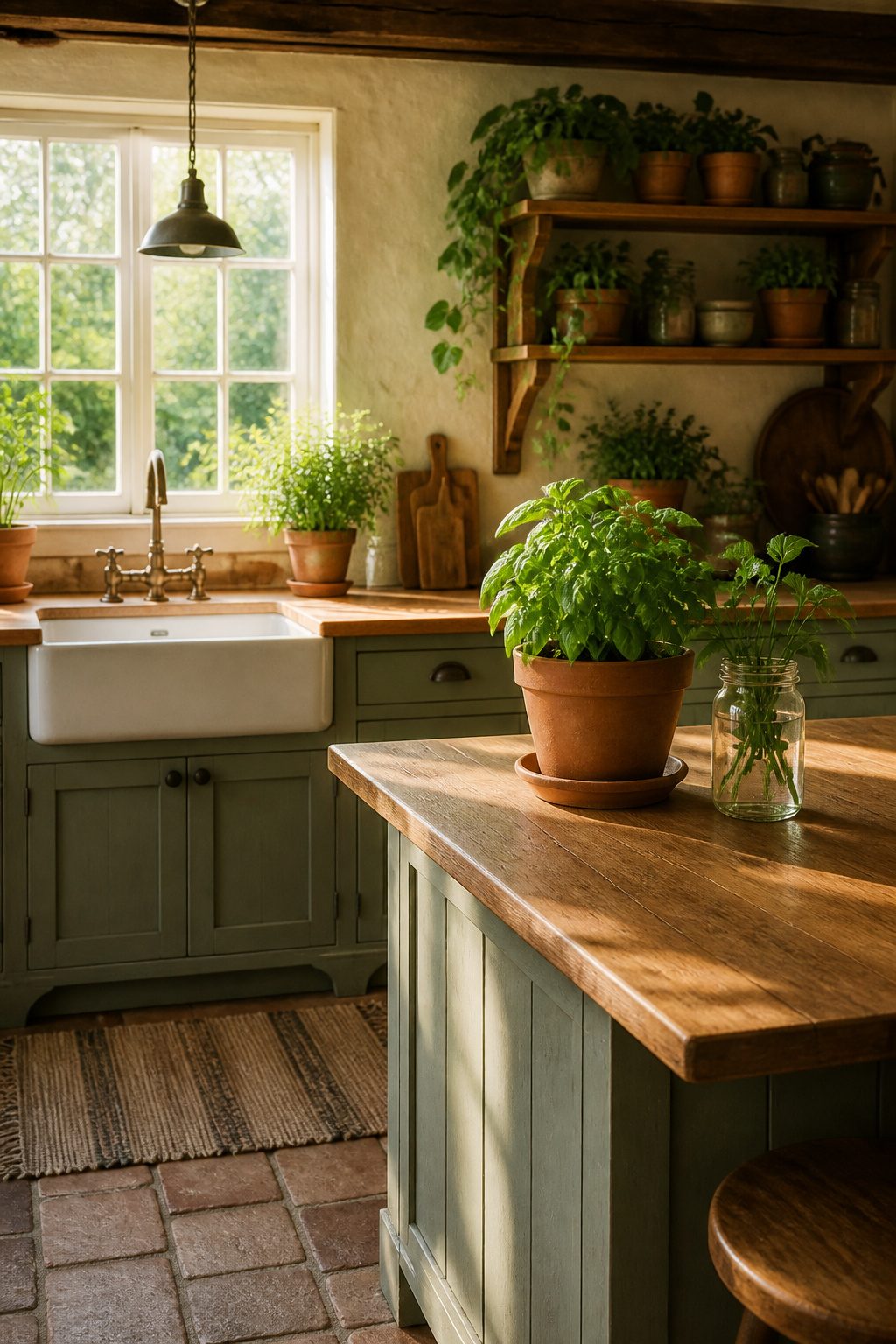
Fresh herbs in a decorative container read as summer decor faster than almost anything else you can set on a counter.
A lush basil plant does the heavy lifting: it survives the lower light of most kitchen windows longer than you’d expect, and the leaves give you something to pinch into dinner while they last.
Mint holds on nearly as well, and both beat rosemary or thyme for tolerating a spot that isn’t full sun.
The container matters more than most people think. A mason jar looks simple and pretty, but it hides the one mistake that kills most kitchen herbs: no drainage.
Water pools at the bottom, roots rot in a week, and you’re left with a plant that smells like wet compost.
A pot with a hole and a saucer underneath, or at least a layer of pebbles before the soil, buys you the margin that kitchen light already takes away.
I found mine at a hardware store for less than a meal out, though any garden center will have the same terracotta and glazed options. The herb does the decorating; the container just needs to keep it alive.
5. Decorative Dishes
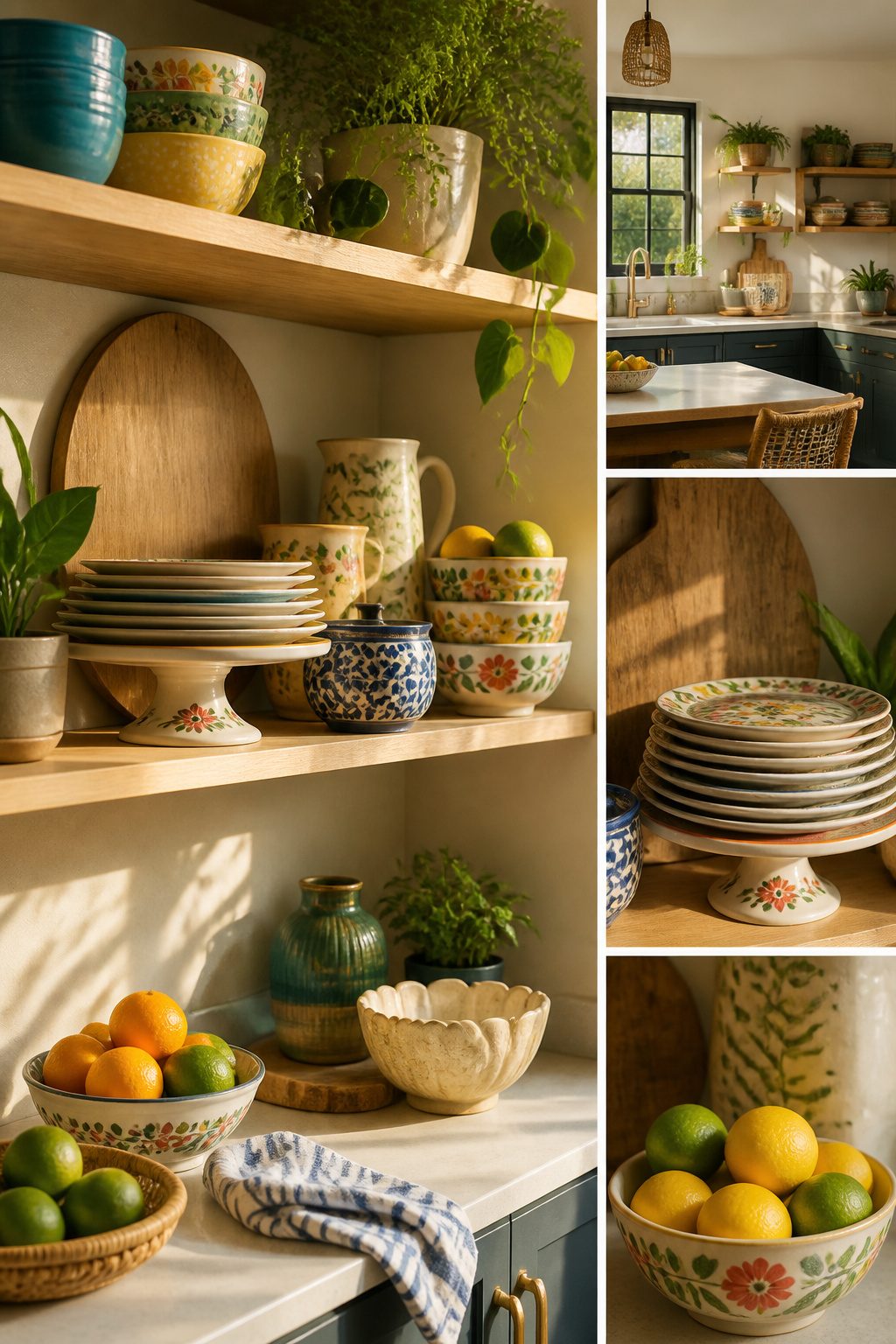
Colorful dishware only earns its keep if you can actually see it. A stack of summer-patterned plates on a cake stand or a platter leaned against the wall behind the range adds color where cabinets would hide it.
Open shelving makes this practical, not just pretty, because you are pulling those dishes down for Tuesday dinner anyway. Metal shelves suit a modern kitchen; wood reads more traditional.
The real question is whether to buy pieces just for display.
Budget usually answers that. Inexpensive melamine dinnerware meant for the patio can live on a hutch near the kitchen table, ready to grab on the way out the door.
Mixing a few display pieces with the dishes you use daily keeps the shelves from looking staged and saves you from dusting objects that never move.
The eggs in a bowl on the counter work the same way: color and texture you already have, no extra purchase needed.
6. Fruit Displays
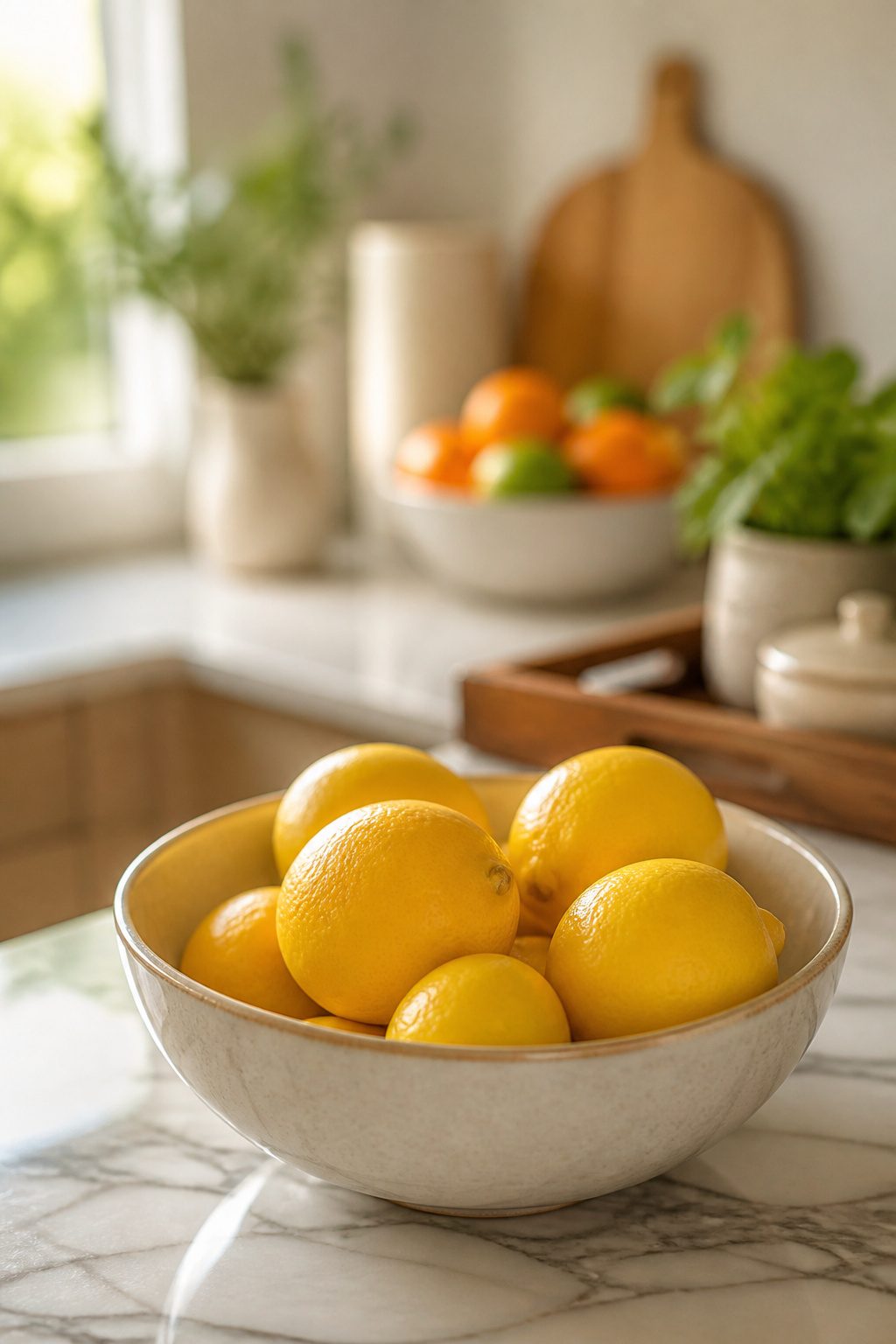
A bowl of lemons on the counter reads as summer faster than almost any swap you can make.
The color is bright enough to register from the doorway, and the shape stacks clean into a low ceramic bowl or a wide glass vase.
Whole citrus lasts roughly one to two weeks at room temperature before the skin wrinkles or soft spots appear, which is long enough to justify the space it takes on an island or breakfast table.
What shifts the idea from décor to pest magnet is the transition to actual use.
A lemon you have sliced for tea, or a piece of fruit with any break in the skin, needs to move to the refrigerator the same day. The bowl itself can stay; just refill it with fresh whole fruit.
If you are using the display daily for cooking or drinks, keep a smaller working bowl in the fridge and treat the counter version as visual backup rather than storage.
Clementines work on the same principle if your kitchen runs warmer in tone, though they tend to disappear faster in my experience because they are easier to grab.
Either way, the cost is just your normal grocery run, and the swap back to nothing in autumn takes about thirty seconds.
7. Open Shelving
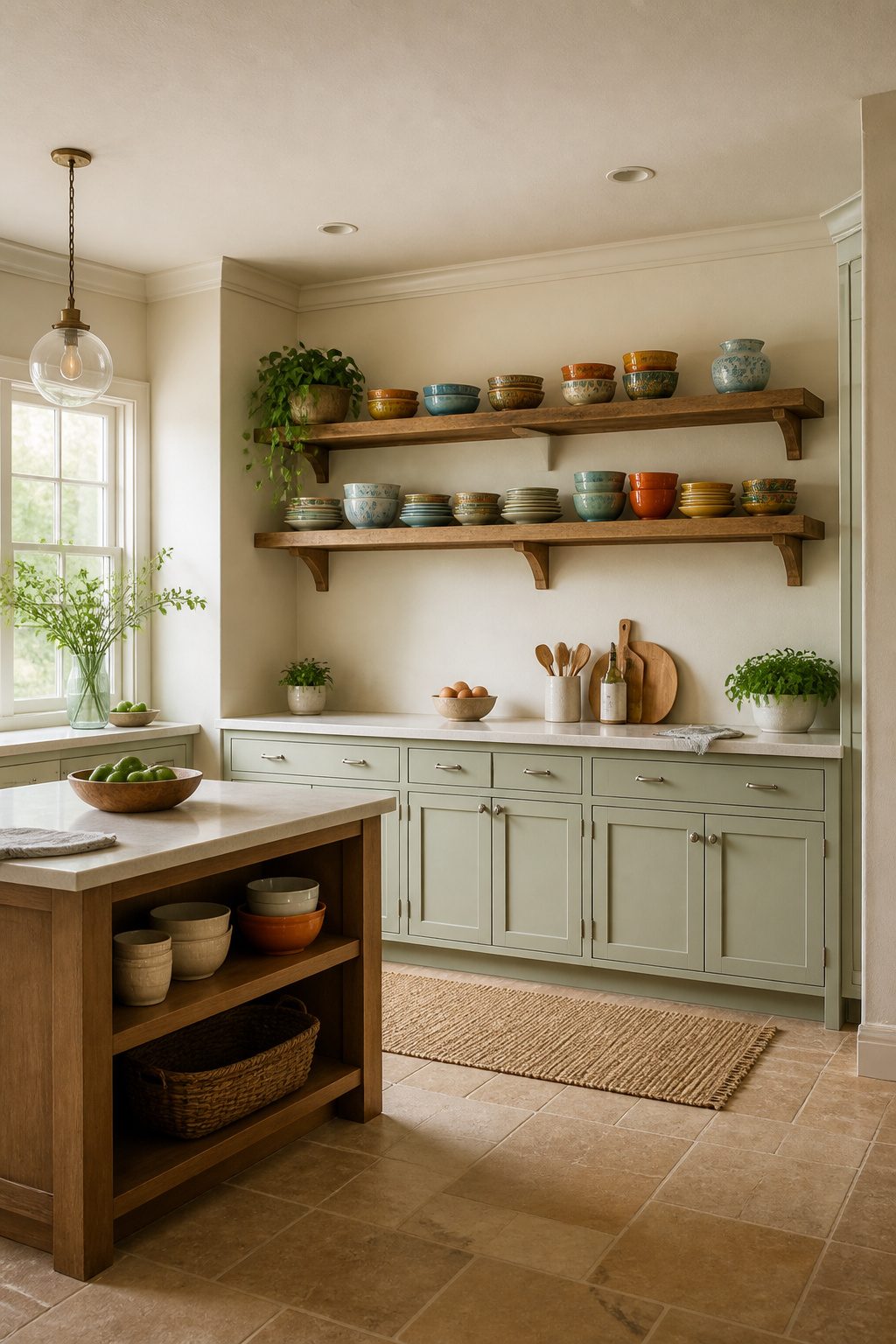
Open shelving only works in a kitchen if you are honest about what lives there. I learned this the hard way after watching a friend swap every upper cabinet for long floating shelves.
Within two months, the stacked plates wore a film of grease near the range, and the cereal bowls gathered dust faster than she could use them. The look was minimal; the maintenance was not.
The smarter play, and the one that fits most renters, scales the shelves back. A single open shelf mixed with standard cabinets gives you a stage for summer without surrendering all your storage to the open air.
Metals read more modern; woods warm up a traditional kitchen. Both materials work, so the choice tracks your existing finishes rather than forcing a new direction.
For summer specifically, the shelf becomes a place to rotate what you already own.
Stack the dishes you reach for daily, the ones that move through the dishwasher often enough that dust never settles. A bowl of eggs by the stove, if you keep them, adds color through actual use.
The decorative pieces, the ones you do not touch, belong in a cabinet or a less brutal room. Grease and dust are not design flaws to solve; they are physics to plan around.
Renters have options that do not involve drilling into landlord tile. Freestanding metal shelving units, the kind that tighten with an allen key, can anchor a wall without a single hole.
A ledge deep enough for a plate, propped on brackets that rest on the counter, reads as built-in until you lift it away. The summer look is the dishes you put there, not the hardware that holds them.
8. Seasonal Vignettes
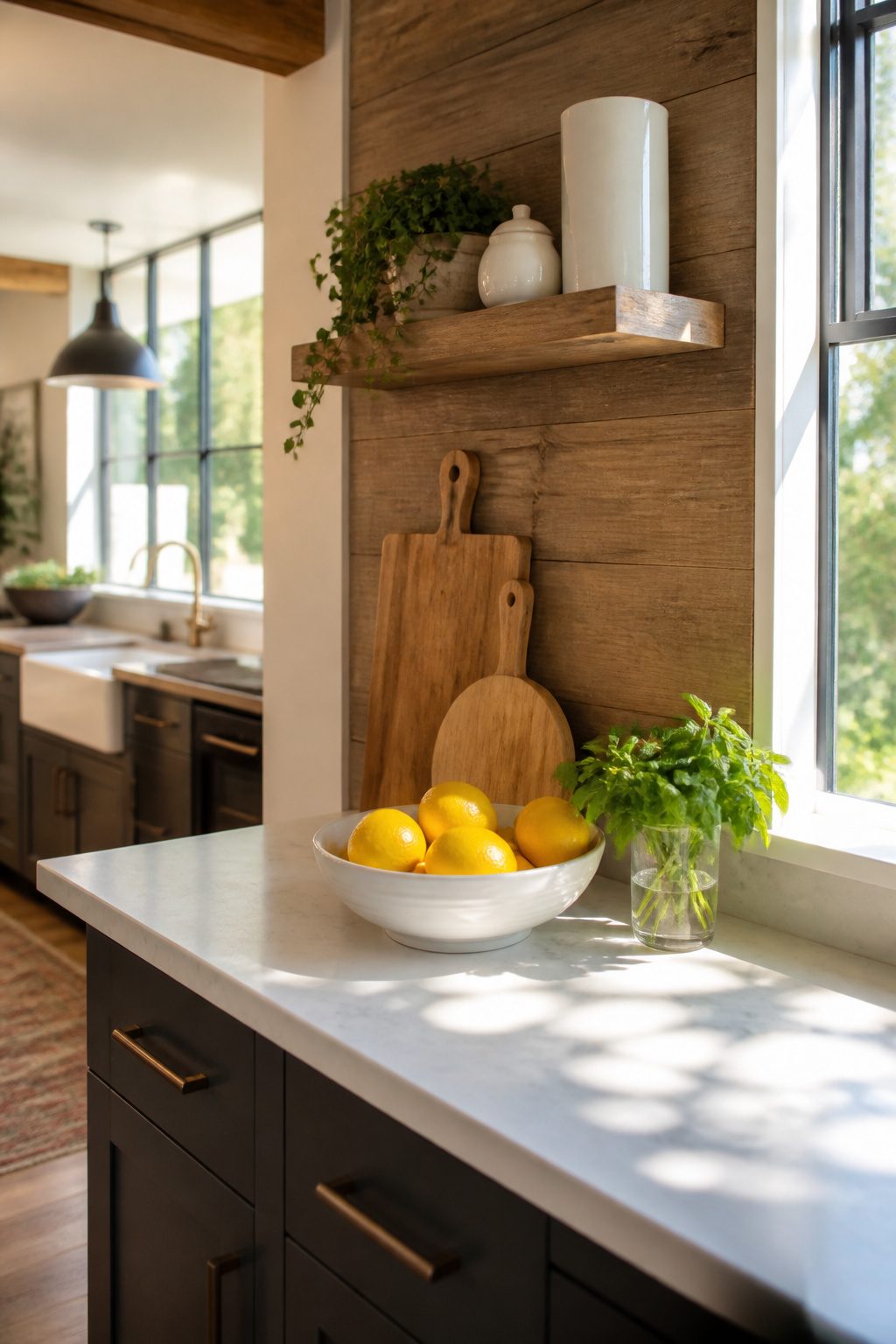
A seasonal vignette is just a small, intentional grouping of objects that tells a quick visual story. In summer, that story usually involves something bright, something living, and something you already own.
Last June I cleared a corner of my counter that had become a graveyard of mail and loose change.
I grabbed a white ceramic bowl from the cabinet, filled it with five lemons from the grocery store, and tucked a single stem of grocery-store basil behind it in a water glass.
Total cost ran about $26, and the whole thing took maybe twenty minutes once I stopped overthinking the angle of the bowl.
The trick is limiting yourself to three objects and one surface. Any more and it becomes clutter again.
Any less and it looks like you forgot to put things away. I swap the lemons for peaches by late August, and when the first apple appears in September, I know the vignette has officially expired.
9. Casual Trays
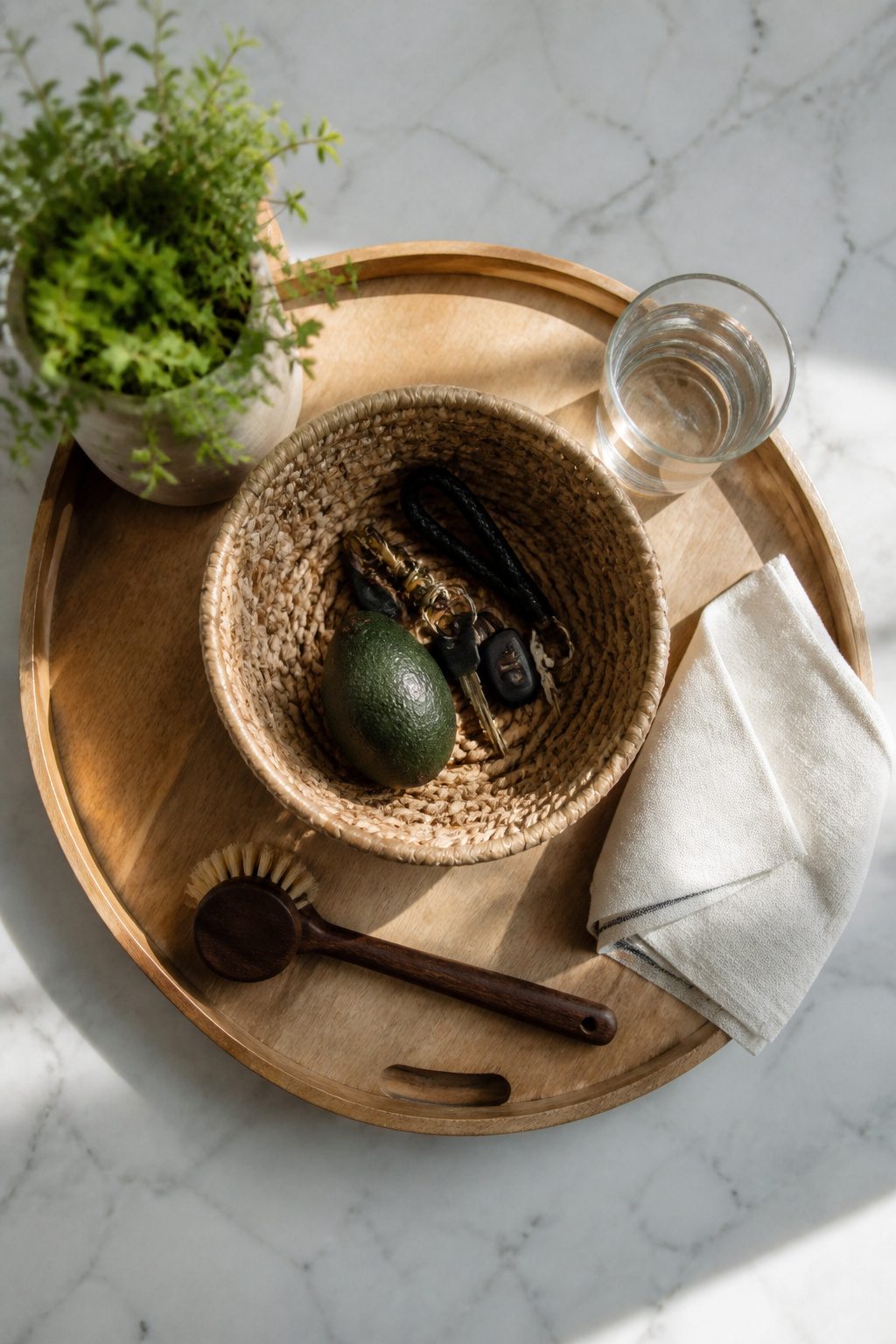
A textured woven basket on a casual tray turns the chaos of daily entry into something that looks intentional.
The kitchen island collects everything: keys, mail, the fruit that needs to ripen, the bouquet picked up on the way home. Without a boundary, it all spreads and sours the room in about three days.
The tray itself is the first line of defense.
It defines a zone; nothing lives there unless it earns the space. Inside that zone, the basket does the actual corralling.
Loose items drop in and vanish visually while staying within arm’s reach. A textured weave adds the warmth that smooth surfaces lack, and it reads as summer because the material itself looks sun-dried rather than factory-finished.
Two ways to play this: keep the basket central and arrange fruit or herbs around it as the pretty layer, or treat the basket as the base and let the tray’s edge frame everything.
The second option wins if your island is also where bills land; the tray rim signals "not yet filed" without demanding a second system. What matters is that function stays visible.
A lidded box hides too much and the kitchen starts feeling like a storage unit. The open basket says: yes, life happens here, but it happens inside a border.
10. Wall Art and Printables
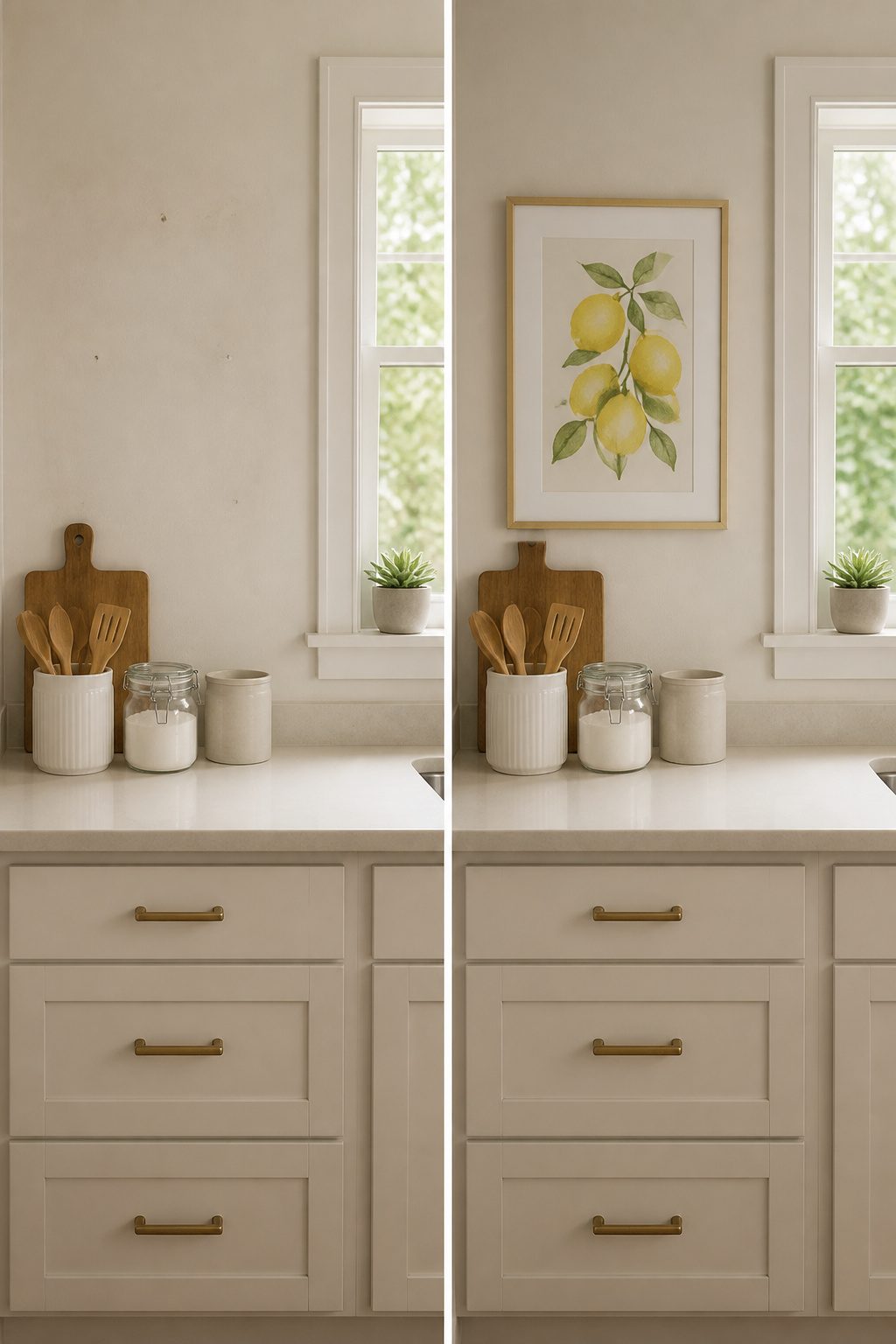
Wall art is where the lowest spend meets the fastest payoff. A lemon theme printable lands the summer mood in about ten minutes, and the frame does the heavy lifting after that.
I print mine at a local copy shop on heavy cardstock, usually $3–$5 a sheet depending on size, then slip it into a frame I already own or pick up from a thrift store or discount retailer.
The old print slides behind the new one for storage; no bin required, no wrapping, no attic run.
For renters, the hanging method matters more than the art itself. Command strips or velcro-style hangers rated for the frame’s weight keep the deposit safe and the wall clean.
I skip the hammer unless I own the stud behind it. One misjudged nail in plaster or a rental-grade drywall patch job is a summer mood killer the landlord will charge for.
Simplicity and the Uncluttered Summer Kitchen
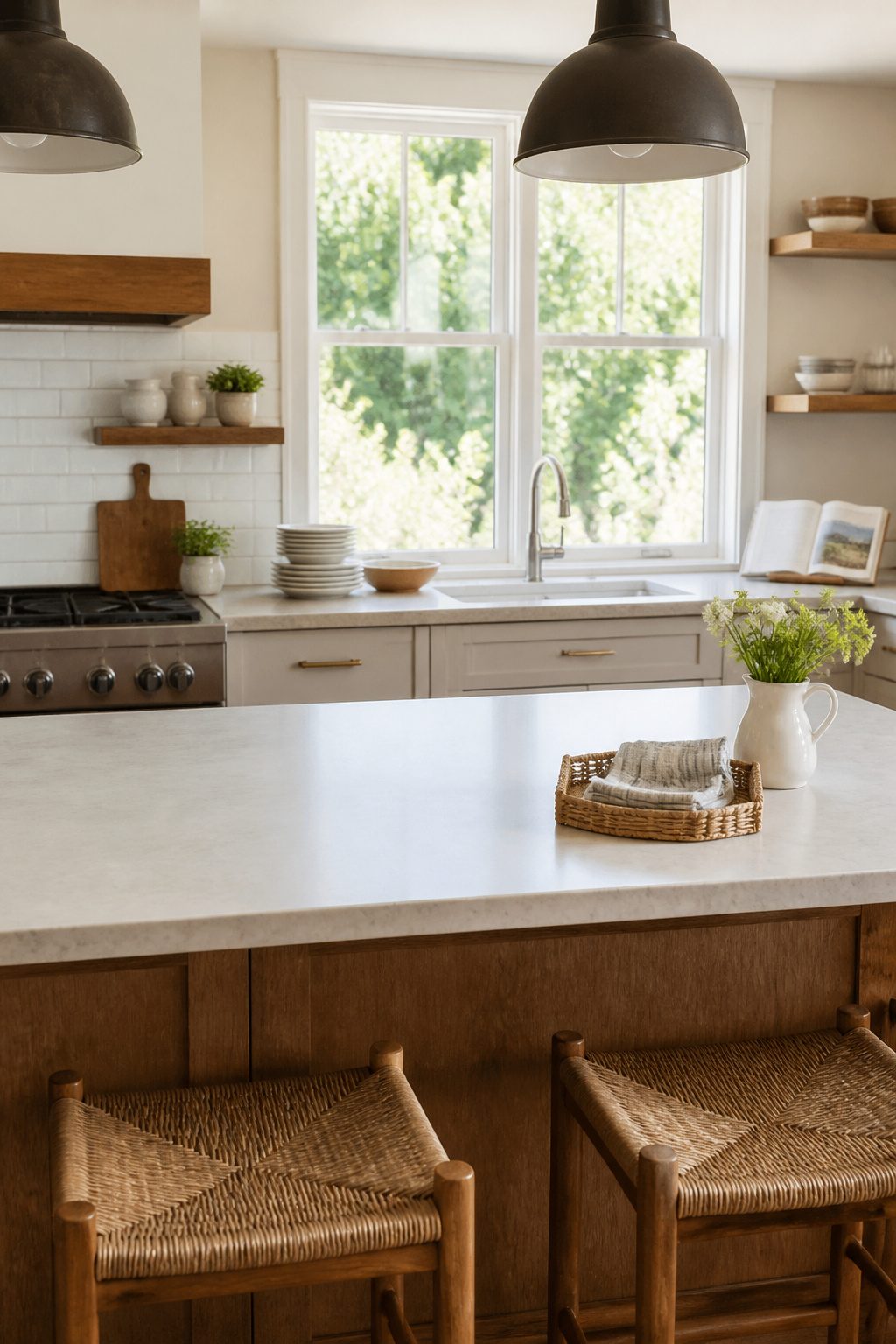
Summer kitchens that actually get used need surfaces that stay clear.
A prep zone, a coffee station, a cooking zone, a clean-up zone, a drink setup zone, and a pop-up bar zone: keeping these areas distinct means summer decor stays where it belongs and work zones stay open.
I keep summer decor to a minimum in the areas where I prep, cook, and clean up, and the payoff is less shuffling things around when someone needs the counter.
The "un-decorated" look wins in July because it matches how the season actually feels.
Fewer pressures, more living. A $5 wicker napkin holder with a starfish, a few yard cuttings in a pitcher, mini wreaths on cabinet doors: small touches that read as summer without turning the kitchen into a project.
The flowers on my counter and stove are cuttings from my yard, and I have been thinking I need to plant more varieties for more options next summer.
What looks relaxed and what actually is relaxed are different things.
A blue and white pitcher on a stack of dishes, a cookbook on a stand when the bar is not up: these stay out because they do not fight the function of the space.
The new round table in my banquette corner, the rug underneath it still working out its folds, the spot for morning coffee and bird-watching: that is summer decor that earns its keep by getting used every day.
Natural Materials
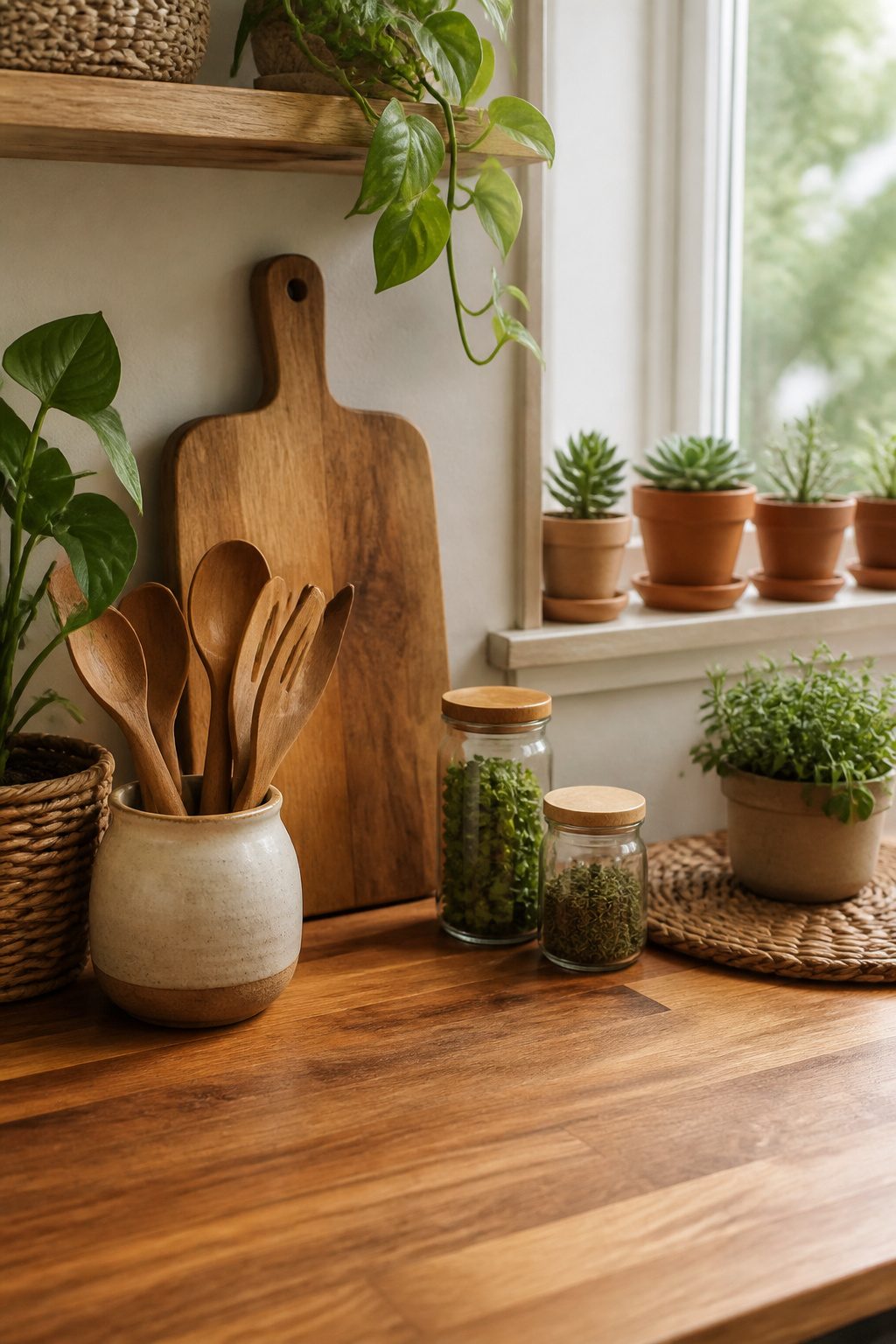
Wood and plants read as warmth in a kitchen, but the summer combo of humidity and heat turns some natural materials into problems fast.
A cutting board left near the sink last July swelled at the edge and never flattened back; that taught me which woods handle moisture and which surrender to it.
Teak and white oak hold up because their grain structure resists water uptake.
Bamboo boards look right for the season and cost less, yet the grass fibers separate once they take on real kitchen moisture. The same split happens with woven seagrass baskets under the sink.
Live plants need the same realism. A pothos on a shelf away from the stove stays green for months.
Herbs on the windowsill dry out in a day of direct afternoon sun, and anything with broad leaves stationed over the dishwasher browns at the tips from the vented steam.
Small succulents on a counter away from both heat sources last the whole season with weekly water.
Rattan bar stools and unsealed wood trivets photograph well for a weekend.
A month in, the rattan loosens and the trivets carry water rings that sanding won’t lift. Sealed hardwood or finished cork handles the environment without the upkeep.
The Blue and Yellow Palette
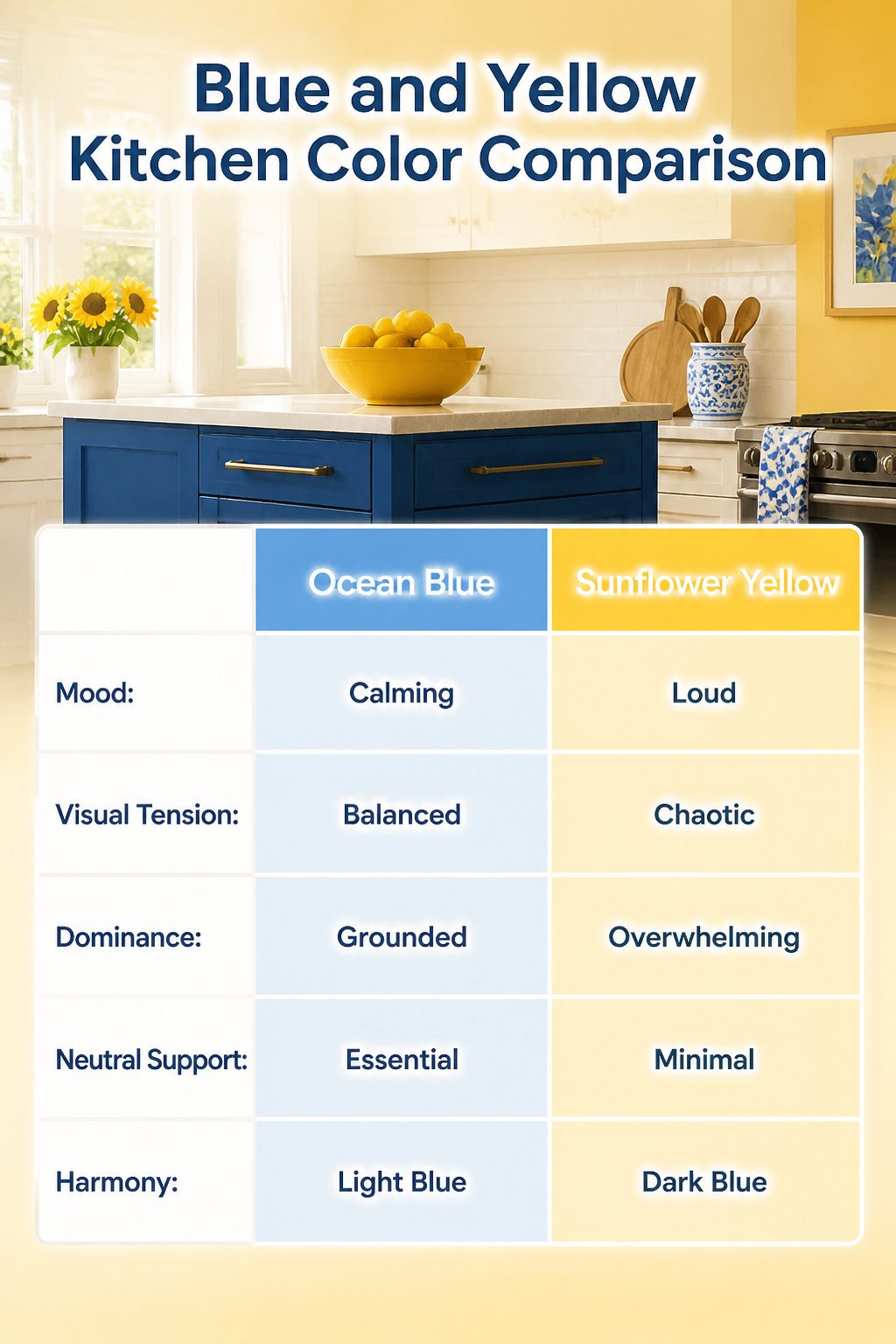
Bright blues and yellows dominate summer kitchen color schemes because they read as sunlight and open sky, the two things everyone wants more of in June.
The trick is keeping them from looking like you bought the whole display at a souvenir shop.
I learned this the hard way after painting a rental kitchen wall in deep ocean blue and pairing it with every yellow accessory I could carry home from one trip. The room felt like a boardwalk concession stand.
What fixed it was stepping back and letting the colors disagree a little. A sunflower-yellow ceramic bowl on a lower cabinet painted dark blue works because neither one tries to match the other exactly.
The blue is calm; the yellow is loud. They need that tension.
The neutral that saves the whole thing is white, specifically on the cabinets you are not painting.
White uppers against a blue island, or a white backsplash behind a yellow feature wall, gives the eye a place to rest. Without that break, the palette swallows the room.
Sources back two approaches: paint all cabinets in a lighter shade of blue if you want harmony, or keep the uppers white and put the bold color down low where it grounds the space without closing it in.
White uppers are the buffer that keeps summer colors from becoming summer chaos.
Functional Decor
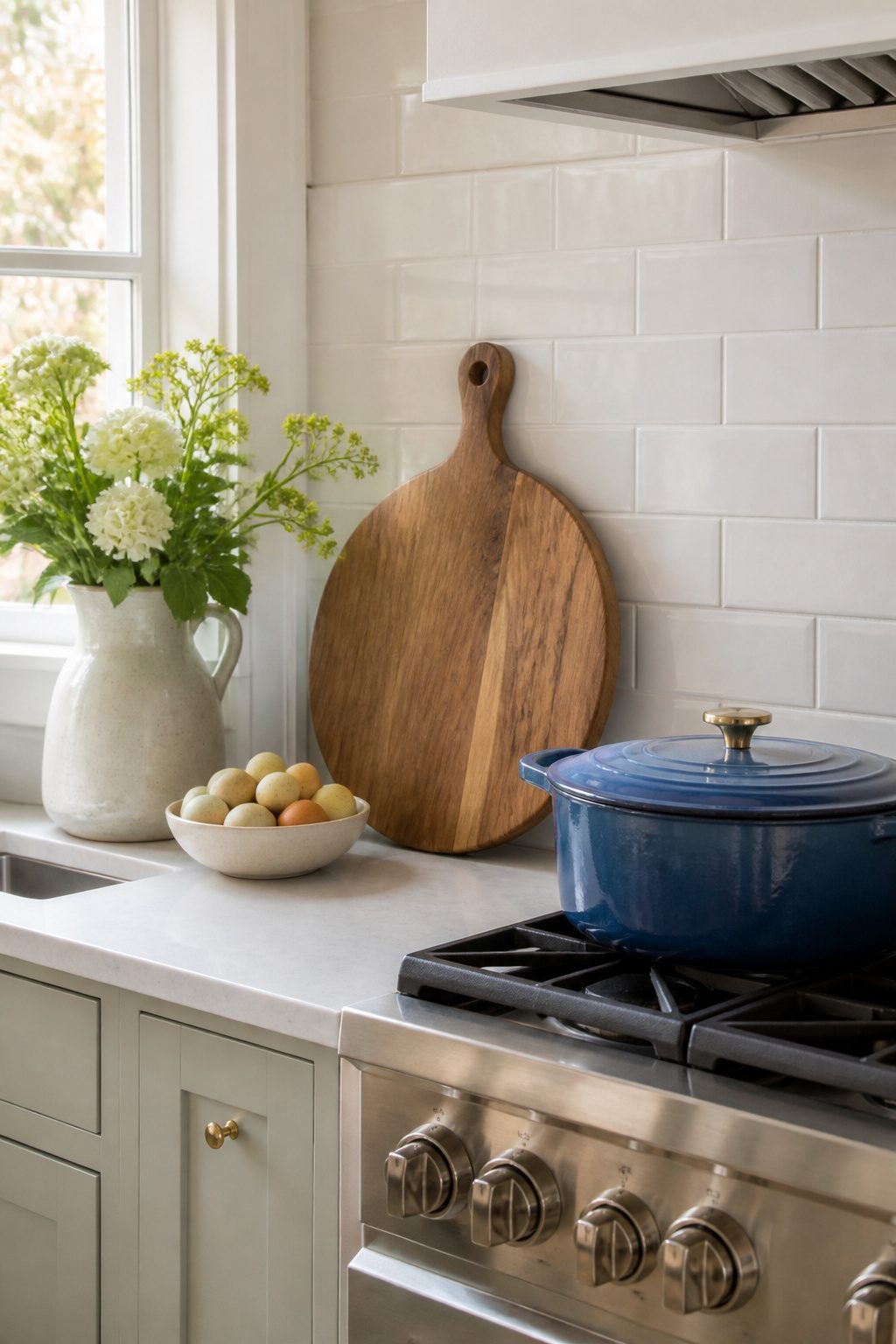
The best summer kitchen decorating ideas start with what you already own.
My enameled cast iron Dutch oven sits on the back burner year-round because the cream exterior looks better there than in a cabinet, and I reach for it four nights a week.
The same goes for a wooden cutting board propped against the backsplash or a ceramic crock holding the spatulas I actually use.
Display only the pieces in good condition, though. One stained saucepan or warped lid undermines the whole arrangement.
Eggs from backyard hens in a shallow bowl, powdered lemonade mix beside fresh lemons, bar towels folded on a shelf: these functional items carry color and texture without buying a single seasonal trinket.
The savings add up fast when you are not purchasing decor that competes for the same counter space you need for prep work.
Not everything earns the spotlight. Worn nonstick skillets, mismatched storage containers, and the tool drawer itself stay hidden.
The test is whether the item looks intentional when someone glances over while you are pouring coffee. If it does not, it belongs behind a door.
Frequently Asked Questions
What are some easy summer kitchen decorating ideas?
Fresh flowers and greenery, colorful linens, and seasonal fruit displays are the simplest ways to shift your kitchen into summer mode.
A bowl of lemons on the counter costs nothing extra beyond your normal grocery run and reads as bright from the doorway.
Swapping in a blue and white seersucker tablecloth or setting out dishes you already own on open shelving takes under ten minutes and changes the whole room by dinner.
How can I incorporate herbs into my kitchen decor?
Display fresh herbs in containers with proper drainage so they survive long enough to earn their spot.
A lush basil plant on the windowsill tolerates lower kitchen light better than rosemary or thyme, and the leaves give you something to pinch into dinner while they last.
Self-watering planters cut the daily fuss if you travel or forget to swap water, and cut stems from the garden in a small mason jar near your prep zone work as both decor and cooking ingredient.
What colors are best for summer kitchen decor?
Bright blues and yellows dominate summer kitchen palettes because they read as sunlight and open sky.
The pair works when you let them disagree a little rather than match too closely; a sunflower-yellow bowl on a dark blue cabinet creates tension that feels intentional, not souvenir-shop.
White cabinets or a white backsplash between the two colors gives the eye a place to rest so the palette does not swallow the room.