
A winter tablescape is the layering of textiles, light, and natural elements that turns a dining table into something warm enough to sit at through January and February. The difference between one that works and one that becomes clutter comes down to height: keep anything above eye level narrow enough to see the person across from you, or conversation turns into a game of duck-and-weave. I learned that with a single tall arrangement one January, and swapped it for clusters of pillar, votive, and taper candles at differing heights instead.
1. Cozy Winter Centerpieces
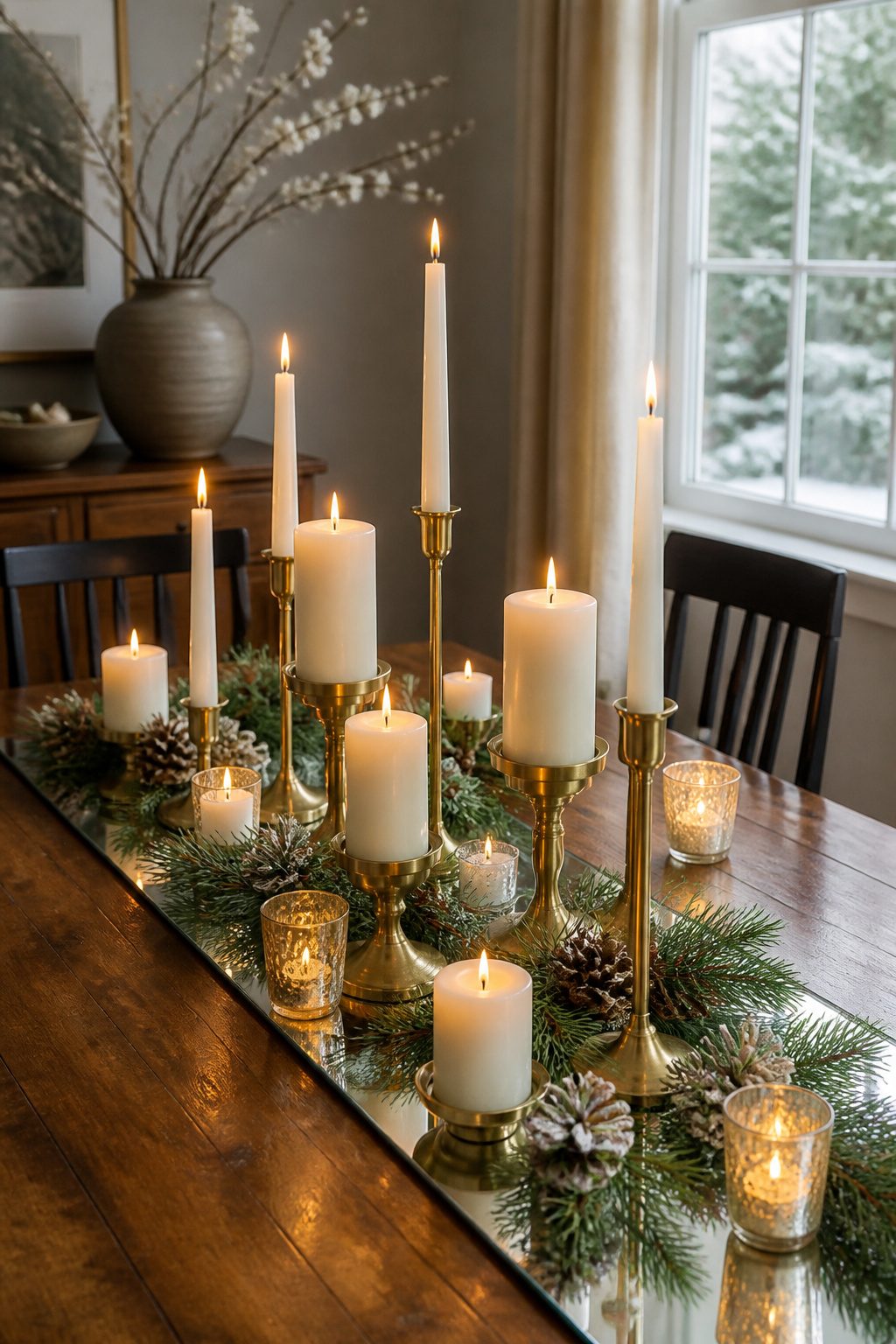
Height on a winter table starts with candles, not flowers. A cluster of pillar, votive, and taper candles at differing heights gives the eye somewhere to land without blocking the person across from you. I learned that the hard way one January when a single tall arrangement turned dinner into a game of duck-and-weave.
Pillars anchor the center, votives fill the gaps at mid-height, and tapers draw the gaze upward. The rule I follow now: keep anything above eye level when seated narrow enough that you can still see the person opposite you. A slim brass holder or a thin beeswax stick works; a wide bouquet or a thick candelabra does not.
For the base layer, a mirror runner catches the flame and doubles the glow without adding bulk. Mercury glass holders do the same with a softer, more scattered light. Flameless candles are fine here, since the effect is warmth, not flicker. If you want natural texture, a few pine sprigs or bleached pinecones tucked between the bases add winter without the height that blocks sightlines.
The mistake most people make is treating the centerpiece as a single statement piece. Three or five small sources of light, stepped in height, give the table more atmosphere and better conversation.
2. Natural Elements
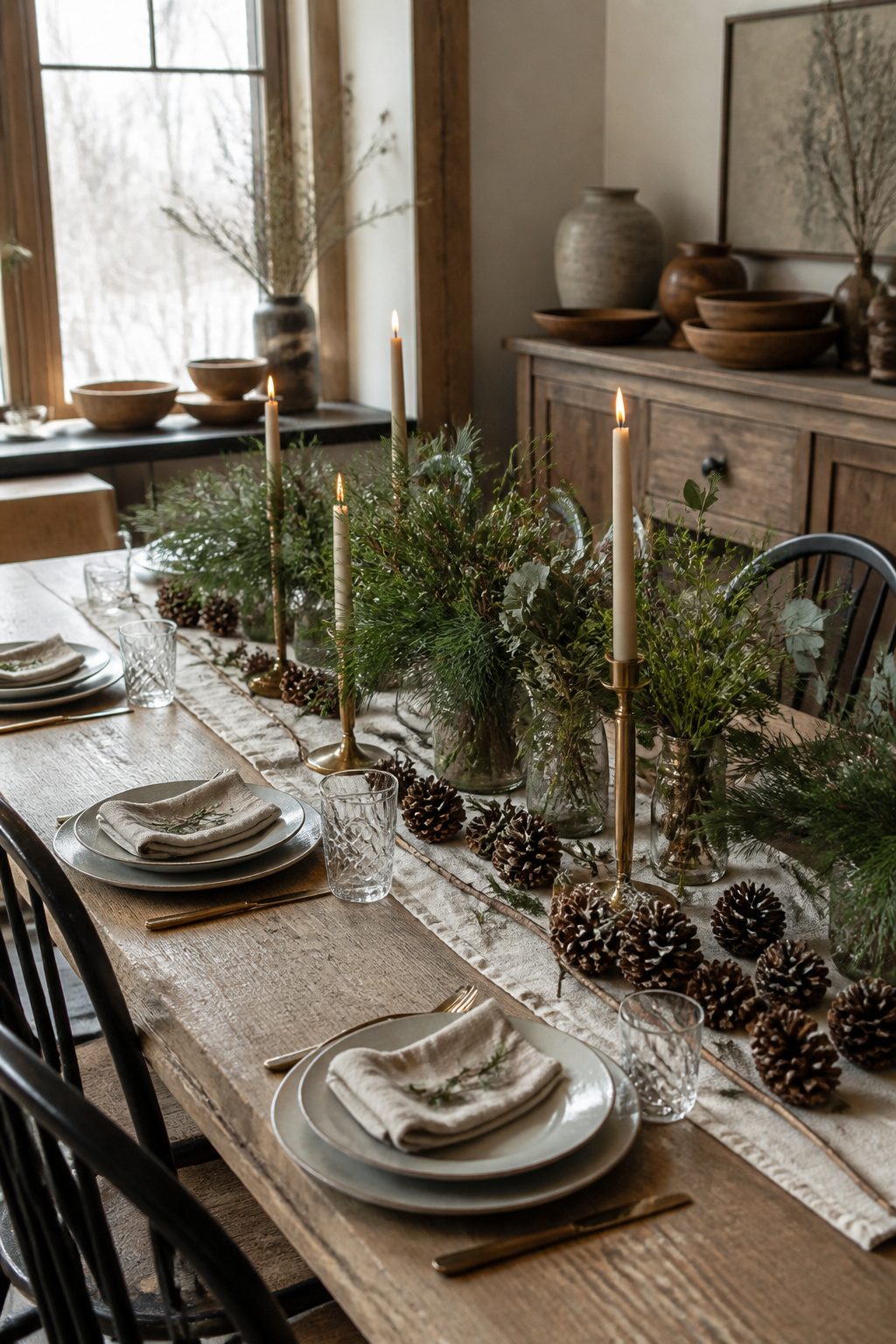
Pinecones and foraged branches look effortless on a winter table until they are not. Last year I clipped cedar from the parkway after a windstorm, set it down the center of the table, and by dessert the needles had migrated into three different wine glasses. Greens last through dinner only if you treat them like cut flowers, not like decoration you can forget.
Evergreen clippings need water to hold. I now stand woody stems in small jars hidden behind candlesticks, the same way I would hydrangeas. Branches with bare wood, like birch or dogwood, stay clean without it; pine and cedar start dropping within an hour if they dry out. For a three-hour dinner, that hour matters.
Faux cedar, eucalyptus, or pine solves the shedding problem entirely and reads softer than the real thing against china. The eucalyptus in particular carries that muted gray-green that feels like snow even without any white in the arrangement. I mix one or two faux stems with real pinecones; the cones give texture and weight, and they do not care about humidity.
Foraged branches need a rinse and a day to dry, or they bring in spider mites and the odd stink bug. A quick shake outdoors is not enough. I learned that the evening I found a ladybug circling the butter dish.
3. Candles
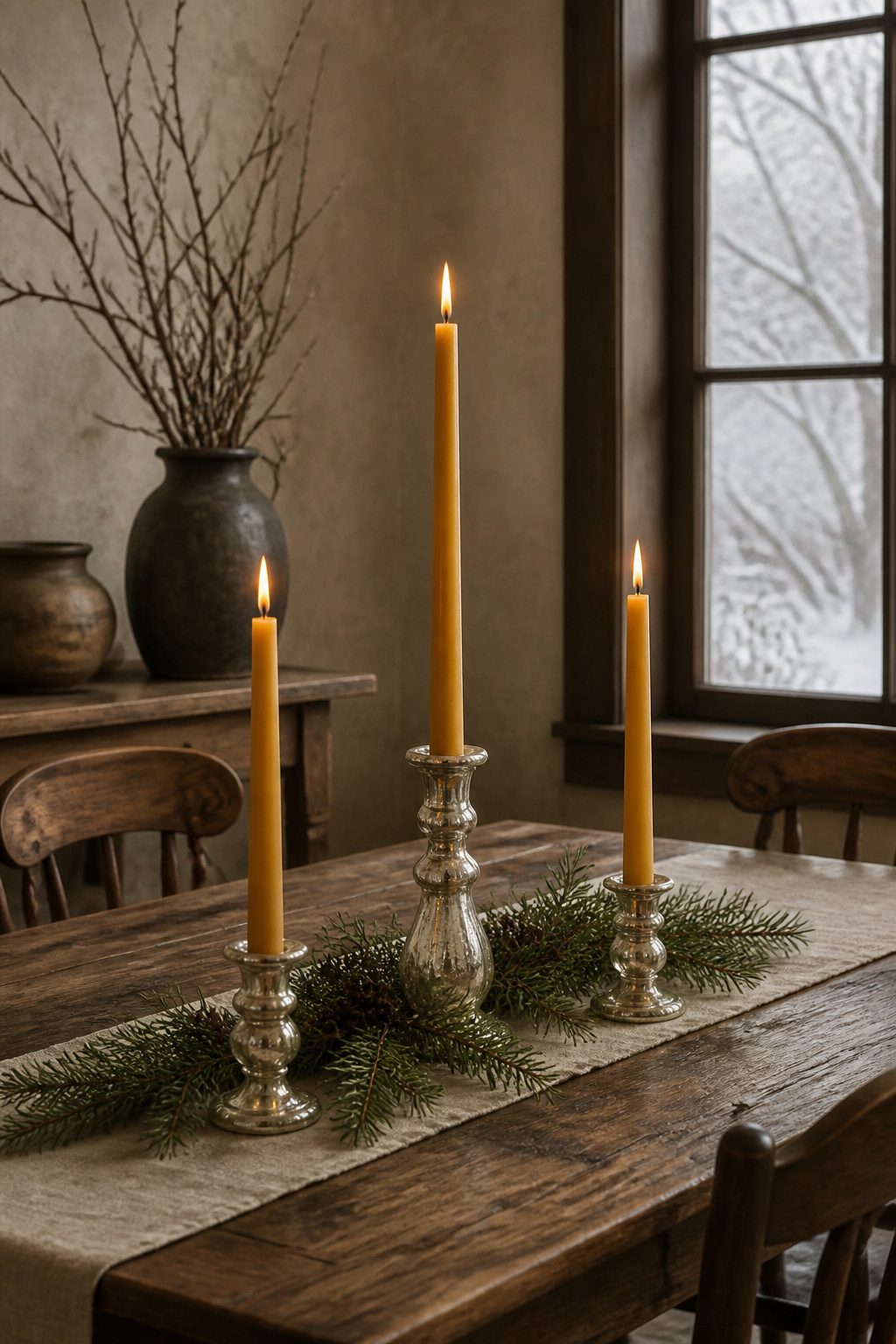
Do not mix scented candles with food. The winter before last, a eucalyptus pillar at one end of the table and a vanilla votive at the other turned a simple roast dinner into something that smelled like a department store candle aisle. The guests were too polite to mention it, but the food lost.
For a table of six or eight, three to five candles of varying heights do the work of one bright overhead fixture without the harshness. Rolled beeswax tapers give a natural, muted color that reads rustic rather than festive, which is the shift from December red-and-green toward something that lasts through January. The year I used only tapers, I learned that uniform height reads flat. A single cluster at the center leaves guests leaning around the flame to talk across the table. Two shorter tapers at the ends and one taller pair in the middle fills the space without blocking faces.
Flameless candles with mercury glass holders carry the look through a whole evening without watching wax drip onto a linen you layered for coziness. The mirror trick works here too: a narrow runner beneath reflects the glow upward and outward, so fewer candles do more work.
4. Textiles
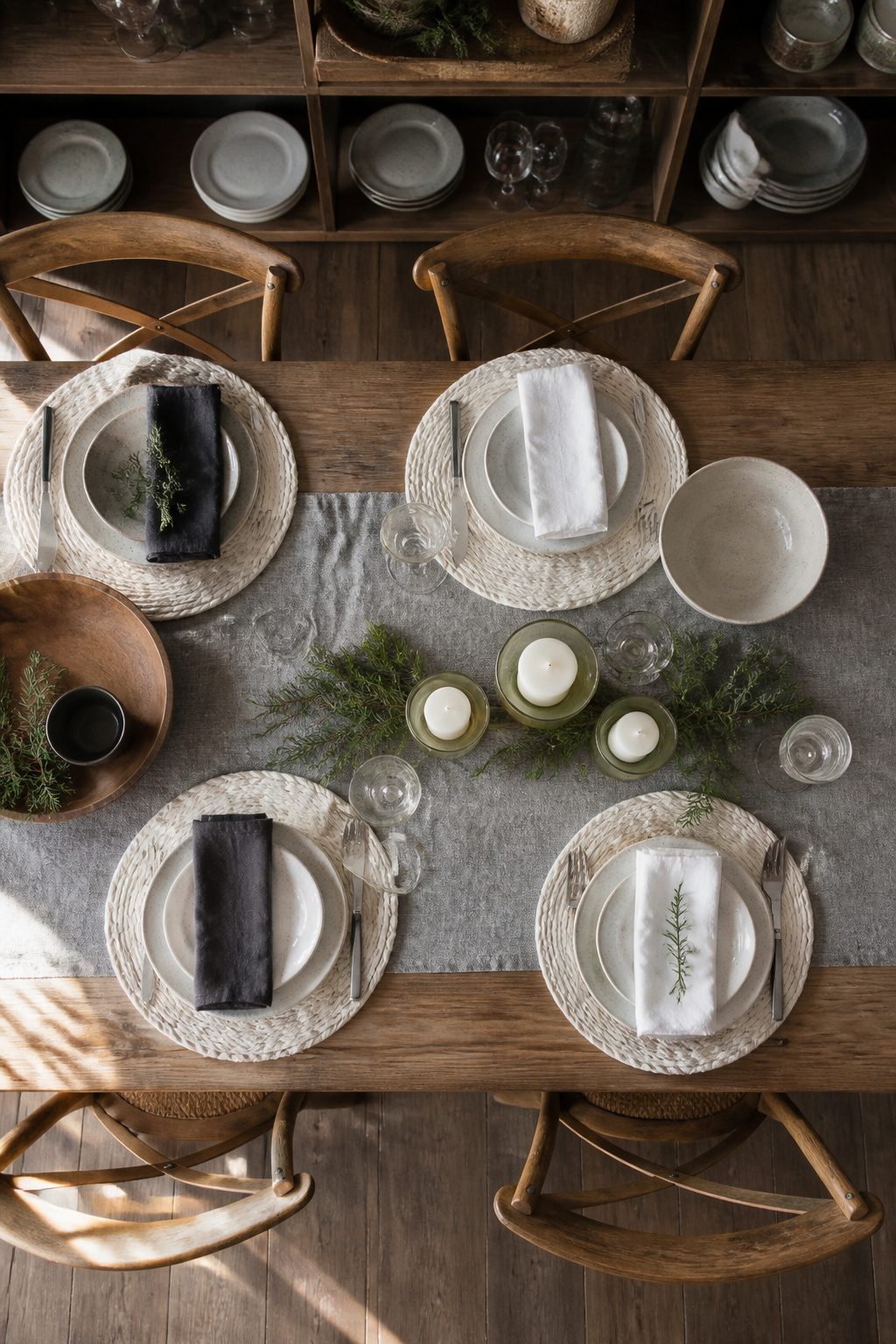
The grey and white linens on my table from November through February are not a matched set, and that is the whole point. A heavy natural linen runner in warm grey sits under whatever plates the season demands, while two sets of cotton napkins, one white and one charcoal, alternate depending on whether the centerpiece runs light or dark. The placemats are the workhorse layer: thick woven cotton in an undyed oatmeal that reads as white in candlelight and hides the red wine splatter from last January.
Building this look without buying a full seasonal set means one good runner and two napkin colors carry the whole winter. The sources favor muted tones and layered linens, and the grey and white combination hits that mark without the pine garland and copper candlesticks that would push it toward holiday-specific decor. A single textured runner over a bare table adds more warmth than a full set of thin printed placemats ever could. The limit is storage space and budget: three linen pieces beat six polyester ones, and the cotton weave only softens with the washing that winter dining actually requires.
5. Color Palettes
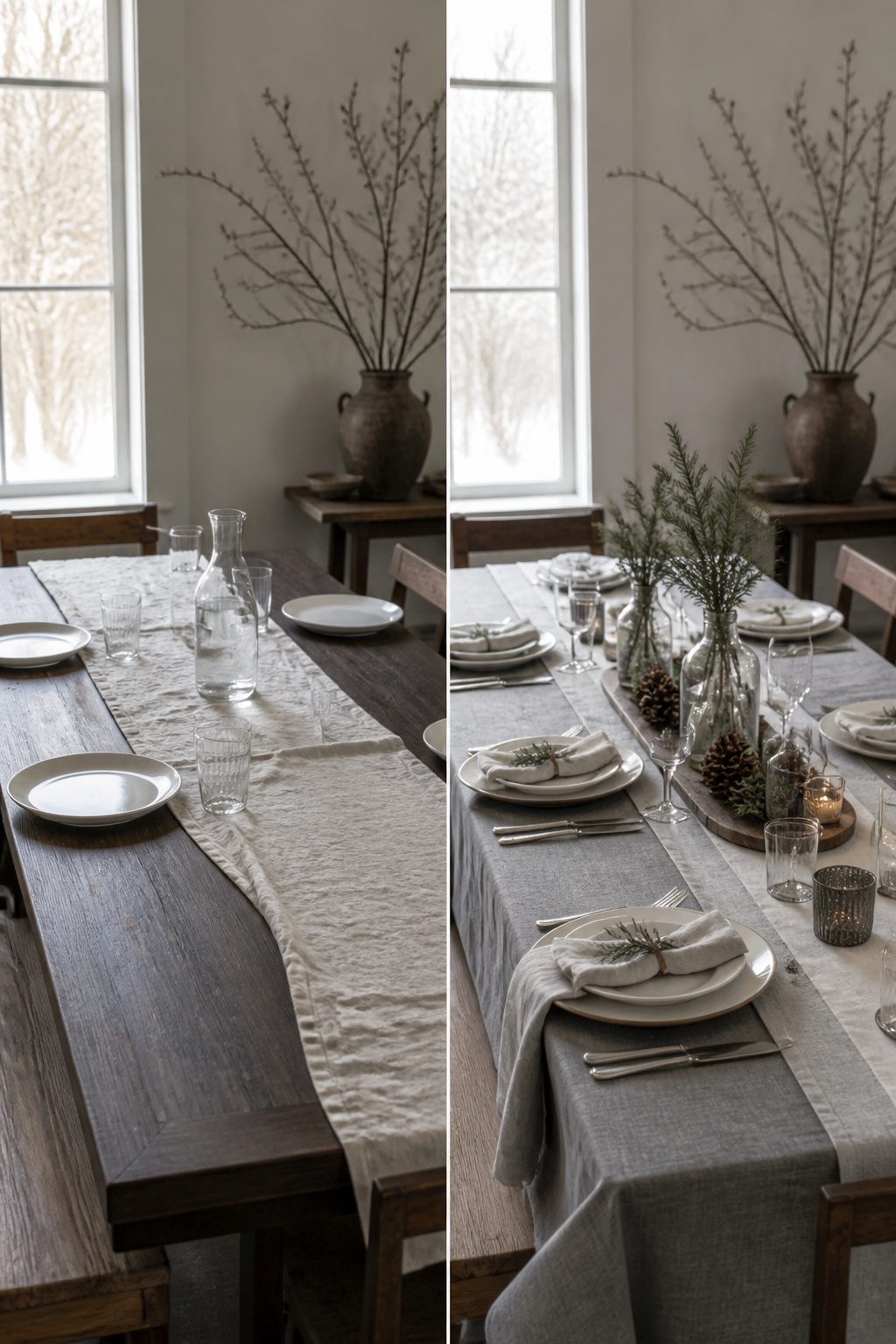
The shift from December red-and-gold to something that carries through March starts with stripping the holiday out rather than adding more on top. I learned this the hard way one January, leaving a burgundy runner on the table until mid-February and watching it go from festive to forgotten to faintly embarrassing. Soft greys, whites, and natural wood textures read as winter itself, not the aftermath of Christmas.
Layering is what keeps a muted palette from going flat. Two neutral linens, slightly different in weight or weave, do more than one ever could. A base of soft grey with a white or cream layer on top builds depth without drifting back into holiday territory. Blues and greens enter as accents: eucalyptus sprigs, cedar or rosemary cuttings, hellebores if you can find them. These bridge toward spring without rushing it.
Wood matters as much as color. Frosty pinecones and bare branches in vintage bottles keep the natural, post-holiday feeling alive. The same bobble-edged bowls or ribbed glassware that looked right in December need only the red removed to keep working. What you leave behind, the green and the natural, carries the table through the months when the light is low and the garden offers little.
6. Themed Decor
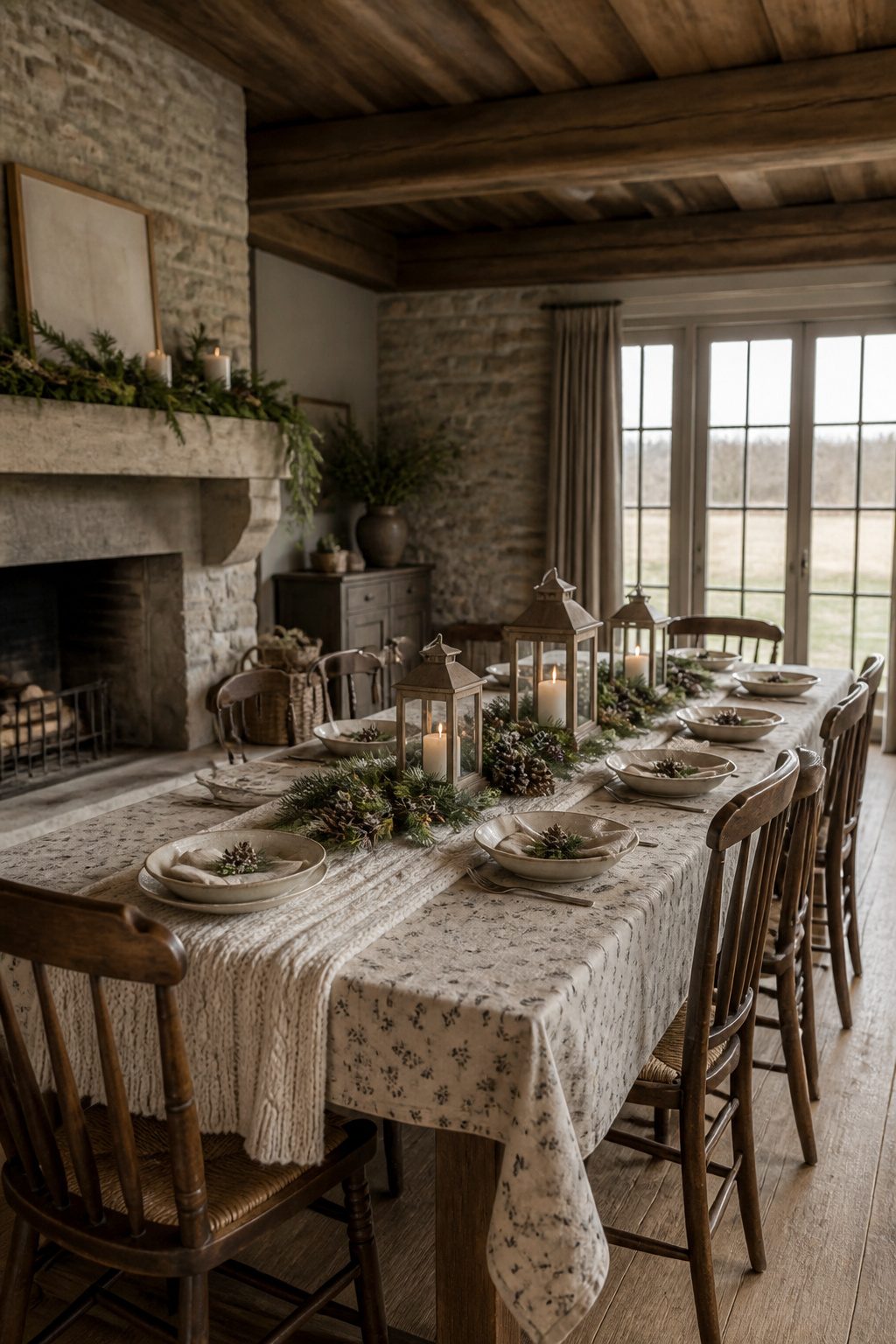
Two directions for a winter tablescape actually turn up in rental dining rooms and first apartments with some regularity: the winter wonderland look and the rustic charm route. The wonderland version leans on snowflake-shaped placemats, scattered faux snow, and that nearly colorless palette of bright whites with shimmering glass votives catching candlelight. It photographs beautifully for the few hours before someone needs the table for actual dinner. The faux snow drifts into cracks, the iridescent pieces read colder in person than in pictures, and the whole setup starts to feel like a department store window that nobody lives inside.
The rustic side runs to pinecones, foraged evergreen clippings, burlap textures, and wooden lanterns with white candles tucked inside. Cableknit or felt runners add the cozy layer without the fragility. This is the one I defaulted to after trying both, mostly because the materials forgive a real weekend. A pinecone centerpiece survives a elbow bump; faux snow does not. The neutral beiges and soft greys against natural wood textures also transition cleanly from any leftover holiday greenery into January without a full teardown, which matters when the table doubles as a desk from Monday onward. The rustic look wins if your dining room is still a dining room by Wednesday.
Building the Table from the Ground Up
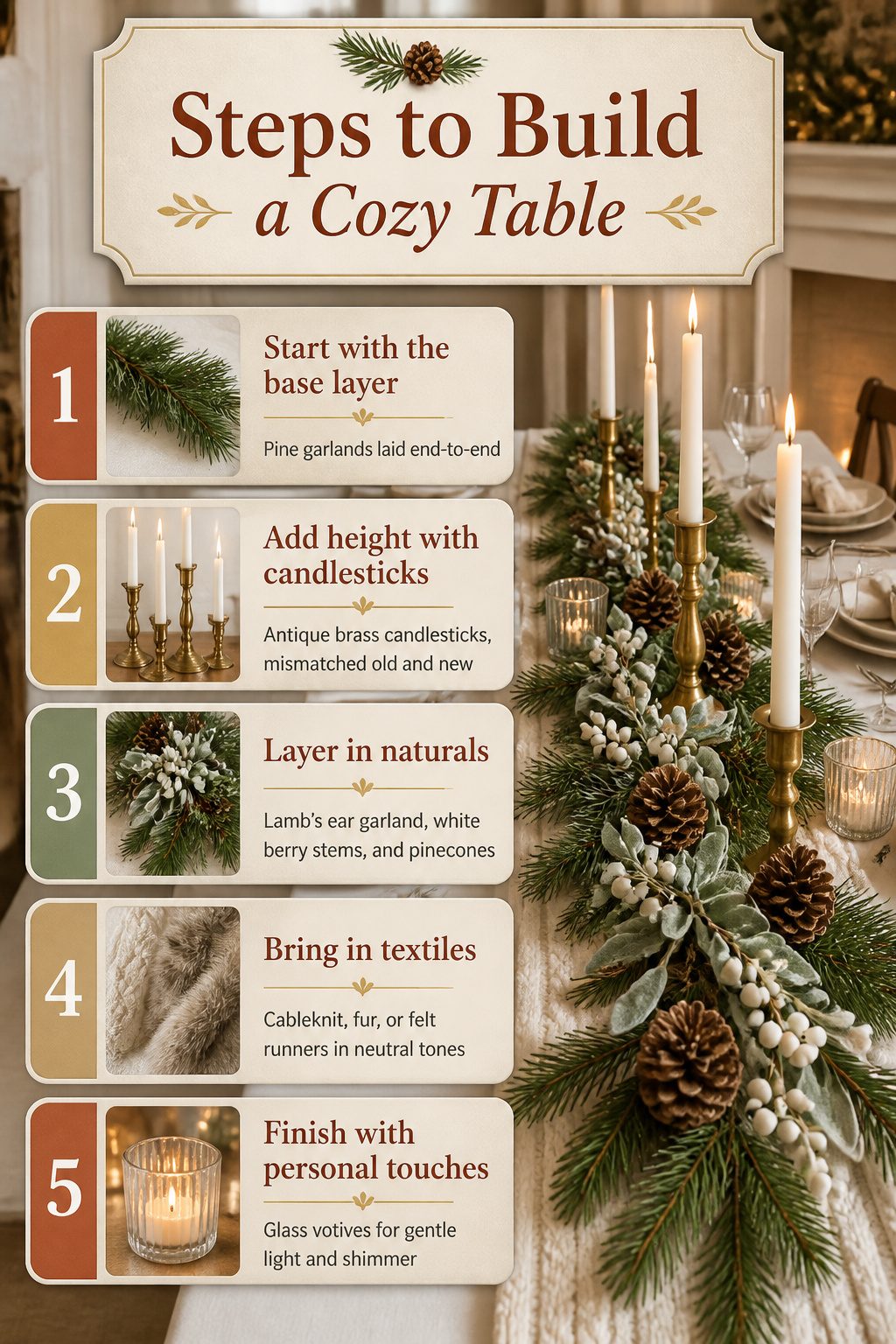
- Start with the base layer. Pine garlands laid end-to-end, branches pointing toward the table ends, form the spine. On a long table this takes ten minutes; on mine the branches kept sliding until I weighted them with jute string at three points.
- Add height. Antique brass candlesticks, mismatched old and new, read as a set once white candles go in. Seven total, four from Etsy and three newer replicas. The difference vanishes at dining distance.
- Layer in naturals. Lamb’s ear garland woven down the center, then white berry stems from a local craft store for contrast against the green. Pinecones spaced evenly throughout.
- Bring in textiles. Cableknit, fur, or felt runners elevate the winter feel without the holiday color palette. Neutral linens, bright whites and cozy beiges, mimic snow-covered ground.
- Finish with personal touches. Glass votives add gentle light and shimmer in long dark months. The brass-and-white scheme transitions straight from holiday to post-holiday winter; remove the berries and the tone shifts to snowy woods.
Natural Against Artificial
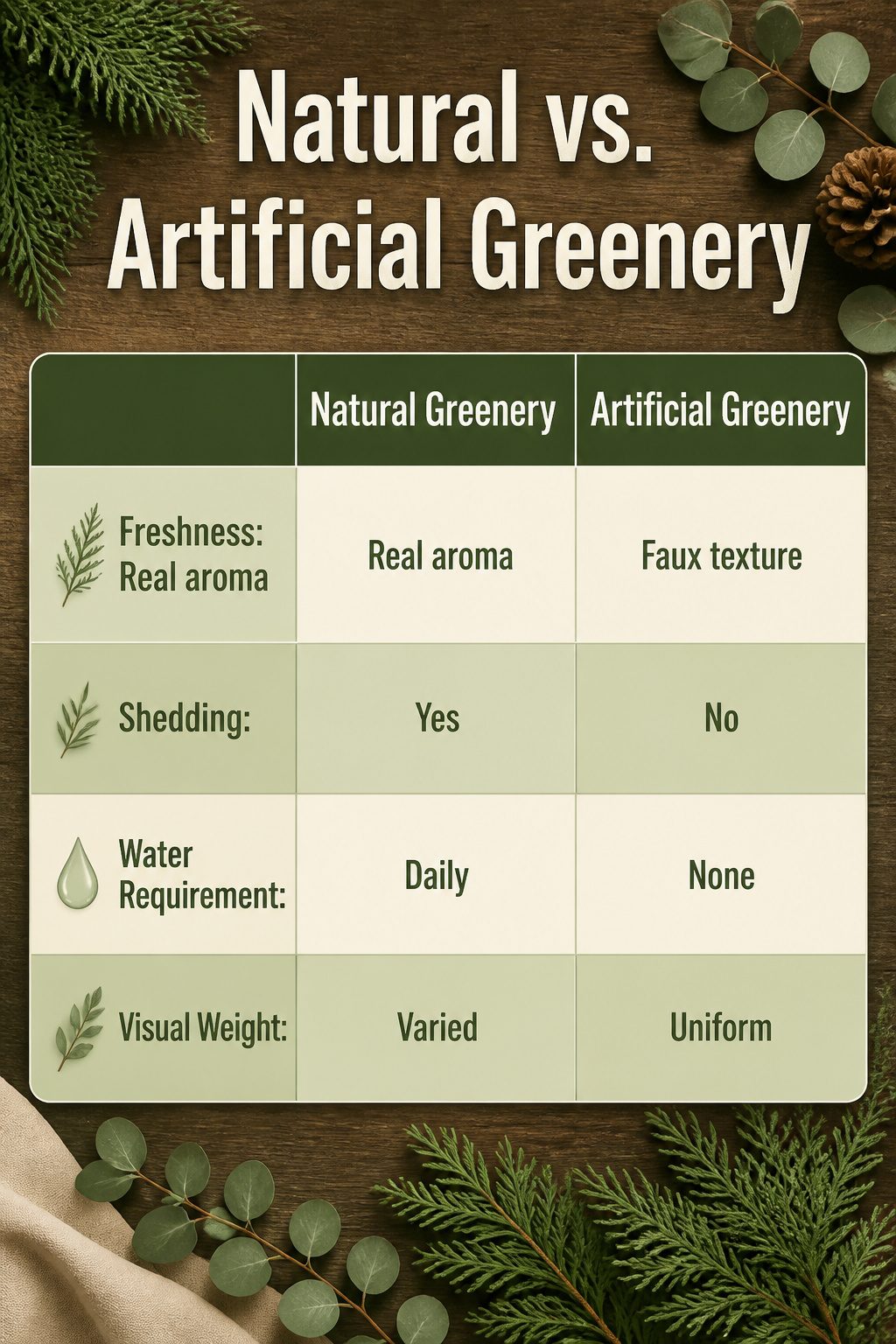
Real cedar branches smell like the season itself, but they shed needles onto your plates by day three and need fresh water checked daily. I have gone through two bunches in a single January, watching the first dry to kindling before the month ended and the second turn moldy where stems sat too shallow. That cycle costs more than most renters want to spend on something headed for the compost.
Faux cedar and eucalyptus fix the shedding and the water problem, though up close the plastic still catches light wrong, especially on branches meant to look frosted. The texture is uniform in a way living things never are.
My split runs real branches cut short and stood in small glass vessels, water changed every other day, with a faux garland down the table center. The fake runner gives the visual weight and the real stems give the smell, and neither is asked to do what it fails at.
Formal Against Casual Settings
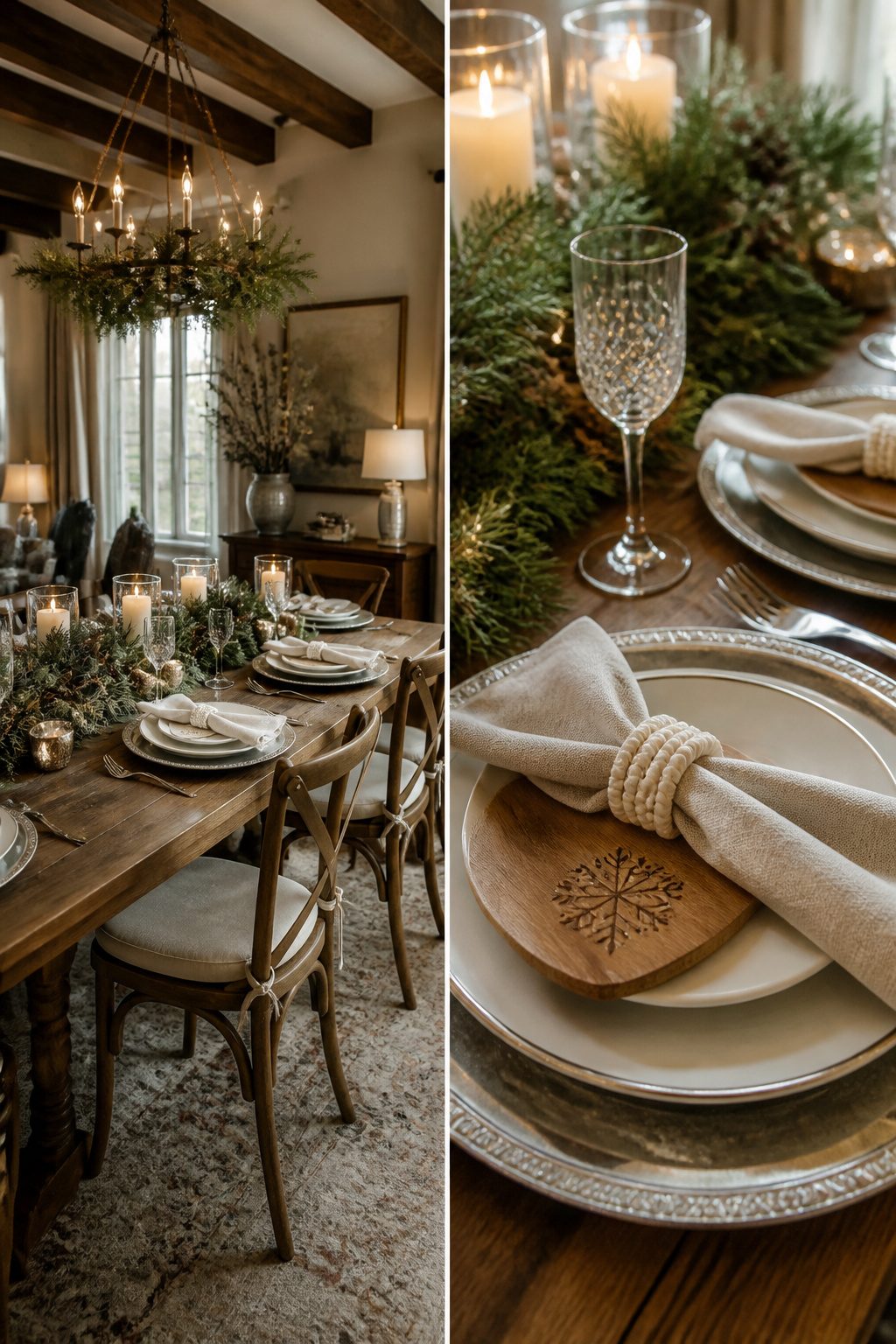
The mini cutting boards stamped with a snowflake from Hobby Lobby pull double duty as place cards for a seated dinner, but they read as precious on a buffet where guests juggle plates. Chargers add washing up without adding function when people stand to eat. Silver charger plates with a decorative edging do frame a plate beautifully for a formal setting, yet the same Dollar Tree snowflakes layered between charger and dish at Christmas worked because they stayed put through a whole seated evening.
Natural linen napkins keep a formal table from feeling stiff, and the fold matters more than the fabric. A napkin ring with cottony white tonal embroidery holds a quick fold that takes two minutes and survives a buffet line. The deep green cloth napkin layered with a salad plate builds height for a seated place setting, but that same layered bulk tips on a lap or a knee.
Wooden chargers warm up a white plate year-round and hide water rings from coffee cups at brunch. Silver flatware from the drawer looks fine against them; gold flatware stays on the mood board until the gathering is small enough that no one needs to borrow a fork.
DIY Elements That Actually Get Done
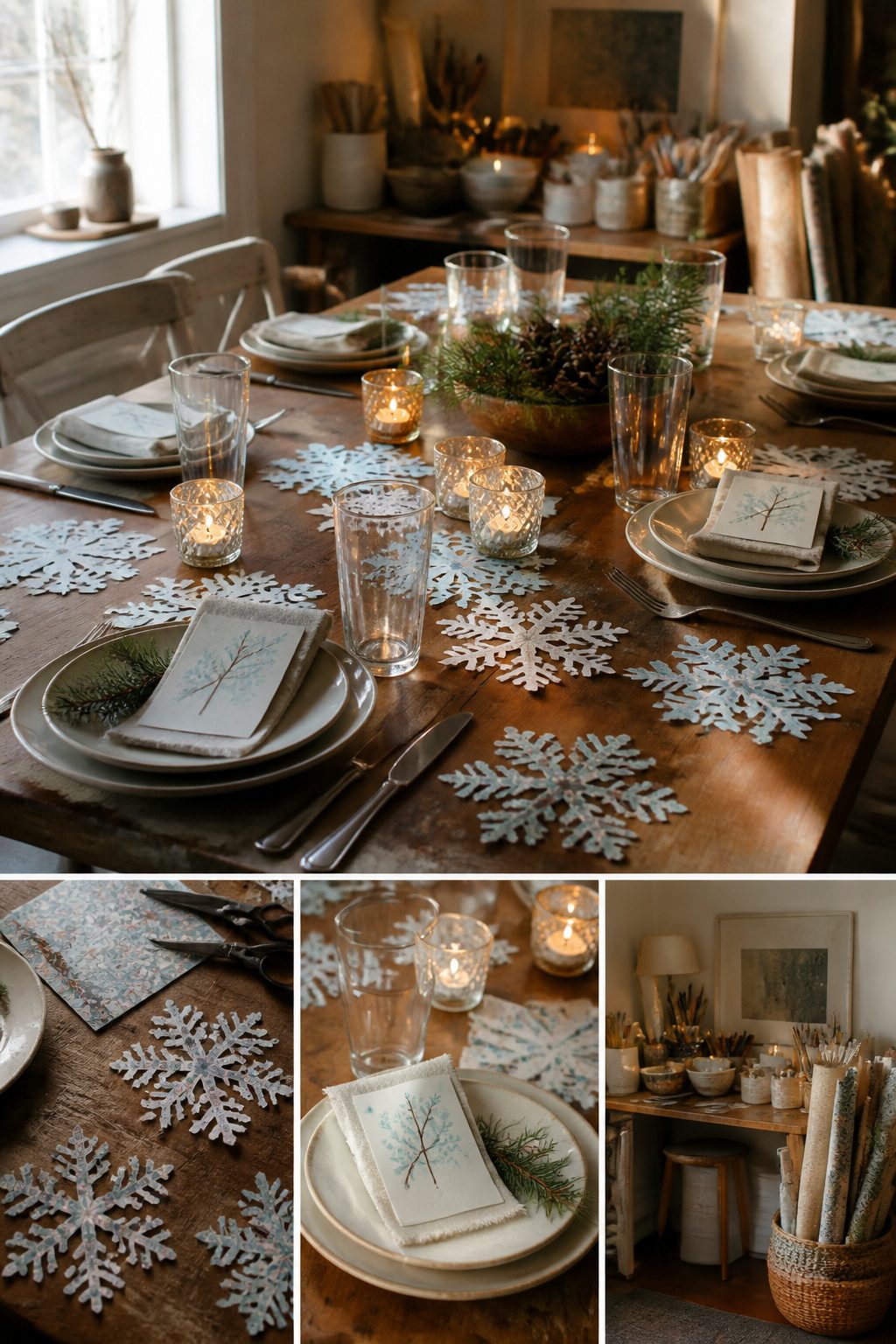
Salt-dough snowflakes were the first project I put on the winter tablescape list, and they are the reason I now keep a hard rule: if it needs more than 48 hours to dry, it does not happen on a weekend. The dough itself took twenty minutes. Cutting the shapes and poking holes for twine was almost pleasant. Then they sat on a baking rack for three days, still soft in the centers, while the Saturday dinner I had planned came and went. I have moved on to pressed paper snowflakes, cut from leftover gift wrap, which flatten under a book overnight and cost nothing but the blade on my scissors.
The place cards did survive that same weekend. I used water-dipped ink on ivory cardstock, which sounds fussy until you learn the trick: a blunt pencil drawn first in the shape of a bare branch, then a fine brush dragged through diluted India ink while the paper is still damp. The branches bleed into soft, winter-bare shapes that look hand-painted because they are. Each card took maybe four minutes once the pencil guides were down, and I finished all twelve during one episode of a podcast.
What I buy now instead of making: candleholders. I tried wrapping jars in twine and cinnamon sticks, and the result looked like a kindergarten craft fair. Plain brass taper holders from a hardware-store aisle near the lightbulbs cost about four dollars each, hold up year after year, and let the candle be the point.
After the Holidays
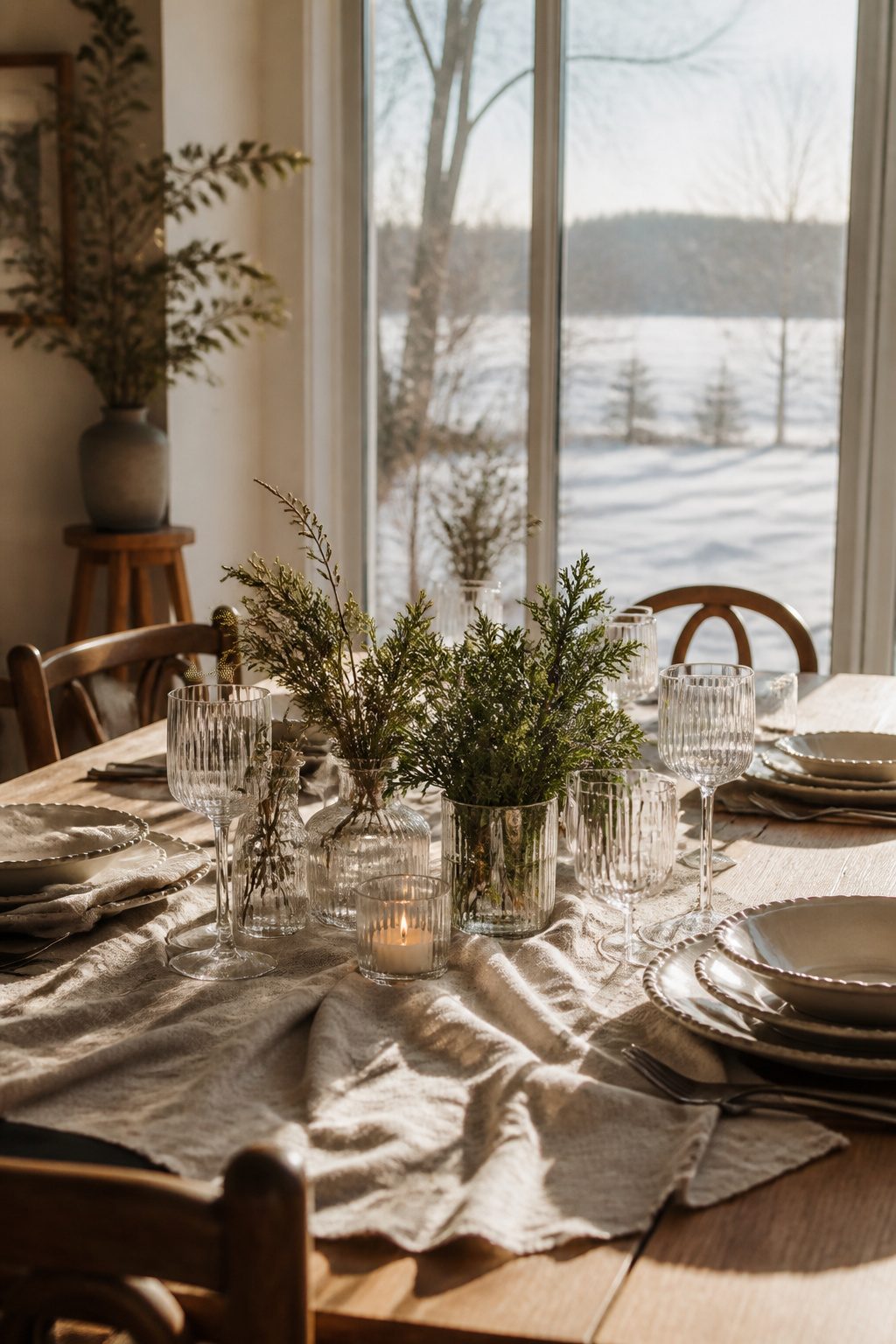
The red disappears first. December 26, I strip the ribbons, the jingle bells, anything that reads Christmas, because keeping those around through January looks like I forgot to clean rather than chose to decorate. What stays is the greenery. Cedar sprigs and mixed winter evergreens read snowy walk, not holiday party, and they carry straight through February without apology.
Glass votives stay out too. Northern Idaho taught me that the shimmer matters in months when the dark arrives at five. I cluster them at differing heights, same as I would candles, and let the flicker do the work that color used to do.
Neutrals bridge the gap. Bright whites and warm beiges against the table mimic what actually sits outside my window: snow, bare branch, the occasional gray sky. Layering two linens, sometimes three, builds the retreat feeling that January demands. The trick is removing before adding: strip the holiday, live with the quiet for a day, then decide what warmth the bare table still needs.
Bobble-edged bowls and ribbed smoky glassware add interest without hue. Catkins in vintage bottles, hellebores if the garden offers them, small nods toward spring that do not rush it. The palette stays muted because that is what winter actually looks like, and pretending otherwise fools nobody who has to live through it.
Frequently Asked Questions
How do I create a winter tablescape?
Start with a base layer of pine garlands or branches laid end to end, then add height with candles at varying heights rather than one tall centerpiece. Layer in natural elements like pinecones or lamb’s ear, add textiles such as cableknit or felt runners, and finish with small glass votives for gentle light. Keep anything above seated eye level narrow enough that you can still see the person across from you.
What materials should I use for a winter tablescape?
Use natural elements like pinecones, foraged evergreen clippings, and bare branches, plus candles in pillars, votives, and tapers at differing heights. Add textiles such as heavy linen runners in grey or white, cotton napkins, and thick woven placemats. Faux cedar or eucalyptus solves the shedding problem of real greens, and mercury glass holders or a mirror runner double candlelight without bulk.
What color schemes work best for winter?
Soft greys, whites, and natural wood textures carry a table from January through March without reading as leftover Christmas decor. Layer two neutral linens slightly different in weight or weave to keep a muted palette from going flat. Blues and greens enter only as small accents through eucalyptus sprigs, cedar cuttings, or hellebores; remove all red and gold after December 26.