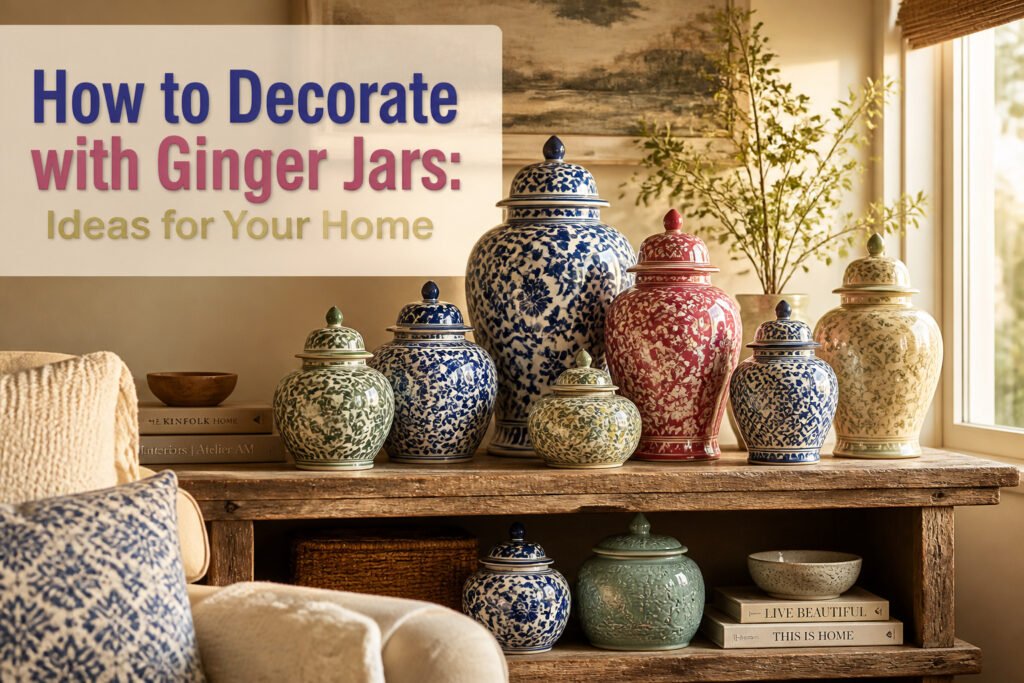
You can decorate with ginger jars for under $20 if you know where thrift stores and marketplaces hide them, but most collections fail in the same spot: height arrangement. The tallest jar dead center reads static until you stagger it slightly off-center with smaller pieces around it. A $12 thrift jar left outside one November taught me the rest; frost gets under the glaze, and by January the surface crazed into hairlines that never stopped catching dirt.
1. Flowers in a Ginger Jar
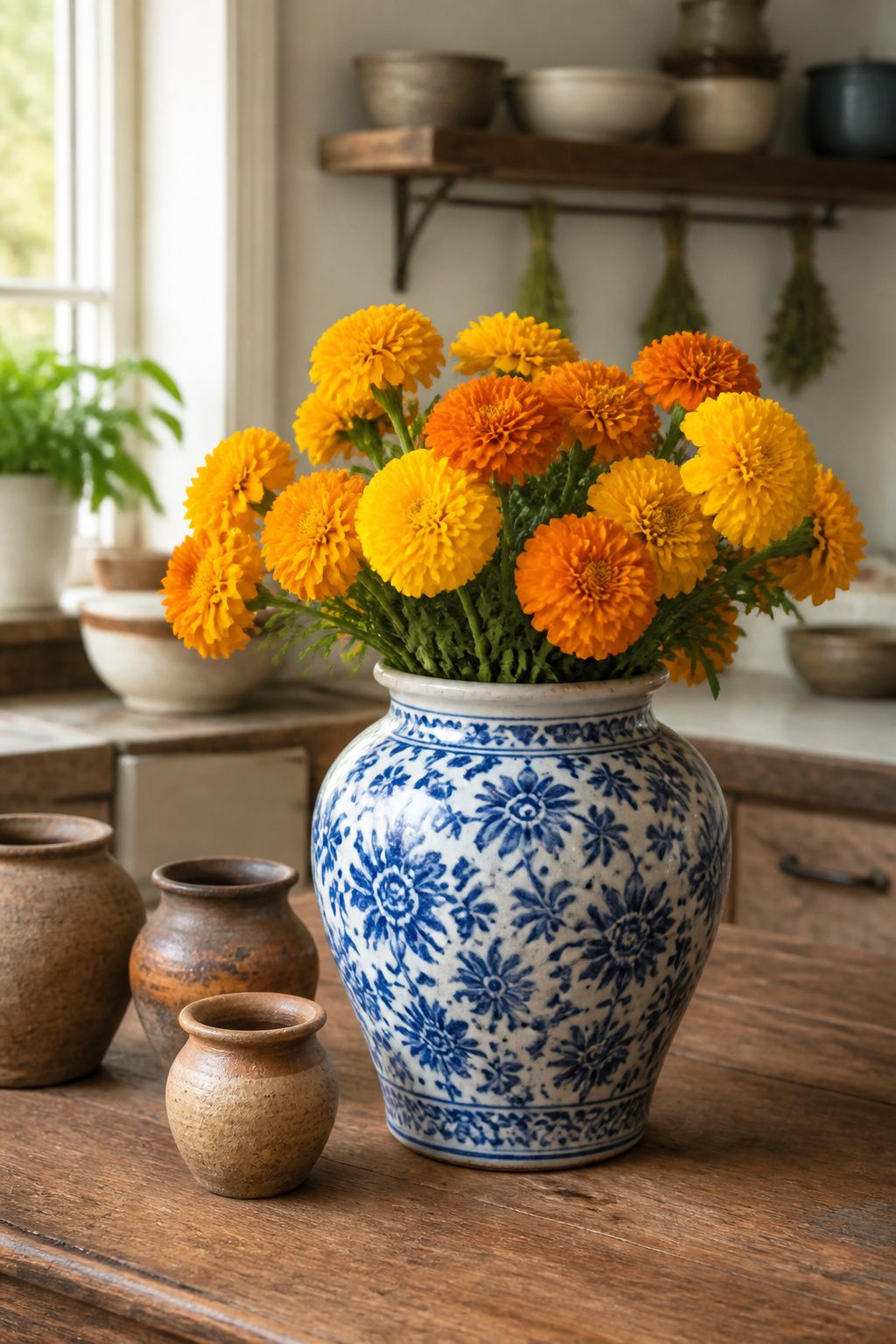
A ginger jar with a wide neck holds stems in place without a frog, which saves both money and setup time. The opening does the arranging for you; even a casual handful of marigolds or garden herbs looks intentional.
Neck width is the practical detail that determines what works inside. Narrow openings keep stems upright and evenly spaced on their own. Wider mouths need more stems to look full, or they read as half-empty.
Fresh flowers are only half the year in my house. The rest of the time I swap in faux hydrangea stems, preserved boxwood, or eucalyptus. A cluster of three or four faux hydrangeas fills a jar in about a minute and never wilts. For fresh cuttings, rhododendron branches or single hydrangea blooms do the same with almost no effort.
Scale matters more than I expected. A small jar on a side table needs only a few stems. The same jar at centerpiece scale gets lost unless you step up the branch size or cluster several jars together.
I once spent $34 on long-stemmed flowers that died in three days. The jar was too deep; the stems sat in water past their tolerance and rotted where I could not see. Now I check stem length against jar depth before I buy, or I cut fresh garden branches to fit.
2. Shelves and Vignettes
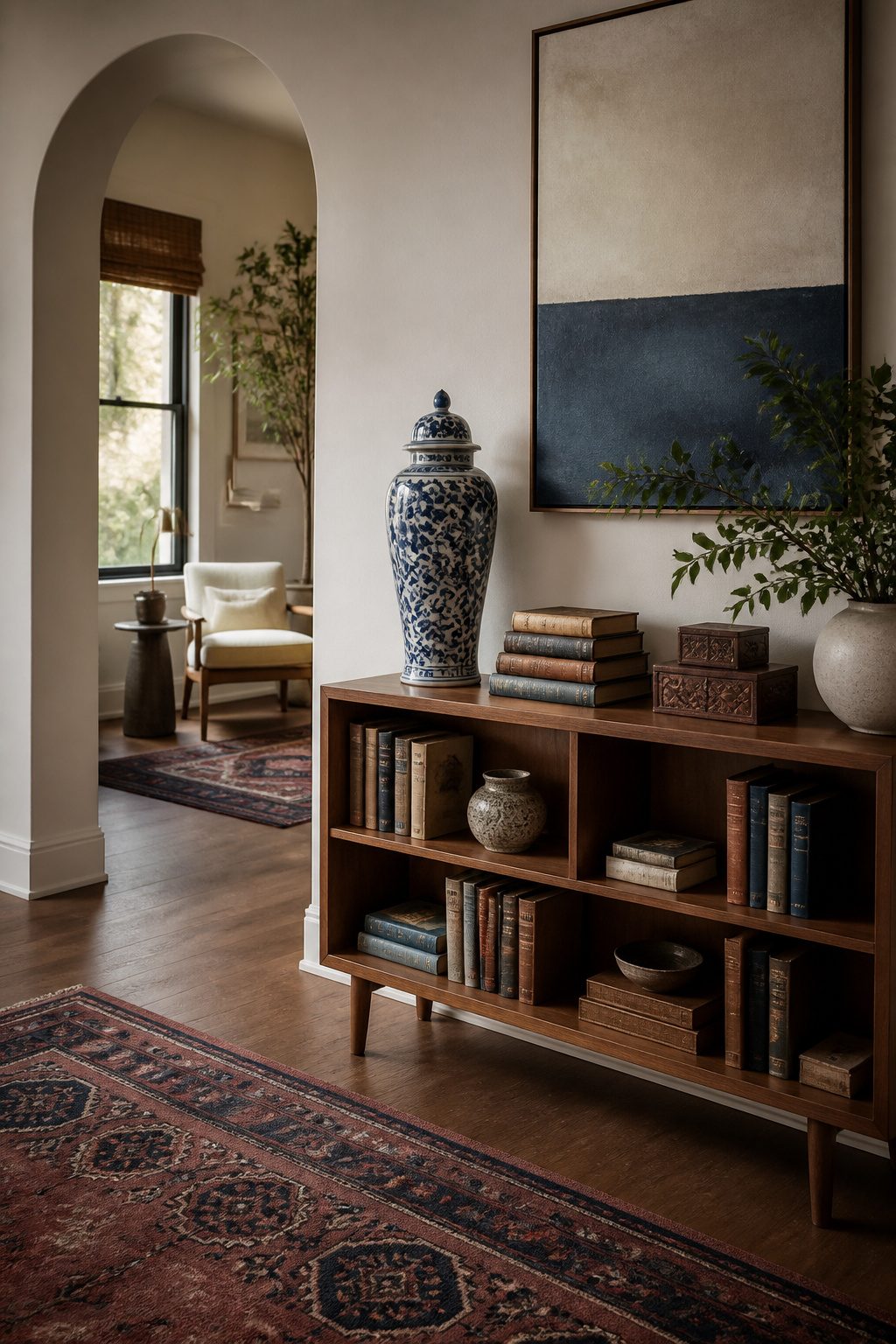
A tall, slender ginger jar is the first thing I reach for when a shelf starts to read as a flat line of spines. It adds height without candles, so the arrangement holds up in daylight and after dark. The rule that keeps it from looking accidental is varying heights in thirds: one tall piece, one medium, one short. Several jars close to the same size tend to cancel each other out.
Books stacked two or three deep make the natural base, with the jar sitting beside or slightly overlapping the stack. Small frames, boxes, or a piece with a different texture, woven rattan or aged brass, round out the grouping. Odd numbers keep the eye moving, three or five pieces rather than pairs that freeze into symmetry. The one place a ginger jar does not belong is flush against a shelf edge, weight forward, where a passing cat or a bumped stack can take the whole arrangement down.
3. Table Centerpieces
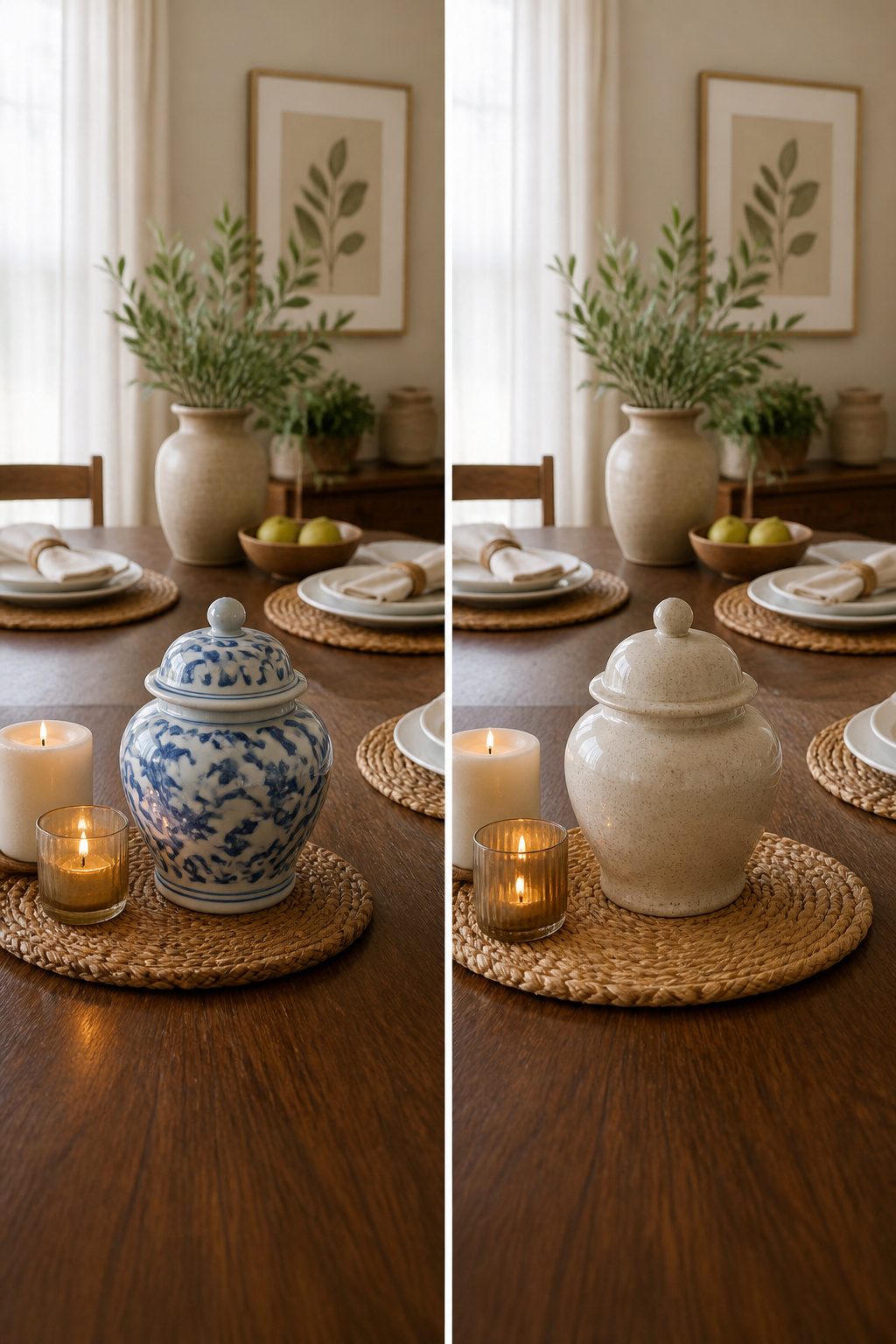
A ginger jar on the table works best when you keep it under ten inches tall on a twelve-inch surface. Scale matters more than pattern. I learned that the hard way at a dinner party where I set a jar so wide and tall that guests had to lean around it to see each other. The table was only thirty inches across. I moved it to the sideboard before salad.
One jar gives you a single focal point. Two jars, matched or just similar in height, split the eye and work better on longer tables where a solo piece would look stranded. The passages suggest flanking a lantern with jars for outdoor settings, which is essentially the same move: two anchors, one visual field.
For coffee tables, the same height rule applies, though you have more width to play with. A pair here risks looking symmetrical, and symmetry on a low surface reads formal fast. Save that for the mantel. On a dining table, asymmetry keeps the mood relaxed enough for weeknight takeout. The jar can still carry hydrangeas, carnations, or nothing at all. Empty reads as intentional when the shape is good.
4. Symmetrical Displays
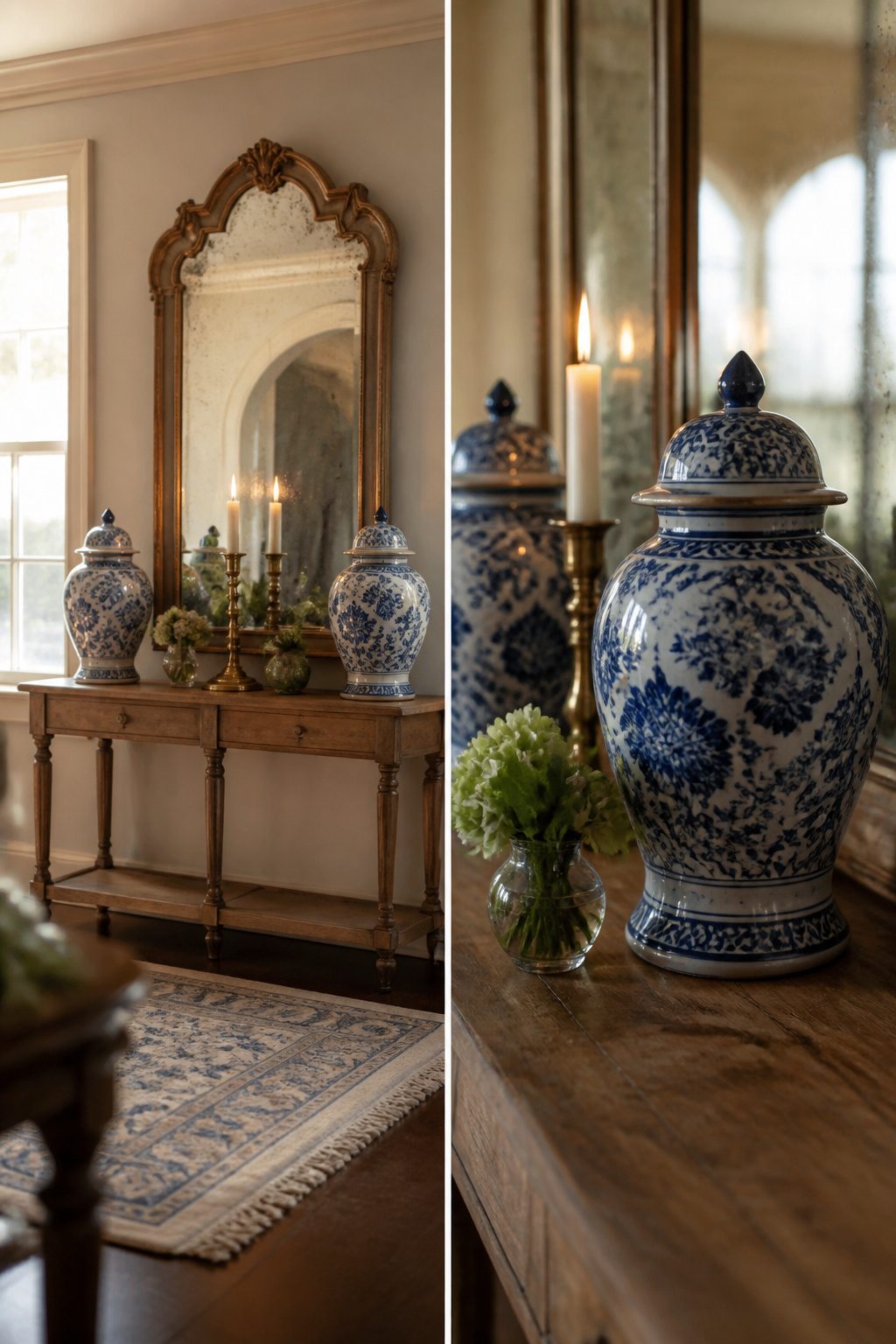
Symmetry works best where the architecture already gives you a center line. A fireplace mantel, a console table backed by a single mirror, a pair of bed tables flanking a headboard: these spots invite two jars placed like bookends. The eye finds the center instantly and rests there.
A matching pair reads as intentional and calm. Two jars of the same height and pattern, set equidistant from a middle object, give the clearest result. Coordinated but different sizes can work, though the risk is lopsided weight. If one jar towers and the other sits low, the center line still needs anchoring, usually with a taller middle piece to bridge the gap.
The mistake is forcing symmetry where the furniture fights it. A single-nightstand bedroom, an off-center window, a console crowded with cables: these spaces reject mirror-image arrangements and look strained for the attempt.
I learned this the hard way with a single blue-and-white jar I found marked down. It sat alone on a mantel for six months, always slightly wrong, until I spotted its mate on Facebook Marketplace for $18. The pair clicked into place the moment they sat together. A single jar in a symmetrical spot reads as half a thought; the second jar completes it. Where asymmetry already rules, one jar is enough, and two is clutter.
5. Storage That Reads as Decor
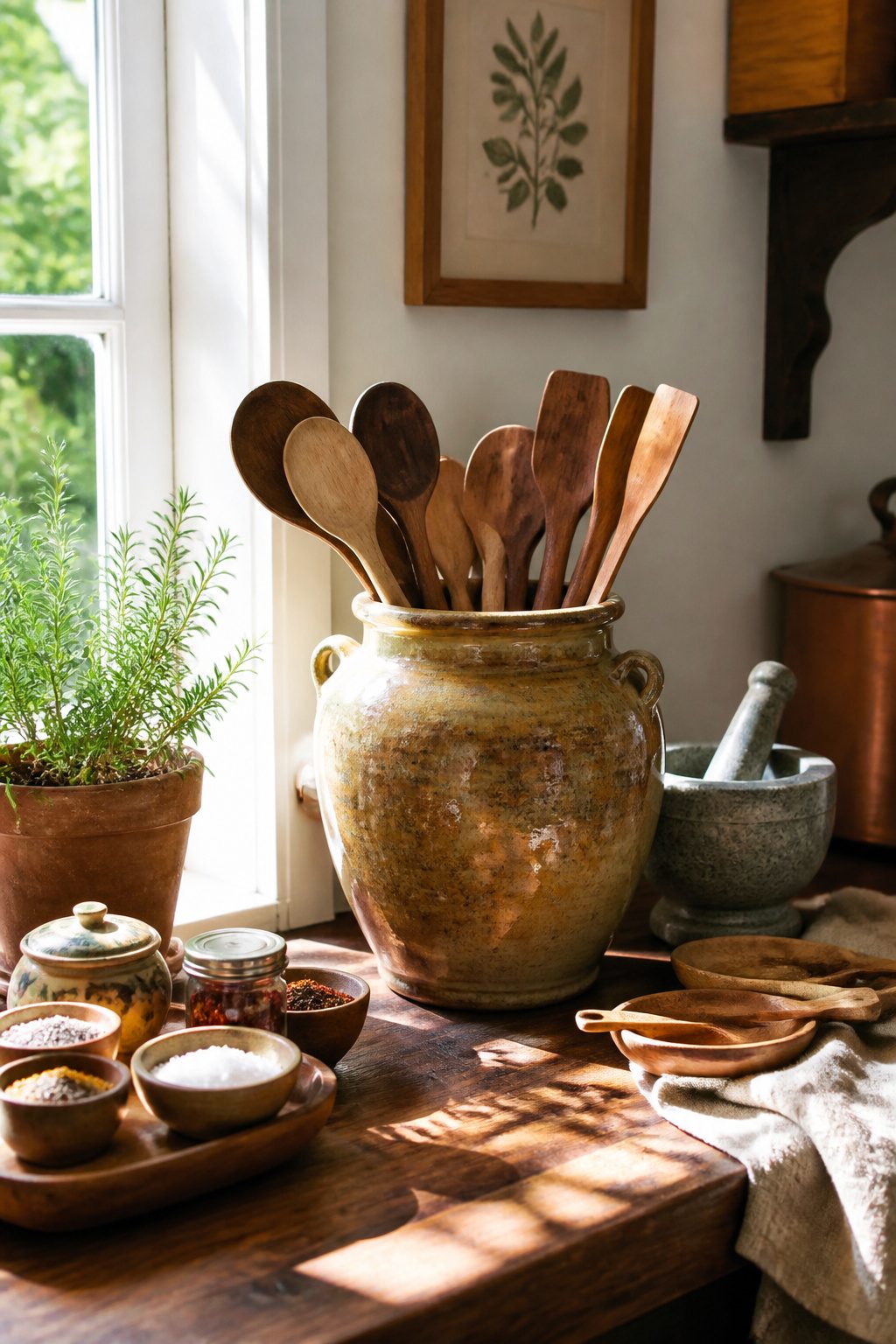
A ginger jar on the counter earns its place by working harder than a vase. Mine holds wooden spoons where I reach for them daily, though the porous glaze inside has collected a faint grease film I wipe out every few weeks with hot soapy water. A wider mouth makes the difference between utensils that stand and ones that lean against each other like tired drunks.
Lids matter more than looks here. The cork stopper on a small jar I tried for whole cloves dried out slowly enough that I did not notice until the cloves lost their punch, maybe six months in. For anything you want to keep volatile, a ceramic lid that seats tight is the safer bet. The kitchen jars with fitted lids handle salt and pepper at the table without trouble, and the seal is enough for spices you move through in a season. For the bathroom, the same tight lid keeps cotton rounds or bath salts from turning into a science experiment, though I would not trust even a good seal with anything liquid you knock over often.
The sweet spot is the jar that looks good empty, because someday it will be.
6. Ginger Jar Lamps
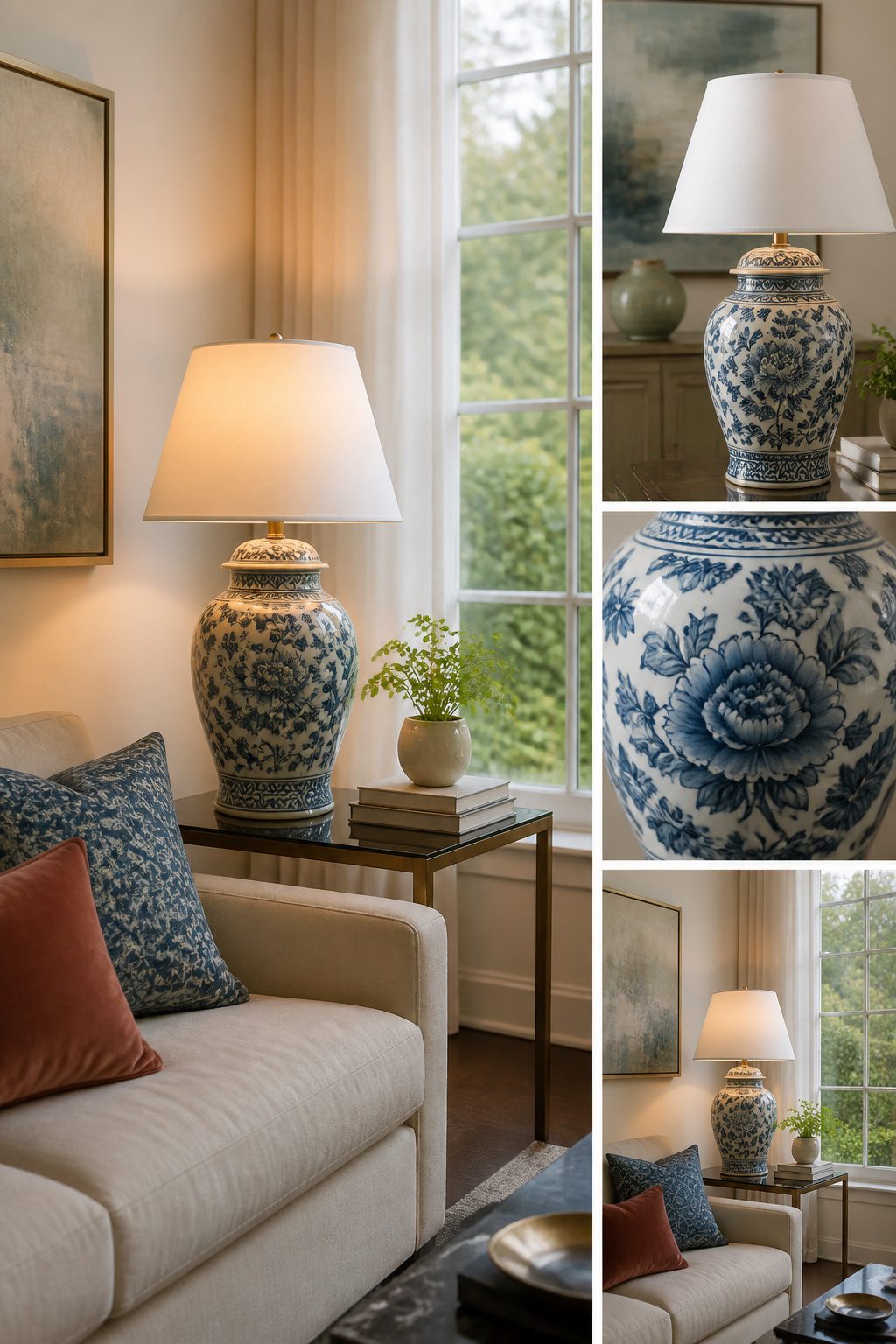
A ginger jar with a lamp kit screwed into its lid is one of the faster ways to get the look without hunting for vintage. The hardware runs about $25–$40 for a basic kit, and you will need a drill to get the cord hole clean. I learned the hard way that weight distribution matters: my first attempt wobbled on the nightstand until I glued a felt base to the bottom, which took five minutes and killed the teeter. What stopped me from making a second was spotting a ready-made ginger jar lamp for $89 that looked identical to my DIY version. The store finish was slightly more even, but in a dim corner with a shade on, the difference was not worth another afternoon. If the jar already sits in your closet, the kit still wins. If you are buying the jar fresh, add the kit cost to the price and compare it against ready-made before you commit.
7. Outside Use
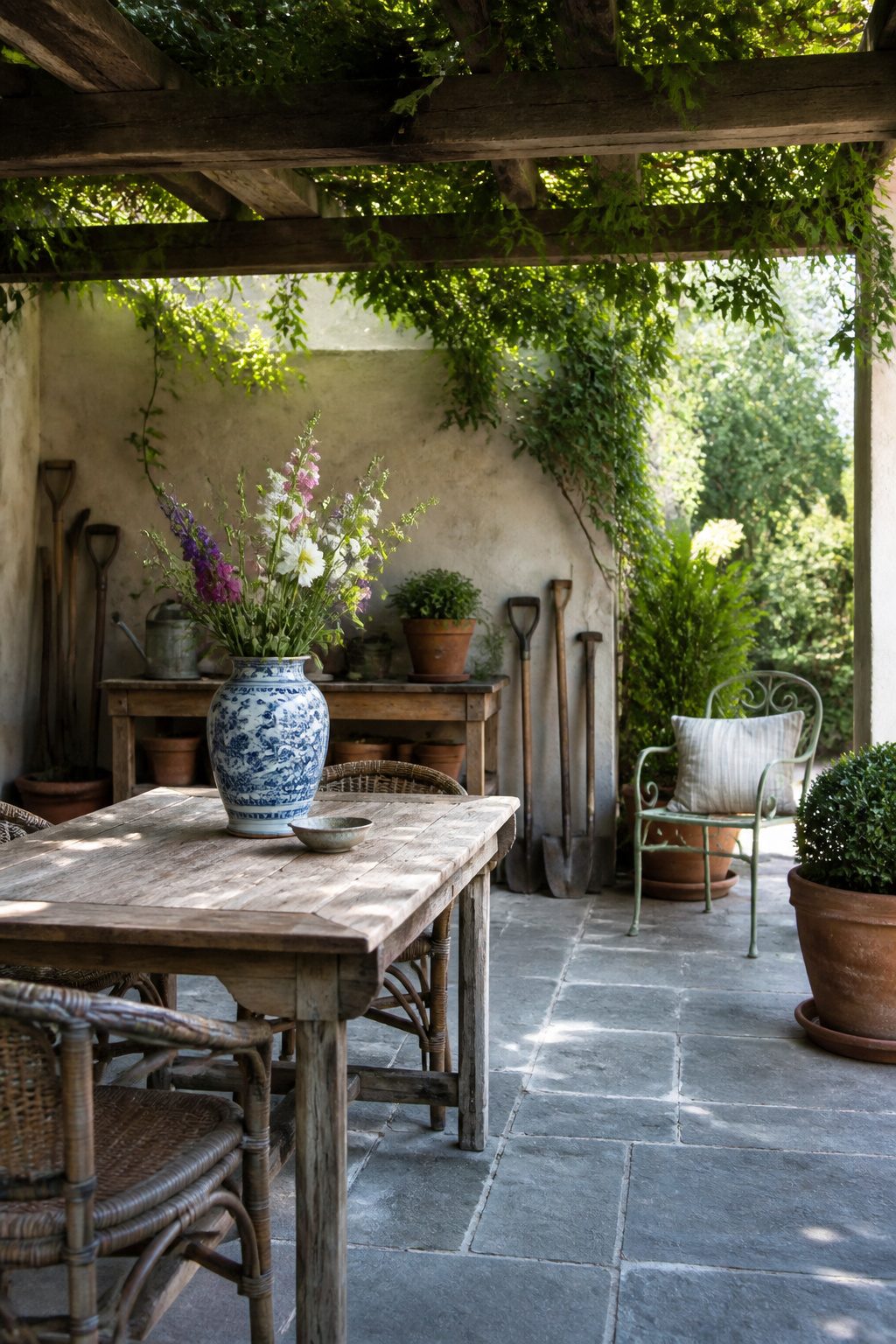
Porcelain ginger jars left outside face one enemy that does not announce itself. Frost gets under the glaze, the glaze expands at a different rate than the clay body beneath it, and the surface crackles or splits clean through. I learned this with a $12 thrift jar I set on an open patio table one November and forgot until January. The jar looked fine from the door; up close, the glaze had crazed into a web of hairlines that never stopped catching dirt.
That jar survived because the table sat under a deep roof overhang and rain reached it only at an angle. Open garden beds and exposed planters are a harder no: water pools, freezes, and the jar becomes a planter in the wrong sense, cracked and holding sodden soil. Covered porches and lanais keep the piece dry enough, though a hard freeze still risks damage. The safest outdoor use treats the jar as a vase for cut stems rather than a true planter, or sets it on a shelf that stays under roof and out of direct weather.
For anyone determined to plant directly in the jar, the drainage problem is solvable but not perfect. A layer of stones at the bottom gives excess water somewhere to sit below the roots, which helps in the short term. In the long term, that trapped water still freezes if the temperature drops hard enough. Annuals and seasonal color make more sense here than anything you mean to keep; if the jar cracks, the loss stings less, and the look lasts the three months you needed it for.
8. Books and Bookends
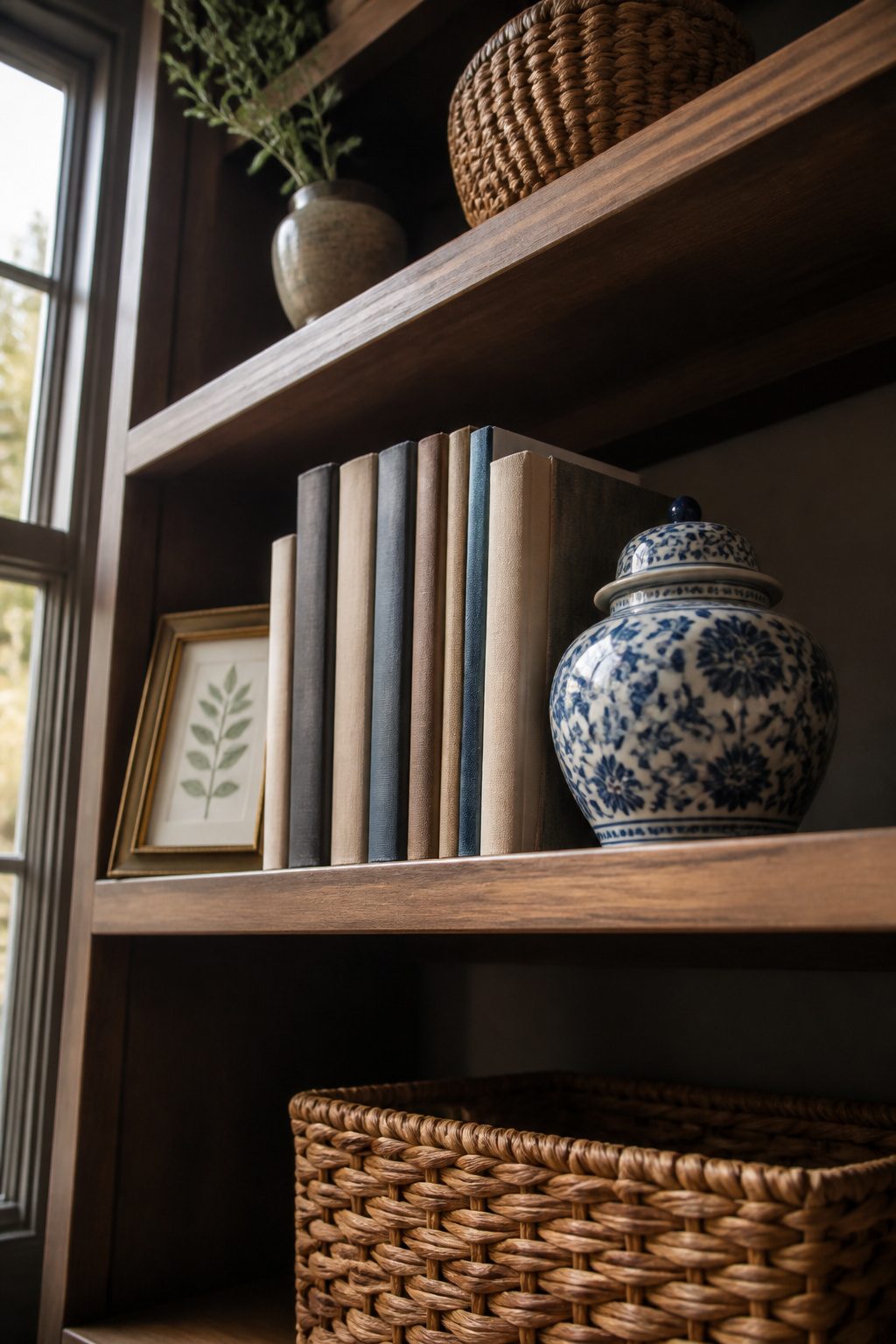
A ginger jar can anchor a stack of books on a side table or hold a short row upright on a shelf, but the shape decides what it can actually do. A full jar holds maybe four hardcovers before sliding, and even then it helps to add clear bumpers underneath so the surface stays put and the glaze doesn’t scratch. I learned the lid corner the hard way: my copy of Wolf Hall still carries a small dent where the porcelain met the spine.
Round-bellied jars want to roll if they sit on horizontal books, so I keep those for vertical duty as bookends or place them on flat tabletops where gravity works with them. Straight-sided or square-shouldered shapes sit stable across the top of a stack, lid on for a finished look or off for something looser. Small jars with a wooden finial on the lid are my favorite toppers; that extra bit of height reads deliberate without trying too hard.
9. Seasonal Rotation
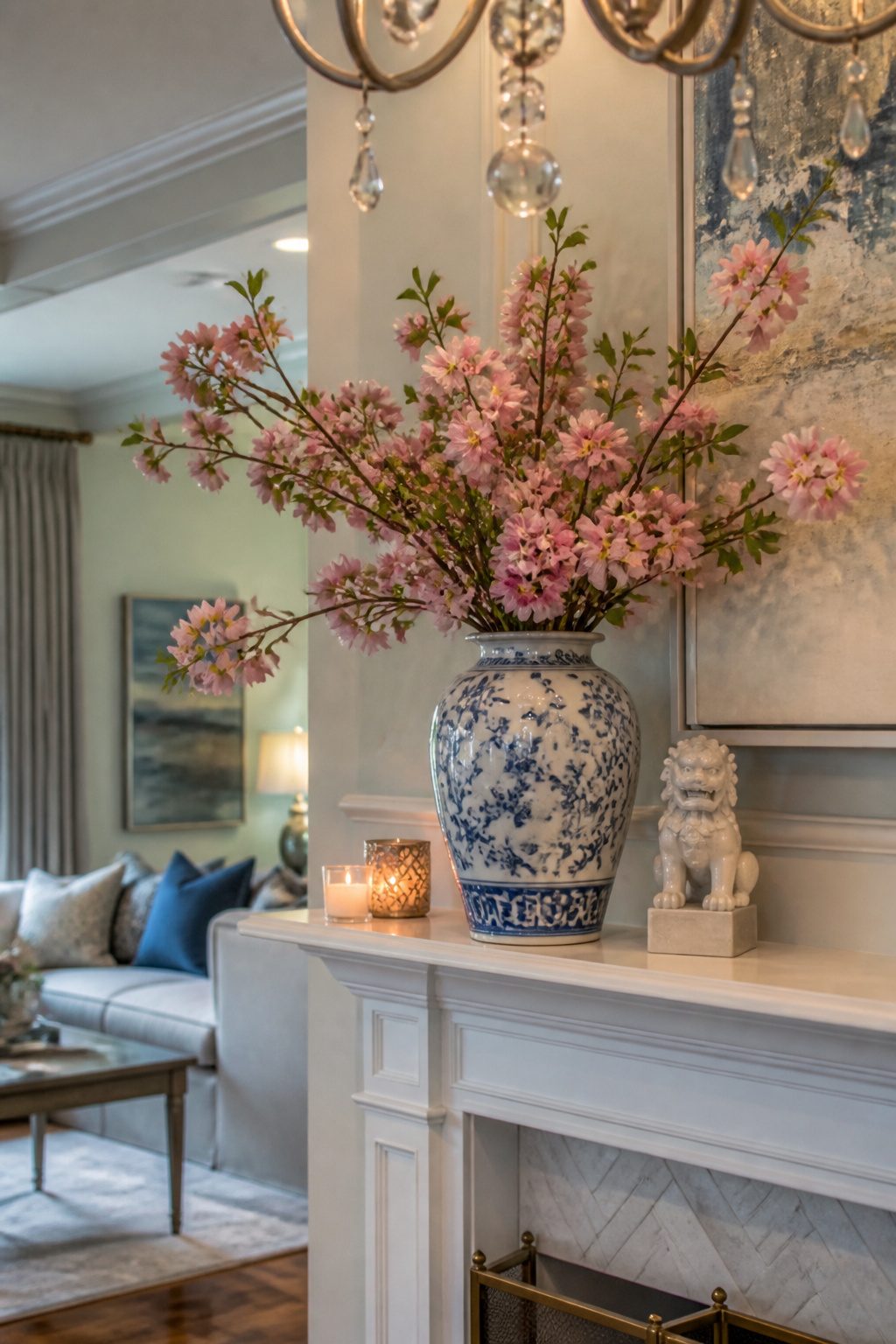
A ginger jar on the mantel earns its keep year-round if you swap what sits inside. In April I cut flowering branches from the neighbor’s overhanging crabapple, stuck them in water in a jar I’d lined with clear tape to hide the stems, and had two weeks of pink before the petals dropped. Summer works better with tall grasses, the kind that dry standing up: oat grass looked architectural for a day, then shed seed husks onto the ledge for three weeks straight. Plastic seasonal fillers read as plastic; the miniature pumpkin I wedged in a jar last October fooled no one past arm’s length, and the gap between its ridges and the jar’s curve collected dust I couldn’t reach. Dried seed pods in November and bare twigs come January need nothing but their own shapes. The off-season stash lives in a shoebox in the hall closet, labeled with a Sharpie so I’m not hunting through tissue paper when the light changes.
10. Building a Collection
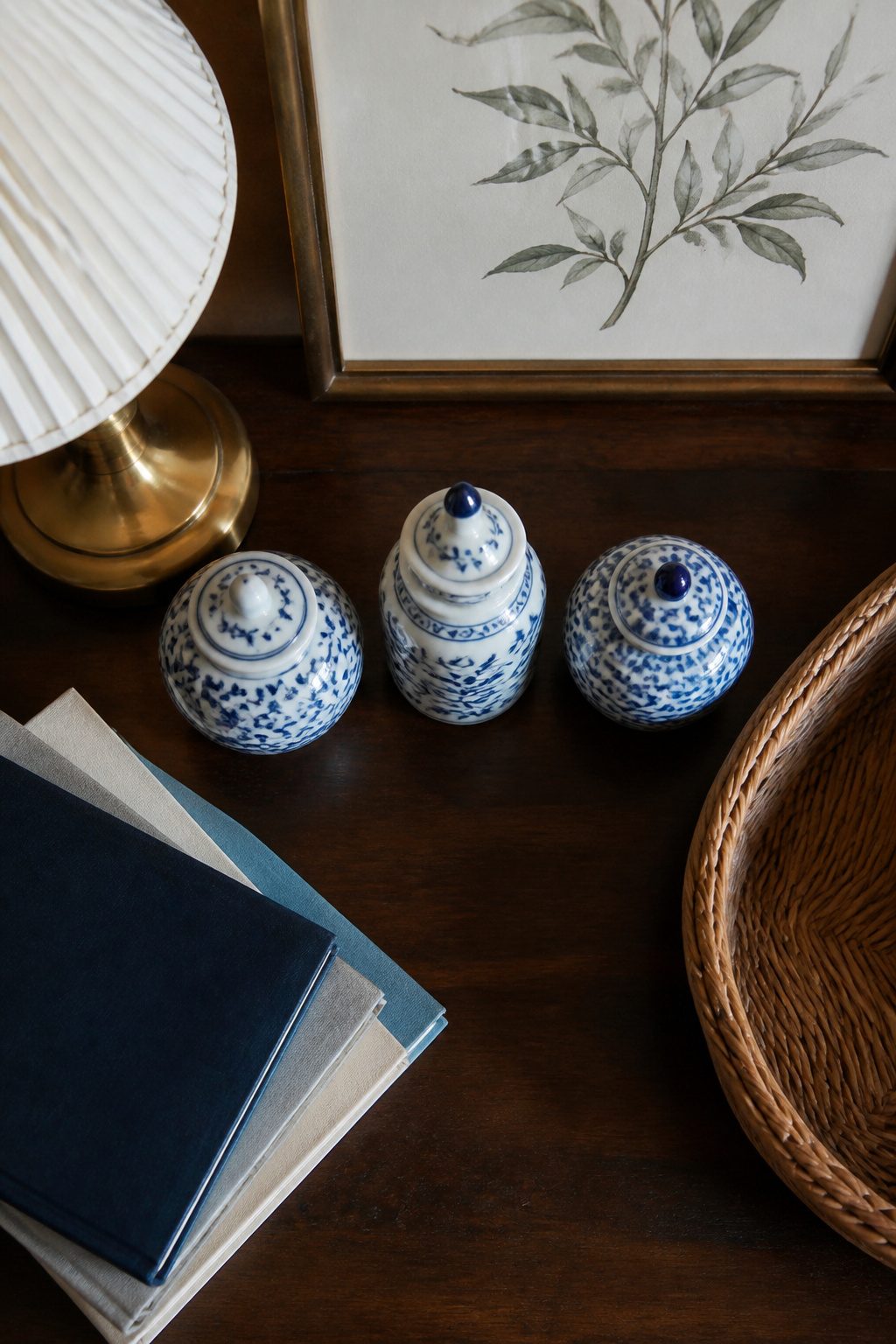
A single large ginger jar can anchor a whole shelf, but three small ones read as a collection from the start. That is the choice that shapes everything after it. I started with one significant piece, a blue and white jar I found secondhand, and spent months waiting for companions that felt earned rather than rushed. The sources that convinced me, reading through a dozen of them, favored intention over speed: a grouping built too fast looks like shopping, not collecting.
Blue and white holds together almost automatically. The palette does the unifying work for you. Multi-color jars need a common thread, something shared in the shape or the finish, or they scatter into clutter. My own shelf held only blue and white until I tried adding a green jar, and the whole arrangement collapsed until I pulled it back out.
The height arrangement took four tries before it read right. I kept setting the tallest jar dead center and wondering why the grouping felt static. Shifting it slightly off-center, then staggering smaller jars at different heights around it, finally gave the eye somewhere to travel. A taller vase or candlestick behind the back row can break up sameness when your jars run too similar in size.
Three to five jars tends to be the sweet spot. Fewer reads scattered; more turns busy on standard furniture. The shapes can vary, the patterns can vary, but the heights need rhythm or the shelf stays restless.
Blue and White and Everything Else
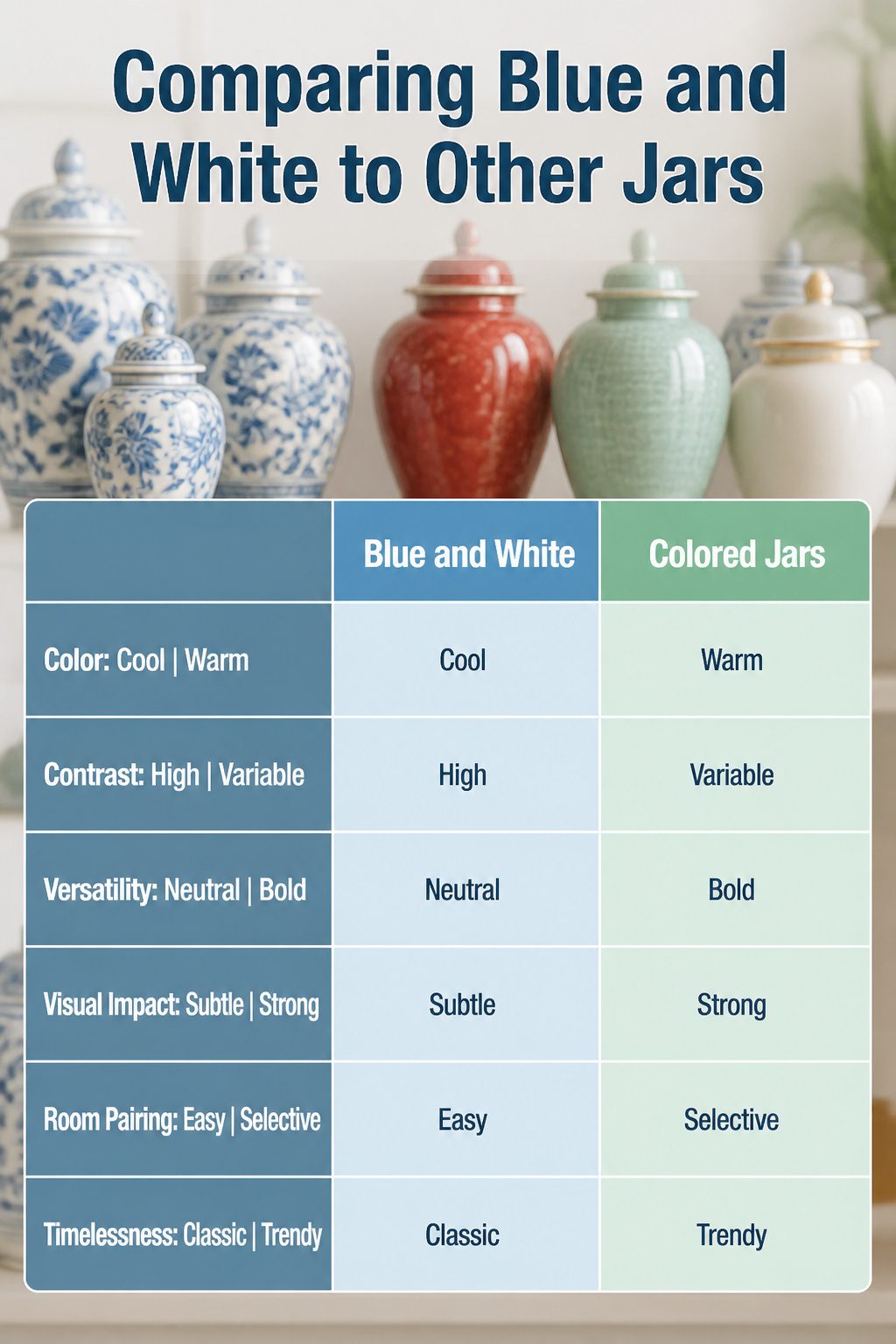
Blue and white porcelain reads cooler and cleaner than almost anything else I own, which is why two of mine live in the bathroom and another pair flanks the stove. The glaze catches light differently on tile than it does on drywall, and in those rooms the contrast feels intentional rather than busy.
Still, I bought a red jar last year for the living room shelf because the navy was starting to feel like a uniform. Green came next, a celadon tone that sits near the window and picks up the back side of a ficus. The sources all call blue and white a neutral, and they are right, but neutrals can tire like anything else if you never step outside them.
The jar I reach for most, though, is the one with gold threading around the base and lid. It cost about a third more than the plain blue and white equivalent, and it lives on my bedroom dresser because the gold catches the same trim on a lampshade I already owned. That echo matters more than I expected; the room feels pulled together without a scheme.
Mixing patterns across jars works better than matching them. A floral next to a geometric, both in blue and white, reads as collected over time rather than bought in a set. The same holds for scale: a tall temple jar beside a squat ginger jar keeps the eye moving. What breaks the look is height without variation, or color without some thread that ties the group together.
What Size for What Spot
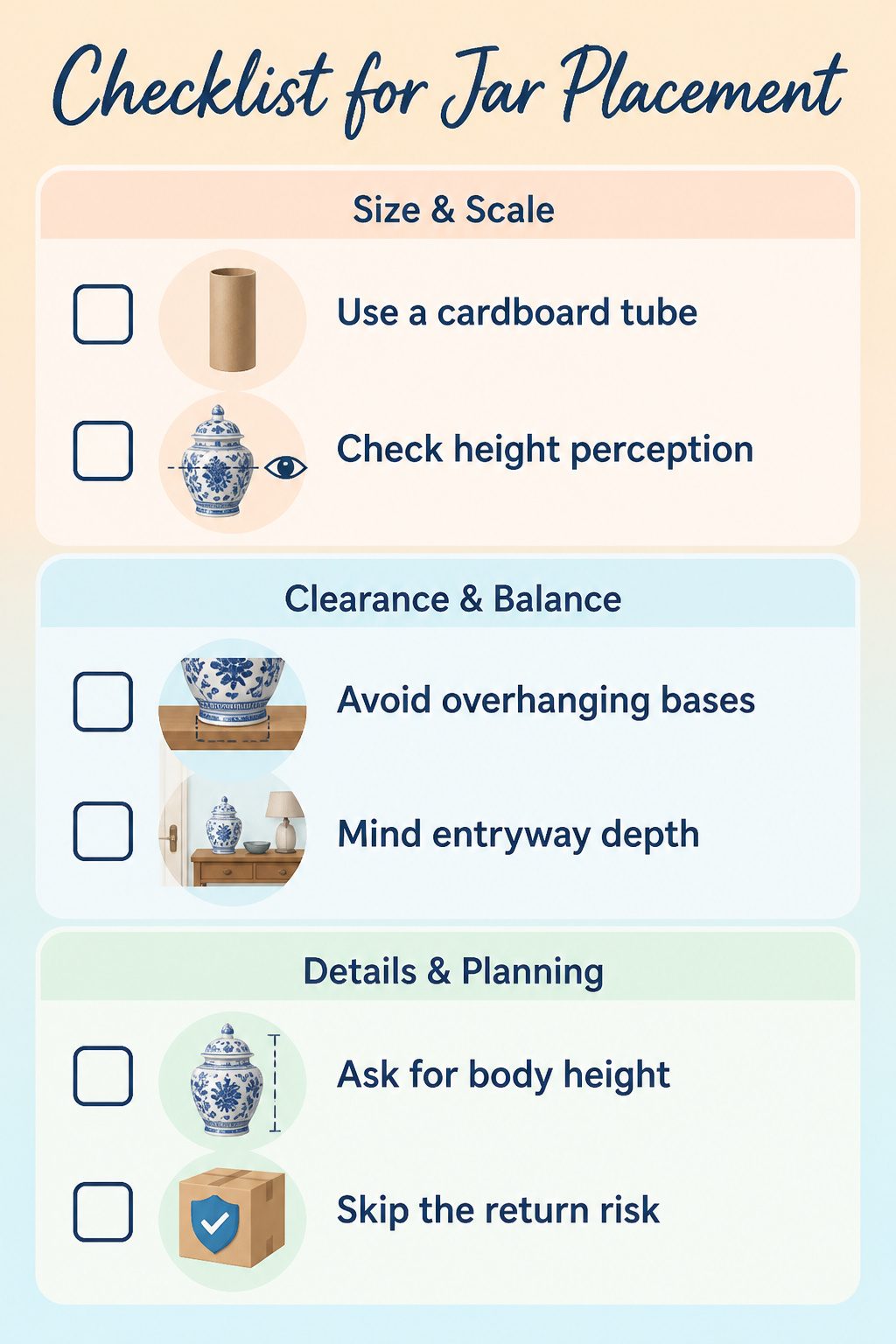
Eye-level jars look smaller in the room than they do in your hand. I learned that after hauling one home that swallowed half my console table; from above, the lid barely cleared the lamp base. The fix is a cardboard tube from a spent paper towel roll. Stand it where the jar will live and step back. If the tube looks stubby, the jar will too. If it blocks sightlines across the room, so will porcelain.
Height matters more than width for surfaces you walk past, but depth steals space you actually use. A jar that eats the last six inches of a entryway table leaves no landing spot for keys. For shelves, the base should sit inside one board’s depth, not overhang it; an inch of porcelain hanging in air looks like a mistake waiting to happen.
Suppliers list dimensions by full height including the finial lid, which can be a third of the total. Ask for the body height alone if you need the jar to tuck under something, or the widest point if clearance is tight. Return shipping on ceramic is rarely worth the gamble, so that thirty-second tube test saves both the cost and the bubble wrap.
Cleaning and Care
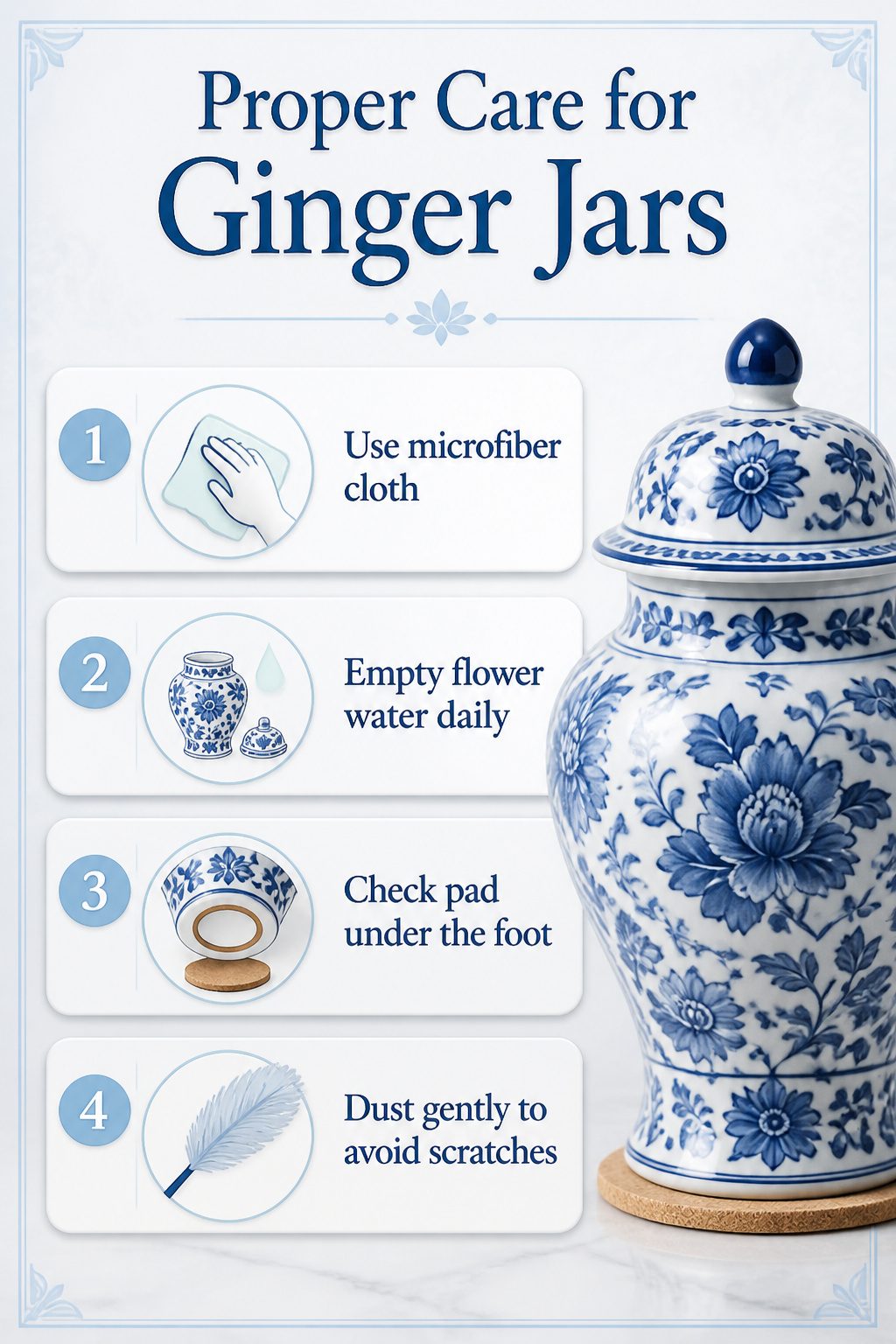
Porcelain glaze is harder than most household dust, but the matte painted finishes on some reproduction jars scratch if you dry-dust them with a stiff feather duster. A clean microfiber cloth, barely damp, lifts dust without dragging grit across the surface. The glazed interior of a true ginger jar resists coffee or vinegar stains well enough that I stopped worrying about the occasional leftover flower water, though I still empty it within a day rather than letting it sit.
The unglazed foot ring is where I got caught. That porous clay absorbed water from a wet countertop, and the ring left a faint ring on my painted shelf before I noticed. A thin cork coaster or felt pad under the foot fixes this without being visible from anywhere you actually look. Check the pad every few months; compressed felt stops working once it hardens.
Where the Form Comes From
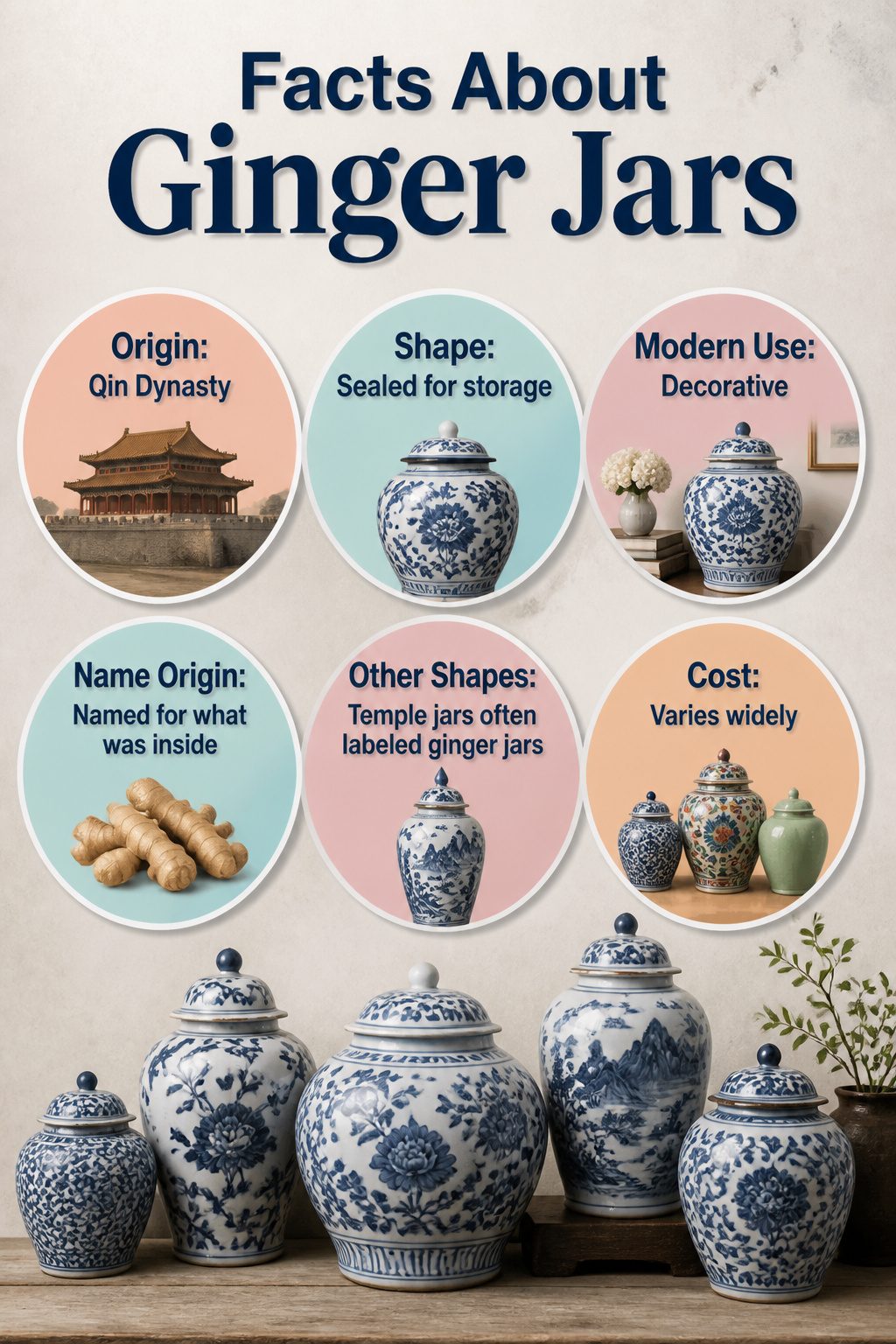
The shape of a ginger jar is not decorative by accident. The high shoulder and small opening were built for sealing, originally during the Qin dynasty (221–206 BC) to keep salt and ginger dry through long storage. The form stayed useful for two millennia before it turned into something people display empty.
When ginger became a major export to Europe in the 19th century, Western buyers started calling the vessels "ginger jars" by association with what had been inside. The name stuck even as the function faded. Today the same rounded body and flattish lid read as ornament, though elongated temple jars with pointed lids often get labeled ginger jars too. The distinction matters to collectors more than it does to decorators, who tend to treat both shapes as interchangeable blue-and-white porcelain or as newer ceramic pieces in whatever color fits the room.
Frequently Asked Questions
What is a ginger jar?
A ginger jar is a rounded porcelain vessel with high shoulders and a small opening, originally designed during China’s Qin dynasty (221–206 BC) for sealing and storing spices like salt and ginger. The name stuck in the West during the 19th century when ginger became a major export, and the form eventually shifted from pure function to decorative object. Today decorators often treat ginger jars and the more elongated temple jars as interchangeable.
How can I use ginger jars in my decor?
Ginger jars work as vases for fresh or faux stems, shelf accents that break up flat lines of books, table centerpieces under ten inches tall for a twelve-inch surface, symmetrical bookend pairs on mantels, and functional storage for utensils or dry goods. You can also convert one into a lamp with a $25–$40 kit, though ready-made ginger jar lamps sometimes cost less than the DIY route once you factor in the jar itself.
What colors do ginger jars come in?
Blue and white is the classic and most common palette, enough so that decorators often treat it as a neutral. Beyond that, you will find red Imari jars, green famille verte pieces, black and white famille noire, and famille rose with colored florals on white. Newer ceramics come in solid colors like celadon, and some add metallic threading in gold or other accents.