
Pillow covers, not whole pillows, cut the cost of a full seasonal swap from four hundred dollars to closer to forty.
The catch is weight and warmth, not pattern: velvet against chunky knit reads as finished, while matching sets read as a catalog photo.
Last year I hung a wheat wreath on an interior dining-room door instead of the front entry, and the unexpected placement drew more notice than the usual spot ever had.
1. Swap Out Throw Pillows
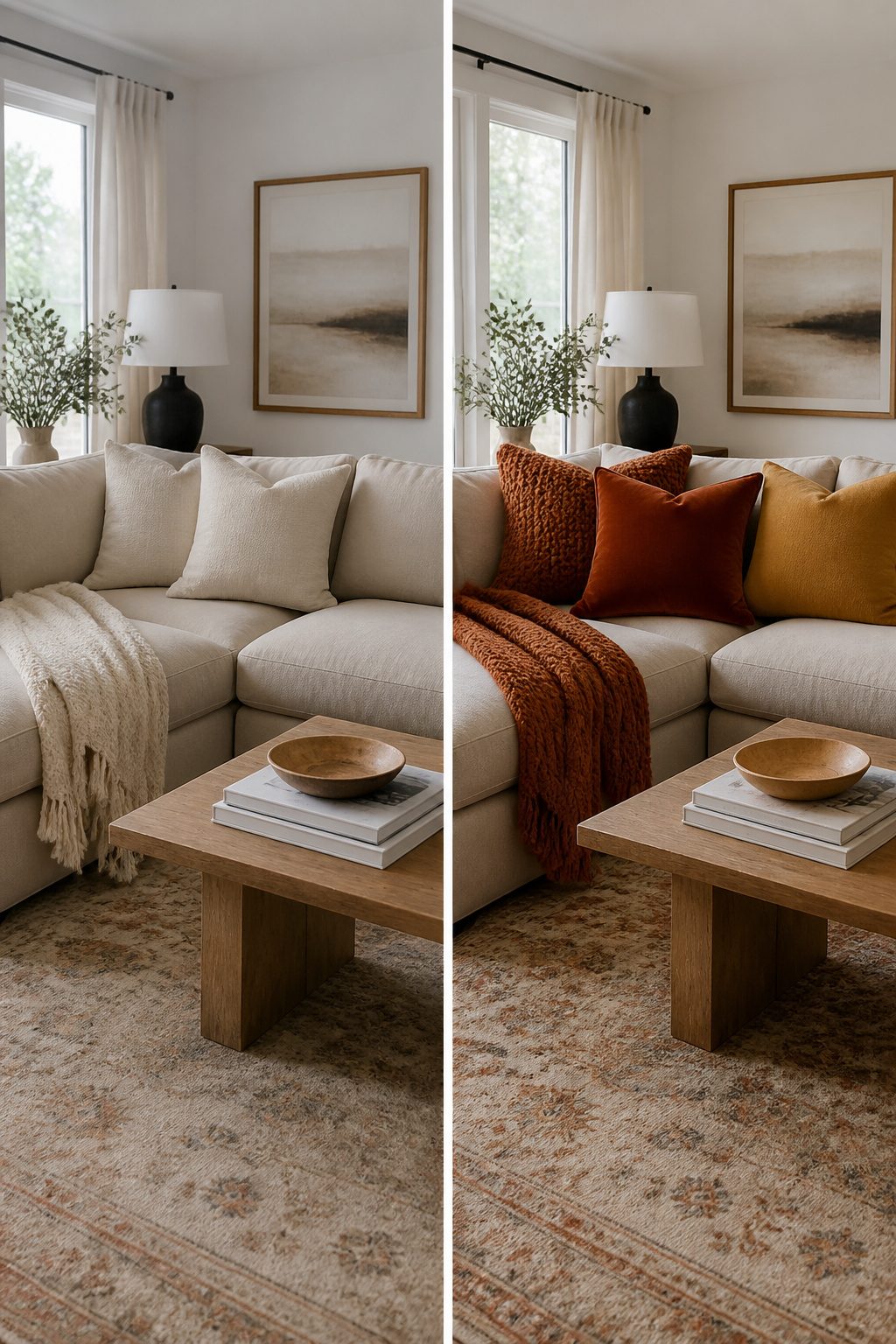
Velvet and knit pillow covers do the heavy lifting in my own summer-to-fall switch.
Linen and cotton reads breezy in July; by September those same shapes in rust orange or mustard yellow read like the season changed while you were at work.
Pillow covers, not whole pillows, keep the cost closer to forty dollars than four hundred if you are hitting every seating spot in the living room.
Chunky knits layered against smoother velvet adds the depth that makes a room feel finished rather than decorated. Plaid, buffalo check, or a quiet floral all work; the common thread is weight and warmth, not a single prescribed pattern.
Wool and flannel covers read the same way if those are what you find secondhand or on sale.
Six sources back this as the single easiest swap if you only do one thing for the transition. I believe it.
The sofa stays, the lamp stays, the art stays. Only the fabric in your peripheral vision changes, and somehow the whole wall shifts with it.
2. Add Cozy Throw Blankets
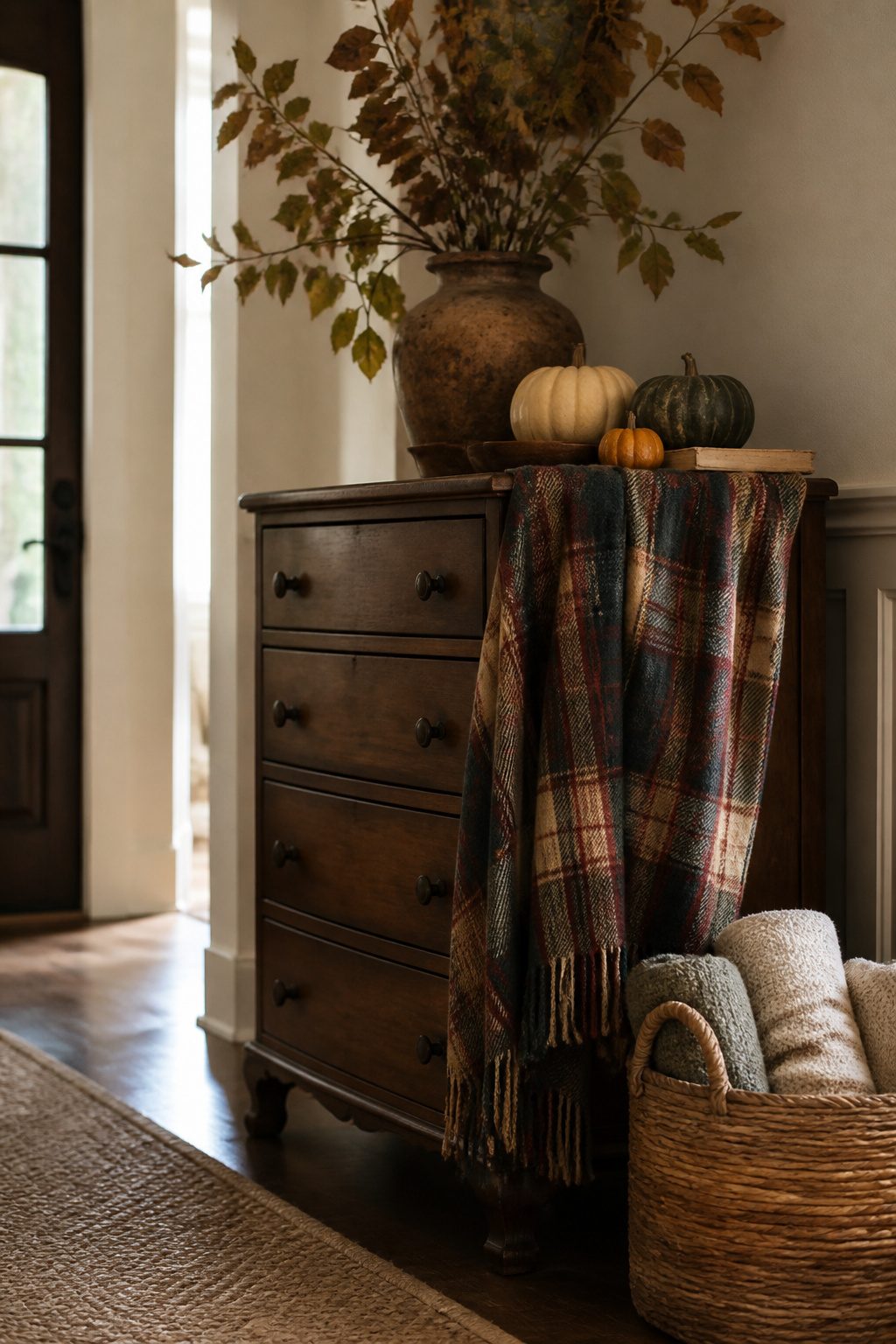
Chunky knits and plaids hit different once the temperature drops below sixty-five. I swap my summer cotton throws for a two-and-a-half to three-pound chunky knit or a heavy plaid that actually holds warmth when you pull it over your legs.
The entry gets one draped over a vintage dresser that doubles as storage, so the blanket earns its keep even when nobody’s curled up with it.
Living rooms and bedrooms get first priority. A throw over the sofa arm signals the season without touching a single wall color, and the same move on a bed footboard bridges that awkward gap before you commit to flannel sheets.
Layering helps: velvet against chunky knit adds depth that either texture alone flattens out.
The catch is where they live from April through September. Mine stack in that same dresser, rolled rather than folded so the knits don’t crease into permanent lines.
Woven baskets work too, tucked into closet floors or under console tables, but only if the throws are clean. Wool and boucle pick up oil from hands fast, and stored dirty means moths find them before you do next October.
3. Incorporate Natural Elements
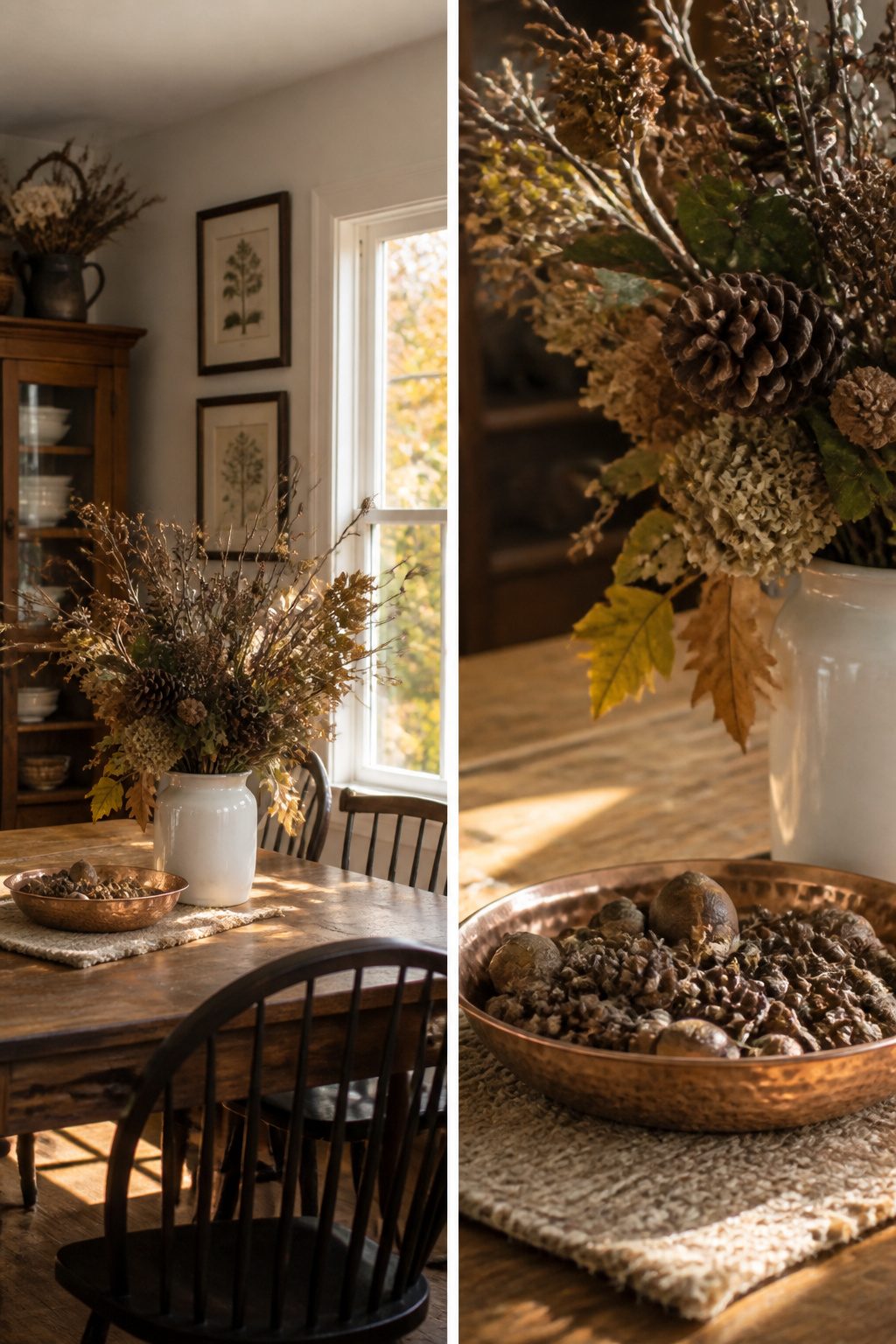
Branches, pinecones, dried flowers, and acorns do most of the work in a summer to fall decor shift without costing anything.
I gather mine from the yard after a windstorm, from park paths after the first real drop in temperature, or from the craft store when the season starts early and the trees are still fully green.
Damp branches fail fast: they mildew in the vase and drop bark on the table, so I let anything freshly cut sit in the garage for two or three days before bringing it inside.
Pinecones need the same patience; the open, dry ones hold their shape all autumn, but the slightly green or resin-heavy ones crumble by Halloween and leave sap on your hands that does not wash off with regular soap.
Dried hydrangeas last the full season if the heads were already papery on the stem before cutting. I have had better luck with those than with store-bought dried grasses, which shed and look tired by Thanksgiving.
A copper bowl or even a plain ironstone tureen from the back of the cabinet turns the collection into something intentional.
The mistake is treating each piece as its own display; one cluster of acorns on the mantel and another on the entry table reads as leftover craft supplies, not as decor that carries through the room.
4. Change Your Wreath
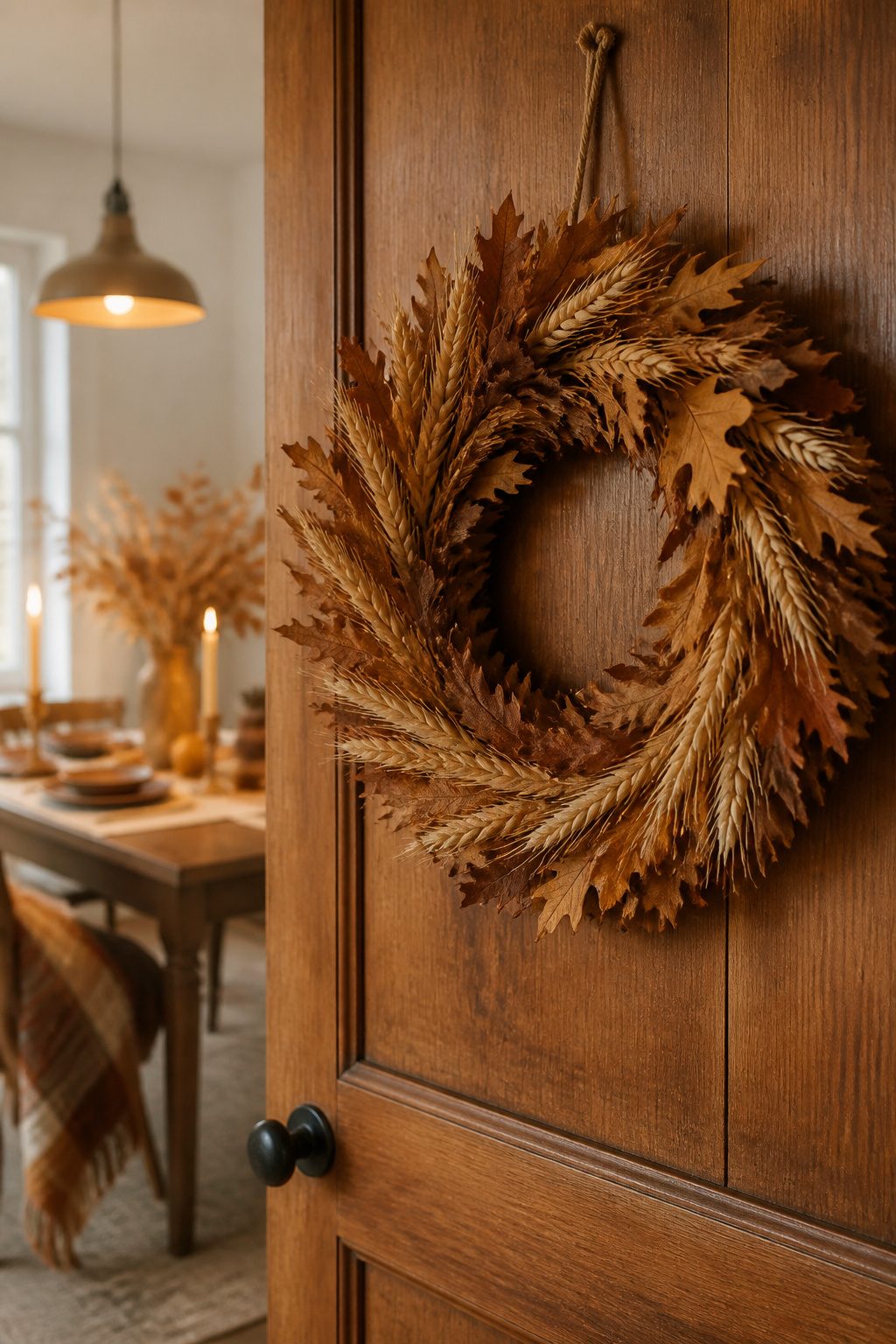
A wreath reads as fall instead of generic when it carries the season’s actual materials rather than a color swap on the same grapevine base.
Wheat, dried hydrangea, and foraged oak leaves signal autumn specifically because they stage the transition the yard is already making.
Last year I hung a wheat wreath on an old interior door in my dining room rather than the front entry, and the unexpected placement drew more notice than the usual spot ever had.
Bedrooms work too; a soft cluster of dried florals above a headboard adds texture without the full commitment of a mantel overhaul.
The catch with dried wreaths is the shed: hydrangeas and oak leaves will drop petals and fragments over six to eight weeks of active handling, so placement over carpet or bedding asks for a tray or occasional vacuuming.
Faux wheat avoids the debris but loses the slight color variation that makes dried material feel alive in September light.
For a weekend budget, foraging your own oak leaves and wiring them to a grapevine form costs nothing and lasts about the same span as purchased dried goods before brittleness wins.
5. Adjust Your Color Palette
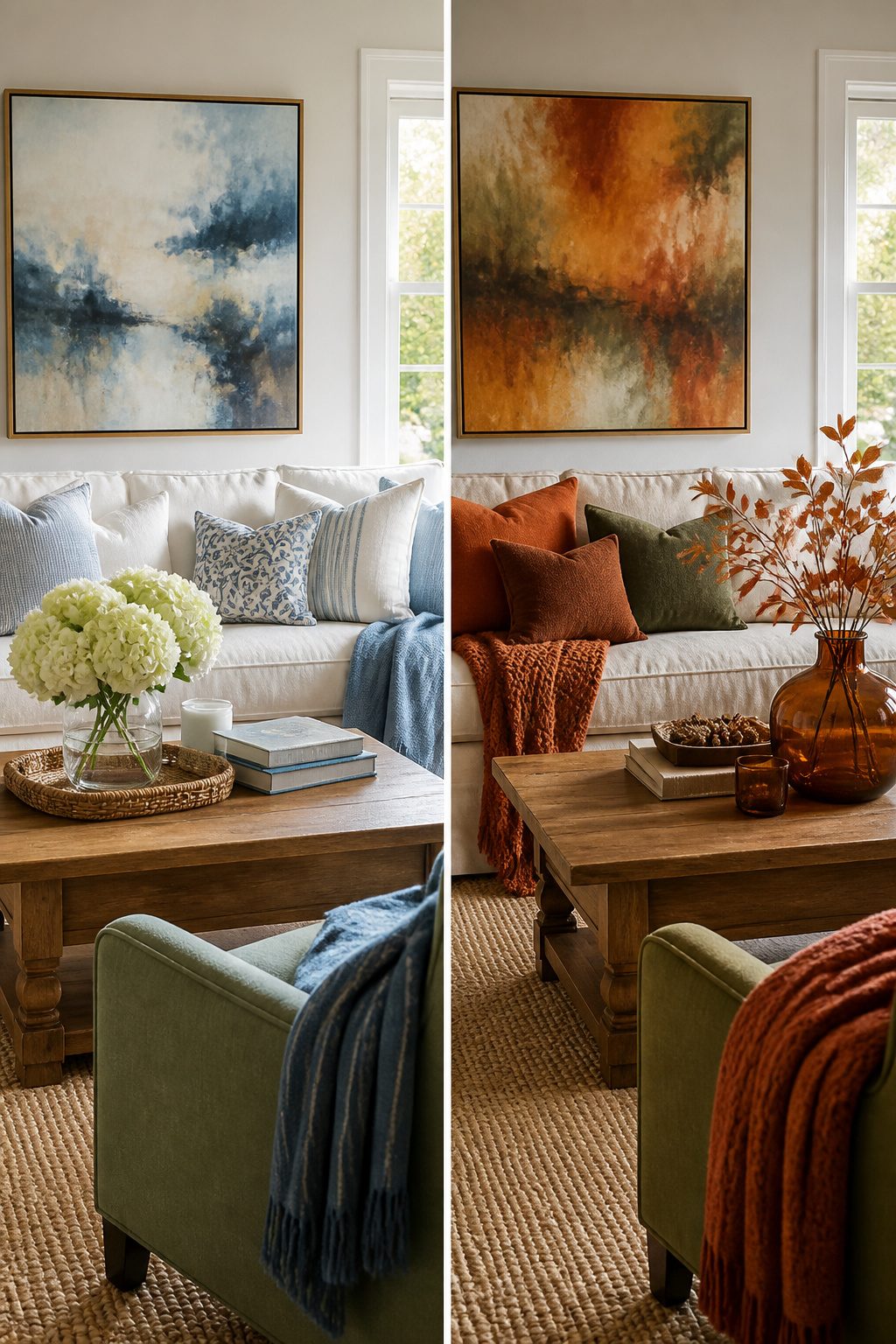
Burnt orange, mustard yellow, deep reds, and muted greens read as fall the moment they land in a room, but the move only works if you do not repaint a single wall.
Swapping summer’s crisp whites and soft blues for these earthier tones happens through pillows, throws, and the artwork already sitting in frames.
A mossy green pillow or a muted plum throw changes the mood of a sofa in under a minute. Free printable fall art, printed and popped into an existing frame, costs nothing beyond the ink.
The mistake that undoes this is buying everything in the same shade. Amber glass, rust-toned books, and creamy stone finishes layered against year-round blue and white lamp bases read as collected.
A room full of matching burnt orange looks like it arrived on the same afternoon. Pair rich, warm hues with neutral tones like taupe and gray to keep the balance from tipping into costume.
Early in the season, green eucalyptus stems and fresh hydrangeas bridge the gap until branches with soft amber or faded rust feel right. One or two of these organics at a time keeps the look gathered rather than staged.
6. Warm Wood and Metal Accents
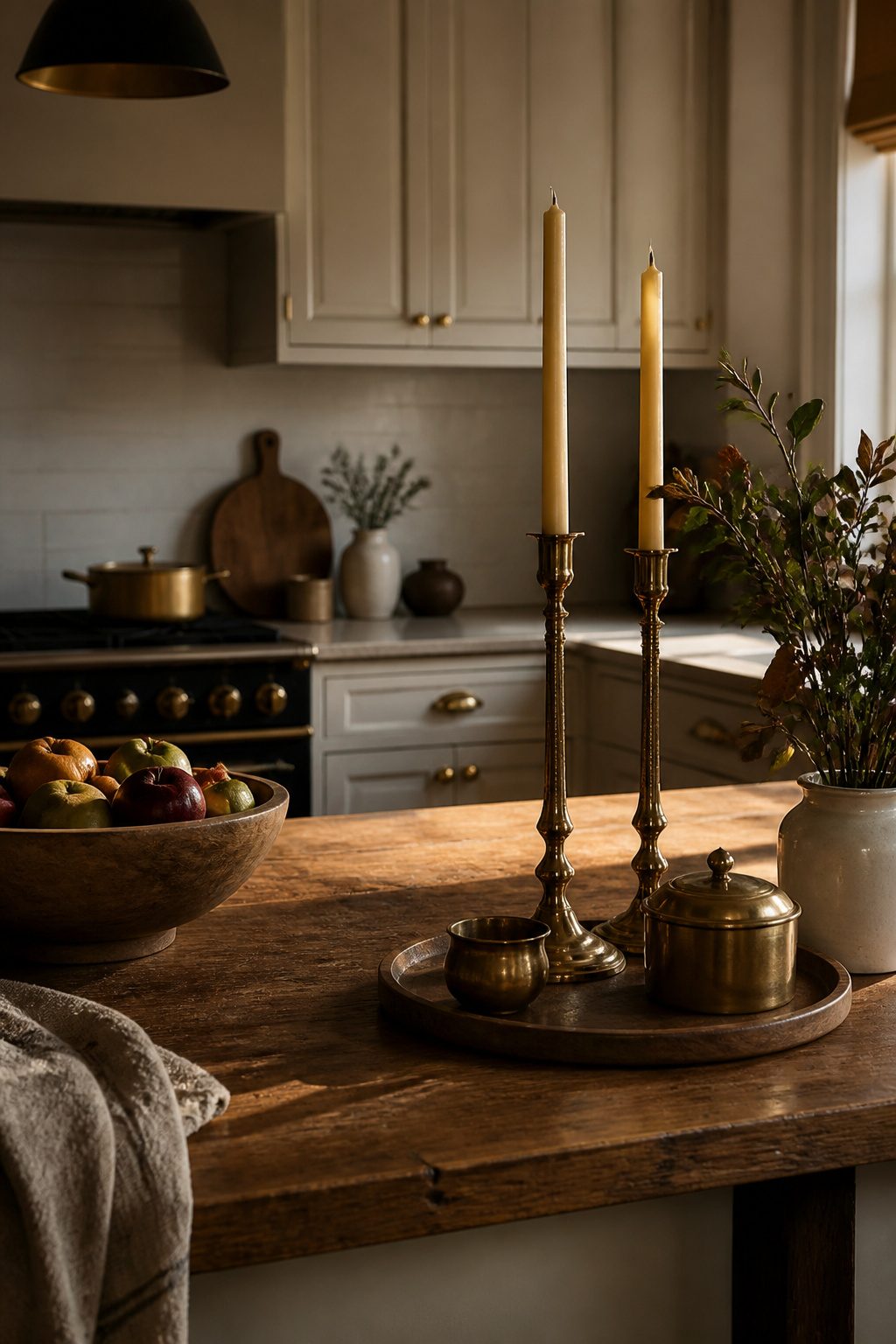
Brass and copper catch the low September light in a way that reads entirely different from summer’s chrome and white ceramic.
A row of brass candlesticks across a mantel, or copper mule mugs pulled from the cabinet and set on a shelf, does the seasonal signaling without any literal motif.
The distinction between vintage brass and new brass matters more than most people notice. Vintage brass carries a softer, almost honeyed patina that absorbs light rather than bouncing it back aggressively.
New reproduction brass can feel sharp and showroom-bright until it dulls slightly with handling. Vintage brass reads warmer, and it costs less at flea markets than the big-box reproductions.
Wood works on the same register. Breadboards kept stacked in a basket year-round can move to center stage now, and a dough bowl that sat tucked in a corner all summer suddenly holds the room together.
The grain connects back to what’s happening outside in a way painted surfaces never quite manage.
These accents show up smallest where they read largest: cabinet hardware, picture frames, the feet on a candle holder, the rim of a small side table. The collected look comes from mixing periods deliberately rather than matching sets.
Amber bottles alongside aged copper, a wood crate under brass candlesticks, pieces gathered over time rather than purchased as a suite.
For rental kitchens where you cannot change the fixtures, trading white accents for copper on open shelves or inside glass-front cabinets does the transition with zero permanent commitment.
7. Update Lighting
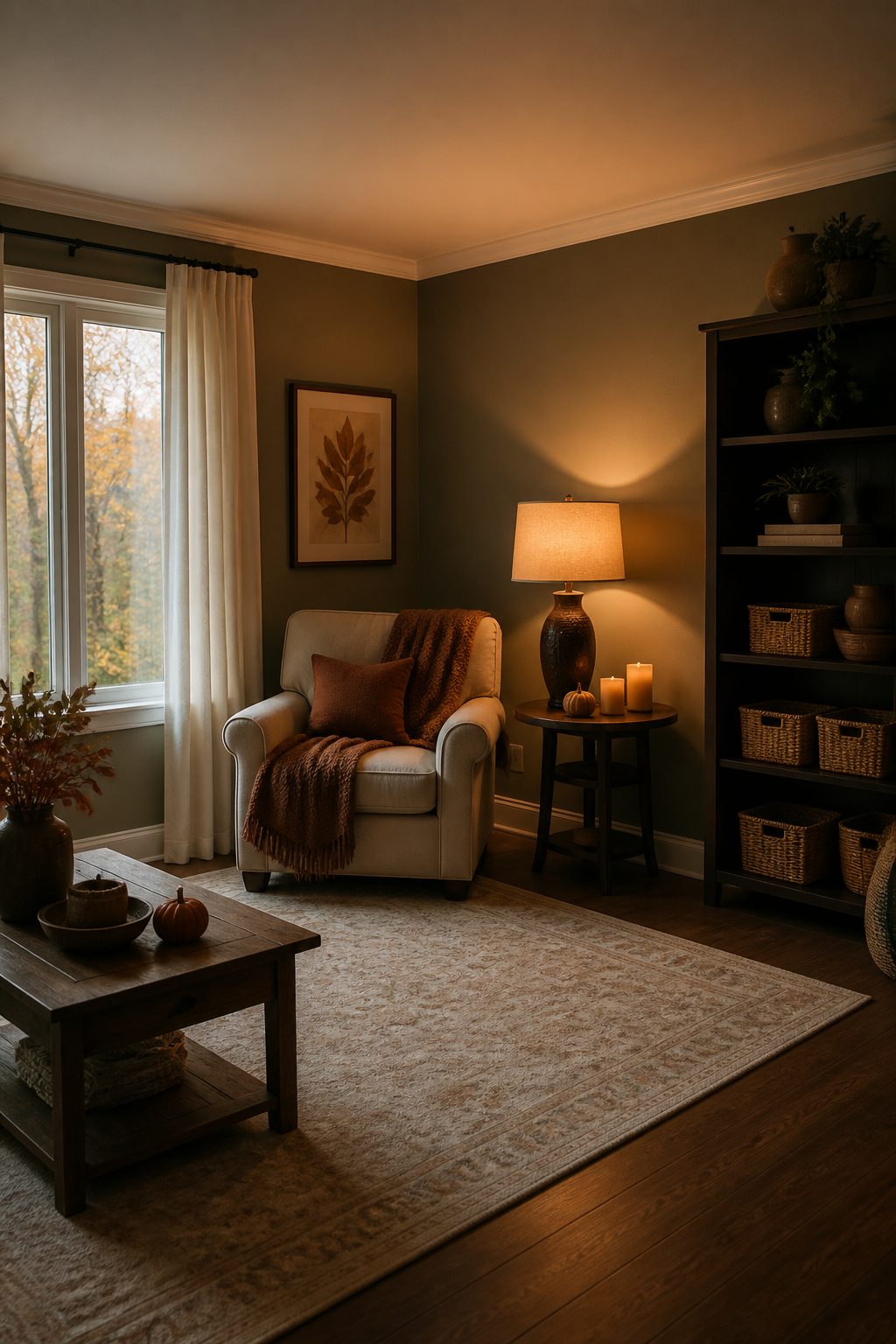
Shorter days mean the overhead fixture that felt fine in July starts to read like an interrogation lamp by September.
Last year I finally stopped fighting it and swapped the bulbs in two living-room lamps from 5000K daylight to 2700K soft white. The change was immediate.
Rooms feel smaller in the right way, edges soften, and the amber tone reads as warmth rather than dimness.
Candles do the rest of the work, but the limit matters. Three votives on a coffee table or mantel is the point where the glow feels intentional.
Past five in a single room, you are managing flames instead of enjoying them.
For renters especially, this is worth taking seriously: tealights in stable glass holders on a non-cluttered surface, never directly under shelves or curtains, and battery-operated pillars anywhere a lease restricts open flame.
The timers that click lamps on at dusk cost under fifteen dollars and solve the early-dark problem without touching a ceiling fixture your deposit depends on.
Layer the two sources, lamp and candle, and the room holds its depth after sunset instead of flattening under a single bulb.
Stick to one bulb temperature per room; mixed daylight and soft white reads as a mistake, not a mood.
8. Introduce Seasonal Scents
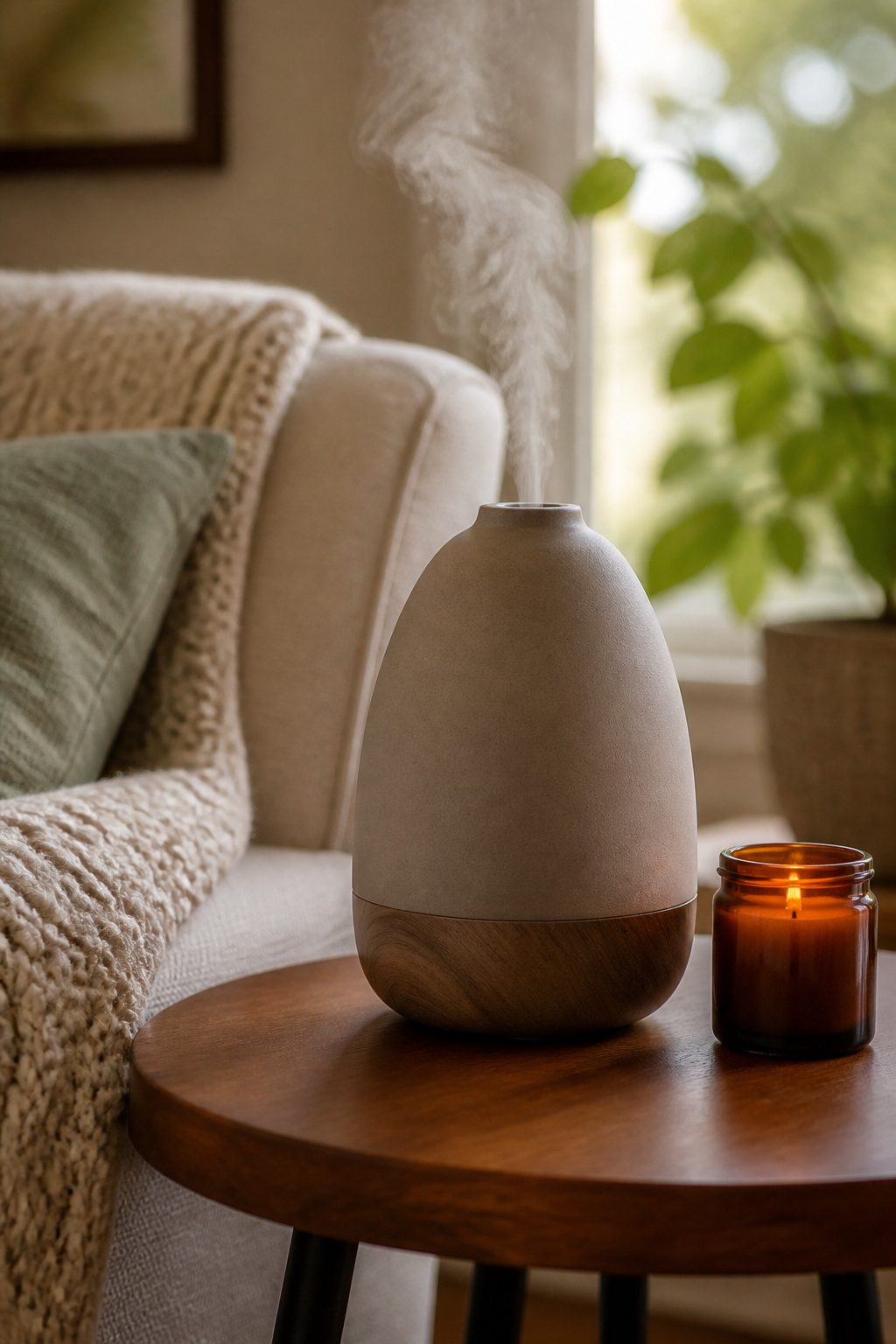
The switch from summer to fall decor hits a wall the moment a pumpkin spice candle fills a 400-square-foot studio like a fog. Scent works as background, not another decorative object competing for attention.
A diffuser set to its lowest interval, or a candle trimmed to a quarter-inch wick and lit for an hour at a time, keeps apple cinnamon from announcing itself before the door opens.
I learned this the hard way in a one-bedroom where guests asked if I was baking, and not as a compliment. Scented decor belongs in the background of a room, not its foreground.
The sources agree on pumpkin spice and apple cinnamon as the two notes that read instantly seasonal, but the real move is controlling the dose so the throw matches your square footage, not the packaging’s promise.
9. Display Seasonal Fruits
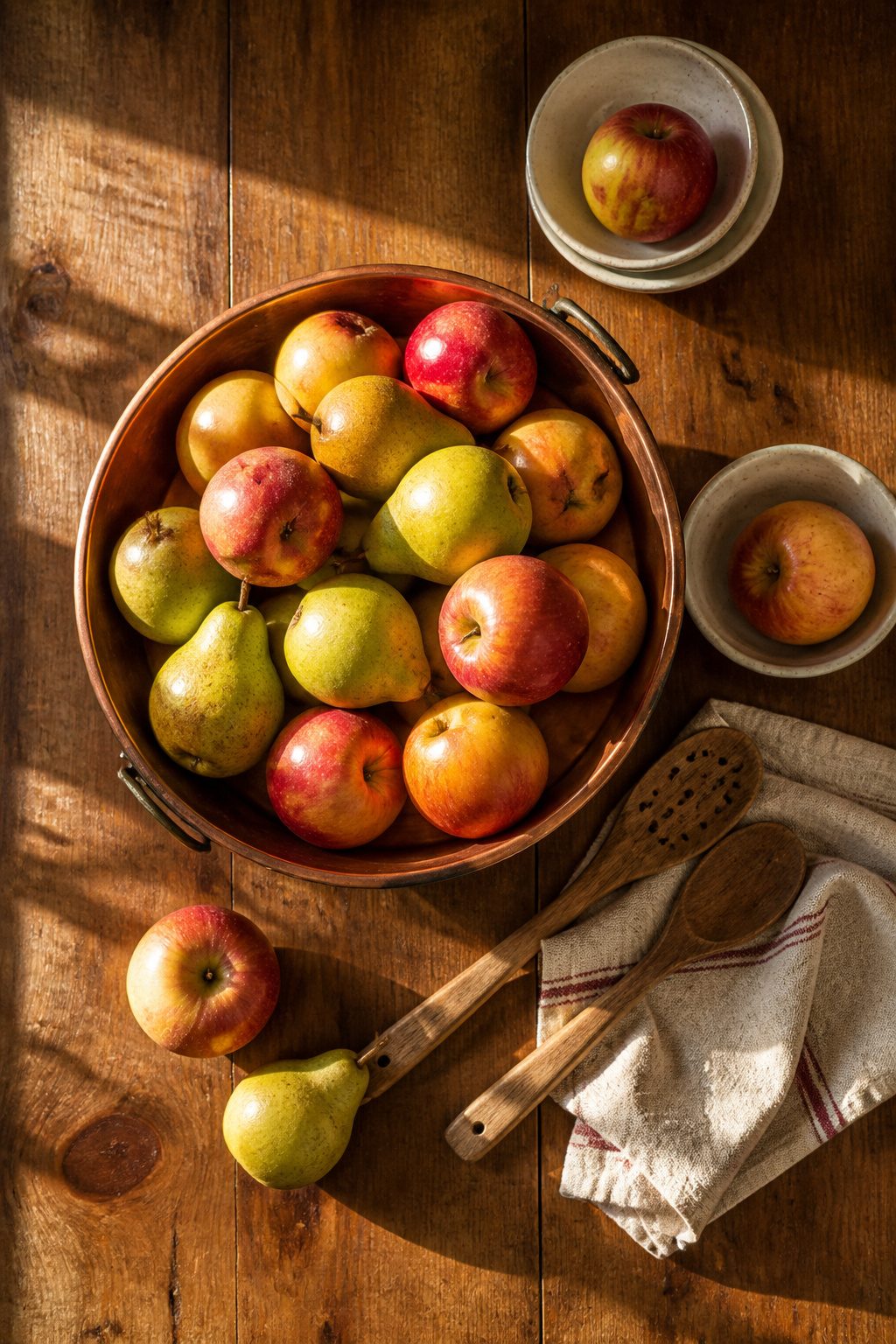
A copper bowl piled with apples and pears does more work than a candle in making a kitchen feel like fall. The trick is knowing which fruits can sit out and for how long.
Apples hold firm for one to two weeks at room temperature; pears go softer faster, especially Bartletts, which give you maybe three days before they turn mealy. Bosc and Anjou last closer to a week.
The line between styled and neglected sits at about day five for most bowls I have seen. A single bruised fruit left in the pile accelerates the rest.
When they start to soften, move them to the refrigerator for cooking, or slice and freeze them for oatmeal. Leaving them out past their point is how a centerpiece becomes a fruit fly situation.
Small bowls in two or three spots through the room, as in a vignette by the entry or on a side table, carry the same warmth without demanding a large harvest.
Ironstone or a basic ceramic dish works as well as copper; the fruit supplies the color, not the container.
10. Layer Textures
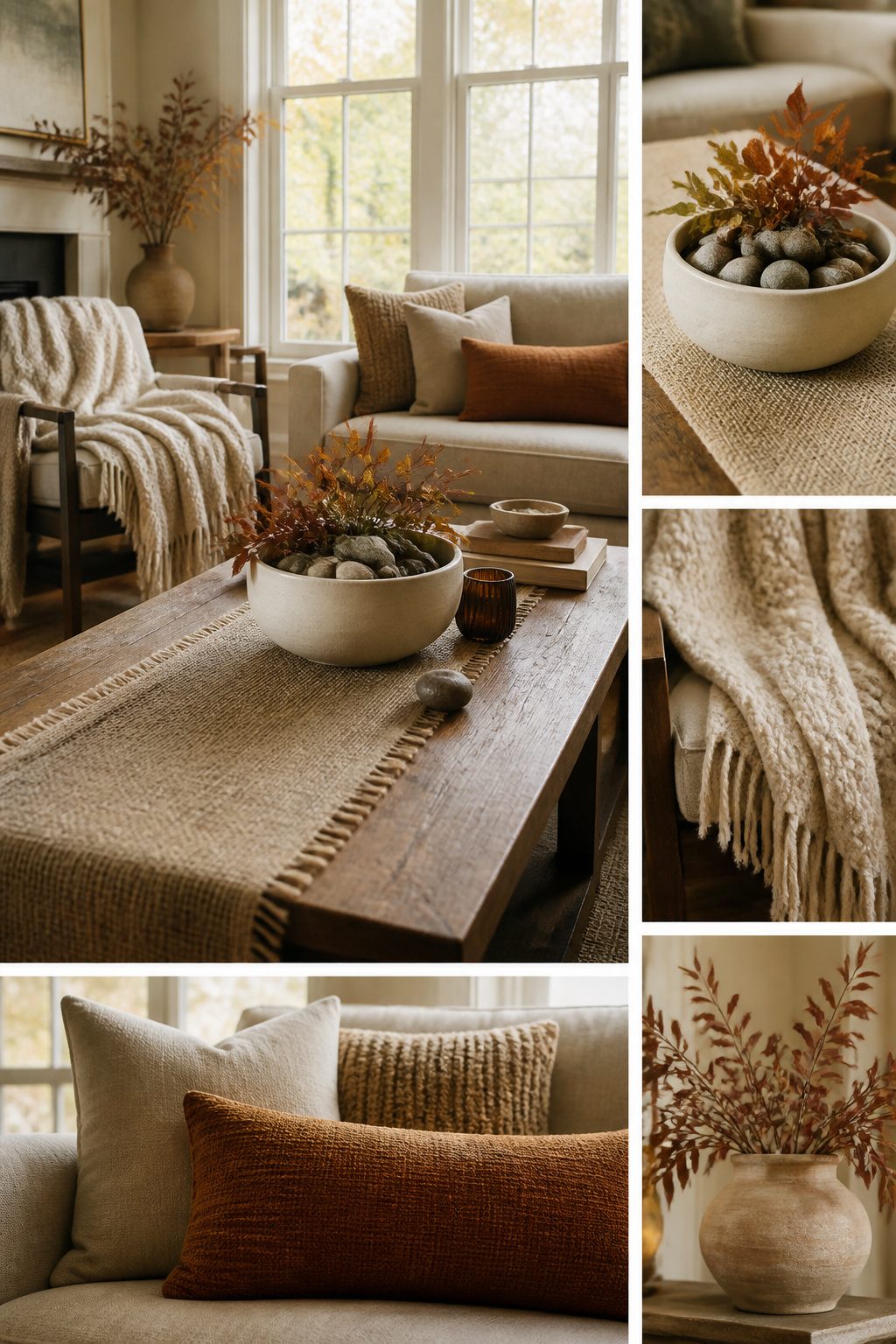
Texture does the heavy lifting when summer light starts to thin. Burlap laid across a table, a wool throw left where someone actually sits, a ceramic bowl that catches the last warm afternoon.
These three materials carry the shift without announcing it.
Horizontal surfaces are where burlap and ceramic belong. A burlap runner down the center of a table grounds the room, and a matte ceramic piece beside it catches light differently than summer glass.
Vertical surfaces need the give of wool, a pillow or throw that breaks up a flat wall or sofa back. The mistake is making everything rough.
All burlap and raw wool together reads as storage, not living space. Balance heavier fabrics with lighter accents so the room does not feel weighed down.
Linen still works here, or a smooth cotton that lets the wool do its job without competition.
I bring out chunky baskets, aged-wood bowls, and burlap runners during this in-between time. These items do not shout fall, but promote a comfortable feeling.
The texture works in the background, creating a welcoming mood that feels right for this time of year.
Color Palette Mistakes
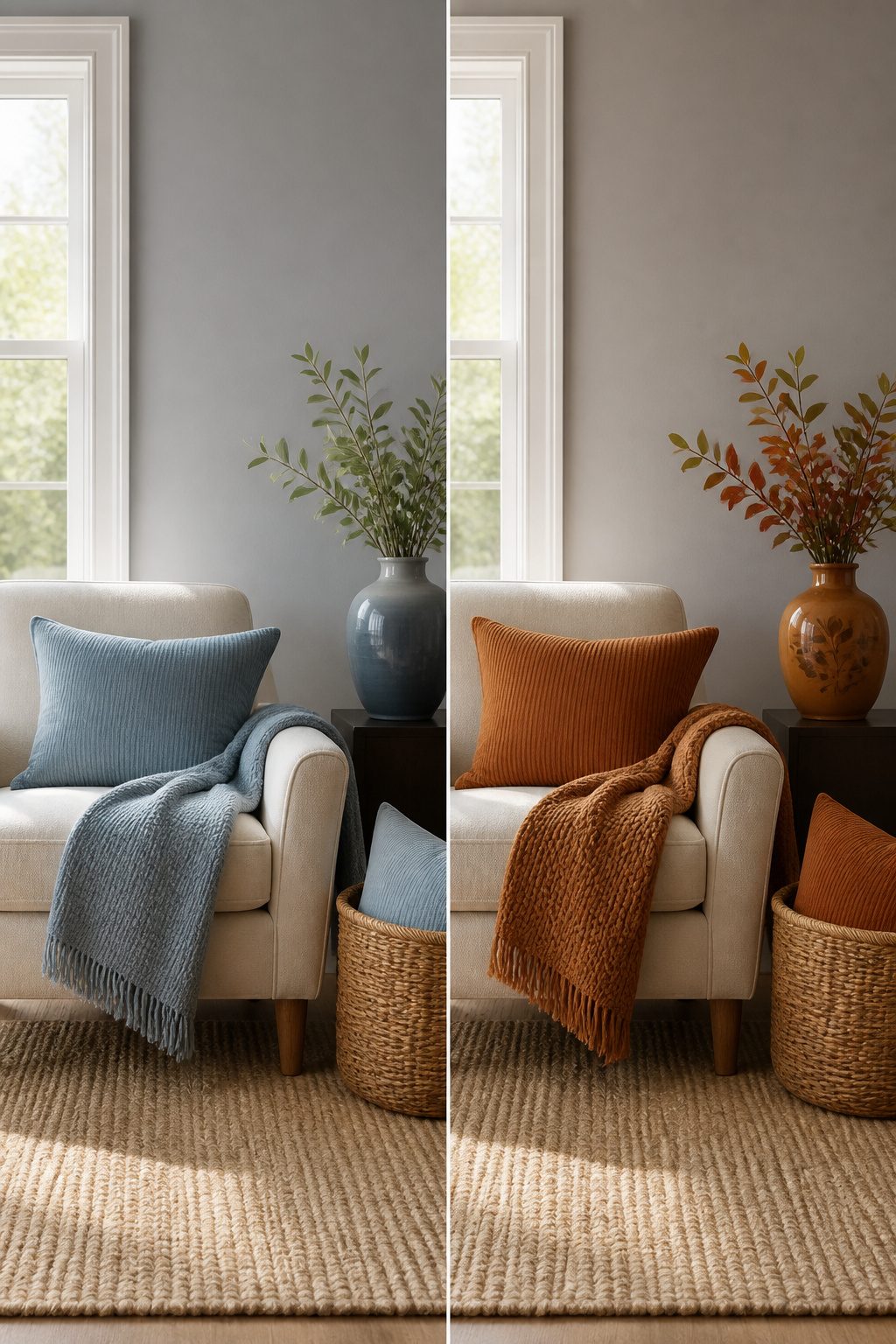
Orange reads louder in fall than most people expect. The first year I tried a full seasonal swap, I painted a thrifted vase in what the can called "Harvest Pumpkin" and set it against my sage-green living room wall.
The wall turned the orange almost neon; it looked like a craft store exploded in the corner.
The wall color underneath matters more than the accent itself, and warm beige, soft gray, or muted olive backdrops handle rust and amber far better than anything with green undertones.
Matching sets are the second trap. I bought three identical rust-colored pillows and a matching throw from the same end-cap display, and the sofa looked like a staged catalog photo, not a room someone lived in.
Mixing textures, even within the same color family, breaks that flatness: a corduroy pillow, a nubby wool blanket, something with a visible weave. The variation costs nothing extra and reads as collected over time rather than purchased in one afternoon.
Natural Elements That Fail
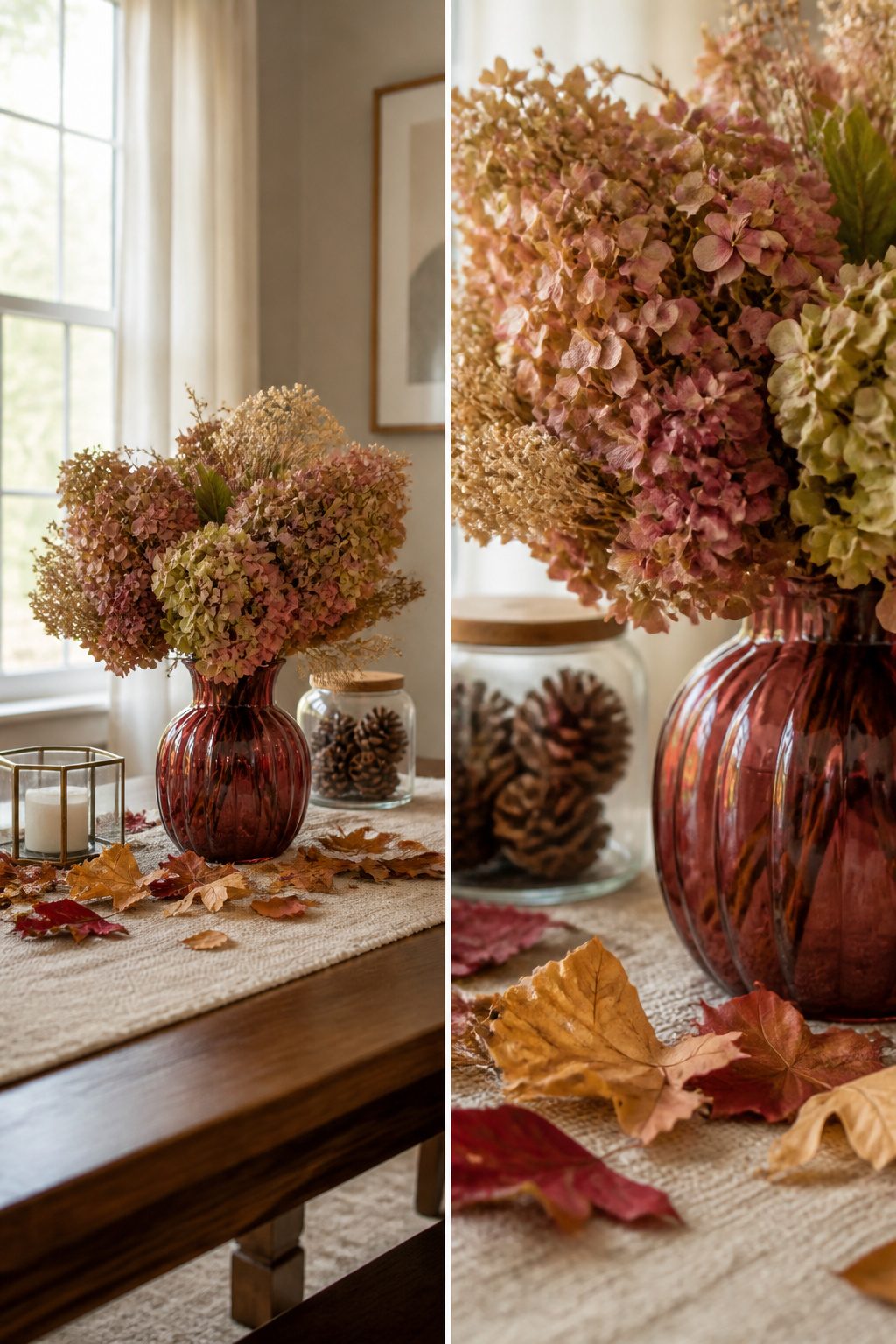
Damp branches look beautiful for about a week before the mold starts. I learned this the hard way with a birch arrangement that went fuzzy at the base where the bark stayed wet.
If a branch bends instead of snaps, it is not dry enough to bring inside. Pinecones seem harmless until the heat kicks on and whatever is sleeping inside wakes up.
A quick bake at 200°F for an hour fixes this, but most people skip that step. Dried flowers shed.
Dust settles into the crevices of seed heads and wispy grasses, and after a month they look less like decor and more like something that needs a vacuum.
The shed problem is real: little bits of stem and petal under the table, in the couch cushions, tracked through the house. Natural elements work for fall only when you treat them like perishables, not permanents.
Textile Storage Between Seasons
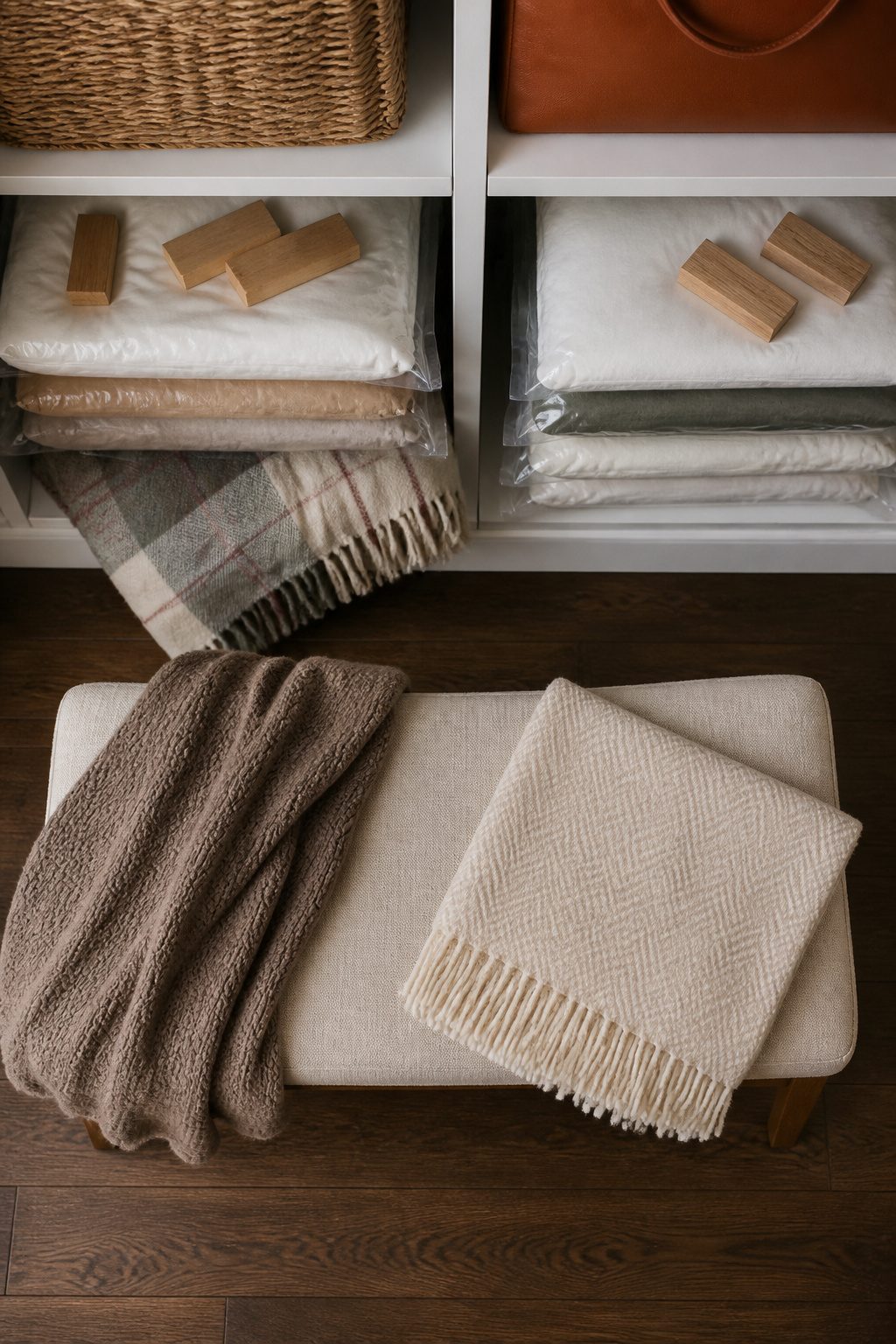
Vacuum bags buy the most space back for the smallest money, which matters when your closet is the one the landlord gave you and not an inch deeper.
I pack the cotton throws and the lightweight quilts in the flat kind, the ones you roll to push air out rather than hunt down a hose attachment you lost last spring.
Cedar blocks go in with them, not because I trust the smell alone to keep moths away, but because the bags sometimes fail at the seal and the cedar buys a little buffer.
The blocks cost a few dollars and last years if you sand the surface lightly each season to wake the oil back up.
The hard part is admitting which textiles actually earned storage and which ones sat untouched all summer. If a throw never left the basket, it does not get the vacuum bag real estate.
I learned that after two seasons of carefully packing things I later donated unopened. Now I sort on the bed, not in the closet where the temptation to shove and close is too strong.
Lighting for Small Spaces
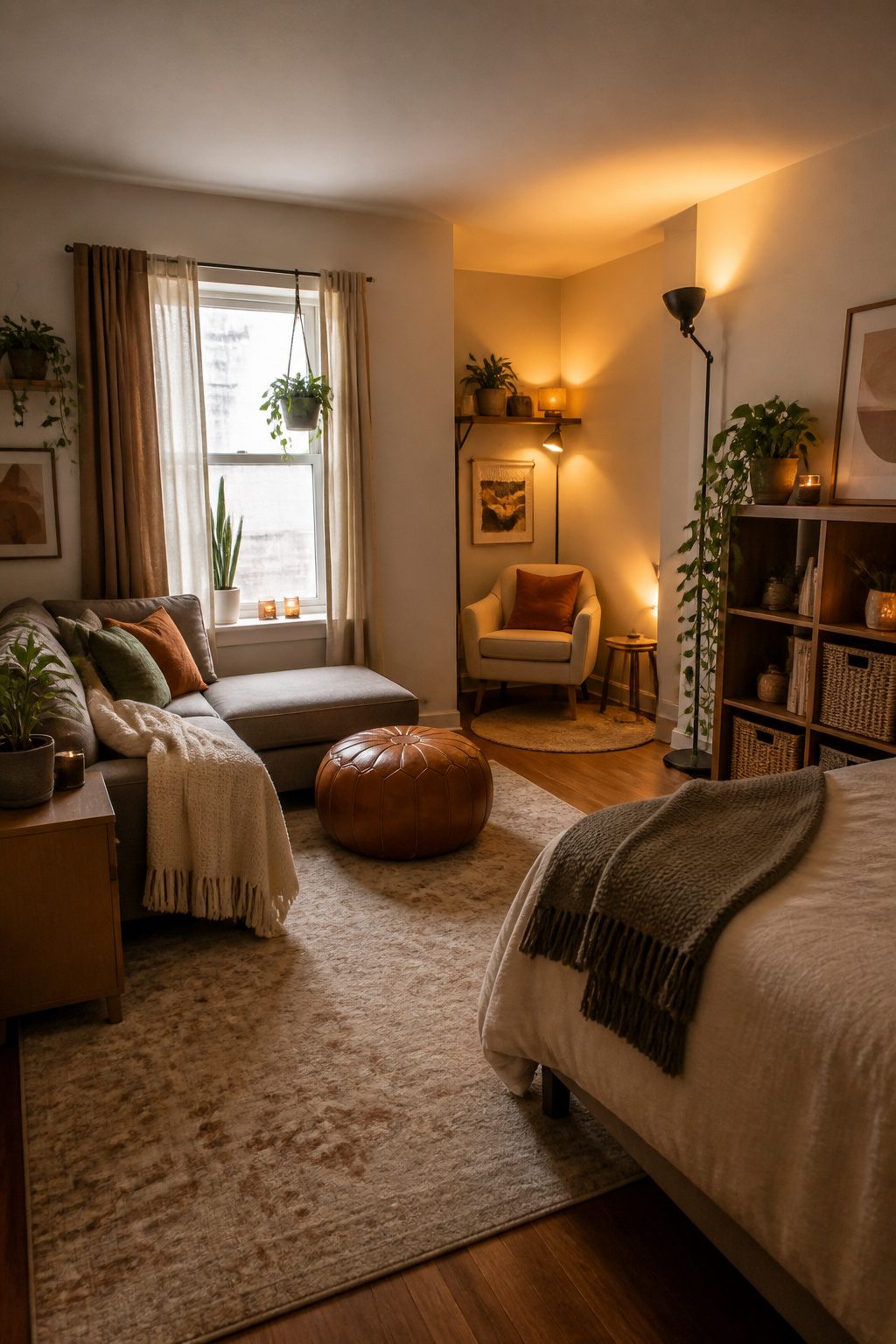
A floor lamp in a studio apartment eats the one corner where a chair could go. I learned to think upward instead of outward.
A clip-on LED with a warm 2700K bulb, aimed at the ceiling, bounces light down without claiming a single square foot of surface.
Most hardware stores carry them for under $15, and the clamp fits a shelf edge or the back of a headboard.
Cord management matters more in small spaces because there is nowhere messy can hide. I run lamp cords behind furniture legs, held with the adhesive hooks that peel off clean at move-out.
For a rental, skip the hardwired sconce and try a puck light with a remote. The battery lasts a season of evening reading, and the sticky back mounts inside a closet that becomes a mood-lit nook by October.
Brightness is the place where fall decor trips up. Summer light is blue and ample; fall calls for dimmer, warmer pools.
Two small lamps at knee height beat one overhead glare for making a room feel inhabited rather than interrogated. The swap costs nothing but the bulbs.
Vintage Brass and Thrifted Wood
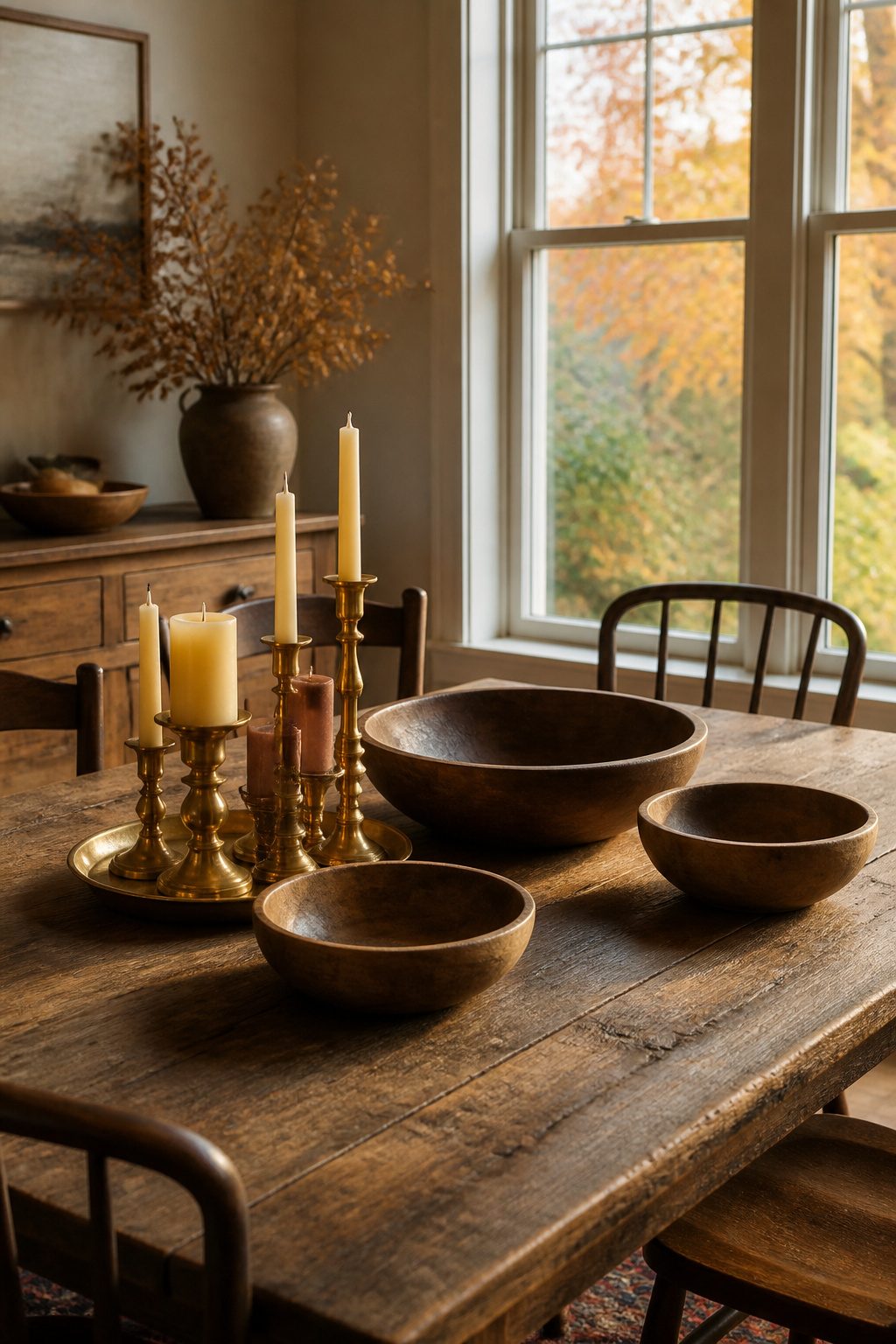
Brass and wood carry warmth that reads as fall without screaming pumpkin spice, and the secondhand market drops the price to impulse territory.
Estate sales are where the better brass hides: drawer pulls, candlesticks, small trays, the kind of objects that patina into something richer than factory finish. Thrift stores follow with picture frames and wooden bowls, though the hunt takes longer.
Plate loss on brass is the dealbreaker. Once the plating wears through to base metal, polishing exposes more damage, and the patchy look never settles in.
Run a finger along edges and high spots; copper or zinc showing through means pass. Wood is more forgiving if the damage is honest wear, but veneer bubbling or chipping at corners is structural, not character.
Water rings sand out; lifted veneer needs glue, clamps, and patience most weekend projects do not have.
A brass tray under a cluster of candles or a turned wooden bowl on the entry table shifts the room toward autumn without a single textile swap.
The mix of metal grain and wood grain does the seasonal work for you.
Frequently Asked Questions
When should I start decorating for fall?
September is typically the best time to start transitioning to summer to fall decor, though starting in late August works fine if your weather cools earlier.
The article suggests layering textiles and lighting first, then adding seasonal accents like branches and wreaths as the month progresses. There is no wrong time; the shift is about following the temperature drop rather than a calendar date.
How do you transition your home from summer to fall?
Start with small changes rather than completely redecorating. The article focuses on pillow covers, throw blankets, and bulb swaps as the easiest entry points, then builds to natural elements, wreaths, and warmer metals like brass and copper.
Keeping your sofa, lamps, and art in place while changing fabric and light temperature does most of the seasonal work.
Do I need to buy new decor every season?
Not at all. The article repeatedly emphasizes shopping your own home first: moving breadboards and dough bowls to center stage, printing free art for existing frames, foraging branches and pinecones, and rotating brass or copper pieces already in cabinets.
The goal is collected, not purchased.
What’s the easiest swap if I only do one thing?
Pillow covers. Changing linen and cotton to velvet or knit in rust, mustard, or plum shifts the entire room for about forty dollars across all seating, compared to four hundred for whole new pillows.
The sofa stays, the lamp stays, and somehow the whole wall moves with just the fabric change.