
Summer home decor inspiration runs from a $5 grocery store bouquet to a full patio overhaul, and the deciding factor is not budget but how much of your real schedule the look can survive. The pressed linen tablecloths and weekly farmers market runs that photograph beautifully wilt into wrinkled laptop backdrops by Tuesday afternoon. What actually works are cotton throws that store flat, wicker trays that move room to room, and the same blue-and-white ginger jar carried from mantel to kitchen counter until the palette holds the whole house together.
1. Decorate the Mantel
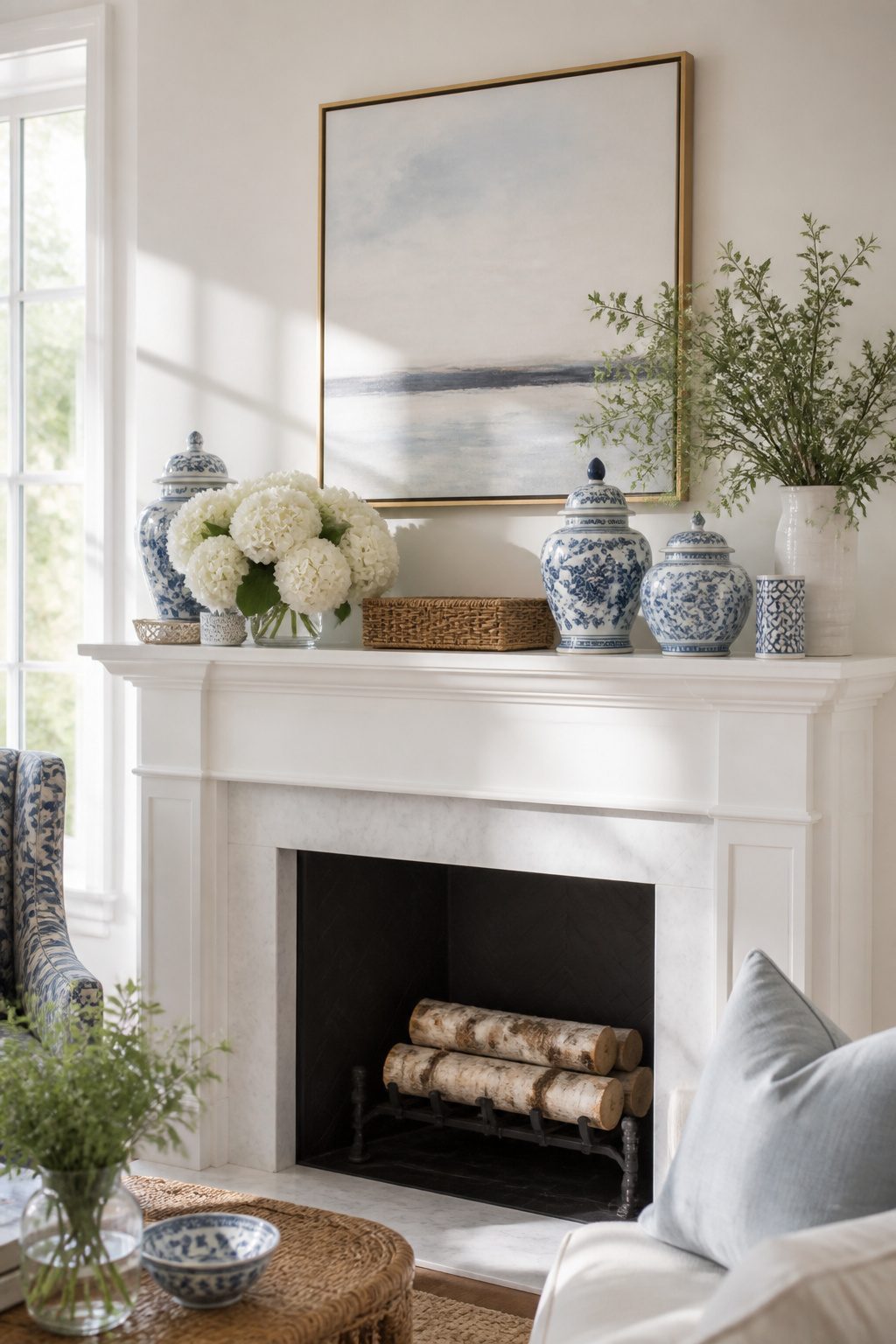
A mantel in summer can feel like dead space once the winter greenery comes down. Last year I solved that by treating the shelf as a single blue-and-white vignette backed by fresh stems, and the room felt cooler instantly.
Benjamin Moore White Dove on the wall behind the mantel gives the whole arrangement a quiet glow without competing. The slight warmth in that white keeps blue accessories from reading cold. I cluster a small ginger jar or a blue-and-white ceramic at one end, leave breathing room in the middle, and set a low vessel of white hydrangeas or green ferns at the other. The asymmetry keeps it from looking staged.
Real stems last about four days on a mantel above a working fireplace, even in summer, so I keep a backup of faux airy greenery for weeks when I forget to swap water. The mix is forgiving: one real fern cutting in front of a ceramic jar fools the eye enough. Skip the mirror or clock for these months; the wall color and the florals do the work, and anything reflective just bounces competing light around.
2. Ramp Up the Blue and White

Blue and white reads coastal the same way green reads garden, but the trick is carrying it past the one shelf or table where it usually lives. In my living room, bone picture frames on built-in bookshelves pull the palette away from any single surface and let it wander. A small ginger jar on the kitchen counter, a striped rug under the coffee table, a cache pot on the bathroom sill: each piece is light to move and cheap enough that swapping it out in September does not feel like waste.
The backyard is where this palette pays off most. Blue and white rugs, chair cushions, and planters turn a covered patio into something that feels like an actual room instead of leftover space. String lights overhead do the work after dark; the blue and white does the work all day. Woven placemats and a white tablecloth on the outdoor table finish the look for about the price of one indoor throw pillow.
What I skip: the foo dogs and intaglio art unless the rest of my house already leans formal. Those pieces need context. A simple floral planter or wavy vase works harder in a rental where nothing is built in.
3. Change Out the Front Door Wreath
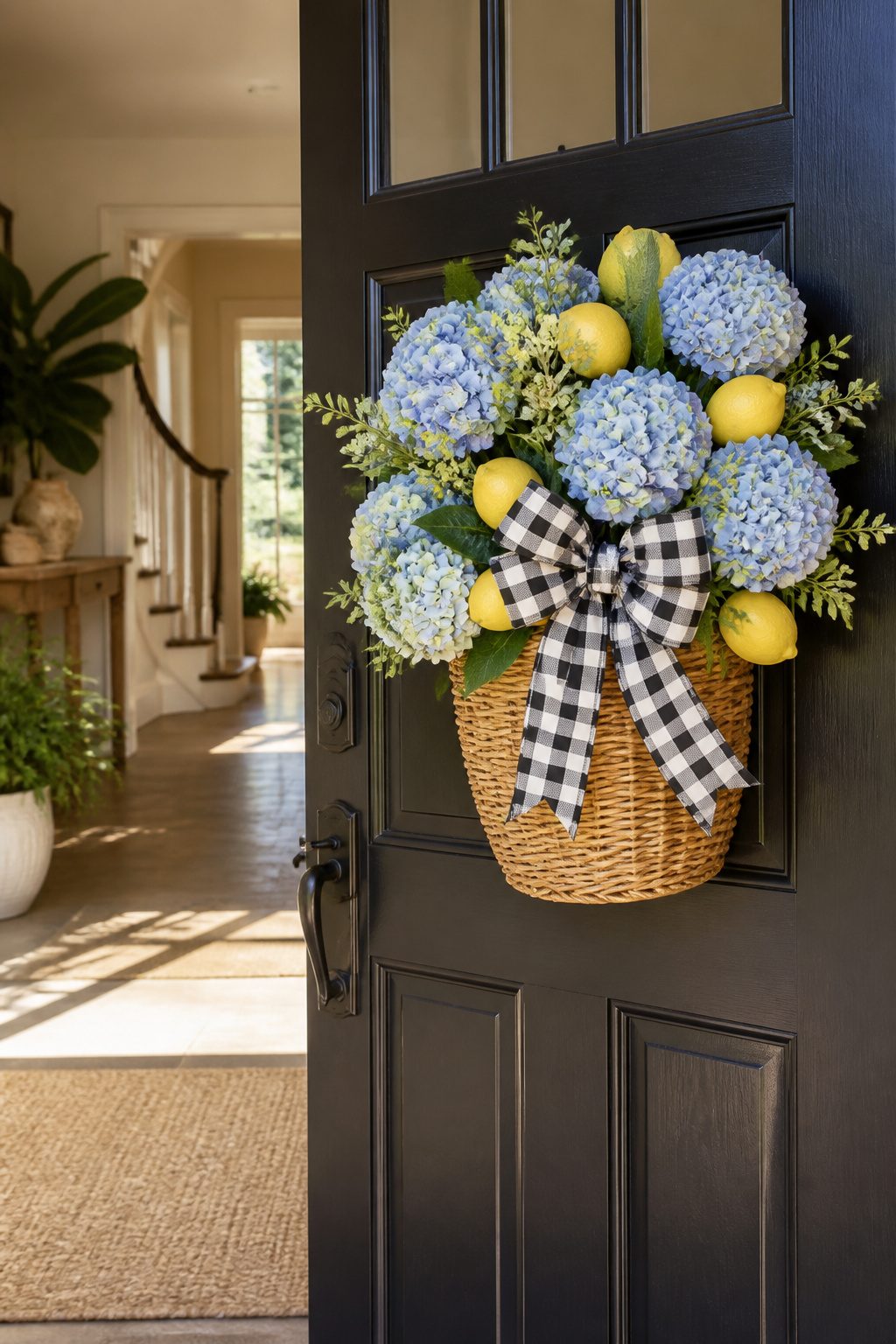
The front door wreath is the first thing I swap when the seasons turn, and summer calls for something brighter than the muted greens I keep up through spring. A basket wreath base makes the swap practical: you tuck in new stems and ribbons in about ten minutes, no glue gun required. Faux hydrangea and fern read fresh for warm weather, especially paired with a crisp black-and-white gingham bow. If you want more color, blush pink, coral, or orange florals work, and a few faux lemons tucked in give that specific summer-citrus look without the rot.
A ten-minute swap with a basket base beats storing four complete wreaths. I learned that the hard way after years of hanging full grapevine constructions for every season. For renters especially, the door is often the only exterior surface you control. A wreath there earns its keep.
4. Add More Natural Materials
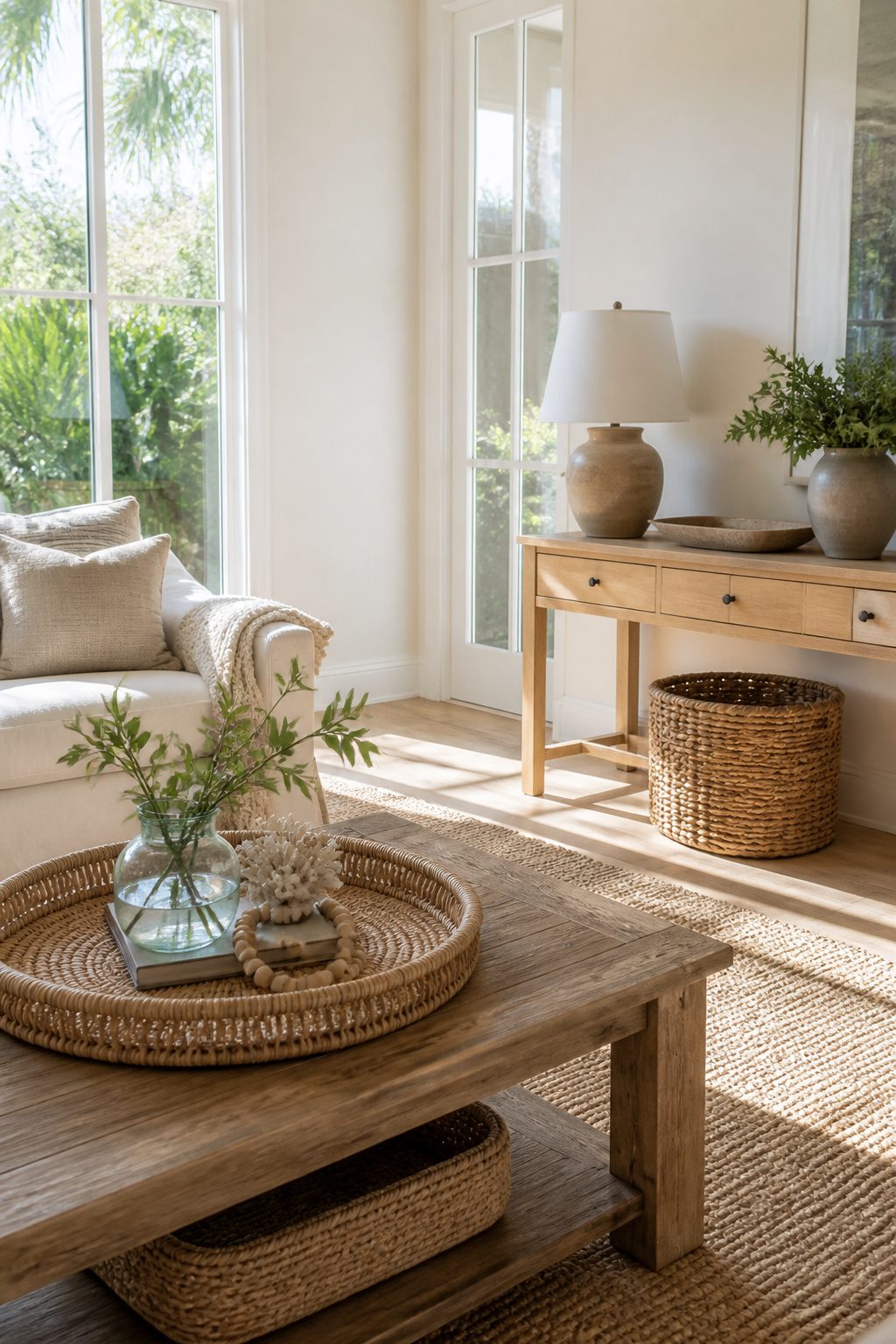
Rattan, wicker, and seagrass carry the summer feeling without asking much of your budget. I keep a rattan round tray on the coffee table from May through August, and a rattan vase on the mantel that gets swapped in when the heavier ceramics go to storage. The materials read as outdoors brought inside, which is exactly the trick for warm-weather style.
Woven textures are showing up everywhere this year: wicker baskets for corralling throw blankets, seagrass bins tucked under console tables, even pendant lights with cane or rush detailing overhead. A single woven piece per room is usually enough; more than that and the space starts looking like a patio furniture showroom. I learned that the hard way after stacking two seagrass baskets and a wicker magazine holder in one corner and wondering why it felt cluttered instead of beachy.
The lightweight construction matters for renters too. A wicker accent chair moves to the bedroom in fall without the commitment of a full furniture switch. Jute rugs layer under dining tables for summer, then roll up slender against a closet wall when the season turns.
5. Bring in Fresh Flowers
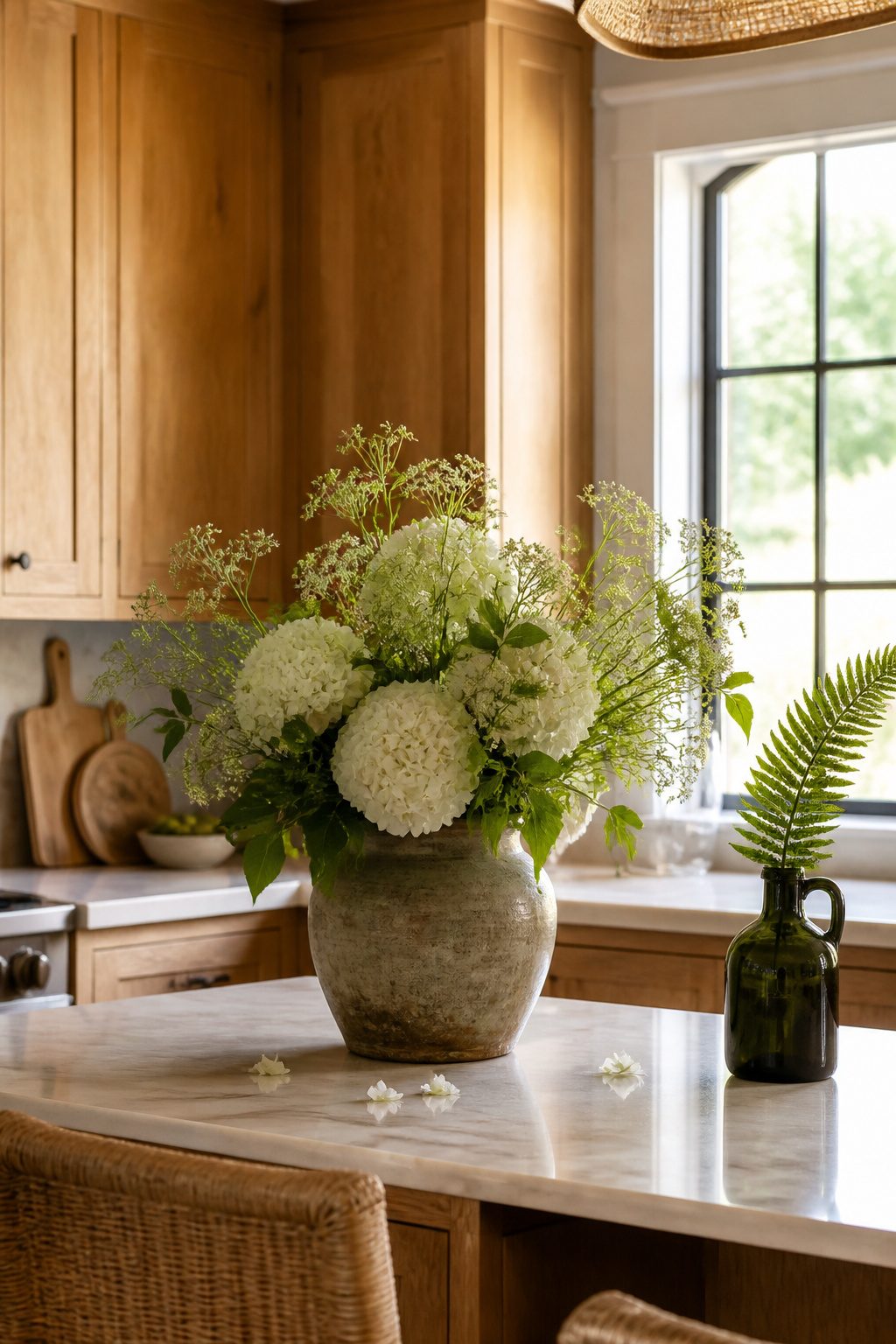
Fresh flowers are the fastest way to convince yourself summer has actually arrived, even if the thermostat disagrees. A $5 grocery store bunch stretches surprisingly far if you clip greenery from your own yard to fill it out; I have gotten two full arrangements out of one purchase this way. Garden-cut stems like hydrangeas, lilies, and peonies cost nothing extra if you already grow them, and they beat store bouquets for sheer volume.
Placement matters more than vase quality. A single sprig of fern in a wine jug holds its own on a dining table, while a rustic garden pot piled with white hydrangeas and airy greenery can carry a whole kitchen island. Faux options from places like Ikea work for rooms you do not visit daily, though I swap in real cuts when the garden cooperates. The key limit is water changes; skip them and even the hardiest grocery store stems collapse in four days. For that reason, I keep arrangements off desks and bedside tables where maintenance slides, and cluster them on the kitchen counter where the pitcher is already in hand.
6. Change Out Your Art
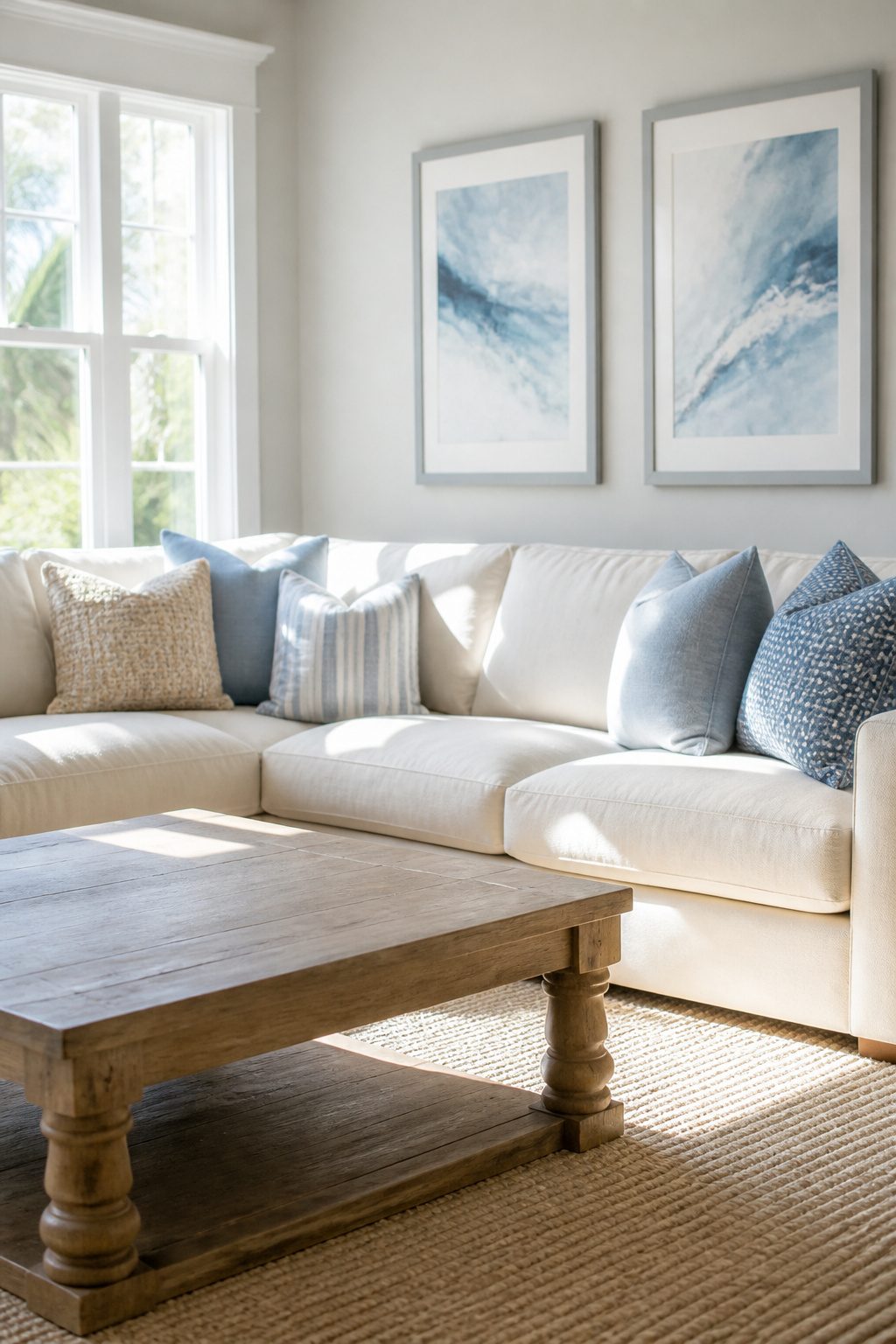
The art on my walls used to stay put year-round, which meant my living room looked like late October even in July. Swapping prints for the season costs almost nothing and takes twenty minutes. Free printable art online covers every summer mood, from coastal watercolors to botanical sketches, and a new frame is rarely necessary. If the old frame feels too heavy, a quick coat of SW Adrift on the molding shifts it toward that blue-gray lightness that reads as warm-weather without going nautical. I have painted two thrifted frames in that color and hung them above the bed with a loose abstract piece that used to live in the guest room. The Frame TV owners have it easiest: a digital swap costs zero storage space. For everyone else, the old fall print slides behind the bedroom dresser until October. Small rotation, noticeable lift.
7. Create a Beautiful Summer Table
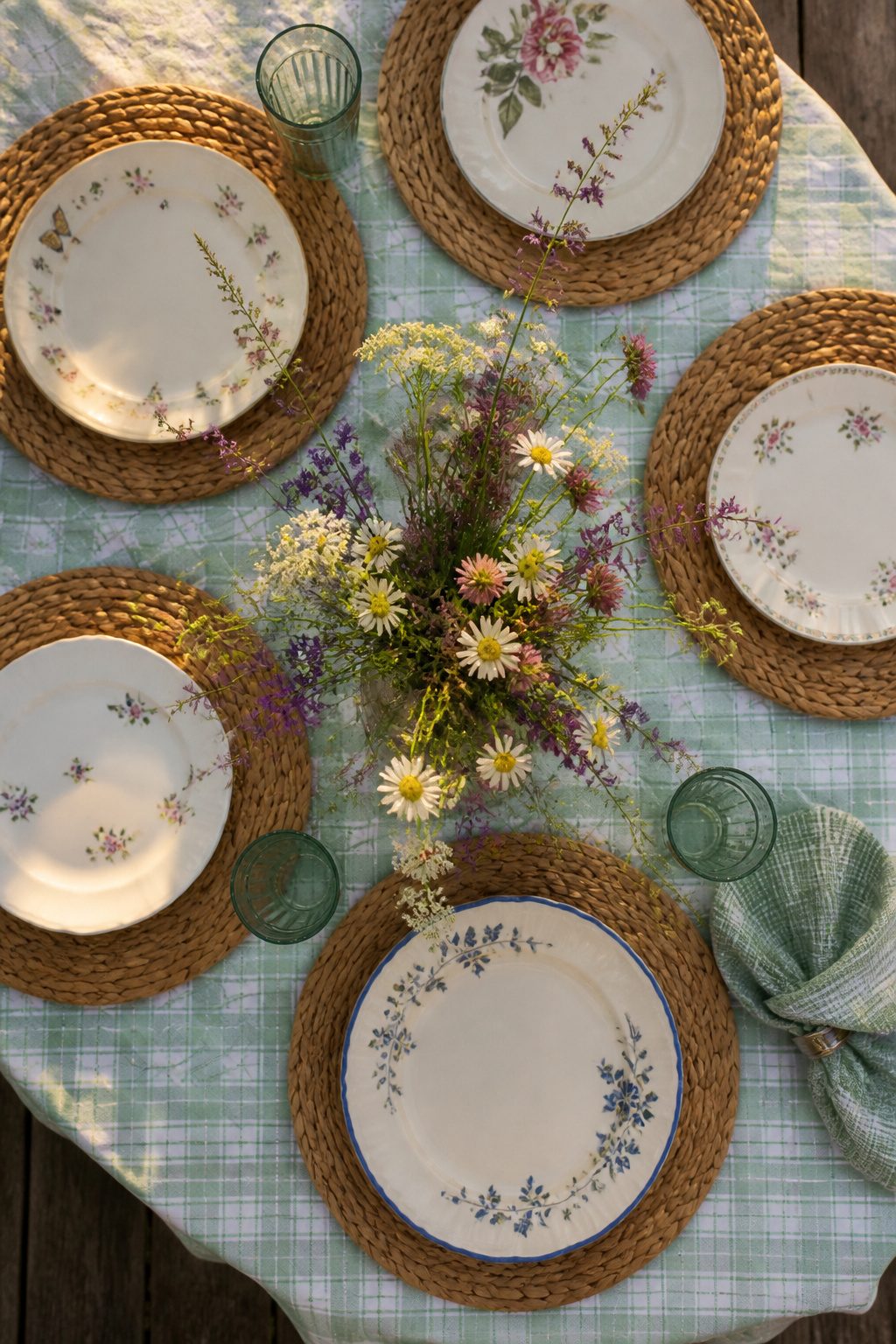
A summer table does not need a full dinner party to justify the effort. Last August I laid a seafoam green plaid cloth over my small patio table on a Wednesday evening, added two mismatched floral plates I had picked up at a yard sale, and stuck a handful of wildflowers in a jam jar. The meal took twenty minutes; the setup took five, and I sat there longer than usual just because the color made the heat feel intentional rather than oppressive.
Layering is what separates a decorated table from a dressed one. Start with a strong base: a patterned or solid tablecloth that can handle the season, then add linen napkins in a smaller print and softer tone. The contrast in scale is what reads as skill, not shopping.
For outdoor dining specifically, the cloth matters more. Technical fiber rugs and weather-resistant linens exist now, and they save the evening when someone spills sangria or a sprinkler drifts. I keep a set of natural woven placemats just for the patio; they add texture without competing with whatever flowers are blooming that week.
Fresh flowers are the fastest centerpiece. A bold vase helps, but a rustic basket works when the stems are too short or too wild to stand upright. I skip candles outdoors unless they are rechargeable and cordless; the rattan-covered ones cast a softer light once the sun drops, and no one trips over a cord in the dark.
Color is the whole point. Summer tableware should feel slightly too bright for April and just right for July. If every piece matches, the table looks catalogued, not collected.
8. Use Seasonal Scents
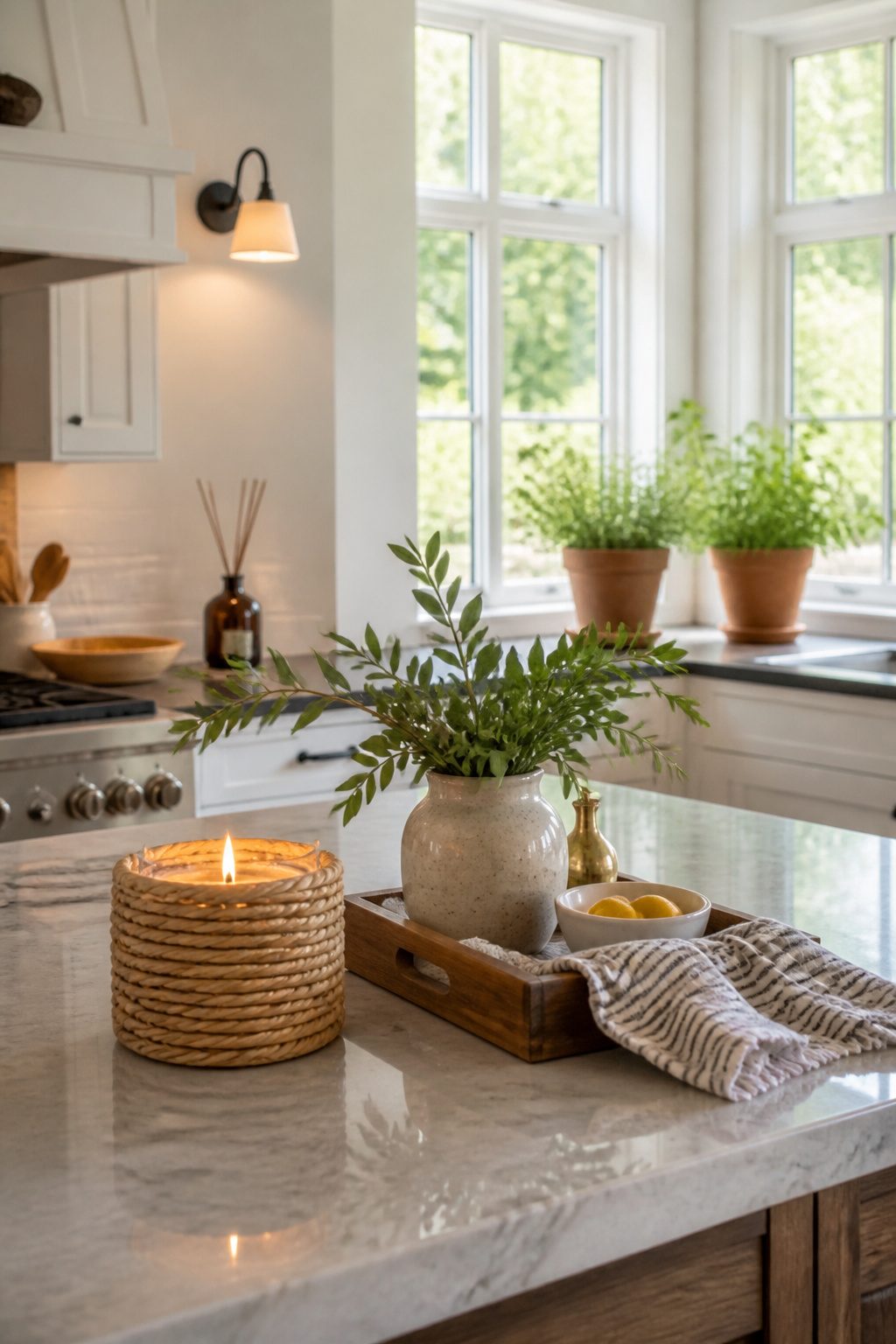
A wicker candle in Havana Coconut sits on my kitchen island through July, and the smell alone shifts the whole room toward summer. Candles pull double duty as decor, especially ones with outdoor texture, so the vessel matters as much as the wax.
I layer that single candle into a fuller system: wall plugs in the hallway, a diffuser near the entry, room spray for the bathroom. The goal is walking through the house and hitting the same note at different intensities rather than one overpowering blast in a single room.
Other warm-weather fragrances that hold up in practice include florals, ocean scents, melon, cucumber, and citrus. My backup this year is Pineapple Coconut, which reads sweeter in the jar than it burns, a good choice for small spaces where food-adjacent scents can turn cloying.
The cost stays low because nothing here is built-in. A candle runs out, you swap the scent. Renters especially benefit: you leave no trace but the memory of the smell.
9. Lighten Textiles
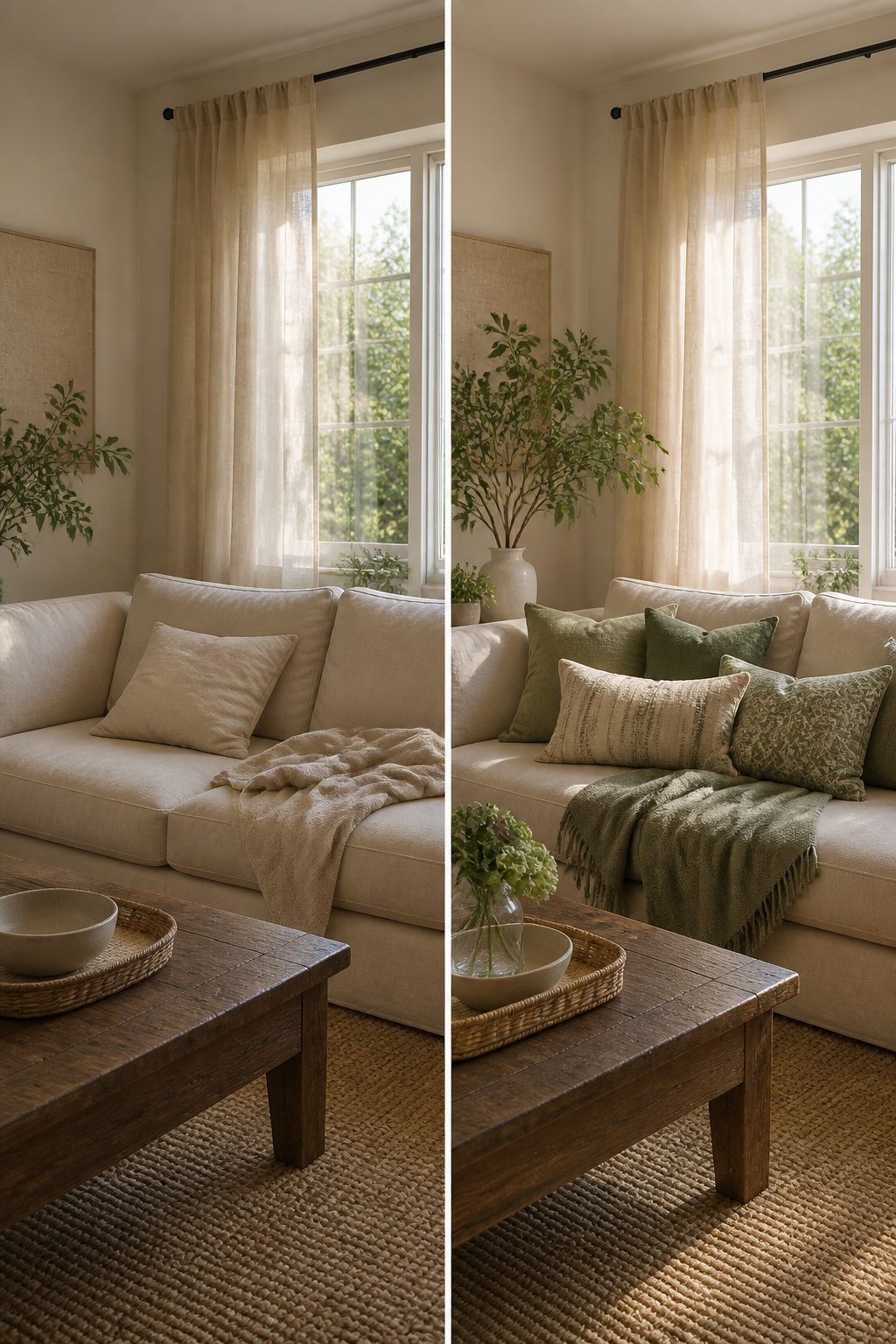
Velvet and chunky knit throws that felt right in January start to look like they’re sweating by June. I swap mine out for cotton and linen, and the whole room loosens up.
Linen and cotton breathe in a way synthetics never will, which matters more than color when the humidity climbs. I keep the palette neutral, maybe a soft moss green or a natural fiber tone, and let the texture do the work. Two or three throw pillows in a light weave, a thin blanket draped over the sofa arm, and the space stops fighting the season.
"This change creates a breezy, cool atmosphere in the bedroom and adds a touch of laid-back sophistication… Don’t forget to swap out your throws for lighter fabrics, such as cotton or linen, to complete the look."
That applies to every room, not just where you sleep. I skip the chambray if I want something that survives a washing without turning stiff. Gauzy muslin works too, though it wrinkles if you look at it hard. For renters, pillow covers store flat in a drawer and cost less than new inserts. The old heavy set goes into a bin under the bed until October, when I’ll want that weight back.
10. Incorporate Coastal Decor
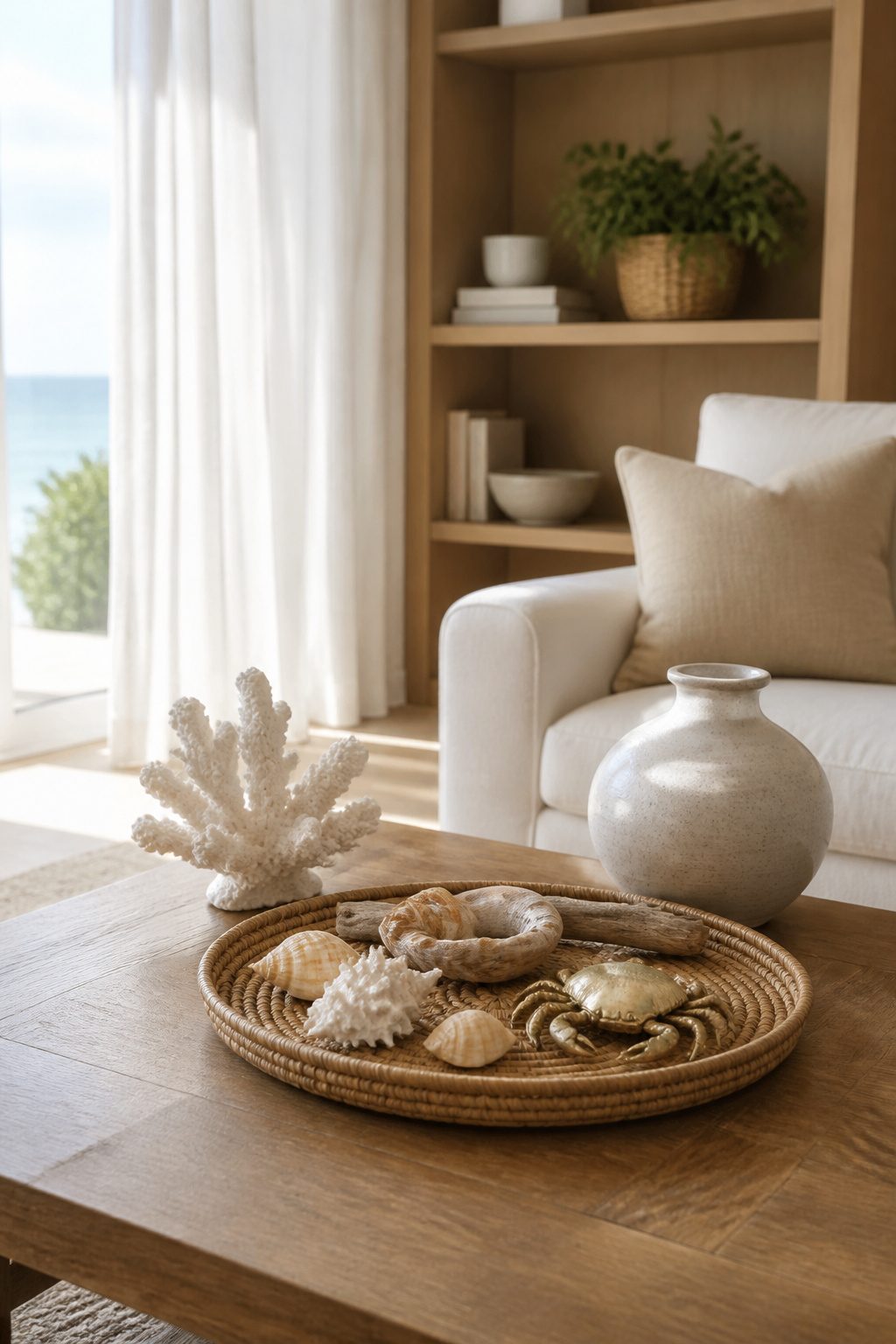
A few coral branches on the mantel or a shallow bowl of shells on the coffee table does more for summer feeling than any color scheme alone. The trick is keeping the objects spare enough that they read as texture, not theme park.
Wooden knots, pieces of coral, or individual shells gathered in a small cluster give that breezy hint without the full beach-house commitment. Decoupage oyster shells work the same way if you want something with a little color; one or two sitting on a stack of books is plenty.
The line between coastal and costume-y sits at about three objects. Past that, you are staging a set rather than decorating a room. I keep it to one grouping per space, and I skip rope accents entirely; they tip the balance toward nautical fast.
The coastal grandmother look that surfaced a couple summers back runs on the same restraint: light fabrics, natural light, and just enough of the shore to signal the season. A single brass crab on the table gets you there. A net full of glass floats does not.
Bright Colors and Greens
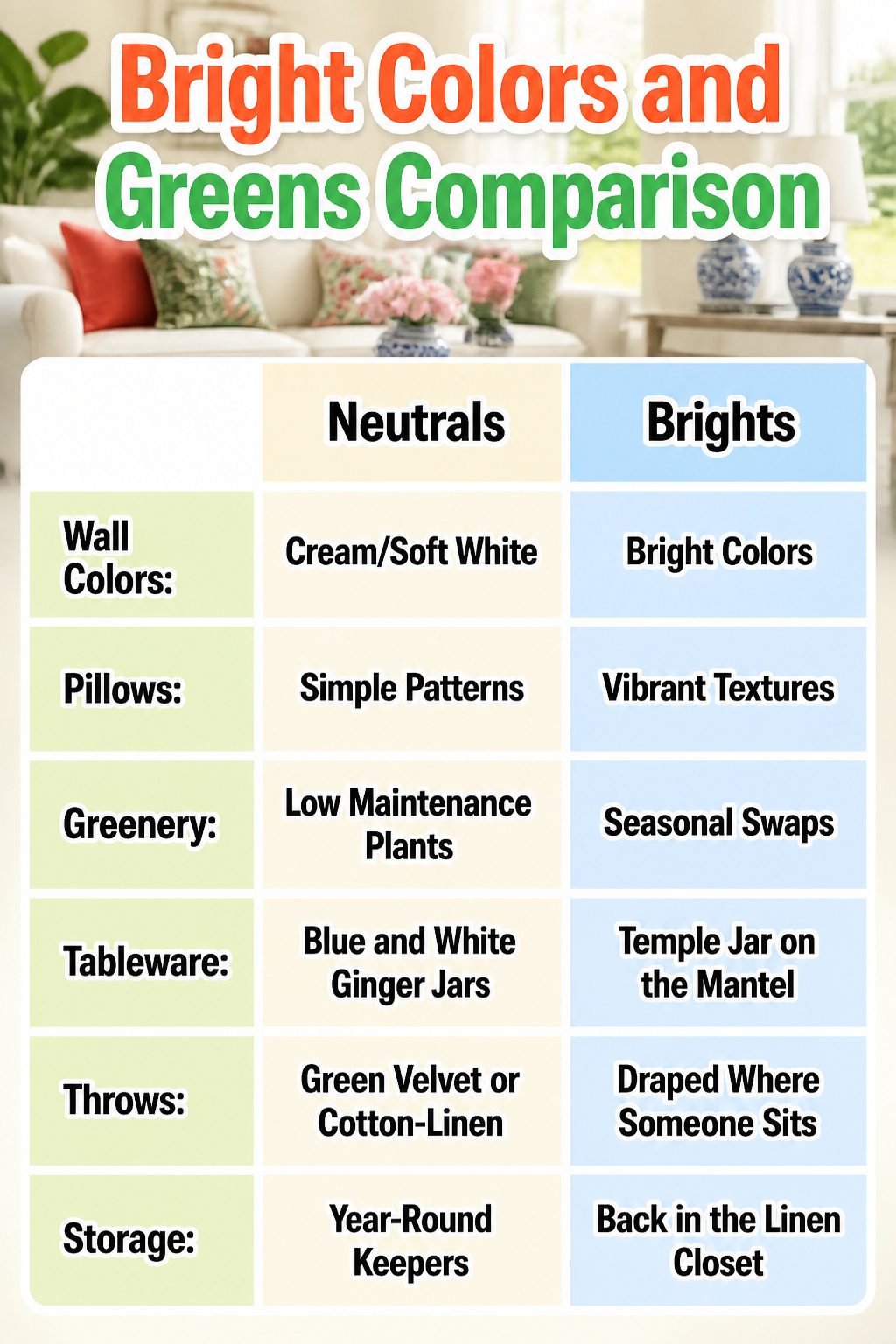
Neutrals on the walls let summer color come and go without commitment. I keep my living spaces in cream and soft white, then layer in the season with what I can fold, stack, or swap in an afternoon.
Pillows do most of the work. A crewel throw in grass green, lattice weaves, or cut velvet in the dining chairs changes the room’s temperature for under $30 if you watch Amazon’s seasonal clearances. Fuchsia, berry, and coral read richer against that quiet background than they would against another competing color. The trick is one vivid story per room, not a scatter of brights that fight each other.
Greenery carries the same logic. A fiddle leaf fig by the window, a snake plant on a side table, or faux stems in a ginger jar add the outdoor saturation without the outdoor maintenance. I move mine between rooms until they land where the light suits them.
Tableware follows the same palette: blue and white ginger jars on a sideboard, a temple jar on the mantel, green velvet or cotton-linen throws draped where someone actually sits. The pieces that stay year-round stay neutral. The ones that shout summer go back in the linen closet come Labor Day.
Blur the Indoor-Outdoor Line
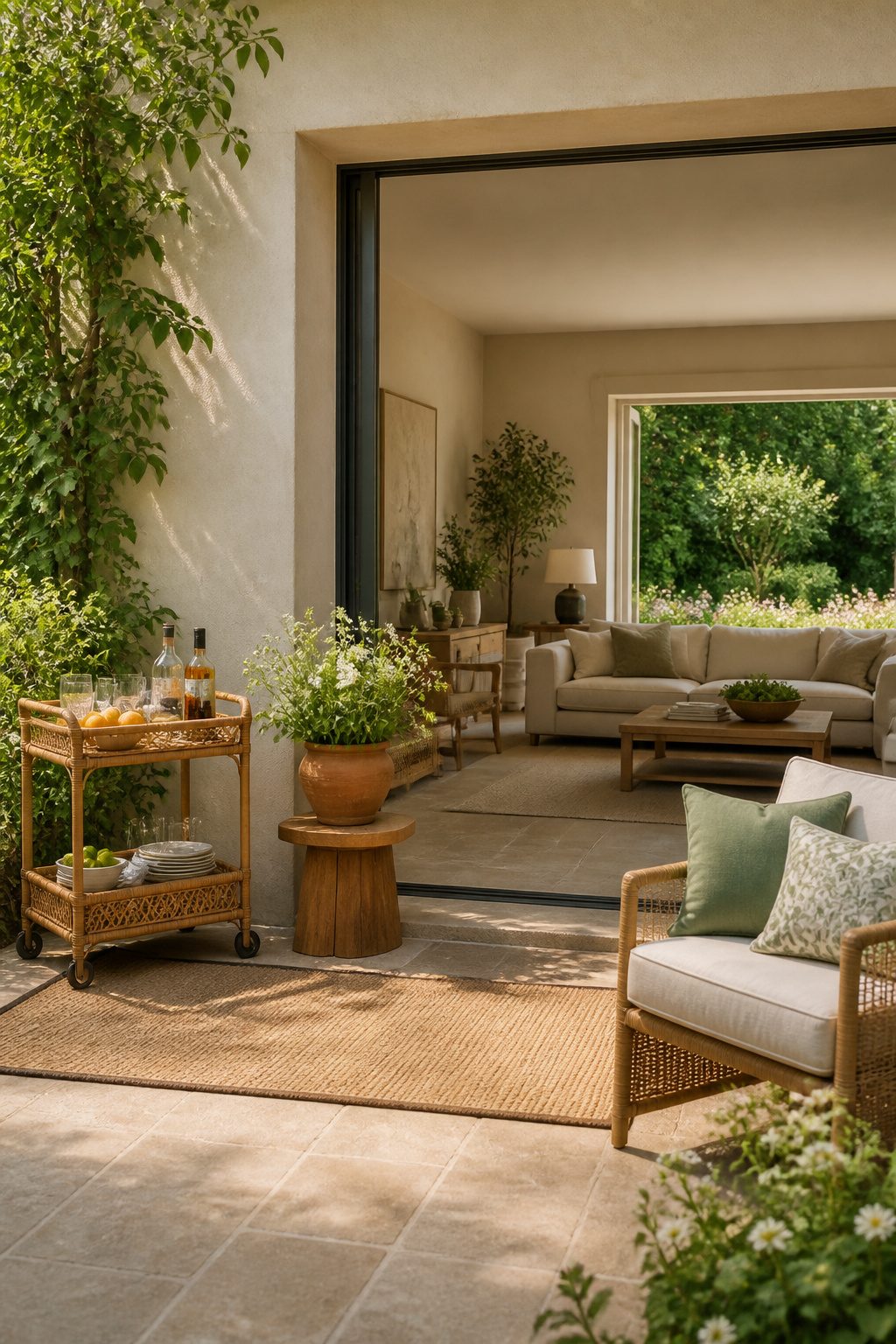
The summer I finally started treating my back door as the main entrance, the whole house changed. I stopped thinking of the patio as a yard and started thinking of it as another room, which meant it got the same attention as any indoor space: a rug underfoot, pillows that could handle a rain shower, a bar cart that rolled out for dinners al fresco. That shift in thinking is what makes the indoor-outdoor line blur instead of just coexist.
Inside, the same principle works in reverse. Fresh cuttings from the garden, or grocery store bouquets when the garden is bare, do more than add color. They bring in the irregular shapes and slight mess of the outdoors, which keeps a room from feeling too staged. If you want the transition to read as intentional rather than accidental, carry the material palette across the threshold: rattan or wicker inside, stone or wood finishes, linen that looks as right in the living room as it does on the porch. Warm neutrals like Portland Stone or Flint white frame the view without competing with it, and they let the greenery be the thread that ties the two spaces together.
The common mistake is treating the connection as a single gesture, one plant by the door and done. What actually reads is repetition: the same terracotta pot shape inside and out, the same blue on a pillow and a planter, the same casual posture in how the furniture is arranged. That consistency is what sells the illusion that the wall was never really there.
What I Do First and What Waits
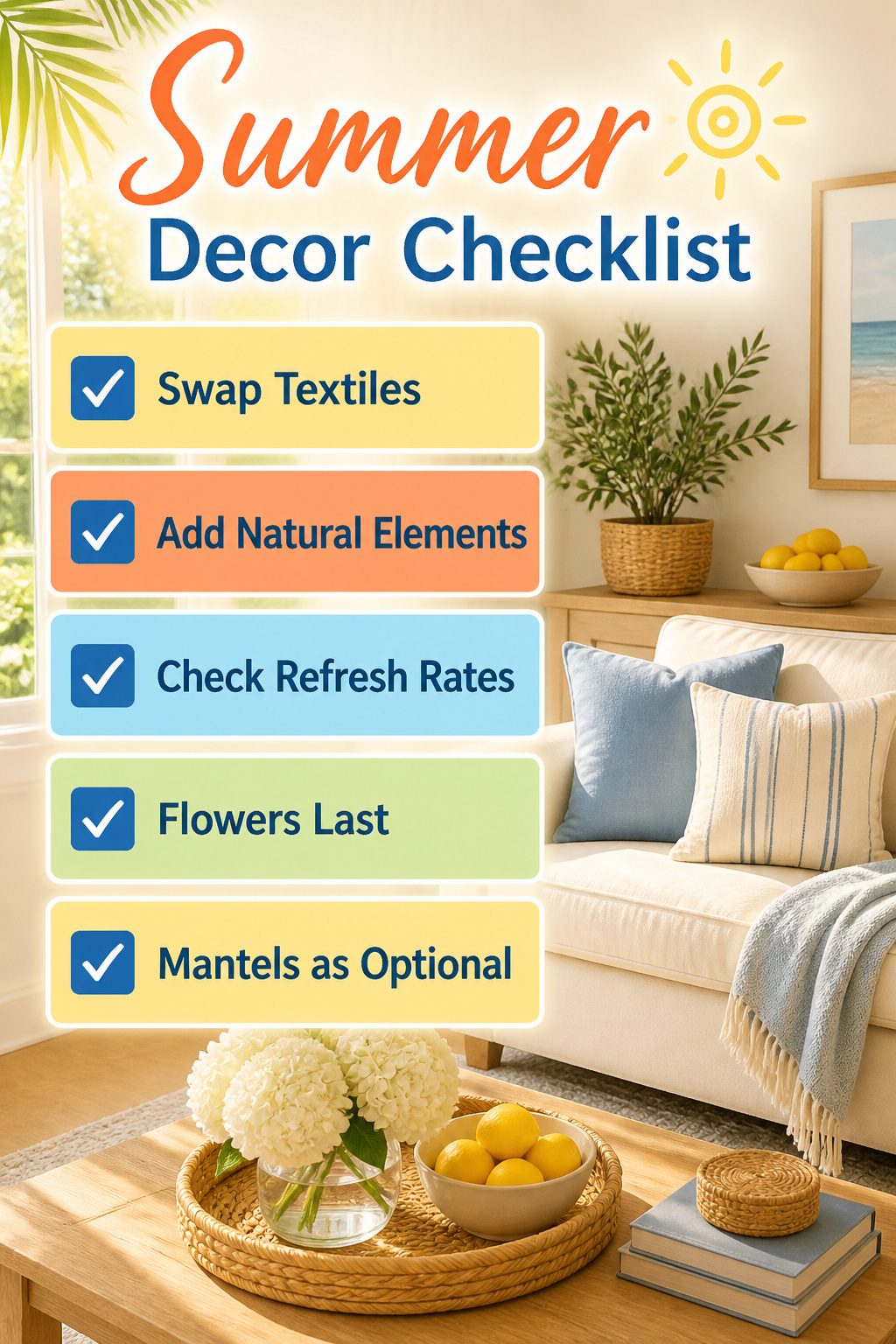
The fastest payoff in a weekend belongs to textiles and surfaces you can swap without tools. I always start there: a lighter throw on the sofa, pillow covers in cotton or linen, the duvet folded away for a thin quilt. These read as summer the moment you walk in, and they store flat when October arrives. Paint and anything requiring a brush waits for a longer window. I’ve learned that twice: the year I tried to repaint a bedroom Saturday and host Sunday, the walls stayed tacky through dessert.
Natural materials and anything living follow textiles in my order. A bowl of lemons, a handful of cut branches, a wicker basket replacing the ceramic one on the shelf. These cost less than new furniture and signal the season more clearly than a color scheme alone. Fresh flowers go last, same-day or Friday evening, so they don’t wilt before anyone sees them.
Mantels and wreaths I treat as optional finishing moves. They photograph well, which is why they dominate the inspiration feeds, but a guest in your actual living room rarely faces the mantel head-on. If the budget is tight, that is where I cut without regret. The sofa you sit on and the light through the window matter more than the vignette on a shelf behind you.
When Summer Decor Needs Refreshing
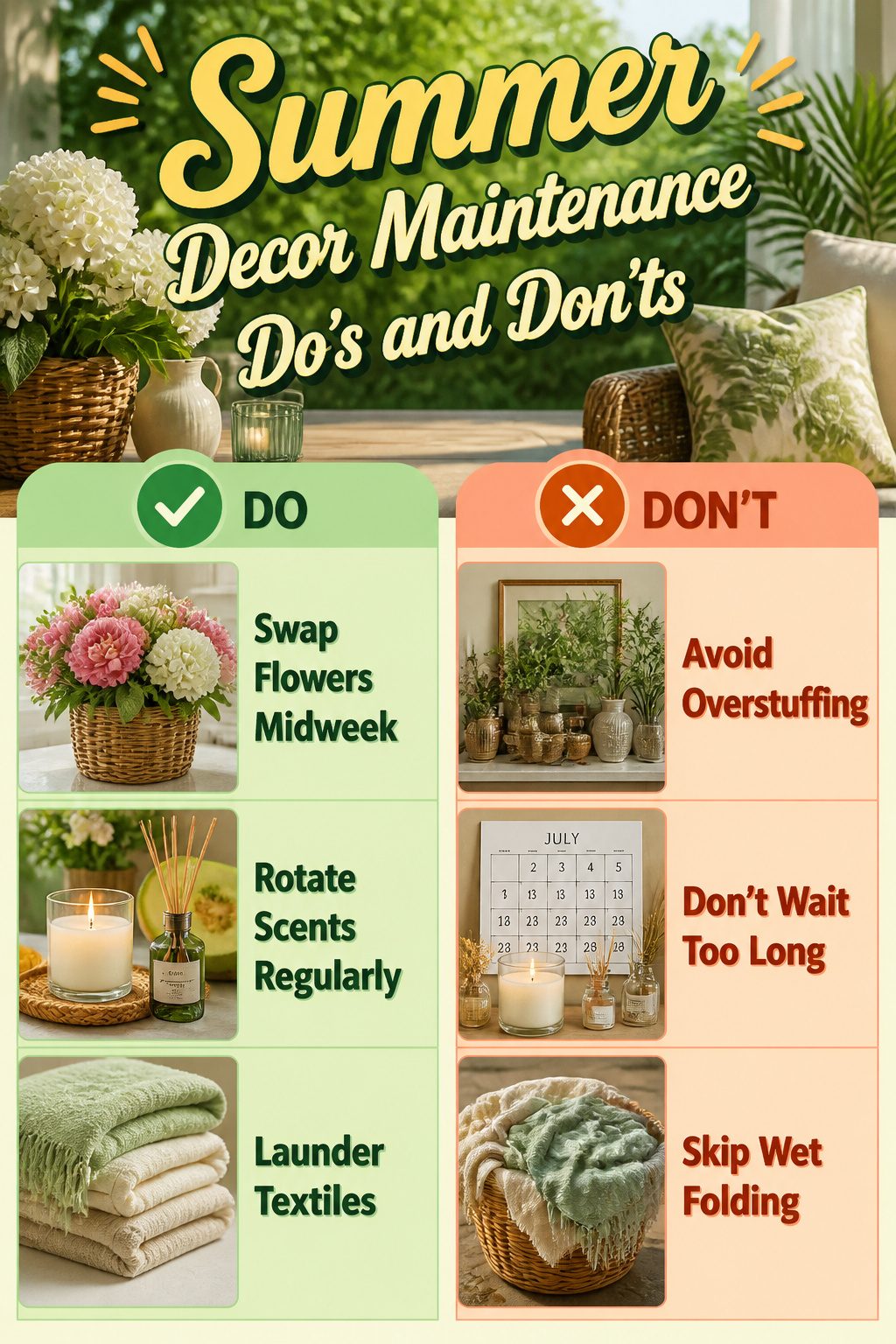
Fresh flowers in a kitchen basket or entryway vase look alive for about three to five days before the drop starts. That is the window. Swapping them midweek keeps the whole arrangement from reading as leftover party decor, and stem clippings from the yard cost nothing if you have them.
Summer scents turn flat around the four-week mark, at least in my experience with candles and diffusers. The Havana coconut or pineapple coconut that smelled like open windows in June becomes background noise by July. I rotate the stock then, not because the wax is gone but because the effect is. Citrus and melon carry longer than heavy vanilla, so the lighter fragrances are what I buy in multiples.
Textiles are the slowest rotation. Linen throws and cotton slipcovers that came out in May can stay through August, but they need laundering before storage. I wash mine on the last hot weekend, dry them flat, and seal them in a bin with a cedar block. The mistake I made once was folding them damp; mildew does not care how nice the weave is.
The real maintenance is noticing when the room goes quiet. That is the signal to move.
What I Skip
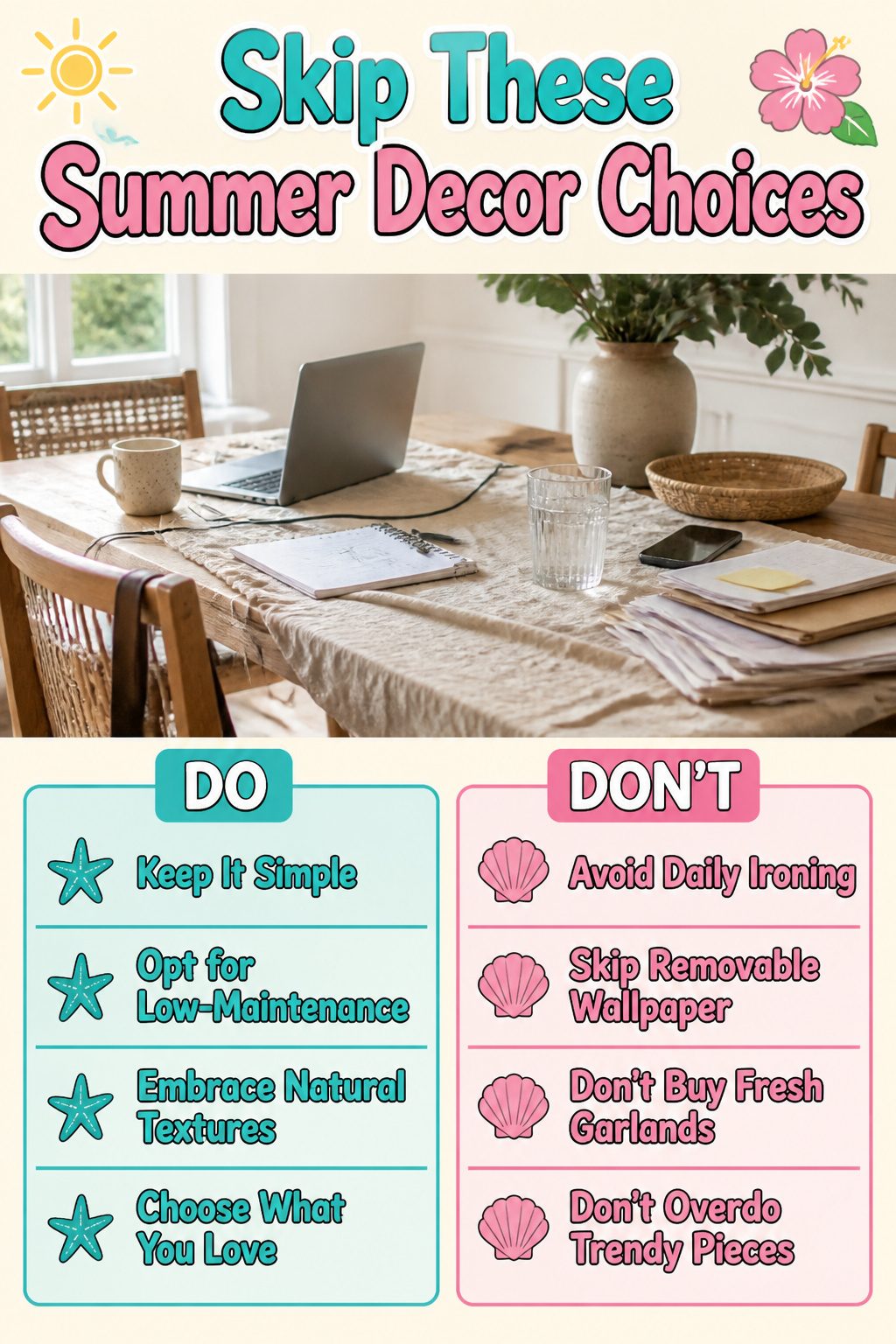
Pressed linen tablecloths and full sets of rattan chargers always photograph like the summer home I wish I had. The reality is my dining table doubles as my desk four days a week, and that pressed linen becomes a wrinkled backdrop for laptop cords by Tuesday afternoon. I skip anything that needs daily ironing or its own storage bin eleven months a year.
Coastal galleries sell the idea of swapping out all your throw pillows for navy-and-white stripes come Memorial Day. The math stopped me cold the one time I priced it: twelve covers, custom fills, and suddenly I was looking at a project budget that would have covered my actual living room refresh. Renters especially get pitched removable wallpaper in palm prints and lemon patterns. The install videos make it look like peeling a sticker; the removal videos, which I finally hunted down, show drywall patches and lost deposits.
Fresh eucalyptus garlands draped over every mirror and mantel last about four days in July heat before the shedding starts. I learned that from a centerpiece attempt that left my credenza sticky for a week. Same with the advice to "just pick up" weekly farmers market blooms. My Saturday mornings belong to errands that run long, and a $40 bouquet guilt-tripping me from the counter is not the relaxing vibe summer decor promises.
The look I actually want has to survive my real schedule, not a styled shoot with a team.
Frequently Asked Questions
What are some easy summer decorating ideas?
Start with textiles and surfaces you can swap without tools: lighter throws, cotton or linen pillow covers, and a thin quilt in place of a heavy duvet. Add natural materials like a wicker basket or rattan tray, plus fresh flowers or cut branches from the yard. These changes read as summer the moment you walk in and store flat when the season ends.
How can I make my home feel more summery?
Carry blue and white past a single shelf so it wanders through multiple rooms, including outdoor spaces. Layer in bright colors with one vivid story per room rather than competing brights. Use fresh flowers, natural materials like rattan and seagrass, and lighter textiles that breathe when humidity climbs. The goal is repetition and consistency, not a single gesture.
What are some good summer scents for home decor?
Candles and diffusers in coconut, citrus, melon, cucumber, and floral fragrances set the mood. Layer the same note at different intensities through the house: a candle on the kitchen island, wall plugs in the hallway, a diffuser near the entry, and room spray for the bathroom. Rotate around the four-week mark, when the effect turns flat even if the wax is not gone.