
Spring kitchen decorating ideas run from a $2.50 digital print swap to a three-Saturday island paint job, and the single factor that sorts them is how much of your counter you are willing to give up.
Most go wrong on square footage, not budget. A twelve-inch maple board is the maximum depth that leaves real prep space; anything deeper and you are bumping it with your hip every time you chop an onion.
1. Add Fresh Flowers
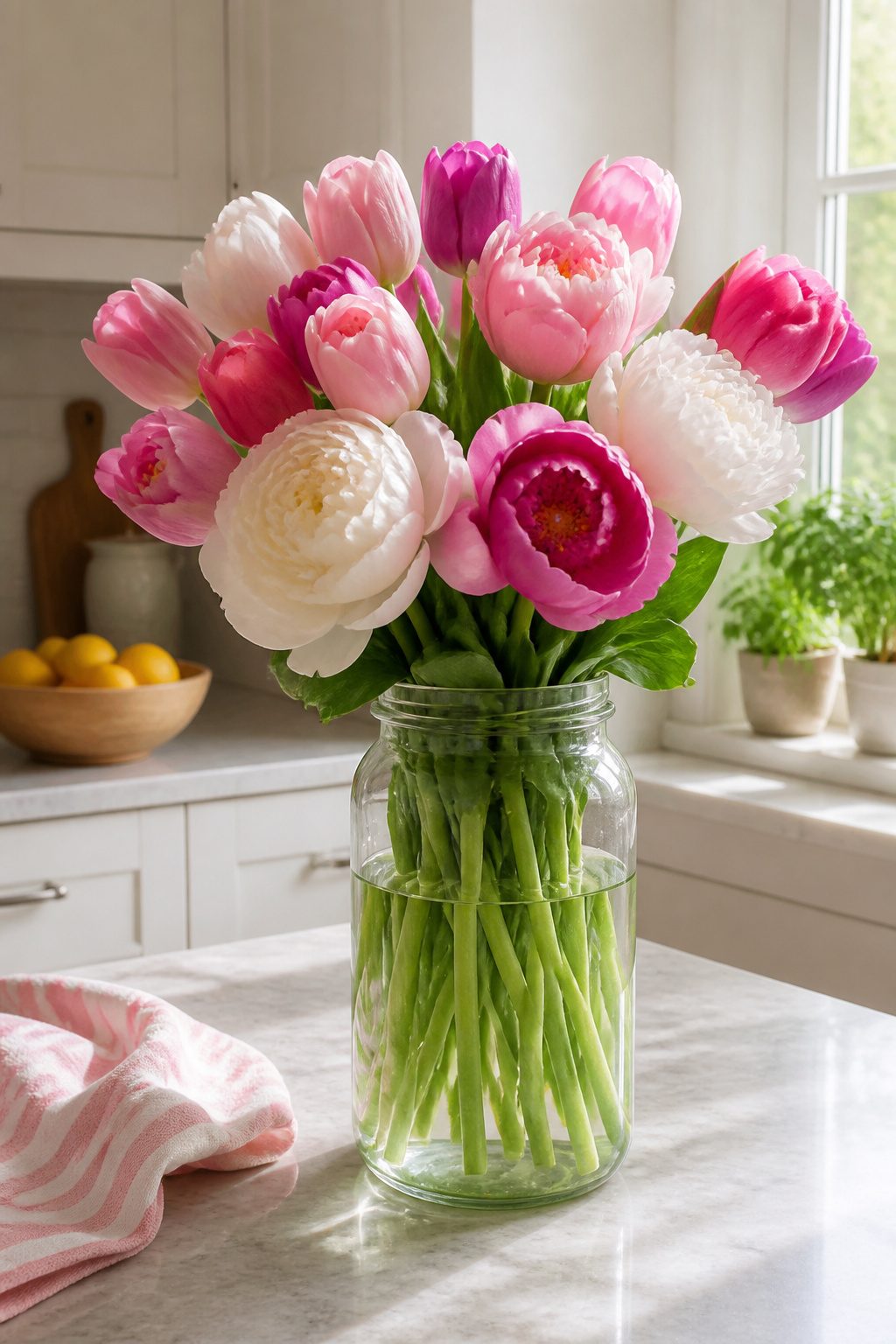
Tulips and peonies are the blooms that signal spring in a kitchen, but the stems need to clear the sight line or the whole point is lost.
Last April I brought home a grocery-store bunch of tulips, trimmed them to what felt right, and set the jar on the counter below the window.
The blossoms sat two inches below the window frame, invisible from anywhere but standing directly over the sink. A standard kitchen jar needs stems trimmed to about 14 inches to clear upper cabinets and hit natural light.
The fix cost less than the mistake. Grocery bunches run $12 to $18 for ten stems, enough to fill a jar but tight.
The farmers market move that morning was $8 for a looser bunch of the same tulips, fresher, with longer stems that gave me room to adjust.
Two bunches of peonies, six buds and six open blooms, will fill a larger vessel the way those ranked images suggest. Ranunculus mixed in stretches the arrangement if the peony season is short where you live.
2. Incorporate Potted Herbs
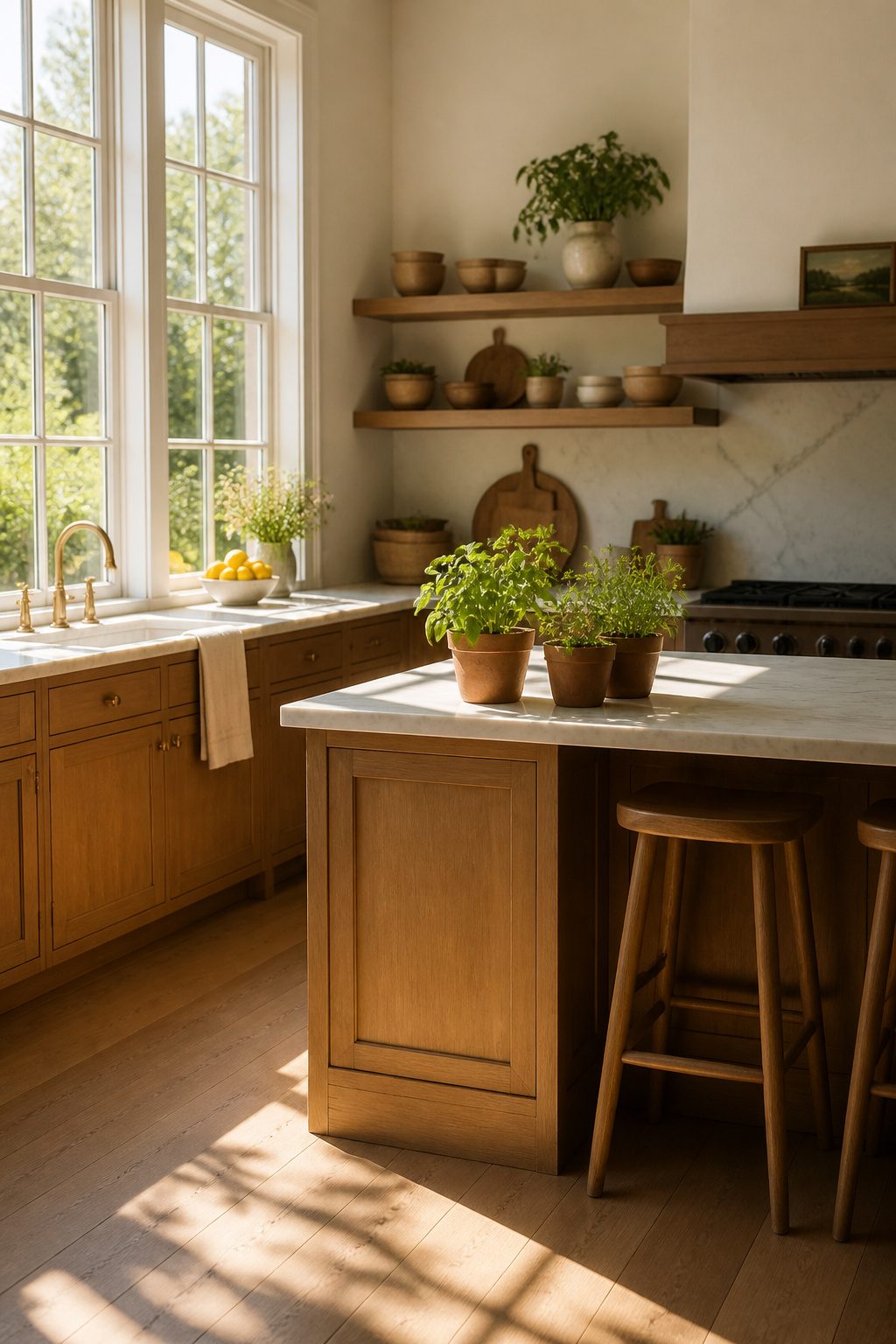
Basil and mint are the two herbs every guide names for kitchen windows, and there is a reason they keep showing up.
They survive the lower light of a typical rental kitchen, and they pay rent in leaves you can actually cook with.
The grocery-store transplant is the move that keeps this cheap. A living pot in the produce section, usually around $6, holds enough root ball to split into two smaller containers.
I use basic four-inch terra cotta for the second plant, nothing fancy. The original stays in its plastic nursery pot with a saucer.
Both need six hours of direct sun minimum, which in most kitchens means the one window that faces south or west.
If that windowsill is already crowded, set one pot on the counter at the window’s edge and rotate it every few days; the basil will lean toward the glass, but it will live.
That $6 pot, split and tended, gave me three months of leaves for eggs and simple syrup before the stems went woody. The mint outlasted it by six weeks, mostly because I kept forgetting to water the basil and it sulked.
The cooking utility matters more than the look. A leaf torn into yogurt or a sprig bruised for a pitcher of water is the difference between a plant you keep and a plant you replace with a candle.
3. Use Colorful Dishware
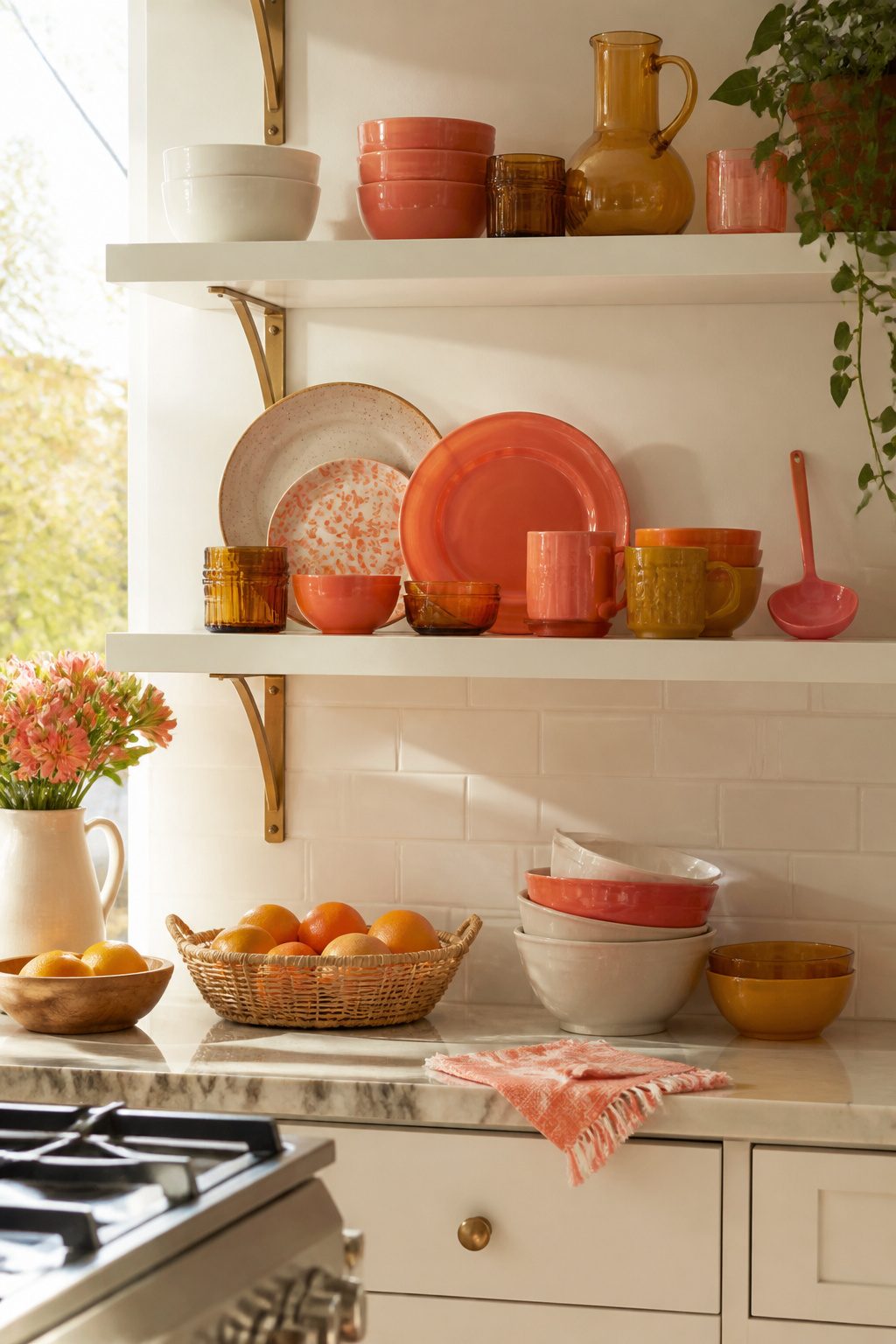
Open shelving and glass-front cabinets give dishware a stage, but the line between intentional and cluttered sits at about six to eight pieces pulled forward, not the whole set.
Leave the back half of the shelf empty, or the eye has nowhere to rest.
I found a stack of mismatched plates at a thrift store for $23, all in the same coral-to-amber range, and that limited palette did the work of a coordinated collection.
Mixing every color at once reads as storage; keeping to two or three related hues reads as design.
If your everyday dishes are white, even four bright mugs in a row on a single shelf will carry the whole kitchen into spring without touching a wall or a counter.
4. Swap Out Kitchen Linens
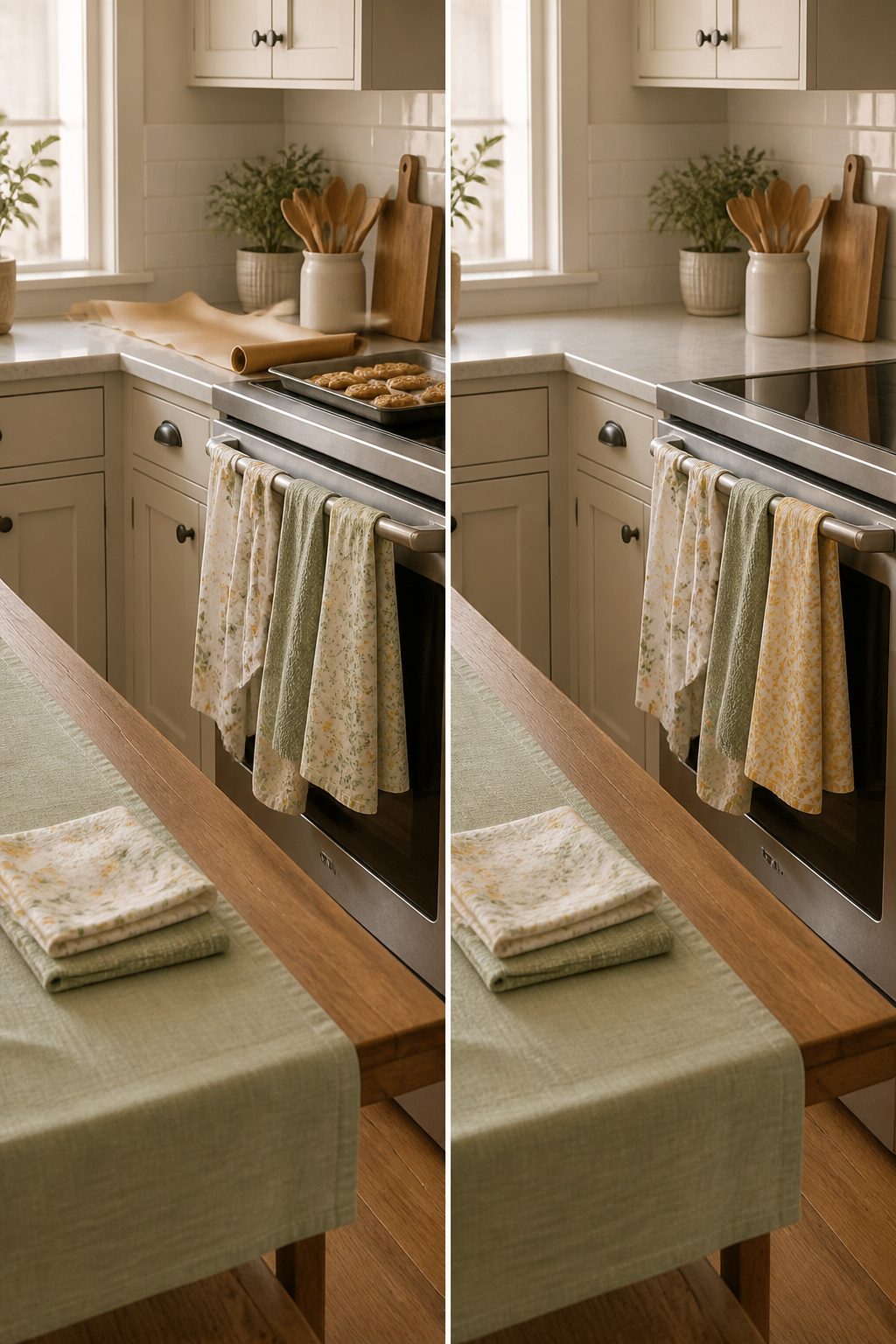
Heavier winter linens get swapped out in my kitchen every March, no ceremony to it.
The flannel-backed set I run December through February is thick enough to handle a hot cast iron handle without folding, but that same weight turns limp and sour-smelling by April once the humidity shifts.
My spring rotation is four thin cotton dish towels, two in circulation and two in the wash. They dry in half the time on the oven door.
The table runner situation is where I learned to stop trusting price alone.
A $9 Target runner in a pale sage washed fine for two seasons; the $4 IKEA stripe in similar cotton frayed at the hem in three washes, the weave just looser enough to let the threads work free.
I still buy the cheap one for months I know I’ll stain it, but the Target piece is what sits out when people come over. Four towels, two runners, maybe $25 total if you catch a sale.
The whole swap takes ten minutes, which matters more than the color change ever did.
5. Create a Seasonal Vignette
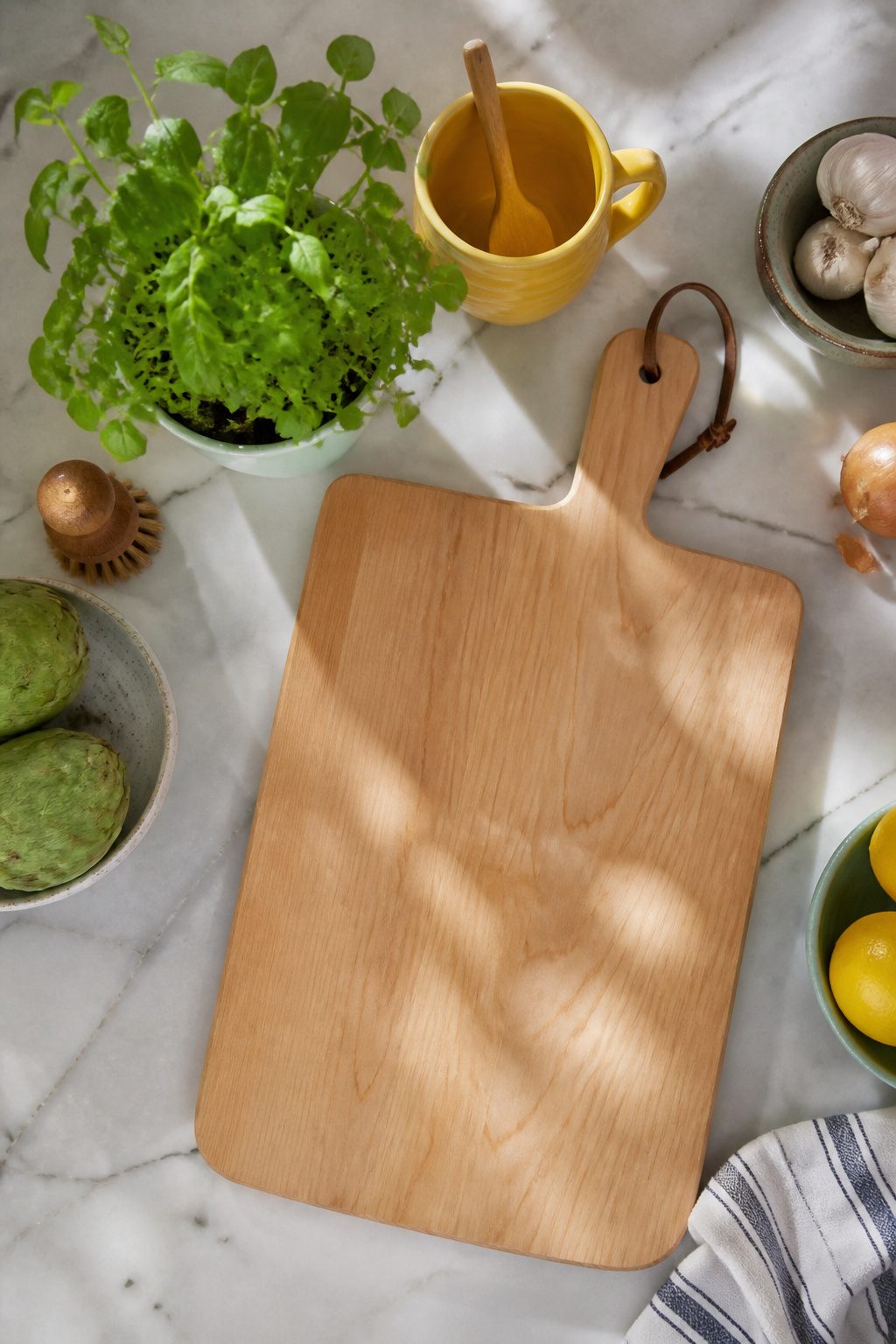
A bread board or cutting board on the counter anchors the whole thing without looking like you staged a photo shoot.
Mine is a maple board about twelve inches long, which is the maximum depth that leaves real prep space on a standard counter. Anything deeper and you are bumping it with your hip every time you chop an onion.
The arrangement is one functional item, one natural element, one color hit. On my board that means the herb pot I actually water, a yellow Fiestaware mug I bought secondhand, and the maple grain itself counts as the natural piece.
The mug holds the wooden spoon I reach for anyway, so the whole thing earns its spot.
Pinterest will show you vertical towers of ceramic hens and stacked cookbooks and trailing ivy that look beautiful until you need eight inches of flat counter for a cutting board.
A low vignette at counter height survives a real cooking session because you do not have to dismantle it to use the space.
6. Add Decorative Trays
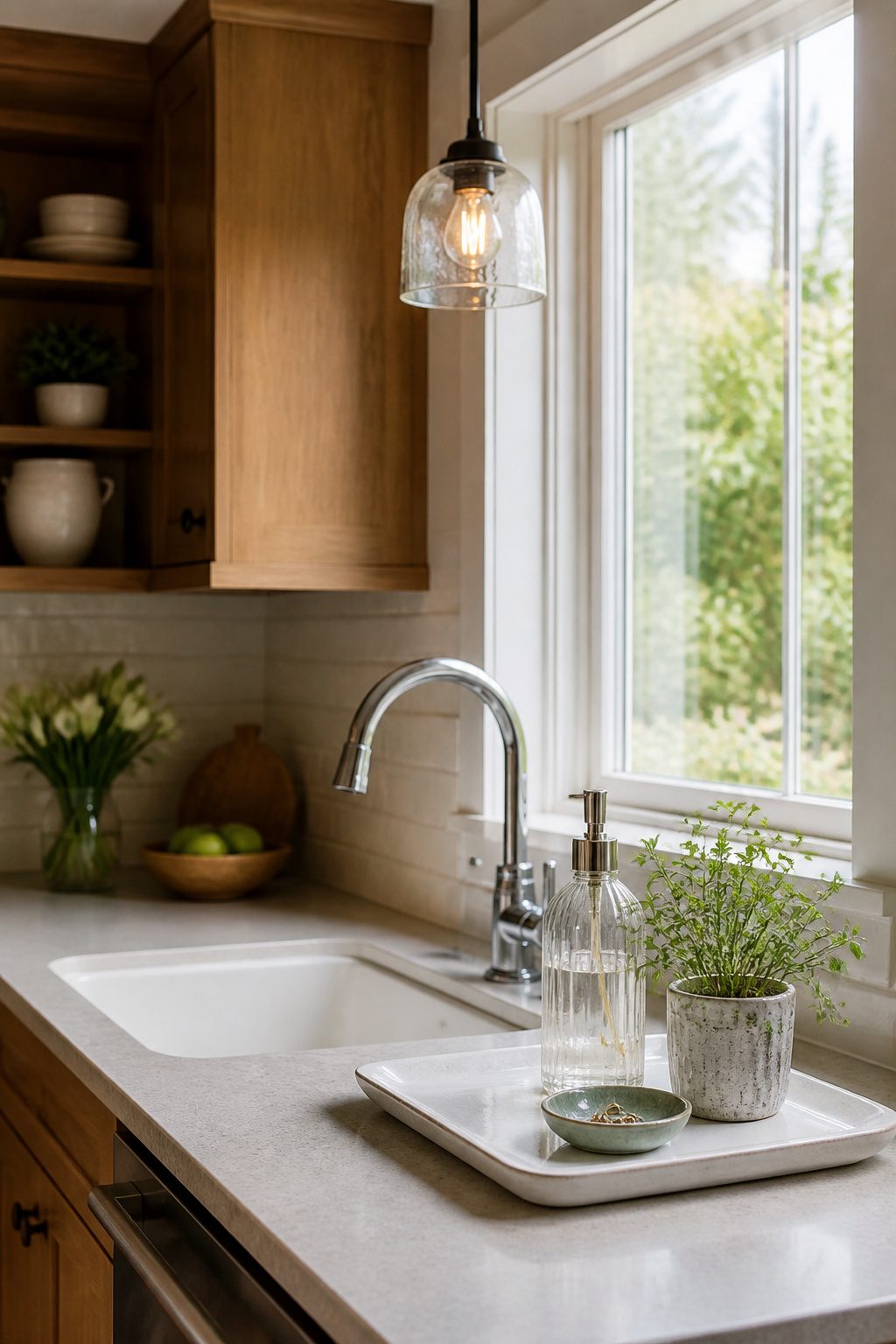
A tray beside the sink turns three loose objects into something that looks considered instead of accumulated. The trick is choosing a material that survives the spot you picked for it.
Wood near running water warps within a season or two. Metal collects hard-water spots that need wiping every other day.
Enamel looks crisp until the day something drops and chips it.
The size that actually works without looking staged is 10 by 14 inches.
That footprint holds a soap dispenser, a small plant, and a ring dish without crowding, and it leaves enough counter visible that the tray reads as an anchor, not a lid.
I found a $16 enamel tray at HomeGoods that sat flat and stayed put. The $34 West Elm version I ordered looked better online, but the base slid on quartz every time I bumped it reaching for the faucet.
It went back the same week. For spring, the cheaper tray got a swap to a glass dish and a single stem in a bud vase.
The whole thing took under ten minutes to arrange, and moving it for counter cleaning takes one hand.
7. Use Seasonal Artwork
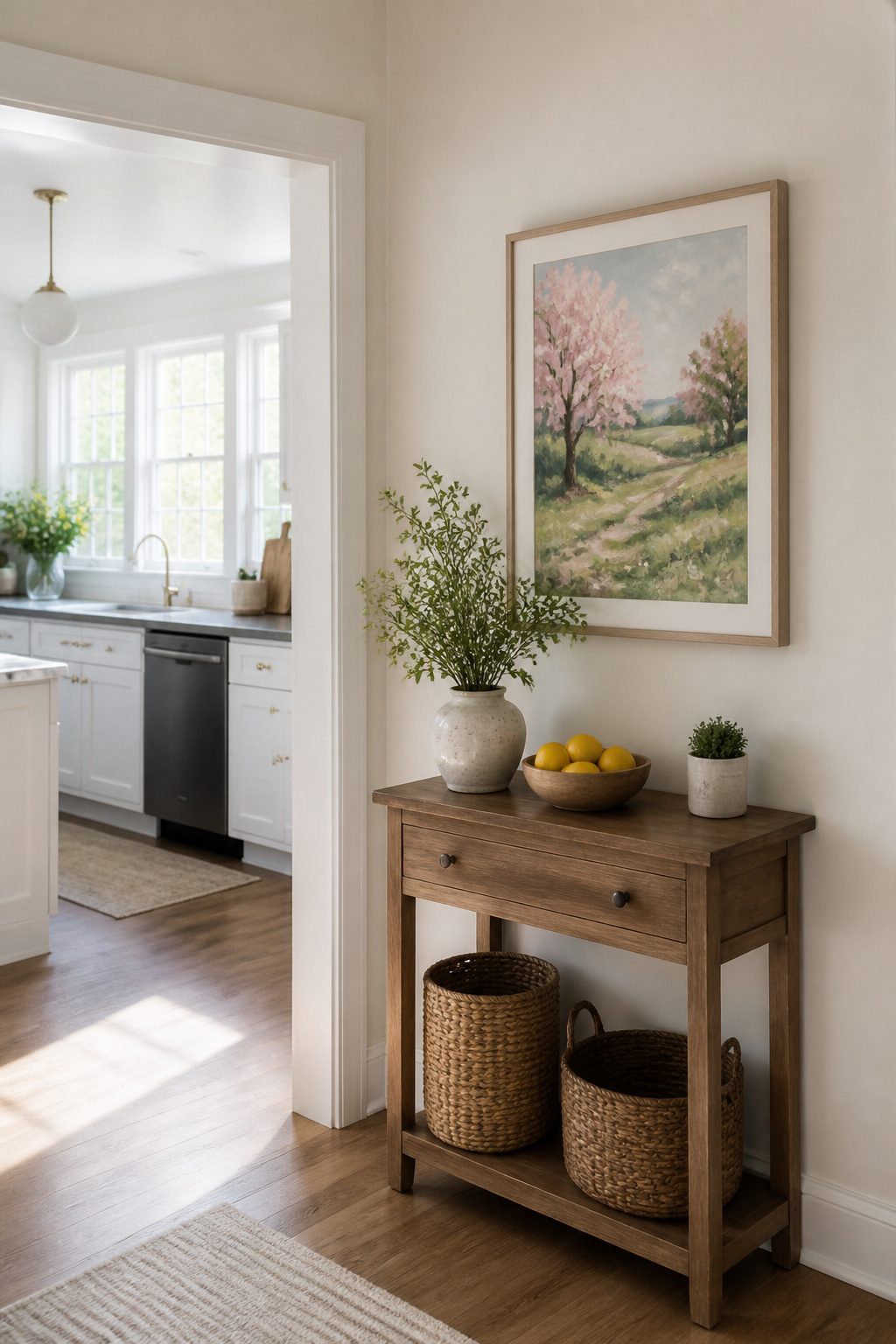
Artwork tends to get skipped in kitchen refresh roundups, which is a mistake.
A single 8×10 frame hung on the wall facing the entry, where you see it walking in and not where grease settles, gives the whole room a seasonal cue for almost nothing.
I buy the print, not the frame. A $2.50 digital download beats a $22 pre-framed piece every time, and swapping the paper takes under a minute.
One spring I left the print up until July because I forgot to order the summer replacement. Nobody noticed but me.
The frame stayed put; the season just ran long.
8. Incorporate Natural Elements
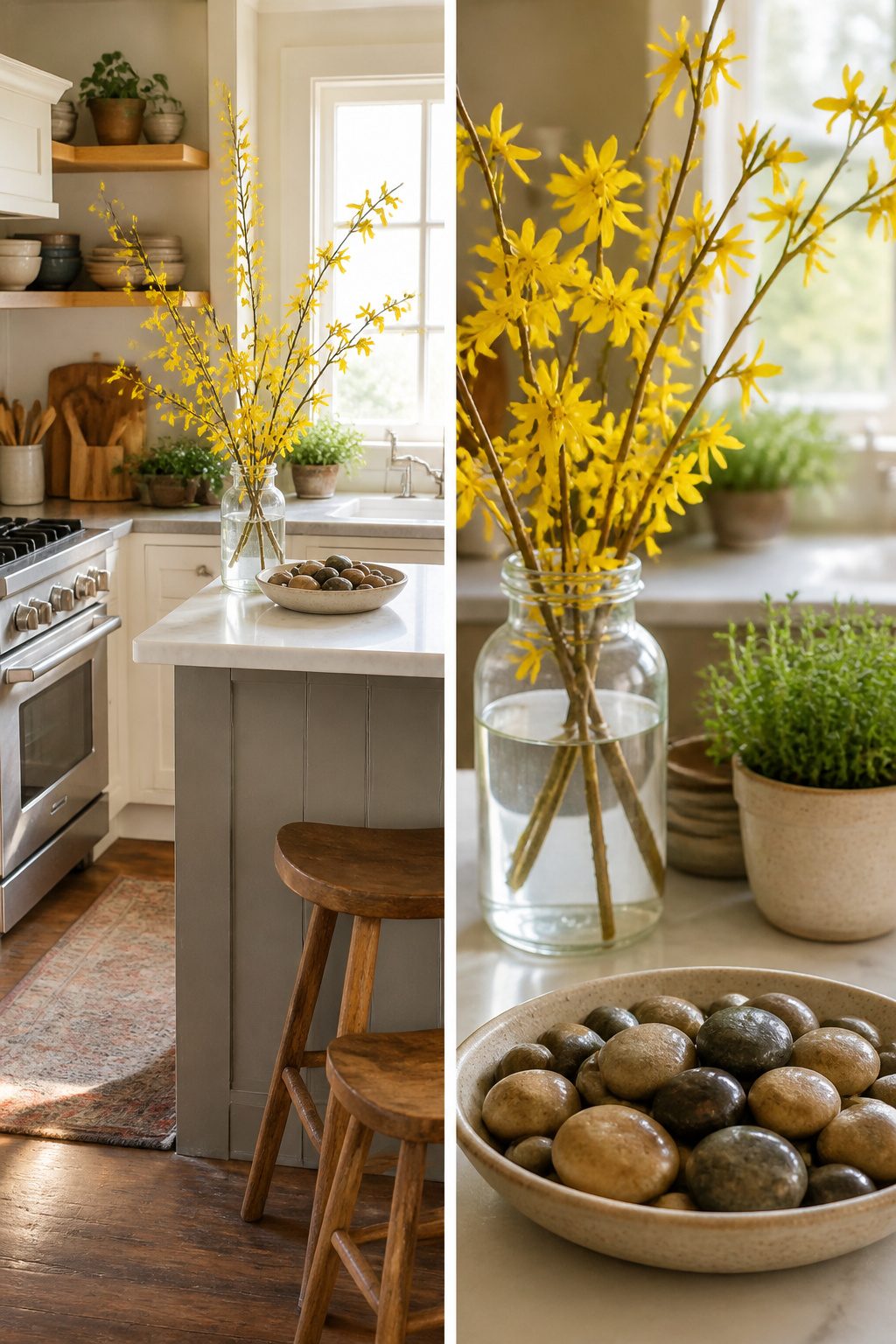
Fresh branches beat cut flowers for staying power. A forsythia branch forced in water gives you two weeks of yellow before it drops petals; the eucalyptus I hung above my sink dried in place and looked silver-green for six months.
Dried grasses last longer still, though they collect grease near a cooktop.
A shallow bowl of river stones sits by my stove because the weight grounds the space and they cost nothing to replace. They also hold heat, which I learned the hard way.
A hot cast-iron pan sat on them one evening while I grabbed a trivet I had forgotten. The stones did not crack, but they released a wet-rock sauna smell that hung in the kitchen for an hour.
Now the bowl lives six inches back from the front edge, close enough to see, too far to use by reflex.
Stones and branches work in any kitchen because they ask nothing of the room’s light or layout.
A windowsill is helpful for forcing branches, but a jar on the counter does the same job if you change the water every few days.
9. Use Light and Bright Colors
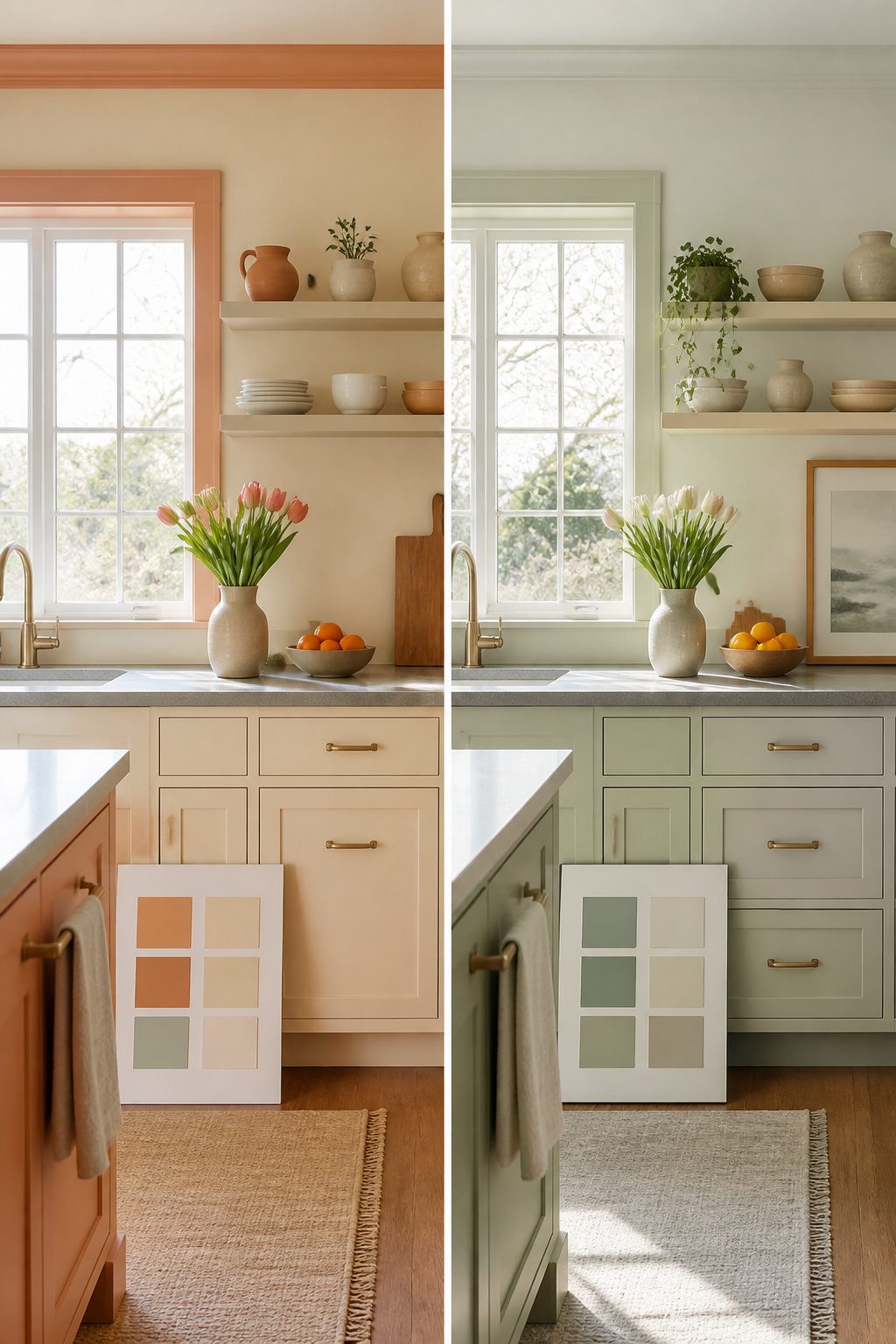
Every spring guide I read pushed mint green and baby blue, and every swatch I taped up looked like a nursery rhyme. My kitchen faces east, which means that 6 a.m. light turns pastel paint into something frosted and artificial.
The color that actually worked was cream warmed with a drop of pale terracotta, grounded by trim and hardware in soft black. Together they read as spring without the Easter-egg effect.
Testing paint in a kitchen means testing it at every hour the room actually sees.
I learned to skip the wall patches and brush samples onto poster board instead, propping them against cabinets and moving them through the space across two days.
Wall patches force you to decide from a single spot; poster board follows the light around the room and shows you what happens when afternoon sun hits the same color from the opposite angle.
10. Add a Bowl of Fruit
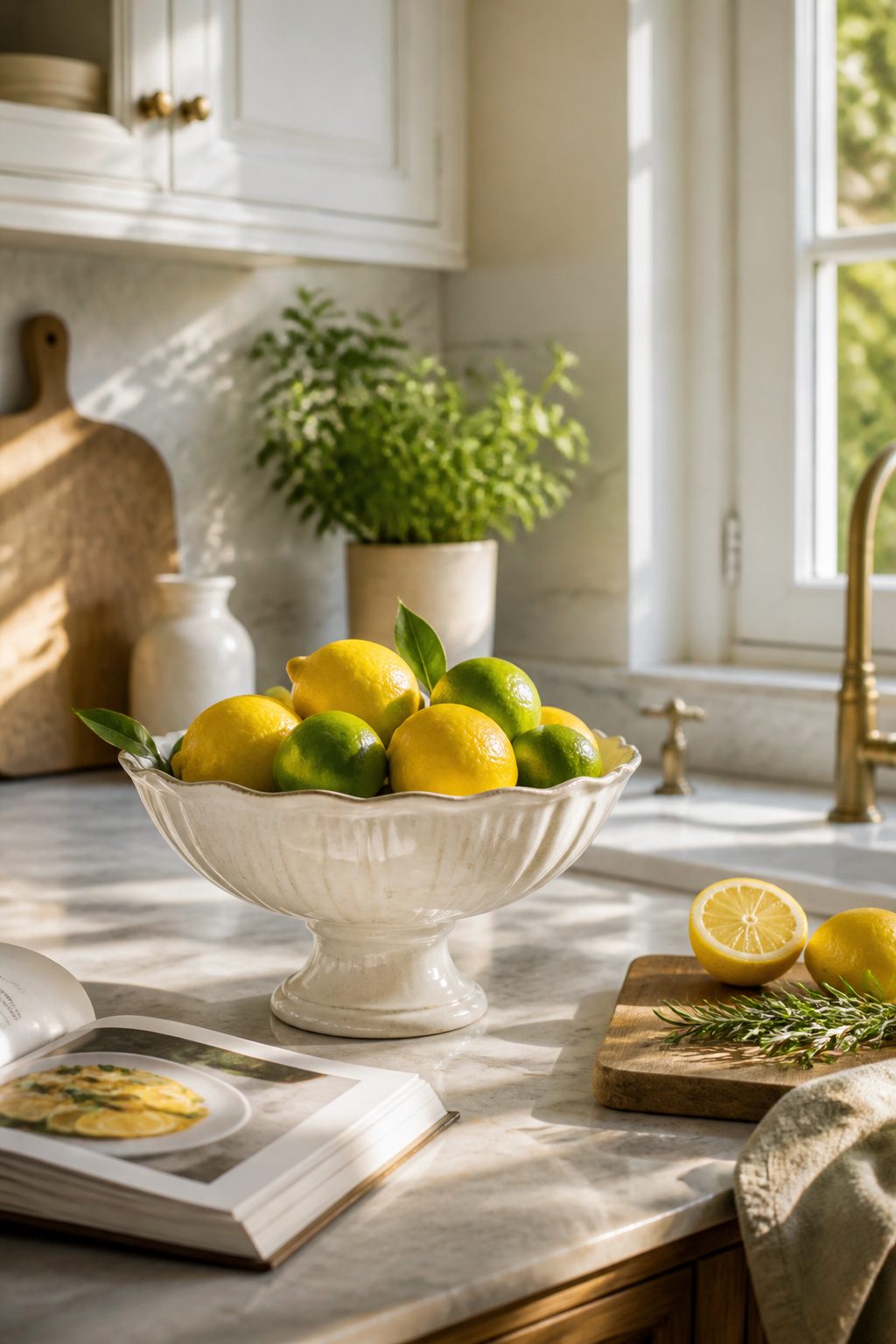
A bowl of fruit looks like the easiest win on this list, which is exactly why it goes wrong so often.
The brown bananas, the cloud of fruit flies by August, the ceramic bowl that sat too close to the window and turned a bunch of pears to mush in two days: I have lived all three.
The difference between decoration and compost is a footed ceramic bowl set in the coolest spot on the counter, with citrus only, refilled weekly. Lemons hold their color, resist bruising, and still look intentional when you are down to four.
I tried the $4 wire basket once. It ventilated better than anything ceramic, but the sight of it reminded me of a cafeteria line, and I moved it to the pantry inside a week.
If the bowl is pretty enough to photograph and cool enough to slow ripening, the fruit stays a vignette instead of a chore.
Indoor Herb Gardening Beyond the Windowsill
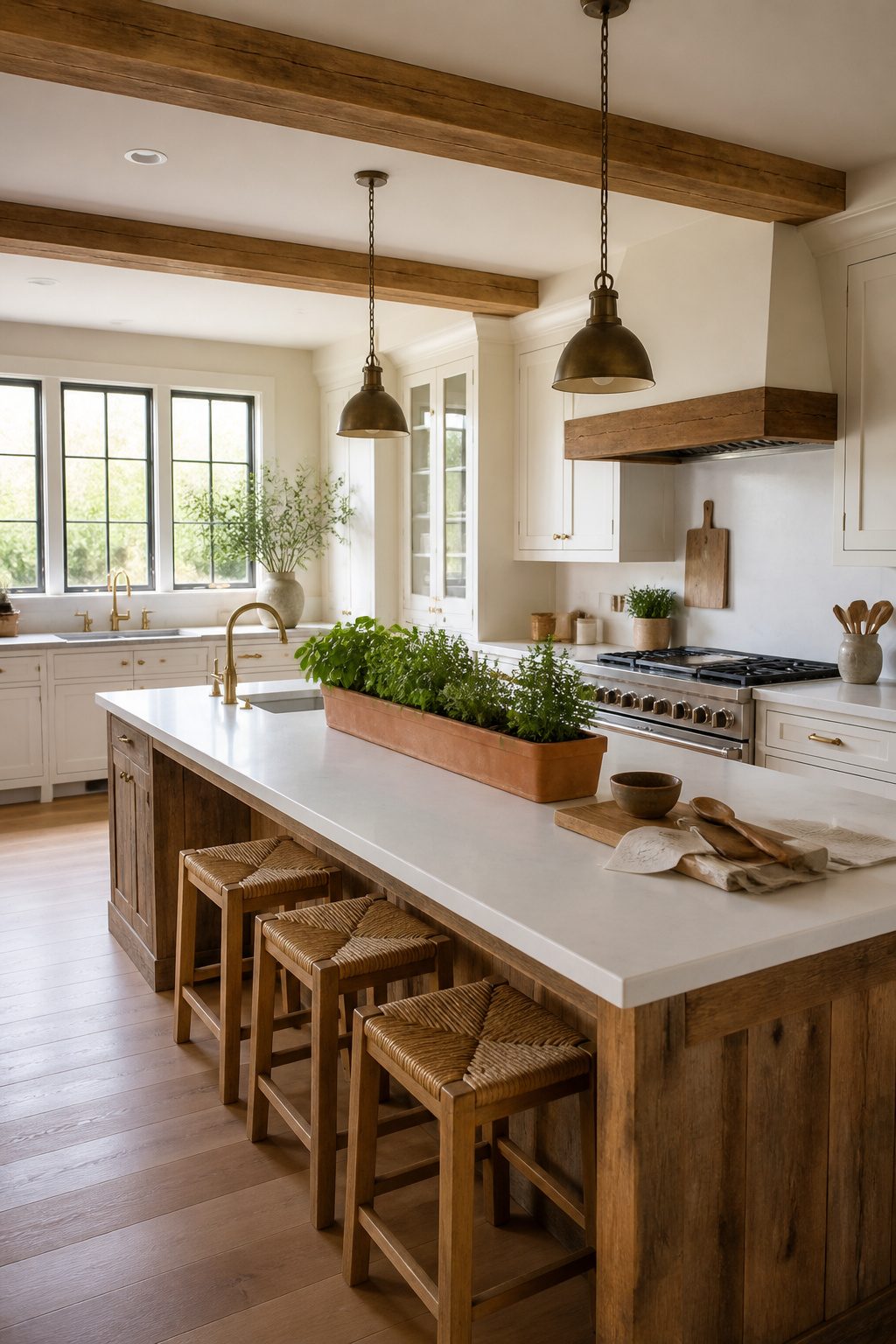
The dough bowl trend looks beautiful on a kitchen island until you realize vintage bread bowls have no drainage. Four inches of soil depth keeps most culinary herbs happy, which is deeper than a standard decorative bowl allows anyway.
My first attempt died in ten days from root rot; I watered whenever the top looked dry, which was far too often for a sealed container.
A $14 terracotta trough from the garden center outperformed the antique every time. Unglazed clay pulls moisture out through the walls, so overwatering takes deliberate effort.
I move the pots outside once nights stay above 50°F, usually mid-May here, and bring them back in before the first frost. The terracotta chips if you drop it, but at that price you replace it without mourning the craftsmanship.
Chalkboard Seasonal Messages
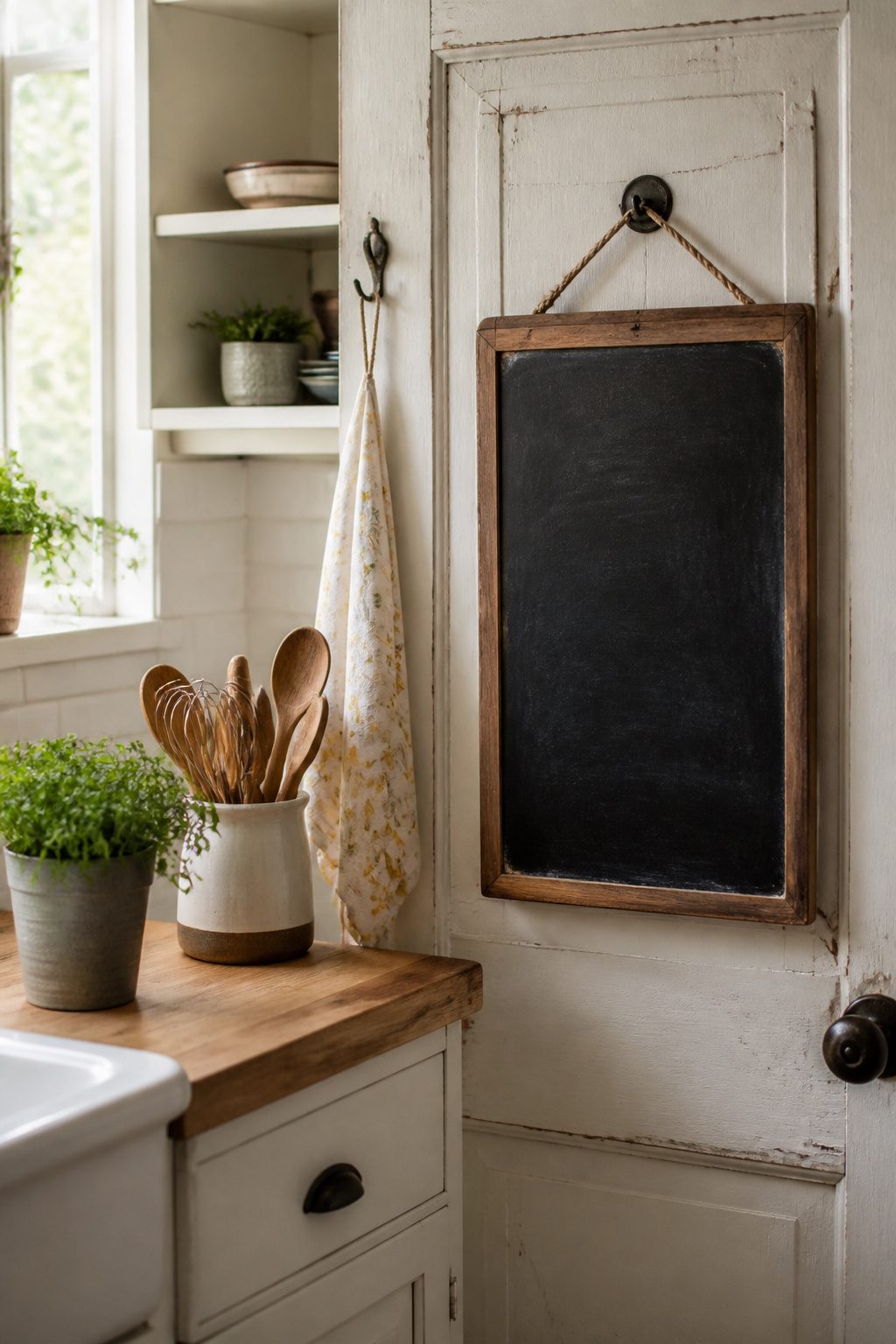
A 12×16 inch chalkboard hangs on my pantry door with a simple over-the-door hook, no drilling needed. I bought it three springs ago thinking I would write something clever every week.
The reality settles closer to once a month, sometimes less.
Chalk markers won the job over real chalk after the first rainy week smeared a grocery list into gray fingerprints. The markers still smudge if a sleeve brushes them, but the lines stay crisp enough to read.
Erasing takes a wet cloth; a dry paper towel just pushes the pigment around.
My messages start strong in March: "asparagus season," "open the windows," a running tally of days until the farmer’s market opens. By late April the ideas thin out.
Last year I wrote "spring?" with the question mark and left it up through June, the marker fading to a soft green ghost by the time I finally wiped it clean.
The board works best as a small anchor, not a daily project.
A Pastel Kitchen Island Project
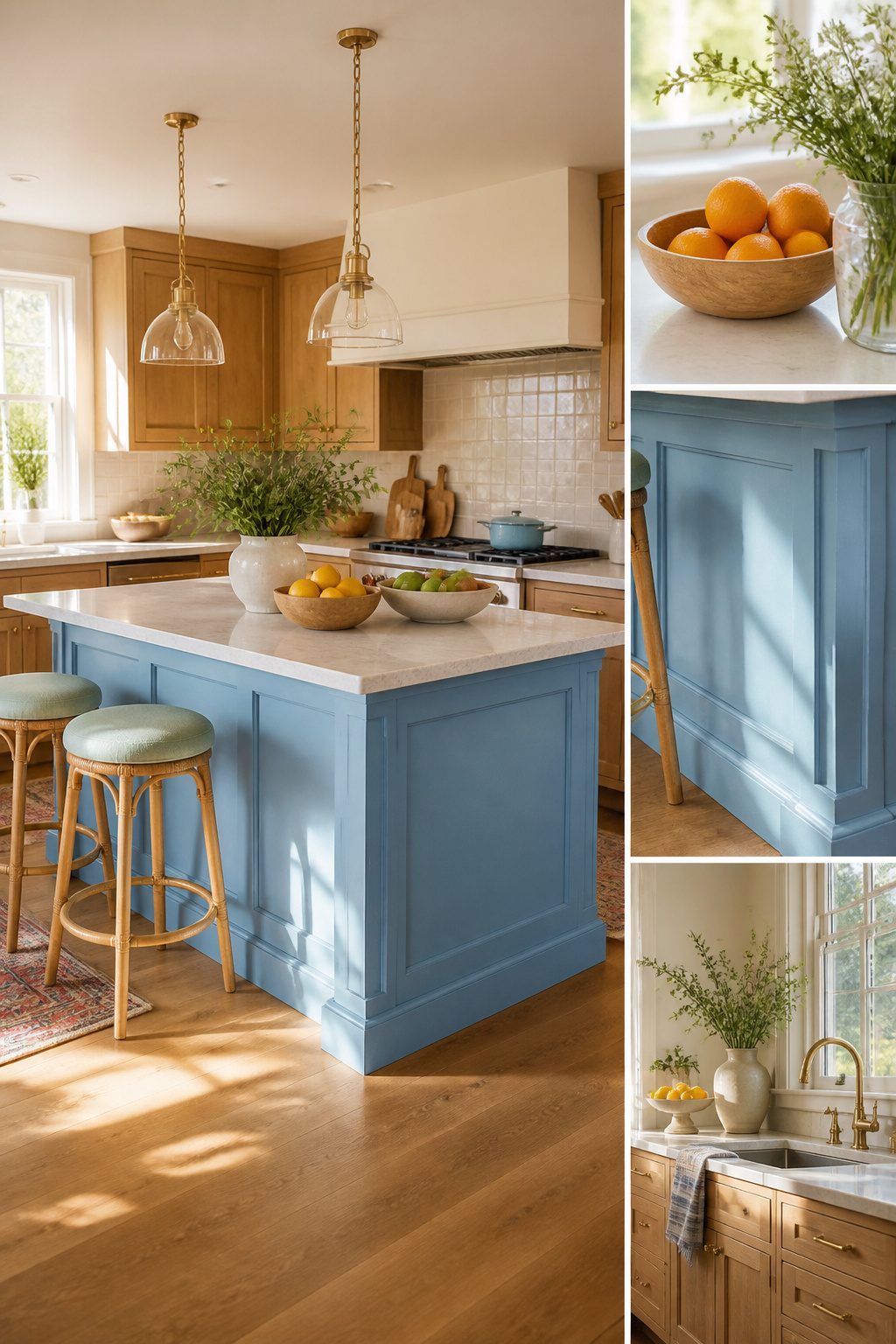
Painting a kitchen island in a pastel hue is the most involved project on this list, and the one that changed the room the most.
I used Benjamin Moore’s Palladian Blue, a soft blue-green that reads noticeably greener on a large surface than it does on the chip. The paint and primer together ran about $45.
Three Saturday mornings went into cleaning, sanding, brushing on two coats, and waiting out dry time between them.
Raking afternoon light still catches a few brush marks I missed with the foam roller, and next spring I would rent a sprayer for the finish instead.
Even with that flaw, the island now holds the room together in a way white never did. Pale green, seaglass, or a deeper sky blue would work the same trick if Palladian Blue leans too mint for your cabinets.
Clay-based paint handles the wear well, though any cabinet-grade paint will do the job.
What I Spend and Where I Save
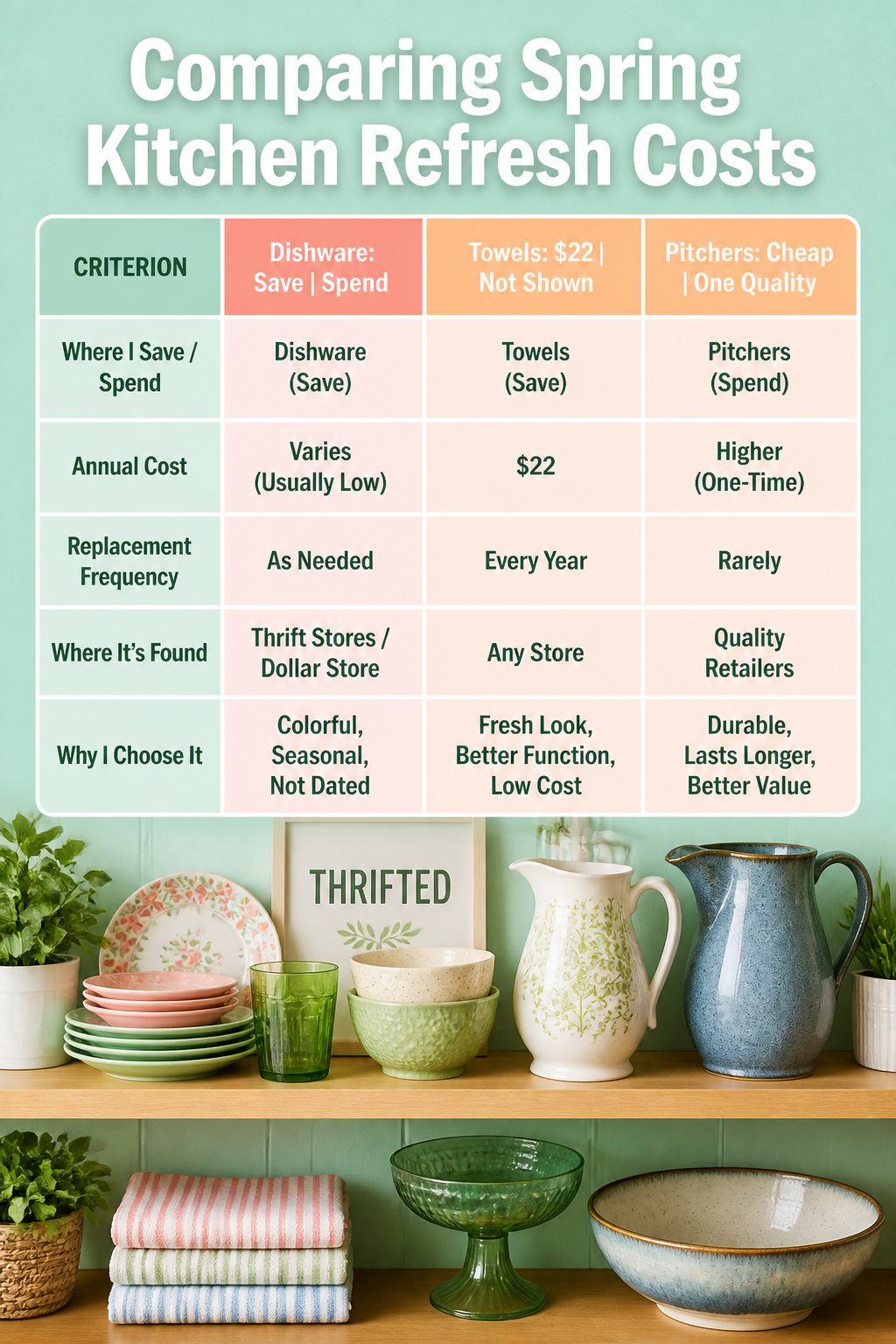
My full spring kitchen refresh last year cost $87, down from the $340 I blew the spring before on a new dish set I barely use. That year taught me where the money actually lands.
Dishware is where I now save.
The sources are right: thrift stores carry plates and mugs with color that reads seasonal, not dated, and a single dollar-store glass in a bright hue does more on a shelf than a full cabinet of matching bowls.
I skip full sets entirely.
The $22 item I replace every year is a set of lightweight cotton dish towels. They fade, they thin, they stop drying by August, but fresh ones in a light stripe change the whole room for less than takeout.
Where I pay full price is anything that touches water daily: a ceramic pitcher that holds up, a glazed bowl that sits out. The math is simple.
Two cheap pitchers that crack cost more than one that does not.
Weekend Timeline for the Whole Refresh
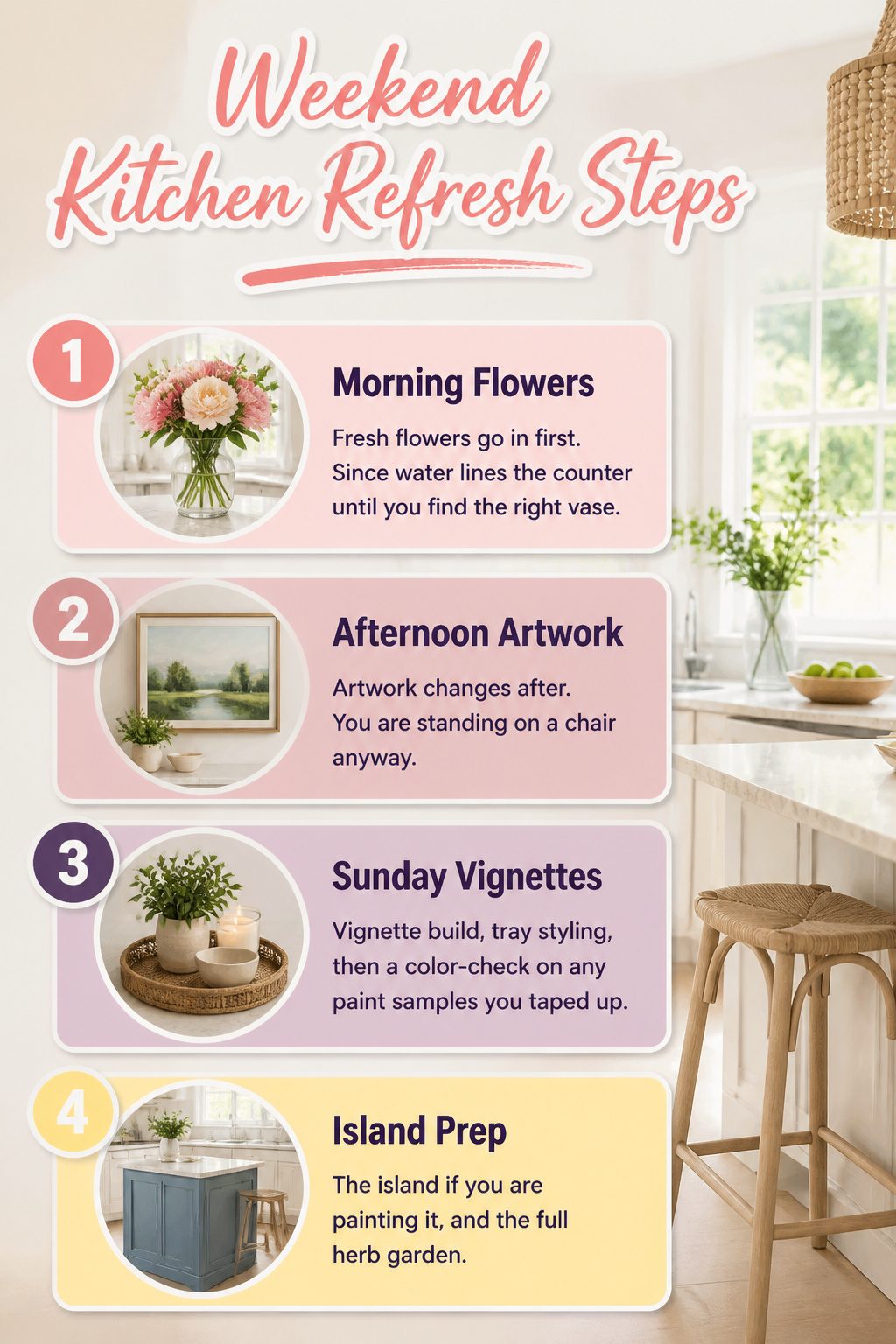
- Saturday morning: Fresh flowers go in first, since water lines the counter until you find the right vase. The herb split and fruit bowl follow; both need a dry surface, and morning light shows you where the eye lands.
- Saturday afternoon: Linens swap out fast once the old set is already in the wash. Artwork changes after, since you are standing on a chair anyway and might as well hang the new piece while the step stool is out.
- Sunday: Vignette build, tray styling, then a color-check on any paint samples you taped up. Paint reads truer by daylight, and Sunday afternoon light is what you will actually cook in.
- What waits: The island if you are painting it, and the full herb garden. I once tried to squeeze a painted island into the same Saturday as the flowers and linens. The second coat went on at 10 p.m., the kitchen smelled of latex through Tuesday, and the herbs sat in their nursery pots until Thursday. Give the island its own weekend, or live with the regret.
Frequently Asked Questions
How can I decorate my kitchen for spring?
Start with fresh flowers trimmed to about 14 inches so they clear upper cabinets, add potted herbs like basil or mint on a sunny windowsill, and swap heavy winter linens for thin cotton towels that dry faster.
Pull six to eight colorful dishes forward on open shelves, and build a low vignette on a cutting board with one functional item, one natural element, and one color hit.
What flowers are best for spring kitchen decor?
Tulips and peonies are the most reliable choices. Two bunches of peonies, mixing six buds with six open blooms, fill a larger vessel well, and ranunculus stretches the arrangement if peony season is short where you live.
Grocery-store tulips run $12 to $18 for ten stems, but farmers market bunches are often fresher with longer stems for around $8.
How do I create a spring vignette in my kitchen?
Use a bread board or cutting board no deeper than twelve inches so you keep real prep space.
Arrange one functional item, one natural element, and one color hit; the author uses an herb pot, a yellow mug holding a wooden spoon, and the maple grain itself.
Keep it low at counter height so it survives actual cooking without dismantling.