A rustic Thanksgiving table can be built from thrifted scarves and sidewalk leaves or from $57 LED spheres and farm-box centerpieces; the deciding factor is whether you need the setup to last one evening or to survive guests who linger past midnight. The seven approaches below range from free outdoor gatherings to layered vintage tableware hunts, and nearly every one relies on the same three natural elements: leaves, pine cones, and pumpkins gathered at no cost.
1. Natural Elements
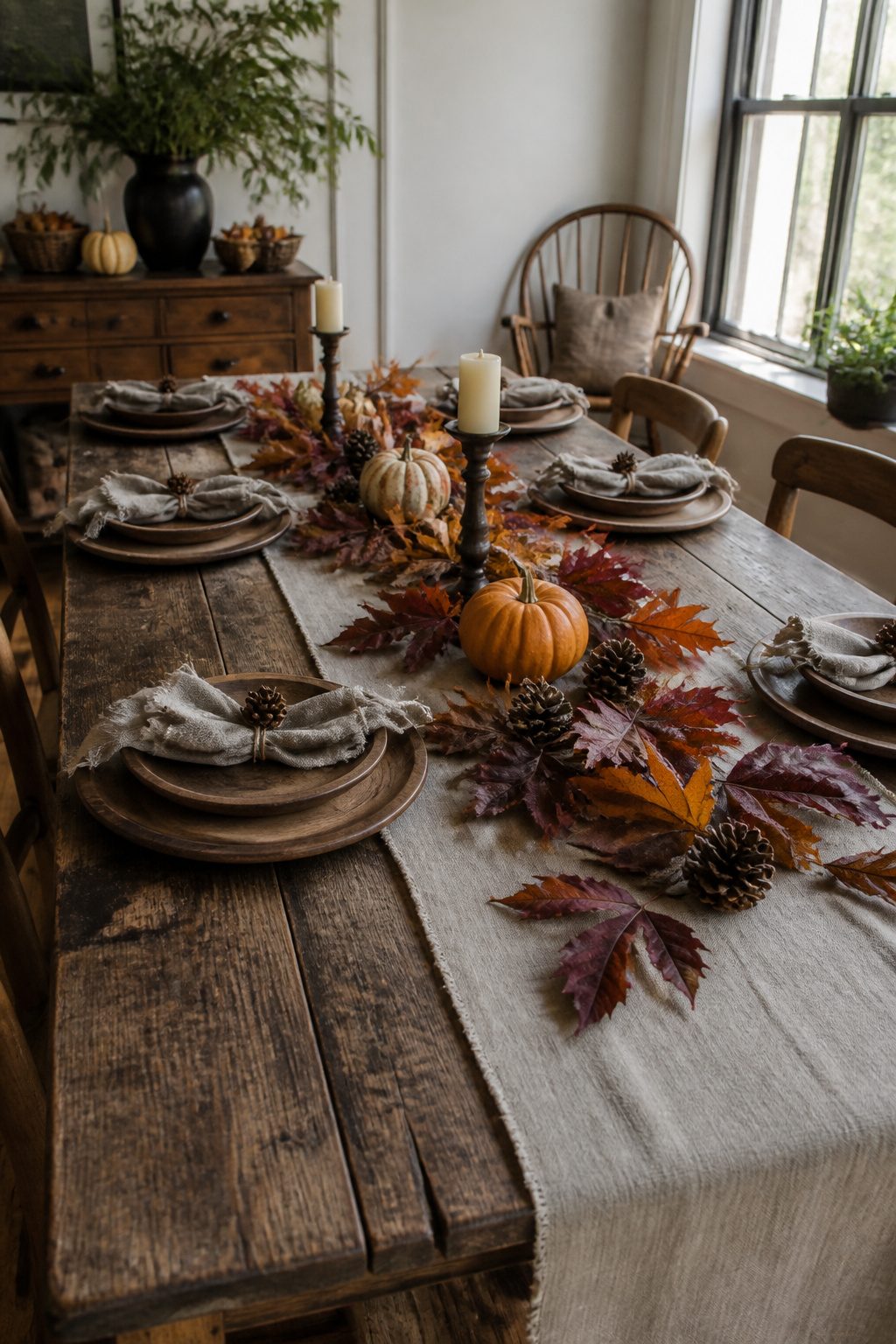
Leaves, pine cones, and pumpkins are the bones of almost every rustic Thanksgiving table that actually gets built. Seven out of ten approaches I sorted through leaned on this exact trio, not because it is trendy but because it works on a real budget. Gathering them outdoors costs nothing and the variation from yard to yard means no two tables look stamped from the same catalog.
The layered look builds itself once you start. Scattered leaves across the runner, pine cones tucked between plates, small pumpkins anchoring each place setting. Plum and orange tones against whatever cloth you already own carry the warmth through without a single store trip.
What I watch for is scale. A centerpiece piled too high blocks faces across the table, and Thanksgiving is the one meal where you want to see everyone. Keep the tallest elements under plate-rim height, cluster the rest low and wide. The natural materials do the work; your job is not to overarrange them.
2. Wood Accents
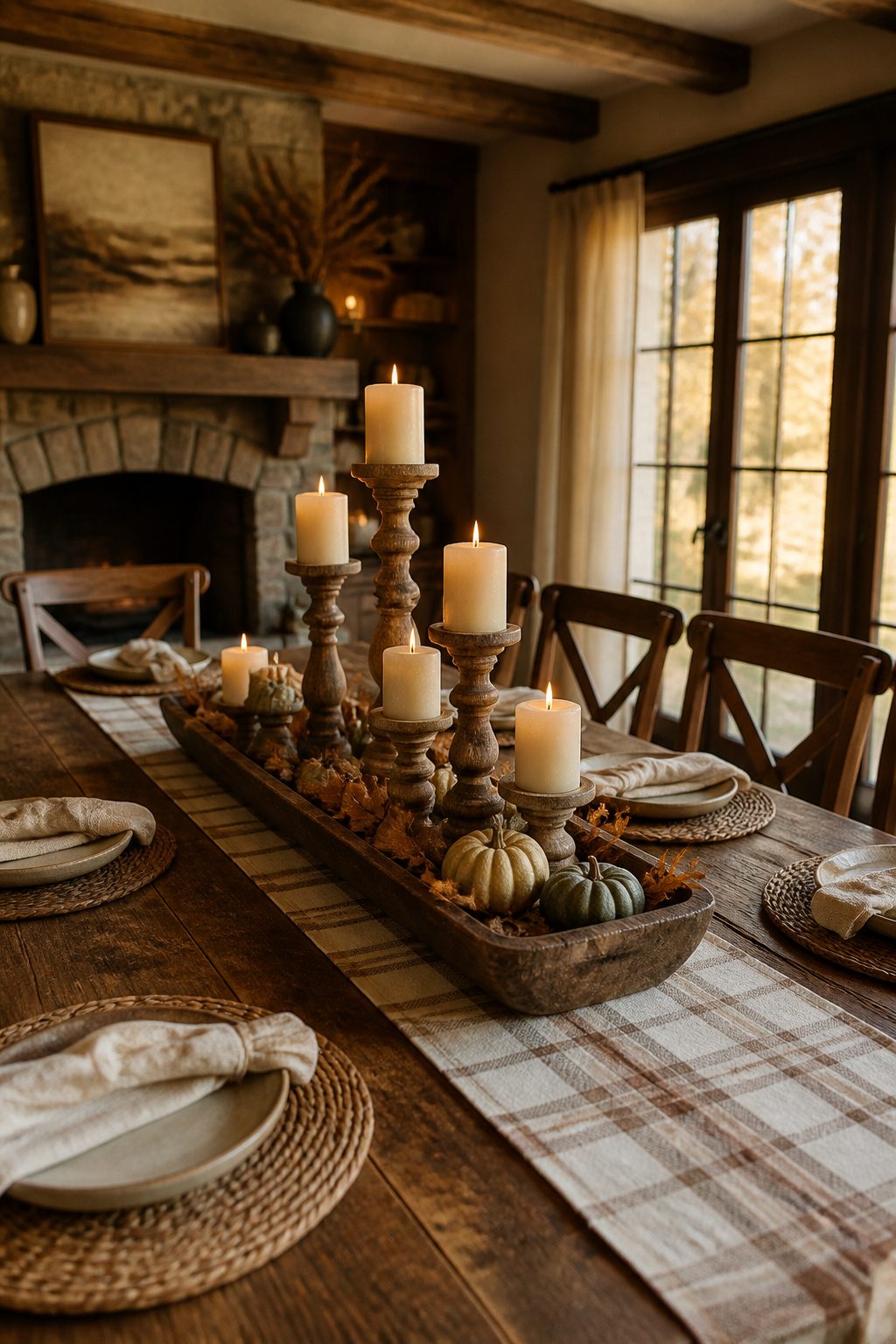
Wood brings the warmth that makes a rustic Thanksgiving table feel lived-in rather than staged. Five separate setups I studied all leaned on it, and the repetition makes sense: wood softens everything around it.
Rustic wooden trays are the workhorse. One writer found hers for $12.99 at Home Goods years back and uses it constantly; another pulled a rough farm box from her family’s barn, tool scars still visible. Both read as intentional rather than shabby. A long tray down the center grounds the whole table, and a linen runner layered inside adds texture without clutter.
Wooden candle holders layered at varying heights keep the eye moving. Pair them with vintage brass for contrast, or cluster several sizes among white pumpkins and seeded eucalyptus from the grocery store. Wood slices work too, stacked under plates or laid individually as chargers; a set of ten runs about $36 and comes in mixed sizes.
The limit is tone. Rough, unfinished wood reads rustic; anything too polished drifts toward farmhouse catalog. Barn wood, a cheap tray with a wobble, a breadboard set right on the table: these carry the slight imperfection that makes the whole thing believable.
3. Vintage Tableware
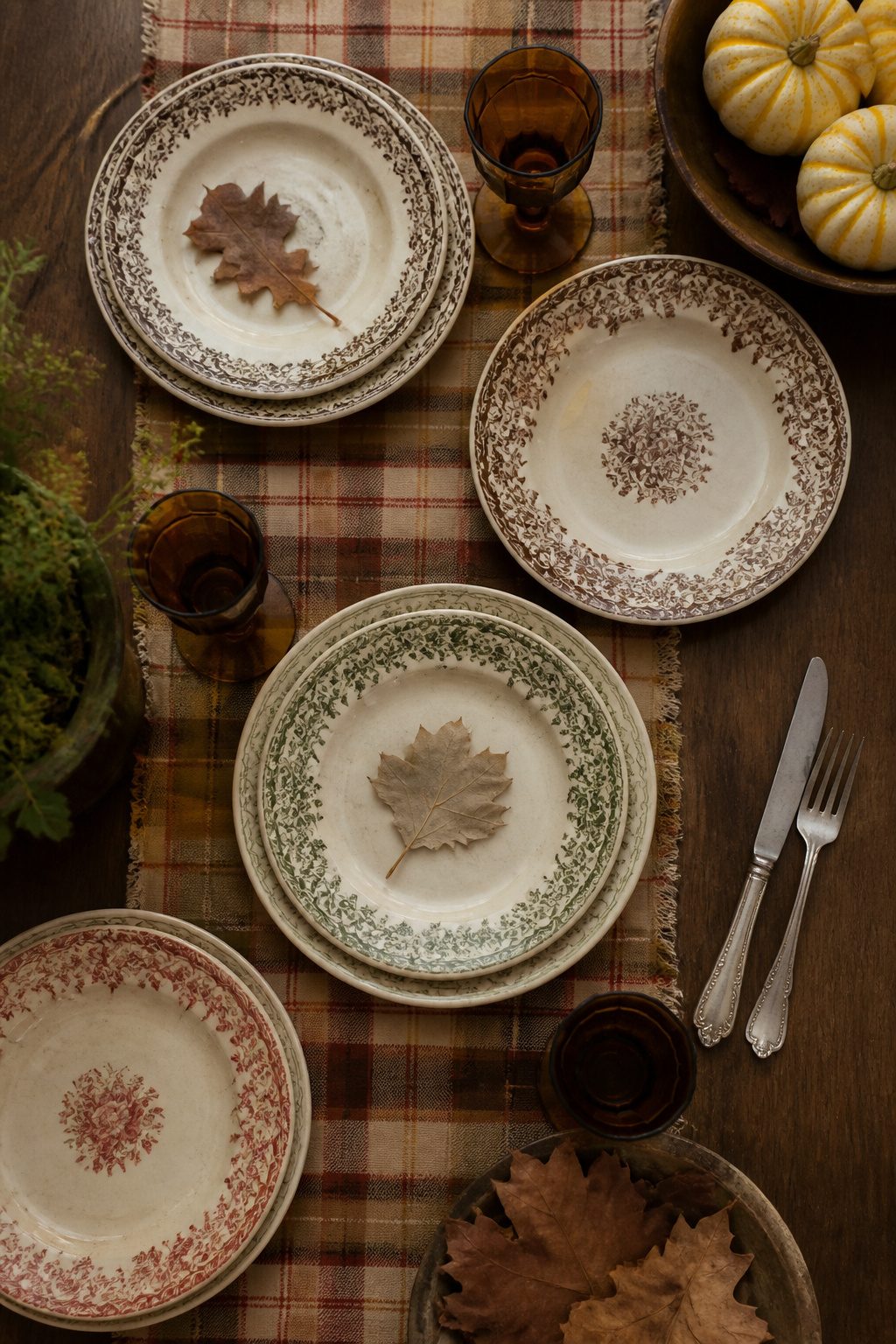
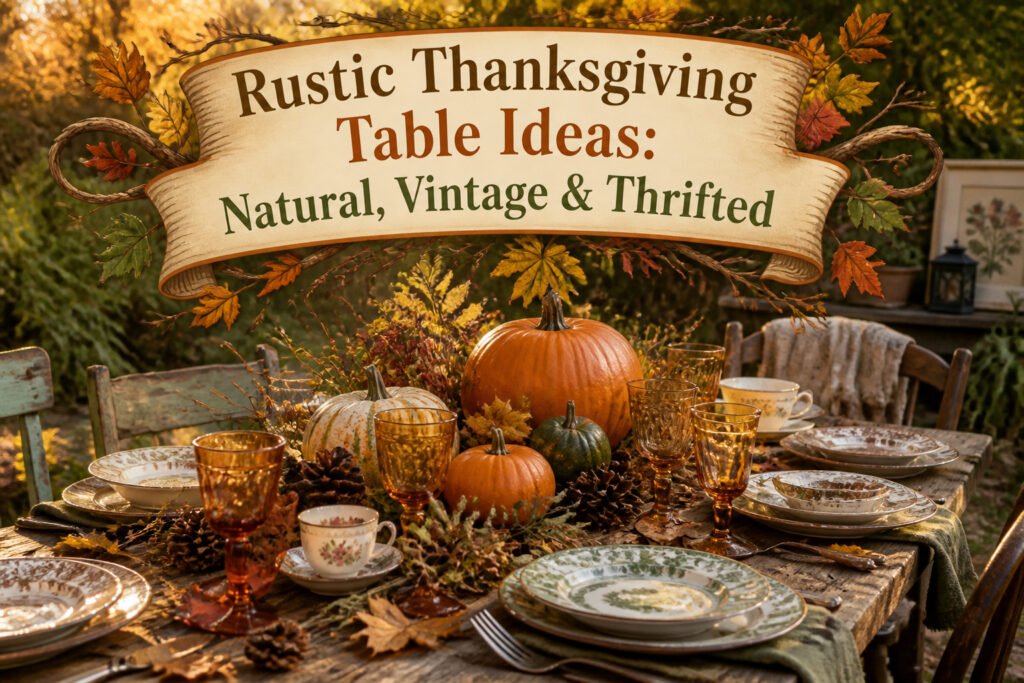
Mason’s Ascot plates carry the kind of autumn palette that makes a rustic Thanksgiving table feel collected rather than staged. The pattern layers warm earth tones with a slightly faded quality that reads as heritage, not reproduction. A blogger who built her whole tablescape around them started with three found at an antique shop, then hunted down matching pieces through eBay to complete the set. That mix of in-person discovery and online patience is the realistic path for most of us; no one walks into a single estate sale and finds service for twelve.
Antique silver and bone-handled Laguiole knives sit well against those plates, though the contrast matters more than the specific pieces. What you’re after is the tension between something refined and something rougher: polished metal against a plaid runner, or in one case, a burgundy scarf repurposed when the right textile proved impossible to find. Brown glass stemware continues the muted tone rather than fighting it.
The risk with vintage tableware is making the table feel like a museum. The fix is using pieces that show real use: slight wear on a rim, faded gilding, the kind of imperfections that let guests relax. Monogrammed linen napkins help, oddly enough, because they signal intention rather than accident. The table looks considered, not inherited by default.
Aim for three to five anchor pieces with character, then let the rest be simple. Every dish does not need a backstory.
4. Layered Textures
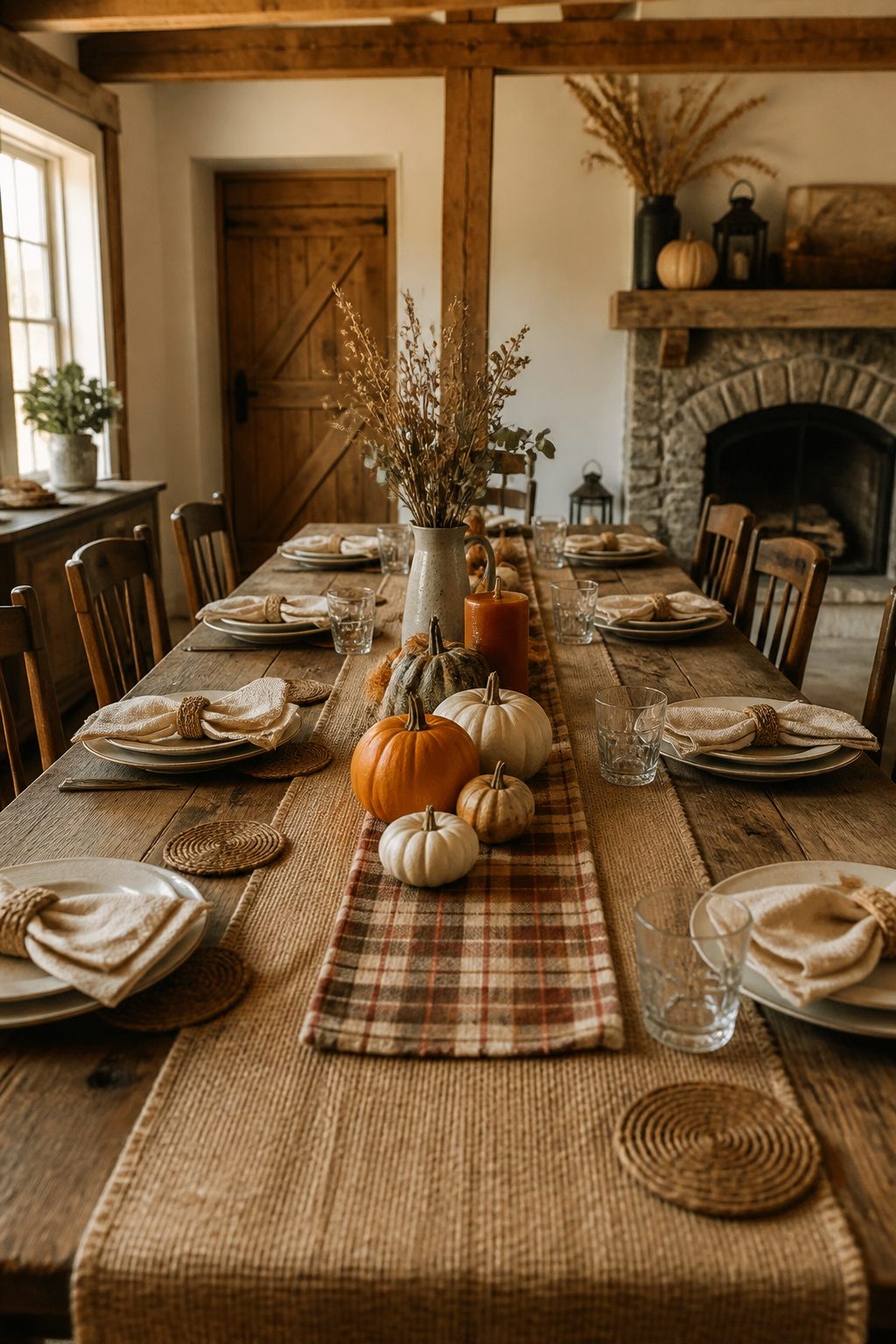
Burlap reads rougher than it photographs, which is why I keep a roll on hand for November. A single length down the center, ends tied with satin ribbon, gives the table its working backbone without costing more than the $23.92 a full runner runs at retail. Linen softens the same setup, pressed napkins at each seat that only look expensive, around $7.29 each if you buy rather than inherit them. Plaid splits the difference between the two, autumn tones in a runner bold enough that the rest of the table can stay quiet, and six fabric directions I have tracked agree on mixing all three rather than committing to one.
The scarf-as-runner variation is what I actually use when the guest list shrinks. A wool plaid scarf, the kind already in the coat closet, runs the shorter length of a card table or kitchen nook with fringe that does the decorative work for you. No hem, no storage bin, no single-purpose purchase. The tradeoff is width, narrow enough that plates sit partly on bare wood, which reads as intentional at a small table and sloppy at a long one. Scale matters more than fabric choice here.
5. Simple Centerpieces
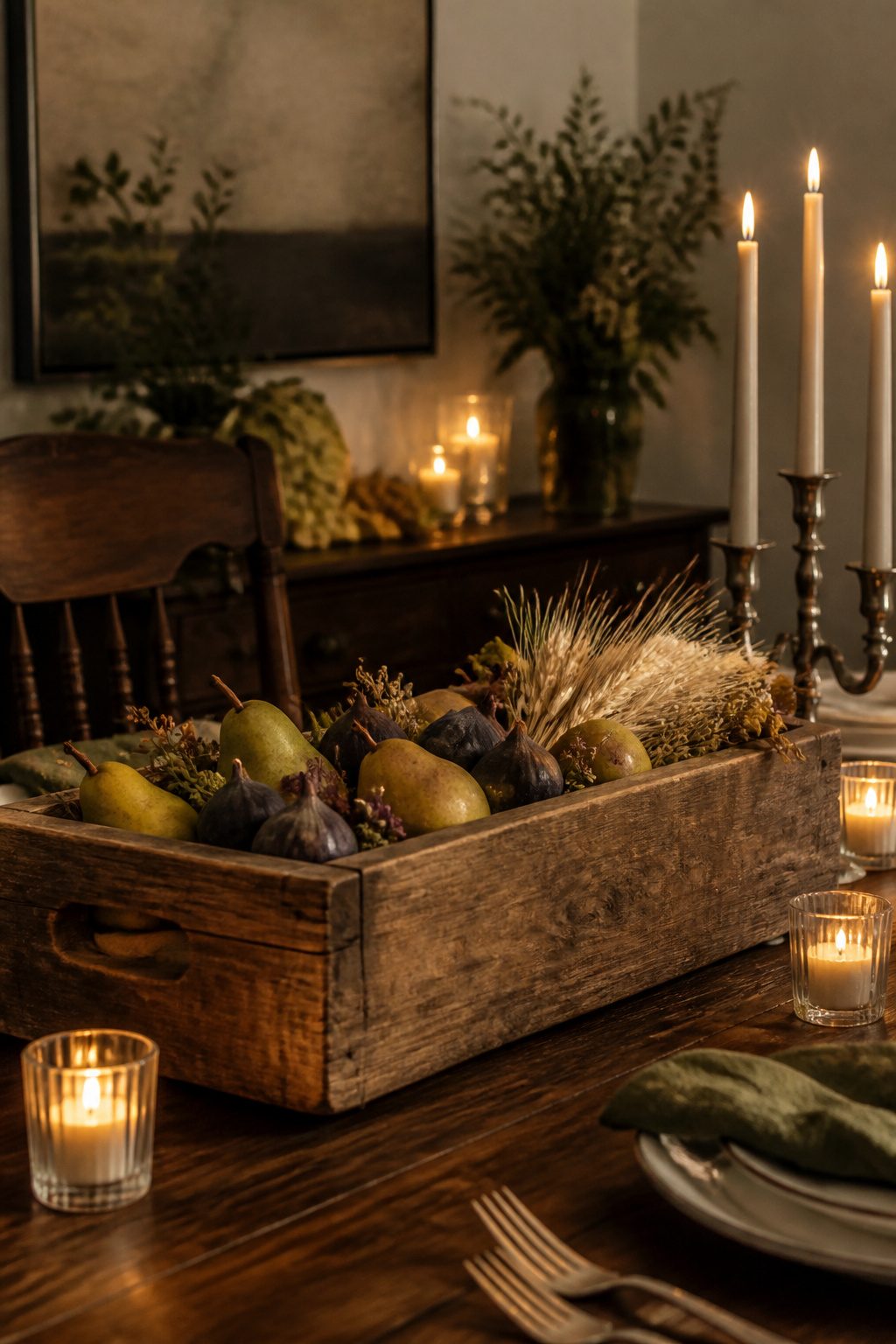
A wooden box dragged in from the barn floor still carries the scratches and stain marks that make it read as authentic rather than store-bought. Copper pumpkins, acorns, antlers, and wheat packed inside hit the rustic Thanksgiving table note without looking arranged by a florist. The rough wood and neutral palette do the heavy lifting; the contents just have to stay low enough that guests can see over them.
For a shift in mood, vintage silver candelabra flanking a dried wheat bundle with fresh pears and figs layered at the ends brings in that harvest feel with more polish. The symmetry helps on longer tables where a single centerpiece gets lost. Small glass votives scattered between pieces give the glow that makes a 6 p.m. dinner feel intentional rather than last-minute. Dried gourds paired with vintage amber bottles work the same way for renters who do not want to store a wooden box year-round.
6. Casual Place Settings
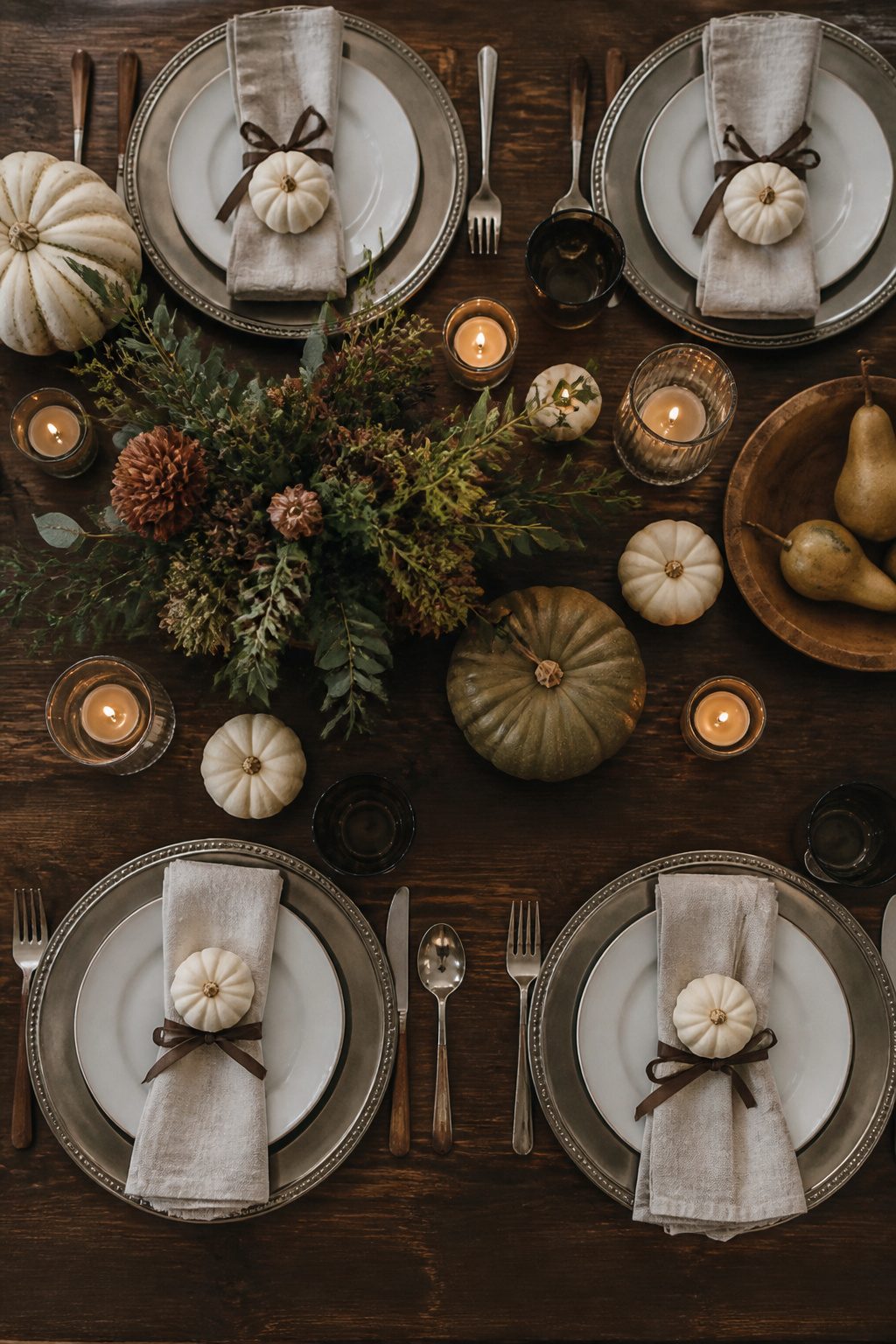
A rustic Thanksgiving table lives or dies on how comfortable people feel sitting down to it, and the fastest way to kill that comfort is too much silverware. Three pieces at each place is plenty: a dinner fork and knife, with the spoon only if you’re serving soup where people sit. Skip the salad fork, the fish knife, the dessert spoon waiting upstairs. Nobody misses them, and everyone notices the breathing room.
Buffet service is the natural partner here. Set a metal charger at each seat, stack the plates and wrap the flatware inside a linen napkin with a ribbon tie. Guests grab a bundle on their way through the kitchen, and the table itself stays clean enough to show off whatever centerpiece or runner you’ve built. The wrapped bundle also travels: it works for porch dinners, card-table extensions, or that one uncle who insists on eating in the living room chair.
Everyday dishes keep the pressure off. The sources all point the same direction, porcelain pulled from the daily cabinet rather than the hutch. A white plate against a dark tablecloth or a rattan placemat gives enough contrast that the food pops without any formal china pattern competing for attention. Clear glasses, thrifted silverware from a Habitat ReStore run, a small white pumpkin or gourd on each plate for a single bright note. The total cost stays under what one person might spend on a single napkin ring somewhere else, and the whole thing resets in ten minutes after pie.
7. Lighting Elements
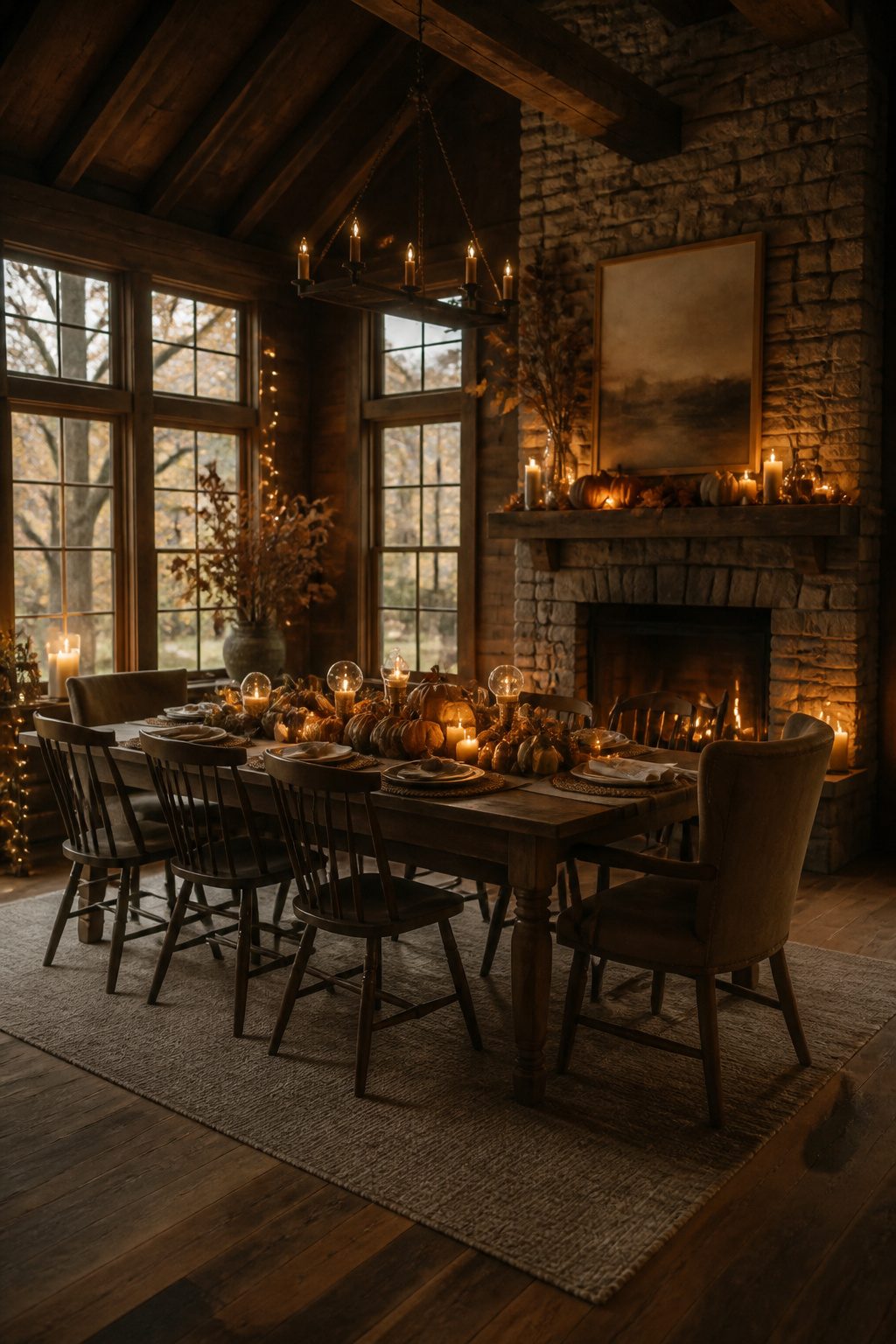
Candles and string lights each solve a different problem on a rustic Thanksgiving table, and the wrong choice leaves the room either dim or distracting. Candles give you that flickering, living warmth that makes a long meal feel intimate; they work best when the gathering runs past sunset and you want the light to drop naturally as the evening goes on. A set of three glass spheres with LED lights inside, priced at $56.99, does something candles cannot: it stays bright and safe for hours without tending, and it tucks neatly among fall decorations where a flame might singe dried leaves or burlap. That safety matters more than I used to think. Last year I tried to nestle real tea lights into a centerpiece of wheat stalks and twine, and spent the first twenty minutes of dinner swapping out votives that burned too hot and too fast. The glass spheres would have solved that, though at that price I would use them as the single accent rather than scattering them down a long table. For a renter’s budget and a single Saturday of setup, a mix usually wins: candles for the meal itself, where the glow flatters faces and food, and a short strand of battery-powered lights woven through the centerpiece for the hours before and after, when people are milling with drinks and you need the table to read as finished even from across the room. The twinkle draws the eye without demanding it, which is exactly what a rustic table needs: warmth that looks accidental, not staged.
DIY Centerpieces That Actually Get Built
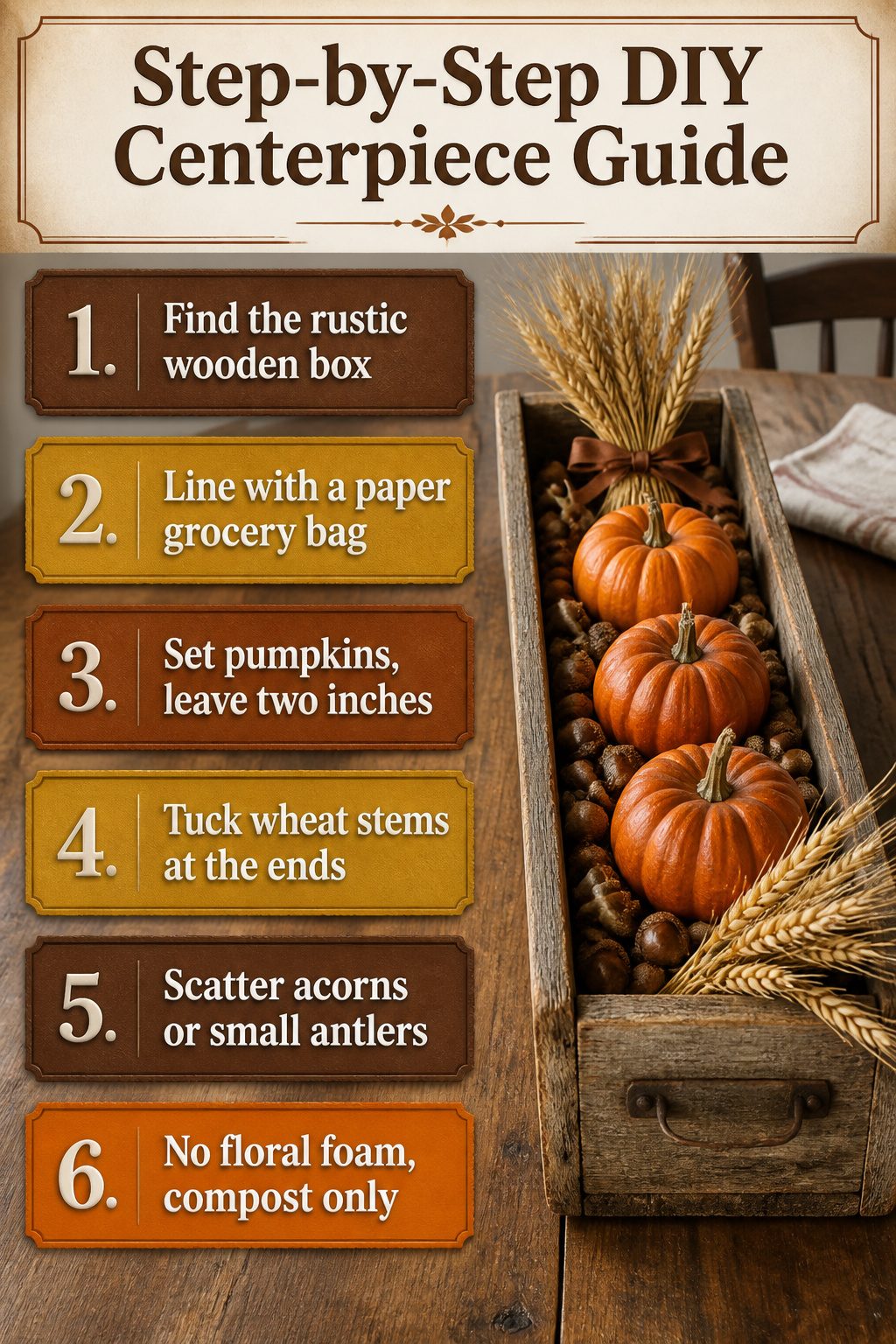
Most "DIY" centerpieces never tell you what to actually build. Here’s the wooden box with pumpkins and wheat, start to finish.
- Find the box. A rough, tool-scarred box from a barn or flea market works. The one I saw was old farm storage, splintered and gray. That patina is the point; new wood looks like a craft project.
- Line it with something that can handle moisture. A folded paper grocery bag, brown side up, disappears against the wood. No one sees it, and a wet pumpkin stem won’t mildew the base.
- Set three small pumpkins or gourds down the middle, heaviest in center. Copper or deep orange both read autumn; the sources split on this, and both work. Leave two inches between them for air, or the display collapses into a pile.
- Tuck wheat stems at the ends, leaning outward so the heads clear the box edge. Five stems, tied with plain twine or a thin velvet ribbon if you want the dressed-up version one source used. The height should break above the pumpkins by about a hand’s width, not compete with cross-table conversation.
- Scatter acorns or small antlers in the gaps. This is where most builds stop too soon; the fill is what makes it look gathered, not placed.
- No floral foam, no water. Dried materials last the weekend, then compost.
What Thrifted and Free Actually Looks Like
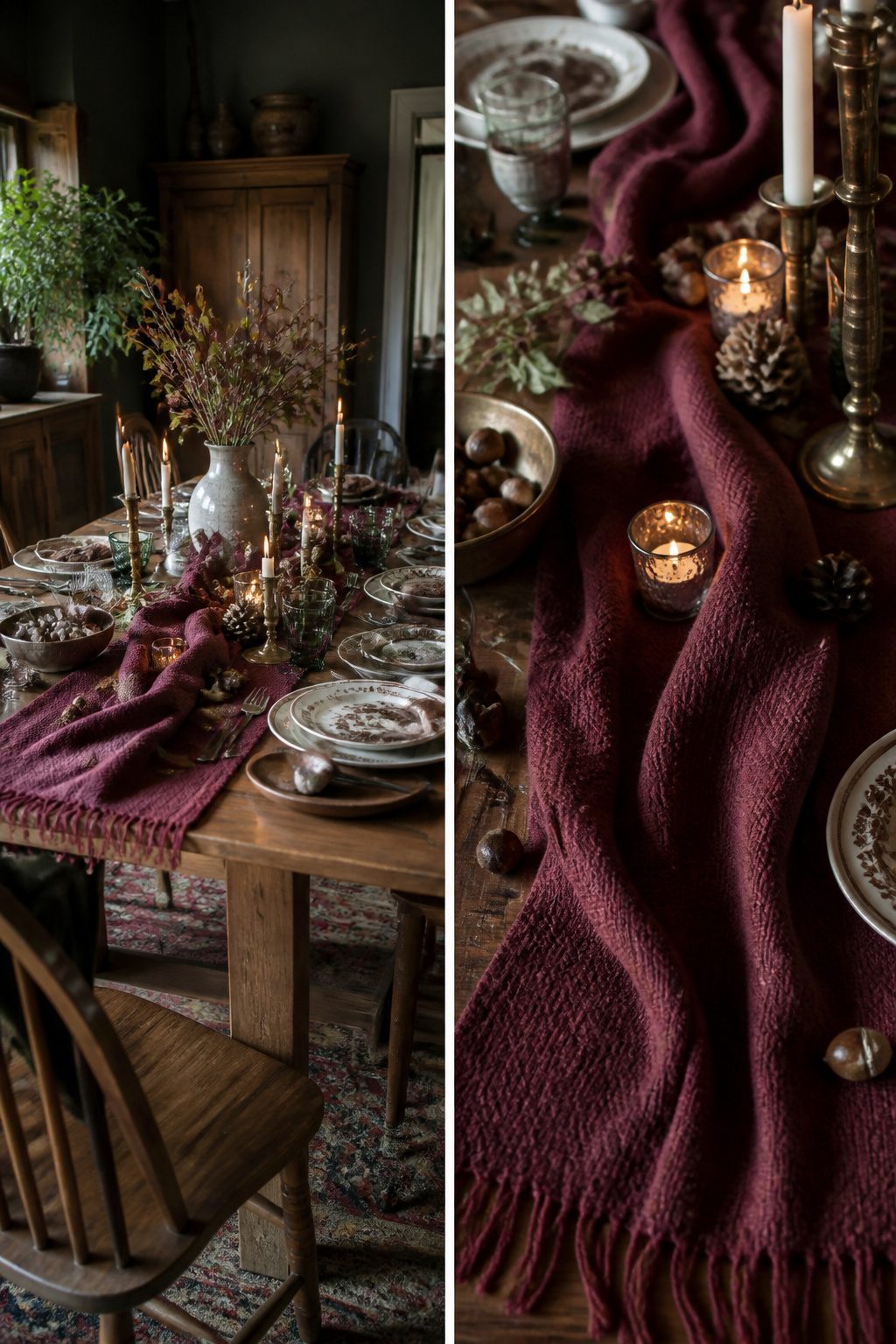
A scarf laid lengthwise down the table works better than you’d guess as a runner. The fabric pools at the ends in a way linen never does, and the fringe catches candlelight. I found a burgundy one at a thrift store for next to nothing, but any wool or silk remnant with a worn edge will read as intentional.
Thrift stores reward the patient. Eclectic glassware, mismatched serveware, and vintage wooden utensils each break up the matchy-matchy look of a boxed set. Burnt orange napkins with white porcelain napkin rings cost me under four dollars total, and the napkin rings had the slight chip that made them cheap.
What is free fills the gaps. Sedum Autumn Joy turns from pink to burgundy as the season cools; one small bloom tucked into each ring ties the color to something alive. Pine cones, acorns, and the leaves already on your sidewalk layer into a centerpiece that costs nothing and moves with the evening air when someone shifts a plate.
The Earth Tone Palette
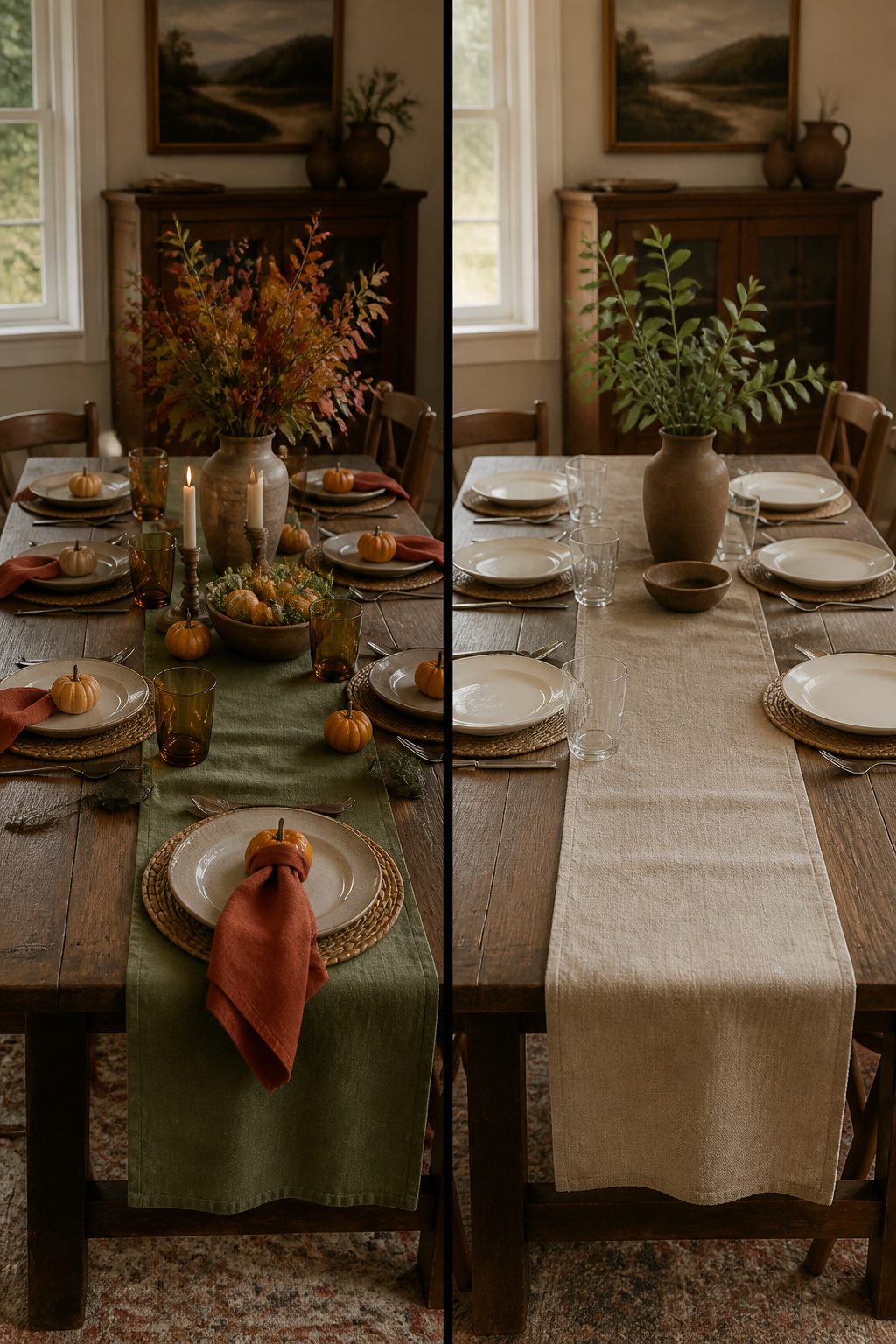
Browns, greens, and muted oranges are the backbone of any rustic Thanksgiving table that actually reads as rustic rather than just brown. The three work because they echo what is already outside in late November: dried grasses, the last stubborn leaves, overcast light on bare branches. Last year I tried adding a bright pop of coral to "warm things up" and it looked like a catalog had thrown up on my pinecones. The orange needs to be dirty, almost rust, or it fights the wood and burlap instead of settling in with it.
Aim for three tones, not three colors: a dark anchor like espresso or charcoal brown, a mid-tone such as sage or olive, and that muted orange as your accent in small doses. Sage green table runners against dark wood with burnt-orange napkins worked better than the reverse; too much orange and the table looked like a pumpkin patch display. The green keeps the eye moving so the brown does not flatten everything into a single muddy plane.
If your plates or glasses introduce another color entirely, let them. A little blue-rimmed enamel or clear glass actually helps, because perfect adherence to the earth-tone trio starts to feel staged. The palette is a guide for the big pieces, not a rule for every item you own.
Outdoor Settings
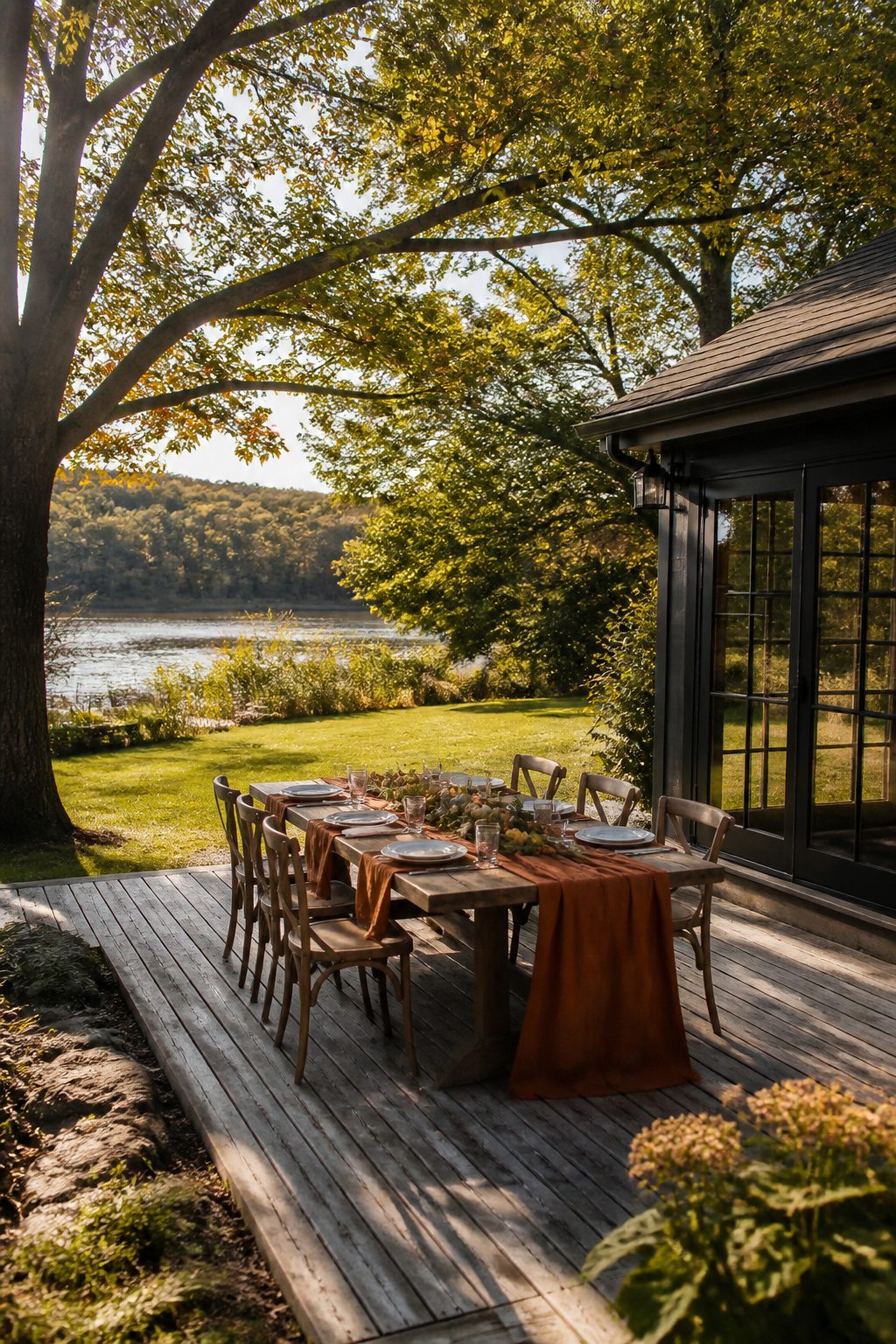
Moving a Thanksgiving table outside changes what "rustic" even means. The bare wood of the deck becomes your tablecloth, and leaves that fall during the meal stop being mess and start being ambiance. Holly’s setup used rattan chargers and white place settings against that raw surface, which keeps the look intentional rather than accidental.
The real question is temperature. That 40-degree dusk shoot is not a meal anyone enjoys. Plan for the window you have, not the one you wish for. A warm afternoon in late November is a gift; build the menu around things that hold at room temperature so no one is rushing.
Woven placemats and layered greenery centerpieces work outside because they already look wind-blown. Crystal mixed with those natural textures catches the low autumn light differently than it does indoors, and that contrast is the whole point. Skip anything too lightweight, paper menus and tall candles both will end up in the neighbor’s yard.
If your deck faces east, the light is gone by afternoon. A string of lights on a pergola is not decoration then; it is the only way the meal happens.