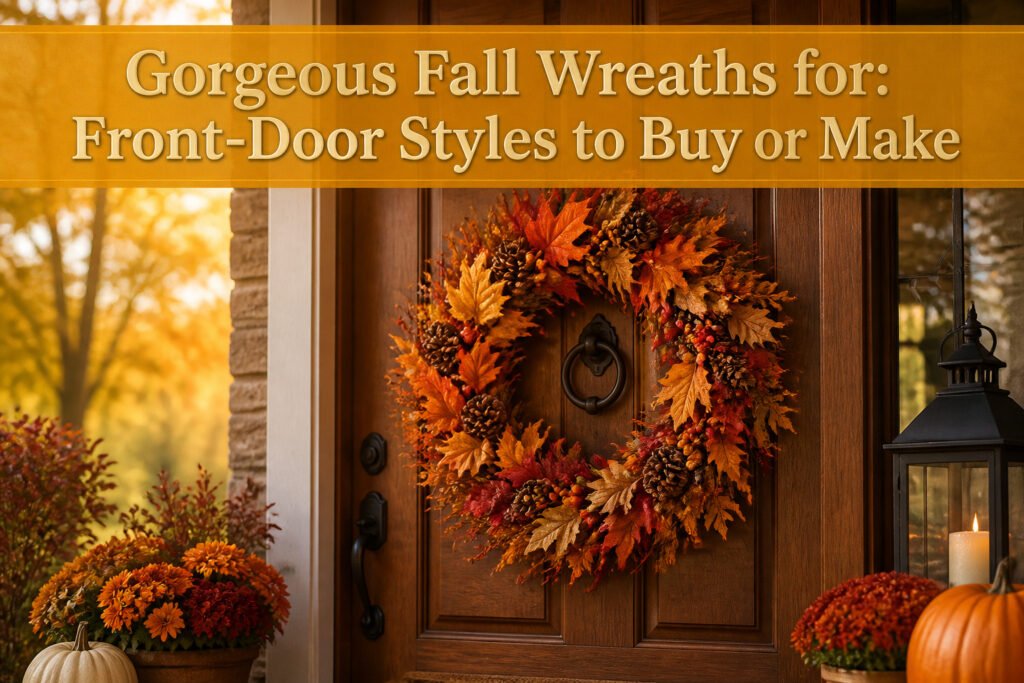
A gorgeous fall wreath is a seasonal door decoration built from artificial or dried foliage, fruit, or botanicals, sized to read as intentional from the curb rather than accidental. The catch is proportion: most standard U.S. front doors run 32 to 36 inches wide, which puts the workable diameter at 22 to 26 inches, and anything outside that range either disappears or fights the door for space. I measured a 26-inch Birch Lane maple leaf against my own frame last year and watched it hang low enough to crowd the knocker, while a 24-inch version cleared the hardware and left breathing room at the edges.
1. Maple Leaf Wreath
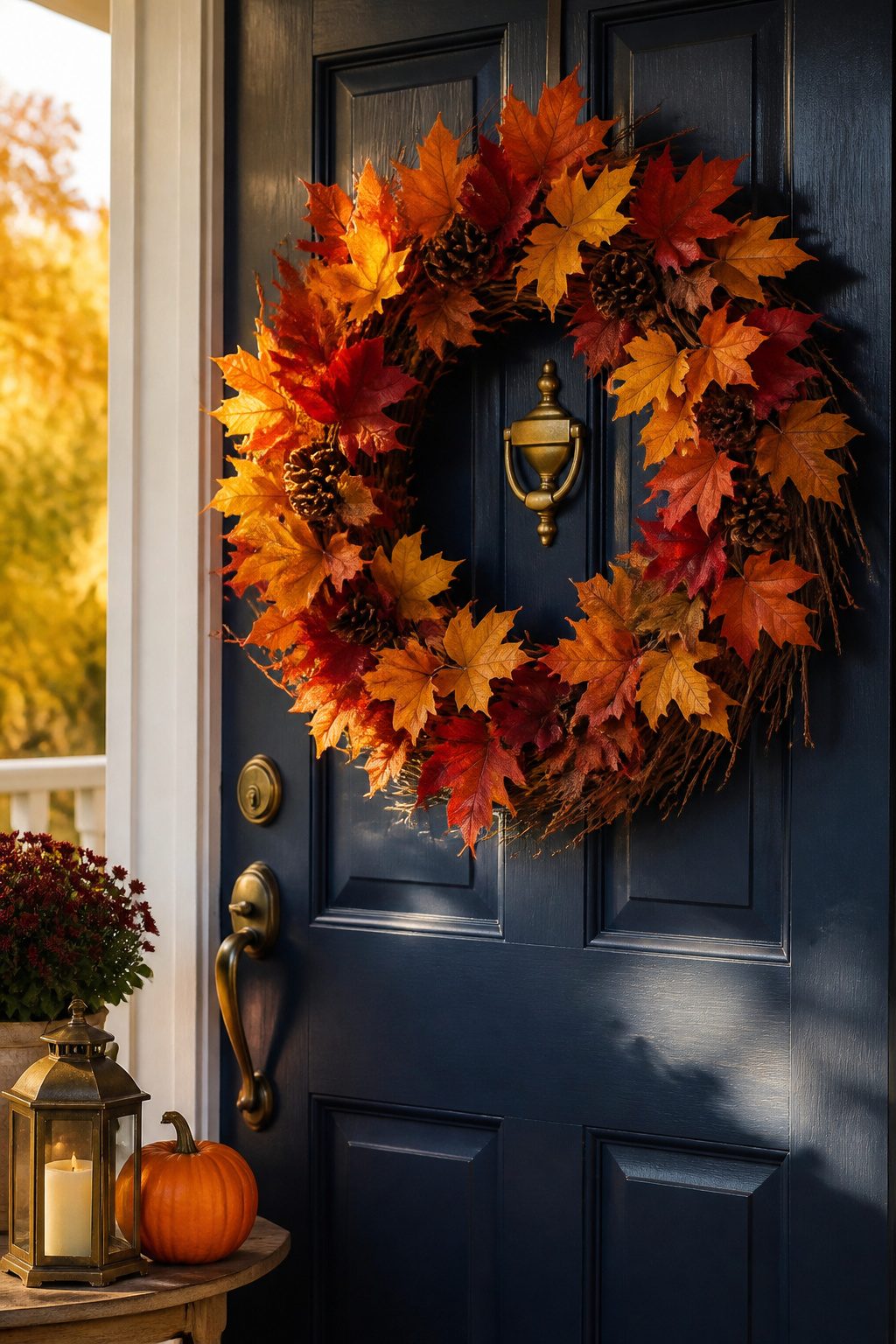
A 24-inch maple leaf wreath lands at the scale where most standard front doors feel dressed rather than swamped. The artificial leaves come in full saturated reds, oranges, and yellows, sometimes with pinecones or persimmons woven through for texture, and the whole thing reads as the classic fall image people picture first.
Price splits sharply by where you shop. Amazon lists versions in the twenty-to-forty-dollar range, which gets you glossy polyester leaves on a grapevine base that works for a season or two. Frontgate and Pottery Barn run higher, though neither site pins exact maple pricing this year; the splurge tier generally starts around eighty dollars and climbs toward one-fifty for denser construction and wired stems you can reshape after shipping.
The 26-inch Birch Lane wreath I measured against my own door frame last year hung slightly low on a standard thirty-two-inch panel. Twenty-four inches sits higher, clears the knocker, and leaves breathing room around the edges. On a mantel, the same size works centered alone or paired with candlesticks; the color saturation carries far enough that you do not need much else.
Red-only versions exist, and one blogger I follow keeps hers on a dining room mirror through November. The multicolor reads more traditional front-door, especially against dark paint or brick.
2. Fall Foliage Wreath
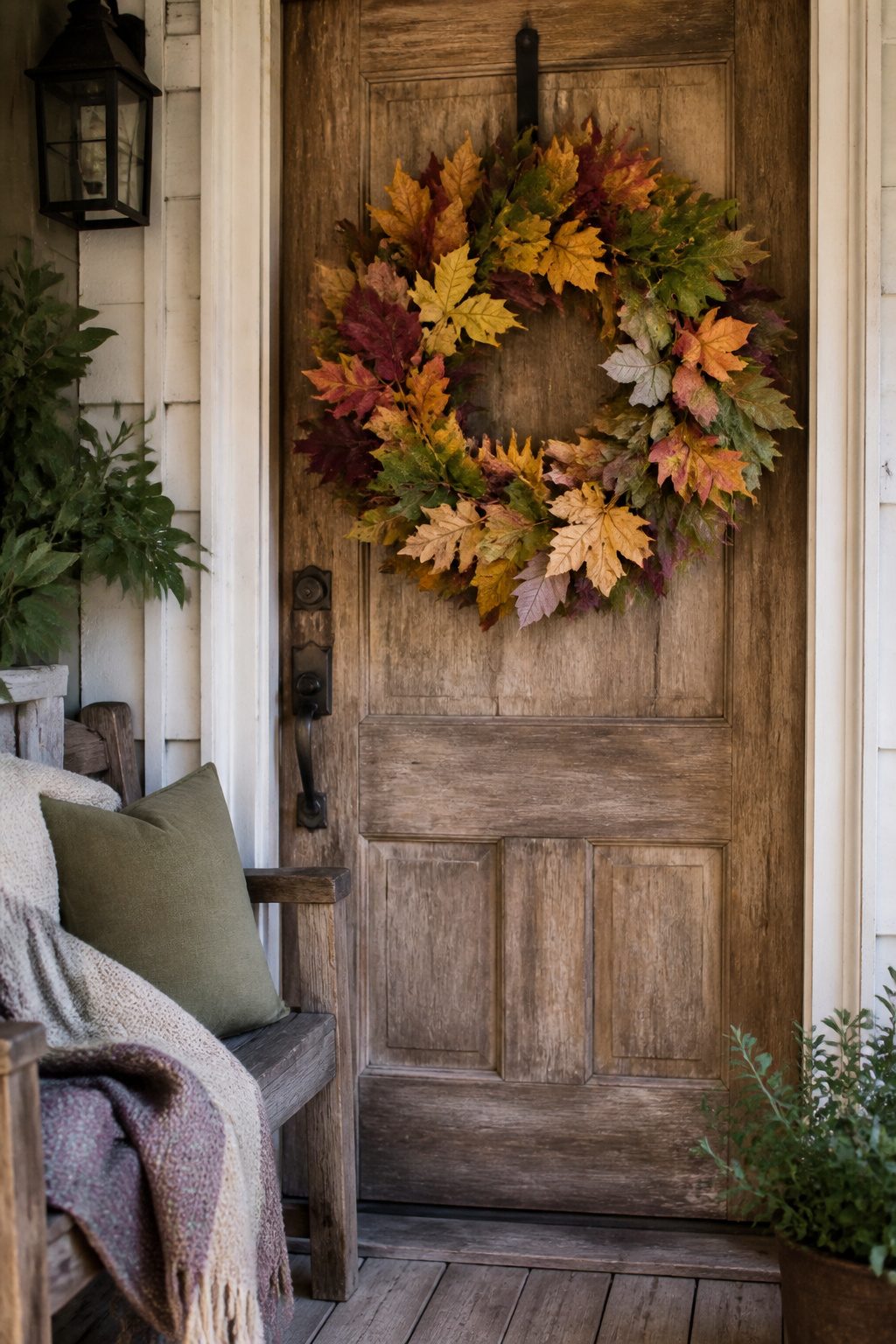
A mixed-leaf wreath reads differently on a door than one built from a single tree type. Maple or oak alone gives a flat, uniform surface that flattens further in photos; the eye has nowhere to rest. Blending three or four species, say oak, maple, sweetgum, and a touch of birch, builds layers at slightly different depths and angles. On camera, those overlapping edges catch light unevenly, which translates as fullness even when the wreath itself is lighter than it looks, often under two pounds for a 22-inch frame.
The weight matters more than I expected when I started hanging these. A dense grapevine base loaded with one heavy leaf type needs a serious hook and leaves marks. The mixed style spreads material across a lighter wire or twig frame, so it hangs on a standard over-the-door wreath hanger without stressing the finish.
For Pinterest, the variation does the work a filter would. One leaf catches sun, another falls in shadow, and the whole ring reads as depth rather than pattern. Single-species wreaths need perfect staging to avoid looking like a flat disk. The mixed version forgives a cloudy afternoon or a porch light that is slightly off-center.
3. Gold Magnolia Leaf Wreath
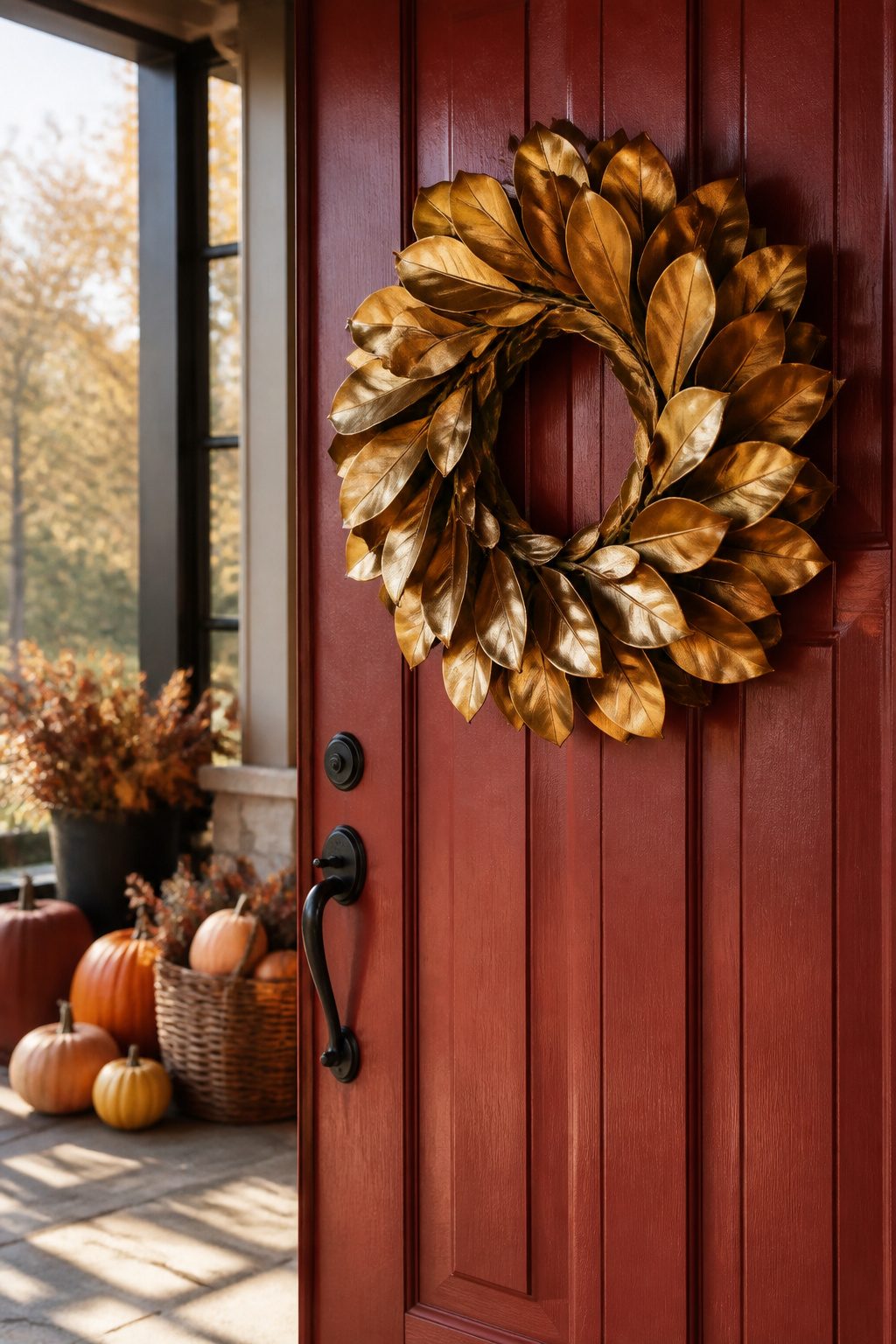
A magnolia leaf wreath in gold finish catches late-afternoon October light differently than any other metallic option. The waxy surface of real or high-grade faux magnolia leaves already has a natural sheen; adding gold amplifies that reflectivity so the wreath seems to glow from within as daylight thins.
The warm undertone of gold, rather than silver or copper, is what makes this specific pairing work against traditional fall palettes. Orange gourds, deep burgundy mums, and dried wheat all sit adjacent to yellow on the color wheel, so gold reads as an extension of those hues rather than a contrast. The result reads intentional and expensive even when the wreath itself is simple.
That expense is the practical catch. Standard faux foliage wreaths run on a simpler production line: bulk polyester leaves, standard dye lots, minimal hand work. Gold magnolia wreaths require either metallic spray application in multiple passes or, for the premium ones, individual leaf painting with shading to keep the gold from reading flat. The labor difference shows up in the price tag, usually landing at double or more compared to an uncoated leaf wreath of the same diameter.
For renters or anyone swapping wreaths seasonally, the gold version also stores differently. Metallic finishes can flake if crushed against other decorations, so flat storage or a dedicated hook inside a closet protects the investment better than tossing it into a bin with the rest of the fall box.
4. Grapevine Wreath
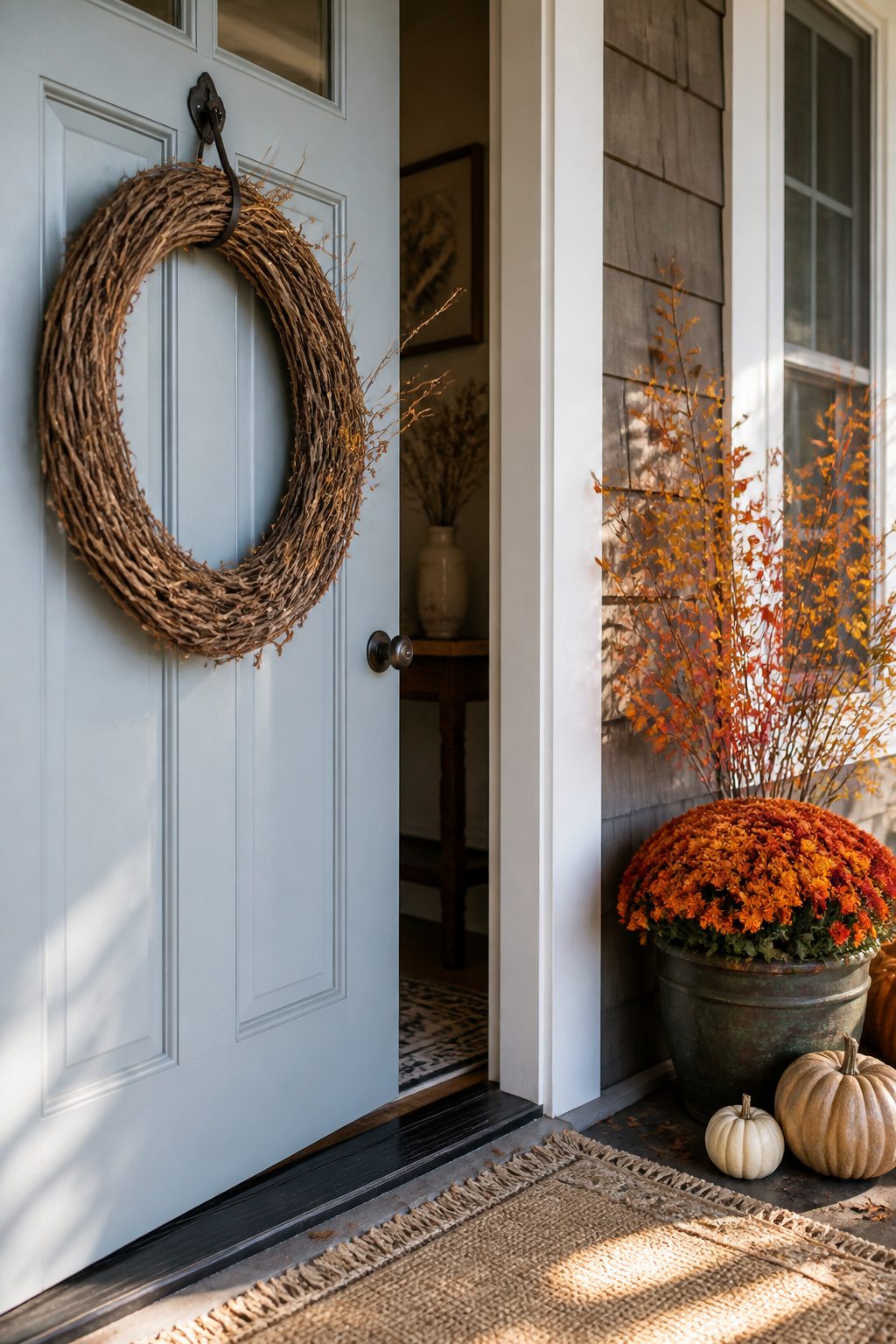
A grapevine wreath starts as bare twisted wood, nothing more. The woven branches carry their own pattern of knots and gaps, so the finished piece reads as found-in-the-woods rather than assembled from craft-store parts. That texture comes with weight; these run heavier than foam or wire frames of the same diameter, and they feel solid in your hands when you lift one off a hook.
Rain is where grapevine shows its limits. The wood soaks water in rather than shedding it, and a saturated wreath can droop or shed bark flakes onto your porch. A covered entry or an overhang buys it another season or two. Most craft stores stock these in 12, 18, and 24 inch widths, with the 18 inch size filling a standard front door without blocking the peephole.
I like the nearly-bare look best. A few dried stems tucked into the weave, maybe a strip of muslin tied off-center. The grapevine does the work; anything more starts to compete with it.
5. Eucalyptus Wreath
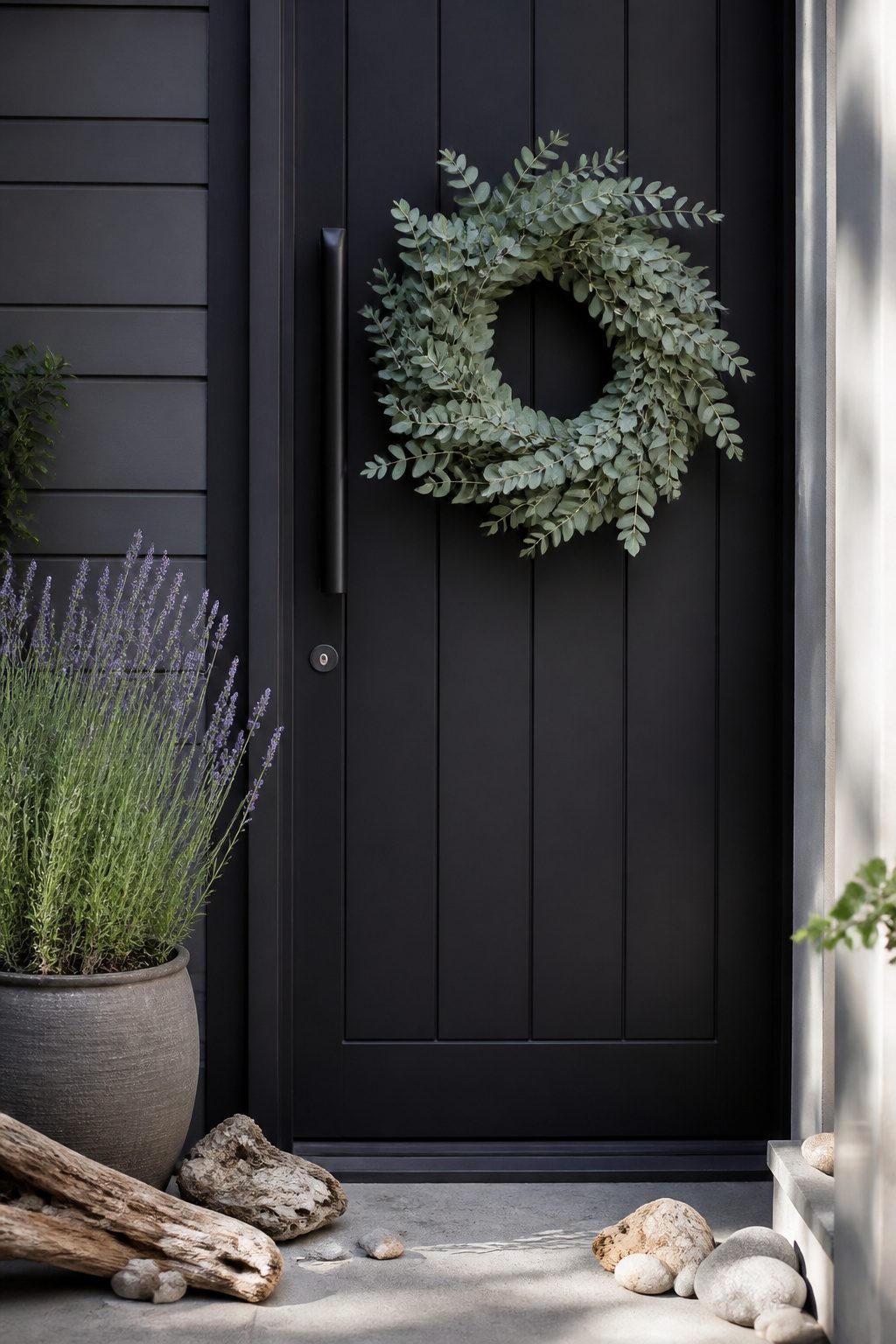
A eucalyptus wreath reads cooler and more modern than the usual burnt-orange and burgundy palette without fighting the season. The silvery-green leaves pick up gray light on overcast October afternoons, and against a painted door, especially navy or charcoal, the contrast feels intentional rather than accidental.
Fresh eucalyptus has its own advantage: it dries in place. The stems stiffen and the color shifts from bright silver to a muted sage over a few weeks, so the wreath you hang in late September keeps working through Thanksgiving without going brown or brittle. The scent is faint but present, that clean menthol note that hits when the door opens on a gust of wind. It does not read as air-freshener sweet; it reads like someone just walked in from a hike.
Photographers and Pinterest scrollers gravitate toward this style for a reason. The muted tone does not blow out in direct sun the way saturated reds do, and the round, coin-shaped leaves create texture at every distance. If your door is already a color, eucalyptus steps back and lets it lead.
6. Pumpkin Wreath
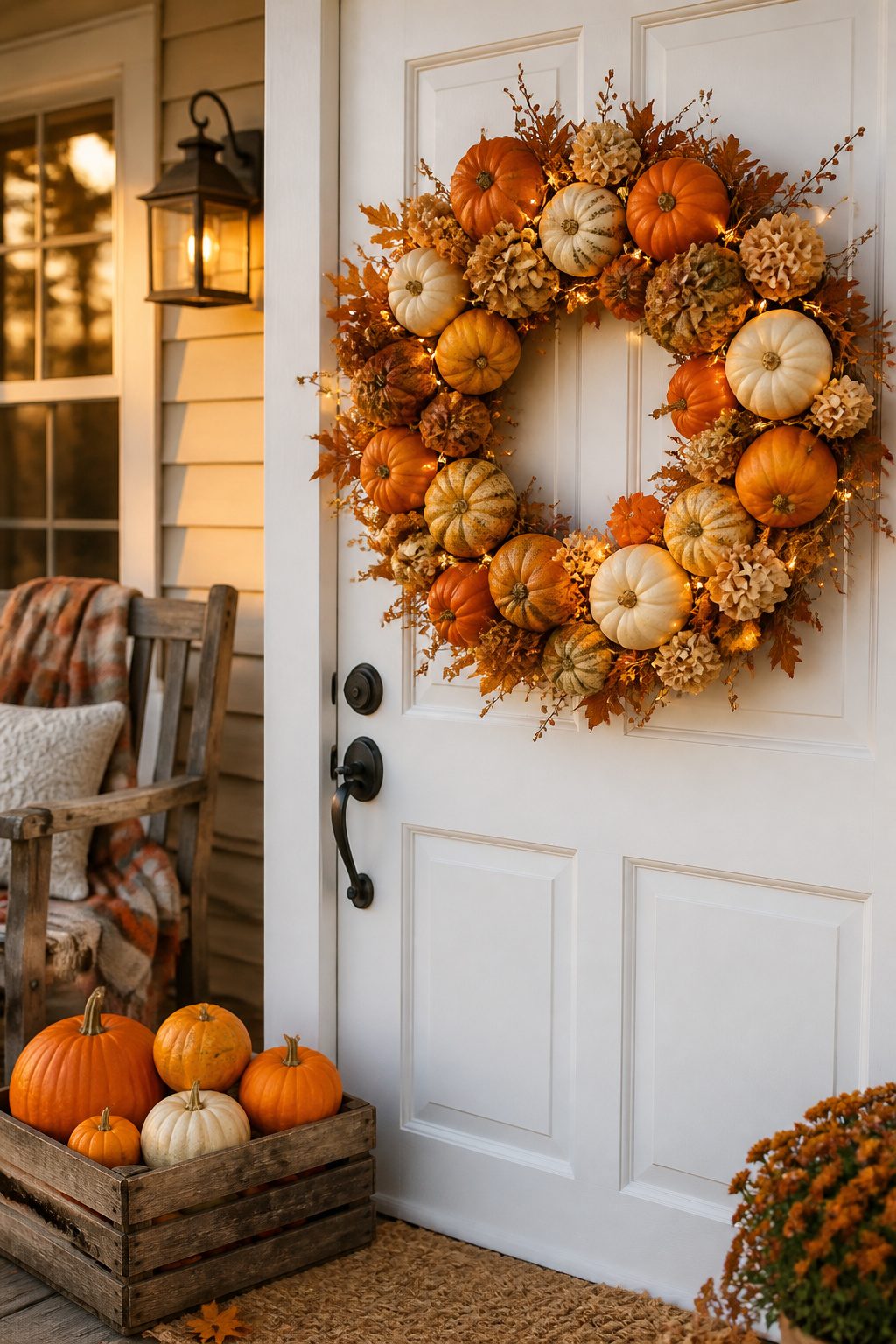
Real pumpkins on a wreath look charming for about ten days, then the weight shifts as they soften and the whole thing sags toward your doormat. I learned that timing the hard way. A 24–26 inch base carries the visual bulk of even small gourds without crowding a standard front door, and it’s the size I keep landing on when I browse. The faux route solves the rot problem entirely: one 24-inch polyester-and-wire wreath I spotted runs $35 or less with a coupon, and the 19-inch plastic version sits lighter but reads smaller than you’d expect against dark paint. If you go real, foam pumpkins from the dollar store keep the load under a pound and let you swap in fresh ones weekly. Dried hydrangea tucked between them stretches the budget to about $10 total. Artificial squash wins for anyone who wants the look to last from late September through Thanksgiving without a second thought.
7. Pomegranate Wreath
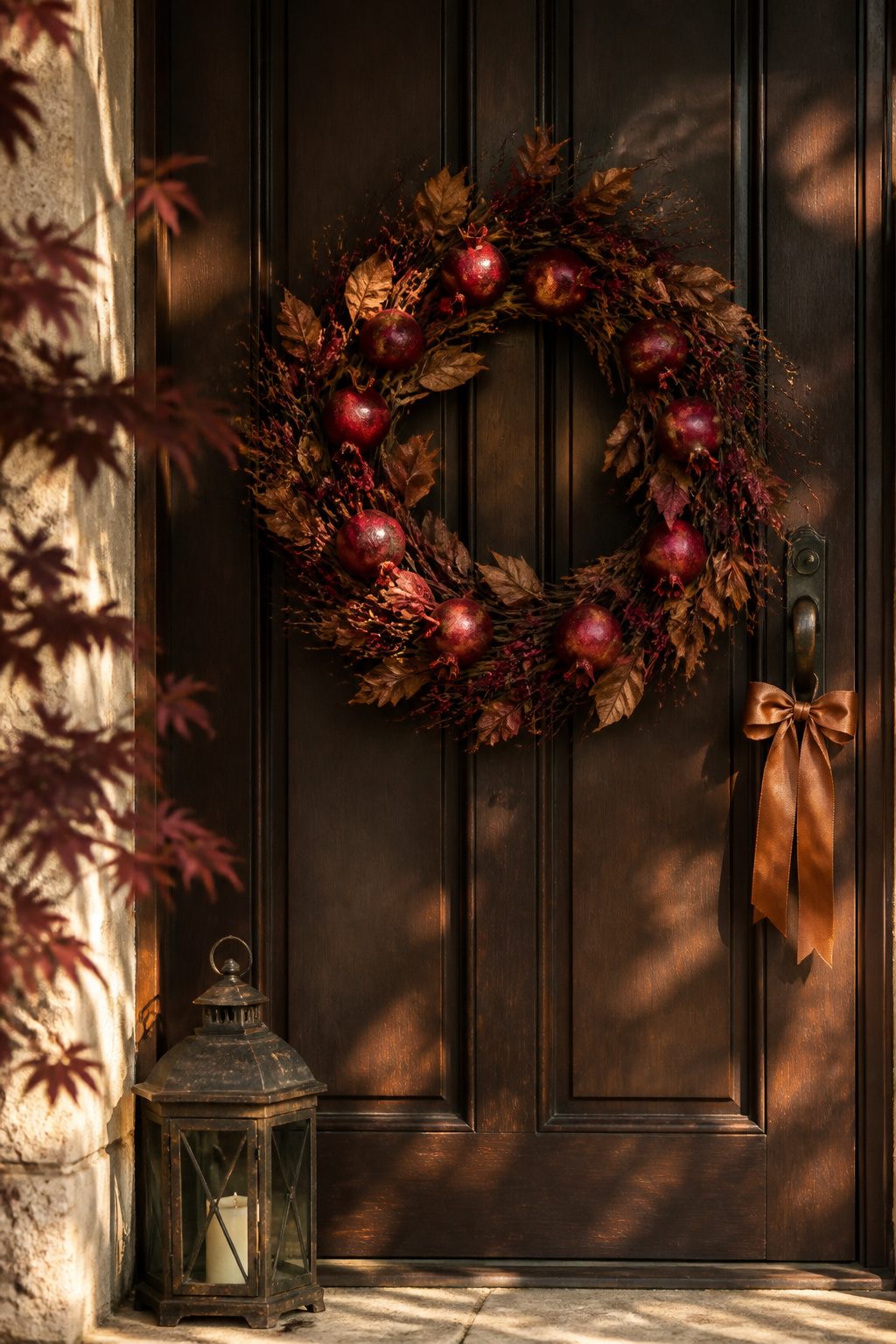
Pomegranates are one of the harder materials to find in craft stores, so plan on ordering faux ones online or raiding the discount bin after the holidays. The round fruit reads as a heavy, deliberate choice compared to the airy spread of leaves. Each globe sits at its own depth, catching light on the waxy skin and casting tiny shadows in the gaps. That weight gives the whole wreath a Tudor-era stillness, the kind of thing that looks right against dark wood or iron hardware. Real pomegranates last roughly two weeks before the skin splits and juice stains the backing, so the faux route wins for anyone who intends to hang the wreath from mid-September through Thanksgiving. Wire each fruit at the stem hole, not through the body; a punctured pomegranate, real or foam, will sag or weep within days. The deep red reads as expensive even when the materials were not, which makes this the rare fruit option that does not tip into kitchen-decor territory.
8. Corn Husk Wreath
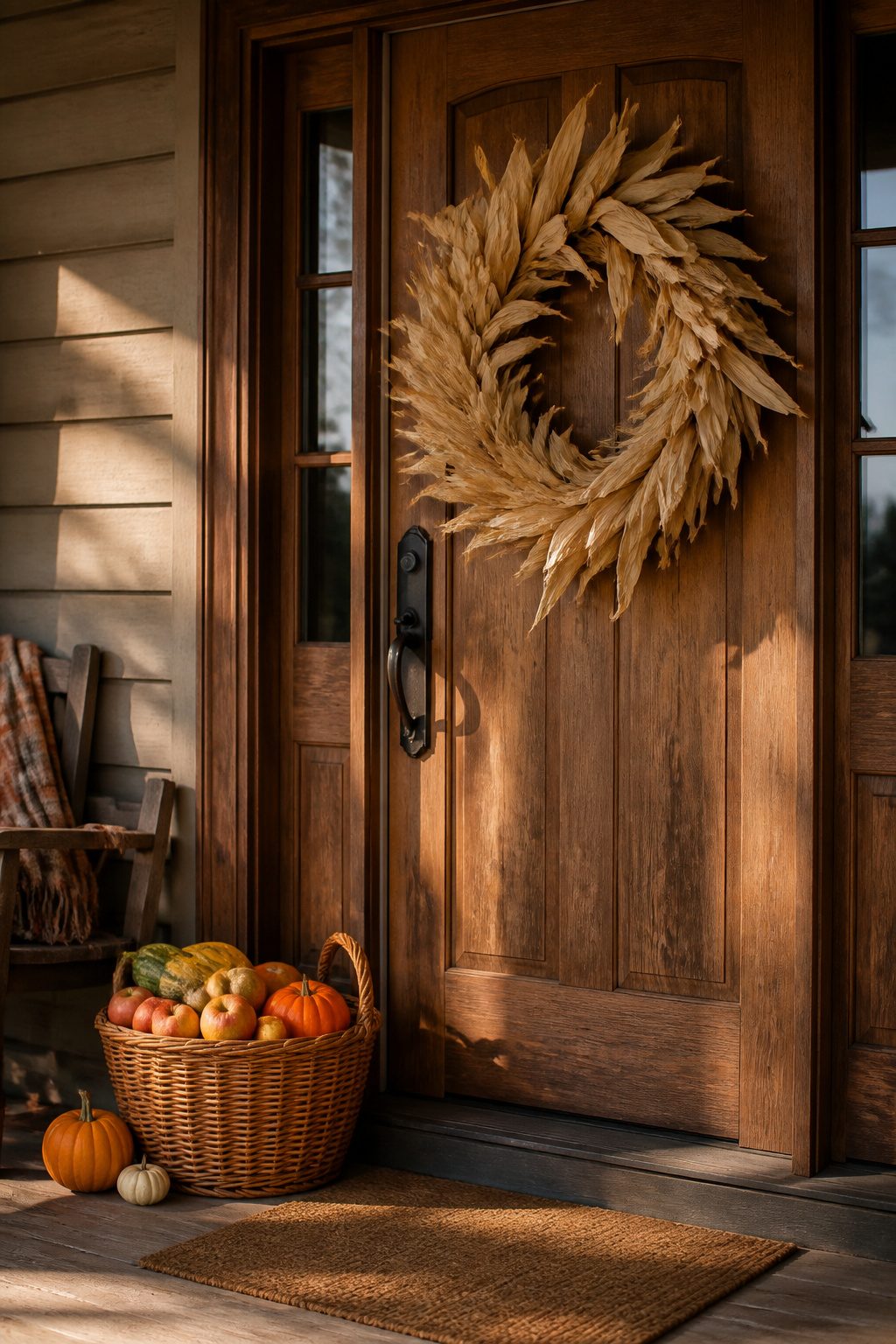
Dried corn husks carry that stripped-back farmhouse feeling without trying too hard. The bleached or natural tan color reads as quiet rather than rustic theater, which matters if your porch already has a lot going on.
Craft stores sell them by the bundle, already cleaned and flattened, and that is where most people should stop. Drying your own sounds satisfying until you are peeling back damp layers for weeks and still finding mold pockets. The store bundles are brittle from the start, so they shed dust and fine threads every time the wreath moves. Hang it indoors if you want it to last the season; a screened porch will rough it up faster than you expect.
The texture is the point, but it is also the weakness. Corn husks do not bounce back from being crushed. Store the wreath flat in a box come November, or you will spend next October re-fluffing flattened petals that remember every crease.
9. Floral Wreath
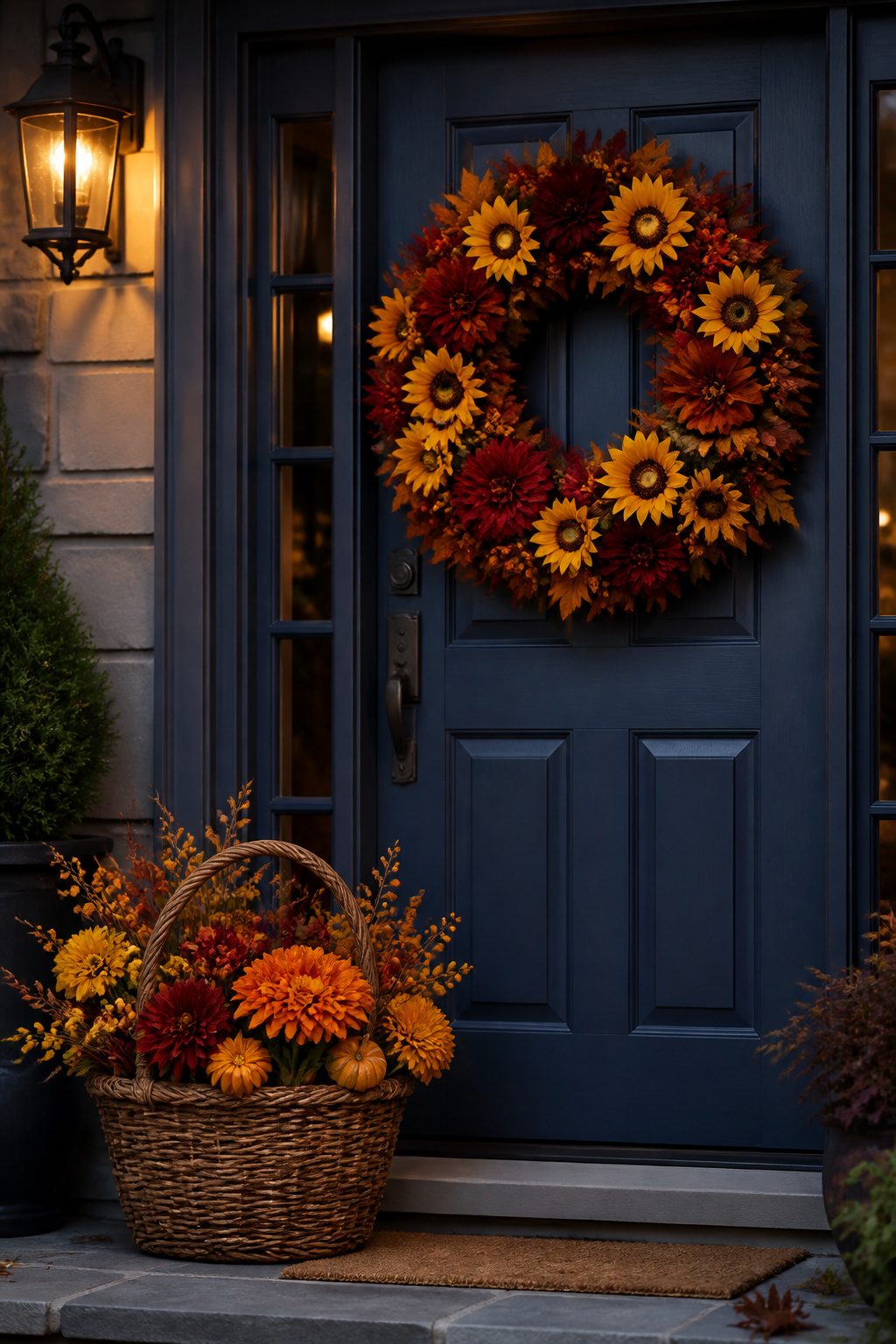
Artificial mums and sunflowers pack a wreath tighter than foliage does, which is why a 24-inch floral wreath reads as the same visual weight as a 26-inch leaf-heavy one. The stems and layered petals fill space that maple leaves leave open, so the door gets color at a smaller diameter. That density also hides the mechanics; the grapevine or wire frame disappears under blooms, whereas a sparse oak wreath shows its skeleton if the light hits it wrong.
Color fading is the tradeoff. Polyester petals hold dye better than dried botanicals, but south-facing doors still bleach them by late October. The Frontgate and Pottery Barn faux florals use UV-resistant coating, which buys a season or two longer than the Amazon-tier versions I have swapped out after one year. Hydrangea clusters are the worst for this; their blue-to-plum shifts go muddy first.
My own porch faces east, so fading is slow enough that I replace every third autumn. If your door gets afternoon sun, size down on floral and go heavier on pinecone or persimmon accents. The texture reads as fall without the saturation risk, and a 24-inch skeleton wreath with three statement blooms costs less to refresh than replacing the whole ring.
10. Dried Botanical Wreath
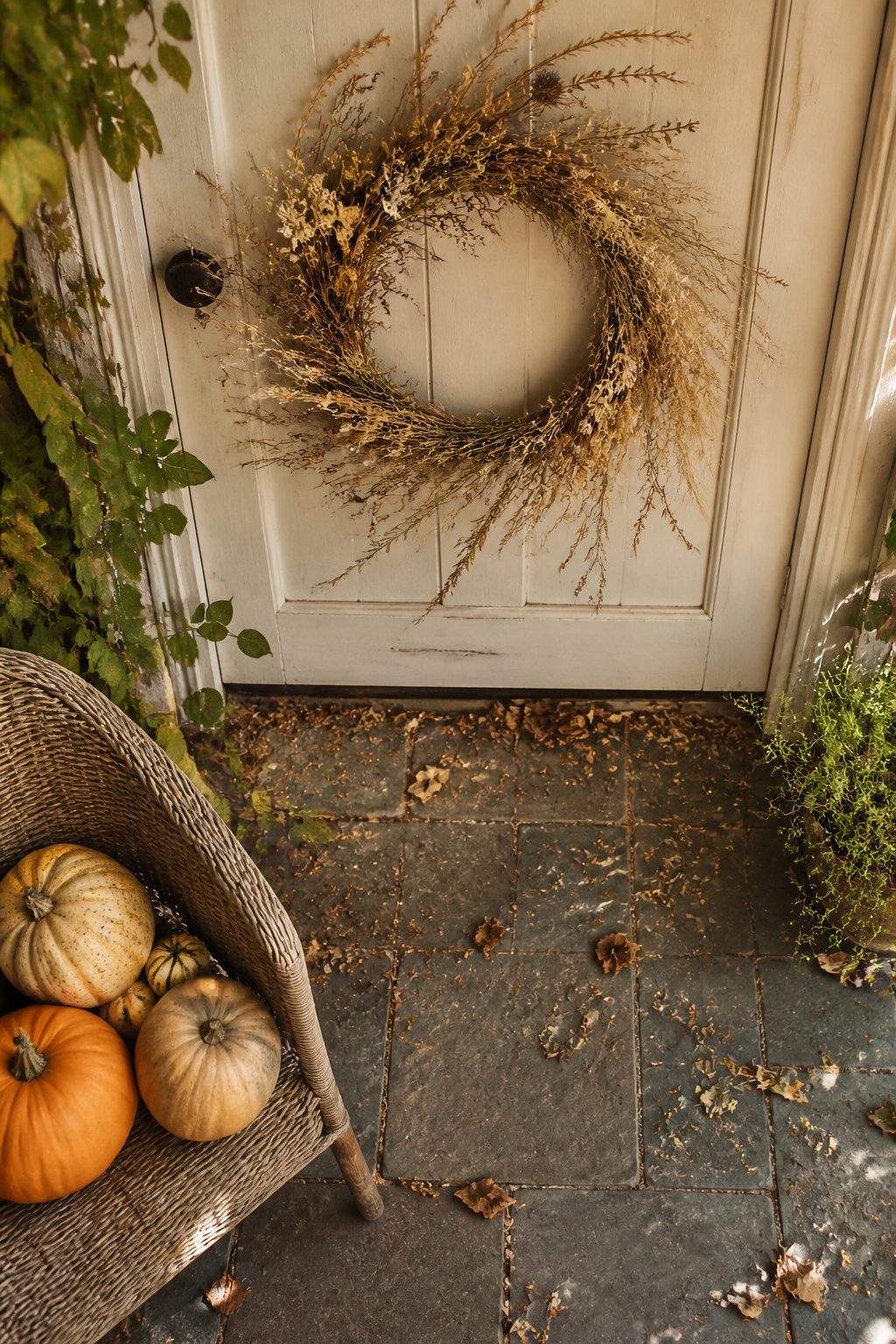
Dried grasses and seed heads carry a texture that fresh stems never match, and the best part is most of it costs nothing. A walk through a field in late August gives you everything for a wreath that looks like the ones that took over Pinterest boards last season: airy, slightly crooked, proudly imperfect. The tradeoff is the shedding. Every time the door opens, a few seeds or brittle petals drift onto the porch, which is why I stopped hanging mine where the wind hits it directly.
If you want the structure to last past one season, wire the heavier seed heads in tight rather than trusting hot glue. The foam pumpkins and dried hydrangeas that show up in so many of these builds run about $10 total when you source the base from a dollar store and clip the flowers from a bush in your own yard or a neighbor’s with permission. Ten minutes of assembly, and the square wire frame keeps it lighter than a grapevine base.
The handmade look only works when it reads as intentional imperfection rather than actual mistakes. Leave gaps between stems so the negative space becomes part of the design; packed too tight, dried botanicals look like a pile of yard waste.
11. Coastal Wreath
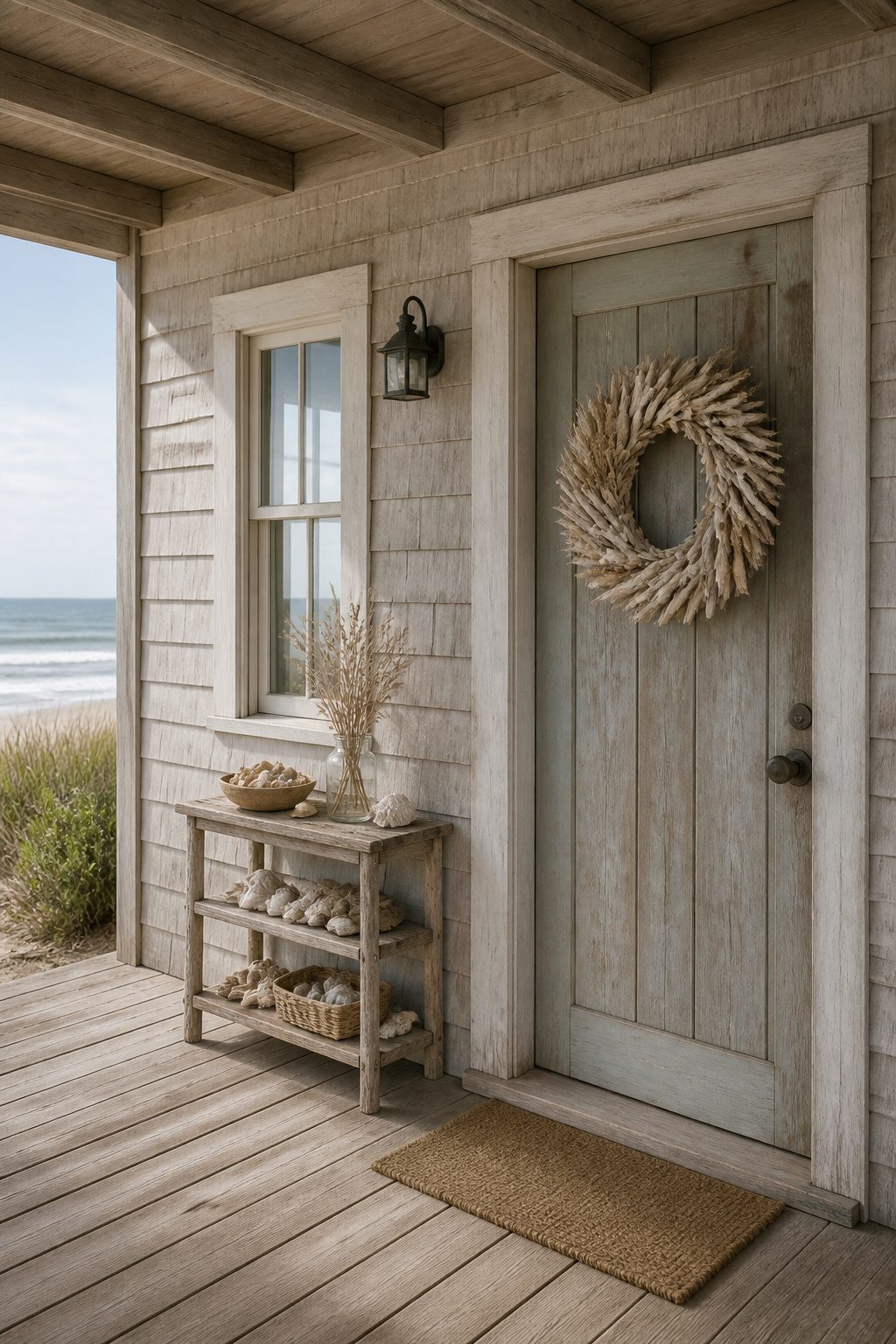
Shells and bleached driftwood read as stubbornly summer to most fall displays, which is exactly why a coastal wreath works where the season stays mild and the porch faces salt air. The palette stays in oatmeal, sand, and the gray of weathered wood rather than forcing amber and rust where they feel out of place. What convinced me, looking through enough of these, is that the material contradiction isn’t a flaw; it’s the whole point. A wreath of collected driftwood, dried sea oats, and a few pale starfish keeps the door dressed through November without the visual whiplash of sudden orange.
The style extends past Thanksgiving almost by accident. Nothing in it codes specifically Halloween or harvest, so there is no iconography to retire. Swap a navy velvet bow for whatever summer ribbon hung there and the same base reads late autumn, then winter. For renters in coastal zones who get one project weekend before the holidays, driftwood glued to a grapevine base with hot glue costs little and holds up to humidity that turns paper leaves to pulp. The risk is over-collecting; five pieces of bleached wood do more than fifteen. Stop when the circle still shows negative space, or the wreath starts looking like a tangle from the tide line rather than an intentional piece.
12. Budget Wreath
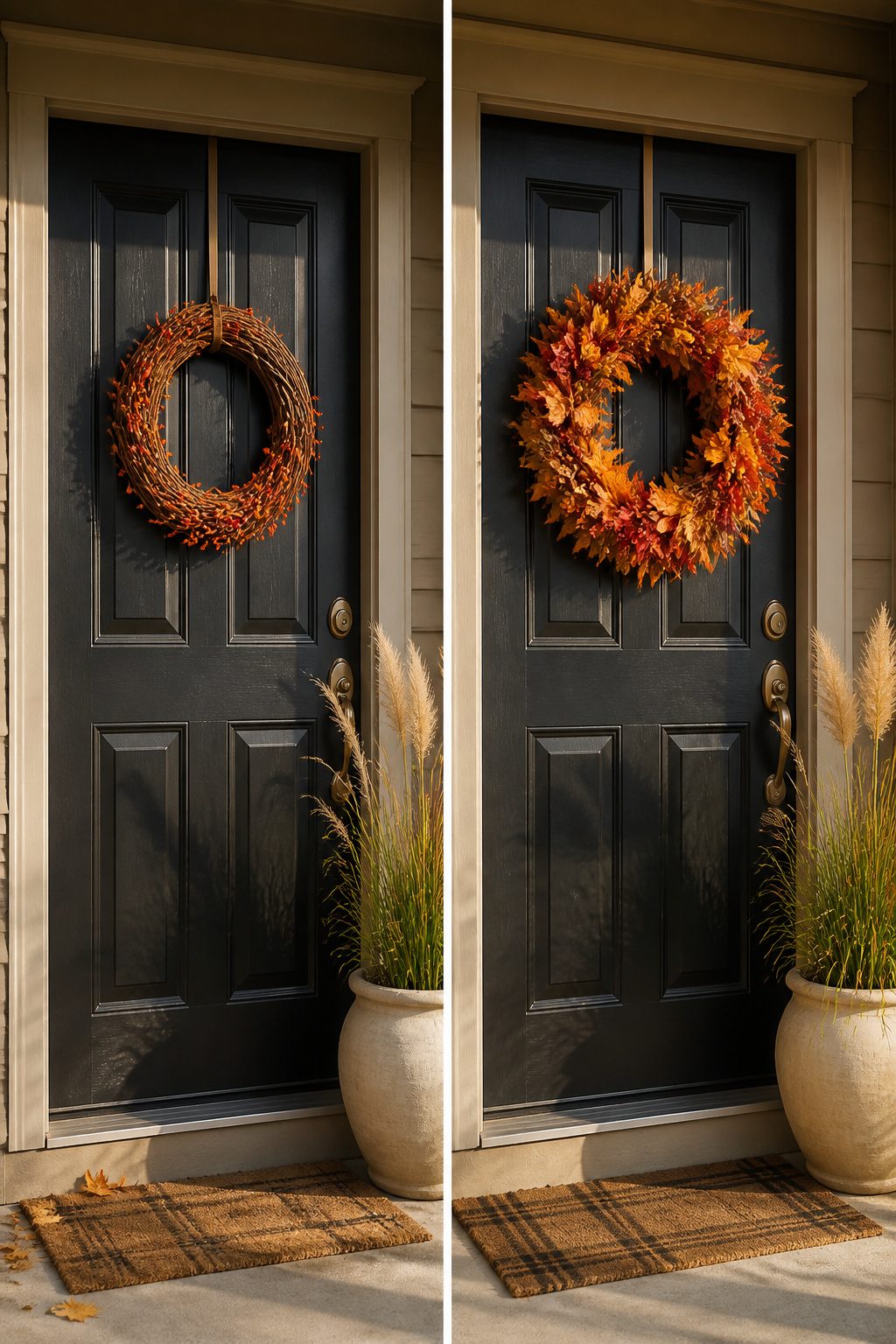
A $35 ceiling buys you grapevine bases with maple leaves, mini pinecone clusters, or eucalyptus paired with orange berries from Amazon and Target seasonal aisles. At that price most stems are PVC or polyester with wire cores, not silk, so the finish reads rich from six feet away but up close you notice the uniform gloss. The styles that fake expensive best keep to one texture, like an all-grain or all-berry wreath, rather than mixing pumpkins, gourds, and leaves which can look crowded where the glue shows.
I ordered a 22-inch berry and eucalyptus piece two Septembers back and learned the timing the hard way. The late-September inventory drop is real: shelves fill after Labor Day, but the designs that photograph well for Pinterest move fastest, and by mid-October you are left with the colorways that did not sell. My back door ended up with a golden forsythia option that was perfectly fine, yet not the layered neutral I had tagged in August.
A 20-inch width is typical at this tier, enough for a standard steel door without blocking the peephole. If the same wreath offers a 10 percent coupon clipped at checkout, that usually lands the total under $20, which is where I draw the line for something that will sit in a humid porch box three months and shed berries by Thanksgiving.
13. Elegant Wreath
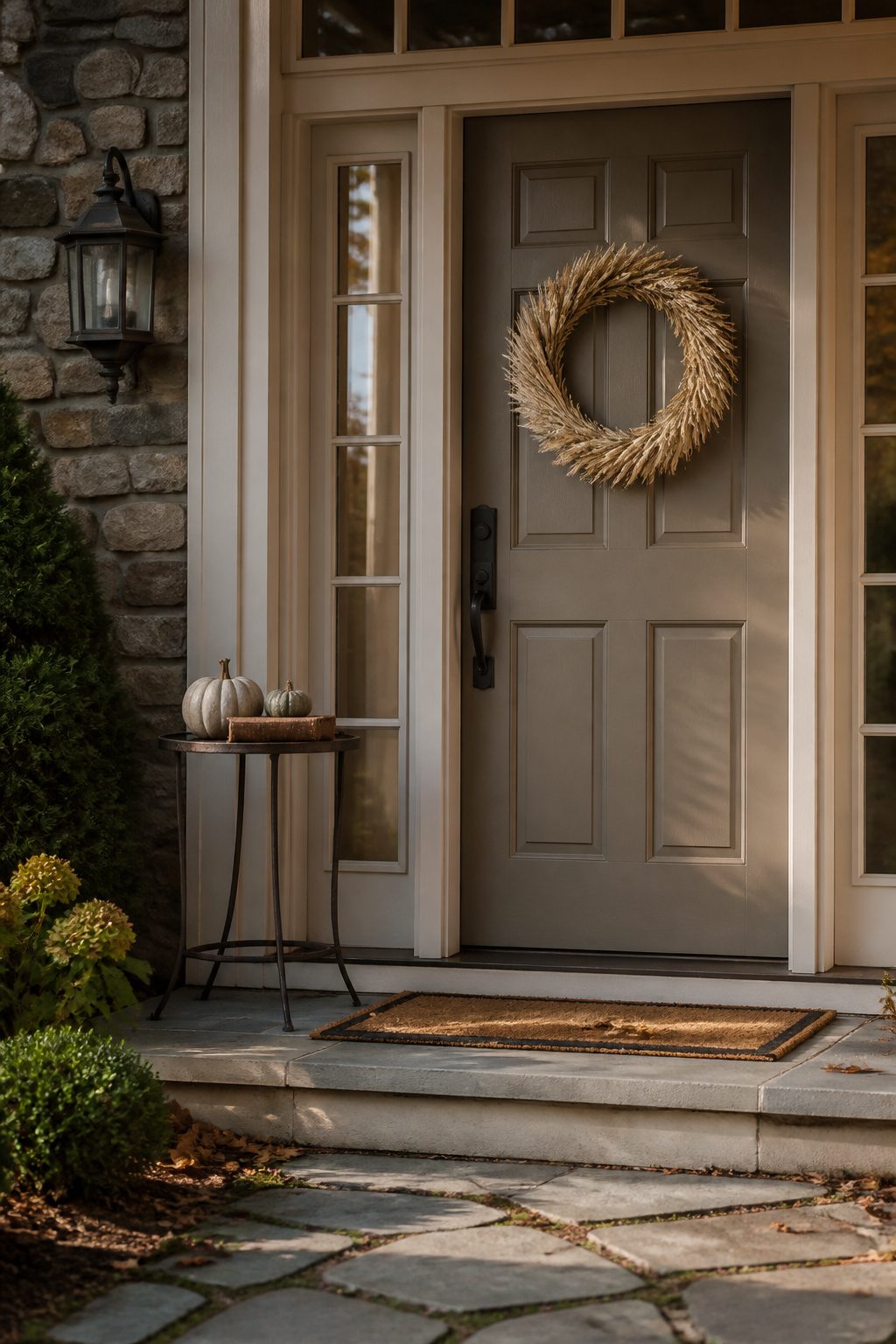
The price gap between a Birch Lane wreath and one from Pottery Barn or Frontgate buys restraint. Where the budget picks crowd dahlias, pumpkins, pine cones, and gourds onto a single twig frame, the higher-end pieces run a single note: Italian oak, or wheat, or a ring of pomegranates and pinecones with breathing room between them. That cleaner composition reads from fifteen feet away, which is the distance most guests actually see your door from.
Whether the materials justify the cost depends on where you hang it. A 24-inch Birch Lane wreath, hand-assembled from polyester and plastic, holds up fine on a covered porch; one reviewer in the Hudson Valley called the mix lush and the price reasonable. The splurge options use the same faux foliage technology, but the stems are wired more precisely and the color hand-painted rather than dyed in bulk. Up close, the difference is obvious. From the street, on a door that gets afternoon sun, both look like what they are: good fakes.
Spotting the same look for less means hunting the single-element designs. An oat wreath or an oak wreath skips the harvest clutter that raises costs on midrange pieces. Target and Michaels rotate similar silhouettes in September, usually under $40, though the wire gauge is lighter and the leaves crimp faster in weather. For a door that stays dry, that trade is worth it.
14. DIY Wreath
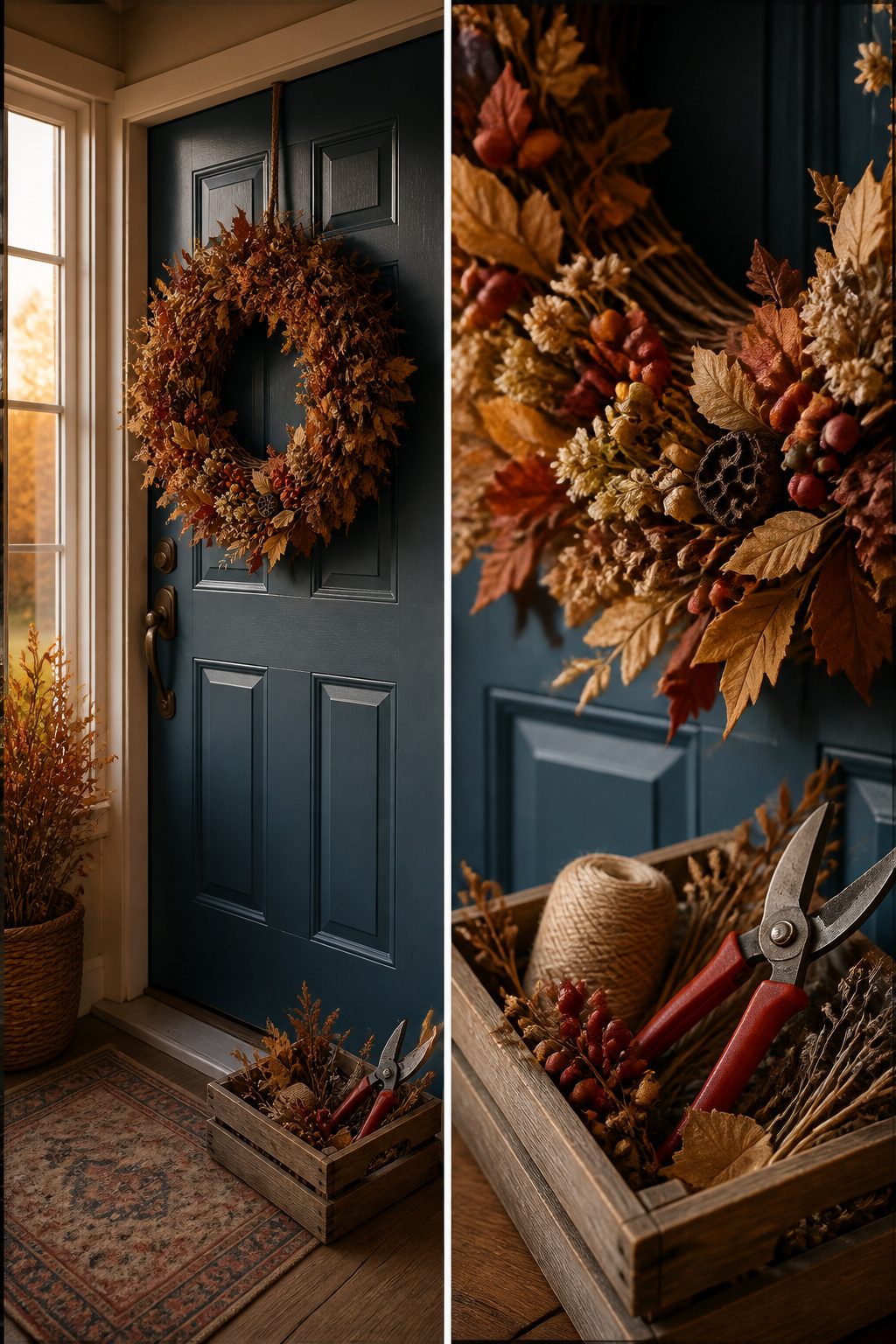
A wire frame, hot glue, and whatever you gathered from the yard or picked up at the craft store will get you a wreath that costs less than the ones hanging in the seasonal aisle. The first attempt runs longer than the two-hour tutorials suggest; plan on a morning just for sorting and drying materials, then another hour for assembly. Wire cutters, a glue gun with extra sticks, and floral tape belong on the table before you start. Dried stems and faux berries usually stay under fifteen dollars if you shop the discount bins, which already puts you below most store prices before the frame itself.
The frame matters more than beginners expect. Lightweight grapevine looks rustic but a foam ring holds glue better and keeps the shape through temperature swings. Where these projects fail is weight distribution: too much heavy material on one side pulls the frame oval by Thanksgiving, or the glue gives where damp leaves met dry adhesive. Work in sections, let each layer cool before you add the next, and hang it on the door for ten minutes before the final fill-in. The sag shows up fast when it is going to, and that test saves you from remaking the whole thing after the first rainy week.
Picking the Right 24-Inch Size
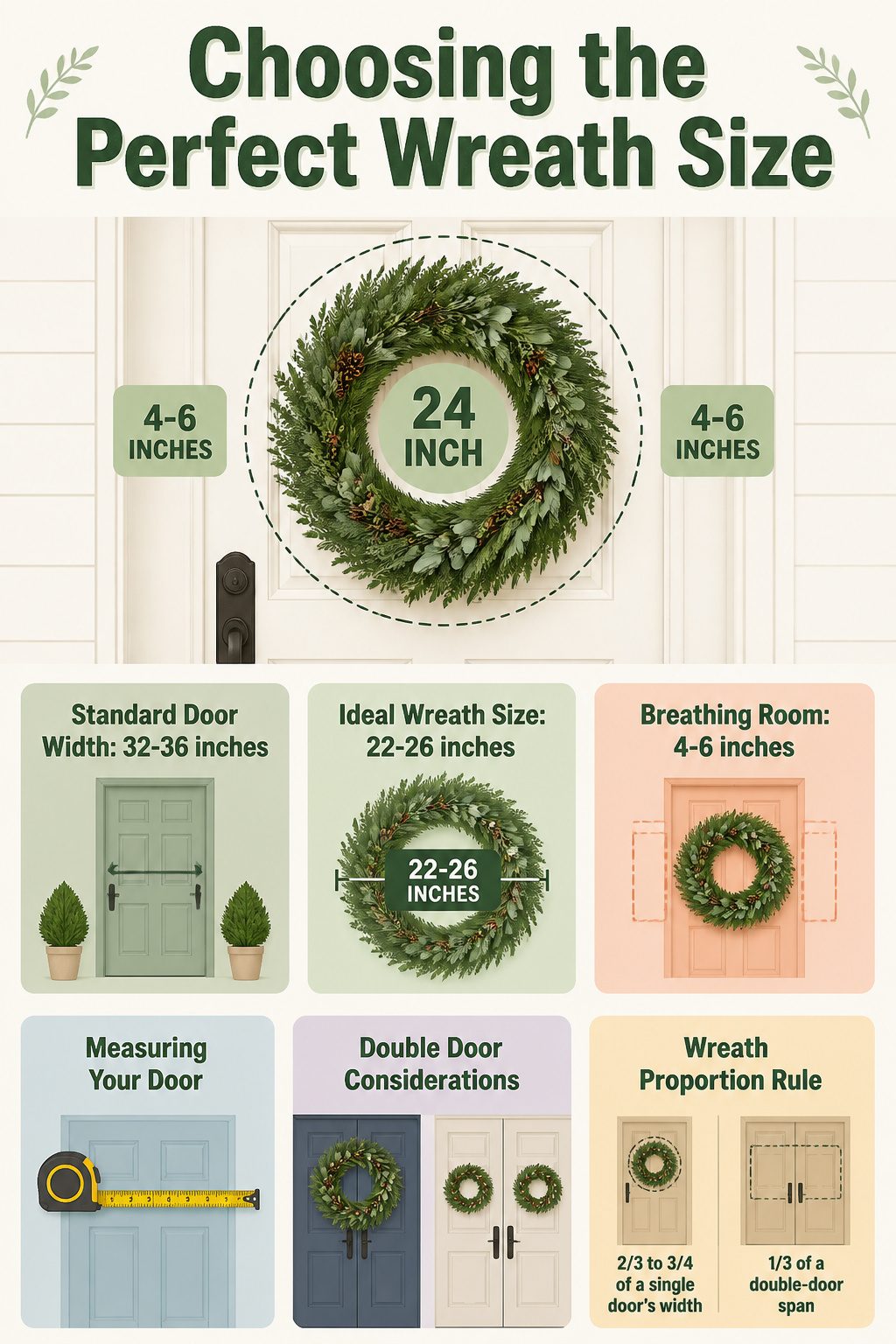
Most standard front doors in the U.S. run 32 to 36 inches wide, which puts the sweet spot for wreath diameter at 22 to 26 inches. Below 20 inches, the wreath starts to look like an afterthought, the kind of thing a visitor might not register until they’re already reaching for the knocker. Above 30 inches and you’re fighting the door itself for visual space; the wreath starts to read as a shield rather than an accent.
Measuring your own door takes about thirty seconds. Width is what matters here, not height. Hold a tape measure across the visible panel where the wreath will sit, then picture a circle centered in that space. A 24-inch wreath leaves roughly four to six inches of breathing room on each side of a standard single door, which feels intentional without shouting.
Double doors change the math. Two 32-inch doors side by side give you a 64-inch visual field, and hanging one 24-inch wreath on a single panel throws the whole facade off balance. For doubles, either scale up to the 28 to 30-inch range and center one wreath across the meeting point, or commit to a pair of matching 22-inch wreaths, one per door. The proportion rule is simple: the wreath should occupy about two-thirds to three-quarters of a single door’s width, or roughly one-third of a double-door span. Ignore that and the entry looks accidental, no matter how gorgeous the fall wreath itself might be.
What Faux Foliage, Berries, and Pumpkins Actually Cost
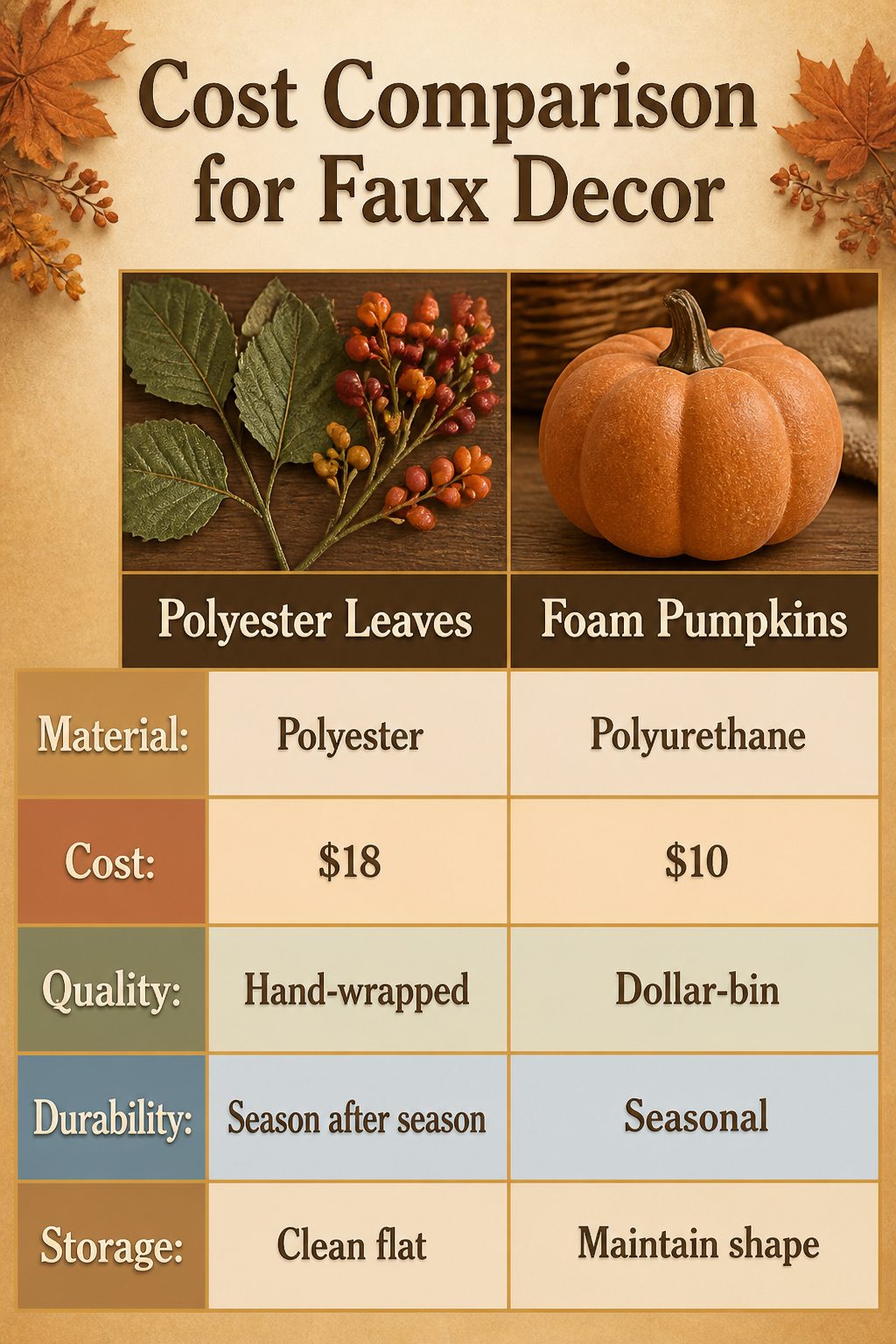
Polyester leaves run on a grading system that shows up in the hand more than the tag. The cheap stuff feels like crinkly gift wrap and creases permanently when you fold it; mid-grade carries a wired edge that lets you reshape after storage, and the better batches are backed with flocking that catches light like real leaf fuzz. Foam pumpkins split the same way. The dollar-bin versions are hollow blow-mold with a seam you can see from the sidewalk, while denser polyurethane holds its carve if you want to add a fake stem or distress the surface yourself. Berries are where most wreaths die. Hard plastic spheres on thick wire brush clean and store flat; thin vinyl skins over cotton will look fuller the first October and bald by November. An $18 wreath that lists "hand-wrapped grapevine base, wired polyester, foam filler" on the tag usually outlasts one that calls itself "premium decorative foliage" without naming a material at all. The tag specifics are the warranty. After three seasons of buying both kinds, I check for wire gauge and foam density before color now.
Hanging Beyond the Front Door
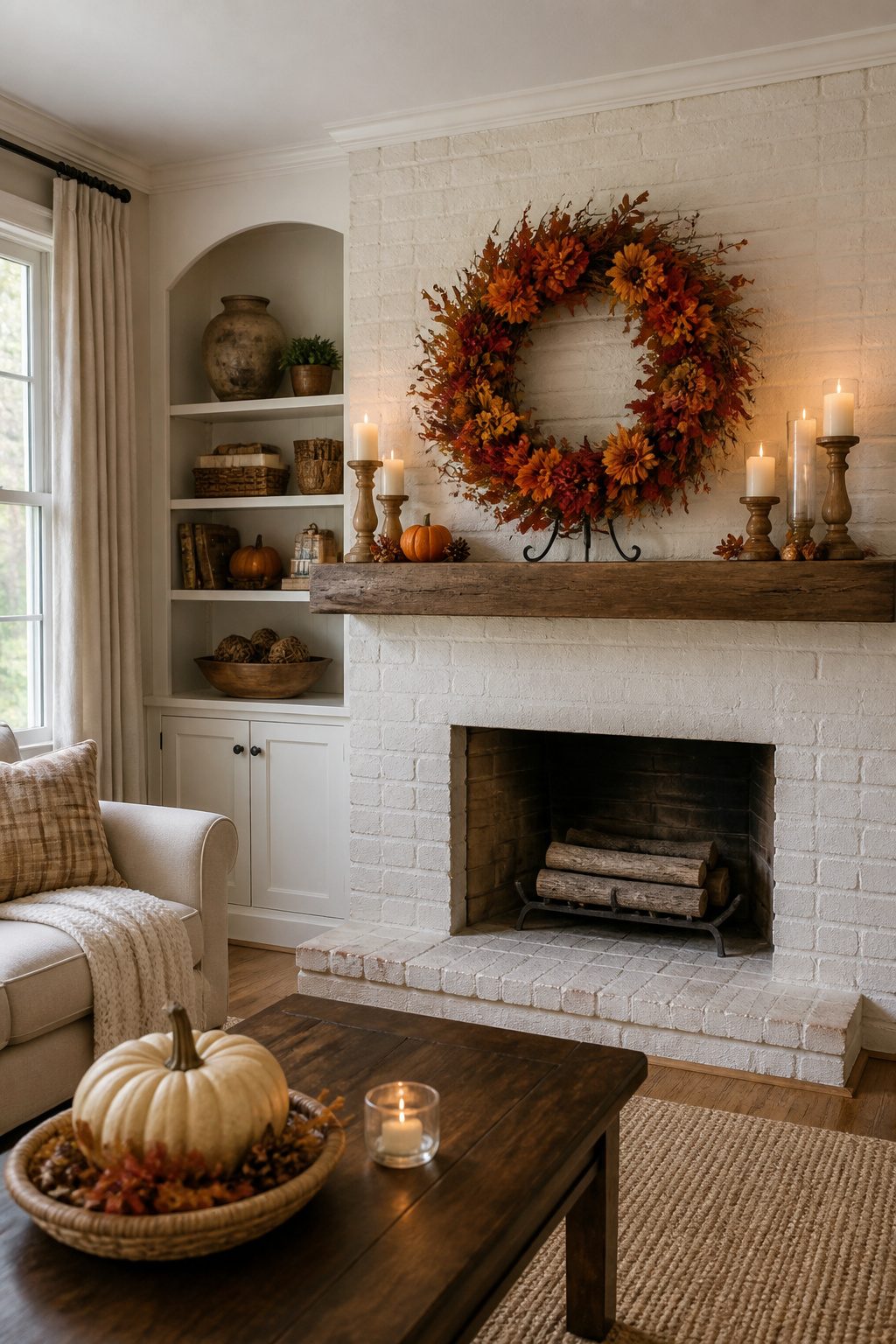
A wreath you love deserves more than six weeks on the front door. These are the four places mine have actually lived, and what keeps them from looking like afterthoughts.
- Mantel with a table easel. The easel needs weight, brass or cast iron, or the wreath tips every time someone walks past. I set mine about six inches back from the mantel edge so the lower curve does not hide the frame. A 24-inch wreath at eye level reads larger than the same one on a door.
- Interior door with an over-the-hook hanger. The hook itself shows, so I use black steel on dark doors and brushed nickel on painted ones. The back of the door will swing the wreath into the jamb if the hanger is too thin; a flat-profile hook with felt backing fixes that.
- Exterior window from suction hardware. Suction cups fail in cold rain, full stop. I only trust the lever-lock kind rated for glass, and I check them weekly in October. Place the wreath on a window that faces a walkway or porch; from the street, a wreath on a side window disappears.
- Garage door with a magnetic hook. Steel-panel doors hold them, aluminum or wood do not. The magnet needs a rubber face or it scratches the paint every time the door rolls up. Visibility is the real problem here: from the curb, a garage wreath sits low and reads small. I use this spot for wreaths I am rotating out, not for the one I want noticed.
Warm Orange Against Muted Gray-Brown
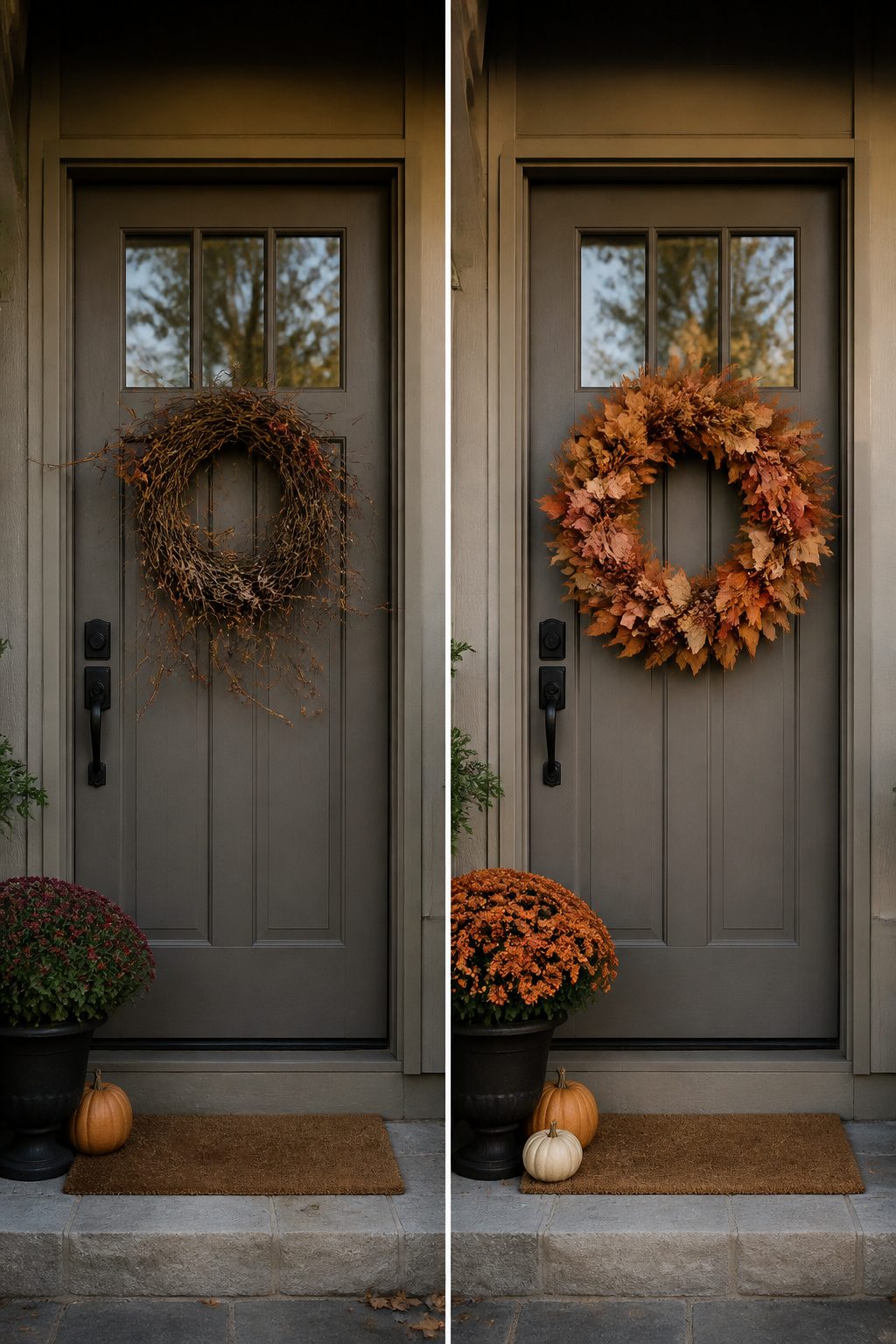
Orange still reads like fall, but the shade matters more than it used to. A saturated near-red orange against a warm beige siding feels like 2018 Pinterest; the same wreath on a cooler gray-brown house flattens into traffic-cone territory. What convinced me, scrolling through board after board this year, is that muted terracotta and rust orange now outperform true orange on every exterior I compared. The warmth stays, but the edge of neon is gone.
The newer direction runs sage, cream, and burgundy, and it photographs cleaner because nothing in that palette competes with itself. Burgundy carries the depth that orange used to provide, while sage keeps it from reading Christmas. I would not put that combo on a house that already has warm stone or red brick; the muted palette needs a cool or neutral background to register as intentional rather than muddy.
Traditional orange-yellow-brown works when one of those colors is the house itself. A gray-brown door with orange foliage reads as contrast; a yellow door with the same wreath reads as matchy-matchy overload. My rule from looking at too many front doors: let the wreath be either the warmest thing in the frame or the only warm thing, never both.
Frequently Asked Questions
What are the best materials for fall wreaths?
Faux foliage, eucalyptus, berries, and pumpkins are the most common and reliable materials. Polyester leaves with wired edges reshape after storage, foam pumpkins hold up better than hollow blow-mold ones, and hard plastic berries on thick wire brush clean and store flat. Check the tag for specifics like wire gauge and foam density rather than vague marketing terms.
How do I make a DIY fall wreath?
Start with a foam ring rather than grapevine; it holds glue better and keeps shape through temperature swings. You will need wire cutters, a glue gun with extra sticks, floral tape, and dried stems or faux berries from discount bins, usually under fifteen dollars. Work in sections, let each layer cool before adding the next, and hang it on the door for ten minutes before final fill-in to catch any sag early.
What size should a fall wreath be?
For a standard 32 to 36 inch single door, aim for 22 to 26 inches in diameter. A 24-inch wreath leaves roughly four to six inches of breathing room on each side, which looks intentional without overwhelming the door. Below 20 inches reads as an afterthought; above 30 inches fights the door for visual space. For double doors, either use one 28 to 30-inch wreath centered across the meeting point, or a pair of matching 22-inch wreaths.