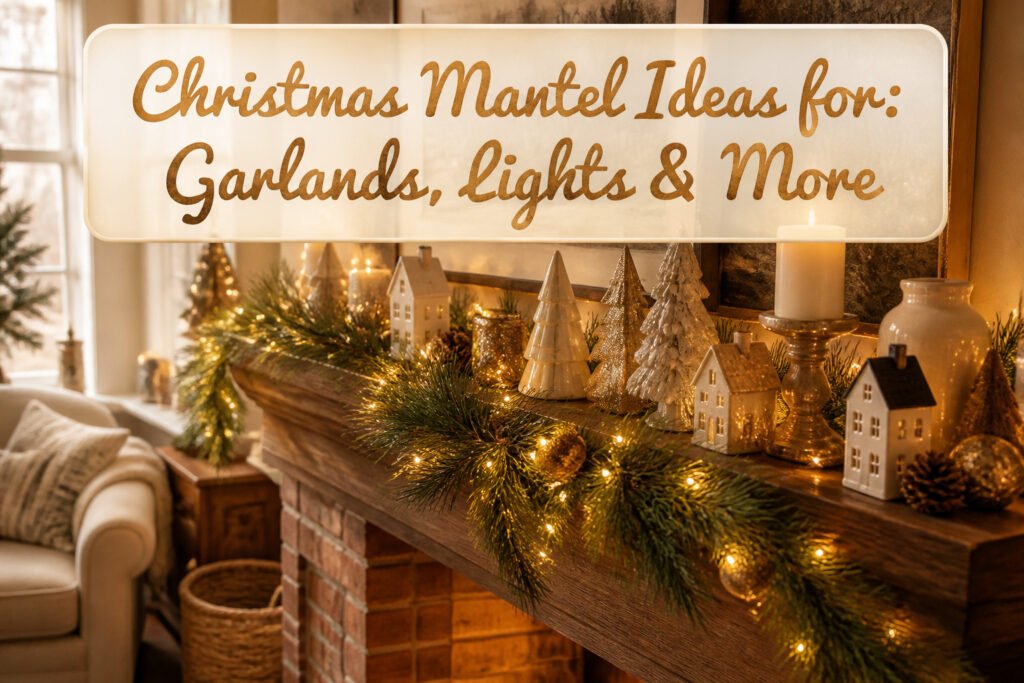
A finished Christmas mantel sits somewhere between a catalog photo and your own living room: the difference is the order you build it, and whether you stop in time. The trick most people miss is starting dead center with the heaviest piece and working outward, not filling gaps as they appear.
I learned this redoing mine three times last December, after a pine garland turned to pulp in one wet week on the porch and seventeen ceramic pieces across four feet made my mantel look like a gift shop exploded. Now the whole thing comes down in twenty minutes the week after Christmas, because the storage decisions made that afternoon decide how next November goes.
1. Layered Garlands
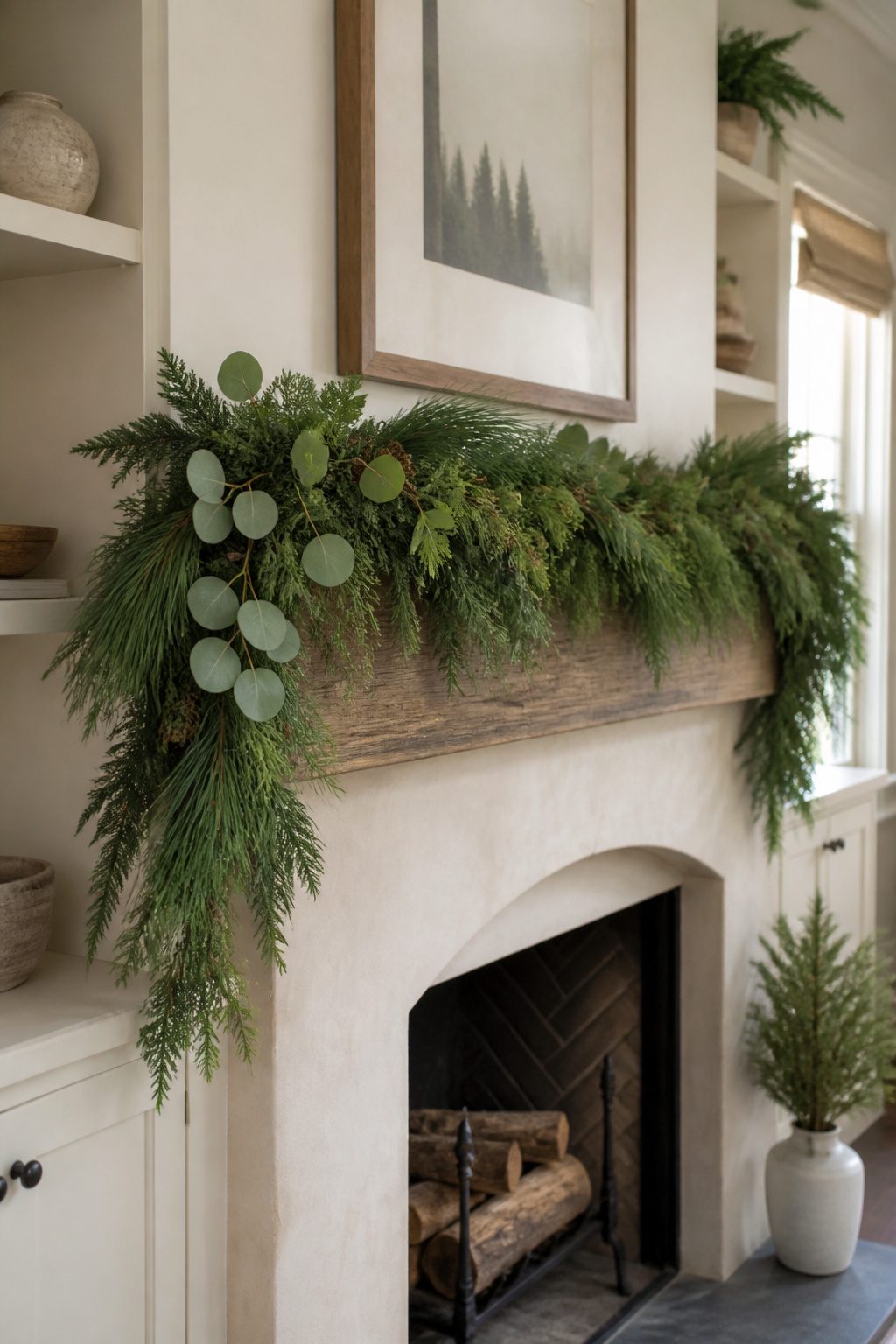
Eucalyptus garlands make a soft, silvery base that reads as greenery without shouting "Christmas tree." Last year I ran two along our dining table and liked the look enough to buy more for the mantel this season. Pine and cedar add the traditional weight; layering all three gives the depth that makes a mantel look collected rather than bought as a kit.
The practical hang-up is always the same: how to secure it without drilling into someone else’s woodwork. Cord bundlers hold garland surprisingly well against the back edge, and small command hooks tucked underneath keep stockings from sliding without the bulk of traditional holders. I looked for a rule on how many feet per mantel and came up empty; measurements vary too much from house to house, so buy a little more than you think and let the excess drape or trim it with wire cutters.
For extra volume, tuck in faux evergreen stems or a strand of bead garland between the layers. The mix of textures does more than any single garland could on its own.
2. Twinkling Lights
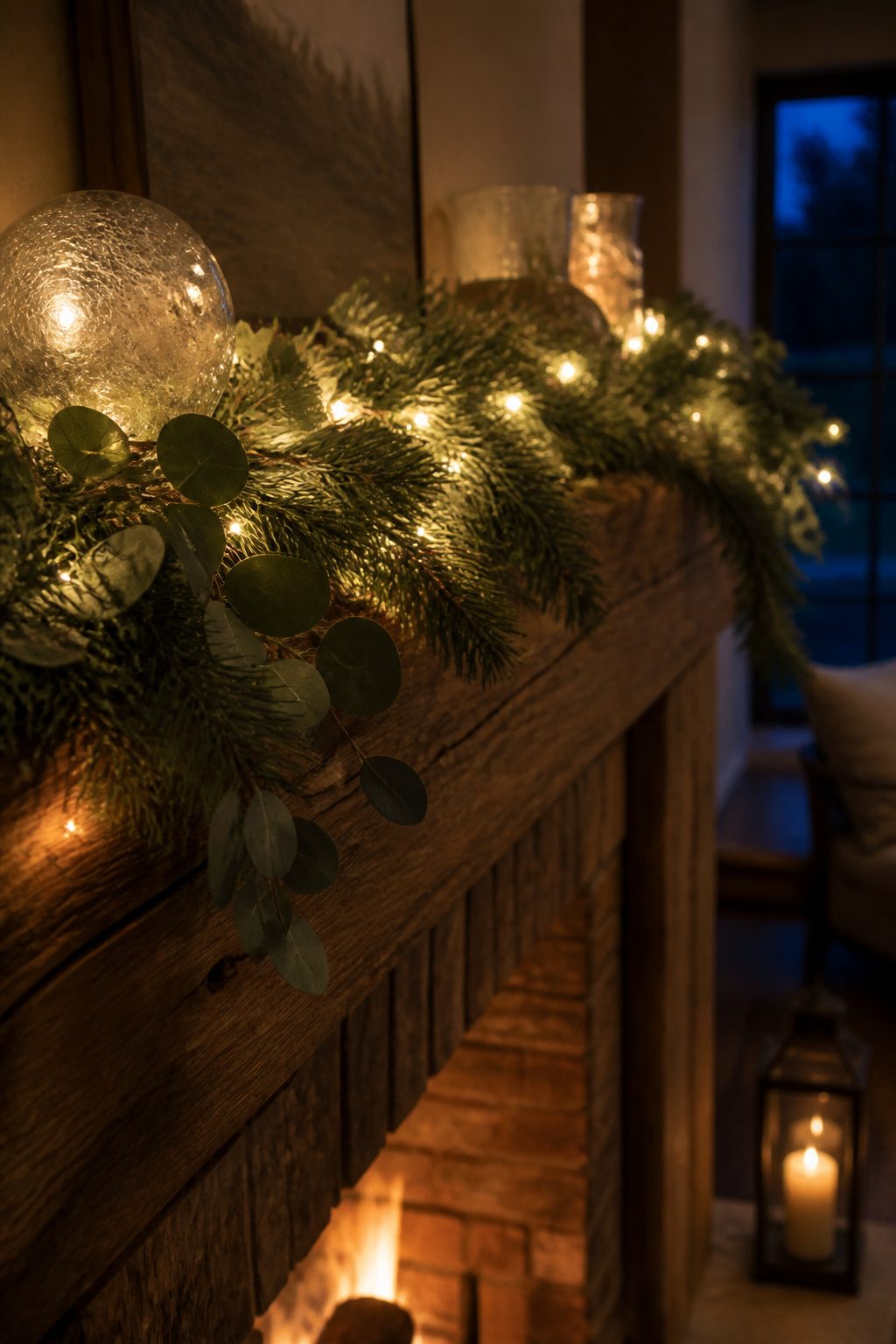
Warm white twinkle lights are what separate a mantel that glows from one that just sits there lit. Strings with a slightly amber cast read cozy in a way cool white never quite manages, especially after dark when the overhead lamps are off and the fire, if you have one, is doing its own orange dance.
Battery-operated strands have been the practical answer for me on a mantel with no nearby outlet, or anywhere you do not want a cord snaking down to the floor where a toddler or a curious dog lives. The tradeoff is remembering to switch them off or timer them; rechargeable AA setups help, but disposable still wins for a single-season string you are not storing for next year.
Weave the lights into the garland itself rather than draping them over finished greenery like an afterthought. Work in the string as you layer, spacing bulbs so they sit between branches, not crushed on top. This means the light becomes structural to the greenery instead of a separate event happening on it. For battery packs, tuck the box deep in the center where the garland is thickest, and the greenery hides both the plastic housing and any timer switch you need to reach. The result reads intentional from across the room, not like someone remembered the lights at 9 p.m. on a Wednesday.
3. Stockings
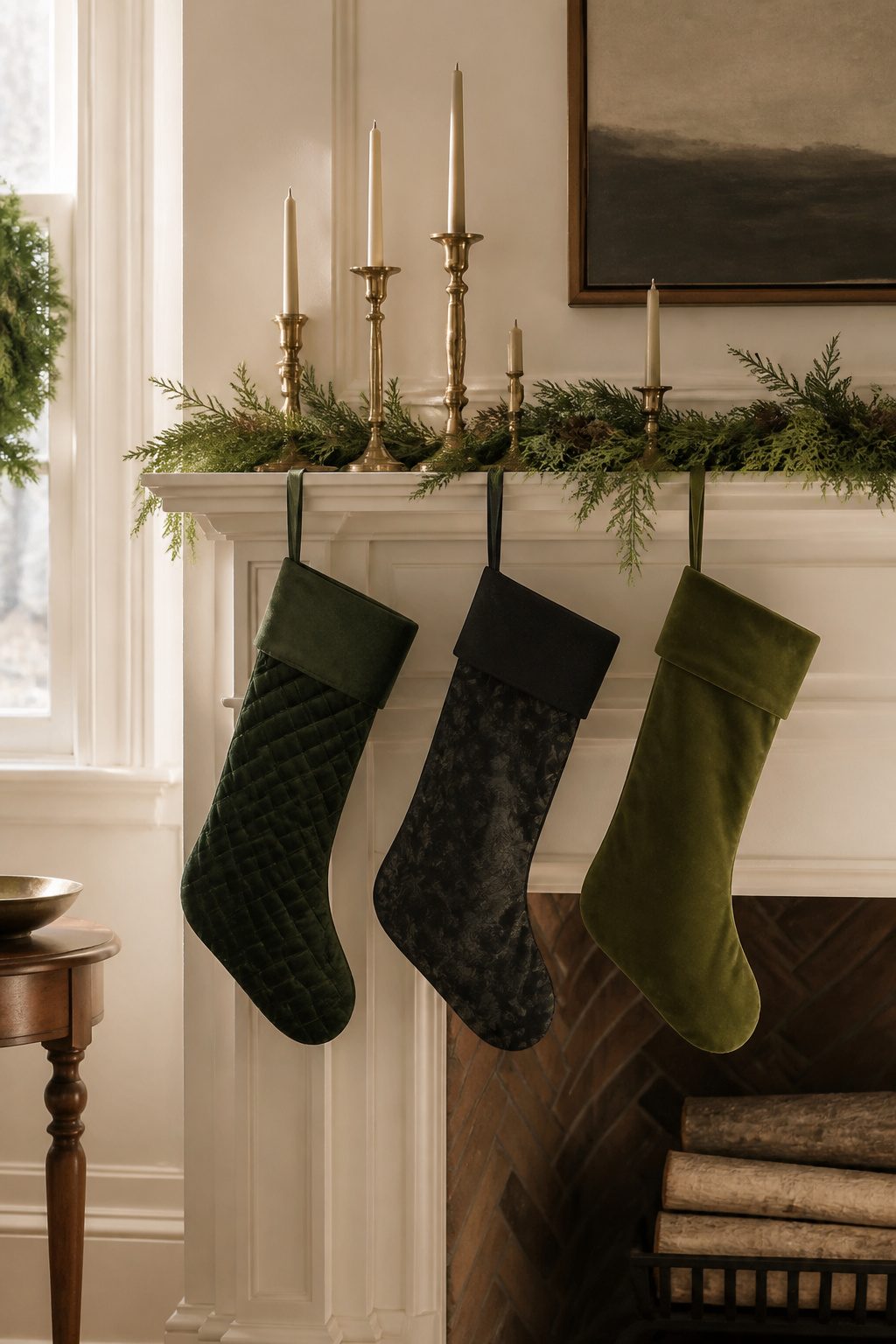
Stockings can anchor a mantel or fight it, and the difference is usually the holder. Traditional metal stocking holders look fine until one tips under the weight of an orange and takes the whole display with it. Command hooks tucked on the underside of the mantel shelf solve that cleanly: no scratched wood, no visible hardware, and they peel off in January without a trace. The 3M strips rated for a few pounds each hold a loaded stocking fine if you use two per.
Coordinating the stockings themselves with the garland and accents matters, but matching everything exactly flattens the whole thing into one note. A reader’s mantel might run eucalyptus and warm white lights; stockings in a deep green or a moody black keep the palette from going too soft. The red sign-and-stocking pairing works the same way, tying the vertical element to something else on the horizontal plane without making every thread identical.
What breaks the look is scale. Three stockings across a six-foot mantel sit comfortably; five crowd the garland and force everything else smaller to compensate. If the count runs high, slimmer stockings or an alternating pattern, two hung, one folded over the holder, buys back some breathing room.
4. Candles
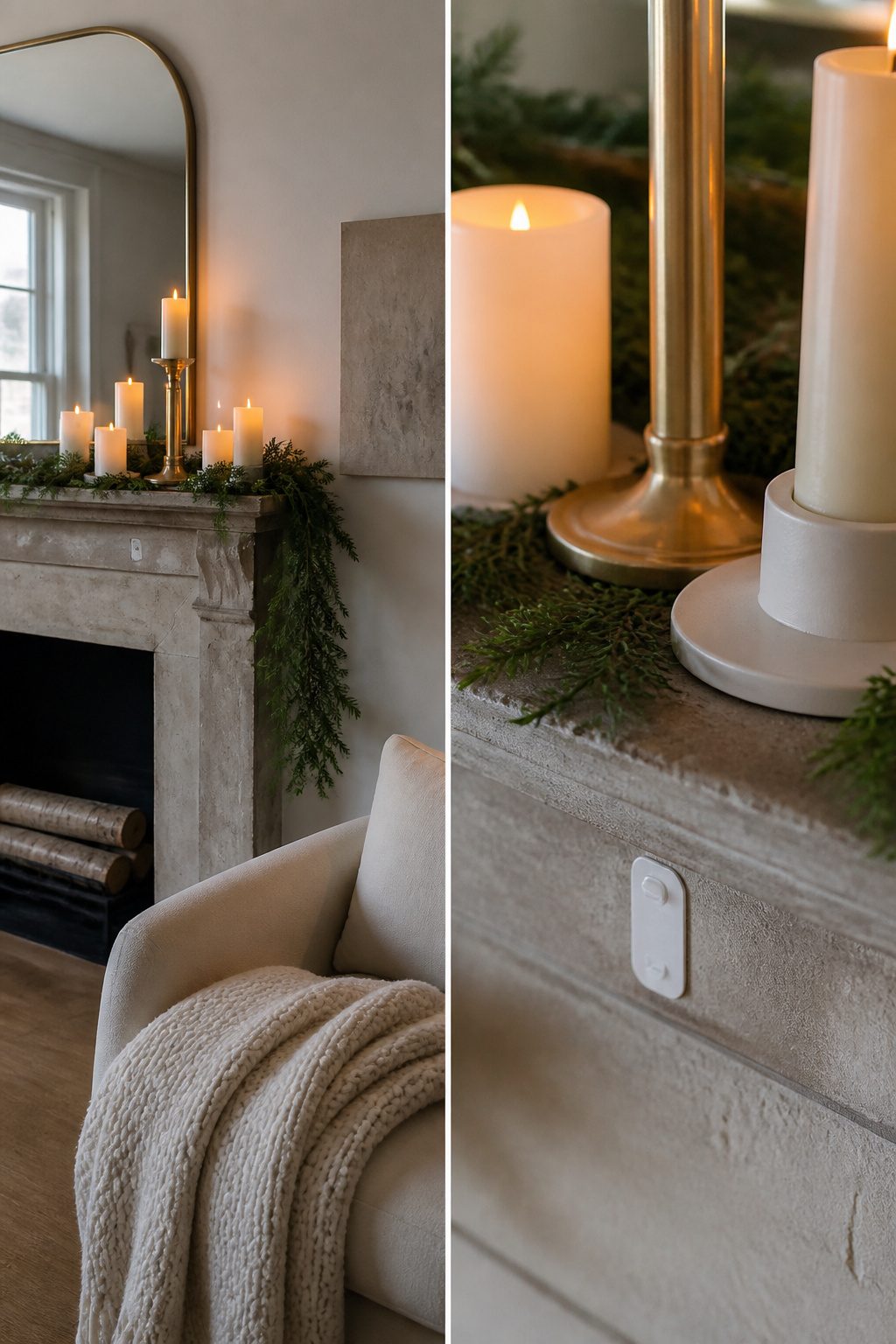
Candles turn a mantel from staged to lived-in faster than anything else I have tried. Real tapers in brass holders give that slight flicker you cannot fake, but LED candles now look close enough that I reach for them first in a rental or anywhere stockings hang. The newer ones have waxy tops and a warm stutter in the bulb, not the cold pulse they used to.
Height variation matters more than symmetry. A cluster of three-inch votives reads as clutter; the same count at six, nine, and twelve inches pulls the eye across the whole shelf. Kelly’s asymmetrical mantel works because the tallest candle sits off-center, not in the middle where a mirror or wreath already holds focus.
For renters, the practical side is non-negotiable. Open flames within arm’s reach of garland dry out fast, and wax drips on painted mantels leave scars that eat your deposit. LED removes the watchfulness, and Command strips behind the holders mean no screw holes to patch in January. Diane’s taper setup with fresh greenery is lovely, but I would swap her real candles for LED before I layered anything flammable underneath.
5. Decorative Accents
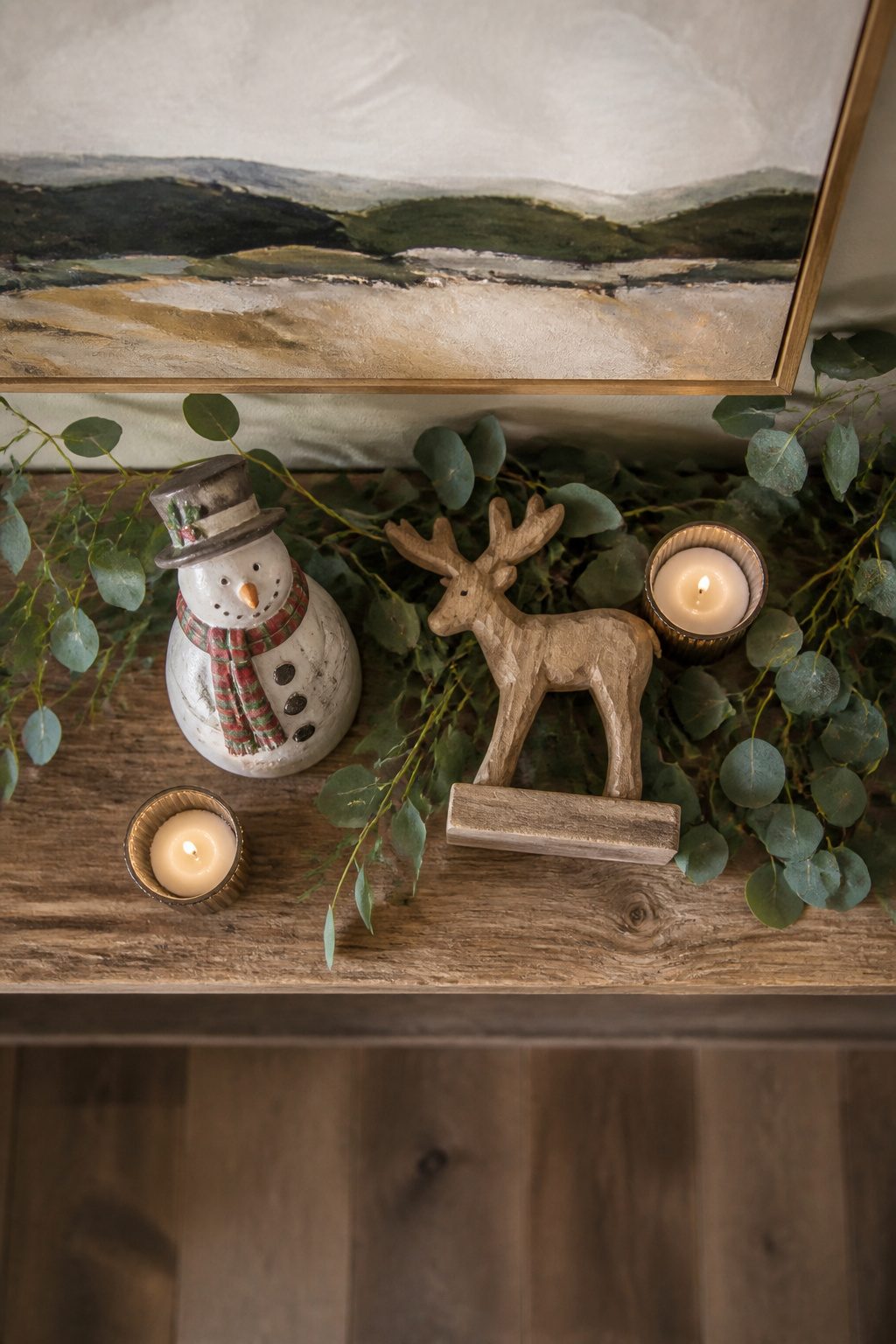
Ornaments and figurines sit on the mantel like jewelry on an outfit: the final layer that either pulls the whole thing together or tips it into clutter. Most of us collect these pieces over years, inheriting a ceramic snowman from a grandmother, grabbing a wood-carved reindeer at a market, receiving a glass angel we never quite loved. The mistake is treating the mantel as open storage and putting every single piece out at once. I learned this the hard way the year I lined up seventeen items across a four-foot span and stepped back to what looked like a gift shop exploded. Now I edit like I am curating a small museum, not emptying a box. Three to five pieces, spaced so each one has room to breathe, beats a crowded lineup every time. Rotation keeps the display from going stale. The reindeer sits this year, the angel waits in tissue paper for next December, and the mantel feels intentional rather than inherited. That restraint costs nothing and reads as the most expensive choice on the shelf.
6. Natural Elements
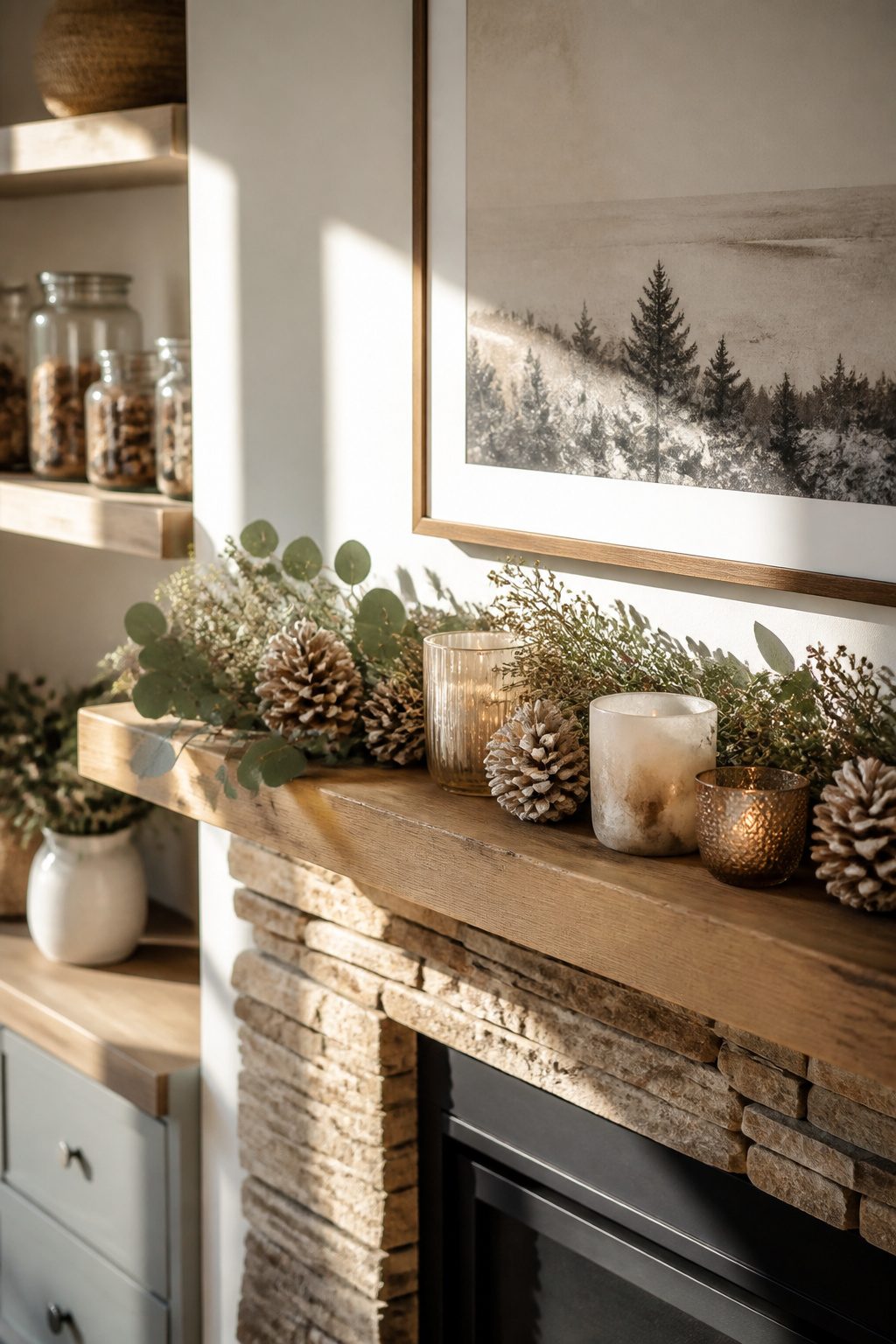
Pinecones and fresh greenery read as accents, not the main event, and that distinction matters on a mantel. A few clipped sprigs of cedar or fir tucked between candlesticks give height variation that a draped garland alone rarely achieves. The tradeoff is the drop: needles shed within days indoors, and the whole arrangement starts looking like a forest floor by New Year’s.
For a weekend setup that stays presentable through December, dried elements win over fresh every time. Bleached pinecones, eucalyptus stems, or even air-dried orange slices hold their shape without water and travel well to storage. If you do want the real thing, plan on replacing greenery weekly; the dry heat from most fireplaces accelerates the browning. A shallow tray of wet florist foam hidden behind books or a screen buys you maybe three extra days, but it is not worth the fuss for a two-week display.
7. Personalized Items
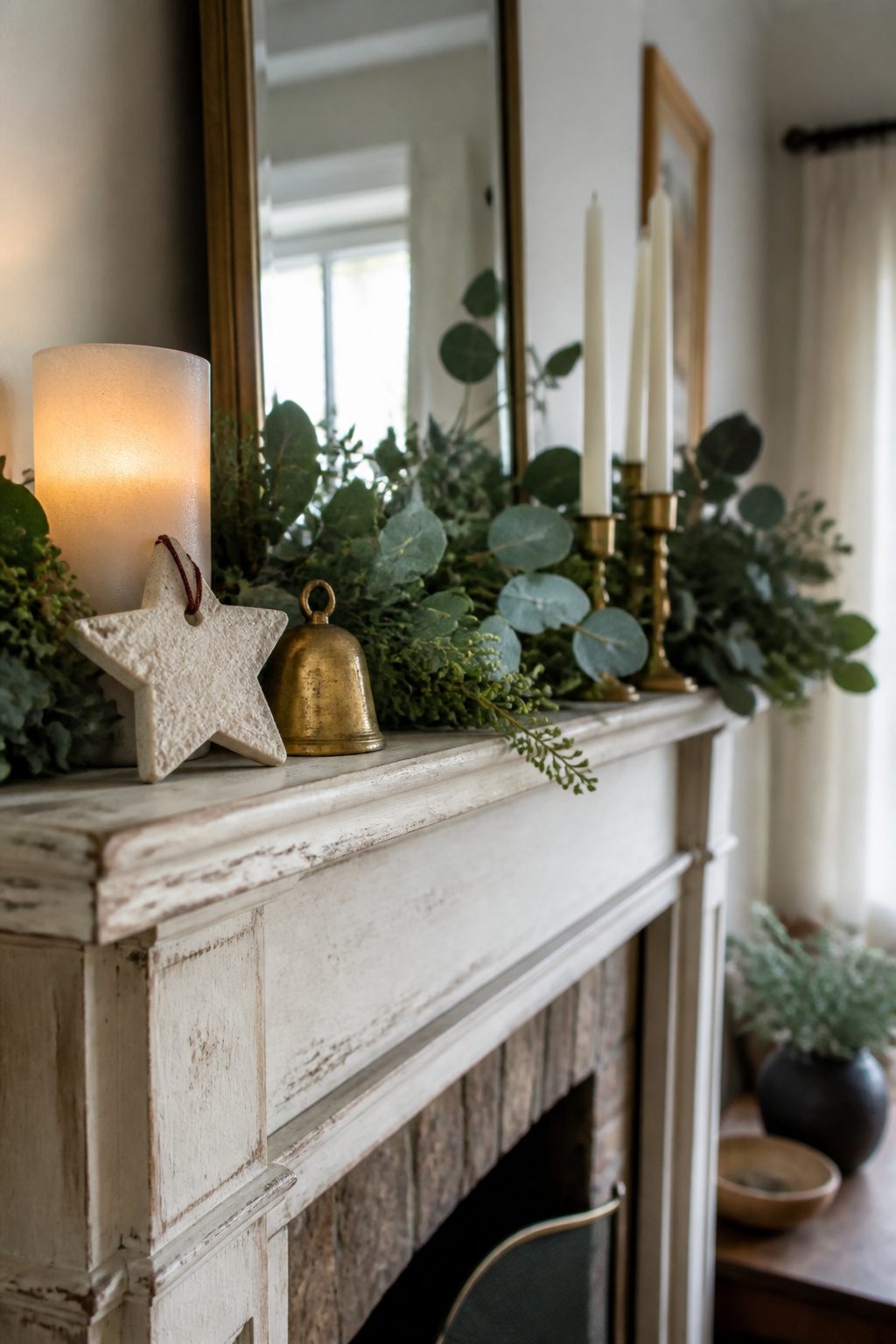
Family photos and hand-me-down ornaments carry weight that no store-bought garland matches, but they also carry risk. The mantel becomes a shrine fast. Two years back, my mother’s ceramic angel sat dead center with framed baby pictures flanking it, and the whole thing read memorial wall instead of holiday display. The fix was moving the angel off-center, tucking it between pine branches so the greenery led the eye first and the figure surfaced second. Heirlooms work best when they lose the spotlight and gain context: a child’s paper snowflake clipped to ribbon, a grandfather’s brass bell hung deep in a eucalyptus branch where it catches light rather than demanding it. One sentimental piece per foot of mantel is the ceiling; beyond that, the stories fight each other and none get heard. Handmade items need the same discipline. The salt-dough ornament my niece pressed at age four stays because she is twelve now and the lopsided star still makes her grin, but it sits on a small iron easel at the far left, paired with a plain white candle that gives it breathing room. Sentiment without editing looks like hoarding. Sentiment spaced and grounded in living greenery looks like intention.
Non-Traditional Palettes
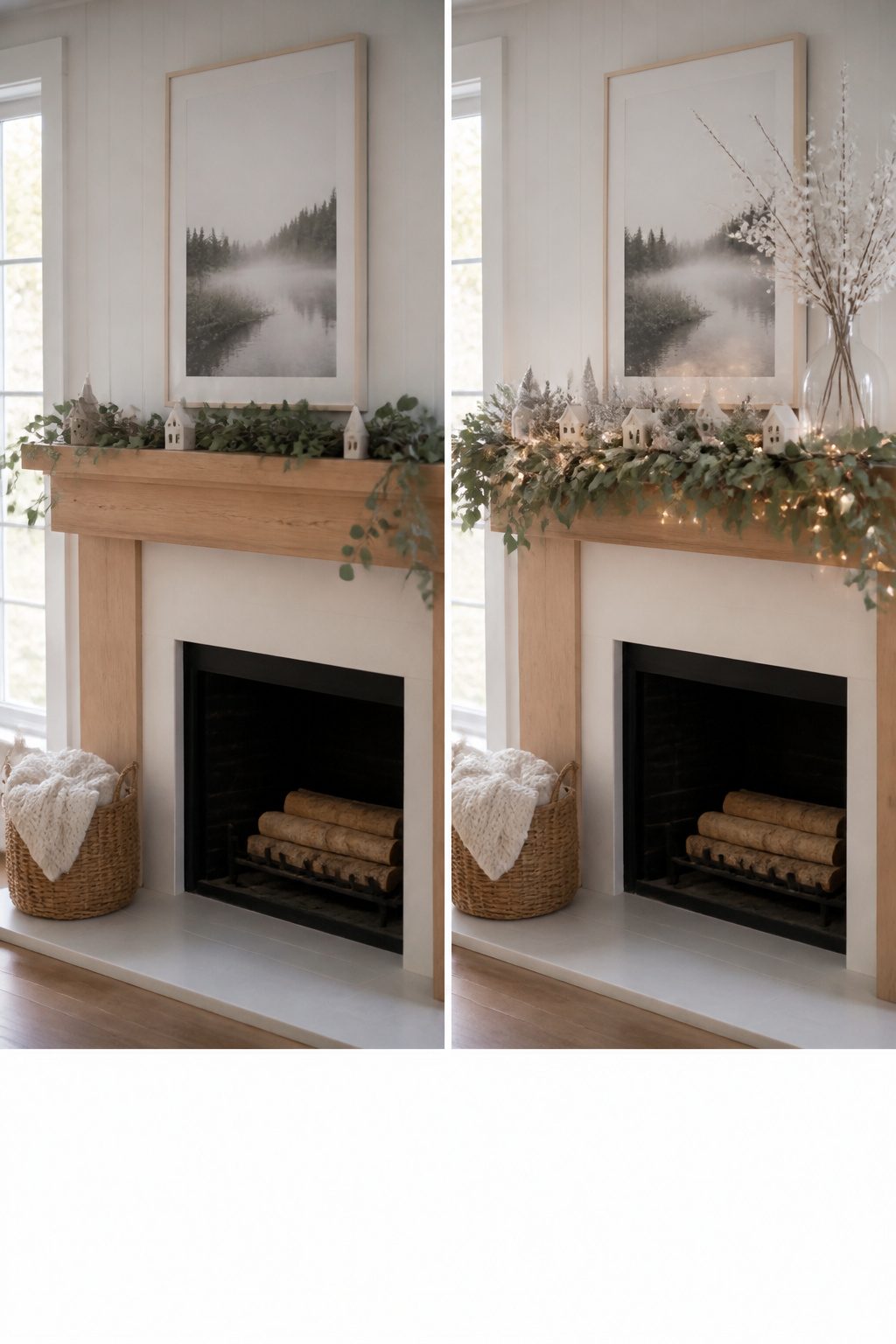
A pastel or monochrome mantel changes every other decision you make, which is exactly why it is worth considering. Skip the red-green-gold entirely and the garlands suddenly read as texture instead of pattern, the lights become warmth instead of holiday signal. The first time I tried this, I kept reaching for cranberry picks out of habit and had to stop myself three times before the new palette stuck.
White ceramic trees, pale sage eucalyptus, silver-dollar eucalyptus draped instead of pine: these need the same layering as traditional greens but they show dust faster and they die faster if you use real stems. Faux is the practical call here, and the good faux eucalyptus pays for itself by February when the fresh stuff would be brown.
The real shift is psychological. Guests pause longer because the scene does not match their automatic read of "Christmas." That pause is the point. But the mantel has to carry the weight alone, without the rest of the room agreeing, so the layering has to be tighter, not looser. A sparse pastel mantel looks forgotten; a sparse traditional one looks intentional. Build fuller than you think, then remove one piece and stop.
Outdoor Mantels
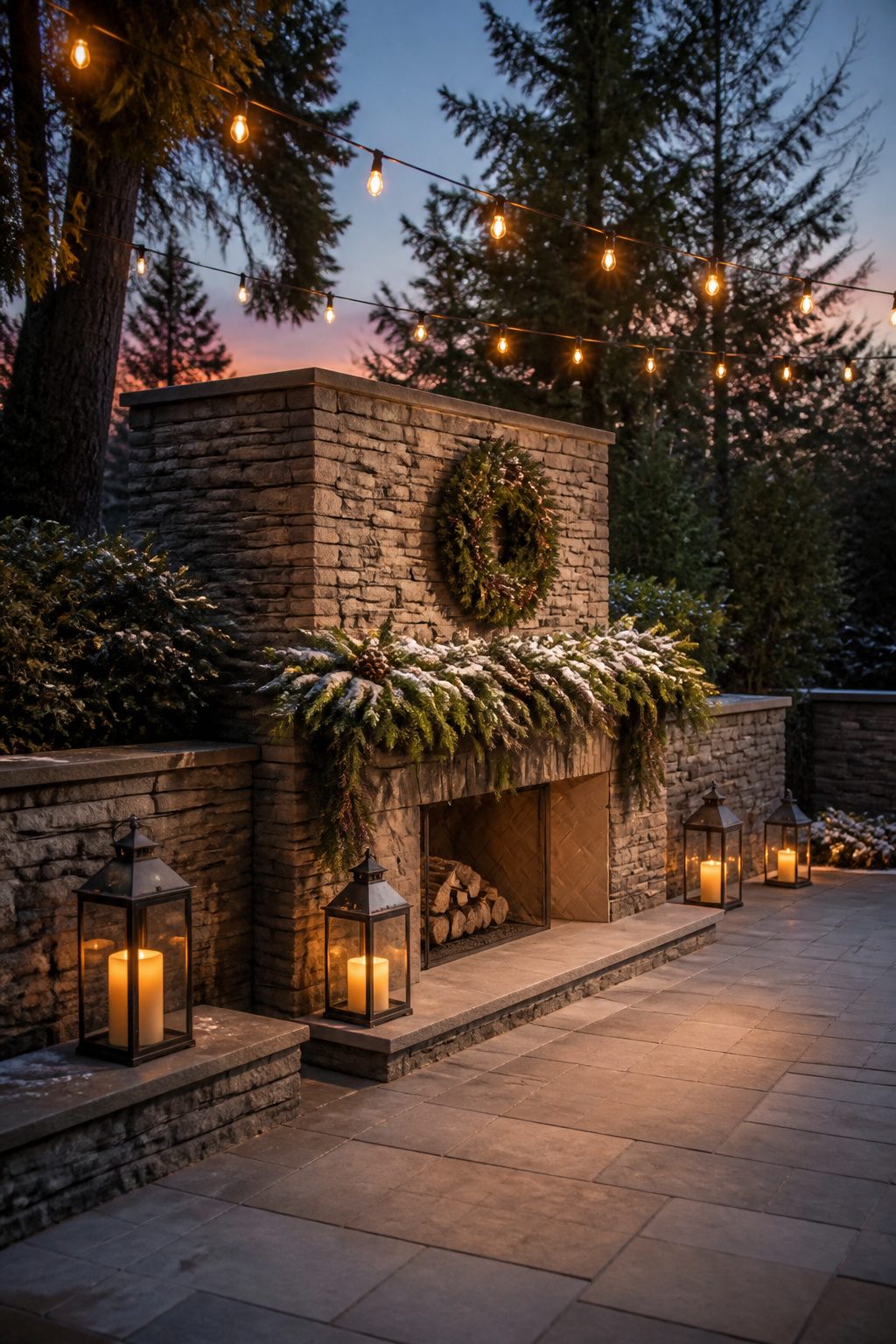
Outdoor mantels sit where the weather does the editing for you. Wind strips away anything too light, rain soaks what is not sealed, and a freeze-thaw cycle in a single December afternoon can crack a finish that looked fine on the porch. The materials that survive are the ones built for the job from the start, not the indoor favorites pressed into service.
I learned this after watching a pine garland turn to pulp in one wet week. Now I use powder-coated steel frames, sealed cedar, or resin composites rated for exterior use. Scale matters more outside, too. A mantel that reads full indoors disappears against siding or brick; you want heavier garlands, bigger lanterns, and branches with real length to hold their own.
Lighting shifts completely. Solar strands work only where the panel sees direct sun for several hours, so I default to battery-operated LEDs with timers and keep the battery pack in a sealed box. Even then, cold drains cells faster, so I budget for swapping them mid-season rather than fighting it.
Temperature swings are the hidden problem. Adhesives that grip at 50 degrees let go at 20, and thermal expansion pops rigid mounts loose. I wire or screw everything now; magnetic hooks and sticky strips are for indoor mantels only.
What I Store and How
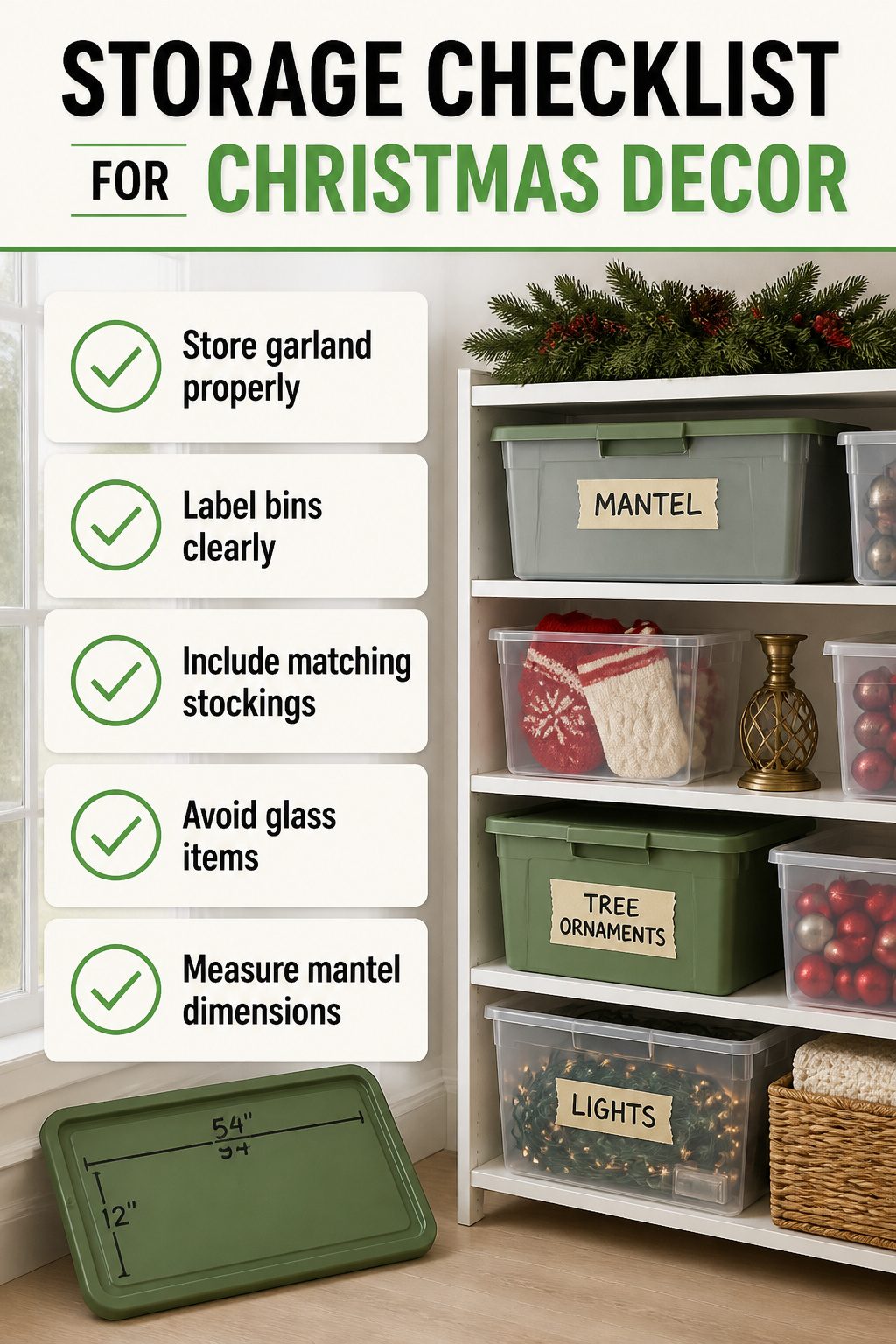
The week after Christmas, my mantel comes down in about twenty minutes, but the storage decisions made that afternoon decide how next November goes.
Garlands get the priority bin. A good faux garland that keeps its shape costs enough that replacing it yearly would eat half the budget, so mine gets rolled loosely, not stuffed, into the same under-bed box it came from. The trick is storing it with the lights already attached; threading them through branches a second time is the thirty-minute task that turns a quick setup into a whole evening. Battery packs get taped to the plug with a strip of painter’s tape so the corrosion from forgotten AAs doesn’t trash the whole string.
Labels matter more than you’d think. "Mantel" written in Sharpie on masking tape beats a detailed inventory, because detailed inventories never get updated. What goes in that bin: the garland, the stockings if they match the scheme, the one candle holder that fits the narrow left side. What doesn’t: the taper candles, which will warp in summer heat no matter what container you choose, and anything glass that you can replace at the grocery store for a few dollars. That glass breakage in year three taught me the difference between sentimental keep and practical replace.
Renters especially should measure their mantel depth and width onto the bin lid in marker. Next year you’ll be in a new place half the time, and knowing what fit before keeps you from buying for a fireplace that isn’t yours.
Building the Layers in Order
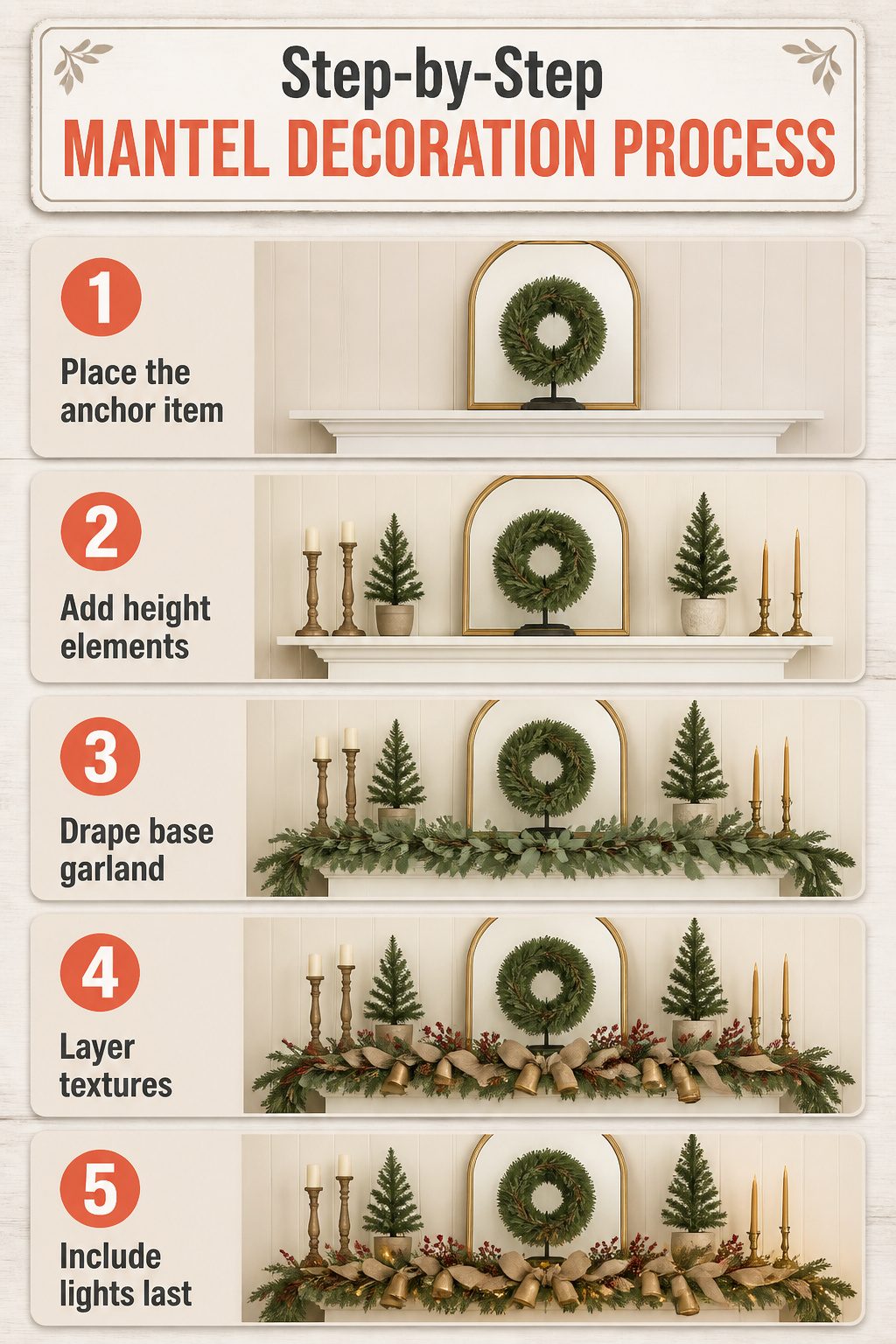
A mantel looks thrown together until you know the order. I learned this redoing mine three times last December.
Start with the anchor dead center. A mirror, a piece of art, a wreath on a stand, whatever reads as the heaviest object. This is the weight the eye lands on first.
- Build outward with height on both ends. Candlesticks, small trees, tall vases. The ends want to match in visual weight, not in identical objects. Symmetry and sameness are different things.
- Lay in your base garland. Drape it so it breaks the straight line of the mantel edge. Eucalyptus or faux greenery both work; the point is the soft, irregular shape it makes against the wall.
- Layer textures through the middle third. Ribbon, bells, berries. Vary the sizes and let some pieces sit forward, others tuck back. Depth matters more than density.
- Add lights last, tucked into the greenery so the source hides. Warm white reads cozy; the wires disappear if you weave them under, not over.
Sentimental pieces go in at step 2 or 4, wherever they fit the scale. A tiny framed photo gets lost as the anchor, but it holds its own inside the garland.
When a Weekend Is All You Have
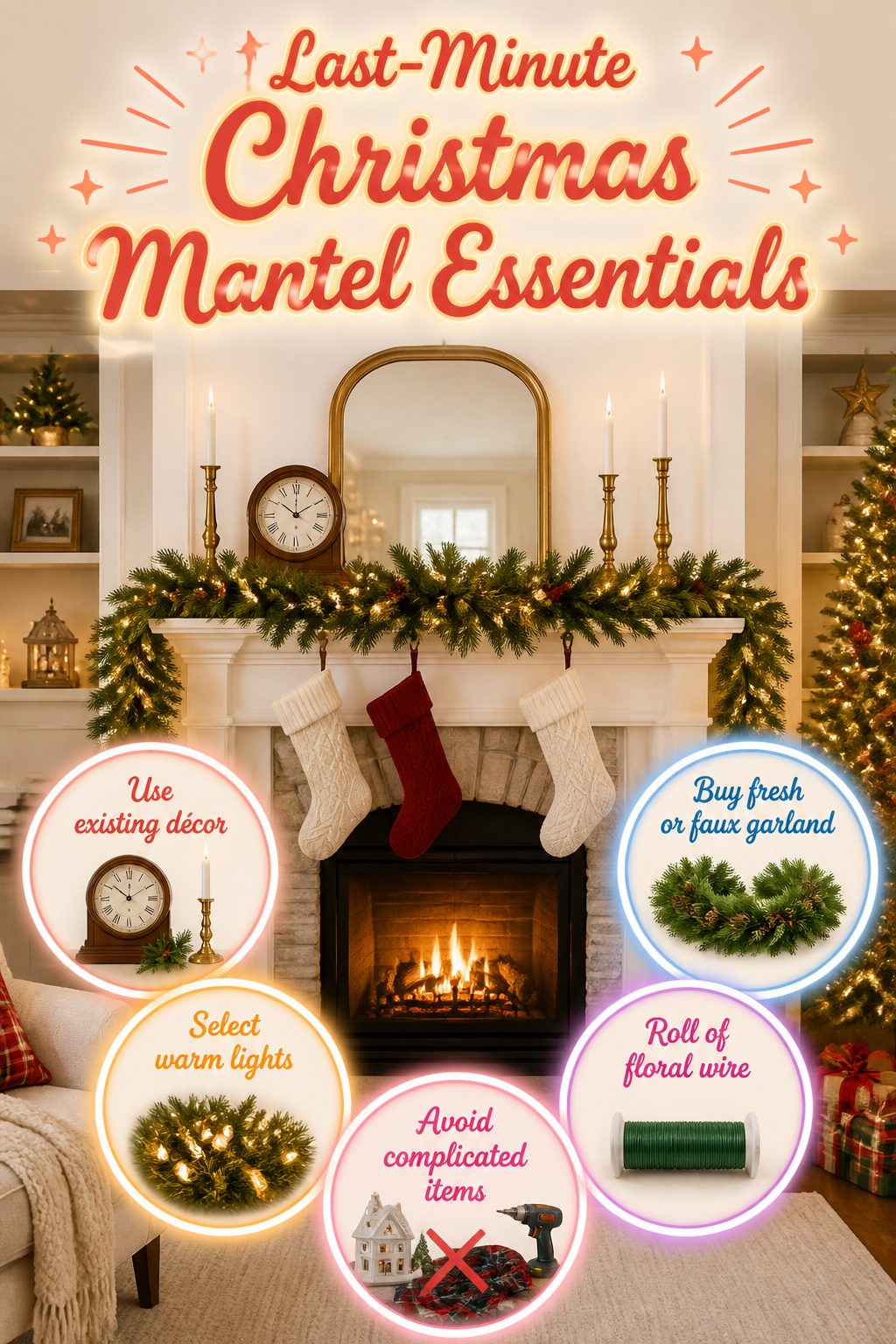
The Saturday before guests arrive is not the moment to order custom stockings. I have learned this from the particular panic of taping greenery to brick at 10 p.m., hoping the adhesive holds through Sunday dinner. Start with what the mantel already owns: the mirror, the clock, the pair of candlesticks that live there year-round. Christmas layers around those, not instead of them.
Buy fresh or faux garland, one string of lights with a warm color temperature, and one roll of floral wire. That is the complete toolkit. Skip the matching sets of ceramic villages, the specialized mantel scarves, the anything that requires a level and a drill. Ribbon can wait; you will not miss it if the greenery is full enough.
Faux garland pays for itself by the third year, but fresh smells better and forgives uneven shaping. Either way, drape it first, lights second, then step back before adding anything else. The common mistake is filling every gap. Negative space reads as intention; clutter reads as hurry.
Frequently Asked Questions
How do you decorate a mantel?
Start with a large anchor piece dead center, like a mirror or wreath. Add height on both ends with candlesticks or small trees, then build outward with varied textures and depths. The ends should match in visual weight, not in identical objects.
What are some ideas for Christmas mantel decor?
Layer garlands such as eucalyptus, pine, and cedar for depth. Weave in warm white twinkle lights, hang stockings with hidden command hooks, and add candles or LED alternatives. Finish with three to five decorative accents, spaced so each piece has room to breathe.
How can I hang garland without damaging my mantel?
Cord bundlers grip garland well against the back edge of the mantel shelf. Small command hooks tucked underneath also work for both garland and stockings, peeling off clean in January without scratching wood or leaving residue.