
Christmas front porch decorating runs from a $29.99 wreath you redress for three years straight to a full layered entry with custom mats and vintage sleds.
What decides which level is yours is not budget but wind: anything above fifteen miles an hour turns real candles into soot and tips lightweight resin planters, so the porch you end up with depends on whether you are willing to swap in battery-operated pillars and concrete bowls heavy enough to stay put.
I learned that the hard way when an eighteen-inch brass lantern cracked its glass on a December gust; the LED replacement, set to a dusk timer, held steady through January without another trip outside.
1. Wreaths and Garlands
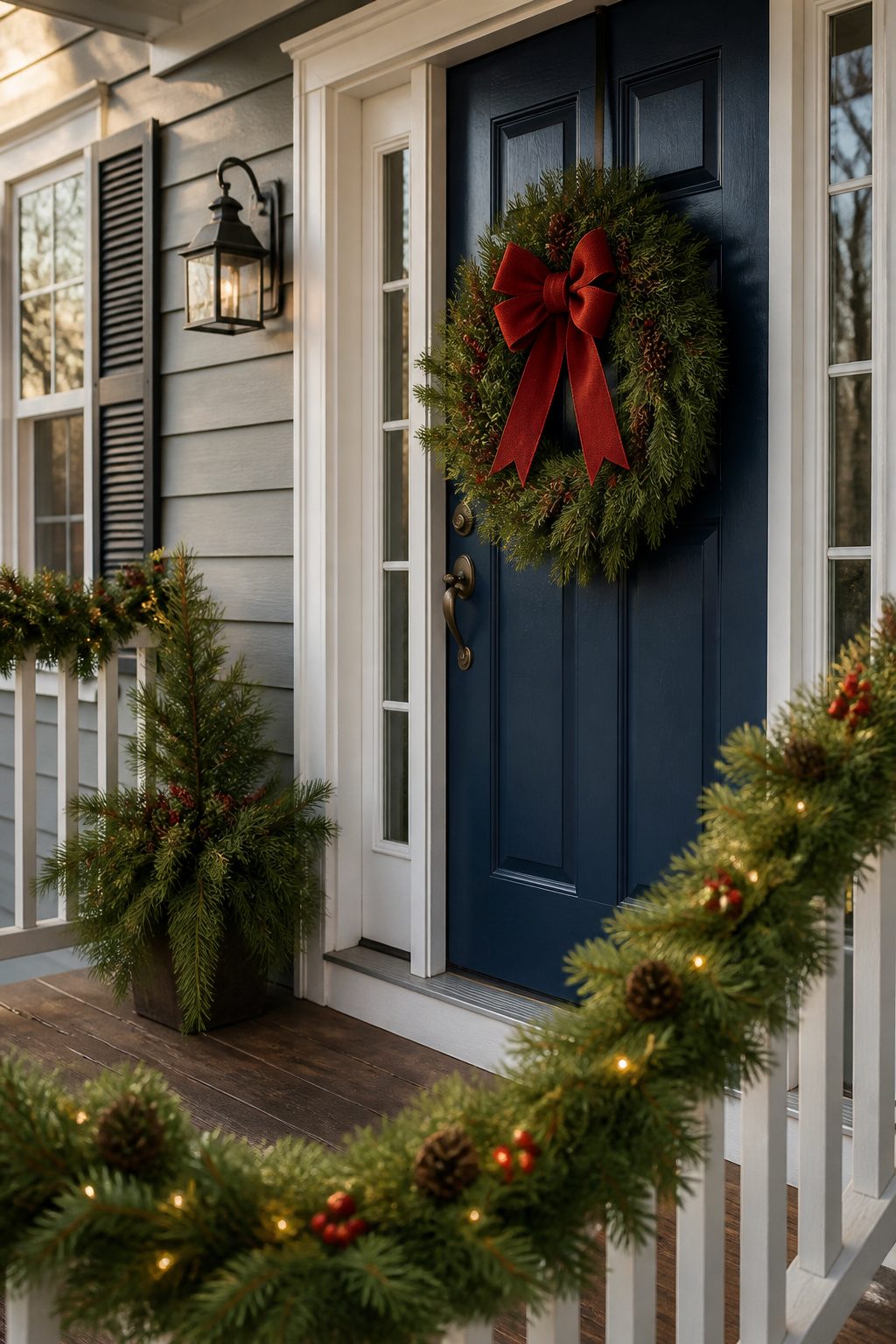
Wreaths and garlands are where porch decorating starts because they do the heavy lifting without eating floor space.
A $29.99 wreath from Marshalls, wired with a few bells and a ribbon you swap out yearly, reads as custom without the custom price.
I have reused the same base wreath through three color schemes now; the ornaments pry off clean with floral wire cutters, and shatterproof ones survive the door slamming all December.
Garlands frame the door or drape the railing, and that placement matters more than density.
Two pre-lit garlands strung end to end give enough length for a standard door frame with a little sag in the middle, which looks fuller than pulling one tight.
Pine cones and berries mixed into the greenery set up the texture that everything else hangs off of: a bow here, an ornament cluster there.
Fresh garlands win on scent and last several days in winter’s cold, but faux holds up if you are not swapping it weekly.
Build the base layer first, then decide what else the porch needs; most of the time, less competes better once the greenery is already doing the work.
2. Seasonal Plants or Trees
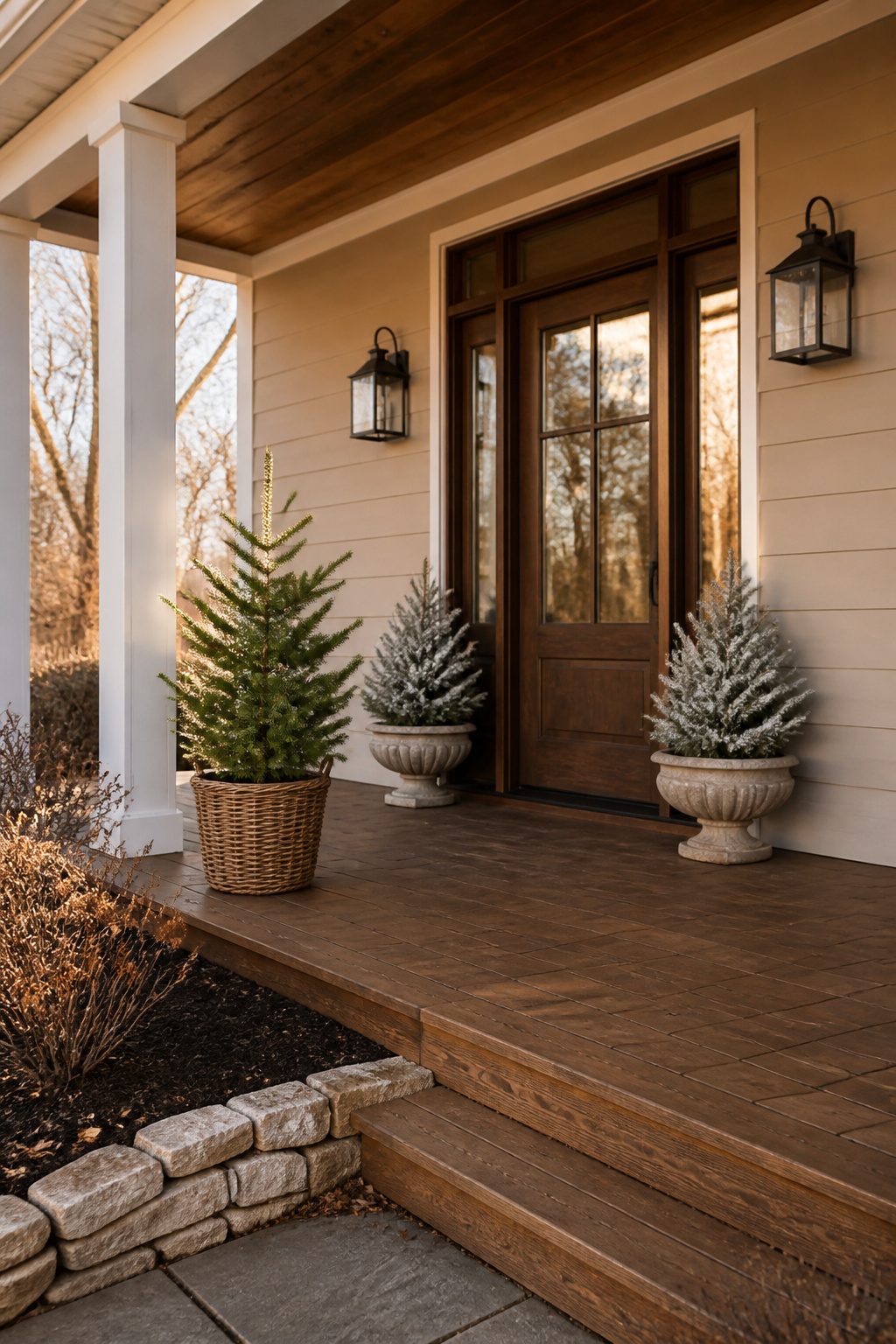
A $19.99 Norfolk pine in a simple basket reads as a small intentional tree, not a placeholder.
Live ones hold up fine on a covered porch through December; the needles stiffen rather than droop in cold air, and a little wind gives them movement no plastic replicate quite matches.
Faux topiaries in concrete bowls flanking a door do the anchoring work year after year, sprayed with white paint to pick up frost light.
Two ways to play the mix: one live tree near the step where guests pass close enough to notice the texture, or a matched pair in baskets on either side of the door if the stoop is shallow.
Plastic reads greener than it should after rain; live greenery fades slower outside than in dry indoor heat, though it will need swapping if the season stretches past three weeks.
The concrete bowls in the passages weighed enough not to tip in gusts; lightweight resin imitations need sand inside or they wander.
3. Seating with Cozy Textiles
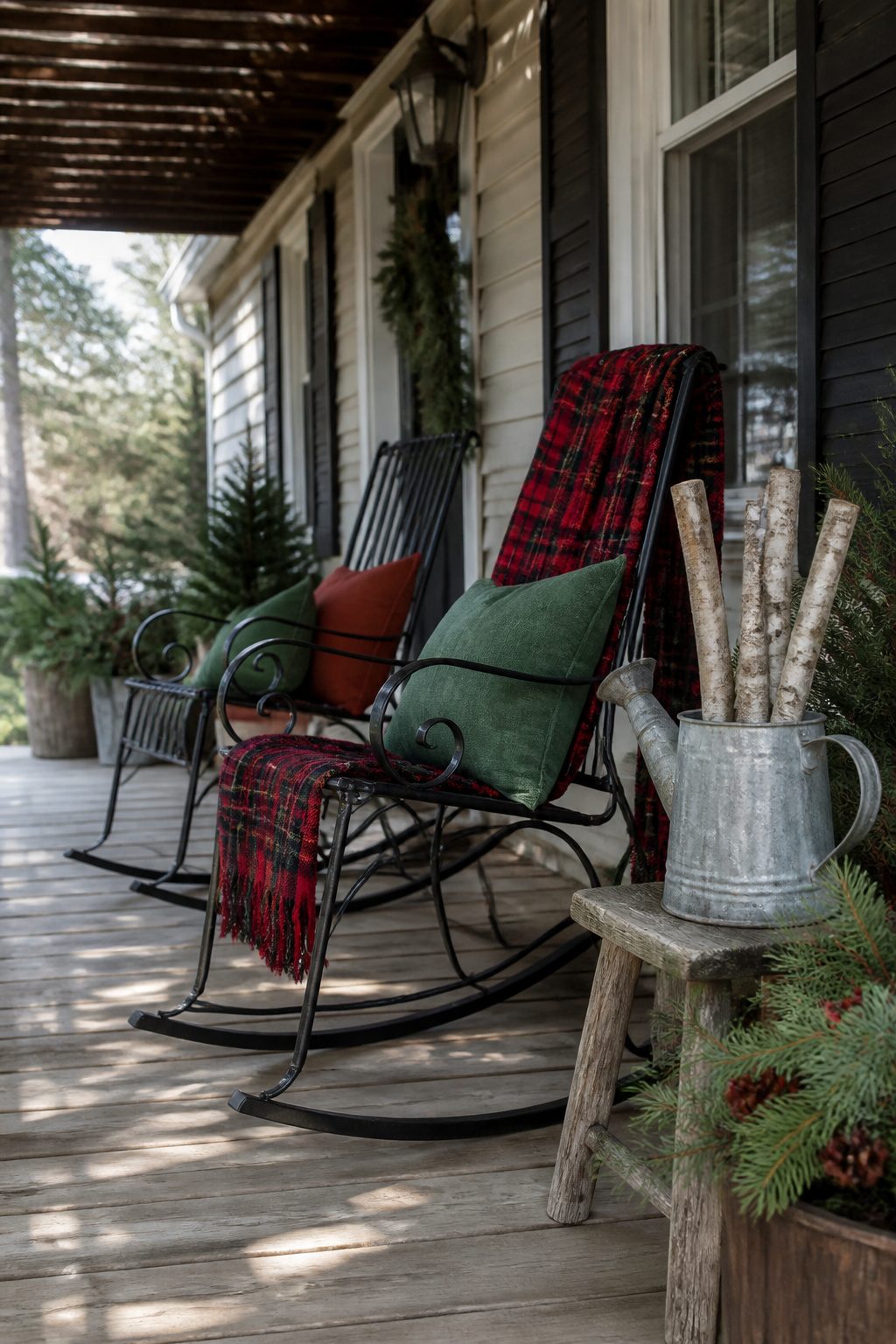
Rockers at each end of a porch read as hard surfaces until you soften them. I learned this the hard way one December when my wrought iron bench sat there looking like yard furniture at a dentist’s office.
A couple of Christmas pillows and a throw blanket changed the whole posture of the space. The bench became somewhere you actually wanted to settle with hot cocoa.
Outdoor-safe fabrics are the detail that separates a porch that works from one that fails. The $5 wooden stool I found secondhand got the same treatment: a plaid blanket draped over it, a small pillow on top.
It added height variation and gave me a place to set a galvanized watering can with birch logs.
Storage is the part nobody plans for. That red plaid throw and those green snowflake pillows looked inviting for about a week before the first rain.
Now I keep a small deck box just inside the door. Wet textiles come off, dry ones go out.
The Polywood rockers themselves stay put; the soft parts rotate.
What survived one winter: the pillows with polyfill held their shape. The cheap cotton blanket did not.
For a few hundred dollars and a weekend, the lesson was clear. Buy the soft goods last, and buy them knowing where they’ll sleep when it storms.
4. Christmas Lanterns
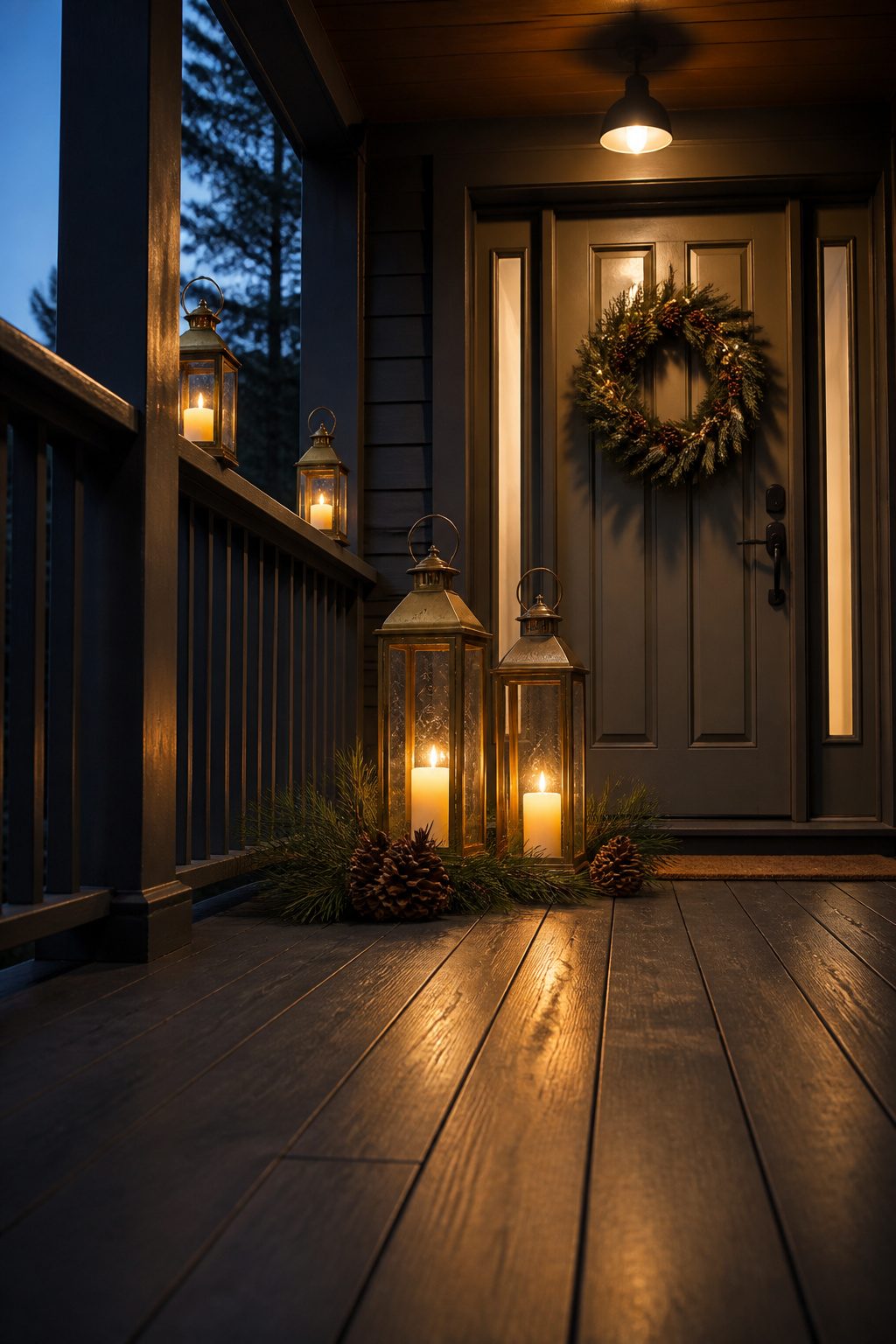
Lanterns do two jobs on a Christmas front porch: they read as decoration by daylight and they carry the light once the sun drops. I learned the hard way that those two jobs need different candles inside.
Battery-operated candles win on porches where wind is even a possibility.
A real flame in a lantern looks richer, but a gust above fifteen miles an hour turns a tall pillar into a sooty mess or knocks the whole lantern off a step.
The first year I tried a pair of eighteen-inch brass lanterns on the third step up, one tipped on a December night and cracked its glass.
The second year I swapped in LED pillars with a timer, the kind that come on at dusk without me walking out in the cold, and the look held steady through January.
Sizing matters more than style. A lantern under fourteen inches disappears against wide porch steps; anything over twenty-four inches on a narrow railing overpowers the rail itself and catches the wind like a sail.
I keep the tall ones, twenty inches and up, on the floor beside the door with a few evergreen stems and pinecones packed around the base to hide the battery pack.
Shorter lanterns, twelve to sixteen inches, sit on the railing where a lower center of gravity keeps them upright.
Greenery inside a lantern works best when it is spare: a stem or two of evergreen, maybe a berry cluster, so the candle still reads as the point.
Fill it too full and the lantern becomes a glass vase that happens to have a light somewhere inside.
5. Decorative Signs
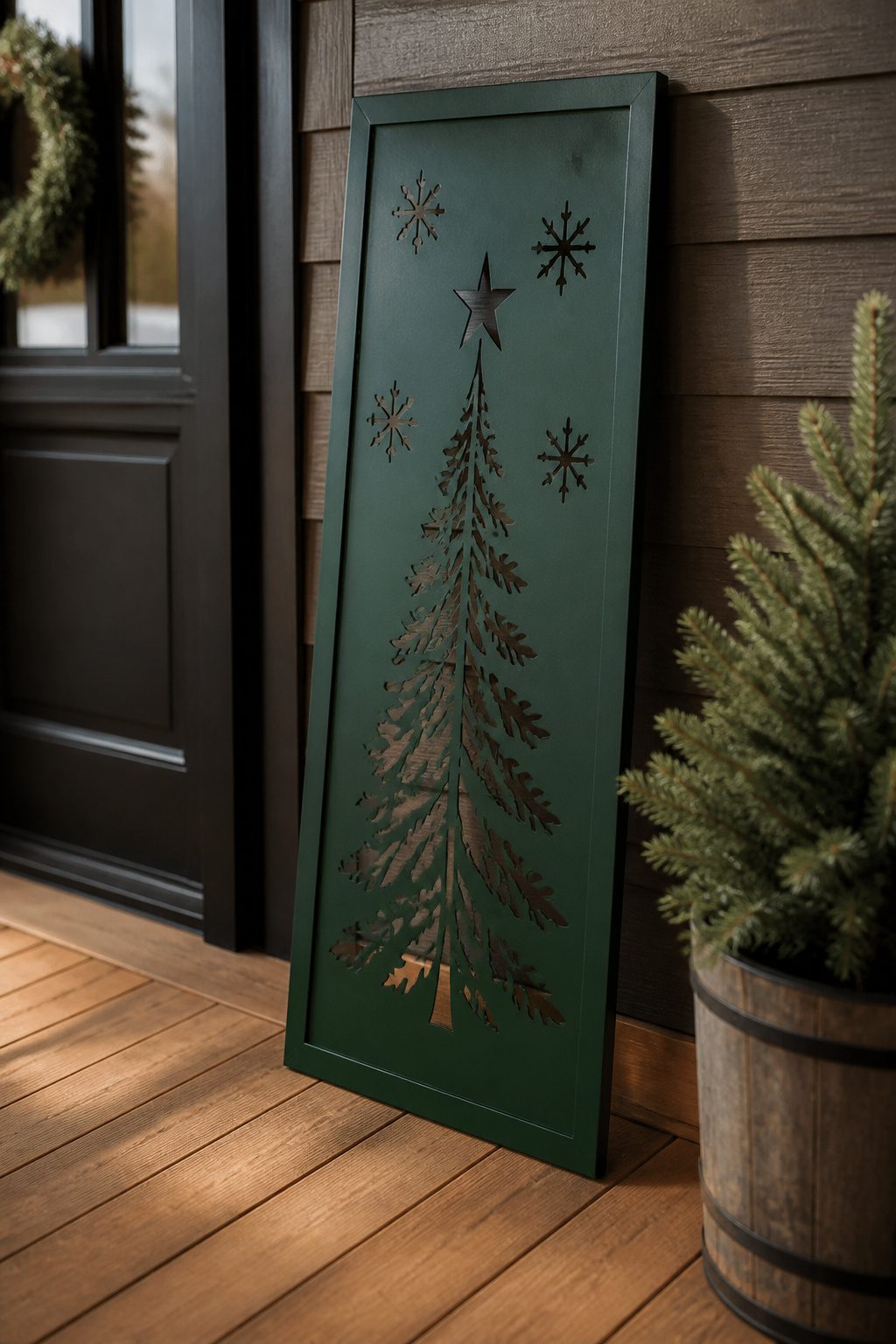
A sign that lives outside for two months needs to earn its spot. I learned that the hard way with the thin wooden plaques that look charming in November and bow outward by New Year’s.
Moisture gets in, freeze-thaw does the rest, and the painted lettering cracks along the grain. Now I look for materials rated for exterior use from the start: PVC board, powder-coated metal, or solid polyresin.
Weight matters more than thickness; a sign that flutters in every breeze will fatigue its own hanger holes.
Sizing should relate directly to the door. A 36-inch entry looks balanced with a sign in the 18–24 inch range, whether it hangs centered or leans in a corner.
The tall, narrow leaners that have become common work especially well on small porches; they read from the walkway without blocking the actual doorway. For renters, a leaning sign skips the hardware question entirely.
A single hook or an over-the-door bracket handles the rest, and both come down clean in January.
6. Fairy Lights
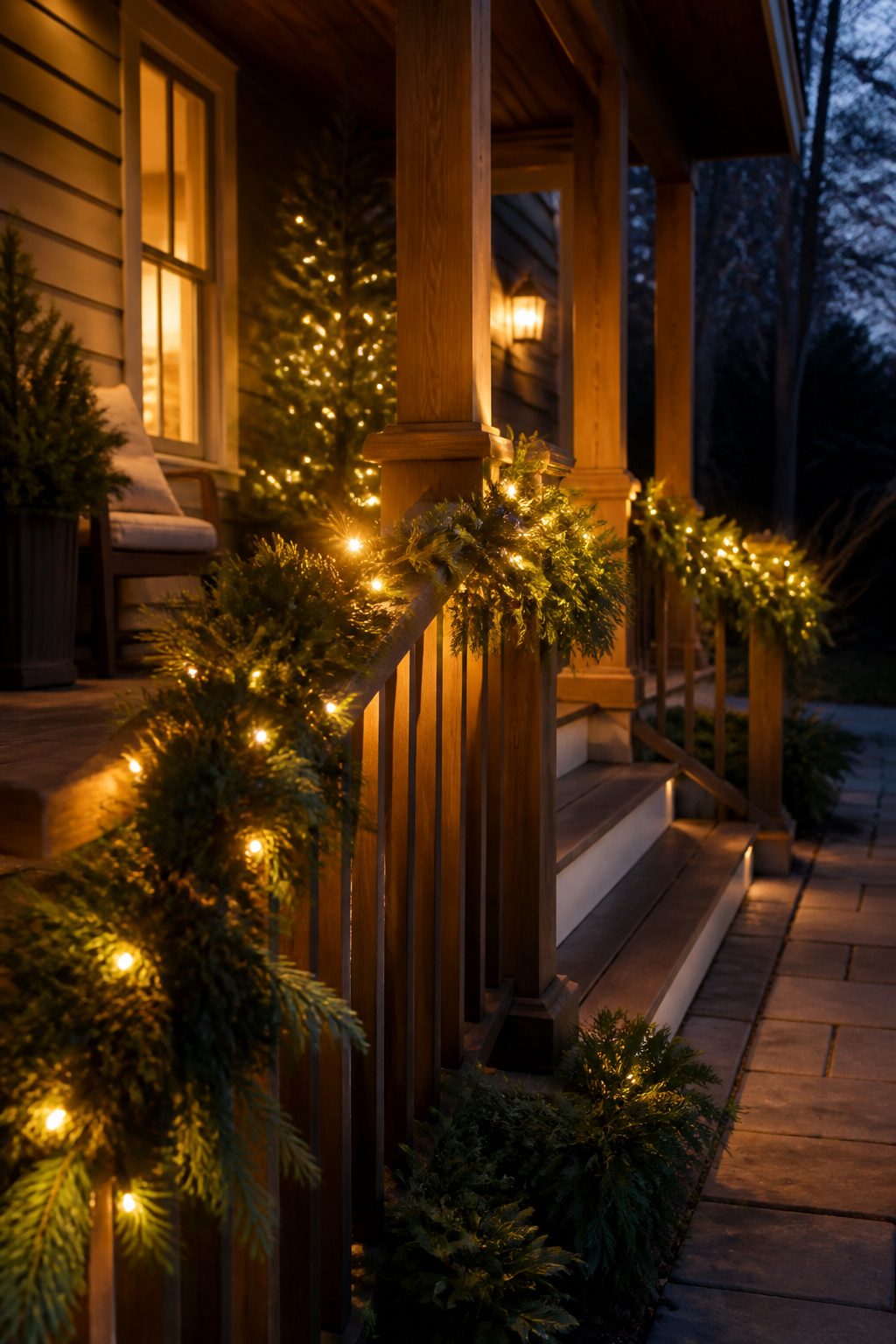
LED fairy lights turn a porch from invisible to inviting once the sun drops.
On my own railing, I run a single strand of 100 lights and get just over 30 linear feet of wrap around the balusters; 200 lights stretches that to about 60 feet if you keep the spacing loose enough to let the wire disappear.
Battery-operated strands with built-in timers solve the rental problem of no outdoor outlet. I set mine for six hours on, eighteen off, and the wreath lights fire themselves every evening without a trip to the porch.
A remote to shift between warm white and that cooler blue-white is useful when you want the door to read cozy rather than clinical.
Roofline outlining demands plug-in strands and a ladder commitment that most weekend projects do not need. Wrapping railings or weaving lights through garland on the posts gives you the glow at eye level, where guests actually stand.
I skip the roof entirely now; the timer handles everything, and the batteries last a full December season before I swap them.
7. Doormats and Rugs
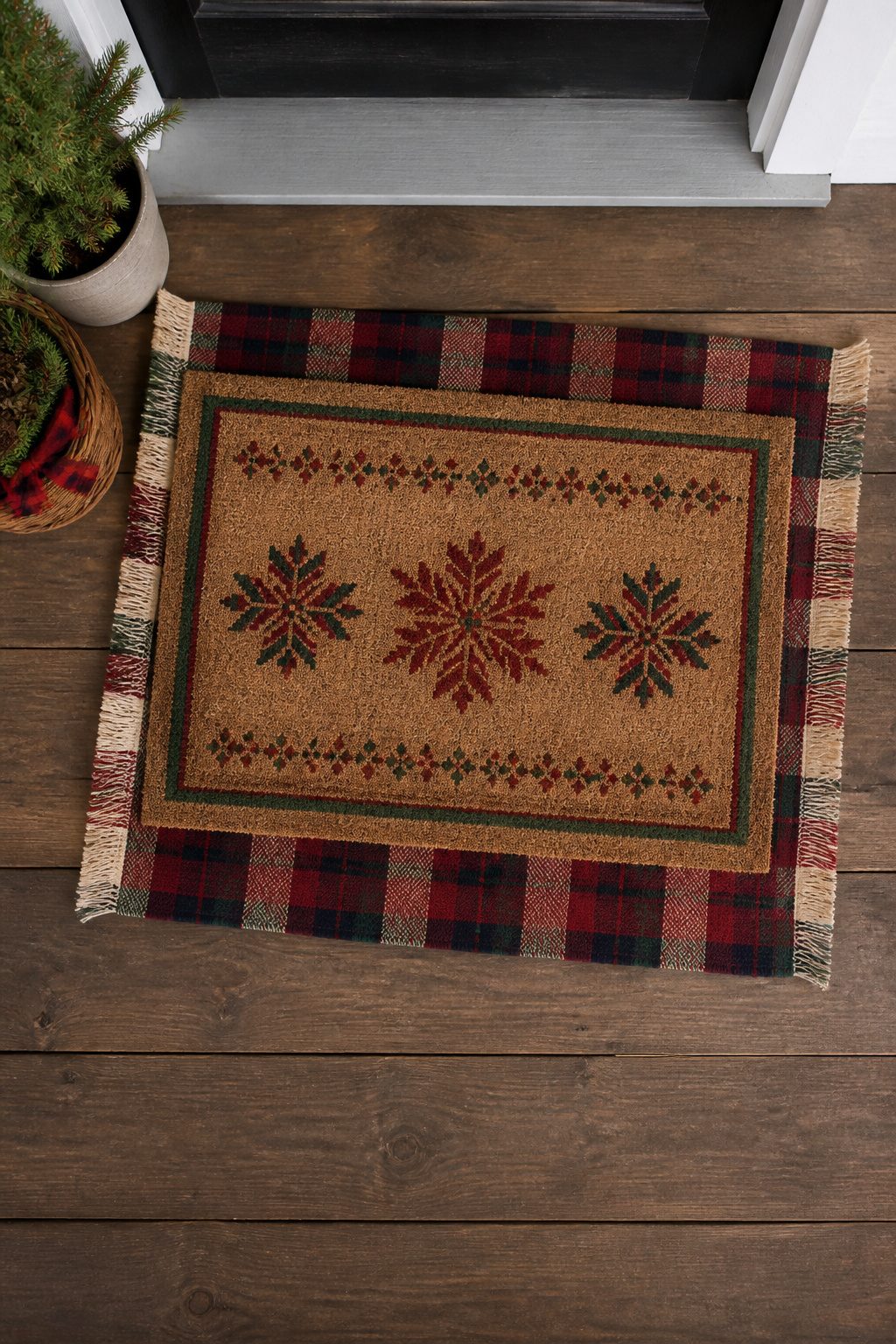
Layered rugs on a porch look warm in December, but the wrong order traps water and rots the bottom layer.
I put the rubber-backed doormat on top and the absorbent natural-fiber rug beneath it once, thinking the pretty one should show. It stayed soggy for three days after light rain.
The mat on top scrapes mud off boots; the rug underneath adds color and catches what drips through. Natural fiber goes down, rubber-backed doormat goes on top if you want the pair to dry.
A custom doormat from Etsy runs $56–$66 depending on size, which is steeper than the Target or Hobby Lobby standard but survives daily use. The one I watched hold up through a full year of heavy traffic still looked new.
For the base layer, a $20.99 plaid outdoor rug from Amazon gives the seasonal color without the custom price. Rubber backing is what separates the two jobs: scraper above, cushion and color below, and neither layer drowns.
8. Vintage Elements
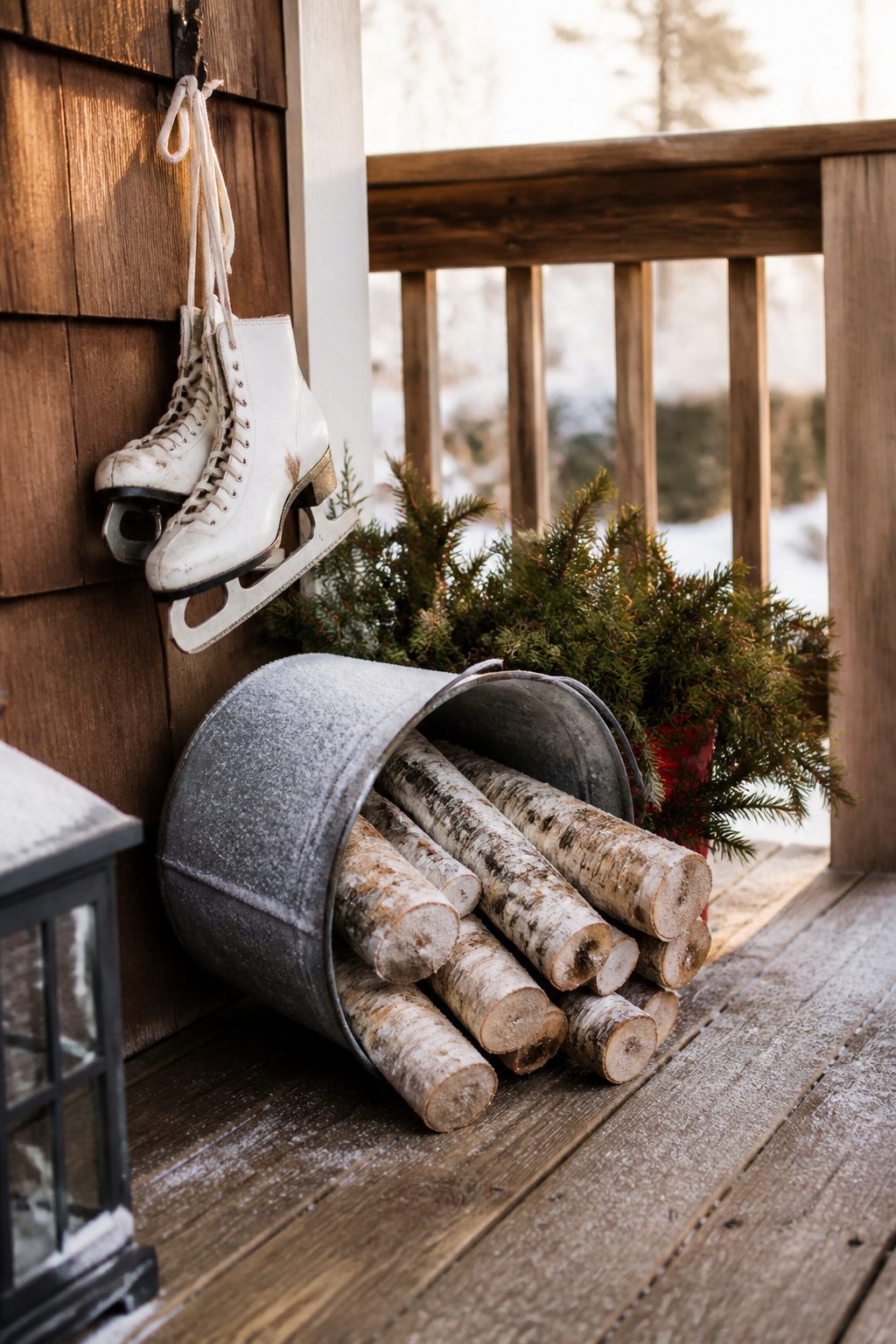
A galvanized bucket filled with birch logs and a strand of rusty bells reads as found-on-the-farm authentic, even when the bucket came from a big-box store last Tuesday.
The same goes for a pair of ice skates hung by their laces or a wooden sled leaned against the railing. These props borrow nostalgia without requiring an actual memory.
Sourcing is where the look lives or dies. Estate sales and Craigslist turn up weathered, chippy pieces that reproductions rarely match, and the price often sits below retail for a reproduction.
The catch is weight and wind. A hollow tin bucket tips at fifteen miles per hour; a cast-iron watering can or a solid wood sled stays put without cinder blocks.
Last year I bought what I thought was a 1940s runner sled, patina and all, only to flip it over and find a barcode sticker and "Heirloom Collection" stamped underneath. The finish was sprayed, not aged.
It photographed fine from five feet away, but up close the paint was too even, too orange.
I kept it because the porch is dark and no one studies grain from the sidewalk, but for the spot by the door where guests pause, the real thing wins if you can find it.
Color Schemes That Hold Together
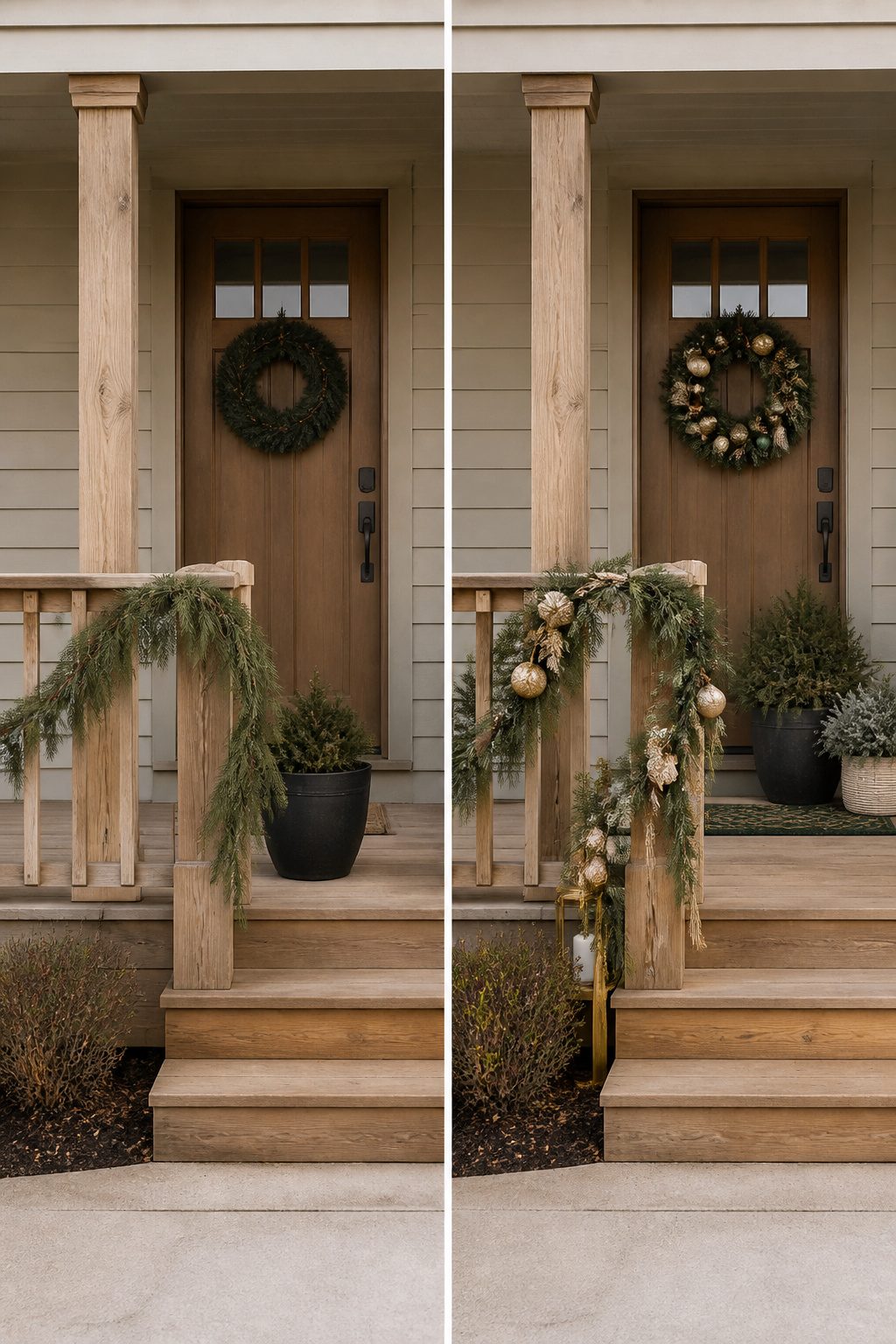
Traditional reds and greens still read Christmas from the curb, but a neutral palette of snowy whites and soft metallics can look more intentional on a small porch where every piece competes for attention.
Three years ago I split the difference and ended up with neither, a red bow, a silver wreath, a green garland, and a white lantern that each fought for the spotlight.
The porch felt busy before a single light went up.
Now I limit myself to two main colors plus one accent, and I decide the rule before I shop. Last year that meant deep green and cream with brass as the single metallic.
The garland, the wreath ribbon, and the door mat all carried the same cream. Two brass bells hung from the wreath and repeated on a small lantern by the step.
Everything else stayed packed away.
The accent exists to break repetition, not to start a second theme.
One year I tried red and silver with a white accent, and the white kept pulling eye toward itself because it was too close to the silver in value.
The two-main rule only works if the accent reads clearly as the exception.
Natural Elements
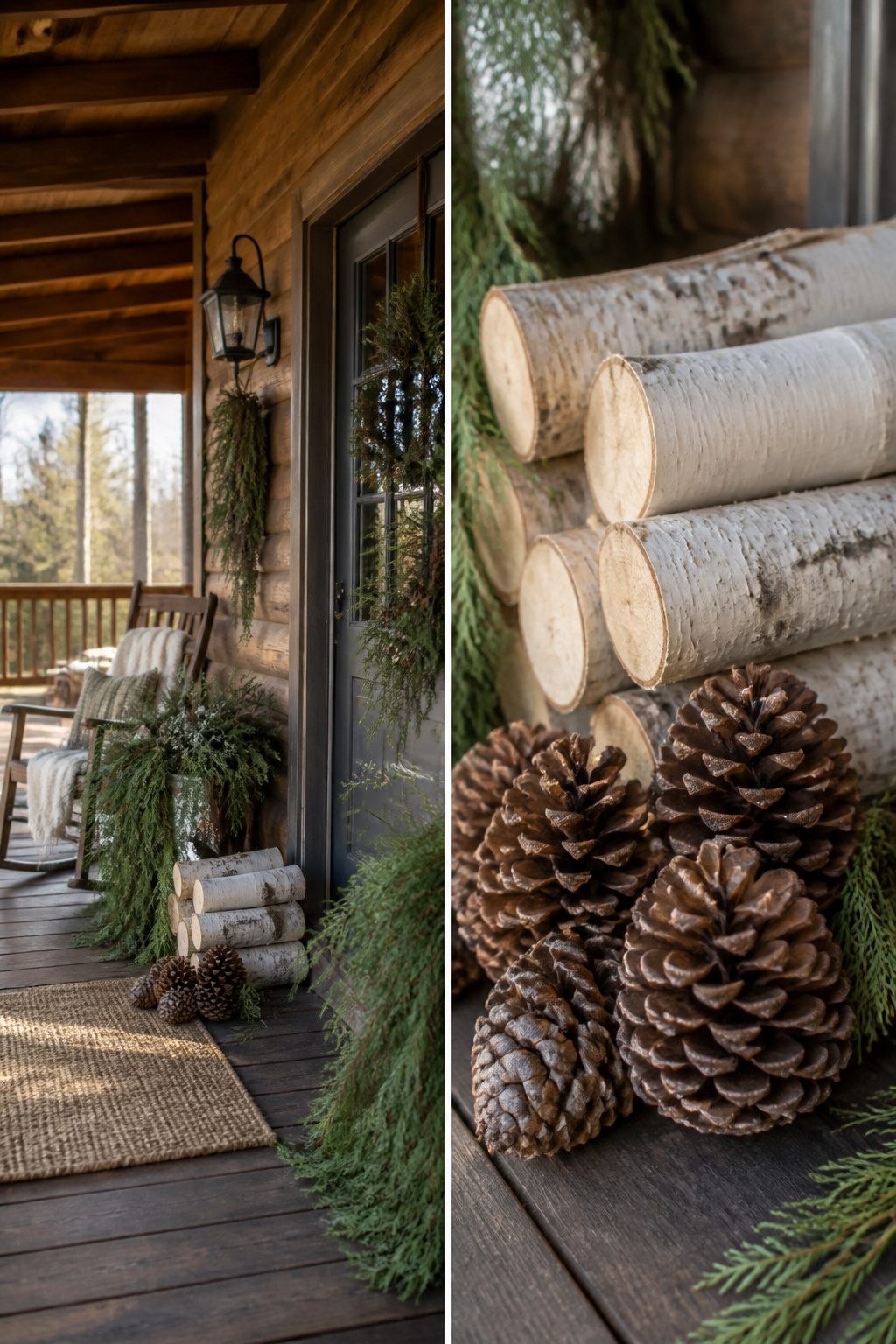
Pinecones and birch logs read like a winter cabin on a porch, but the warmth they bring depends entirely on what you forage versus what you haul home from a store.
I gather cedar and magnolia from my own yard when I can, since the live greenery lasts far longer outside in cold air than it would indoors, and in zones with hard frosts it can hold for weeks without browning.
Cut stems from warmer climates, or anything brought inside even briefly, tend to dry out in days.
The stores fill the gap when native varieties run thin: Norfolk pine at Lowe’s runs $19.99, and the texture of those branches gives a different silhouette than standard Christmas tree greenery.
Logs are where I made my worst mistake. Birch looks pristine in photos, stacked beside a galvanized bucket or tucked under a bench.
I brought in a set once without checking the bark, and ants had tunneled through the papery white layers. Always freeze birch logs for 48 hours before they touch your porch, or keep them outside entirely.
Oversized pinecones finish the woody look without the risk, and at $12.99 for a basket pot from Hobby Lobby (half off, if you time it), the investment stays modest against the effect.
Layering Decor
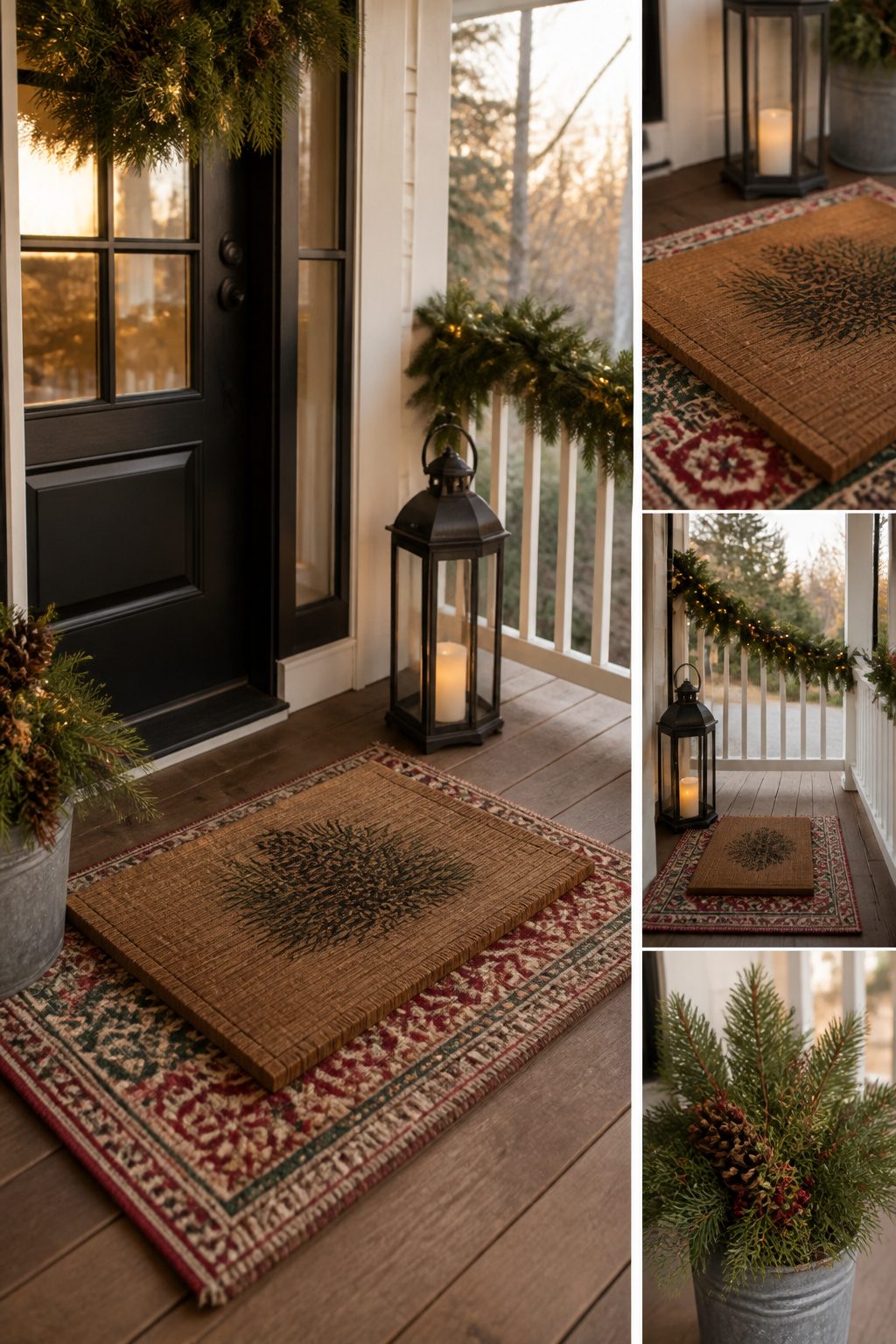
Layering a rug under your doormat is the fastest way to make a porch look intentional rather than accidental.
I started doing it after seeing how a $20.99 buffalo plaid rug from Amazon could ground a custom doormat and make the whole entry feel finished.
The doormat itself runs $56–$66 depending on size, which is steeper than Target or Hobby Lobby options, but the quality holds up to daily use without showing it.
Height is where I overdid it one year and learned the hard way. I had lanterns, a small sled, greenery, and a sign all crowded at the same 12-to-18-inch band.
From the street, it read as a single muddy lump. What registers from the curb is anything that breaks 24 inches or sits below 6 — everything in between disappears.
Now I keep one element tall, one low, and let the middle stay empty. A lantern with a pillar candle and some evergreen stems hits that upper zone; the layered rug and mat anchor the bottom.
The middle? That is where people actually walk, and leaving it clear makes the porch usable and the composition readable from twenty feet away.
Budget-Friendly Tips
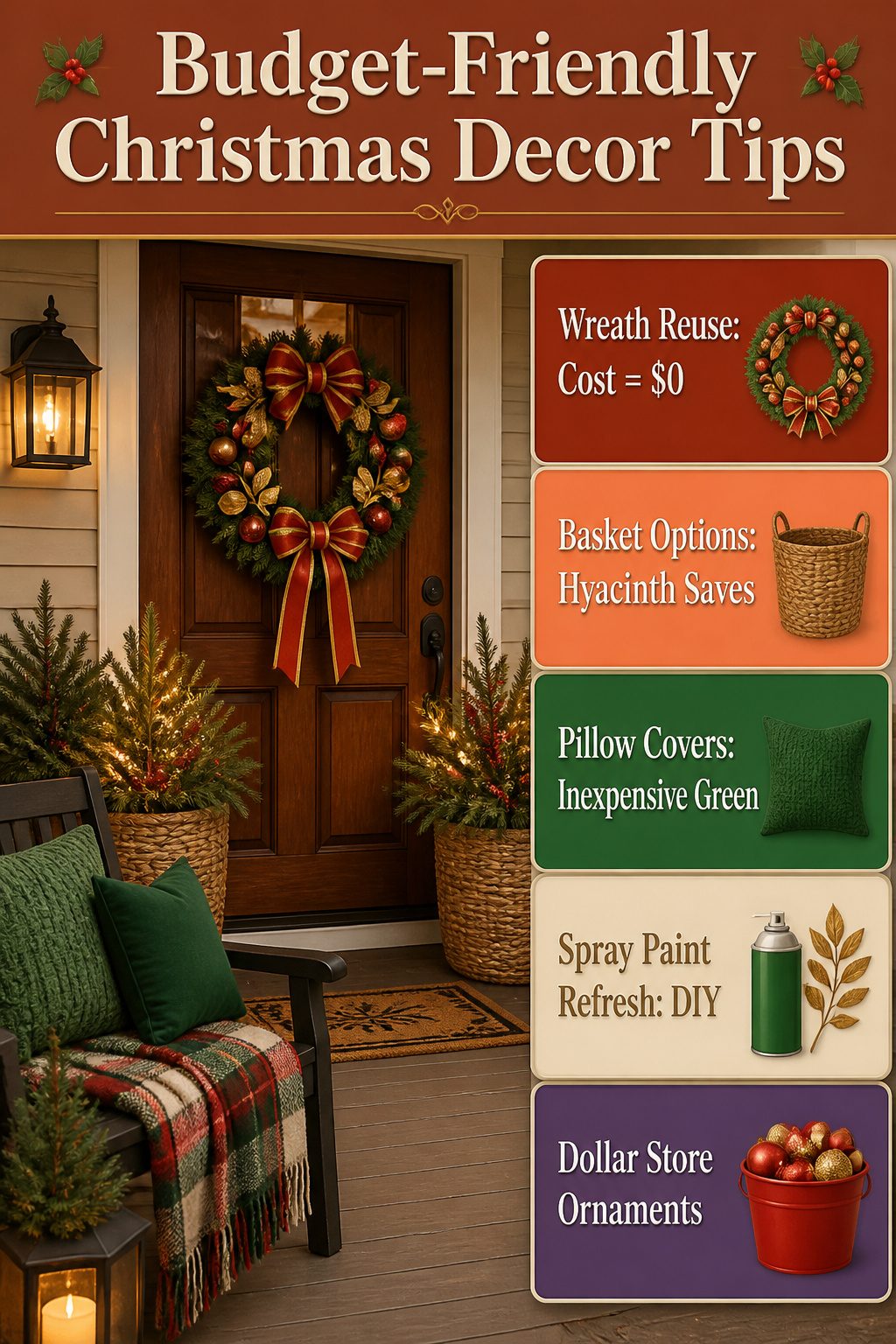
The wreath already hanging on your door is probably the best place to start.
A plain evergreen base from any craft store can be stripped and redressed year after year; I have reused the same one through three color changes now.
Last season I pulled off the old ornaments, tied on red and gold ribbon I had left from wrapping, and spray-painted a few faux leaf stems to match.
The whole refresh cost nothing but the paint, and the shatterproof ornaments I wired on came from a dollar-store bucket that held up fine against the ones I paid full price for at a big-box store.
For the porch itself, the baskets matter more than what goes in them.
I had my eye on expensive faux basket planters until I found large hyacinth baskets for a fraction of the cost; they worked better than I expected tucked beside the door with greens and lights.
The only new purchase for my sitting area was a set of inexpensive green pillow covers. Everything else, I already owned.
Frequently Asked Questions
What are some ideas for Christmas front porch decorating?
Start with wreaths and garlands as your base layer, since they frame the door without taking up floor space.
Add seasonal plants or small trees in baskets for texture, soften seating with outdoor-safe pillows and throws, and use lanterns with battery-operated candles for evening glow.
Vintage elements like galvanized buckets with birch logs or old sleds add nostalgic character, while fairy lights on railings keep the porch inviting after dark.
How can I decorate a small porch for Christmas?
Keep decorations minimal and vertical to avoid crowding the space. A single wreath and one or two garlands do the heavy lifting without cluttering the floor.
Tall, narrow leaning signs read well from the walkway without blocking the doorway, and a small Norfolk pine in a basket beside the step gives seasonal impact without bulk.
Leave the middle zone, roughly 6 to 24 inches, mostly clear so guests can actually walk through.
What color scheme should I use for Christmas front porch decorating?
Limit yourself to two main colors plus one accent, and decide the rule before you shop.
Traditional reds and greens still read clearly from the curb, but snowy whites and soft metallics can look more intentional on a small porch where every piece competes for attention.
Last year’s deep green and cream with brass bells worked because the accent broke repetition without starting a second theme.