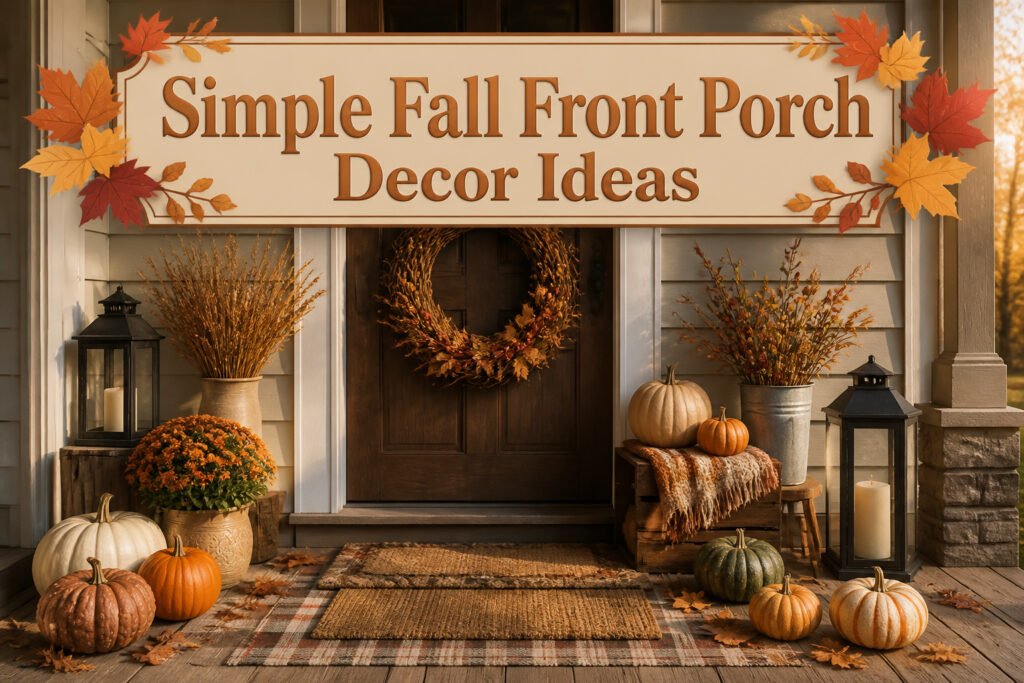
Simple fall front porch decor runs from a single $15 grapevine wreath to a full layered setup with lanterns and stacked rugs, and the deciding factor is usually how much floor space you actually have. A wreath does the whole job on a stoop with no room for pots; once there are steps or a landing, the game shifts to height and layering. The detail that separated the porches that worked from the ones that looked dropped there: three heights, ground to knee to waist, with the heaviest piece on top so October wind does not scatter your work across the yard.
1. Wreaths
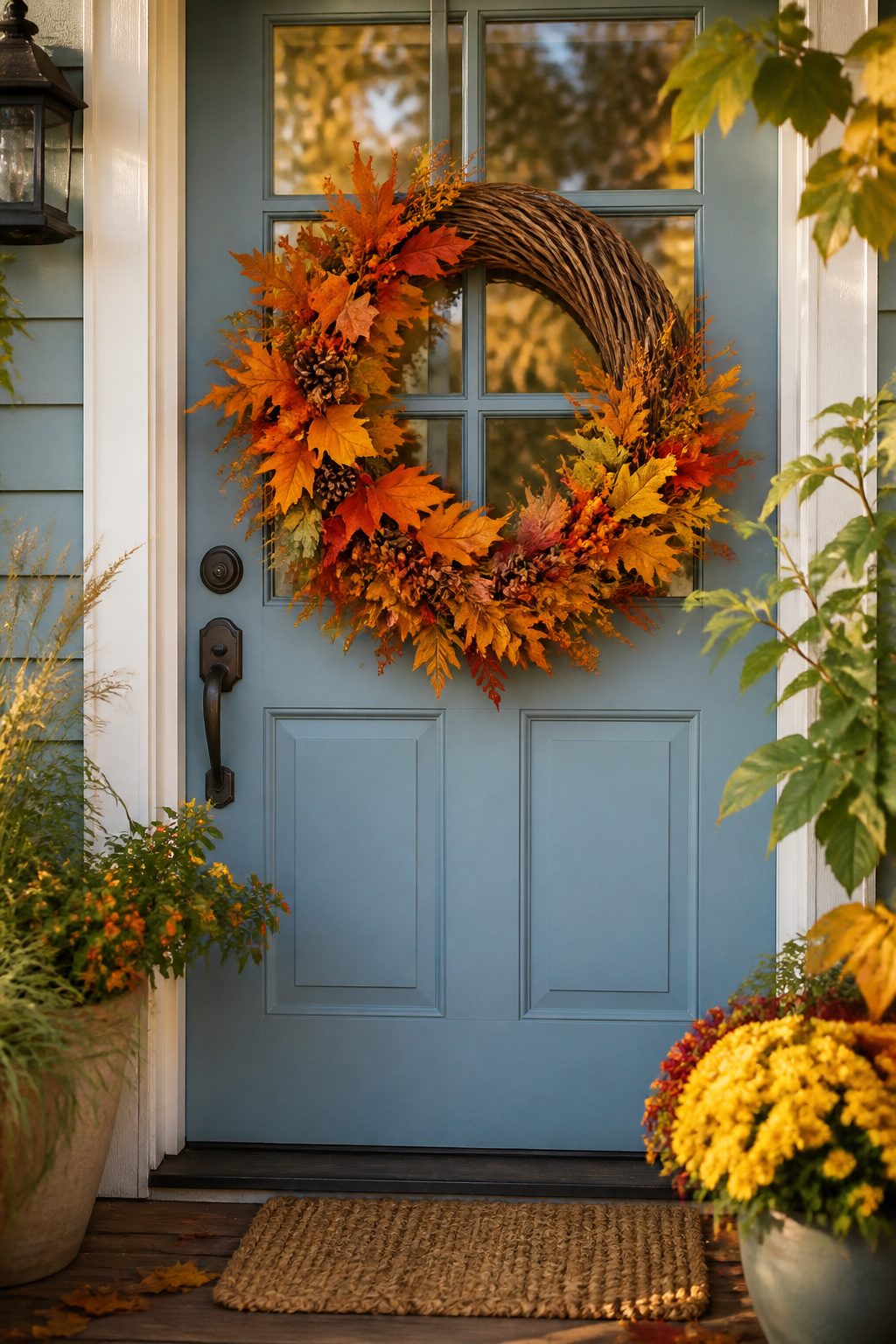
A grapevine wreath stuffed with fall foliage and a few natural elements does more for a front door than most full porch setups manage. Budget stays under $15 if you thrift the base and clip stems from the yard. The craft-store picks that Southern Home and Hospitality used took minutes to arrange, and the messier the tuck, the better it reads from the street.
I have bought wreaths ready-made and I have built them. The Amazon find that Stone Gable used as her jumping-off point cost less than the foam-and-wire frames I used to buy, and it held up longer. Two ways to play this: spend on one statement wreath that carries the whole door, or keep a plain grapevine shell and swap the picks season to season. The second wins if your storage bin is already full of half-used craft supplies.
A small porch, or no porch at all, is where this matters most. One wreath fills the frame and signals fall without asking for floor space you do not have.
2. Mums
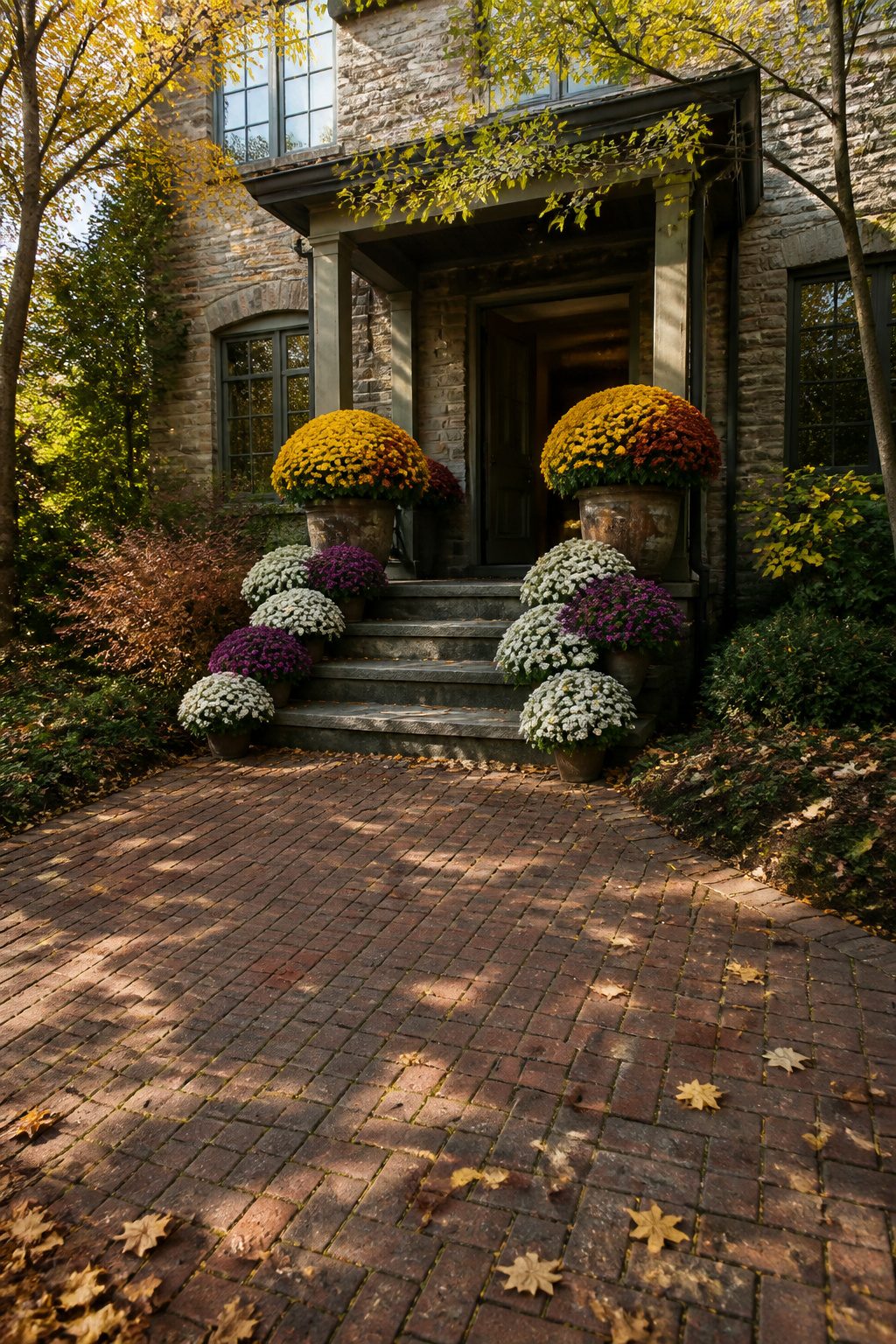
Mums are the fastest way to make a porch read as fall without touching anything else. A pair of oversized pots flanking the door sets the frame, and smaller sizes layered down the steps fill in the color.
Yellow, rusty red, gold and orange are the obvious choices, but purple, white, and even pink hold their own against brick or painted siding. The traditional scheme that rarely misses is yellow, orange, and red together. Purple and white read cooler and more modern; pink with yellow softens the whole look if your house runs pale.
There is no magic formula for how to place mums with pumpkins. The only real mistake is setting everything flat on the ground where it disappears. Use plant stands, stairs, or an overturned pot to lift some pieces and keep the eye moving.
Live mums need water and deadheading to last through October. Faux outdoor-safe versions cost more upfront but survive the season without any upkeep, which matters if weekends are already full.
3. Pumpkins
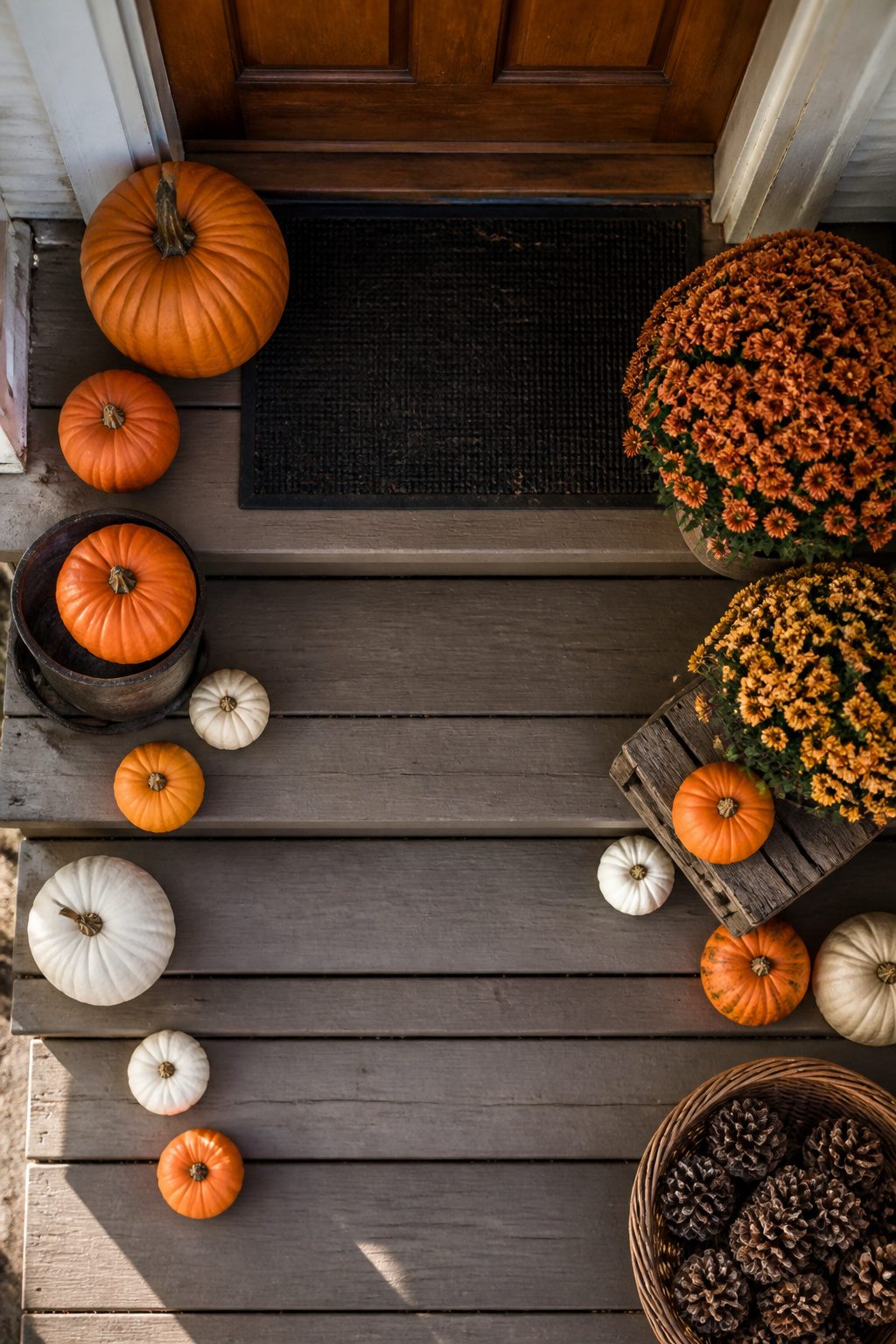
Real pumpkins give a porch something no factory finish can copy, but the week-three slump is real. A mix of real and faux pumpkins solves it: a few foam ones hold their shape from late August straight through October, while real ones bring the color variation that makes a display feel grown, not arranged.
The rule that kept me from overdoing it is one pumpkin for every foot of porch width. On my six-foot stoop, six pumpkins in staggered sizes fill the space without looking like a patch migrated there. Three would look sparse, nine would block the door swing.
Mums nearby are almost inevitable, and the arrangement question comes up every year. There is no magic formula, and you really cannot do it wrong. The only actual mistake is setting everything flat on the ground where the door frame hides half of it. Lift a few pumpkins onto a step, a stool, or an overturned pot so the layers read at different heights.
For a project that stays under $30 total, hollow craft pumpkins slide onto dowel rods from the woodcraft aisle. Cut a small hole in the bottom, run the rod through, and stake it into a planter so the pumpkin appears to rest on top of the greenery. The rods and pumpkins pack away clean and come back out next fall for nothing extra.
4. Lanterns
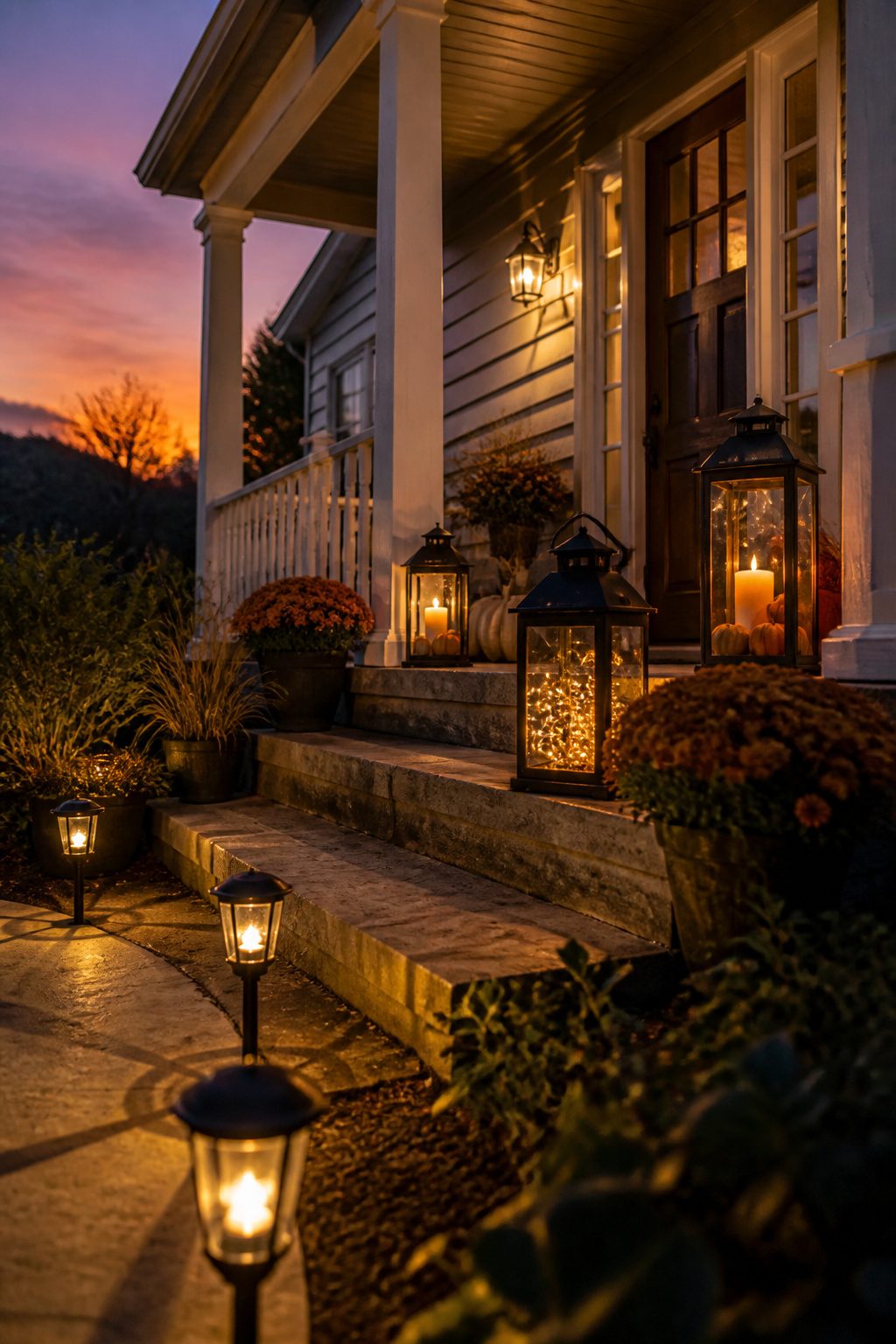
Lanterns give a front porch its after-hours personality. As the days shorten, a porch that looked fine at four o’clock can feel abandoned by six unless there’s a plan for light. The right glow makes a home feel inviting before anyone reaches the door.
Battery-operated candles with built-in timers solve the problem without the maintenance or fire risk of real flames. Set them to turn on automatically at dusk and run four or eight hours, then forget them. Group two or three lanterns of different heights on each side of the door, or pair them to frame steps. For a softer effect, fairy lights inside the lantern give the same warm look without the candle formality.
String lights work on railings or overhead beams if the porch has them. The key is choosing soft white over anything too bright or colorful; the goal is a glow that pools, not a display that competes with the house. A few stake lights or solar lanterns along the walkway extend the welcome without adding to the weekend workload.
Inside the lantern, mini pumpkins or small gourds add texture during daylight hours. Real ones last the season; artificial ones skip the replacement. Either way, the lantern does two jobs: decoration by morning, atmosphere by evening.
5. Layered Rugs
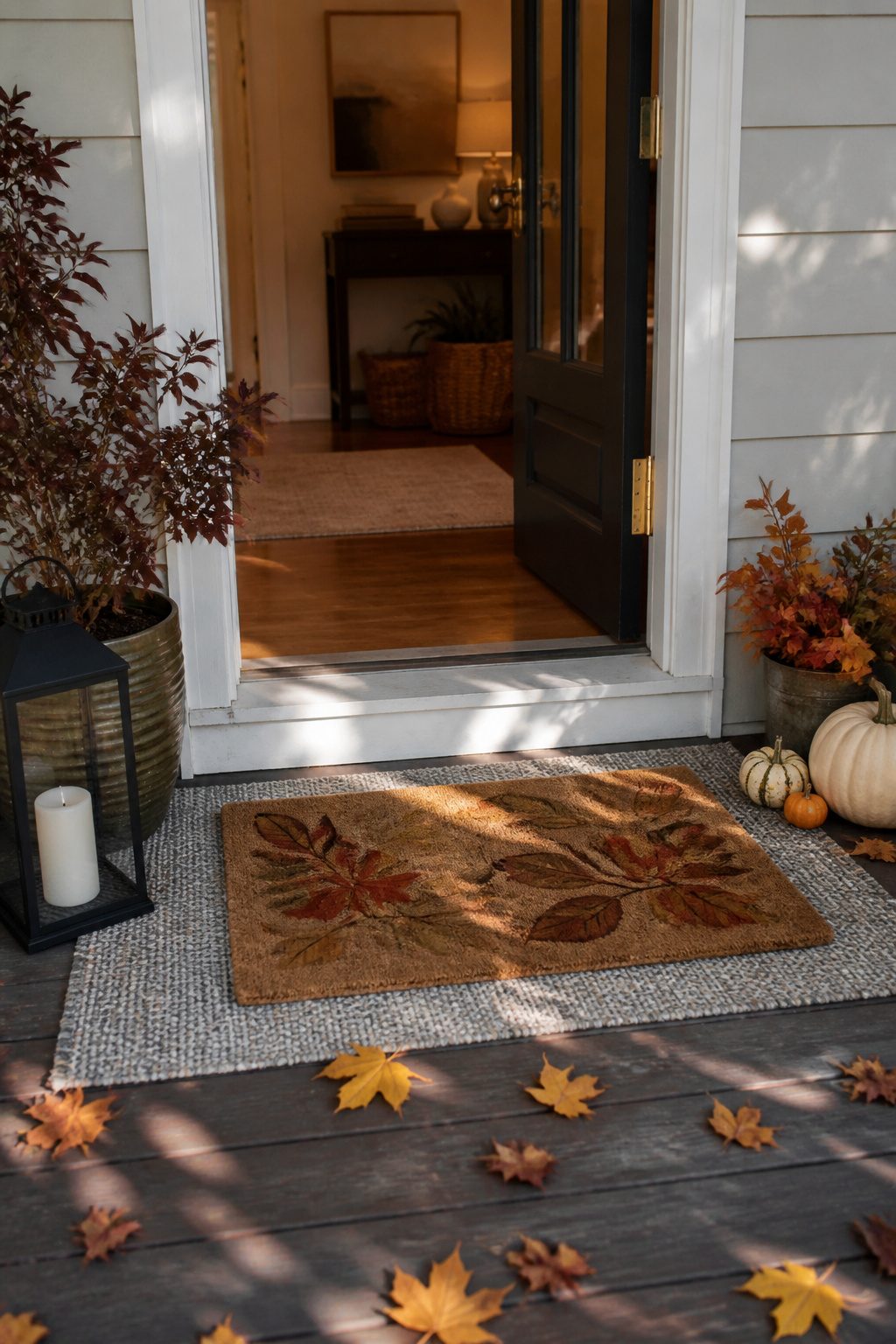
Layering a doormat over a larger rug gives a small porch the finished look of a designed space without the designed-space budget. An 18" x 30" standard doormat needs a 2′ x 3′ rug underneath to frame it cleanly; anything wider and the mat floats, anything narrower and the edges fight. The base rug stays year-round, swapped out only when it wears through, while seasonal mats rotate on top for the cost of a greeting card.
For double doors, the same principle scales up: a 4′ x 6′ outdoor rug carries the full width, with a wide estate mat and a smaller seasonal layer on top. Two ways to play this. On a small entry, keep the base rug tight to the door frame so the layering reads as depth, not clutter. On a broad porch, the larger base rug anchors the whole seating area and the layered mats mark just the threshold. I have tried both, and the small-porch version is the one that actually gets finished; the wide porch plan stayed in my head until October was half gone.
The fabric texture matters as much as the size. A flatwoven base under a coir doormat gives you two weaves to look at, which reads as intention. The same coir on bare concrete just looks like you remembered to wipe your feet.
6. Natural Elements
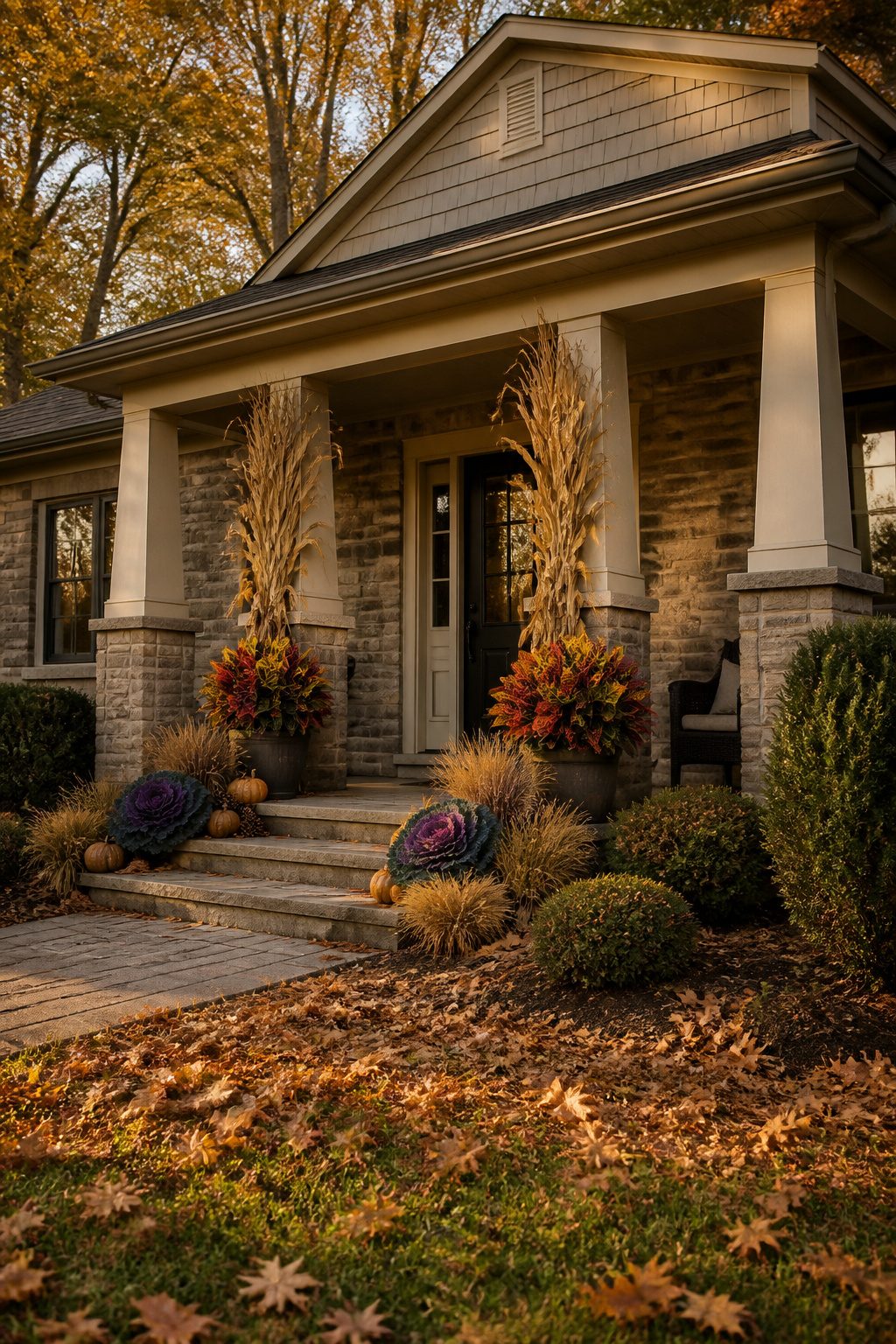
Corn stalks flanking a door read as farmhouse to some, but the height alone changes how a porch feels walking up to it. Two bundles from a farm stand or garden center run cheap, store flat in a garage rafter, and last several seasons if kept dry. Pinecones and wheat bundles fill the gaps where stalks feel too sparse; a basket of cones by the step costs nothing if you collect them, and the wheat adds a gold note that reads against orange leaves without competing.
The plant choices fewer people mention are what keep this from looking like every other porch on the block. Ornamental kale carries ruffled purple leaves that hold up past the first frost, and crotons bring reds and yellows in a leaf shape that is not another mum. Home Depot stocks crotons at reasonable prices in fall, which matters when you are replacing summer annuals and do not want to double the plant budget. Both pair with the dried textures rather than fighting them; the waxy kale against rough corn husk, the stiff croton leaf against soft wheat plumes, is the seasonal texture mix that makes simple look intentional.
7. Throw Blankets and Pillows
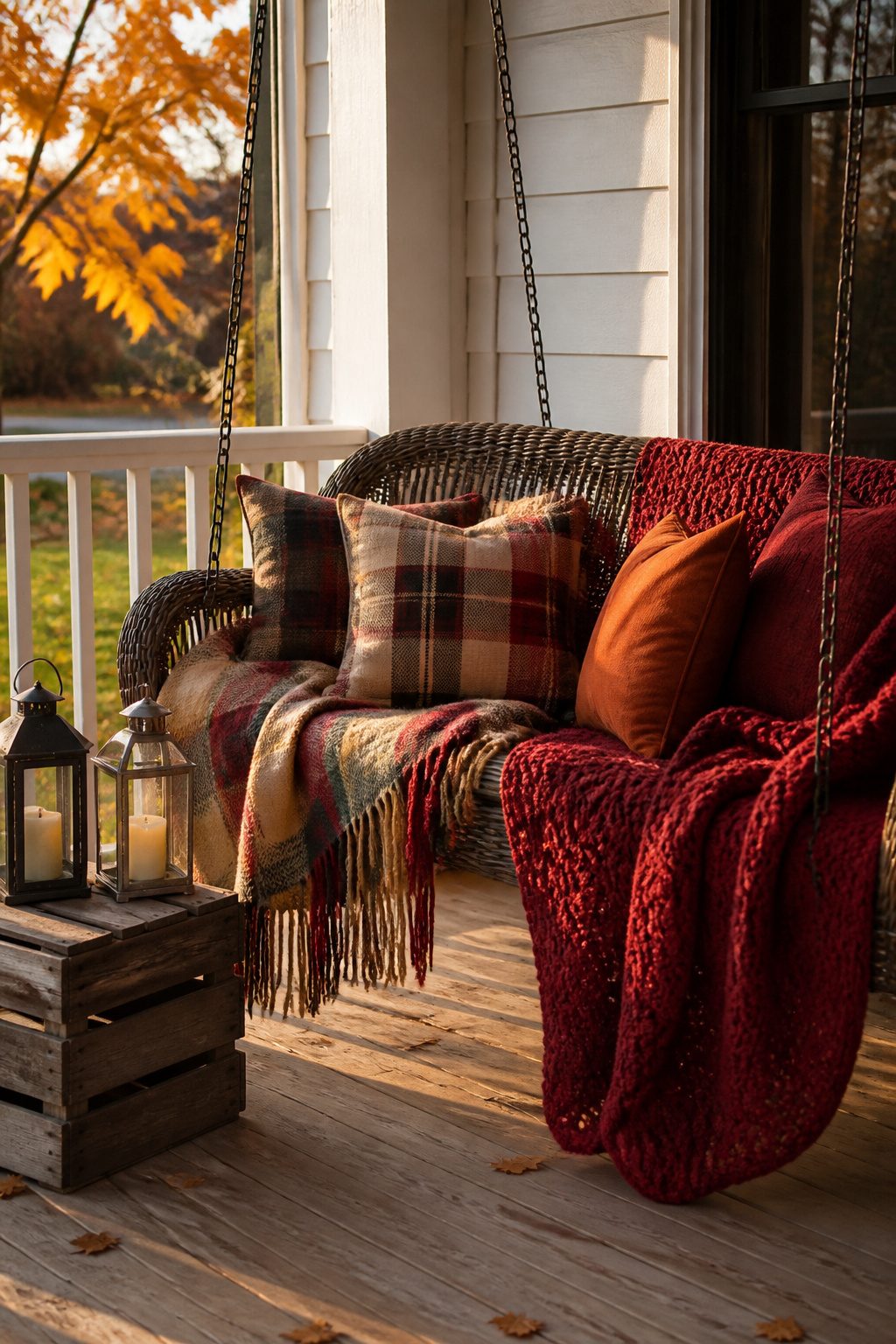
A porch swing draped with a falling leaf garland reads lonely until the pillows and blankets show up. Thrift store throws and end-of-season clearance textiles are where the money stays in your pocket. Last year I found a berry-colored chunky knit for seven dollars in March; by October it was the thing everyone reached for when the temperature dropped below 70.
The texture mix matters more than the pattern. Plaid against a solid chunky knit gives you that seasonal depth without looking like you bought a set. Indoor pillows work fine if your porch has any cover at all, and clearance plaids are cheap enough that a little weather damage stings less. A neutral base pillow with one bold throw in a contrasting fabric, something the eye catches from the walkway, does more than a matched arrangement ever will.
Wicker rockers want a seat cushion first, then the layers. The goal is building a spot that actually gets used, not one that photographs well for a weekend.
8. Planters
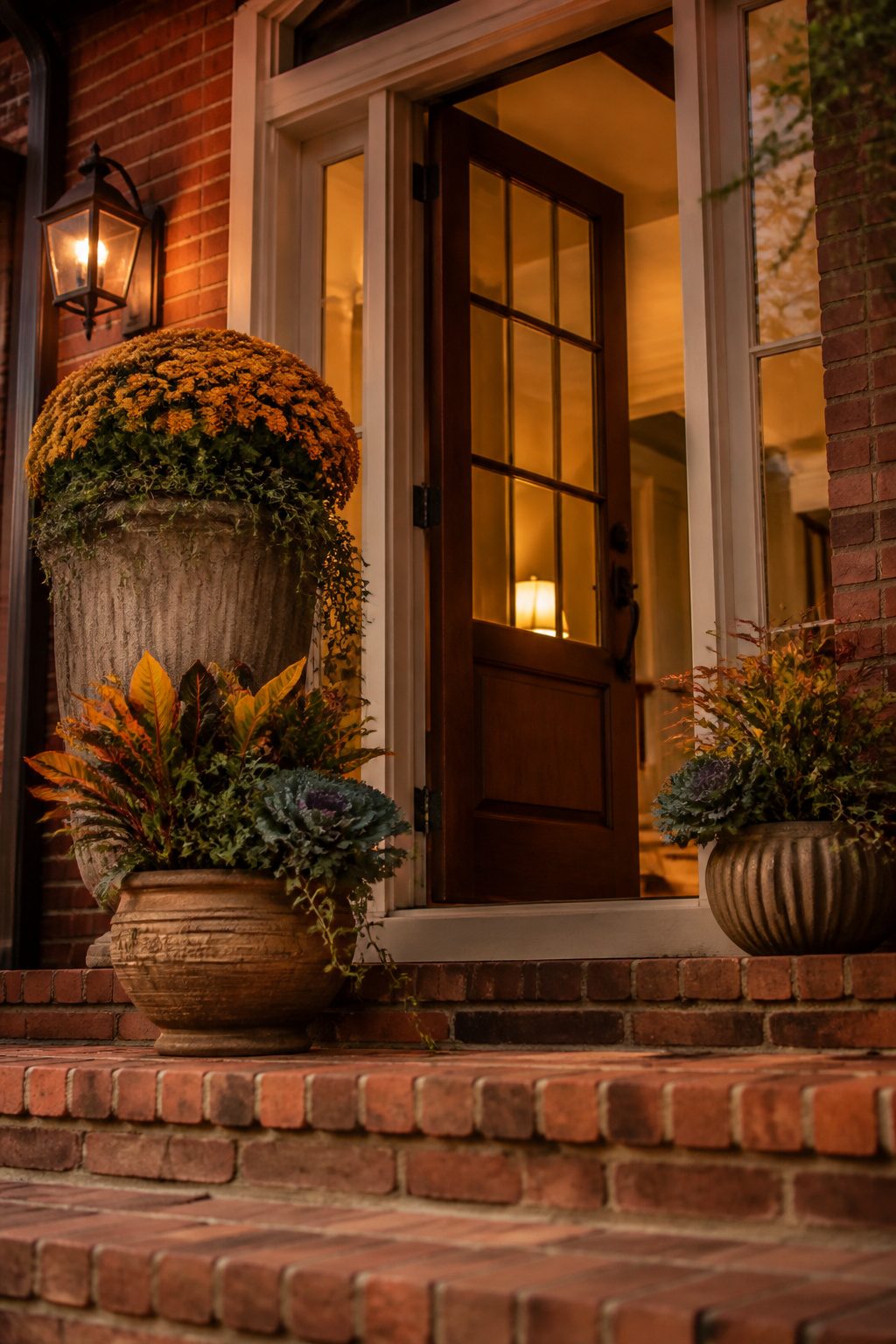
Three planters at three heights will do more for a porch than six at the same level. The door gets framed better, the eye travels instead of flattening out, and the whole thing reads as intentional rather than leftover. I learned this the hard way one October when I lined matching pots across the step and every mum disappeared into a single green stripe.
The passages I sorted through kept saying "varying heights" without committing to numbers, and that gap matters more than it sounds. A twelve-inch difference between your tallest and shortest planter is usually enough to register; anything under six inches tends to read as a mistake you didn’t correct. If you need a quick riser, a turned-over basket or a wooden crate buys you another eight to ten inches without a new purchase.
The lightweight urn-style planters that clock in around knee height work well as anchors flanking the door. Smaller mums can stay in their nursery pots and drop into short planters or even galvanized buckets for the middle layer. What you do not need is every vessel competing for attention; one or two substantial pieces and a few quiet supports does the job. A bushel-basket arrangement from the nursery, tipped into an existing urn, gives you that layered height instantly without the design work.
Wind is the catch with tall and lightweight. A hollow planter that feels fine in September empties itself across your yard in an October storm, so weight the base or choose something that gets heavy once it’s planted.
9. DIY Decor
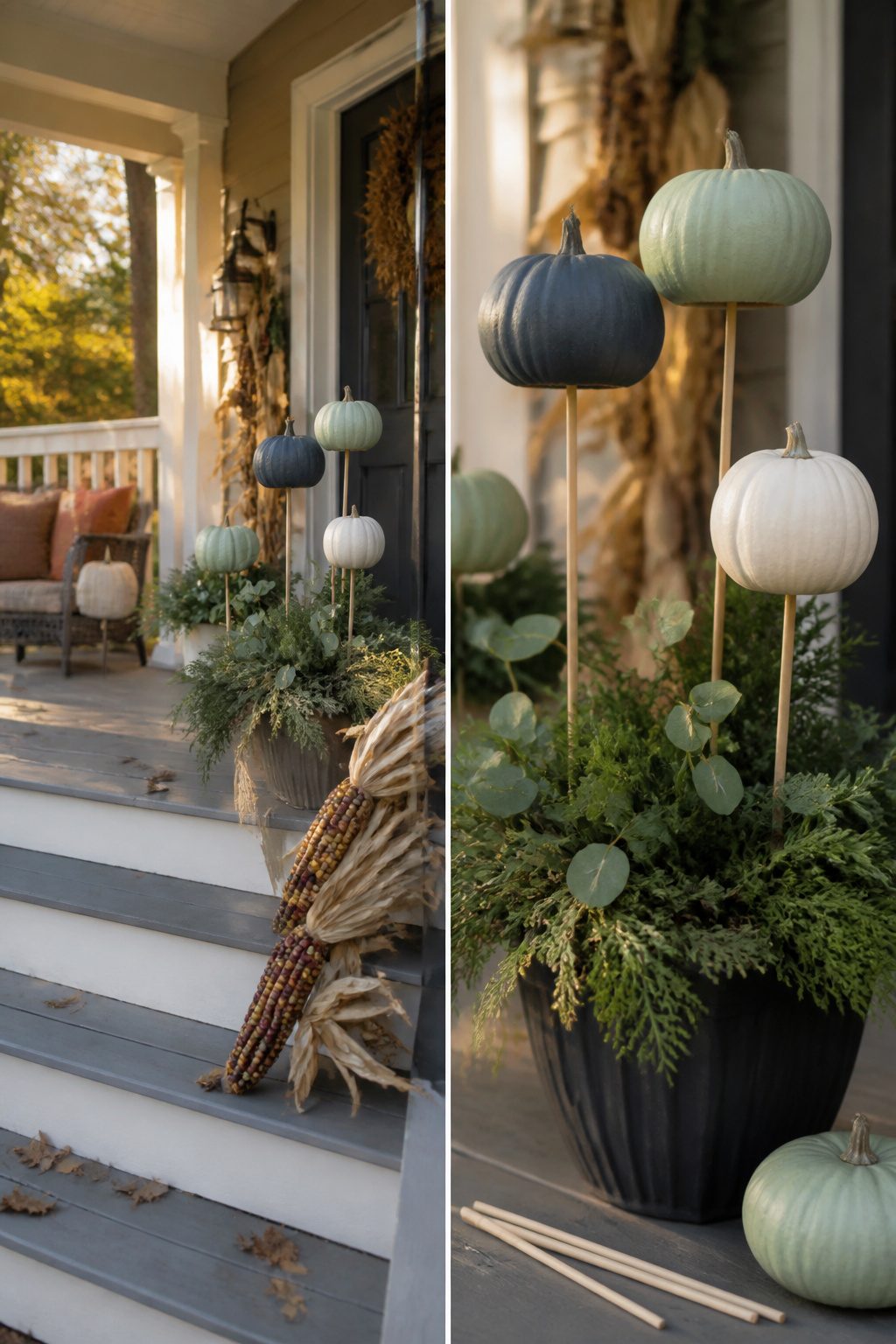
Craft pumpkins and a couple of dowel rods from the woodcraft aisle at Michael’s, usually about a dollar each, are the backbone of a project that runs under $30 total. I cut a small hole in the bottom of each hollow pumpkin with a utility knife, slide them onto the rods, and place the rods directly into a fern or planter so the pumpkins rest naturally on top of the greenery. Bamboo kabob skewers taped together work in a pinch if that’s what you already have on hand. The pumpkins and rods store flat and reuse year after year, which keeps the per-season cost close to zero after the first fall. Corn garlands and a few painted details on the craft pumpkins fill in the gaps without adding much to the tally.
Budget Breakdown
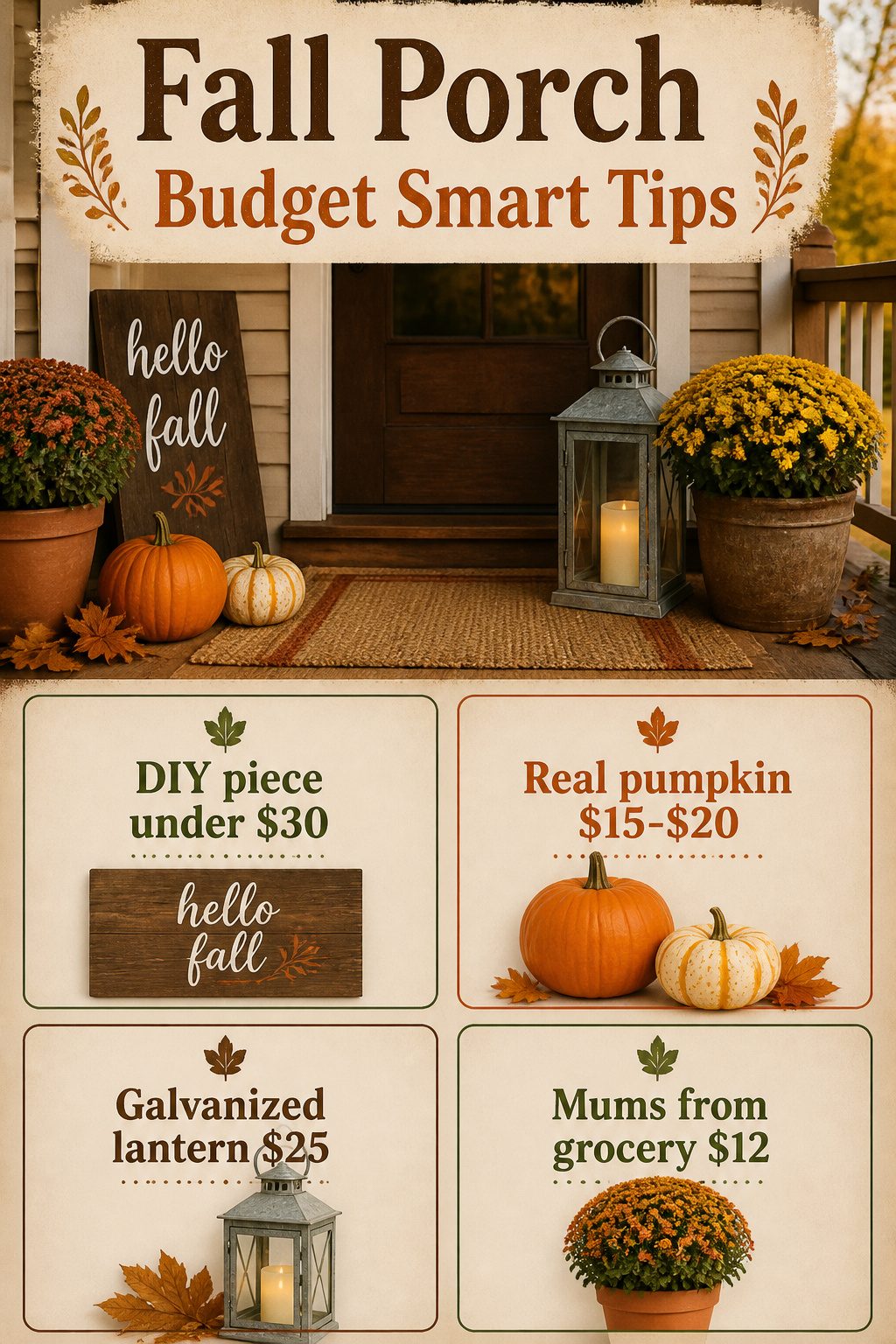
A full fall porch does not need a full wallet, but the money does need a purpose. What convinced me, reading through a dozen of these setups, is that a single DIY piece under $30 anchors everything else and makes the store-bought items look intentional rather than scattered.
The framework that keeps coming up is simple: spend on the thing you touch or that faces the weather, save on what sits protected or gets swapped yearly. Paint your own wooden sign with leftover house paint and a $4 brush from the hardware store; that leaves room for a $15–$20 real pumpkin that will not collapse into itself by mid-October. Faux pumpkins run about the same upfront but survive seasons, so the math shifts if you store them carefully. Mums at a grocery store garden center typically beat nursery prices by half, and a $12 pot in a terracotta vessel you already own reads the same as a $40 pre-arranged basket.
Lanterns are where I would put money if I had to choose one item. A $25 galvanized steel piece with a battery candle outlasts three years of $8 plastic versions warping in the rain. Layered rugs matter less than the internet suggests; a single $20 flatweave in a warm tone does the job, especially if the concrete underneath is already decent. Throw pillows and blankets on a porch only work in dry climates, and even then they read as clutter more often than comfort. Skip them unless you have a covered bench that actually gets used.
Height and Layering Rules
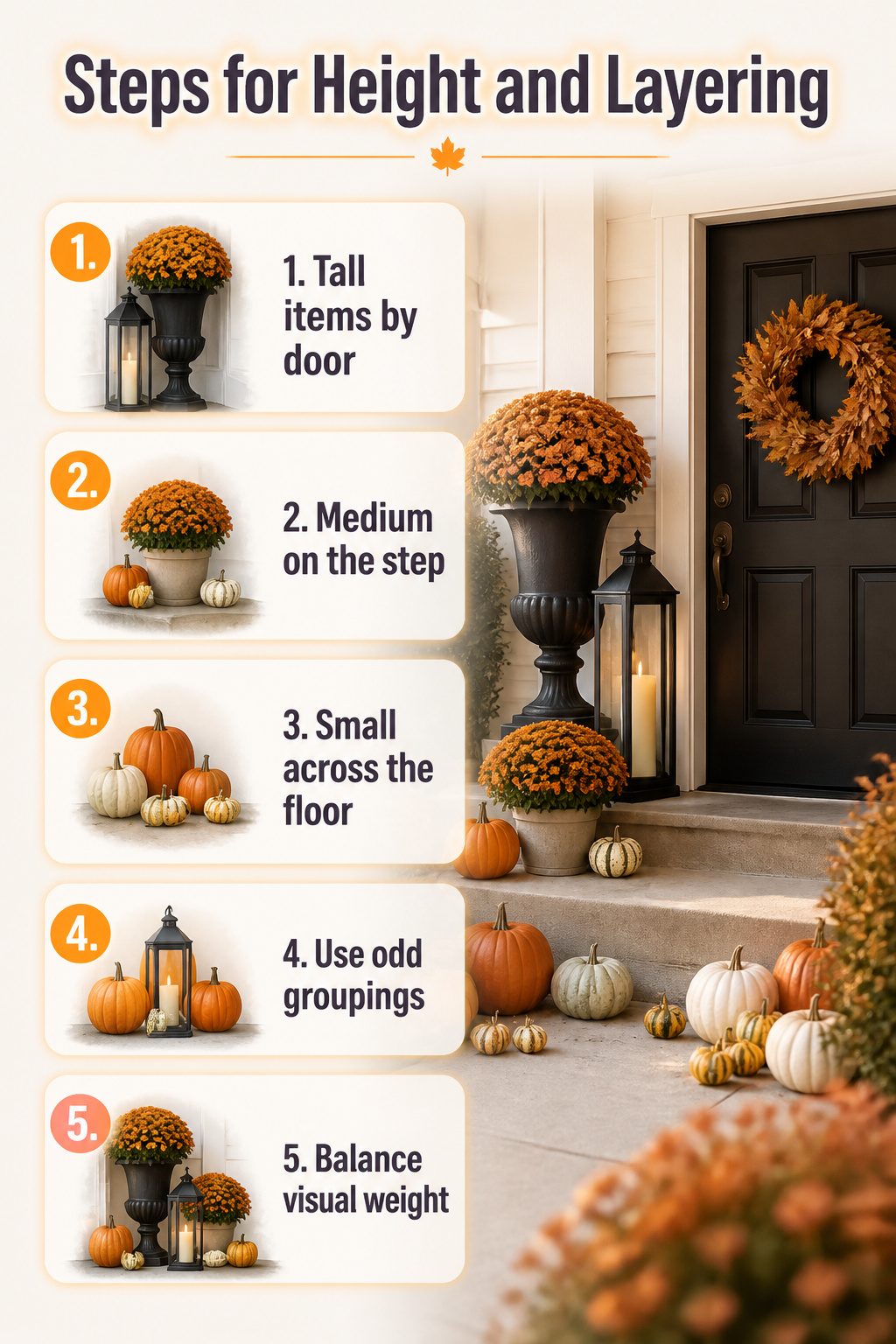
The first year I decorated my fall porch, I set everything on the concrete at the same level. From the sidewalk, the mums disappeared behind the railing and the pumpkins looked like they’d been dropped there by accident. The fix is framing the door with three heights: ground, knee, and waist. I stack the tallest urns or lanterns closest to the door, set medium mums on the step below, and scatter the smallest pumpkins or gourds across the floor. That triangular shape pulls the eye up without crowding the walkway.
Grouping matters as much as height. Odd numbers, threes or fives, read as one cluster instead of scattered objects. I nestle a short gourd between two taller pumpkins, or tuck a lantern between two planters, so each layer has something to lean against. A vintage stool or an overturned pot works as a riser if you need to lift a pumpkin above the rest without buying new furniture.
The wind taught me the heavy piece goes on top. A lightweight lantern on a tall stand will wander; a cement urn filled with soil stays put even on gusty October evenings. Balance the weight, not the symmetry. One substantial urn flanking the door balances two smaller planters on the other side if the visual mass evens out. Step back to the sidewalk and squint. If one side goes dark, move a lantern or a bright mum until the weight feels even.
Color Without Chaos
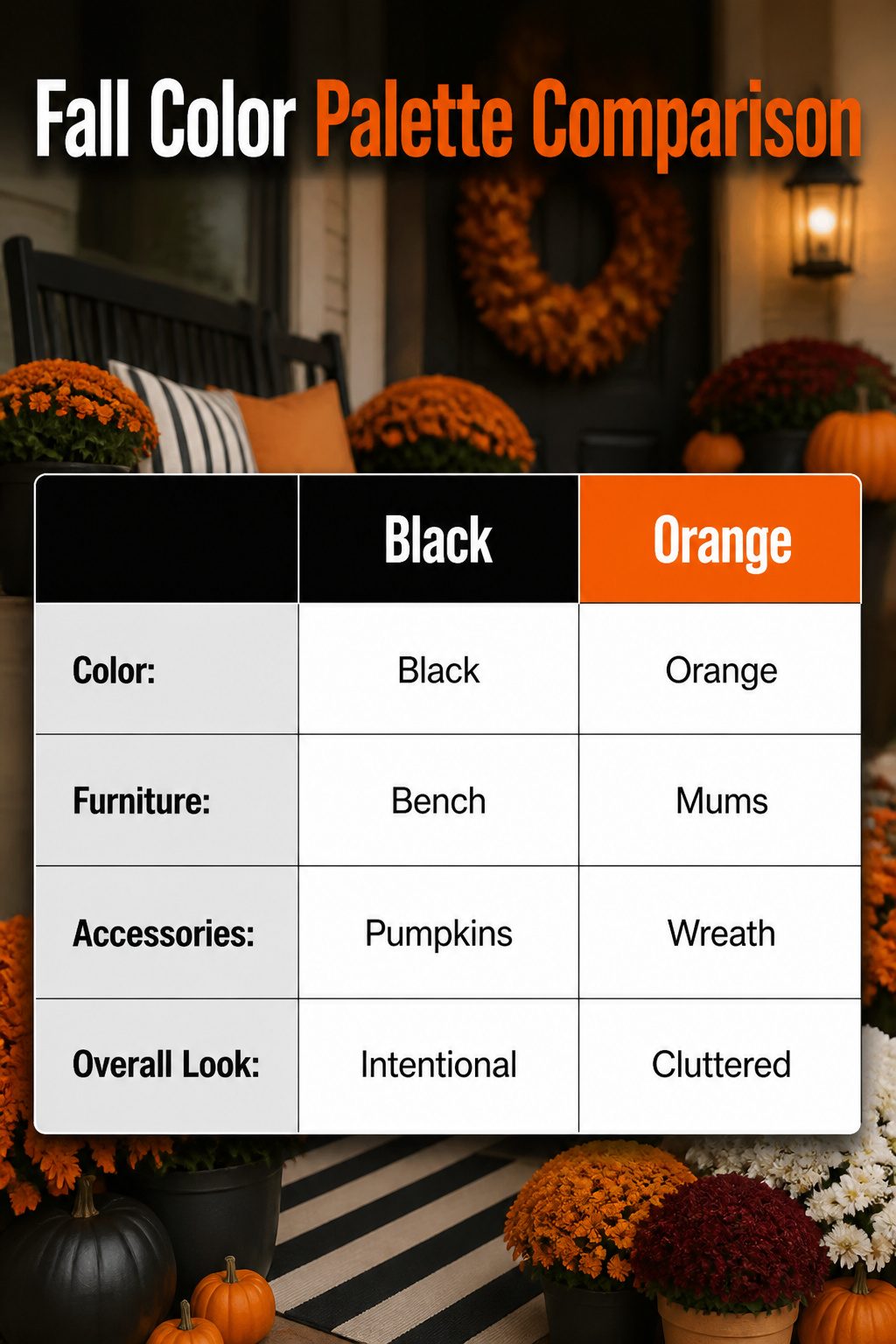
A front porch can go from festive to flea-market fast when every item shouts a different color. The trick is picking two tones and letting them do the work across everything you set out.
Last year I mapped mine on a napkin before I bought anything: black as the anchor, orange as the accent. Black showed up in the bench, planters, pumpkins, and a striped rug. Orange came through in mums, a few smaller pumpkins, and the wreath. Repeating just those two colors made the space feel intentional instead of cluttered, even with a bench, layered pots, and a door hanging all competing for attention.
Neutrals earn their keep here. Crisp white or deep burgundy mums mixed with sunny yellow keep the warmth without the chaos of competing primaries. If you want something less expected, purple and white pair cleanly, or pink with yellow reads soft against gray siding. The rule is the same whatever you choose: once the palette is set, every item gets filtered through it. A clay pumpkin in the wrong terracotta can break the whole look, so hold the swatch in your hand at the store.
Groupings of three still apply, but the color thread is what ties those groupings together across the whole porch.
Texture Mix That Works
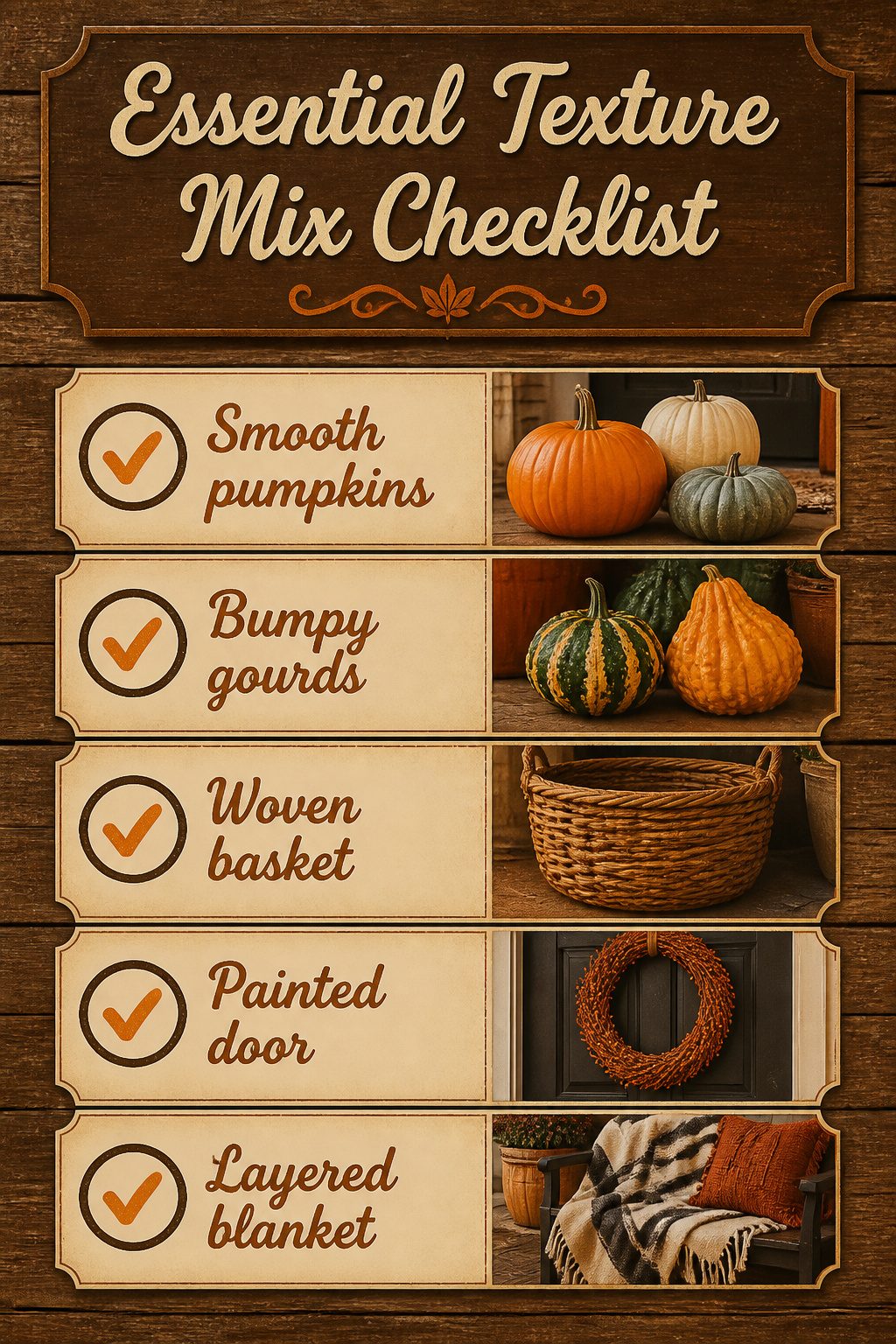
A porch collapses into clutter when everything reads as the same surface. Last year I spread out my pumpkins, mums, and a new striped rug with equal weight across the whole step, and the eye had nowhere to rest. Group items in threes or fives and let one texture do the heavy lifting while the others support it.
Smooth pumpkins against bumpy gourds, grapevine wreath against a painted door, woven basket against glazed clay: the contrast is what reads as intentional. I keep a simple rule now. One soft thing, one rough thing, one living thing. For me that meant the striped rug stayed, but I tucked clay pumpkins and an IKEA lantern into a tight cluster by the door, then let a bundle of dried grass fill the far urn without competition.
Fabric needs the same discipline. Outdoor pillow covers in a warm color work only if the base beneath them is neutral and matte. My first set bled dye onto the bench because I skipped the outdoor-fabric check, a mistake that cost me the covers and an afternoon of scrubbing. Now I layer a single outdoor blanket over the seat and stop there.
The porch feels collected, not crowded, when textures repeat rather than compete. Black in the bench, planters, and pumpkins pulled my look together; orange in the mums and wreath did the rest. Two textures, two colors, grouped tight. Anything more and I am back to the scattered look that started it.
Frequently Asked Questions
How do you arrange mums and pumpkins on a porch?
Frame the front door and set pieces at different heights rather than flat on the ground. Lift some items onto steps, overturned pots, or plant stands so the display reads from the street and nothing hides behind the railing or door frame.
What color mums look best together?
Yellow, orange, and red together is the traditional mix that rarely misses. Purple and white read cooler and more modern, while pink with yellow softens the whole look on a pale house.
How do you make a fall wreath?
Start with a thrifted grapevine base and clip fall foliage from the yard, then tuck in a few craft-store stems. The messier the arrangement, the better it reads from the street, and the whole project stays under $15.