
Spring entryway decor ranges from a ten-minute wreath made of craft-bin scraps to a full weekend of painting and waxing a seagrass vase, and the single factor that decides which is yours is how long your Saturday already is.
The catch is that one piece demands a whole scene: a beautiful velvet-ribbon wreath can make your porch look so tired you end up repainting the door frame to match its energy.
1. Fresh Flowers in Colorful Vases
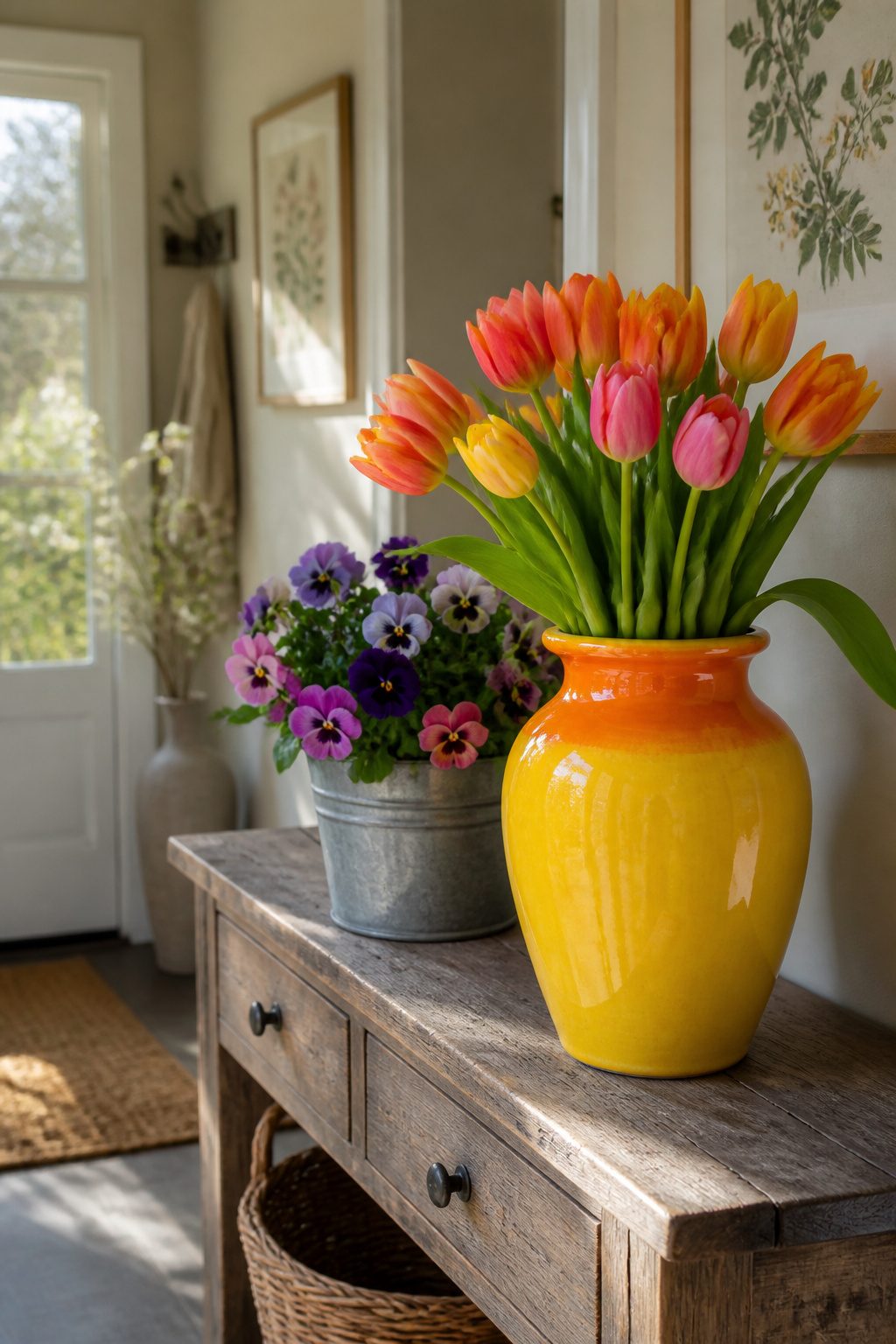
Fresh flowers in a colorful vase do more for a spring entryway than anything that requires a watering can long-term.
The grocery store fringed tulips last almost two weeks if you cut the stems and get them into water the same day.
Changing the water weekly is what stretches them that far; skip it and the stems turn to slime in half the time.
A galvanized pot holding eight pansies sits lower and wider, better for a console or a step where a tall vase would wobble.
The container matters as much as the bloom: a bright glazed pot or even a clean tomato tin makes tulips read cheerful instead of funeral.
Buying a six-dollar bunch every ten days costs more than one good houseplant, but the tradeoff is zero guilt when you forget to care for it.
Pansies in a galvanized bucket took about twenty minutes to arrange and lasted the season with nothing but rain.
For a weekend project on a real budget, cut flowers win on effort and lose only on longevity, which some mornings feels like the point.
2. Plants and Greenery Mix
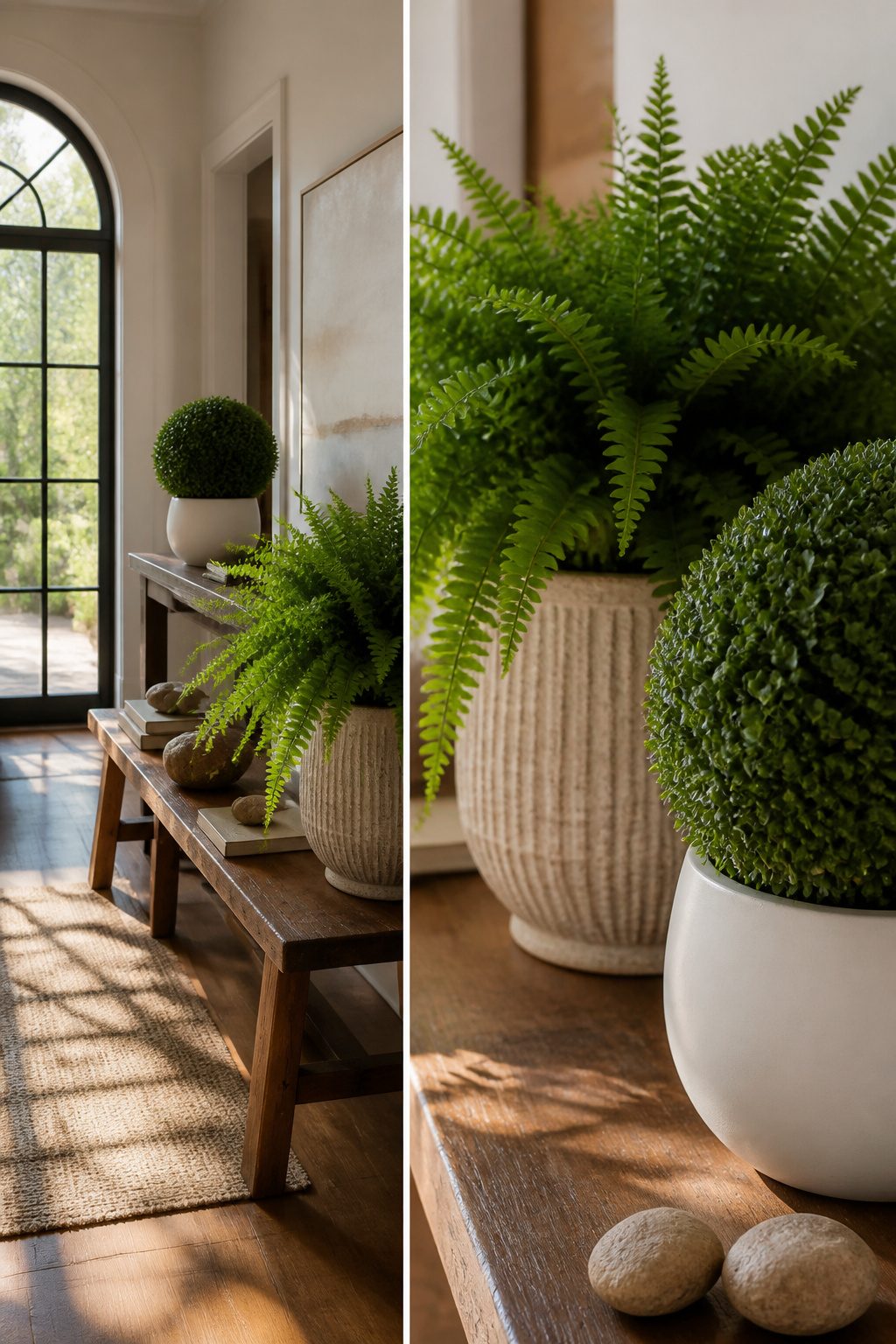
Mixing faux and real plants keeps an entryway alive through spring without turning you into a full-time gardener. I learned this the hard way after a real fern I loved dropped brown fronds onto the tile for three weeks straight.
The replacement is a faux boxwood orb from a tag sale that still looks sharp two years later, no water, no light requirements, no funeral march to the trash can.
Real plants do something faux never fully copies, though.
A fernzilla from the local garden center, the kind that looks manageable on the shelf and arrives home roughly the size of a small car, gives that burst of actual green life that makes a doorway feel seasonal.
Pair it with a ZZ plant in a modern planter by the step, something that forgives low light and skipped waterings, and you have the look without the casualty count.
The care tip most guides skip: check the nursery tag for light needs before you fall in love with the leaves. A shade-loving fern parked in direct April sun through a south-facing door will crisp in a weekend.
Read the tag, match the plant to the spot, and replace what dies with a good fake rather than repeating the same mistake.
3. Floral Wreaths
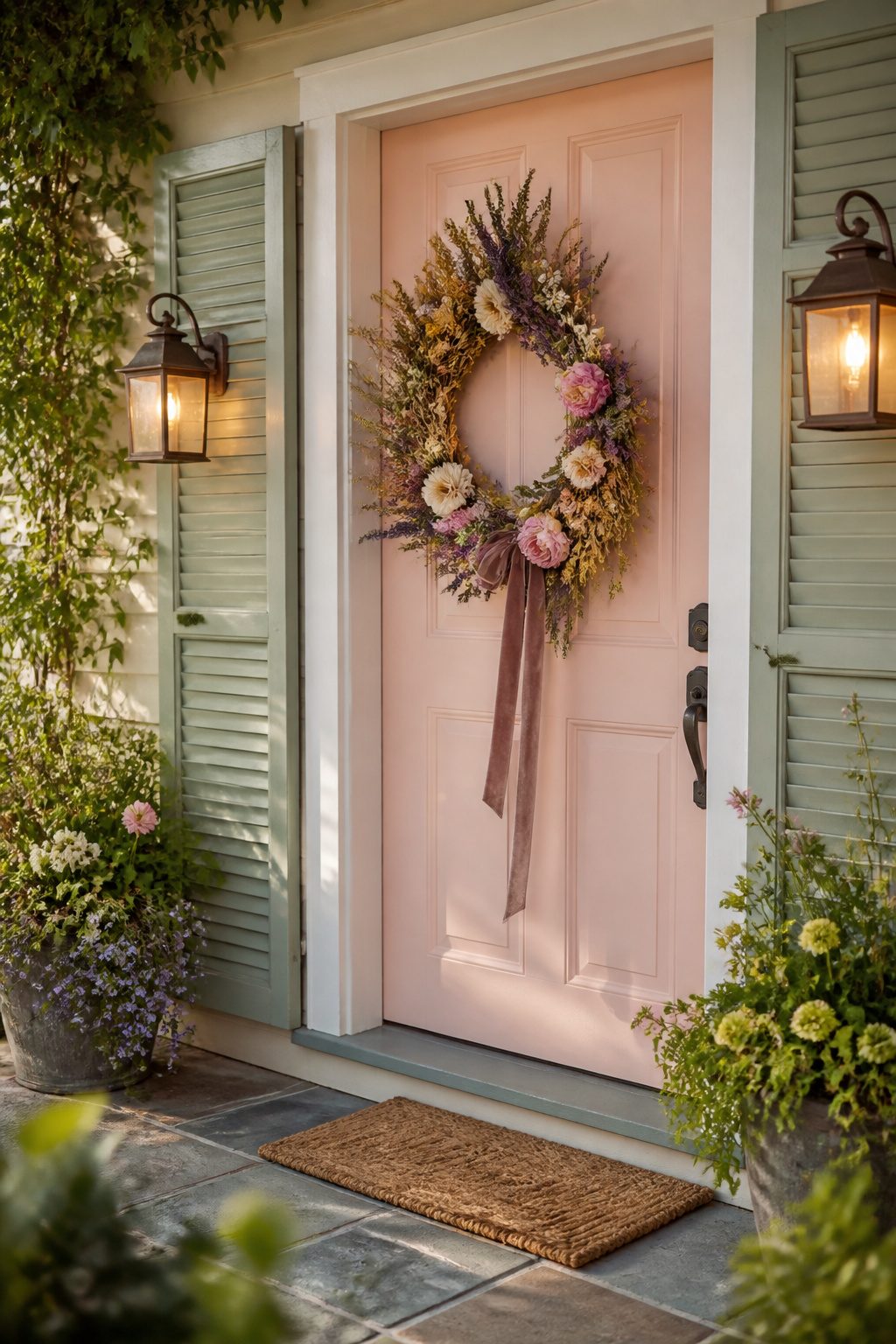
A wreath on the door still reads spring faster than almost anything else, but the storage math sneaks up fast.
I made one in ten minutes last year from stuff already in the craft bin, wire and dried stems I would have tossed, and it looked cheerful enough that a neighbor asked where I bought it.
That kind of quick build works when you need color today and do not want to hunt.
The flip side is the beautiful new spring wreath I found at a shop downtown, the kind with velvet ribbon and proper botanical accuracy, which made the rest of my porch look so tired I ended up repainting the door frame to match its energy.
One wreath demands a whole scene, so budget for the ripple effect or keep it simple. The real cost is the closet space after Easter.
Two wreaths minimum, spring and winter, plus whatever you pick up on sale, and suddenly you are stacking hat boxes in the hall closet. Store them flat in zippered underbed bags if square footage is tight.
4. Vintage Pieces and Heirlooms
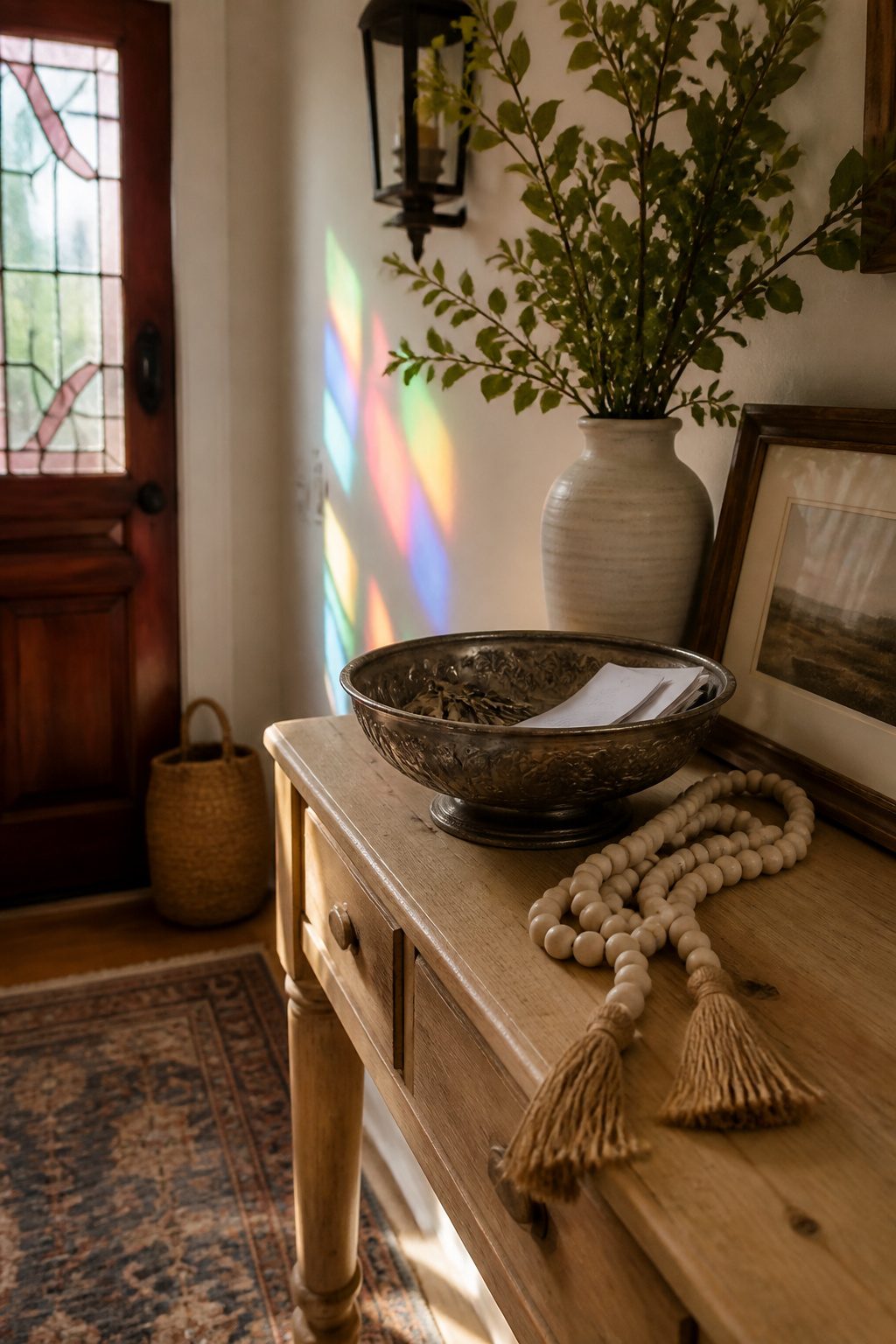
A $3.50 pewter bowl from the back shelf at Savers does more work than any ceramic piece from a big-box store.
Pewter reads as old money even when you paid pocket change, and in New England especially it turns up regularly enough that hunting one down is practical, not luck.
I run a quick phone search on maker stamps while I am still in the aisle; the bowl I am holding might list for thirty dollars online, but its real value is the conversation it starts when someone sets down their keys and asks where it came from.
Raw wood beads from Amazon, painted light brown with jute tassels strung between, bridge the gap between that found piece and whatever else is new in the space.
They cost next to nothing and keep the pewter from feeling like a museum display.
The trickier question is what counts as vintage when you bought it last month. My rule: if it has a story you do not know, it earns the word.
The bowl’s previous owner is a mystery; that blank is what makes people lean in. Family heirlooms work the same way.
A whittled wooden bird from a stepfather, a dish from a grandmother you never met; the spring entryway gathers these and lets them talk to each other.
5. Layered Rugs and Mats
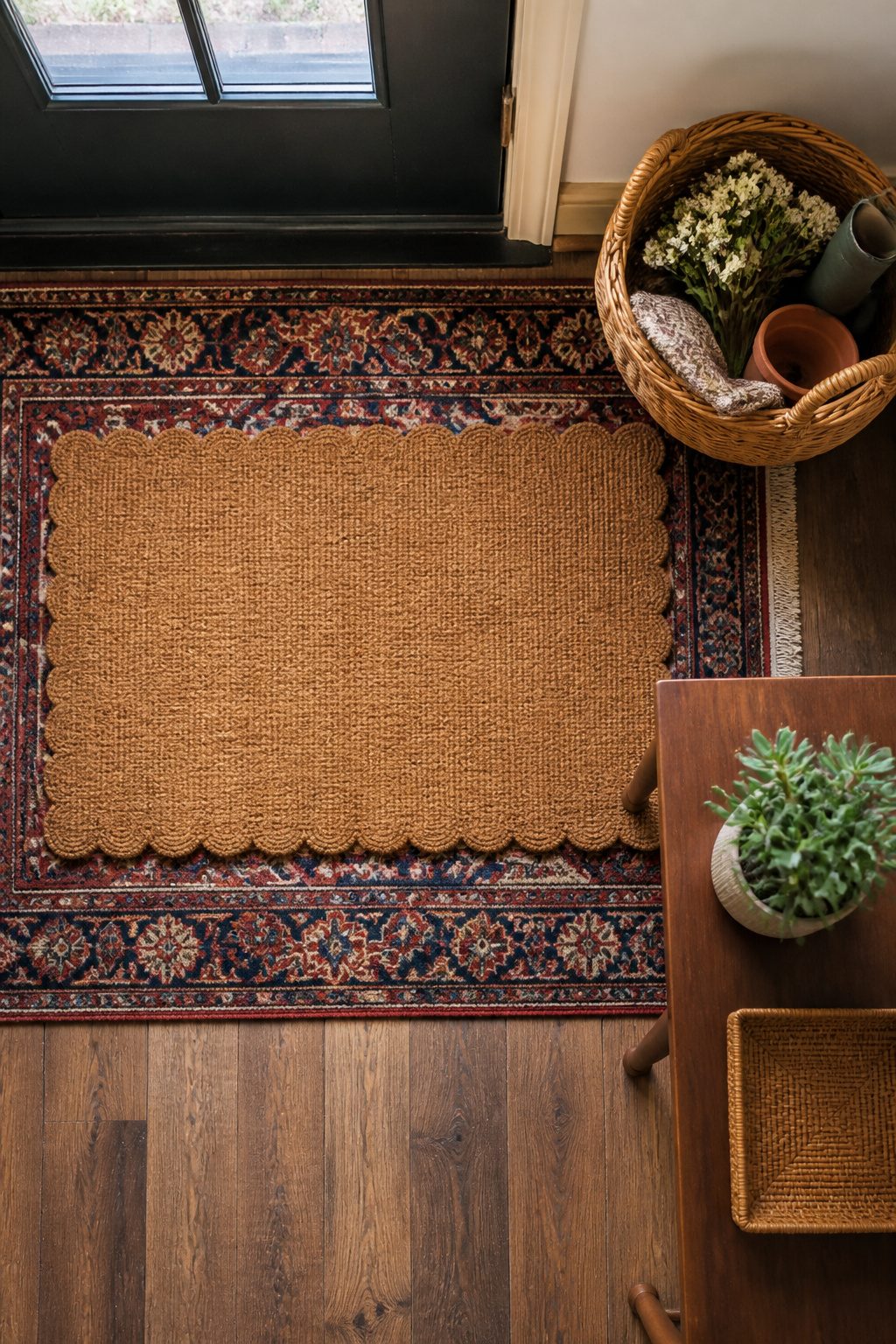
Spring usually means muddy shoes, so a doormat alone rarely finishes the job. Layering a spring doormat over a vintage rug gives the floor two jobs: the mat scrapes boots, and the rug warms the hard surface underneath.
The vintage piece adds the "extra touches that make your home feel special" that a single utility mat never reaches on its own.
Materials matter more than pattern here. A washable runner from a line like Ruggable’s Re-Jute collection survives foyer traffic and can be cleaned seasonally.
Pair it with a coir or rubber-backed doormat on top, not another woven layer that traps grit between the two.
I tried stacking two fiber rugs once; the bottom one turned into a sandpaper belt against my hardwood in about three weeks.
Cost is where the inspiration posts go quiet. A machine-washable runner sized for a standard foyer runs roughly $200–$400; the vintage rug underneath, if you are hunting estate sales rather than curated shops, might land at $40–$80 with patience.
The coir mat on top is the cheap part, usually $25–$45.
The mistake is buying the vintage rug first and sizing the mat later; measure your mat footprint, then find a rug that frames it with six to ten inches visible on each side.
Otherwise the proportions read as accidental, not layered, and you have bought two floor coverings that fight instead of one system that works.
6. Seasonal Accents Without the Cliché
A ceramic bunny or two will probably survive the March-through-May stretch without looking like you forgot to pack away Easter, but the question is whether you want them there in the first place.
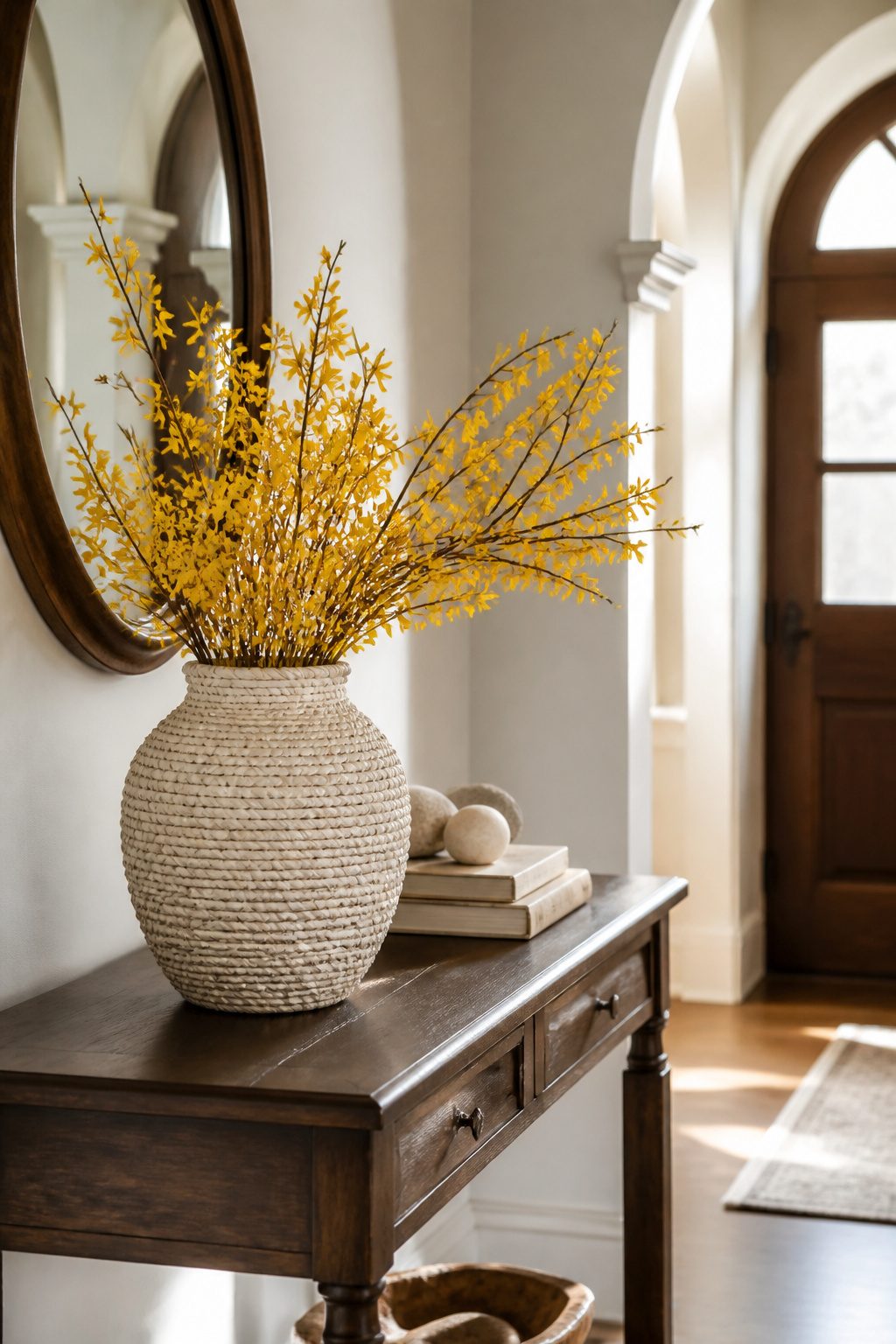
A seagrass-wrapped vase reads spring without that holiday expiration date.
The project starts with any glass vase from a thrift store and seagrass rush, which shows up cheap for garden projects and leaves plenty of spare material.
Hot glue wraps the rush around the vase in overlapping rows; jute cord or nautical rope substitutes if that is what you have on hand.
The original plan was to leave the seagrass raw, but gaps showed glass and glue underneath, so the whole thing got a coat of Waverly chalk paint in "Plaster" and a light brushing of antique wax once dry.
Pussy willow stems, forsythia, or whatever branches you can force indoors that week finish it.
The vase sits on an entryway table from March to Memorial Day without the seasonal whiplash of eggs and pastels. Artwork stays put year-round; smaller accents do the rotating instead.
7. Bowls and Trays for Dropping Things
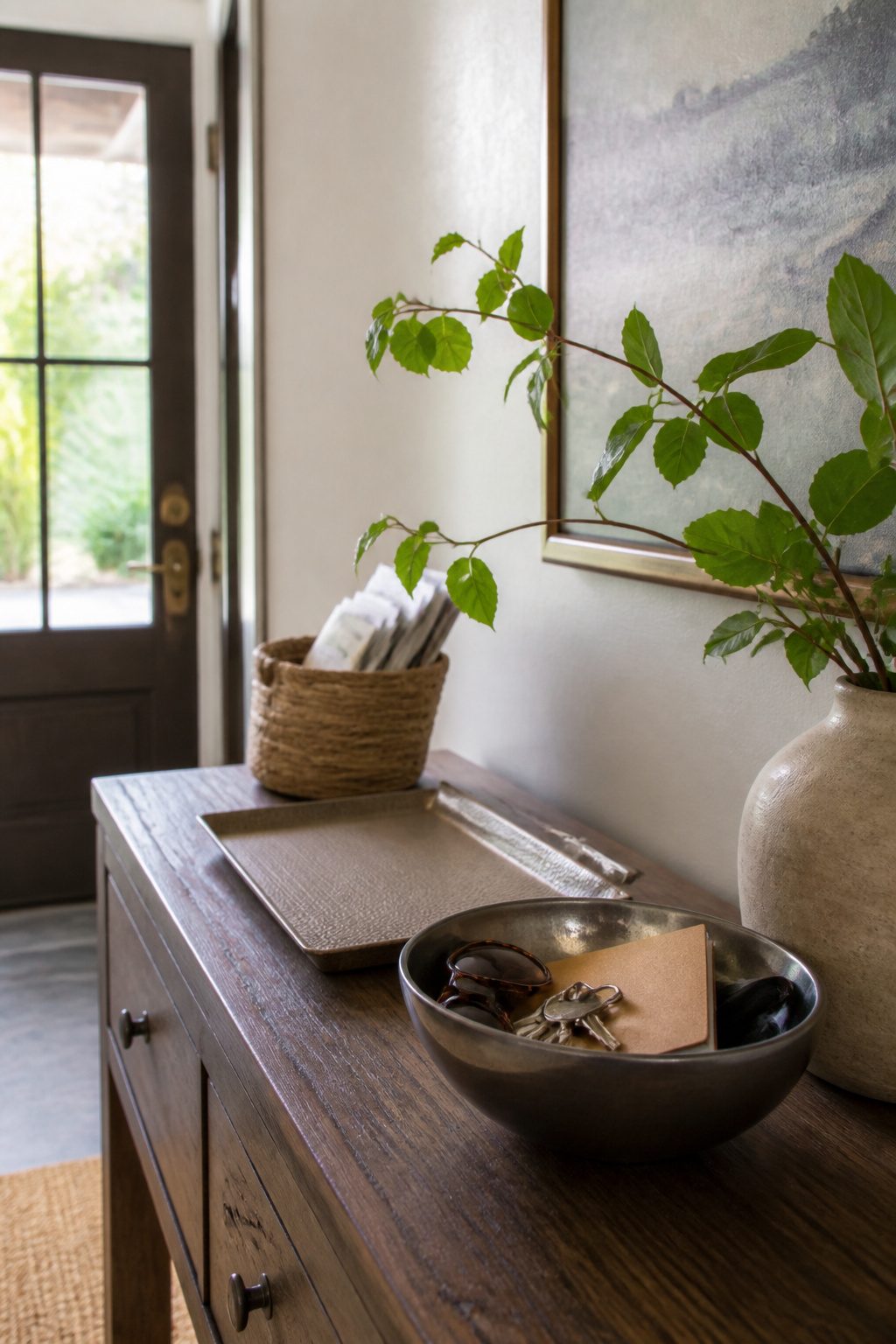
A $3.50 pewter bowl from the thrift store does the hardest job in an entryway: giving your hands somewhere to go the second you walk in. Mine holds the unglamorous daily load.
Mail, keys, sunglasses, the phone with 4% battery. The styled version might show quail eggs and Spanish moss, but that lives on Instagram.
Real bowls collect real mess, and the metal surface means Scuffs from keys wipe off with a thumb.
A bowl wins when your surface has depth. Set it on a console with a lip or a ledge and the pile stays contained.
The trouble starts on a flat, small surface like a narrow shelf or a windowsill. My keys slid off twice before I admitted the bowl was wrong for the spot.
A tray with a raised edge catches the same drop without the roll. The flat profile also reads cleaner visually, which matters when your entire entry is six feet across and the eye needs somewhere to rest.
The pewter ages well, darkening where fingers touch it. After six months the patina looks intentional rather than neglected, which is more than I can say for the ceramic dish it replaced.
8. Thrift Store DIY Upgrades
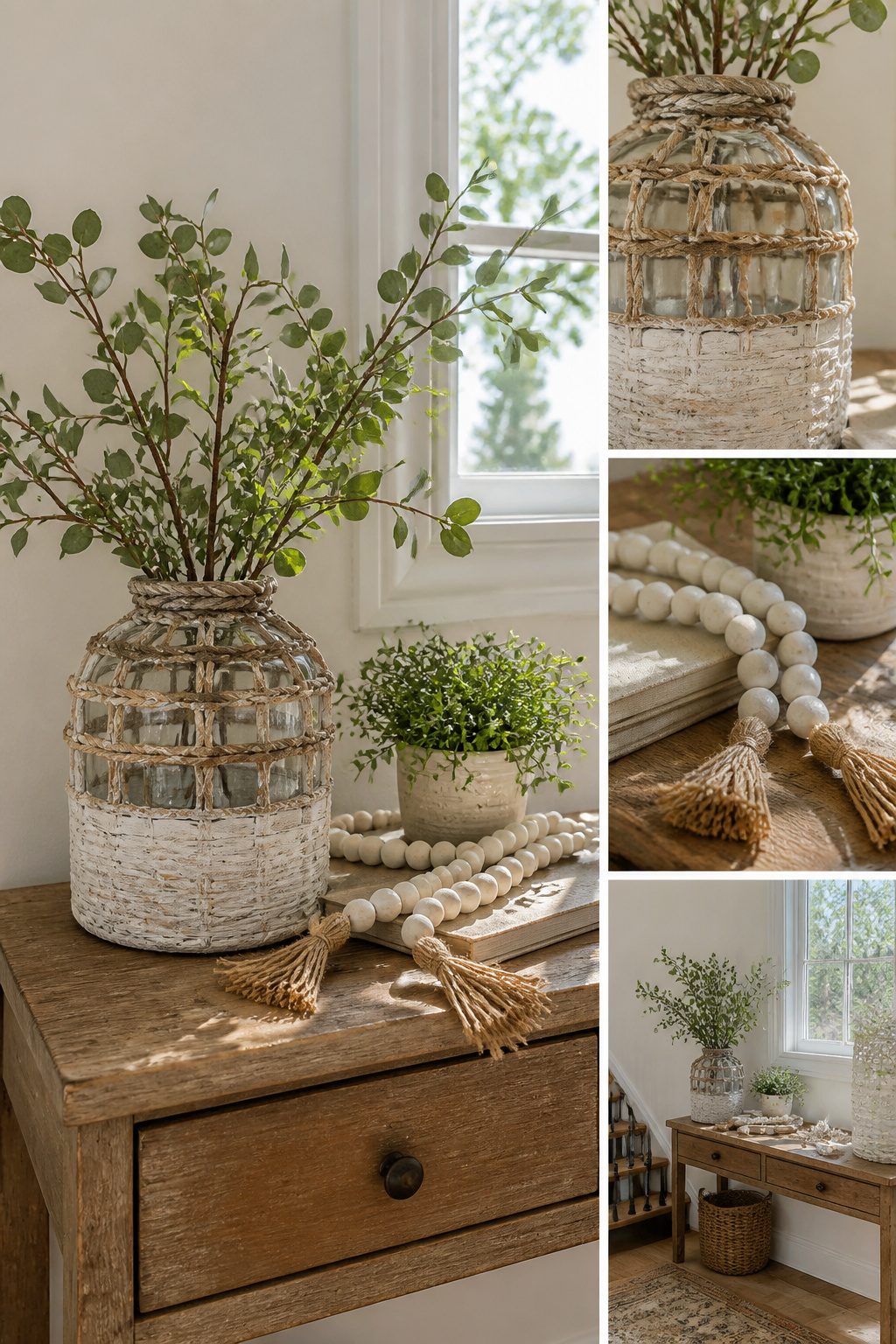
A glass vase with glue showing through reads as a mistake, not rustic. The fix from one cottage project: coat the whole thing in Waverly chalk paint, shade "Plaster," then brush antique wax over the top once it dries.
Seagrass rush hides the glass underneath, though jute cord or nautical rope work the same way. Hot glue holds it, no specialty adhesive needed.
Raw wood beads through Amazon take a different direction. Paint them light brown, string with jute tassels, drape around a vase.
The thrift piece underneath matters less when the garland does the visual work.
Ten minutes is the real contrast. A wreath assembled from what you already own, hung and done, against an evening of painting beads and waiting for coats to dry.
Both count as spring entryway decor; only one respects a Saturday that already has errands.
Color Palette That Reads Spring
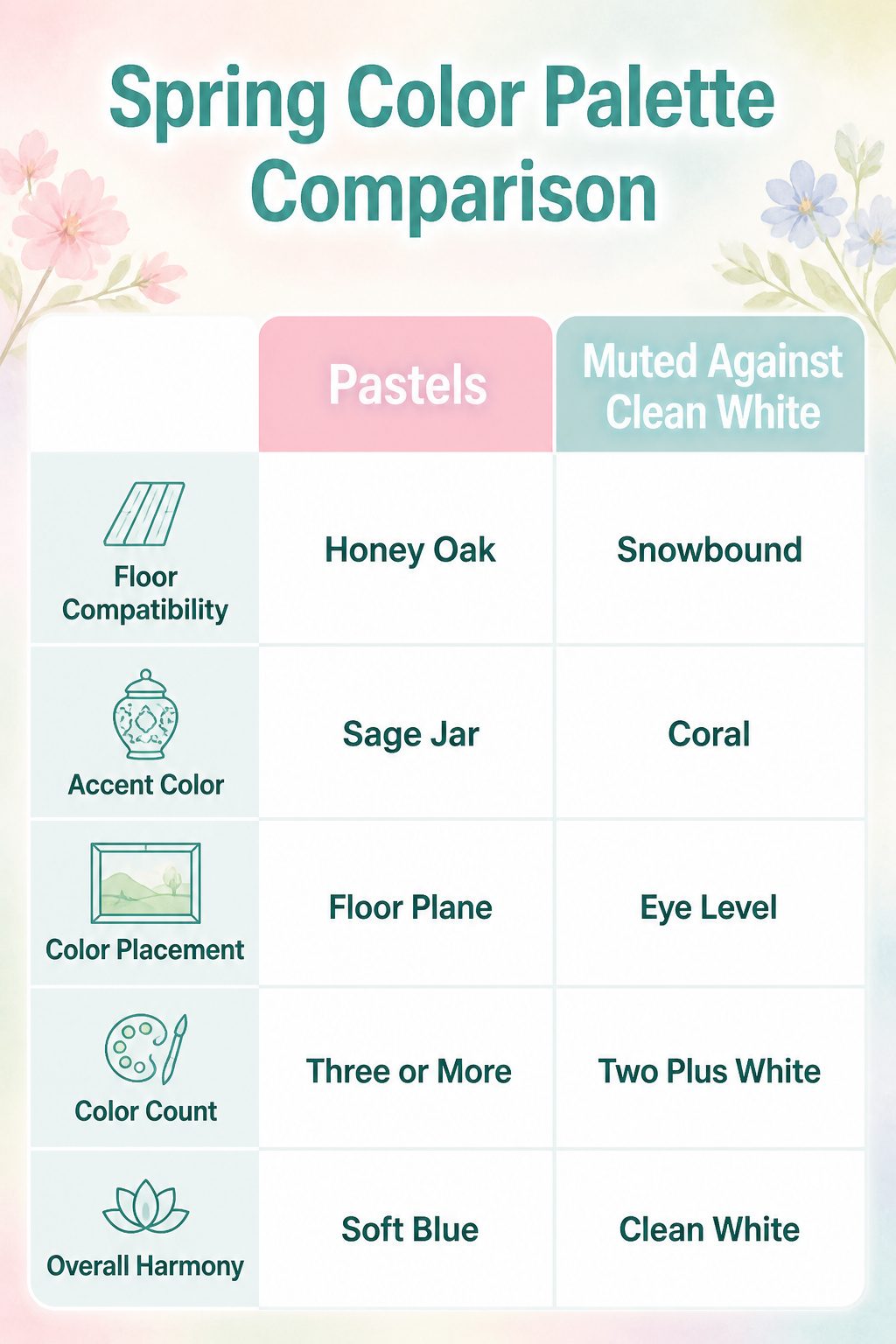
Soft pastels read spring in a catalog, but they can look like a mistake against honey oak floors or the warm beige walls most rentals inherit.
That tension is real, and the way through it is to stop thinking "pastel" and start thinking muted against clean white.
Sherwin-Williams Snowbound on trim or a single accent wall gives pastels somewhere grounded to land. Without that anchor, a sage ginger jar or a soft blue vase just floats.
The sources that pull this off use one near-neutral white, one muted color, and a single accent that carries some weight: green and white ginger jars against Snowbound trim, or chinoiserie blue with coral that reads as texture rather than a third competing hue.
If your floors fight everything, carry color at eye level and keep the floor plane quiet. A green glass vase on a console repeats the landscape painting above it; the eye travels upward and the floor becomes background.
Two colors plus white is the ceiling here. A third saturated tone, unless it is coral acting as neutral texture, starts looking like a collection of objects rather than a palette.
Functional Entryway Systems
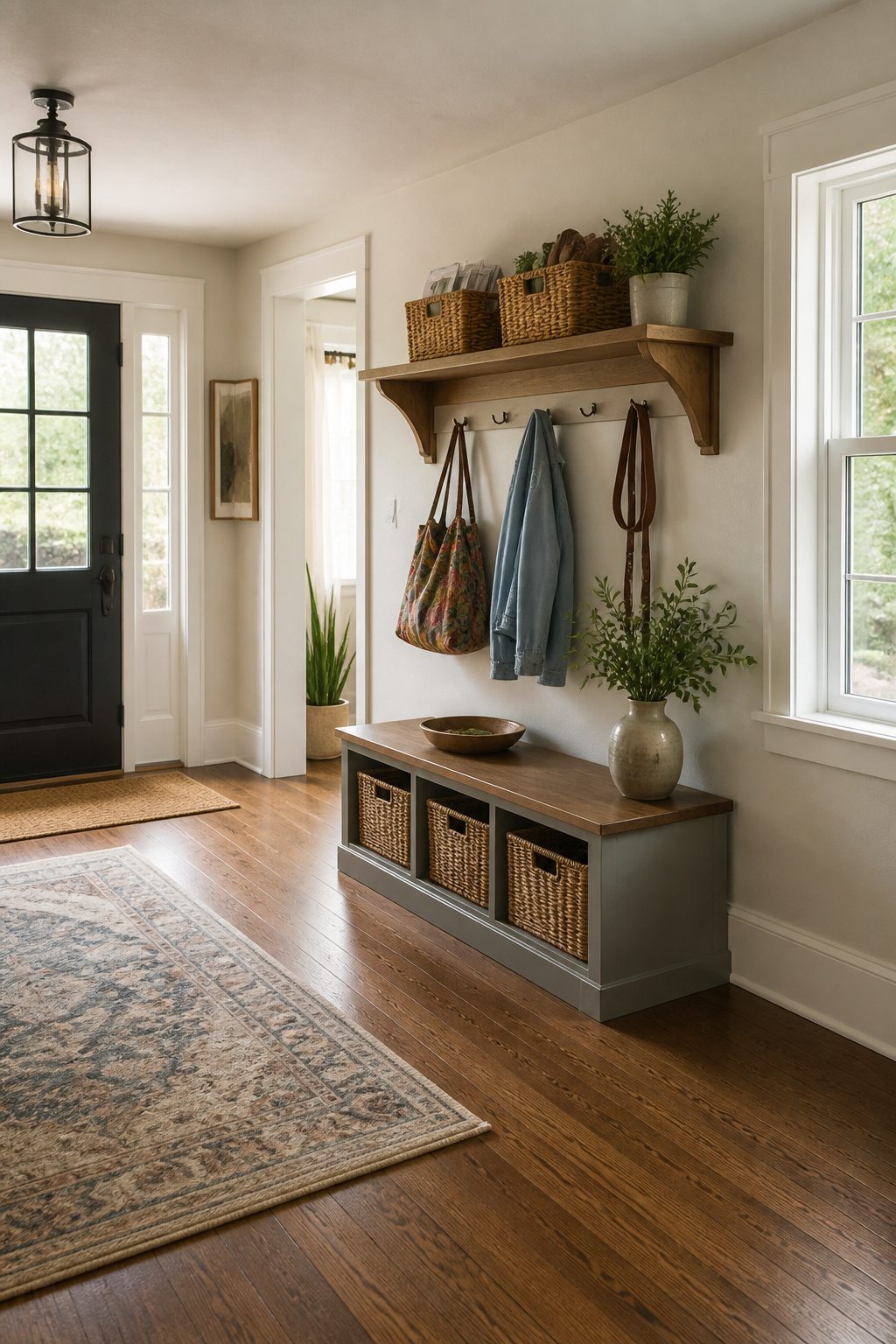
The prettiest entryways on my feed have one thing in common: nothing in them looks used. Woven baskets sit empty.
Hooks hold a single linen tote, artfully draped. That is not where my keys land at 6:47 p.m.
Baskets only earn their floor space when they hold actual mess. I keep one by the door for the mail I will deal with tomorrow, another for the dog’s leash and the backup leash and the one she chewed.
If the weave is too tight to shove a ball of plastic bags through, it is a prop, not storage. The same rule applies to hooks.
A row of four looks balanced in a photograph; a row of four in my house holds my partner’s work bag, my cardigan, the rain jacket that never dried, and the tote I keep meaning to empty.
The hooks from Country Living’s coastal cottage setup, the ones behind the door for leashes and hats, work because they are out of the frame of the mirror and the plants. They do not compete; they absorb.
A green houseplant breathes new life into any space, so why not pot a few in terra-cotta, colorful McCoy pottery, or another favorite material and arrange them in your entryway?
What that means for the rest of us: the plant is the greeting, the hook is the infrastructure. Budget for both, or the plant dies from being knocked off its perch by a coat.
Wall-mounted systems with a shelf above and hooks below solve this, but only if the shelf depth clears the hanging layer.
My own mistake was installing a ledge that looked generous until a winter parka swung forward and swept a ceramic bowl onto the tile. Function wins where the door actually opens.
When to Start and What to Store
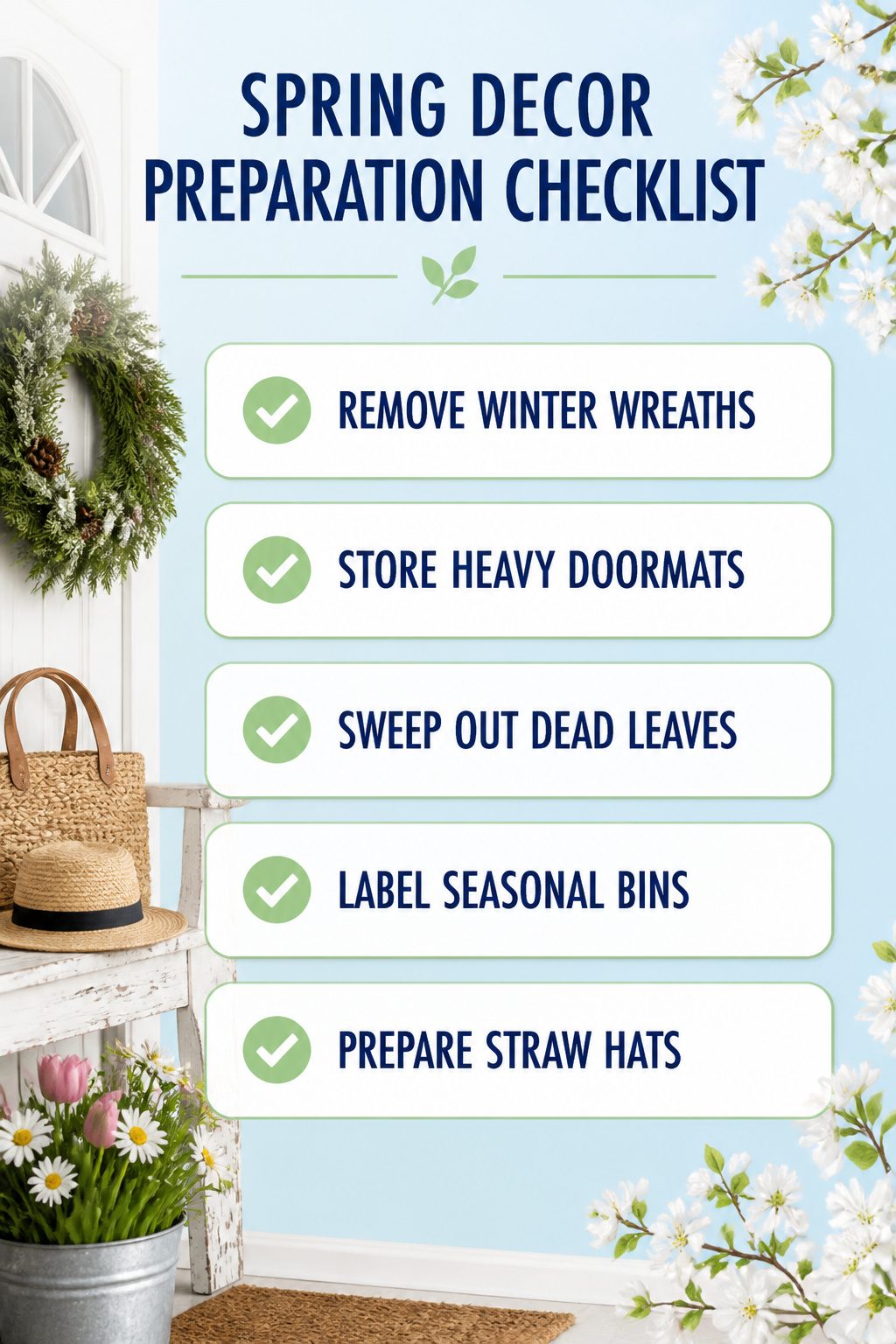
March lands as the practical start line for spring entryway decor, even with snow still on the ground in colder climates.
The shift is less about weather and more about marking the turn: a small update beats waiting for some perfect day that never arrives.
What comes down matters as much as what goes up. Winter wreaths, heavy doormats, and the accumulated grit of three months need to clear out first.
Wiping ledges and sweeping out dead leaves gives the blank slate that makes the next choices obvious. Store seasonals in labeled bins, not a closet of mystery boxes you dread opening next year.
The orchid that finished blooming last week, the holiday evergreen that turned brittle: move them out before you decide what moves in.
A chippy white bench or a clean shelf resets the tone fast. Straw hats and baskets can stay within reach once the heavy coats go into storage.
The whole swap runs on a weekend, and the cost stays low if you treat it as editing what you own rather than restocking.
Frequently Asked Questions
When should you start spring decorating?
March is the practical start line, even with snow still on the ground in colder climates.
The shift marks the turn of the season rather than waiting for perfect weather, and a small update beats delaying for some ideal day that never arrives.
What are some simple ways to update your entryway for spring?
Add fresh flowers or plants, clear winter clutter, and swap heavy pieces for lighter accents. A chippy white bench or clean shelf resets the tone fast, and editing what you already owns keeps the cost low.
How can I incorporate vintage decor into my spring entryway?
Hunt thrift stores for pieces like pewter bowls that read as old money even at pocket change prices.
Family heirlooms work the same way; the story you do not know, or the relative you never met, is what makes people lean in and ask.
What types of flowers are best for spring entryway decor?
Grocery store tulips last almost two weeks with proper care, and pansies in a galvanized bucket can take rain and go the full season.
Forcing branches like pussy willow or forsythia also brings in early spring without the maintenance of potted plants.
How do I care for my spring flowers?
Cut the stems and get them into water the same day you buy them, then change the water weekly.
Skip that step and the stems turn to slime in half the time; the weekly swap is what stretches grocery tulips to nearly two weeks.