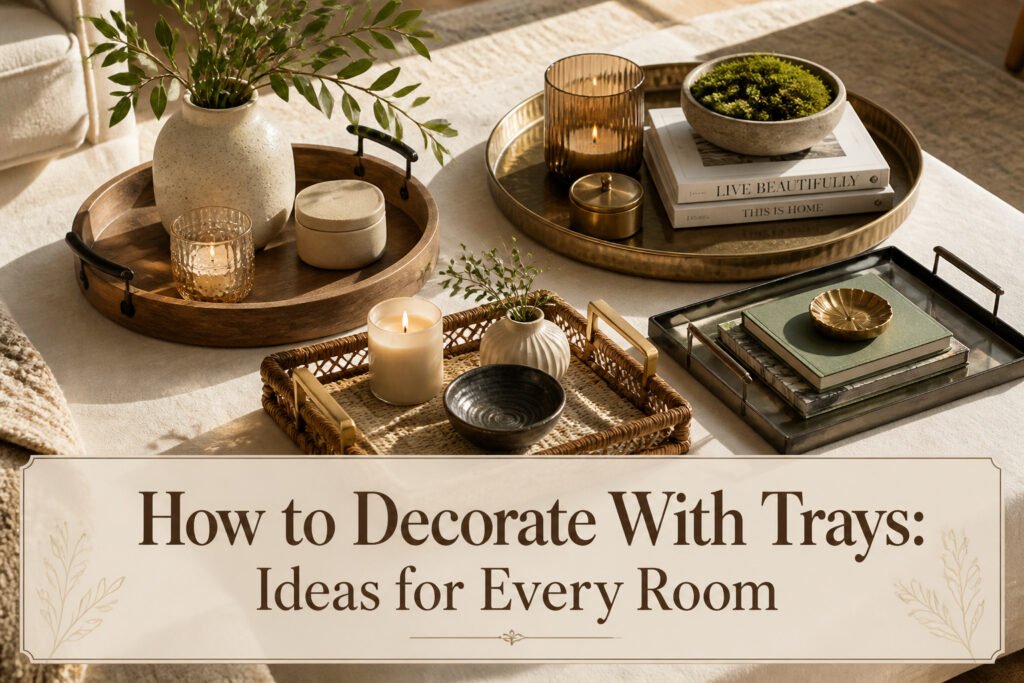
Decorating with trays costs between nothing and whatever a flea-market cheese board runs, and the only skill required is stopping before the tray disappears under its contents. The mistake most people make is treating the tray as storage: a lip around a mess instead of a zone that makes clutter read as intentional. The $15 metal piece by the kitchen sink outlasts the $40 wood one because you can actually carry it to the stove.
1. Coffee Table Displays
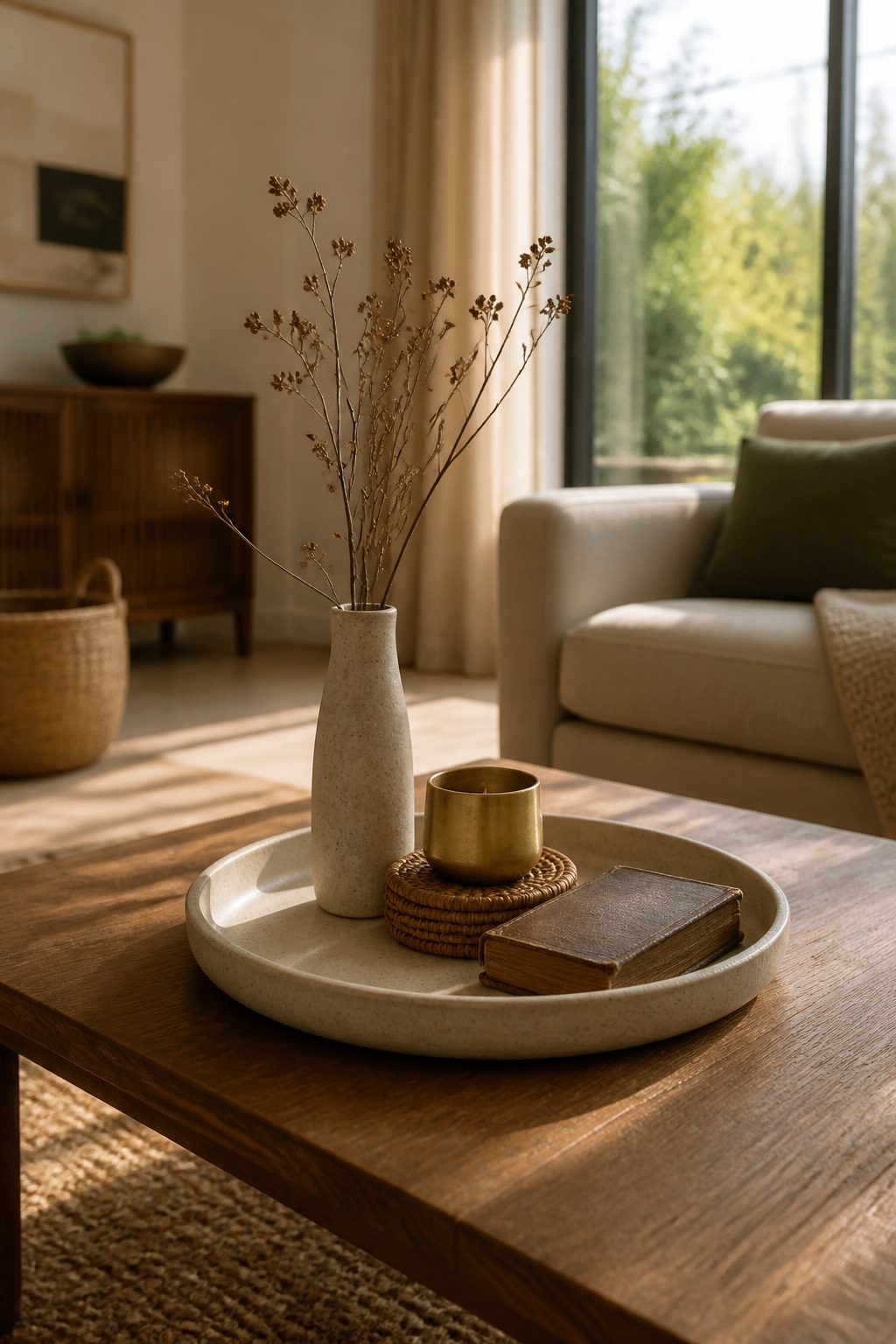
A coffee table without a tray becomes a landfill for remotes, half-empty mugs, and mail you meant to sort three days ago. The tray itself does not fix this; it gives the clutter a border, which is enough to make the eye read the same objects as intentional.
The formula that kept me from overstuffing: something tall, something short, something with texture, something personal. A ceramic vase with dried branches, a squat brass candle, a woven coaster stack, and one object that means nothing to Pinterest and everything to you. Odd numbers of items, three or five, settle better than pairs. Varying heights does the actual work of making the group look arranged rather than accumulated.
Breathing room matters more than completeness. A tray crammed edge to edge reads as storage, not display. I leave at least a thumb’s width between objects, more if the tray is large enough to handle it. The negative space is what lets each piece register separately.
Function sits underneath the styling. The remote lives in the tray because that is where my hand goes; the coasters stay because guests actually use them. Everything else rotates. A wooden bead garland loops through in winter, nothing stays year-round out of obligation.
2. Kitchen Essentials
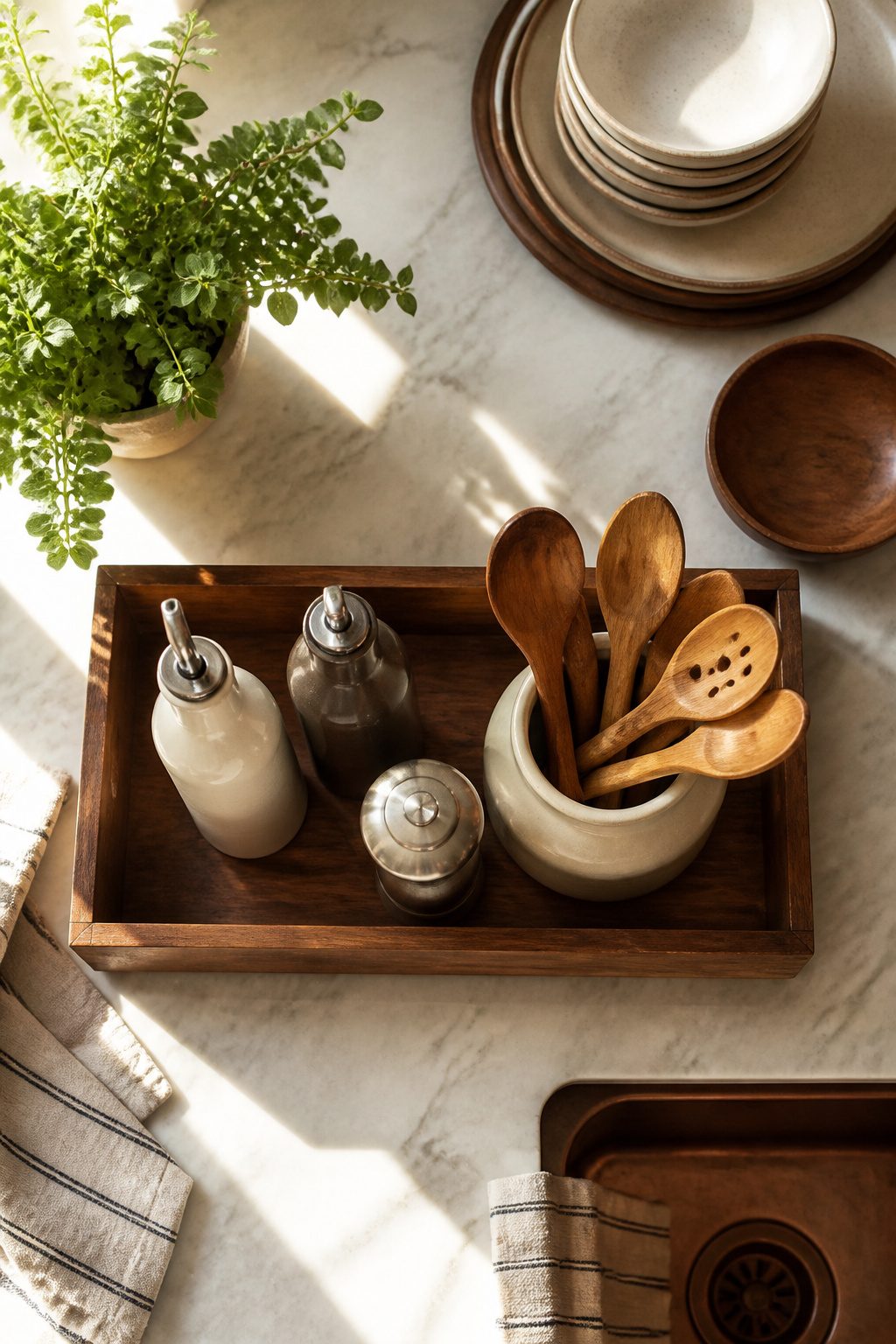
The kitchen counter is where trays earn their keep. Olive oil, salt and pepper mills, a small plant, wooden utensils in a jar: spread out they read as clutter, gathered on a tray they read as intention. I learned this after years of shoving bottles aside to chop onions. The tray does not reduce what you own; it reduces the visual noise by giving the eye one boundary instead of six.
Material matters here more than in any other room. Wood handles humidity better than I expected, though it will darken near the stove. Metal wipes clean but clangs, so I pad the bottom with a linen square I already had. Ceramic looks the most finished and stays cool, which matters if you set down a spoon that just stirred boiling pasta. Each has a limit: wood warps if you let oil pool, metal shows water spots, ceramic chips when you drop it.
This decorative tray is quite functional in the kitchen as a gathering spot for fresh herbs, oils, and spices. It can also be easily transported closer to the cooktop when preparing a meal.
That movability is the detail that sold me. A tray that stays put is a display; a tray that moves with you through cooking is a tool. Buy the size that spans your burners with room to spare, not the one that fits the gap beside the sink. You will carry it to the stove more often than you think.
3. Bathroom Organization
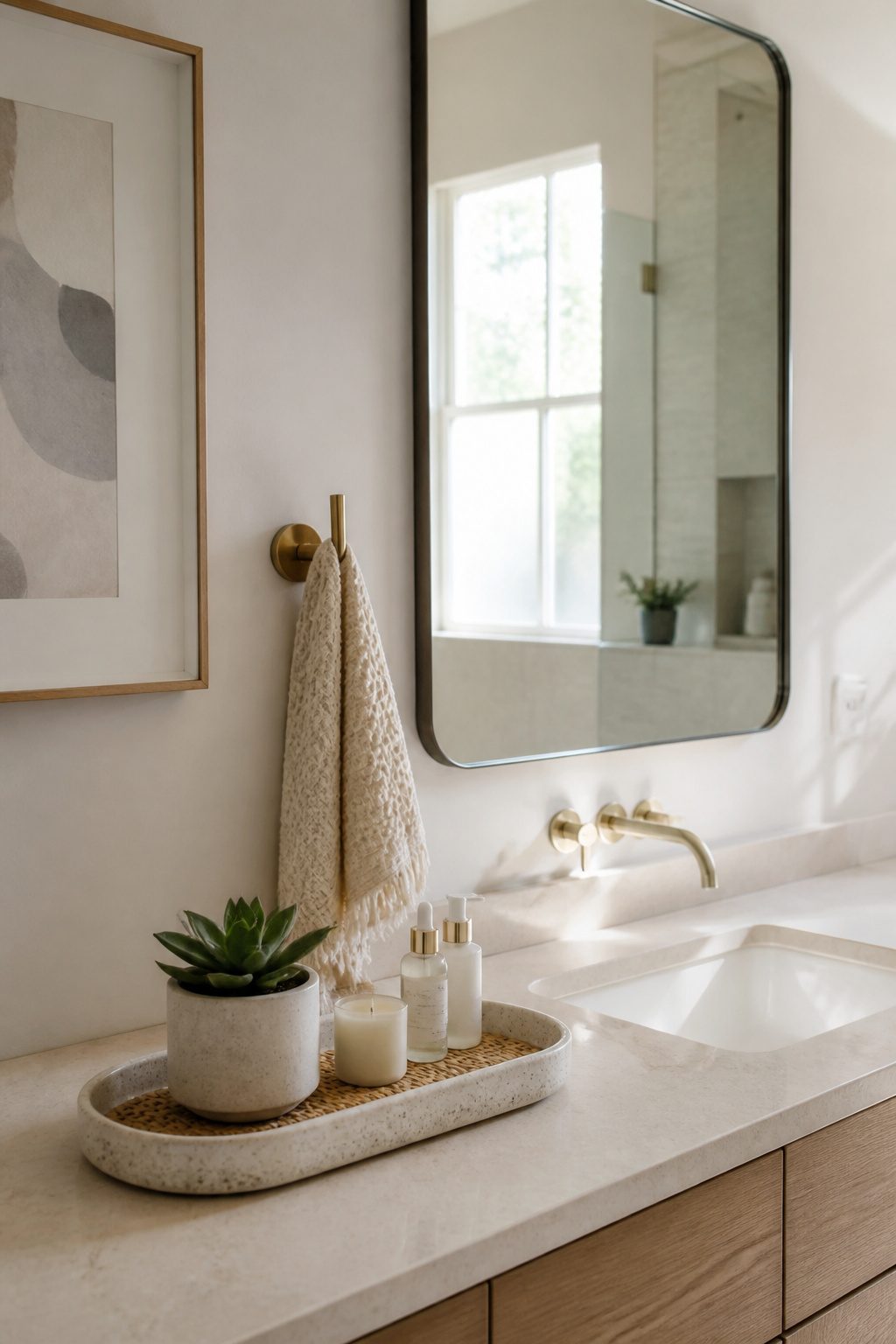
A bathroom counter collects clutter faster than almost any surface in the house, and a tray is the simplest way to halt the spread. Mine started with a single ceramic dish from a garage sale, just large enough for a candle, a bar of soap in a paper wrapper, and a small stack of cotton rounds. The change was immediate: the same three items looked intentional instead of abandoned.
The right tray for a bathroom is not a storage bin but an organized zone — too small and toiletries spill onto the counter, too large and it fights the sink for space. I aim for about two-thirds of the available counter depth, leaving room for actual hand-washing. Rattan and wicker bring warmth against cold tile, though a resin or metal tray survives splashes better near a frequently used sink.
On mine now sits a small candle, a faux succulent in a tiny concrete pot, and the daily skincare bottles corralled in a shallow lidded jar. The perfume bottle lives there too, more for the shape of the glass than the scent. When guests come, the whole arrangement lifts off to a drawer in ten seconds, counter wiped clean behind it.
4. Nightstand Organization

A nightstand tray has to earn its keep without crowding the one surface where you actually need elbow room. The sweet spot sits somewhere between the scale of a dinner plate and a small baking sheet; much smaller and your glasses and lip balm slide off the edge, much larger and the tray becomes the clutter it was supposed to contain.
My own rule, shaped by a few too many mornings knocking things to the floor while reaching for my phone, is to leave at least a hand’s width of bare tabletop on every side. That usually means roughly 10 to 12 inches across for a standard nightstand. A basket tray can hold a lamp base and a remote with room to spare, though I have swapped mine out when the collection of books and nighttime essentials grew past what one surface could reasonably hold.
Books stack neatly spine-up and add the kind of personal detail that makes the arrangement feel intentional rather than dumped. A small notepad, reading glasses, and the inevitable tea mug all find their own territory without drifting into a pile. The tray also travels well; the same piece that corrals your bedside clutter can relocate to a bathroom counter or an entryway catch-all when you want a change without a purchase.
5. Entryway Catch-All
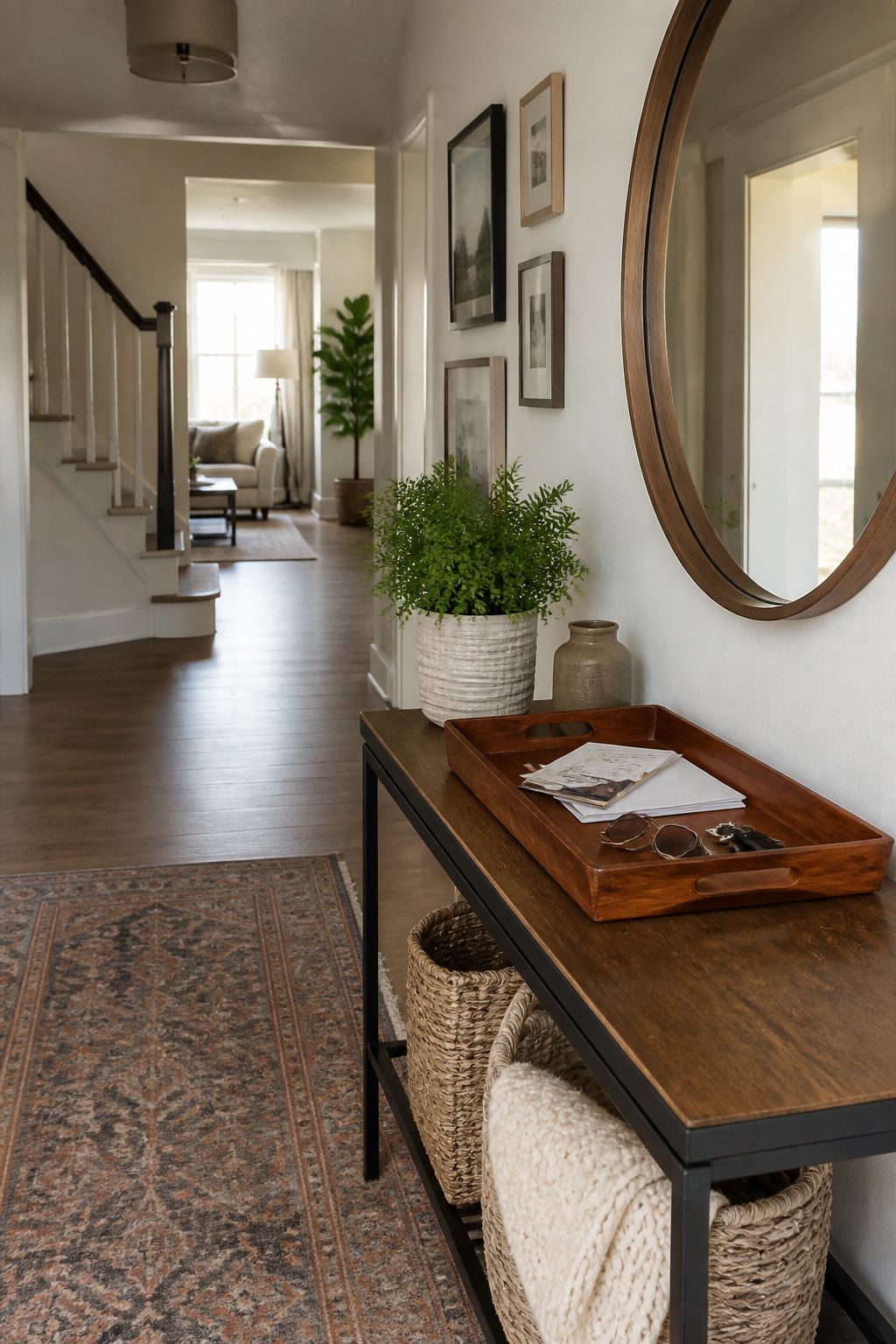
Keys, mail, and sunglasses collect at the door whether you plan for them or not. A tray on the console or bench gives that clutter a boundary: drop it here, grab it on the way out. Metal trays handle wet keys without warping. Woven ones soften the look if your entry opens straight into a living area. Solid wood wears in well; the dings become part of it. Marble looks sharp but slides around on slick surfaces unless you add felt pads underneath. Leather trays, usually a hide stretched over a rigid base, keep things quiet when you set them down late.
My preference runs to metal or wood for the daily entry, the one you actually use. The garage door through the laundry room, in my case. A basket for keys failed here; too many sets, too little sorting. A tray with a small dish nested inside separates car keys from house keys without the bulk of a wall-mounted organizer. Woven or marble works better for a front door you open only for guests, where the tray is doing more decorating than catching.
6. Seasonal Decor
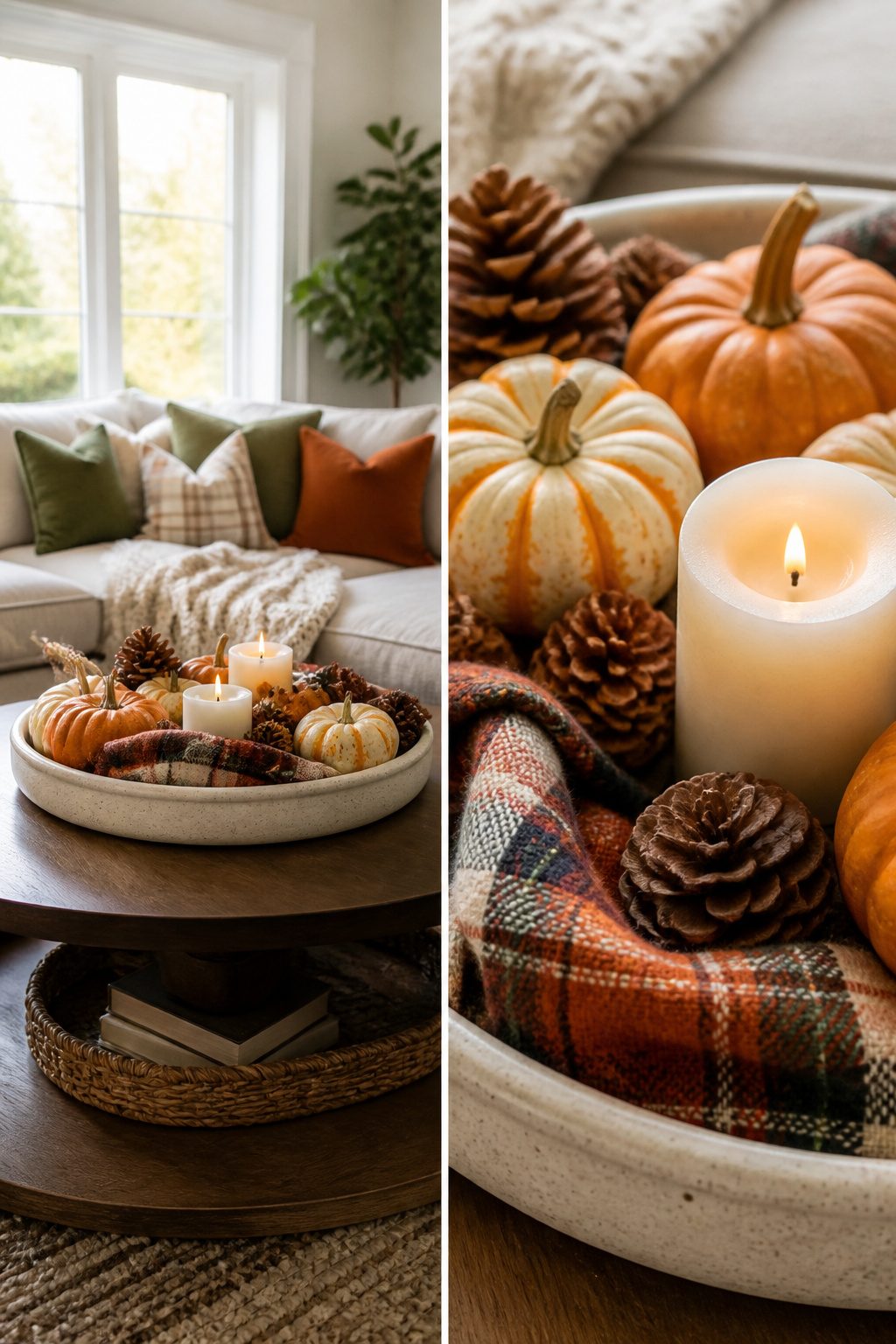
A tray makes seasonal decorating portable, which matters more than I expected. Last fall, I cleared a ceramic tray of its usual candles and set out mini pumpkins and a few pinecones from the yard. When November ended, the whole arrangement lifted off the coffee table and went into a closet without leaving a ghost of autumn behind.
Winter followed the same rhythm: pinecones stayed, pumpkins out, a strand of twinkle lights coiled through. Spring meant grocery-store blooms in a short glass, nothing taller than the tray rim so the look stayed low and calm. Summer could take seashells if I collected any, or just a bowl of lemons.
The real advantage is storage. Seasonal items scattered across a mantel or bookshelf mean clutter and dust. Grouped on a tray, they read as one object, and one object is easy to move. When the season changes, swap what sits on top or carry the tray to another room and restyle it there. A wicker tray with a cardboard insert works for drinks in July; line it with decorative paper and it holds winter greenery by December. No single-use coastal candle holder required.
7. Tiered Trays
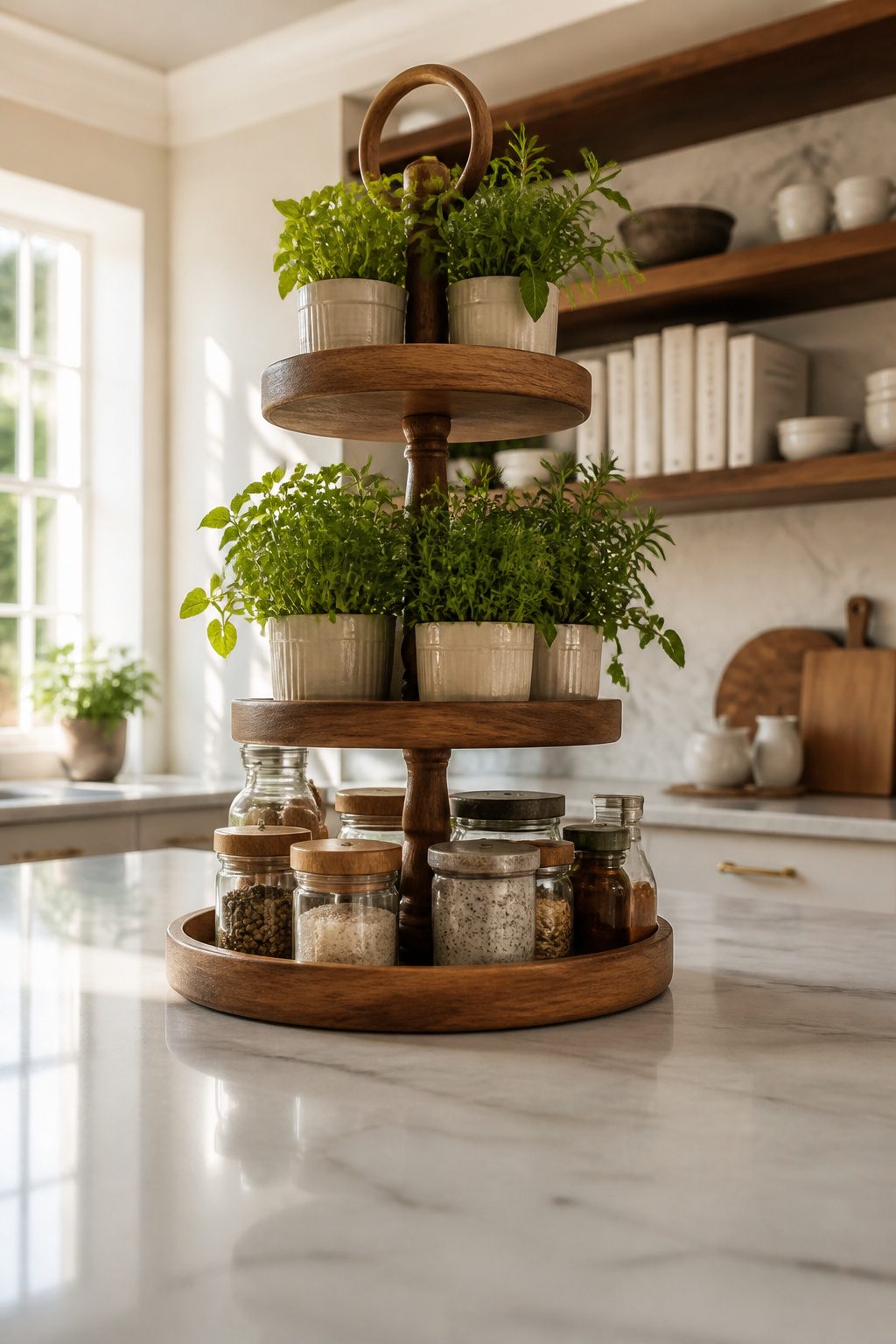
A three-tier tray turns a crowded surface into something readable. The eye travels up instead of flattening into clutter, which is why the kitchen counter or bathroom sink stops looking like a junk pile once you give it vertical structure.
The mistake most people make is treating each tier as its own separate display. The tiers need to relate to each other, same color family or same material, or the whole thing reads as three random piles stacked up. I learned this after swapping my first attempt, a metal farmhouse tray with ceramic figurines and woven baskets mixed across levels, for a single-material tray where everything else had to play by that rule.
Small items that normally disappear on a flat surface, rings by the bed, spice jars, succulents, suddenly hold their own when they sit on different planes. The bottom tier handles weight and bulk, the middle gets medium-sized pieces, the top stays light: a candle, a single stem, nothing that blocks the view of what’s below. For renters especially, a tiered tray on a counter or shelf adds built-in architecture without touching a wall.
Tray Materials and What They Cost
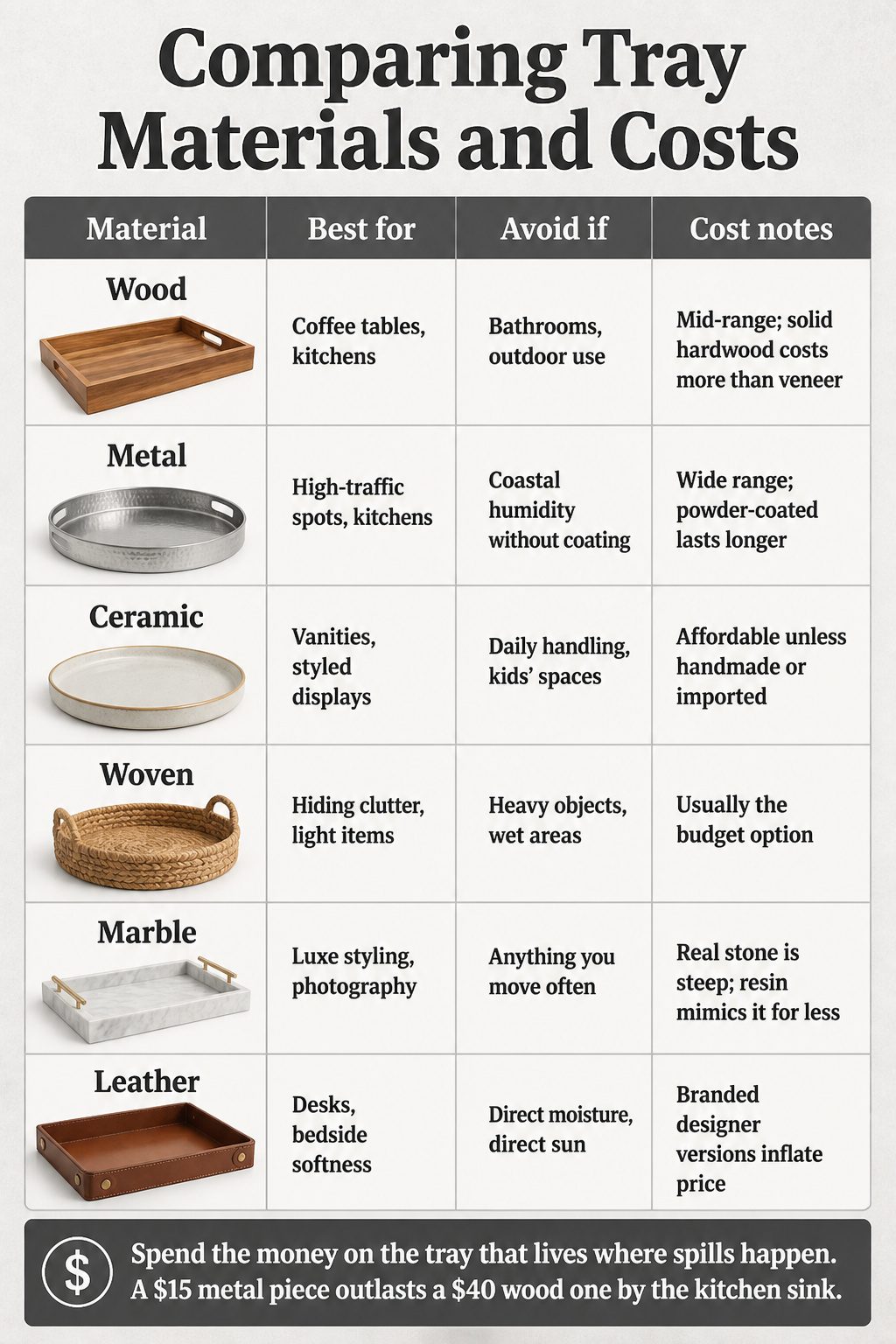
Wood trays warm up a space fast, but they stain if you set a sweating glass down and forget it. Metal holds up to abuse and wipes clean, though cheap ones rust at the weld points inside a year. Ceramic looks polished on a vanity or coffee table until you chip the rim moving it. Woven materials, seagrass or rattan, hide clutter and cost the least, yet they sag under anything heavier than candles and a remote. Marble trays feel substantial because they are; the weight makes them impractical for anything you carry room to room, and the price jumps for real stone over resin castings. Leather trays, usually a hide wrapped over a stiff core, soften the look of an office desk but show every water ring.
| Material | Best for | Avoid if | Cost notes |
|---|---|---|---|
| Wood | Coffee tables, kitchens | Bathrooms, outdoor use | Mid-range; solid hardwood costs more than veneer |
| Metal | High-traffic spots, kitchens | Coastal humidity without coating | Wide range; powder-coated lasts longer |
| Ceramic | Vanities, styled displays | Daily handling, kids’ spaces | Affordable unless handmade or imported |
| Woven | Hiding clutter, light items | Heavy objects, wet areas | Usually the budget option |
| Marble | Luxe styling, photography | Anything you move often | Real stone is steep; resin mimics it for less |
| Leather | Desks, bedside softness | Direct moisture, direct sun | Branded designer versions inflate price |
Spend the money on the tray that lives where spills happen. A $15 metal piece outlasts a $40 wood one by the kitchen sink.
Sizing Trays to the Space
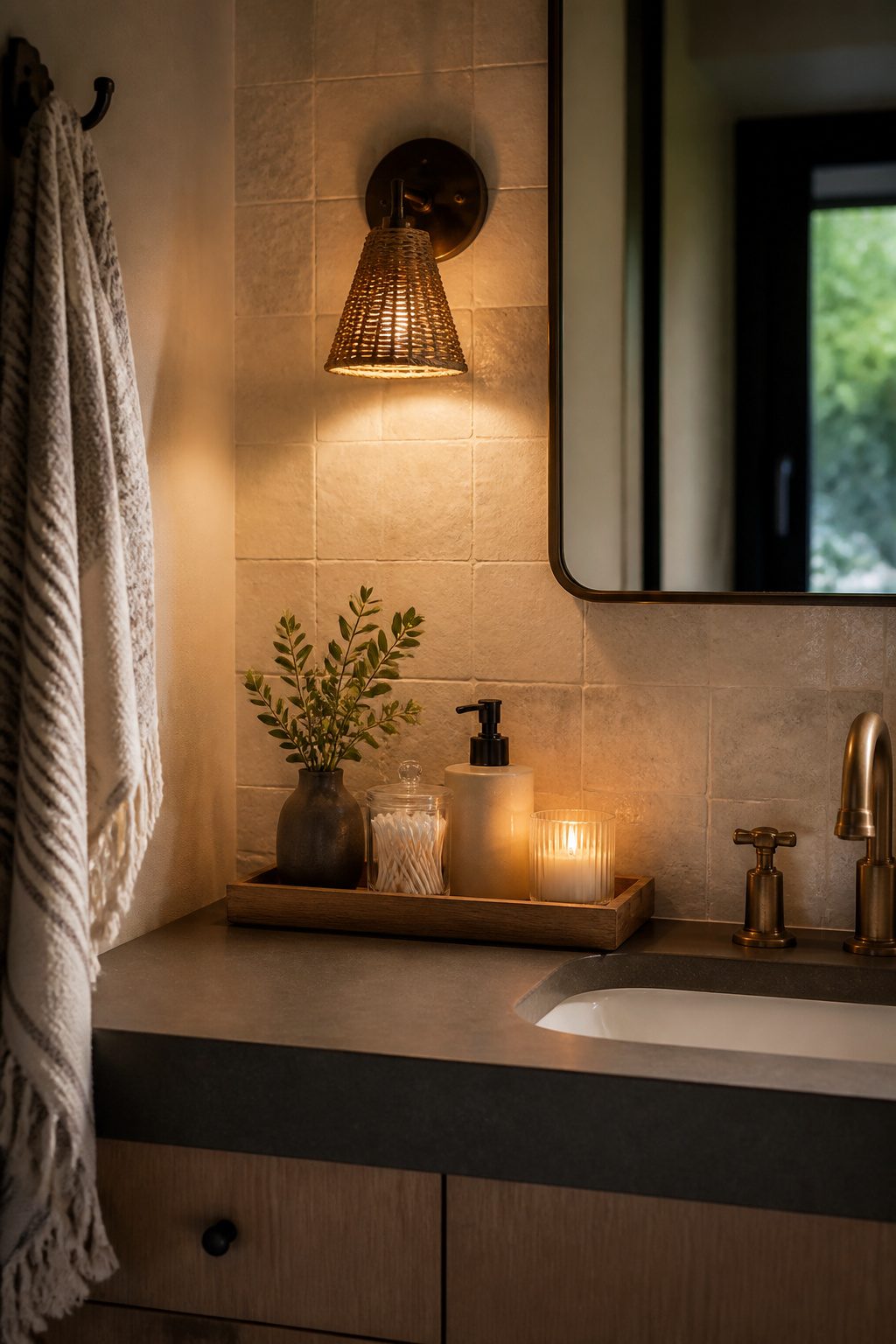
A tray that disappears under its own contents is just a lip around a mess. I learned that the hard way with a rattan piece on my bathroom counter: my cotton swabs, hand soap, and spare floss sat on it like an afterthought, spilling onto the tile every morning. The tray needs to read as a zone, not a storage bin. Eyeballing fit means setting down what you actually plan to corral before you buy. A coffee table tray should leave breathing room on all sides; wall-to-wall edges make the surface feel smaller, not edited. Layering helps when one piece won’t span the job. Smaller rectangular trays inside a larger one keep categories separated without demanding one giant footprint. For tight spots like the back of a toilet or a narrow shelf, a wood tray that fits with an inch to spare beats a spacious one you have to angle in.
What I Get Wrong and Fix
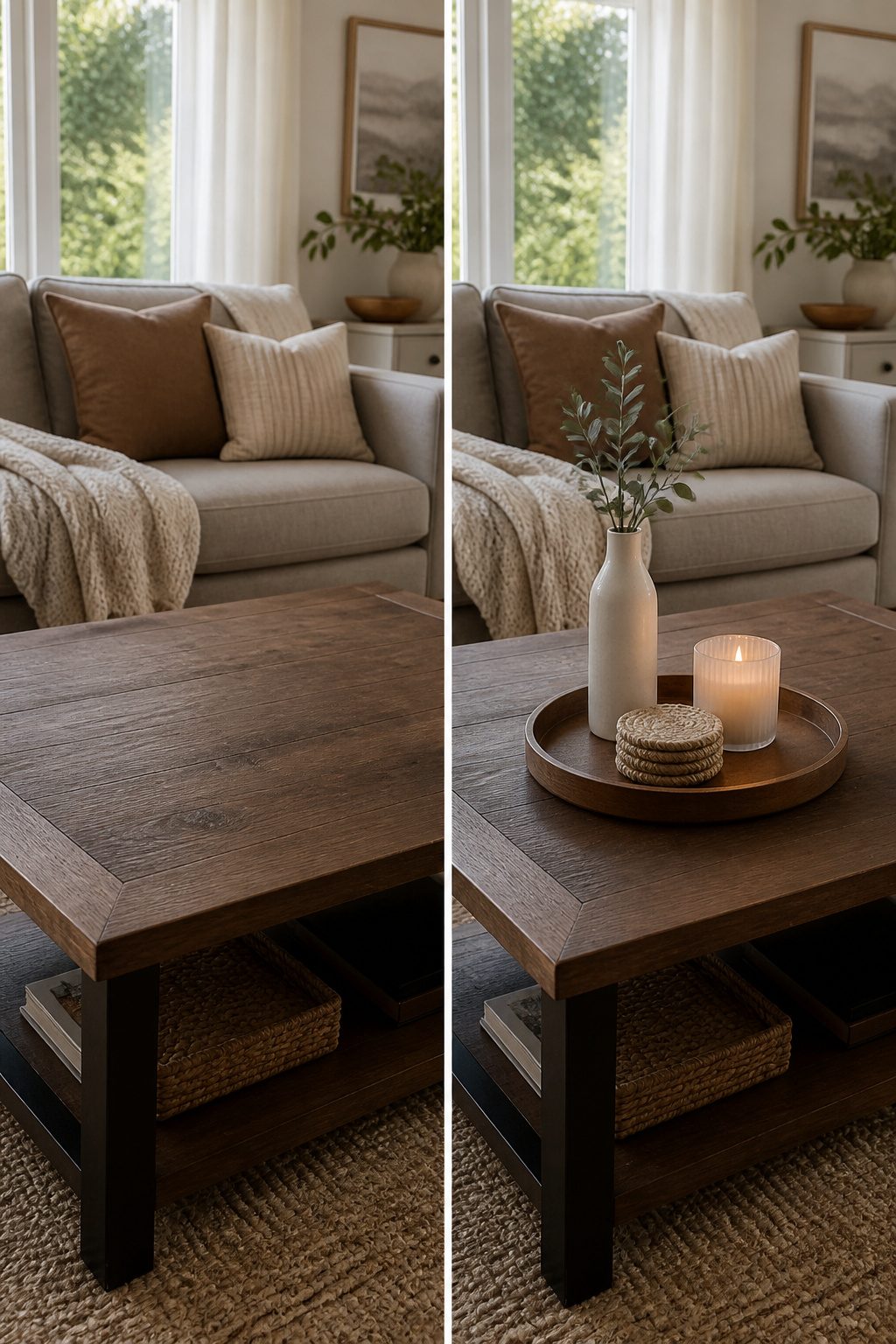
The first tray on my coffee table held everything I owned that looked vaguely decorative. A candle, a stack of coasters, a small plant, a ceramic bird I never liked, all pressed together until the tray itself disappeared. The objects were fighting each other for attention, and none of them won. Clearing it down to three things, one of which was taller than the others, finally gave the arrangement a center of gravity.
Flat arrangements were another habit I kept repeating. Everything sat at the same height, so the eye skimmed over the whole surface without stopping. A stack of two books with a brass bowl on top, or even just a single bud vase with a stem that reached upward, broke that line and made the tray worth noticing from across the room.
Seasonal clutter outstayed its welcome most often. A tray of pinecones and cinnamon sticks looked right in November, but by February it read as forgotten rather than festive. Now I set a phone reminder for the week after a holiday to reassess, because the line between cozy and neglected is about ten days, and I always crossed it.
DIY and Unconventional Trays
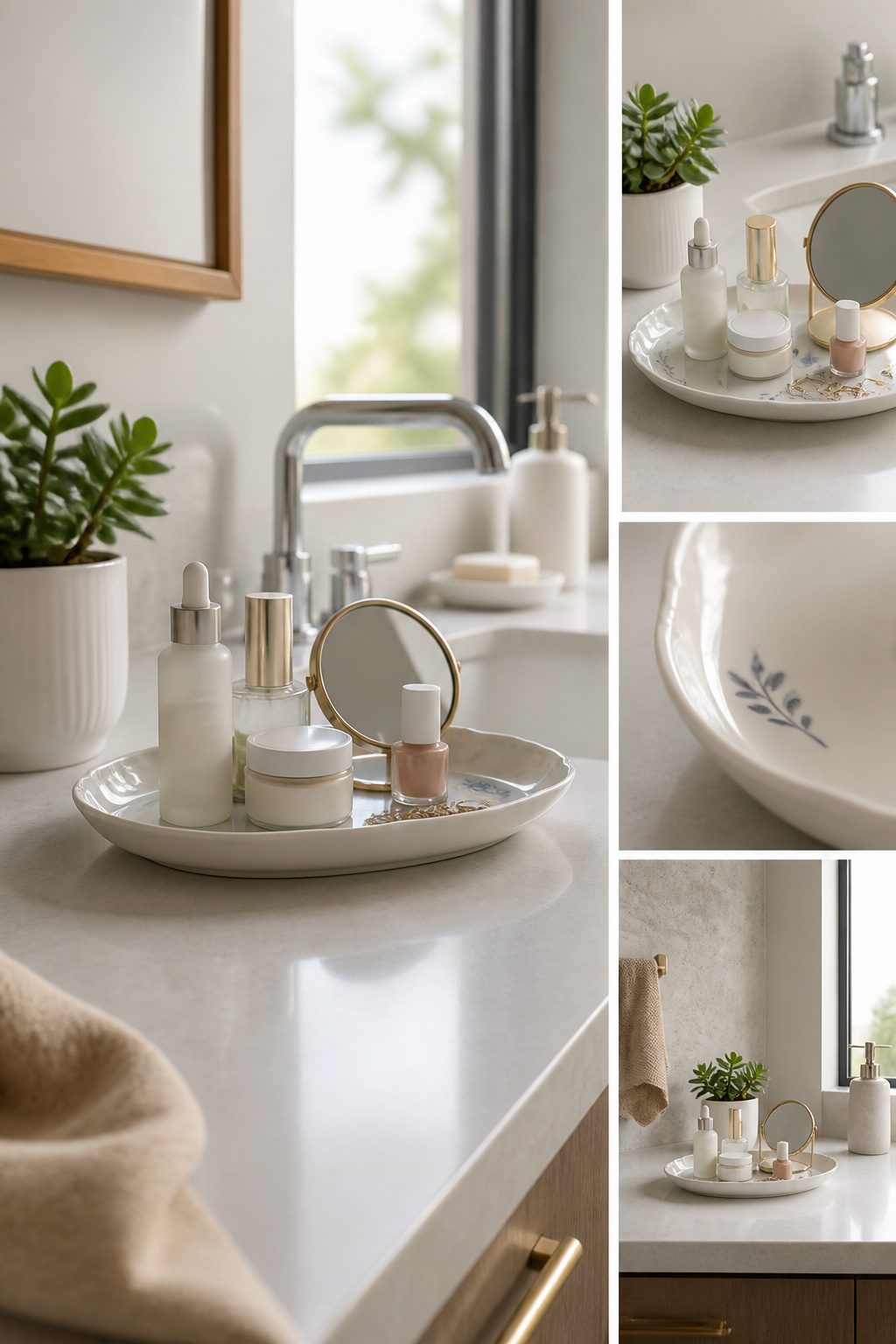
The trays that get the most use in my house never started as trays. A shallow white porcelain dish sold for serving appetizers now holds my nightly skincare on the bathroom counter. The rim is barely half an inch high, which means bottles tip if I crowd them, but the low profile keeps the whole setup from reading as clutter against a small backsplash.
Flea markets and thrift stores are where the real finds hide. Most of my collection came from digging through stacks of mismatched serveware, not from browsing the tray aisle at Target or World Market, though both carry solid basics when you need something uniform. The trick is looking at form before function: a vintage picture frame with a shallow box built behind the glass, a wooden cheese board with a routed groove around the edge, even a heavy ceramic baking dish in a color you actually like.
Layering turns one found piece into a vignette. A large flat tray on the coffee table, something round or oval with a little texture, holds a stack of books. A smaller one sits on top for candles or the remote. The two-level setup adds depth without adding objects, and swapping the smaller tray seasonally takes about thirty seconds. The sources that suggest this usually picture elegant serving sets, but my version is a scratched metal charger from a garage sale and a $4 porcelain rectangle from Walmart’s kitchen section. The combination works because the sizes differ enough to read as intentional, not because the materials match.
Frequently Asked Questions
What can I put on a decorative tray?
Candles, plants, books, and objects that mean something to you personally. The article’s formula is something tall, something short, something with texture, and something personal, grouped in odd numbers of three or five. A ceramic vase with dried branches, a squat brass candle, a woven coaster stack, and one item with personal meaning works well on a coffee table.
How do I style a tray?
Vary heights so the eye stops instead of skimming across, mix textures, and stick to odd numbers of items. Leave breathing room between objects, at least a thumb’s width, so the tray reads as display rather than storage. One piece should reach upward, like a vase with branches or a stack of books with a bowl on top, to give the arrangement a center of gravity.
Where can I use trays in my home?
Trays work in every room: coffee tables for remotes and candles, kitchen counters for oils and utensils, bathroom counters for soap and skincare, nightstands for glasses and books, entryways for keys and mail, and even tiered versions for vertical storage on crowded surfaces. Their real advantage is portability; a tray that moves with you through cooking or lifts off for guests is a tool, not just decoration.