Elegant Christmas living rooms range from $15 battery candles to a $548 brass mirror, but the deciding factor is not budget. It is restraint: two or three colors, three objects per surface, and the discipline to leave six inches bare on each mantel end. The $164 core of one real setup, velvet ribbon and taper candles and yard-clipped greenery, proves that the edit matters more than the spend.
1. Cohesive Color Palette
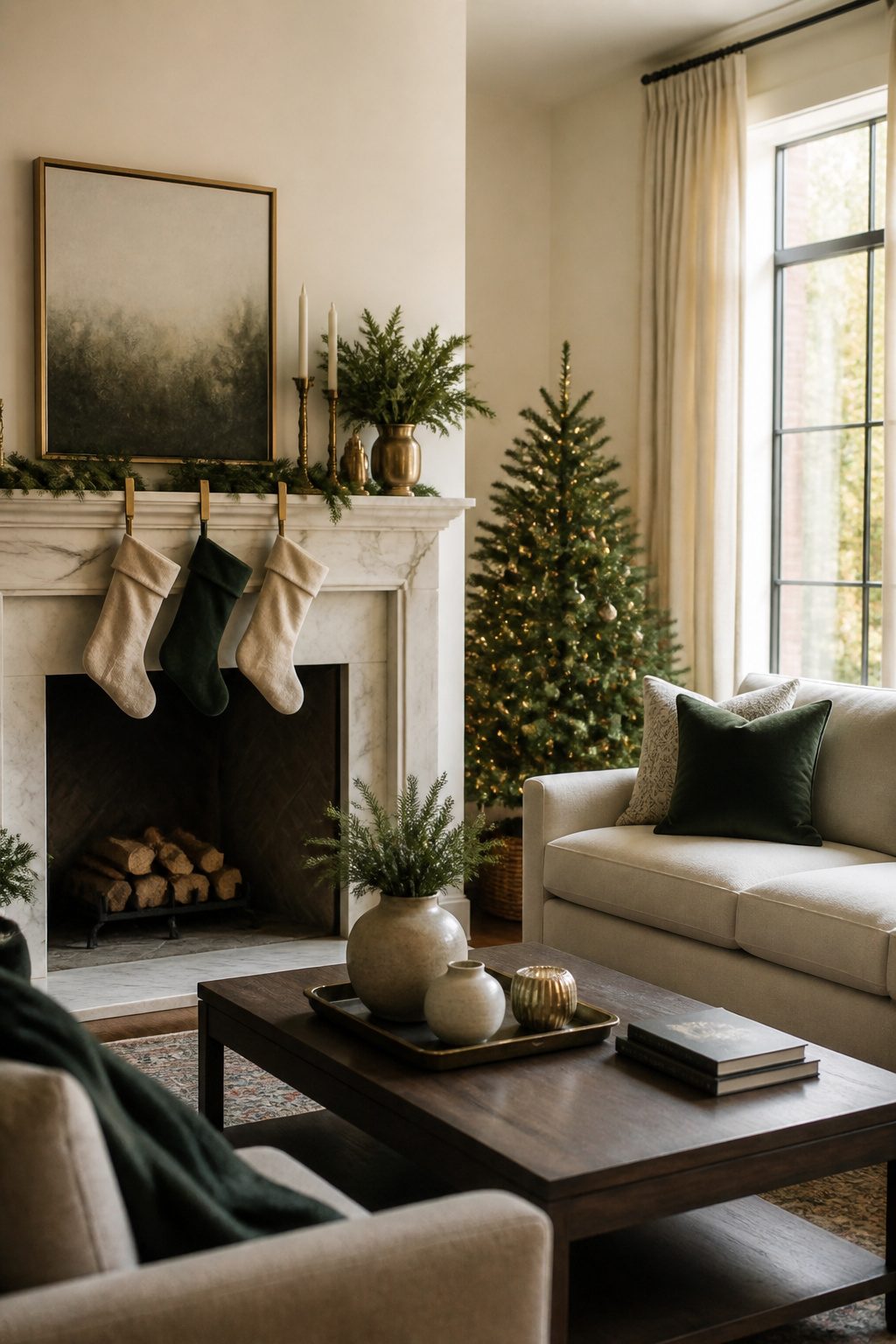
My first year decorating, I used red, green, and gold everywhere. The room looked like a craft store exploded. Now I stick to two or three colors and run them through everything: cream, forest green, and antique brass. The restraint reads as expensive even when the pieces aren’t.
The brass matters more than I expected. A few years back I picked up the Threshold x Studio McGee Light Wood and Gold Antique Stocking Holder for $10, and it became my test case for whether a metallic could tie in without screaming holiday. It sits on the mantel for six weeks, then moves to a bookshelf with a postcard tucked under the clip. The antique finish keeps it from reading as Christmas-specific, which means I don’t have to hide it in January.
Cream and forest green handle the seasonal weight. Cream keeps the walls and larger textiles feeling open; forest green carries the tree, a single throw pillow, and whatever greenery I clip from the yard. Three colors, repeated across ten objects, does more than ten colors scattered across thirty. The edit is what makes it elegant.
2. Natural Greenery and Pinecones
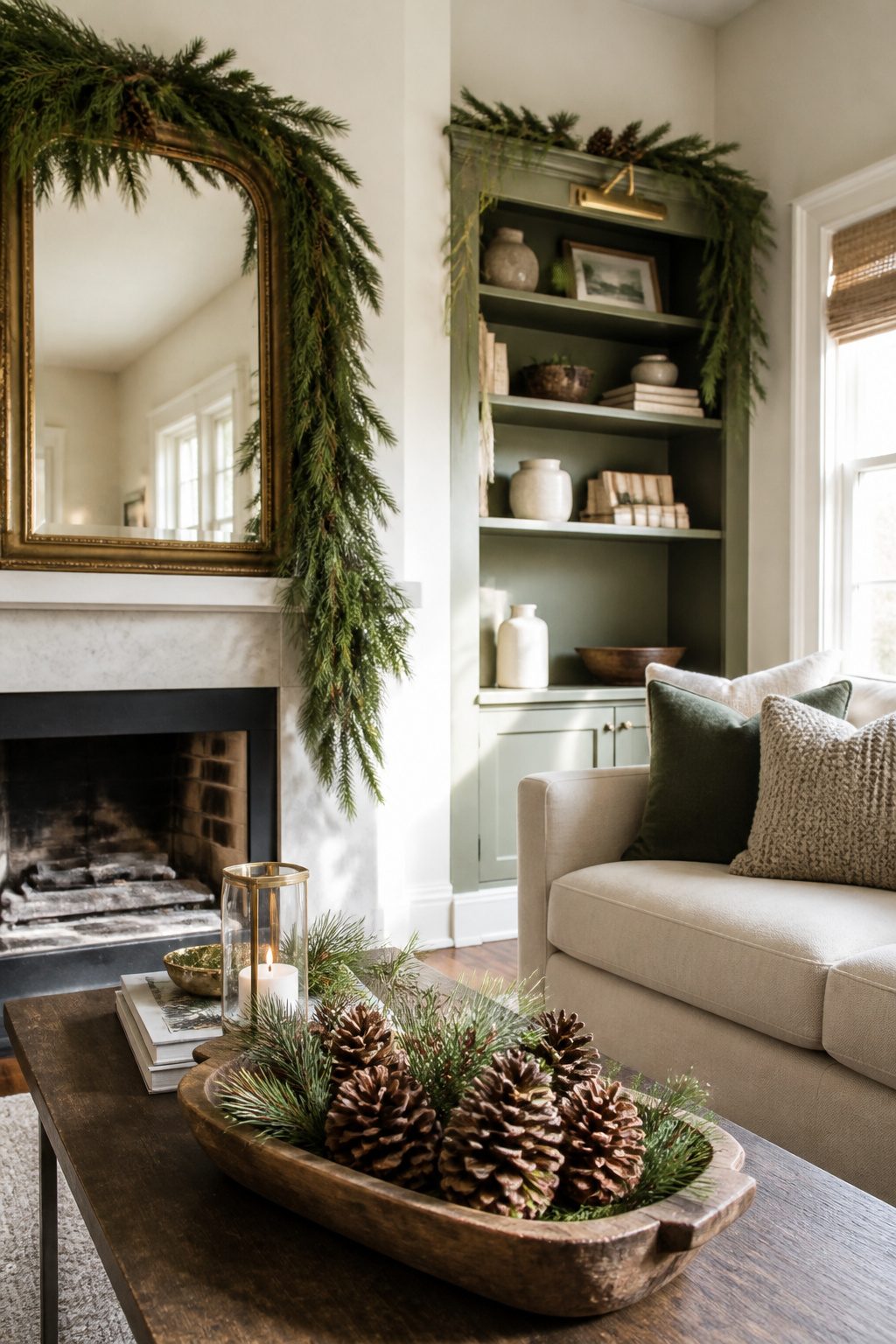
Greenery changes the texture of a room faster than almost anything else you can bring in. Last year I hung a Gracious Garlands Tri-Mix Wreath ($49) over the mirror in my living room, and the fraser fir, boxwood and white pine mix gave the whole wall a weight that ribbon and glass never could. The Natural Teardrop Swag ($55) works the same way draped from a curtain rod or the top of a bookshelf; the shape draws the eye upward and fills vertical space that otherwise goes dead in winter.
Fresh garlands smell like the holiday itself, but fresh garlands shed needles and need vacuuming every three days if you want to keep the elegant look instead of the dried-crunch look. That schedule matters if you are hosting and do not want to be crawling behind the sofa with the hose while guests are due in an hour.
For almost no money, dried citrus garland strings across a mantel or winds through candleholders with a warmth that reads expensive even though the oranges cost grocery-store prices and your time in the oven. Pinecones gathered on a walk do the same work as filler: piled in a bowl or a wire bin, they read intentional rather than leftover.
3. Layered Vignettes
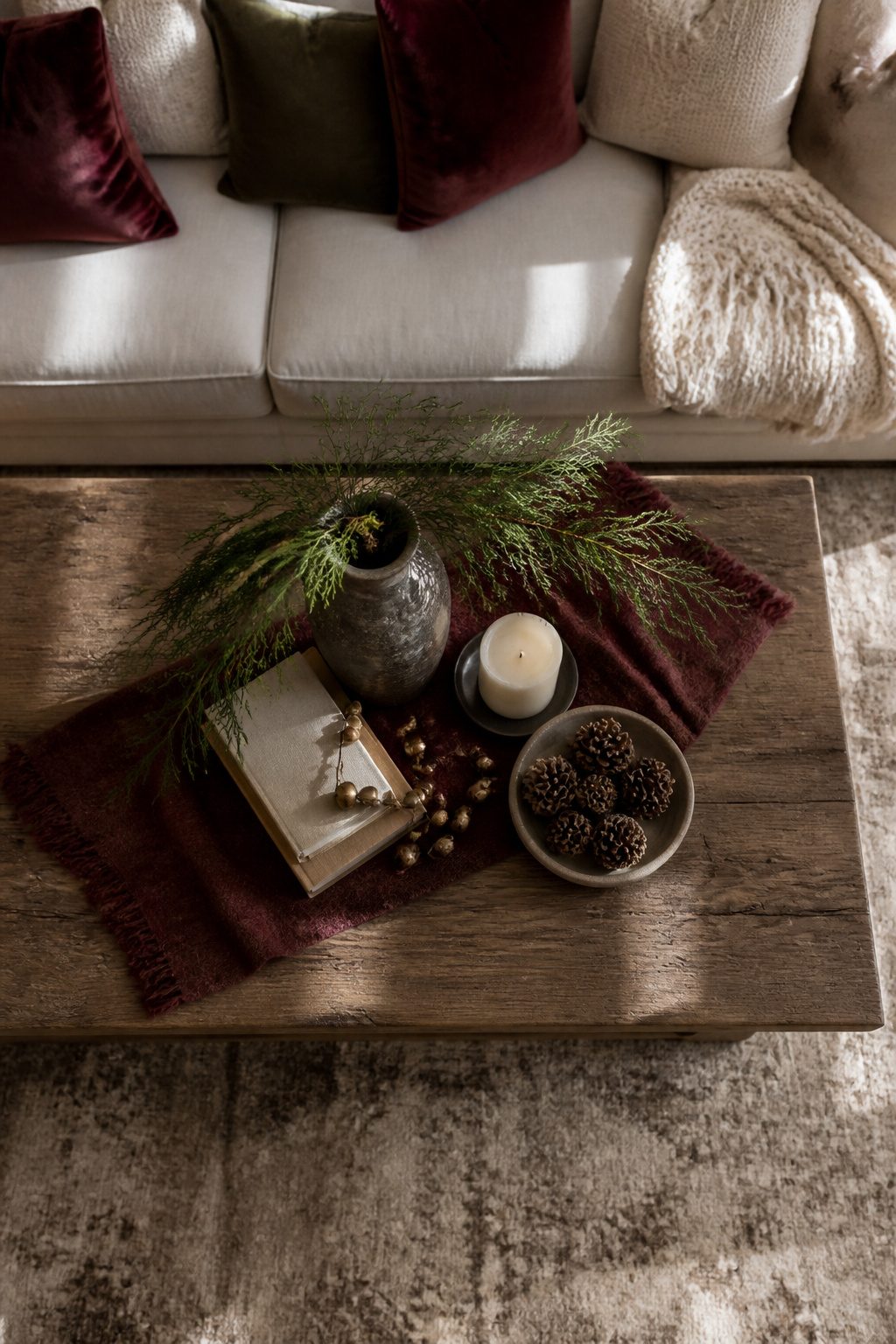
A tray on the coffee table keeps holiday items from reading as clutter. Three pieces at varying heights does the work: a candle, a small stack of books, and a pinecone cluster. Scattered, they fight each other. Grouped, they read as one intentional shape you can lift off when the table needs to clear for takeout or a project.
The Threshold x Studio McGee 8″ x 9.5″ Rustic Vase Brown at $25 sits at a useful mid-height for these groupings. It anchors a vignette without demanding to be the only story. Items in threes, heights staggered, textures mixed is the rule I follow loosely; a second small vase or a brass bell can sub in for one piece if the scale starts to feel too uniform.
Winterberry branches or sun palms from the regular decor rotation can fill that vase through January. The tray itself stays, the contents shift, and the room never quite screams holiday before Thanksgiving or lingers too long after.
4. Candles and Fairy Lights
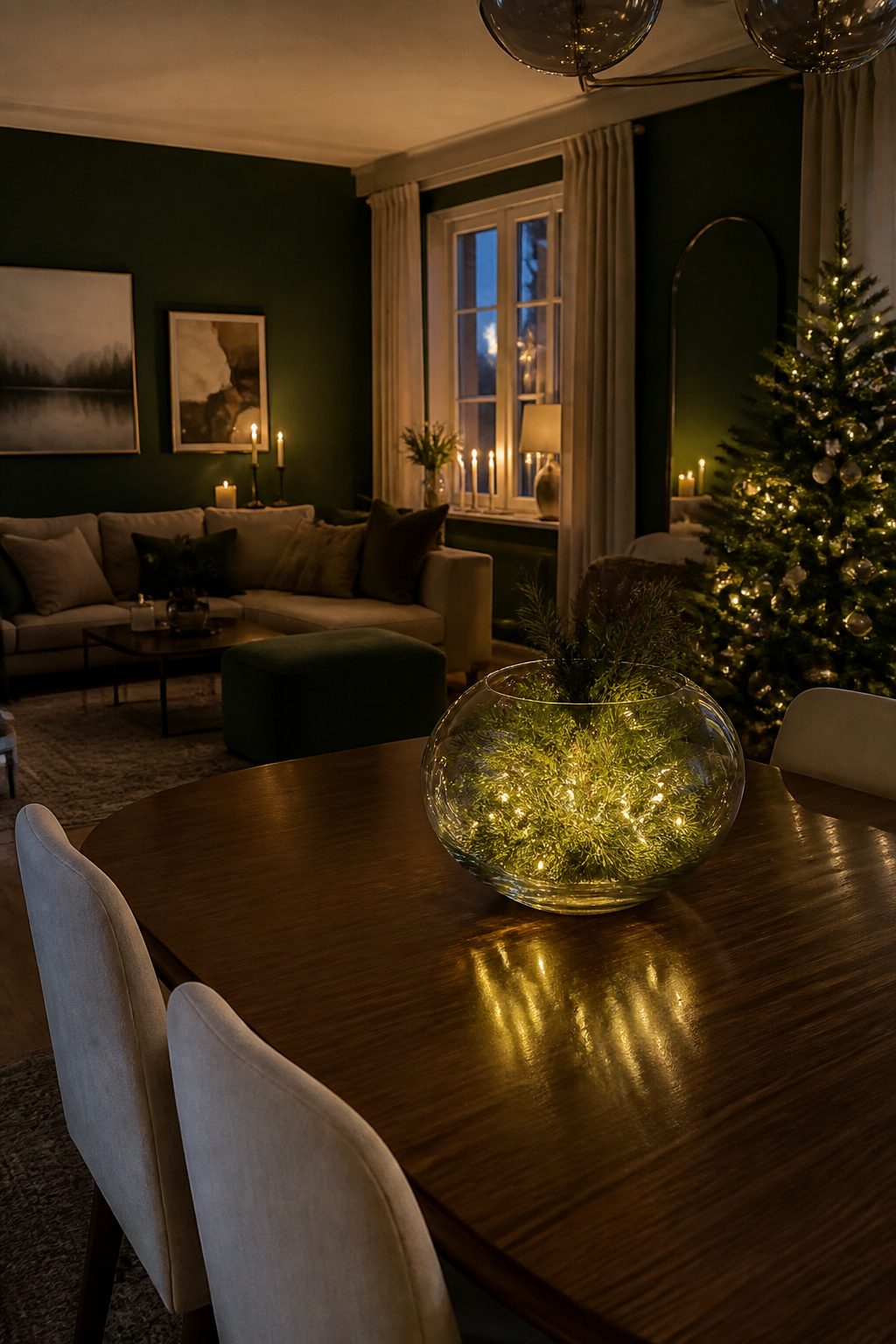
Lighting is where cheap becomes elegant. Warm white, not cool white, is the difference between cozy and clinical. I learned that the hard way one December when a strand of cool white LEDs turned my living room into something between a hospital corridor and a freezer section. Battery-operated taper candles in the windows cost about $15 for six and run on a timer, so the room lights itself at dusk without me remembering anything. Fairy lights woven through a garland or piled in a glass bowl give the room depth after dark, catching on glass and fabric in ways overhead fixtures never manage. The bowl trick costs nothing if you already own a vase or hurricane, and it keeps the lights from tangling into the knot that lives in my decoration box eleven months of the year.
5. Mantel Garlands and Ornaments
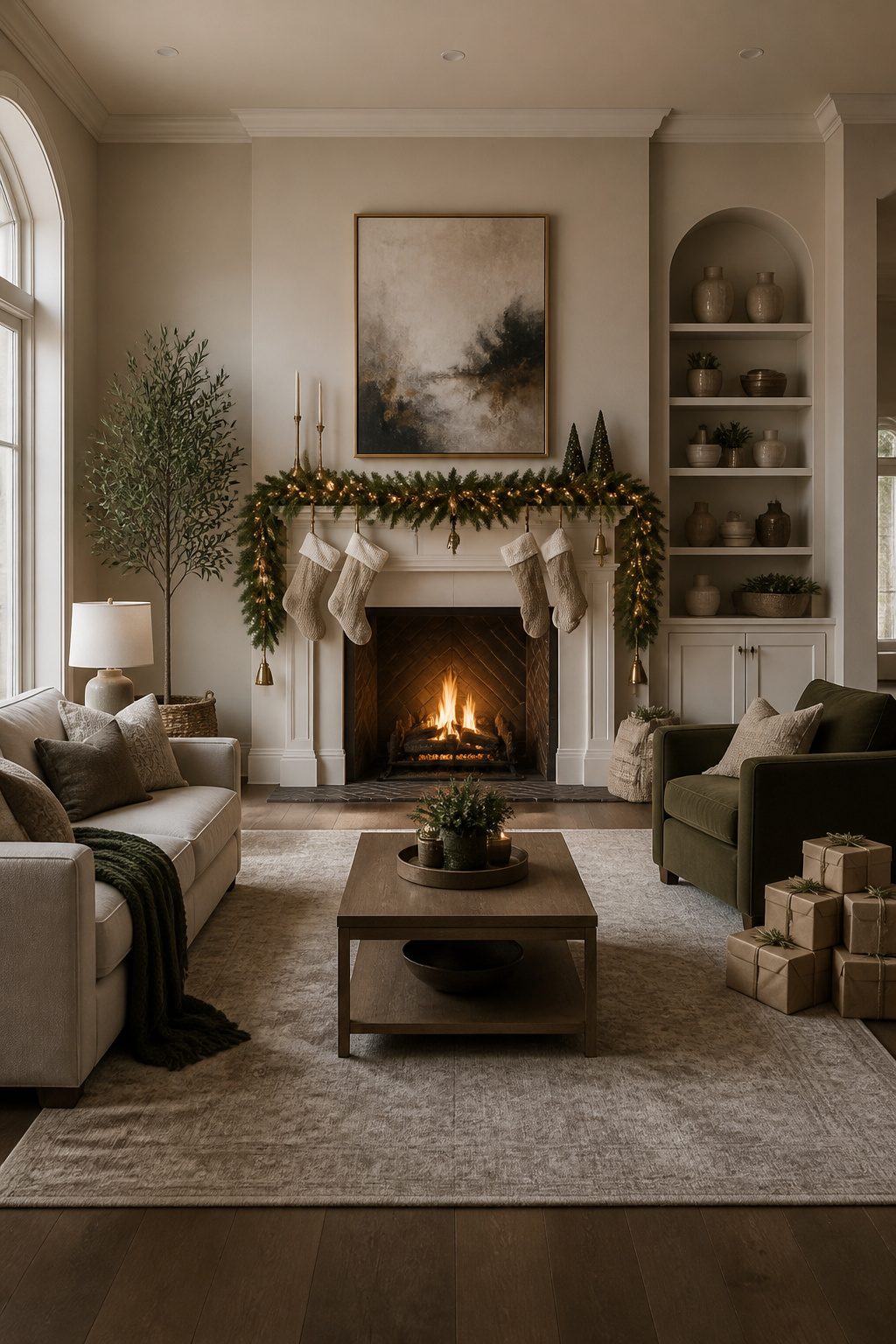
The mantel is the room’s billboard, and most of us treat it like a bulletin board instead. Last year I watched a neighbor wedge every glass ball she owned along hers; from the sofa it read as clutter, not collection. Leave six inches of breathing room on each end of the mantel. That bare space frames whatever you place in the middle and keeps the eye from tiring.
A garland draped with the Wondershop Cable Knit Christmas Stocking Ivory ($15) and a few brass bells tells a story of restraint. Layering helps if the textures differ: greenery under beads, or a thin rope of bells hung slightly lower so each layer catches light at its own height. The Threshold x Studio McGee Light Wood and Gold Antique Stocking Holder ($10) keeps stockings from competing with the garland itself.
Stacks of wrapped Christmas gifts shouldn’t just be reserved for under the tree. Place your favorites on your mantel for an instant living room upgrade.
One or two small packages in matte paper, set to the side, borrow the logic of a still life: an object that hints at occasion without staging a full production. The rest of the mantel stays cleaner for it.
6. Decorative Trays
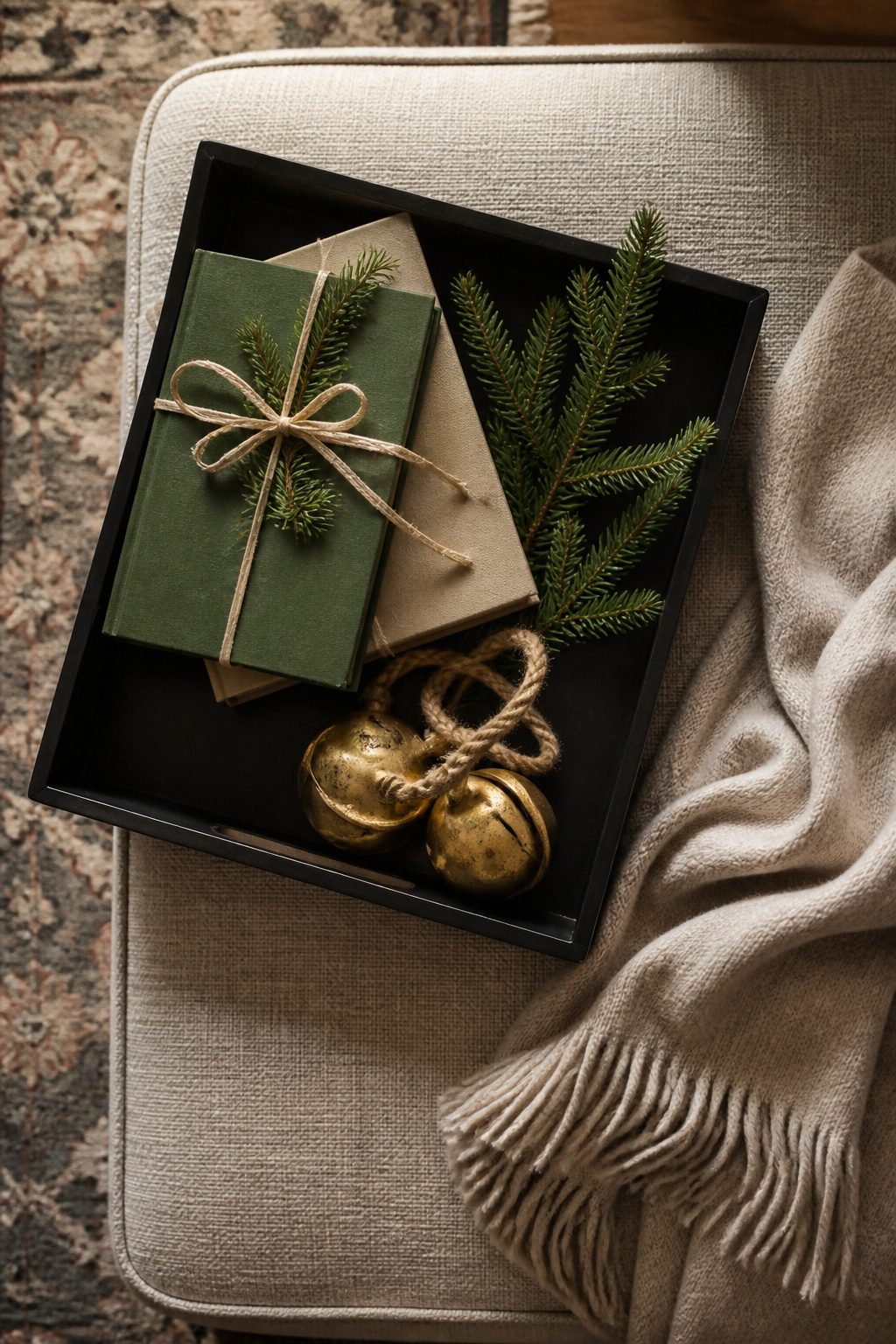
A lacquered tray on the ottoman corrals remotes year-round and shifts to pine sprigs or a small stack of wrapped books once December hits. The same swap works on side tables with a woven tray holding coasters and a single candle in July, then burnished bells or a bowl of orange slices come winter. The tray itself never moves; only what sits inside it changes.
Varying heights and textures inside the tray matter more than the tray’s material. A festive napkin draped over the edge adds warmth without committing the whole surface to holiday clutter. When guests need the coffee table back, the whole vignette lifts off in one go.
The real utility is restraint. Bowls of baubles, mismatched candles, wrapped books, one bleached wood nutcracker. The tray sets a hard boundary that keeps the arrangement from becoming a collection. Three items read as intentional; seven read as storage.
7. Seasonal Swaps for Regular Decor
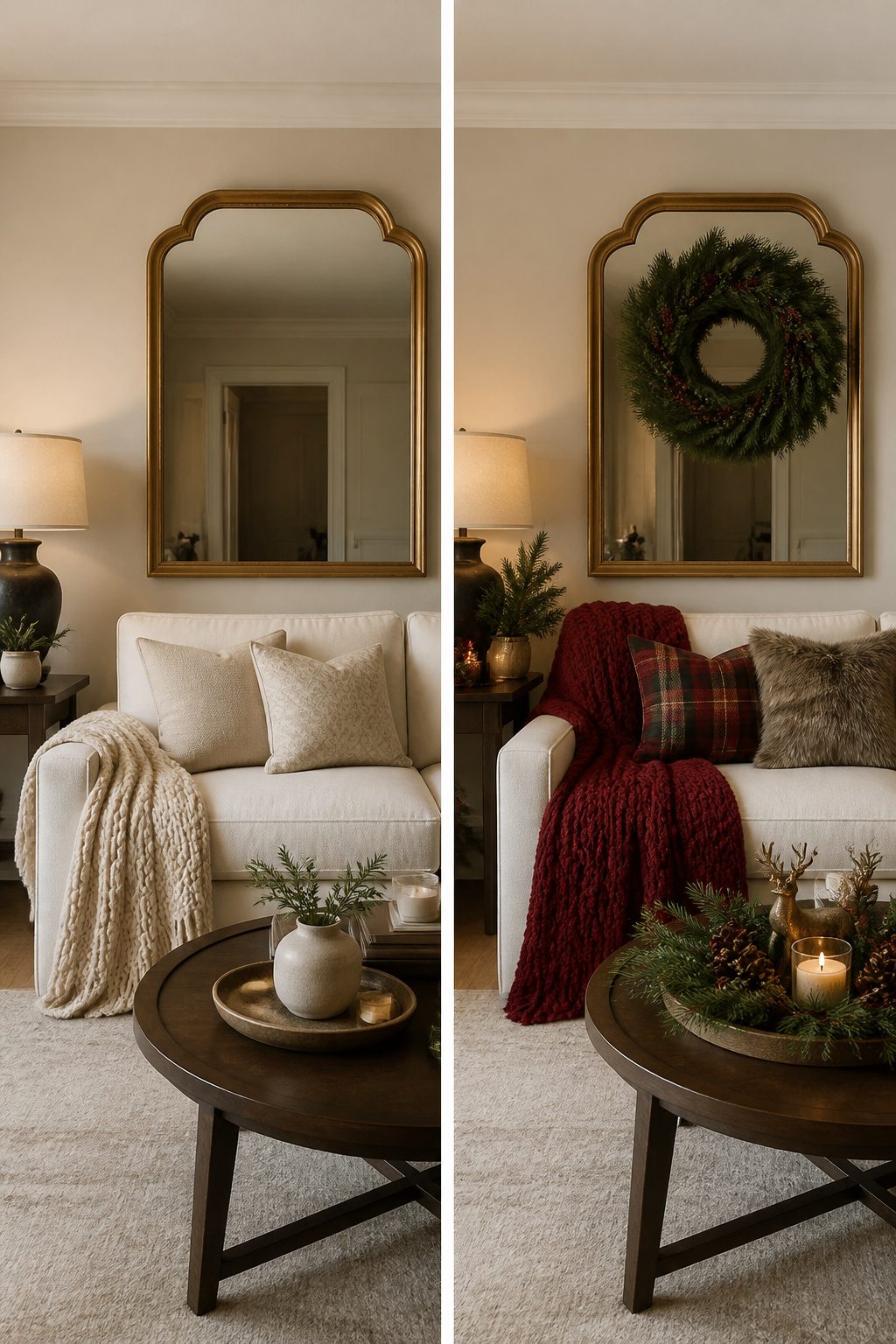
The throw pillow that lives on my couch all year goes into a bin the weekend after Thanksgiving. In its place, the Hearth & Hand x Magnolia Chunky Stripe Fringe Throw Blanket at $29.99 drapes over the same armrest, and the Pillowfort Faux Fur Floor Pillow Cream at $25 sits where the striped one did. Same spot, different mood. The mirror above the sofa stays exactly where it is; only the wreath hung on it changes. I learned the hard way that moving heavy glass twice a year invites chipped corners. Swapping what hangs on fixed pieces keeps the room feeling seasonal without the risk. Plaids, buffalo check, rich greens and burgundies work better than literal Christmas prints for this, because they read as winter-long warmth rather than countdown clutter. Come January, the faux fur pillow and chunky throw blend into February’s gray afternoons instead of begging to be packed away.
8. DIY Velvet Trees
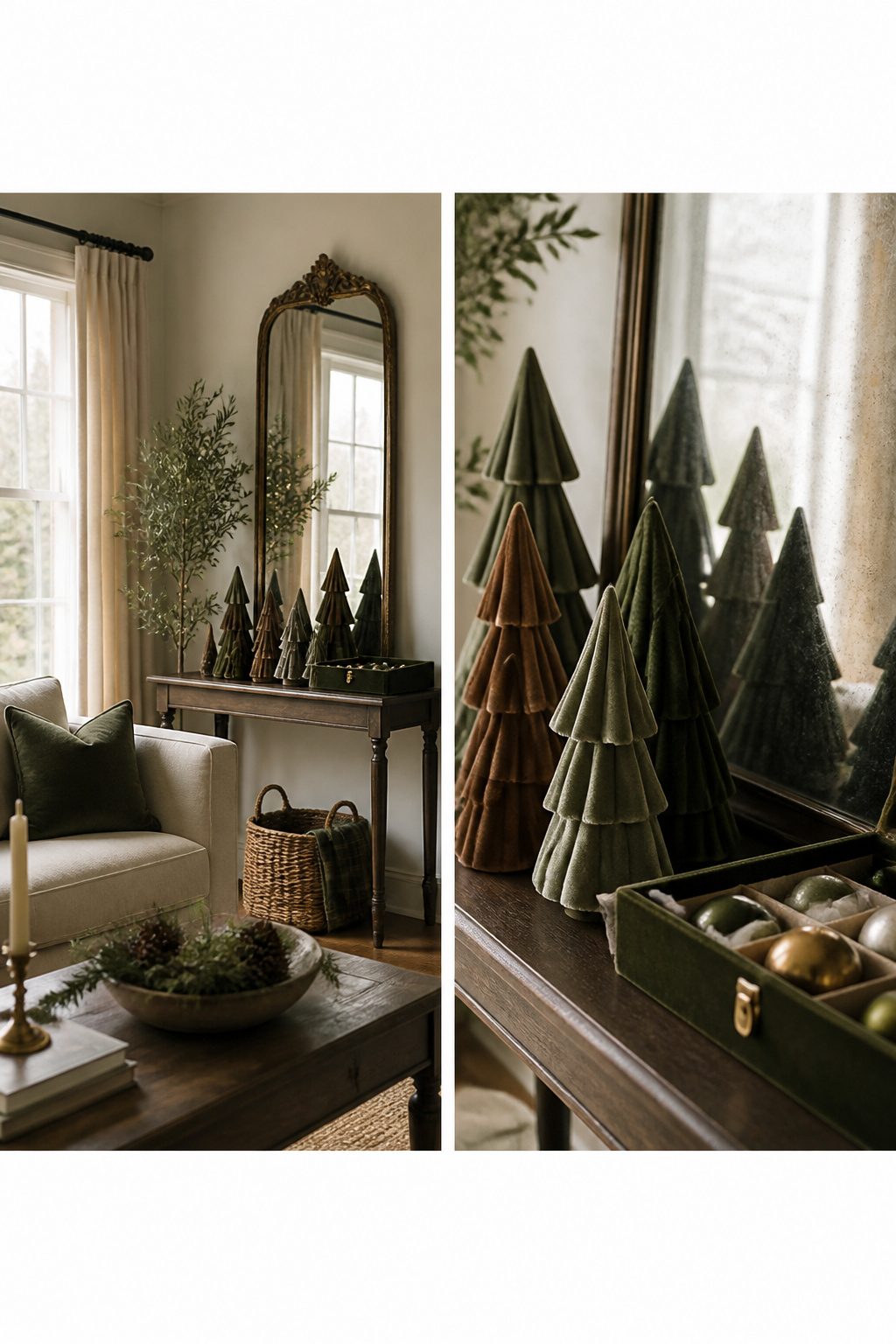
An Anthropologie Gleaming Primrose Mirror makes a room feel designed, but DIY velvet trees make it feel personal. Cone forms, fabric glue, and a yard of velvet run about $8 per tree. Three of them took me an hour, and two lean slightly now, which I actually prefer to a perfect line. The glue sets fast enough that you can work in sections, pressing the nap down in one direction so the color shifts match. A heavier velvet hides the seams better than a thin one, and the cheap cone forms from a craft store hold up fine since the fabric does the visual work. I set mine on the console table beneath that mirror, and the contrast between the hard glass and the soft, slightly crooked shapes is what makes the whole corner feel lived-in rather than staged.
Non-Traditional Themes
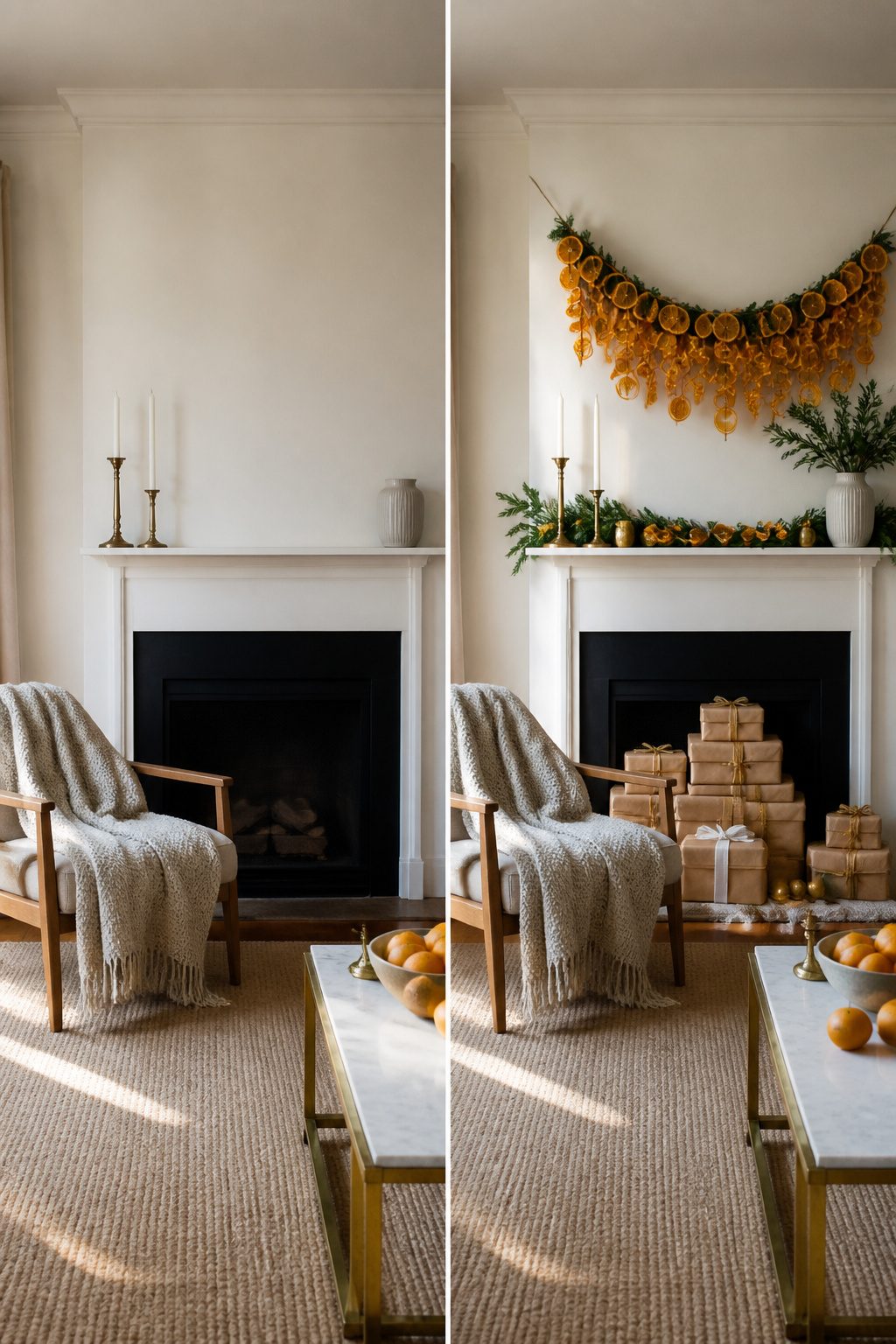
Red and green read as default the same way a rental beige wall does: it was here when you moved in. Josh Yöung’s Citrus Cheer palette, yellow paired with white, cuts through that sameness without shouting. The vitamin-C warmth lands as a deliberate choice, especially against short winter light. I keep coming back to dried citrus garland for the same reason. It costs next to nothing, lives on a mantel through January, and signals that someone thought about this rather than unpacking the same bin from the basement.
An all-white winter scheme, or a moody forest palette of deep greens and browns, works the same trick. The edit matters more than the color itself. Camille Styles’ move to pack away brighter ornaments and keep only white, burlap, silver, and gold made the tree feel pulled together; the same restraint with wrapping paper, kraft plus black-and-white with metallic details, extends that intention to the floor under it. Texture carries a neutral scheme, sheepskin and woven pillows and a soft blanket, so the room reads warm rather than sterile.
Renters especially should note this. A non-traditional palette you build piece by piece, cream stockings or a dried citrus strand, travels with you. The look compounds year to year instead of restarting with whatever the landlord’s blinds happen to be.
DIY Advent Calendar
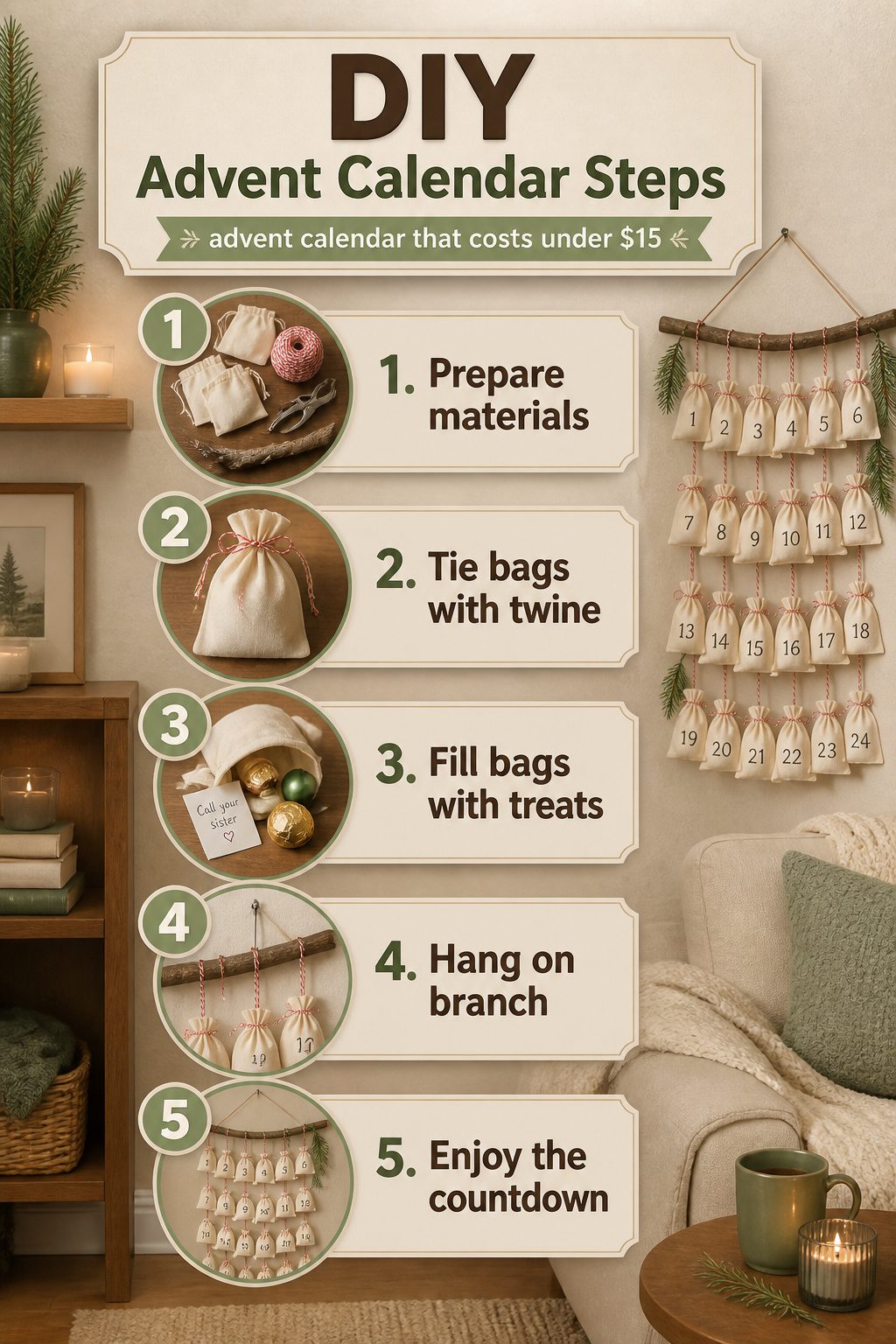
Small muslin bags, a branch from the yard, and twine turn into an advent calendar that costs under $15 if you already own scissors and a hole punch. The branch should be dry enough that it does not weep sap onto your wall, which means cutting it a week ahead and letting it rest in the garage or a closet. I tie the bags with baker’s twine in lengths that stagger them, short clips for the top row, longer drops below, so the whole thing reads as one piece rather than a clothesline.
What goes inside matters more than the container. A foil-wrapped chocolate works, but a handwritten note with a single task, call your sister, walk the neighborhood to see lights, makes the ritual feel personal rather than commercial. Tiny ornaments, the kind sold in sets of twelve at craft stores, let someone build a miniature collection by Christmas Eve. The bags themselves become part of the room’s texture: cream muslin against dark wood, or dyed a muted green if your palette runs that way.
Hanging it takes twenty minutes and a single nail, which is why this project survives a renter’s lease. The branch rests on a nail, the bags hang free, and in January the whole thing folds into a shoebox until next year.
What I Spend and Where I Save
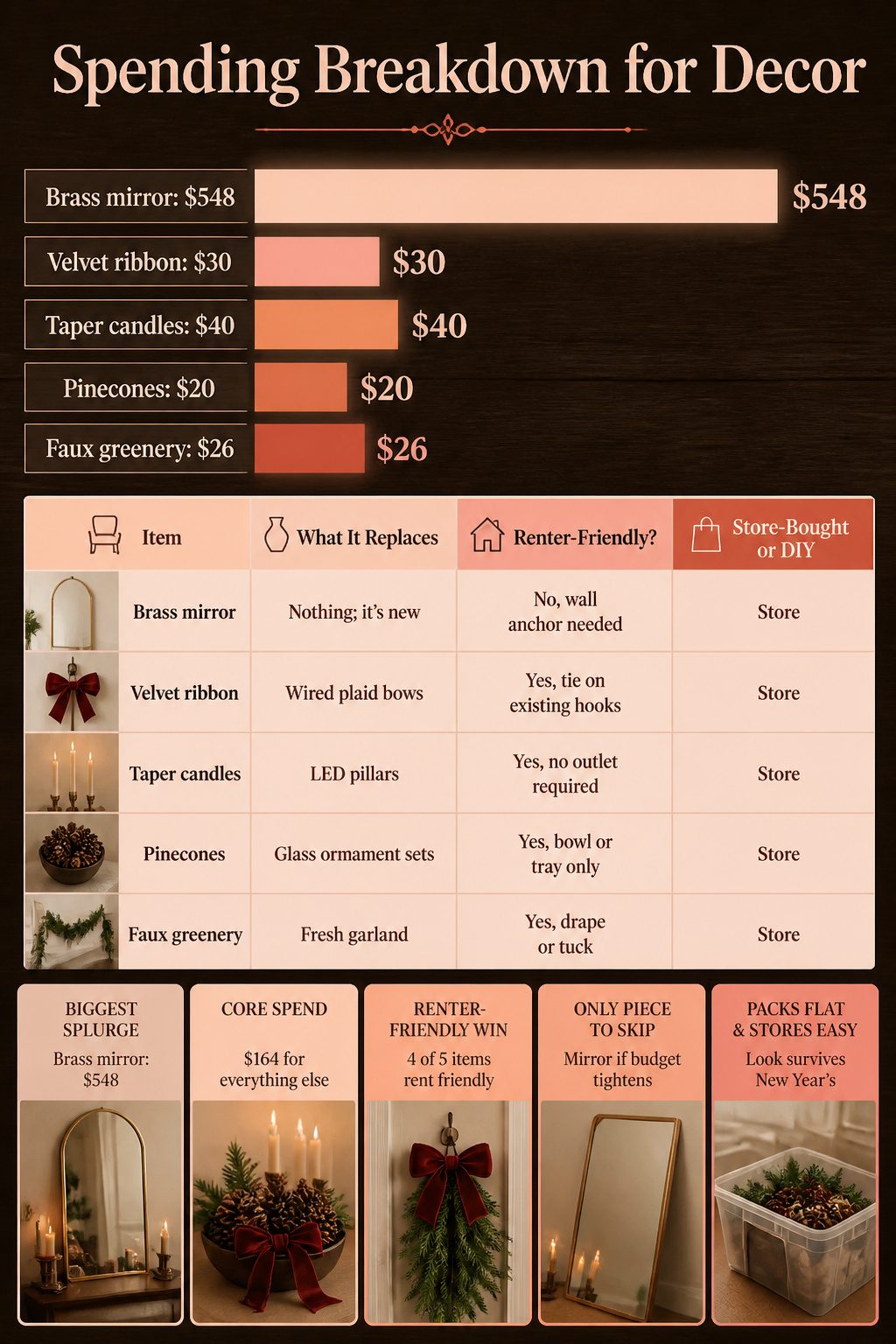
A full-length mirror with a thin brass frame ate $548 of my $712 total. The remaining $164 bought everything else: velvet ribbon, taper candles, a bag of pinecones, and two yards of faux greenery. That split is worth staring at for a minute.
| Item | What It Replaces | Renter-Friendly? | Store-Bought or DIY |
|---|---|---|---|
| Brass mirror | Nothing; it’s new | No, wall anchor needed | Store |
| Velvet ribbon | Wired plaid bows | Yes, tie on existing hooks | Store |
| Taper candles | LED pillars | Yes, no outlet required | Store |
| Pinecones | Glass ornament sets | Yes, bowl or tray only | Store |
| Faux greenery | Fresh garland | Yes, drape or tuck | Store |
The mirror is the only piece I would skip if the budget tightened. A thrifted frame sprayed matte black, leaned against the wall instead of mounted, gives the same vertical draw for under $40. The rest of the look survives without it. The core $164 is where the elegance actually lives, in textures that read expensive at handshake distance and pack flat by New Year’s.
Storage After January
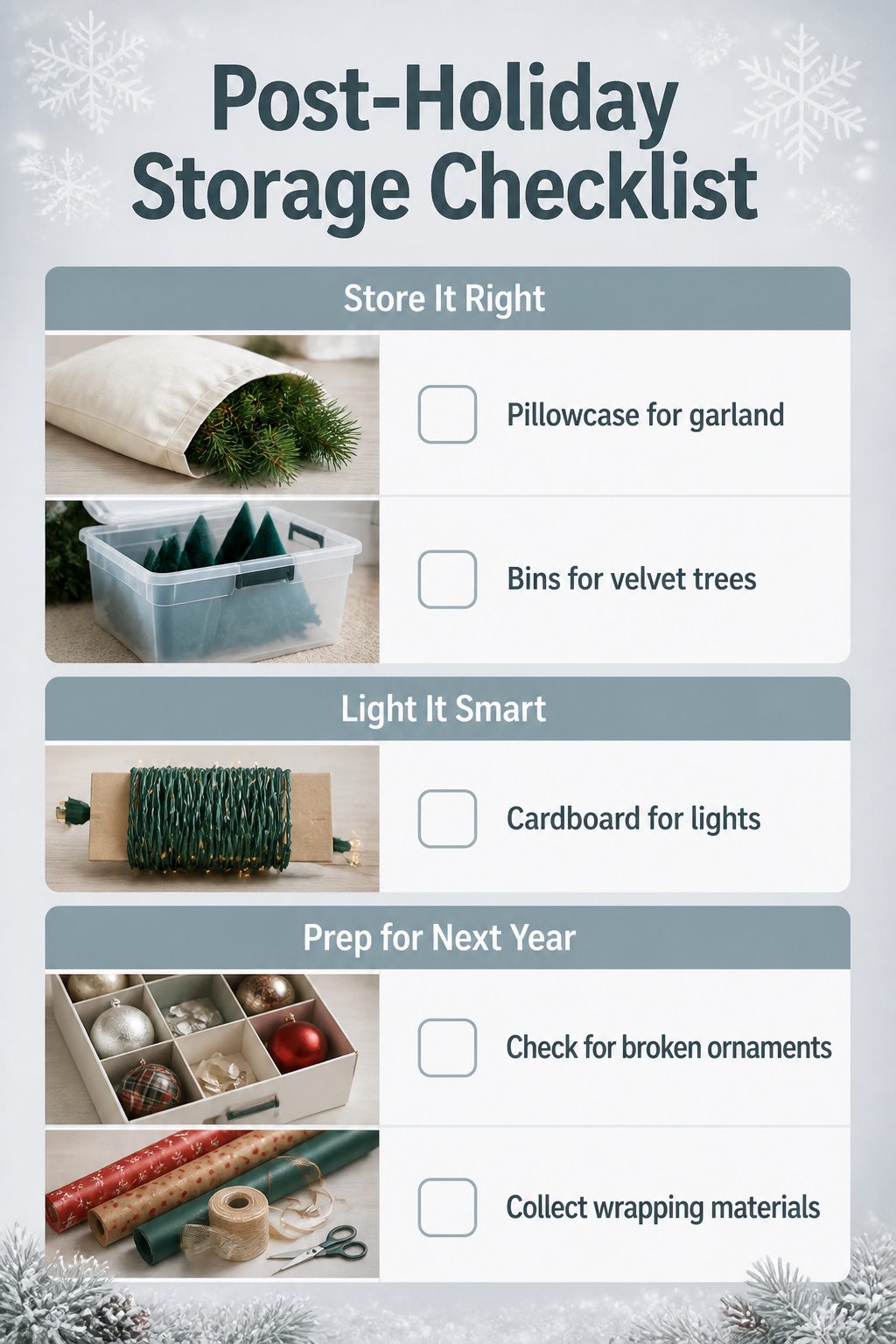
The tree always looks smaller coming down than going up. Garland gets stuffed into an old pillowcase so the greenery can breathe and the needles do not turn to dust by spring. My velvet trees, the ones that took an evening to shape and fluff, each claim their own bin; anything heavier stacked on top leaves a crease that never quite brushes out. Lights are the real time sink, so I cut cardboard rectangles from the boxes the groceries came in and wrap the strands around them shoulder-width. Tangles used to eat an hour every November. Now the first string is ready to plug in before the tree is even straight. What I have learned is that elegant Christmas living room ideas only survive if you plan for January 2nd before December 1st; the prettiest setup is the one you can put away without swearing.
Frequently Asked Questions
How can I decorate my living room for Christmas?
Start with a tight palette of two or three colors repeated across every piece, such as cream, forest green, and antique brass. Add natural greenery for texture, group items in threes on trays to avoid clutter, and swap out regular throw pillows and blankets for seasonal textures like chunky knits and faux fur. The restraint of fewer colors used more often is what makes the room read as elegant.
What are some elegant Christmas decor ideas?
Warm white fairy lights and battery-operated taper candles create instant sophistication for about $15, while dried citrus garlands and gathered pinecones read expensive at grocery-store prices. Layer mantel garlands with breathing room at each end, and use non-traditional palettes like yellow and white or deep greens and browns to signal deliberate choice rather than default decoration.
How do I create a cozy Christmas atmosphere?
Soft textiles carry the feeling: a chunky stripe throw draped over an armrest and a faux fur floor pillow swapped in for regular cushions add warmth that lasts past December. Warm lighting, not cool white, is the difference between cozy and clinical; battery tapers on timers and fairy lights in a glass bowl give the room depth after dark without any effort.