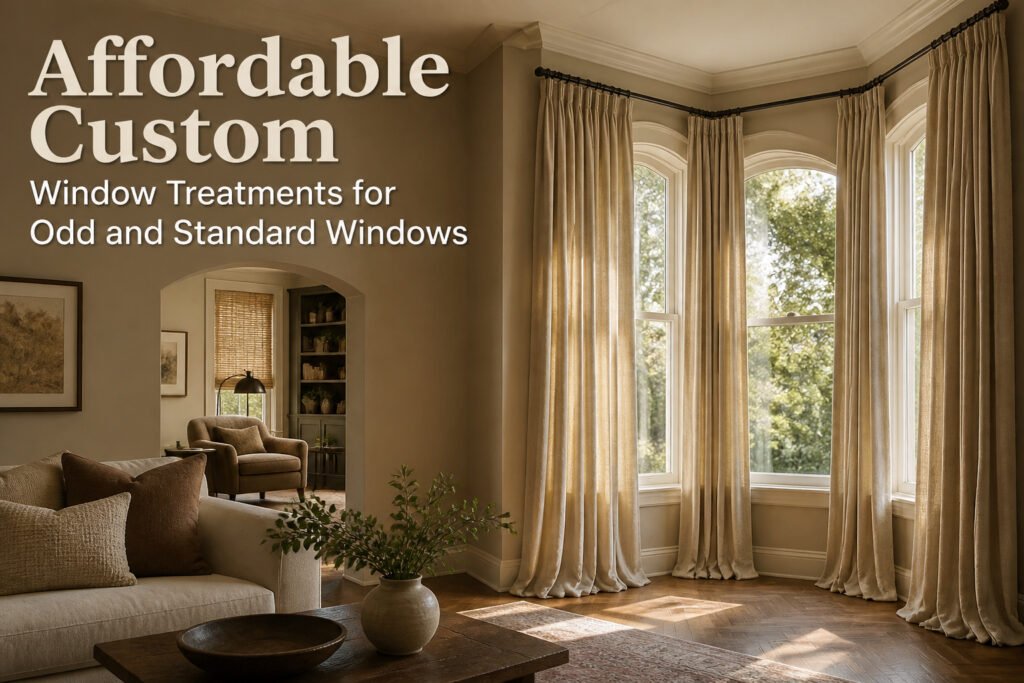
Custom window treatments are cut-to-size blinds, shades, shutters, and drapes ordered to your exact window dimensions without the markup most people expect. The same custom mini blind that costs under $20 at full discount would have required a hacksaw and still hung crooked if I’d bought "standard" and forced the fit.
The catch is that custom sizing itself costs nothing extra; the 50% codes hit the base price before dimensions are even entered, so an 18 by 24 inch bathroom blind and a 115 by 120 inch slider shade go through the same checkout.
What trips people up is odd windows: a frame an inch out of square gaps at one end, and anything under 20 inches or over 115 breaks the mechanism. The ten minutes with a steel tape is the only penalty for measuring right.
Blinds That Fit Odd Windows
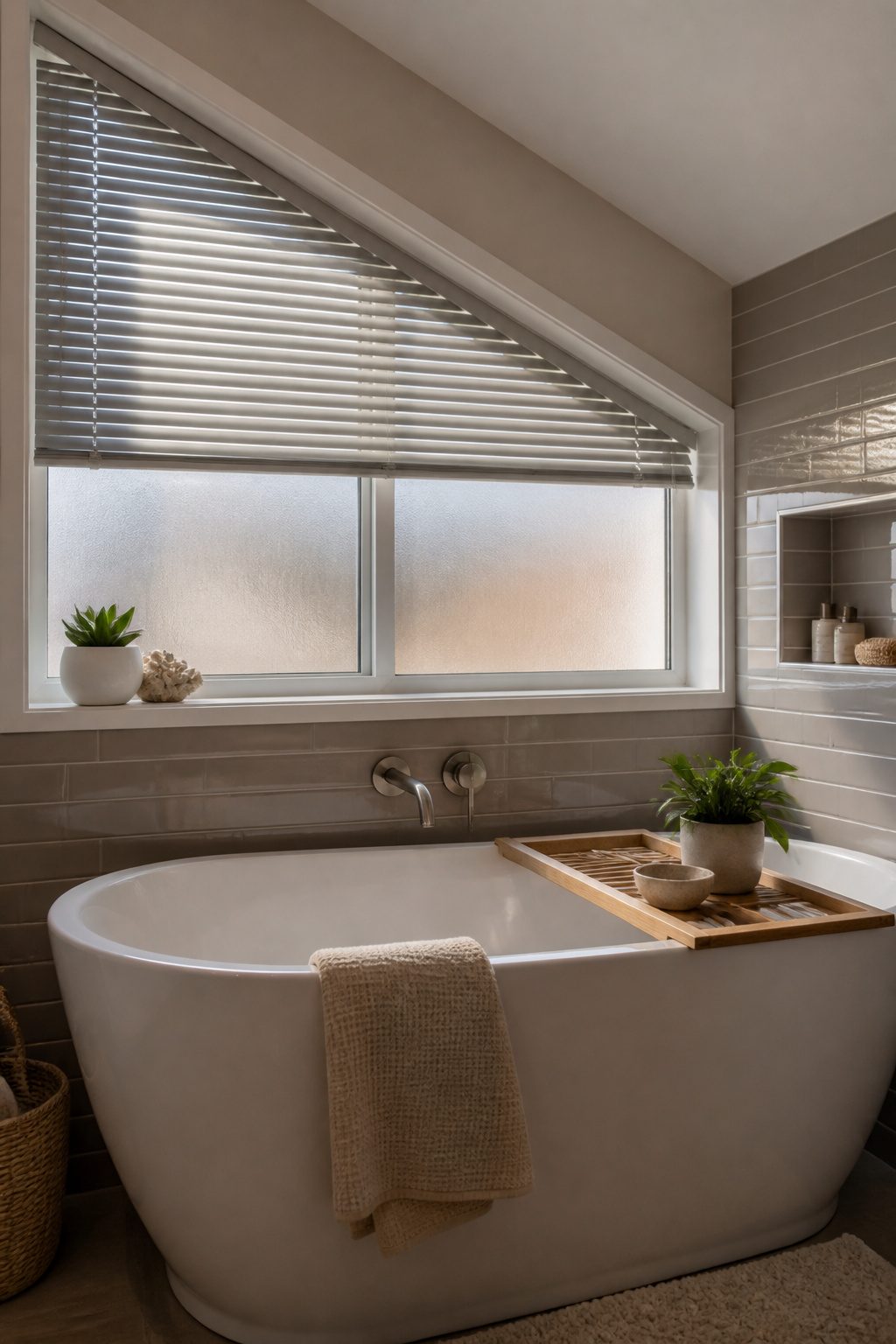
Faux wood, aluminum, and mini blinds can all be ordered to custom dimensions without the markup most people assume comes with the word "custom." The range runs from 20 x 24 inches up to 115 x 120 inches in width and height, which covers the awkward bathroom window above the tub and the oversized slider in the rental I wish I’d had this for last year.
Material matters less than you’d think for the fit itself. Faux wood handles humidity better, aluminum weighs less for wide spans, and mini blinds stay the cheapest per square inch. The real budget win is sizing: a custom mini blind at 18 x 24 inches runs under $20, which is less than I paid for a supposedly "standard" 36-inch blind I had to cut down with a hacksaw and still hung crooked.
Odd windows punish guesswork. The 20-inch minimum exists because anything smaller and the mechanism won’t fit in the headrail; the 115-inch max is where cord lift starts to strain. Measuring width in three places, top to bottom, catches the out-of-square frames that make "close enough" blinds gap at one end. Custom sizing costs the same whether the window is an inch off standard or a foot, so the only penalty for measuring right is the ten minutes with a steel tape.
Shades for Temperature and Light
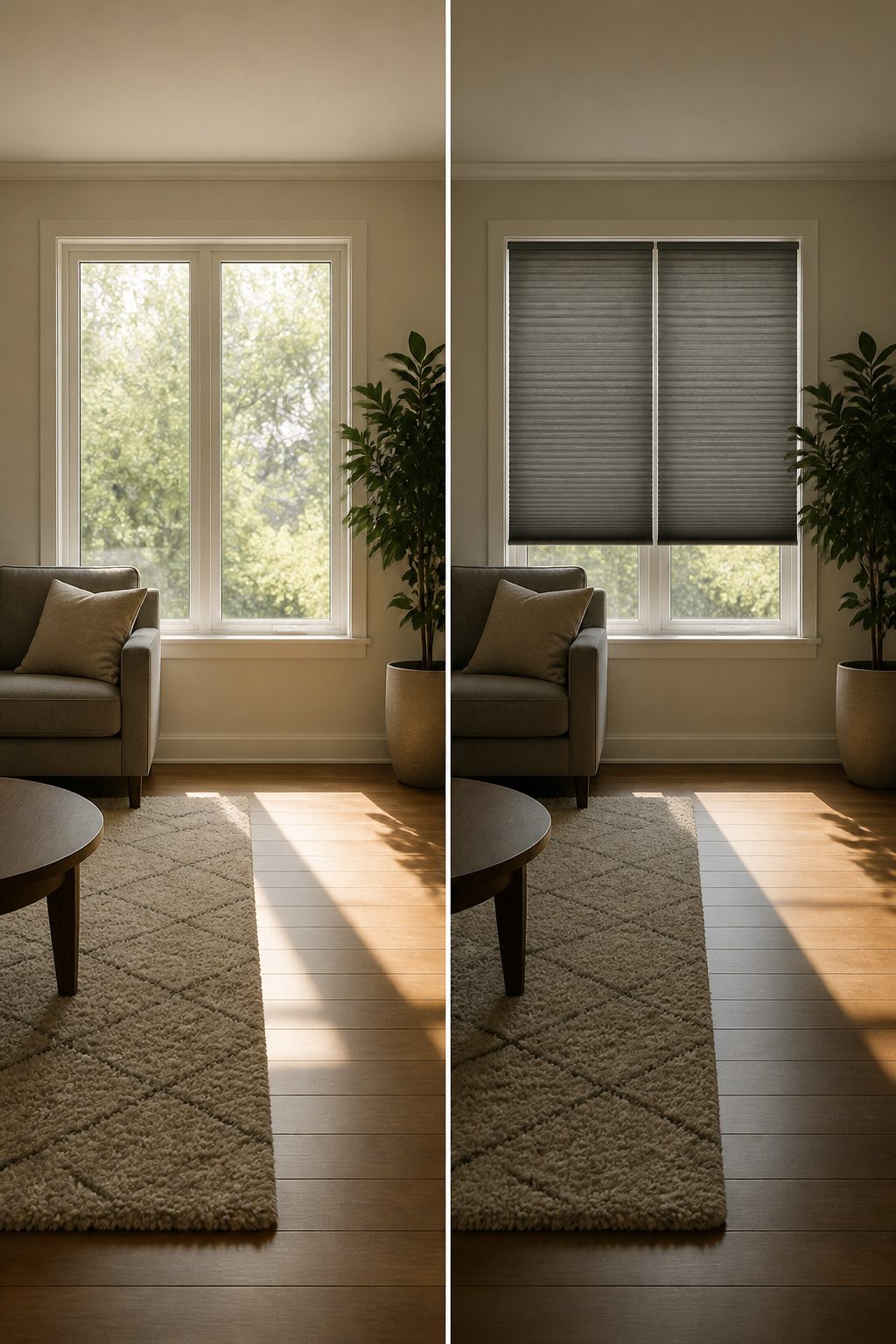
Cellular shades earned their spot in my house the winter the heating bill jumped forty percent. The honeycomb pockets trap air in layers, and that still layer is what keeps a 68-degree room from leaking into a 20-degree window. Fifty-plus material options mean you are not stuck with the white plastic look that screams rental, and the cordless lift is worth the upgrade if a toddler or a climbing cat shares the space.
Roller shades stay the choice for anything modern and minimal. Fabric weight and opacity range from sheer to blackout, so one window can filter afternoon glare while the next room sleeps in.
Roman shades fold into soft stacks that read more like drapery. They eat a few inches of glass at the top even when raised, which matters on short windows.
Solar shades cut UV and glare without killing the view. They read office-matte during the day and go basically transparent after dark, so layer them with drapes or skip them for street-level bedrooms.
Cordless is not a special order anymore; it is the baseline for child safety, with motorization as the next step up. The hardware hides the lift mechanism entirely, no dangling loop to worry about.
Drapes Without the Sewing Machine
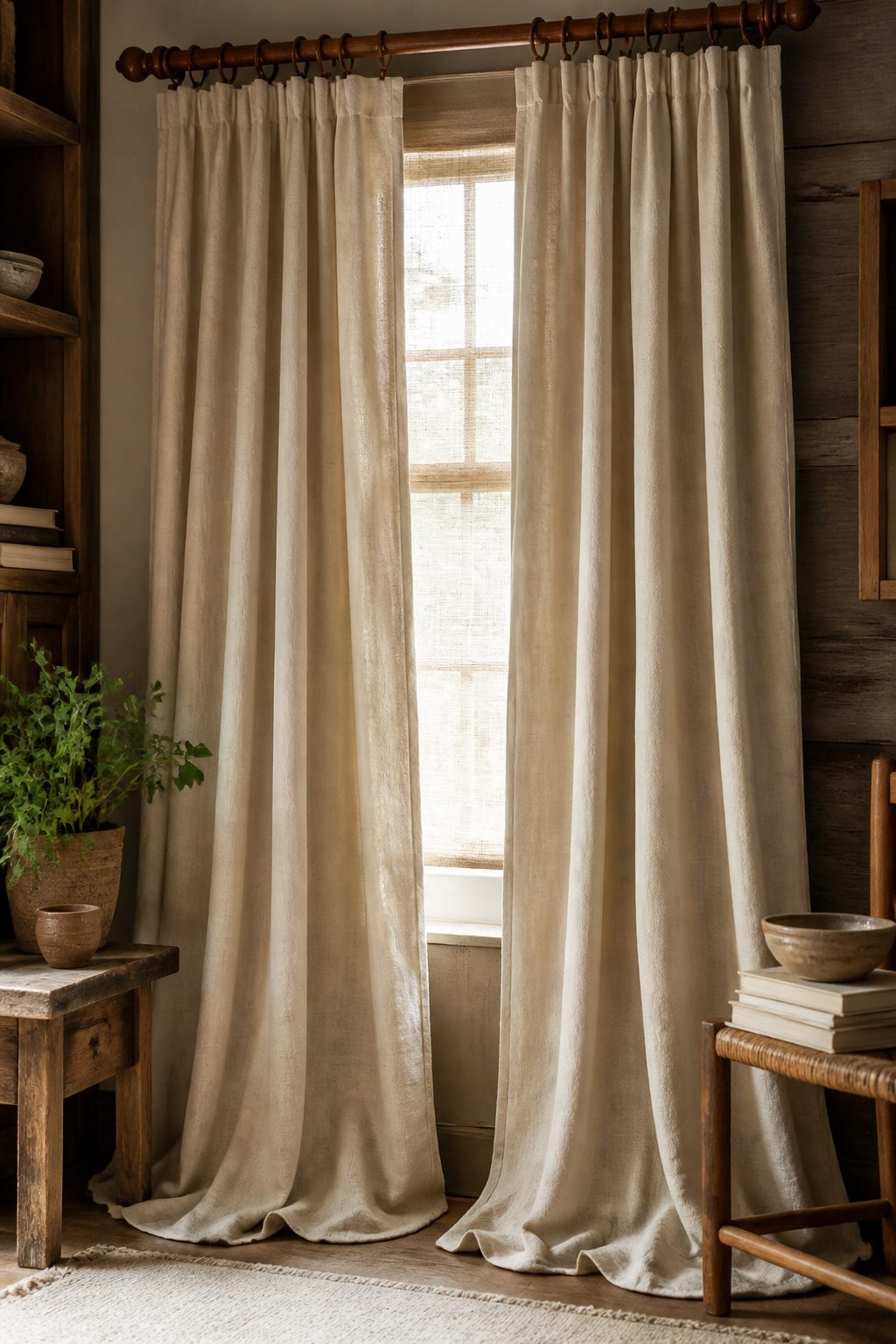
A pair of drop cloth curtains in my living room hung for two years before most guests realized they were not linen. The fabric is already hemmed at the edges, already neutral, and usually costs under fifteen dollars for a panel large enough to pool on the floor. That is the hack: start with a material that does the finishing work for you.
For actual custom dimensions without a sewing machine, iron-on hem tape is the tool that matters. It bonds fabric into a clean fold with a hot iron, and it holds through washing if you let the glue cure for a full day before hanging. Clip-on rings turn a flat sheet or scarf into a curtain in about two minutes; the rings slide onto any rod and grip the fabric with small teeth, so the drape falls in loose folds that read as intentional. Tension rods with café curtains work especially well for small windows, in bathrooms or nurseries where you want privacy without blocking all the light.
Velvet panels read as expensive because the fabric itself does the work. Layer them over sheer shades if you want to control light through the day without swapping hardware. The move that sells the look is hanging high and wide: the rod should sit at least six inches above the window frame and extend past the sides, so the drapes frame the glass rather than covering it exactly. That single choice makes standard windows look larger, and it costs nothing extra.
Shutters on a Budget
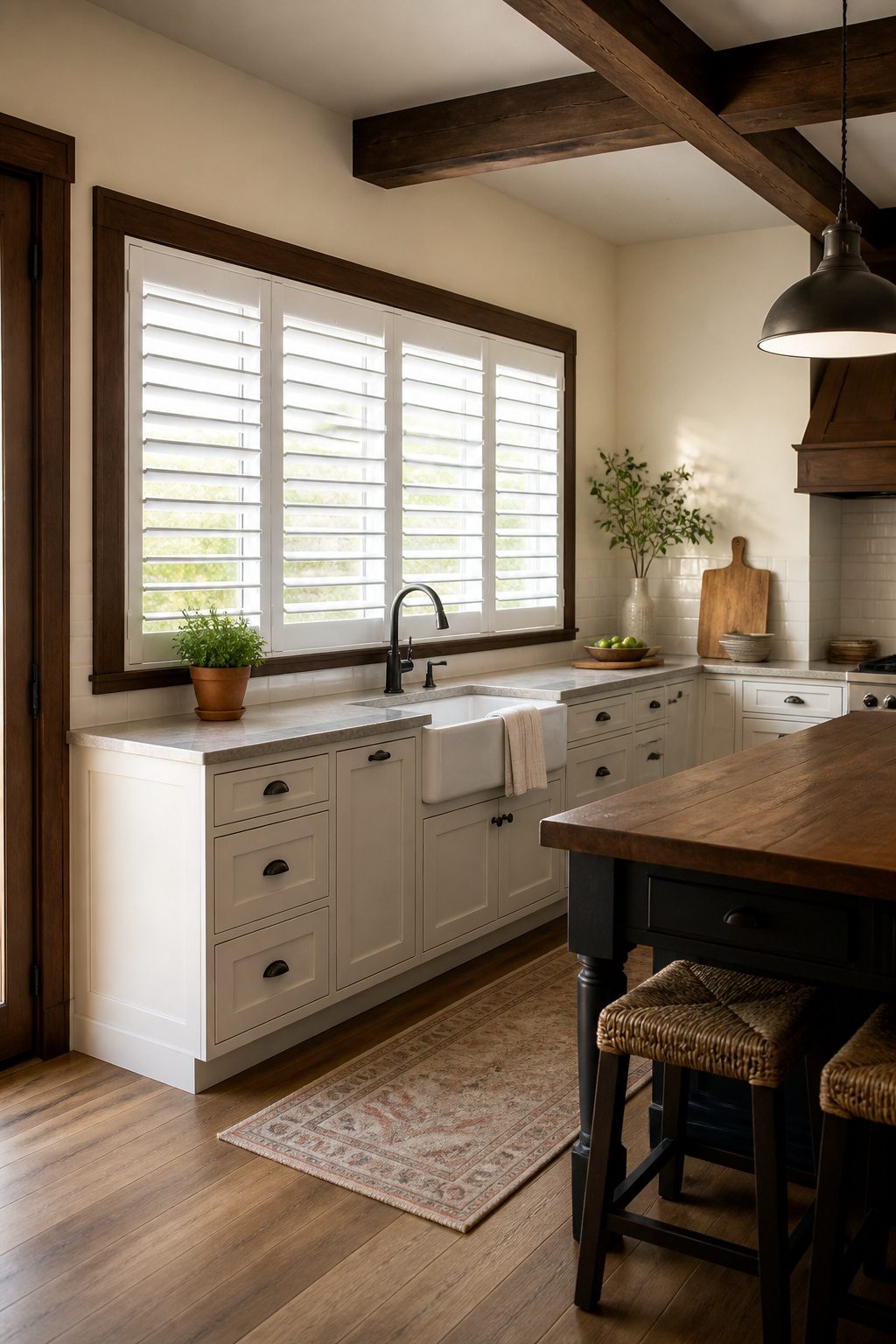
Plantation shutters sit at the top of most wish lists for a reason. They block light cleanly, insulate better than anything else you can open and close, and they read as built-in even when they are not. The catch is the price, which usually starts around custom territory and climbs from there. The affordable path is not to shrink the size of the job but to compromise on material, not on fit.
A shutter that is an inch off looks cheap forever. A shutter in vinyl or faux wood instead of hardwood looks like a shutter, period. The sources list vinyl, faux wood, and bamboo among the material choices for cost-effective treatments, and that range matters. Faux wood stands up to bathroom steam and kitchen splatter better than real wood anyway, which is why it ends up in those rooms even in houses where budget is not the first question.
Custom measurement still matters. The reviewer who sought three quotes for shutters over a kitchen sink and in a studio addition was not chasing the lowest bid; they were chasing someone who would design for a small window without a stock solution. The middle quote won because it got the fit right and offered the style without the center pole, which is a detail that changes how the whole wall reads.
My own read on this, after sorting through enough of these projects, is that the material downgrade saves you thirty or forty percent. The fit downgrade saves you nothing; it just makes the room feel like a rental you never bothered to fix.
Motorized Options Under $200
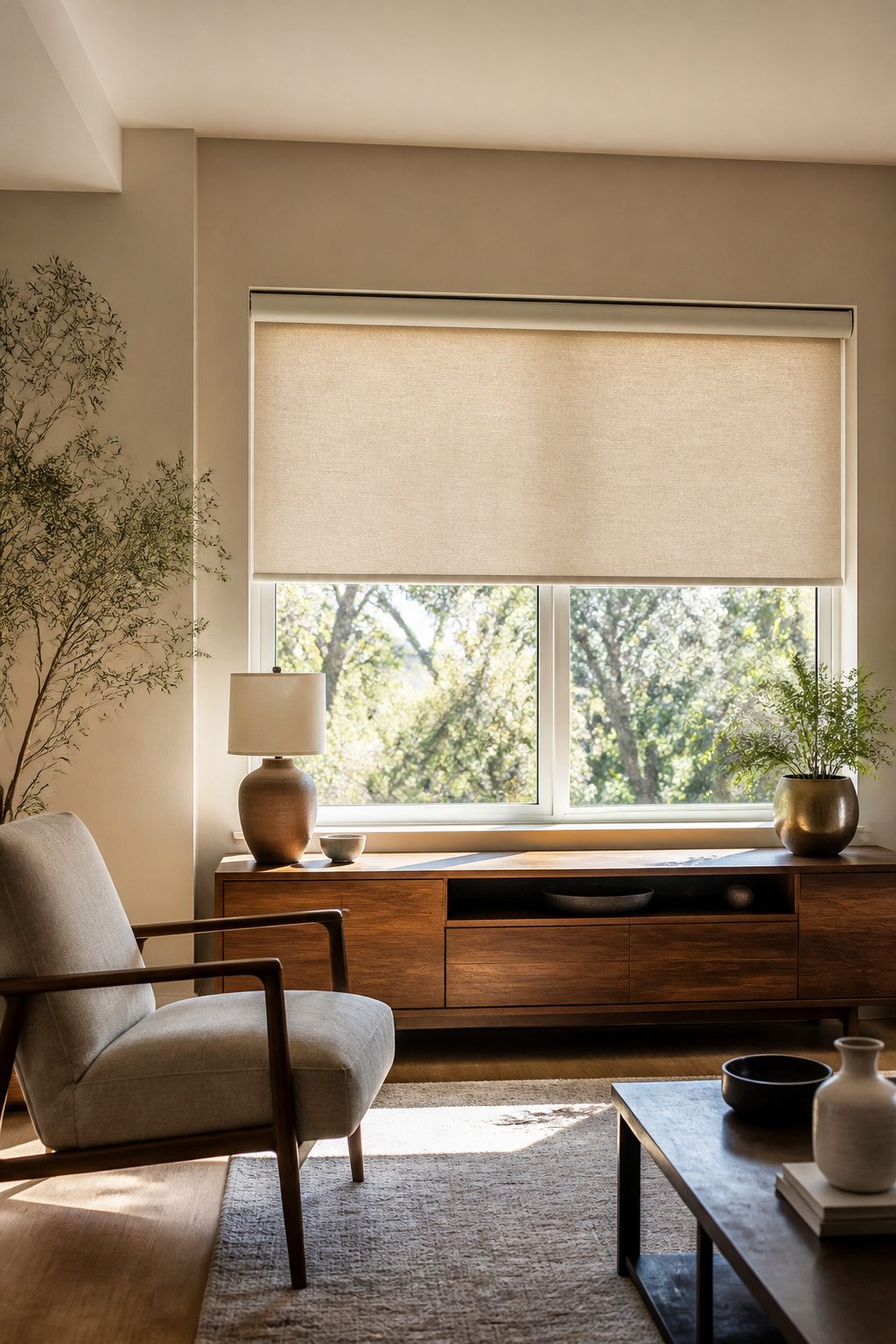
Battery-powered motors changed what a renter can do with window treatments without asking a landlord for permission. The units I have seen install with a mounting bracket and a small tube that fits inside a standard roller shade, no hardwiring, no electrician, no damage deposit at risk. The motor runs on rechargeable cells that claim roughly six months between charges with normal use, though the real test is how often you remember to top them off before they die mid-afternoon.
The retrofit kits that impressed me clamp onto an existing shade tube or sit in a cassette above it. One brand sells a wand-style motor that pairs to a remote for about what two decent dinner deliveries cost; another adds app control and voice integration with Alexa, Google Home, or Apple HomeKit for a step up. Under $200 gets you the motor and the remote, and often the shade itself if you stick to a basic fabric.
Smart integration sounds slick until you ask whether you need it. For a bedroom blackout, a remote on the nightstand does the job without the setup headache. The voice and automation features make more sense in a living room where you are already running scenes for lights and music, but they are not the place to sink your budget if the goal is simply to stop climbing over furniture to close the west-facing window.
Outdoor Shades That Last
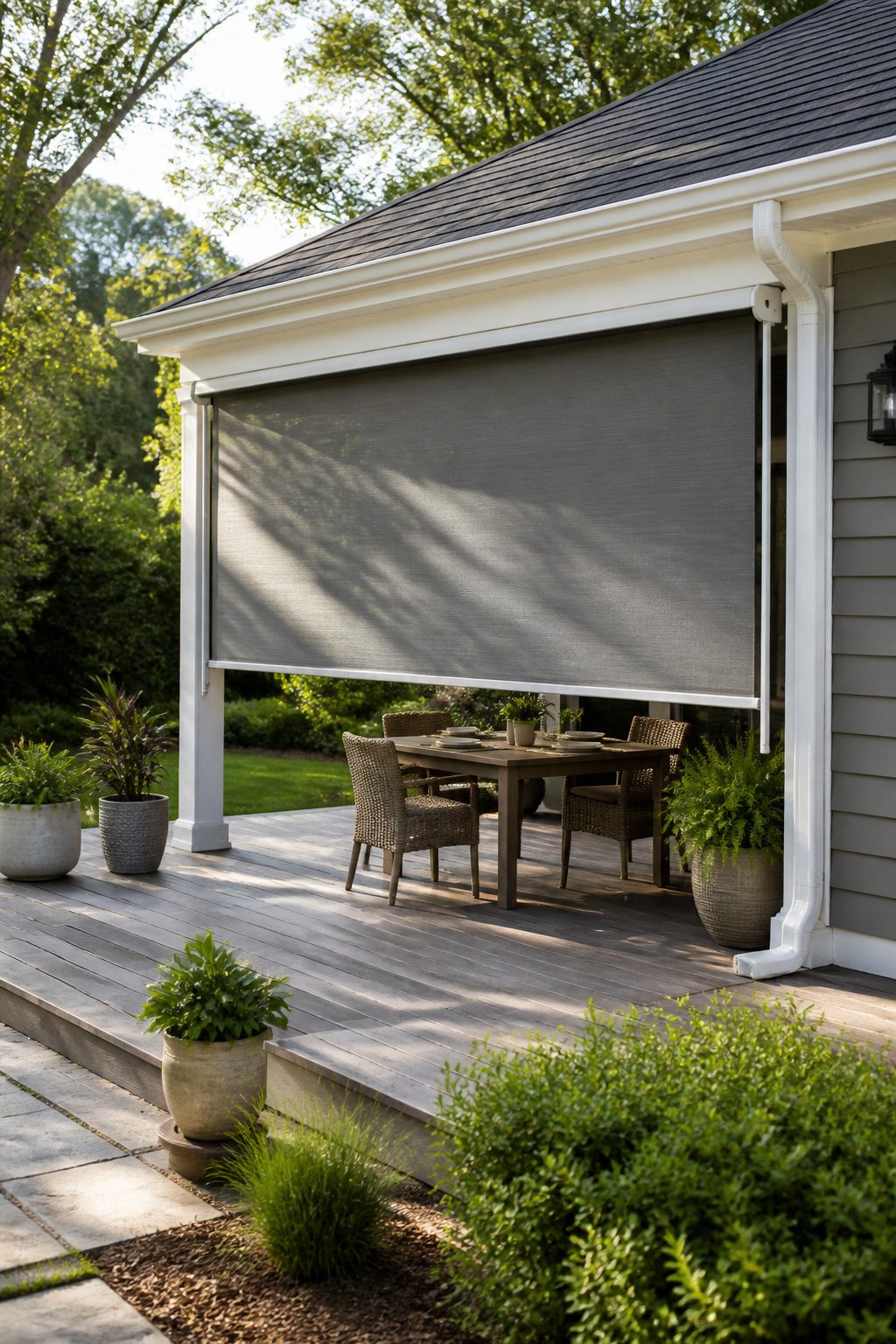
Exterior shades for a patio or a sun-facing window live a harder life than anything indoors, so the material matters more than the color. Vinyl blinds hold up against heat and moisture without warping, which makes them the safer bet for a deck that gets afternoon sun or a kitchen window that steams every evening. I have watched paper-based shades curl at the edges after one humid summer, and that lesson cost more than the upgrade to vinyl would have.
For renters, mounting is the sticking point. Tension-mounted options or adhesive-backed rails let you install an exterior shade without drilling into siding or a window frame you do not own. The Click2Fit, Stick2Fit, or Twist2Fit headrail systems go up without tools and come back down without evidence, which keeps the security deposit intact. Blackout fabric on the same hardware blocks enough light to cool a room by several degrees, and motorized versions let you adjust from inside when rain starts mid-barbecue. The no-drill hardware has weight limits, so measure the span before you order: a 6-foot drop over a sliding door needs a sturdier rail than a 3-foot kitchen window.
Valances and Cornices From Scrap
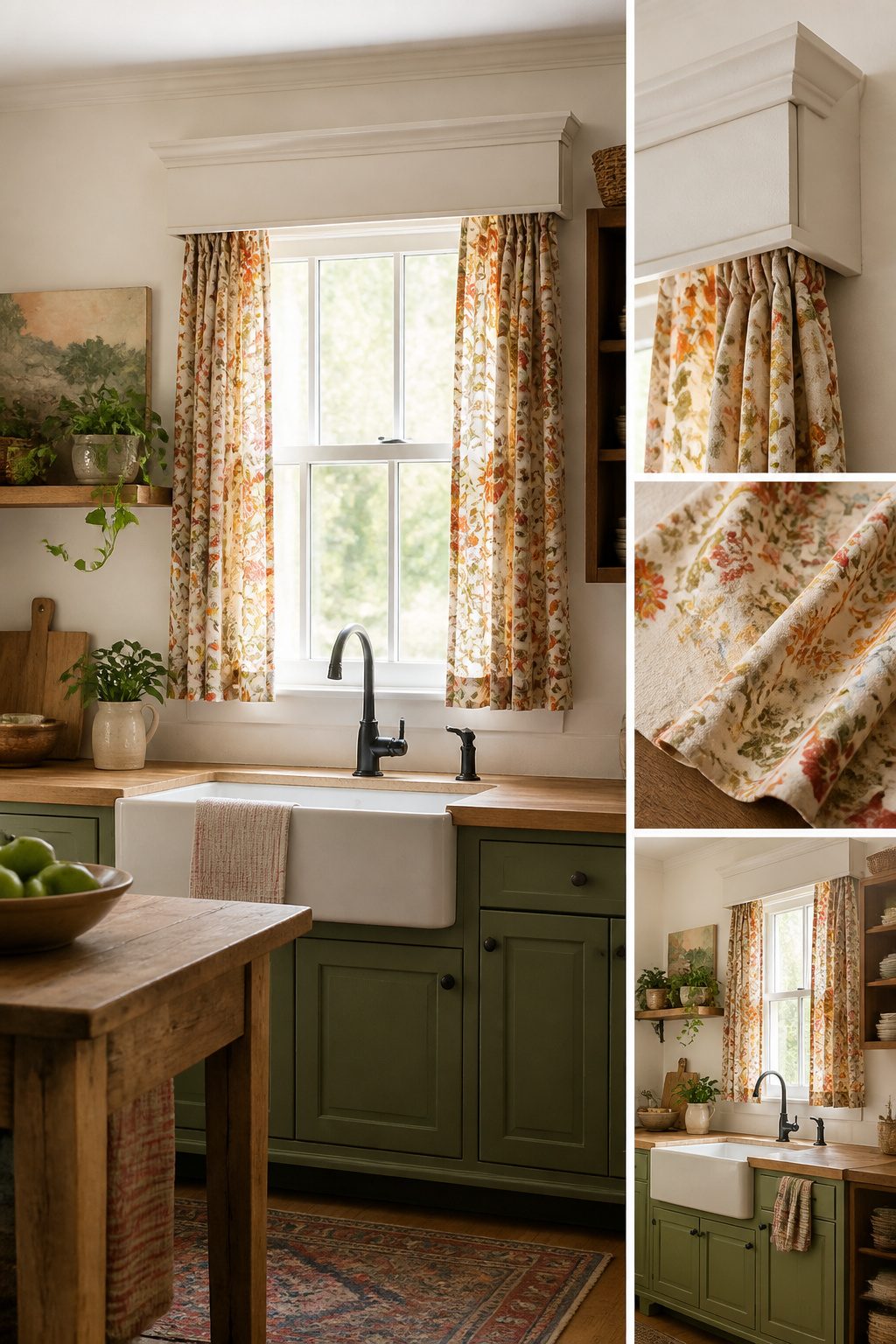
A window that needs something but not a full curtain is where scrap builds up fastest. I had a leftover two-yard cut of textured linen from a chair project and a piece of foam board that was too small to frame anything properly. The linen got wrapped around the foam, tucked at the back with hot glue, and mounted on L-brackets above a kitchen window. Total time was a Saturday morning, and the brackets were the only purchase at about four dollars.
Wood scraps work the same way. A 1-by-4 pine cutoff, painted the wall color so the grain just barely shows, makes a clean cornice that hides the top of a roller shade or a tension rod. The trick is keeping the profile shallow, no more than five or six inches tall, so it reads as trim rather than a shelf collecting dust. I have seen rope used the same way for a rougher look, coiled and stapled to a backer board, though that style either fits the room or it doesn’t.
The real limit is weight. Foam board bows in anything over about thirty inches unless you glue a thin strip of wood across the back as a brace. Fabric without lining will fade faster than a lined panel, which matters on a south-facing window. For a renter, the whole assembly lifts off with a screwdriver in five minutes and the holes patch with a dab of spackle. Under ten dollars and one weekend is the honest range for most of these, not because the materials are cheap but because the scraps were already paid for.
How I Measure Twice
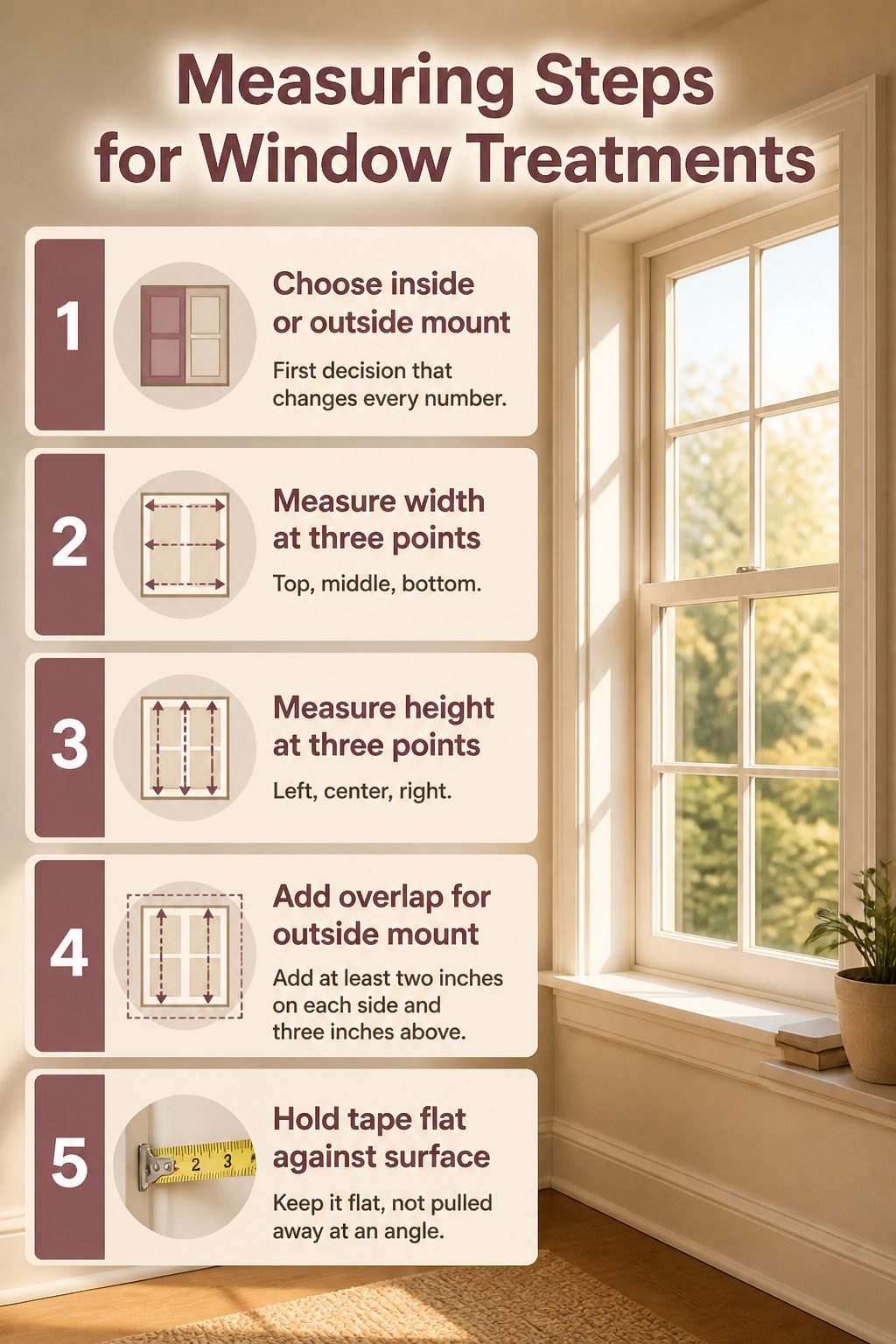
Inside mount or outside mount is the first decision, because it changes every number that follows. An inside mount sits the treatment within the window frame, cleaner and more streamlined. An outside mount covers the frame entirely, which helps when a window is slightly out of square or when the frame itself is damaged.
For an inside mount, measure the width in three places: top, middle, and bottom. The top measurement is the one most people take, then stop. Wood frames settle and swell, though, and the middle of a window can be a quarter inch narrower than the header. Use the smallest width of the three, or the treatment will bind when you lower it.
Height gets the same three-spot treatment: left, center, right. Measure to the nearest 1/8 inch. For outside mount, add at least two inches of overlap past the frame on each side and three inches above, which blocks the light gap that otherwise streams in from the edges.
Hold the tape measure flat against the surface, not pulled away at an angle. A helper at the other end helps, but the lip of the tape itself can bridge a corner if you are working alone. Record before you move; the number you swear you will remember disappears by the time you cross the room.
Cordless and What It Actually Costs
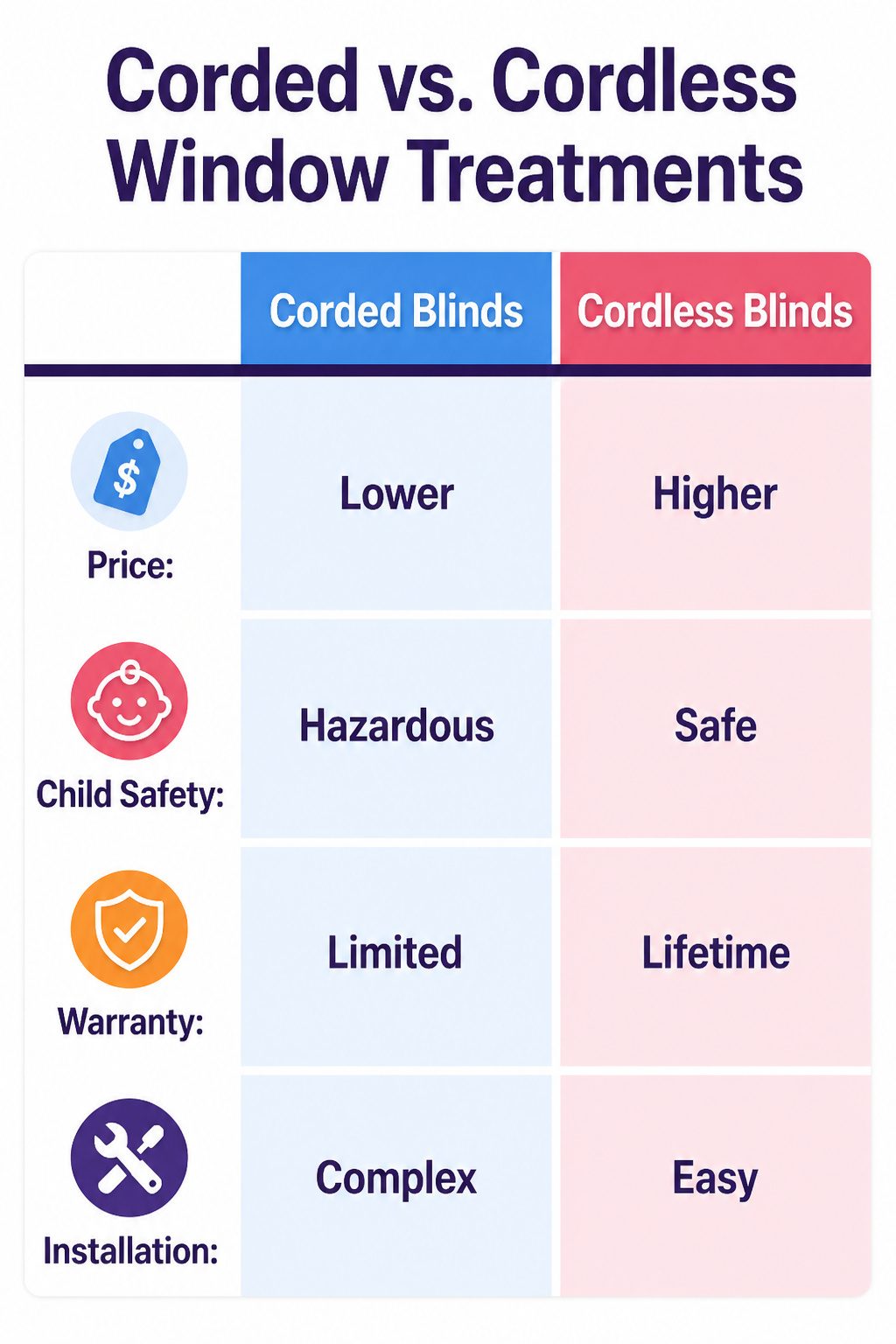
Corded blinds cost less up front, but the gap has narrowed enough that the safety trade-off is no longer expensive. The CPSC lists corded window treatments among the top five hidden hazards in American homes; a child between 14 months and 9 years can become entangled in about 60 seconds. That risk is what pushed me toward cordless lifts for every room my niece visits.
Cordless systems now meet WCMA child-safety standards by default at most custom shops, and the price premium over corded runs smaller than it used to. Budget Blinds builds every custom blind cordless, with motorization as an add-on if you want to eliminate pulls entirely. Motorized is the other child-safe path worth weighing: no strings, no chains, just a remote or app. It costs more, but for hard-to-reach windows or for anyone already wiring smart home gear, the convenience can justify it.
Where cordless gets genuinely cheaper is in the warranty math. Blinds To Go covers all mechanisms for life, which means a broken lift string in year eight does not become your problem. A corded blind without that coverage often ends up in a landfill once the mechanism fails, so the lifetime warranty on cordless mechanisms is where the real savings live.
Material Hacks I Have Tried
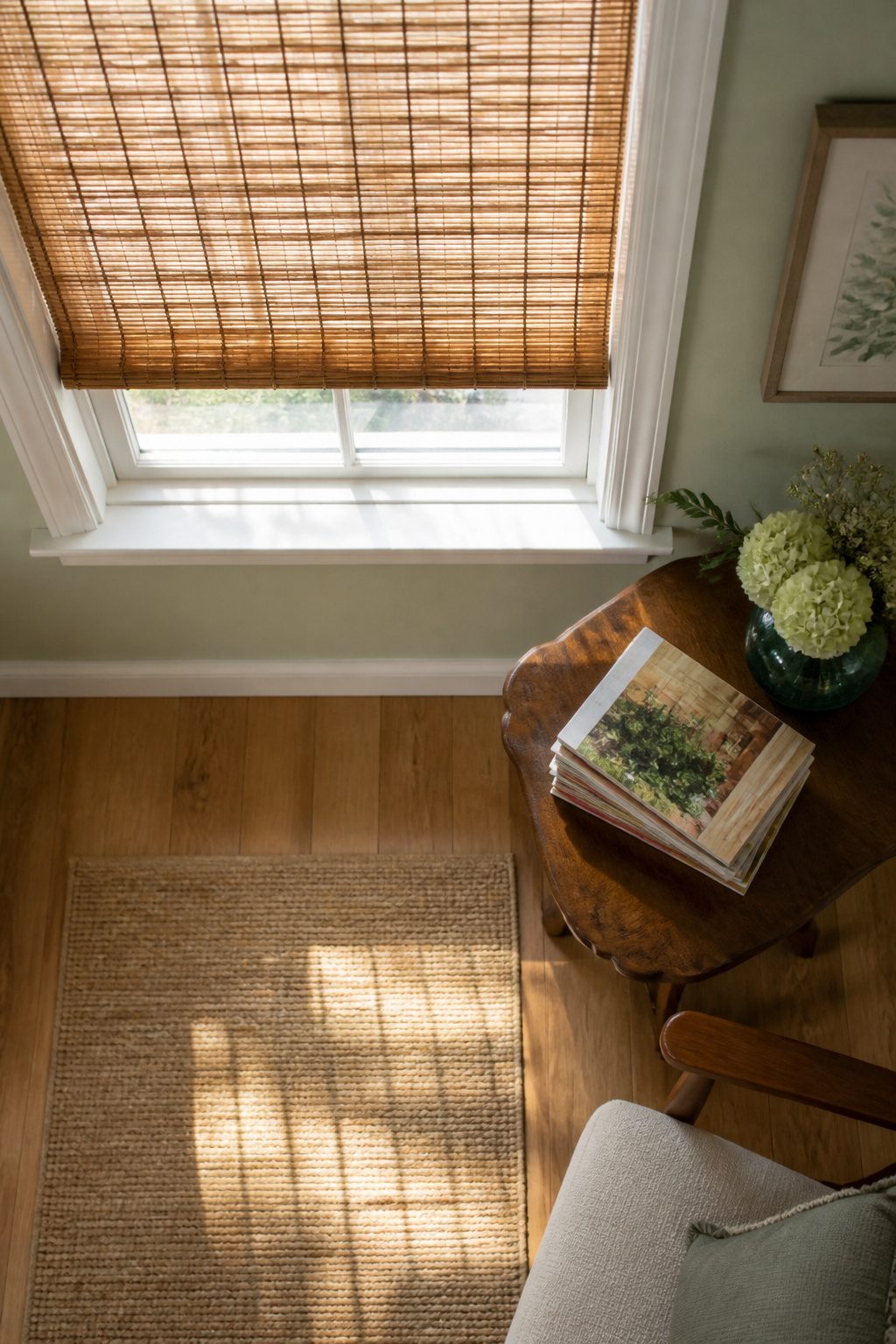
Bamboo shades were the first eco-friendly material I tried, and the texture still works in rooms where you want warmth without weight. The woven wood construction comes in enough weaves that you can move from a tight, almost fabric-like surface to something that reads more like a screen, which matters when you are trying to match existing trim. Responsibly sourced bamboo held up better than I expected in dry rooms, though it did not love the bathroom where steam swelled the fibers over two seasons.
Recycled fabric options, especially in roller and roman styles, solved the color problem bamboo could not. The material took dye evenly and did not pill where cheaper synthetics had in my past attempts. What surprised me was how the honeycomb structure in cellular shades, even the recycled-content versions, actually improved the insulation. The room felt different, not just looked it.
The real hack for me was decorative window film on a rental bathroom where nothing else was allowed. Applied wet with a squeegee, it gave privacy without sacrificing the morning light. It will not last forever, peeling at edges after about eighteen months of steam, but removal left no damage and the next tenant never had to know I was there.
Upcycled fabric as a roman shade backing worked once and failed once. A heavy vintage tablecloth had too much irregular weave; the shade hung lopsided no matter how I weighted the hem. Lightweight cotton sheets from a thrift store, washed and starched, became the cleanest shade in the house. The lesson is test your tension before you cut for length.
Installation Without a Drill
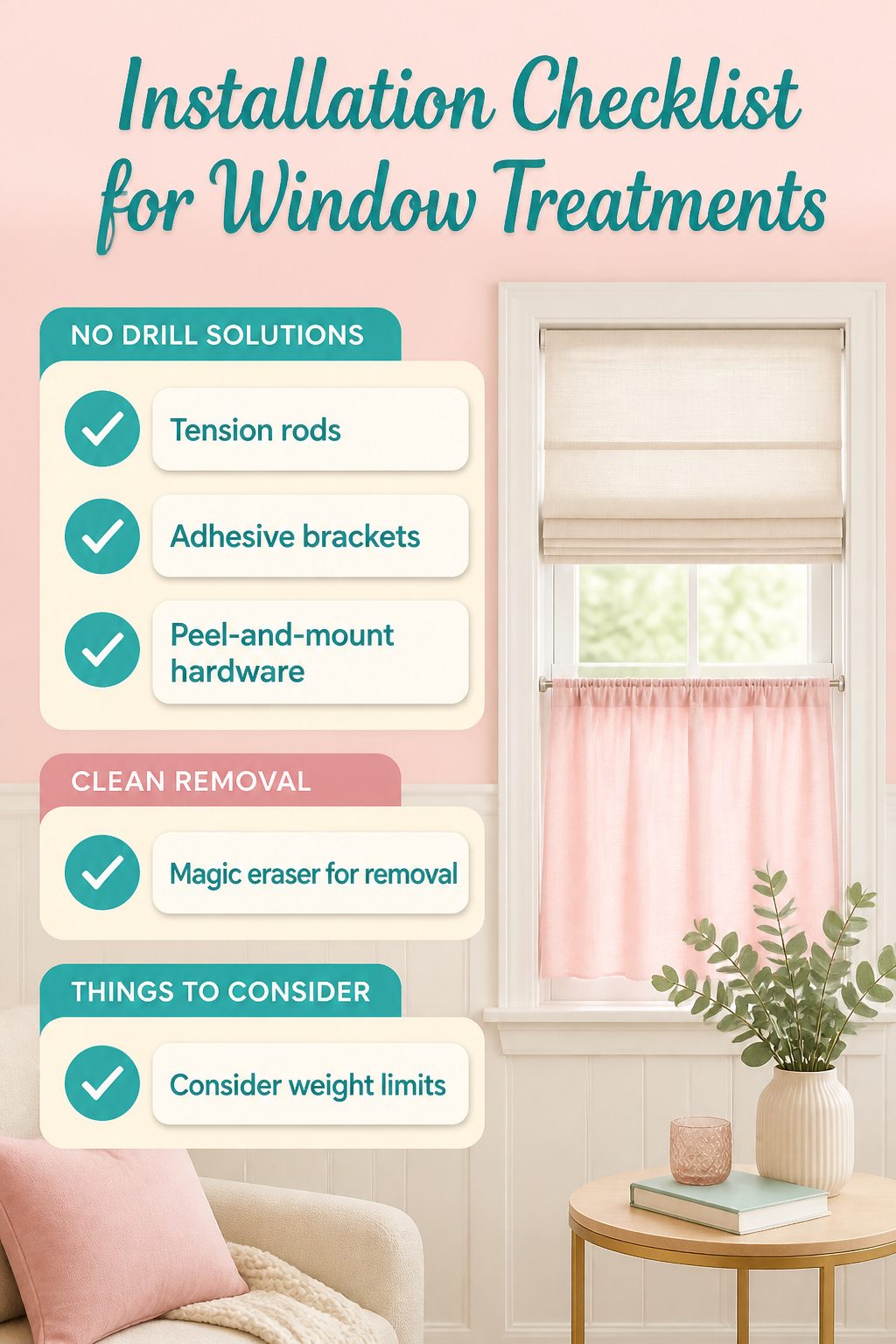
Tension rods, adhesive brackets, and peel-and-mount hardware cover most of what renters actually need. A tension rod inside the frame supports café curtains or lightweight Roman shades up to about 36 inches wide before the spring starts to sag. Adhesive-backed brackets, the Stick2Fit style, hold cellular shades or roller blinds by bonding directly to the window trim; they work best on painted wood or vinyl, less so on bare brick or anything porous. Click2Fit and Twist2Fit headrails use pressure or a locking mechanism against the sides of the frame, no holes, no residue beyond what a magic eraser takes off.
What still needs a drill: anything heavy, anything wide, anything outside-mounted. Faux wood blinds over about six pounds, drapery rods spanning more than 48 inches, shutters, or any bracket set beyond the window frame itself all need wall anchors in drywall or studs behind plaster. Renters in buildings with strict move-out inspections should weigh this carefully. One patched anchor hole rarely costs a deposit; six in every window usually does. For sidelights or transoms where even adhesive feels risky, decorative window film blocks light and adds pattern with nothing mechanical at all.
Where the 50% Off Actually Shows Up
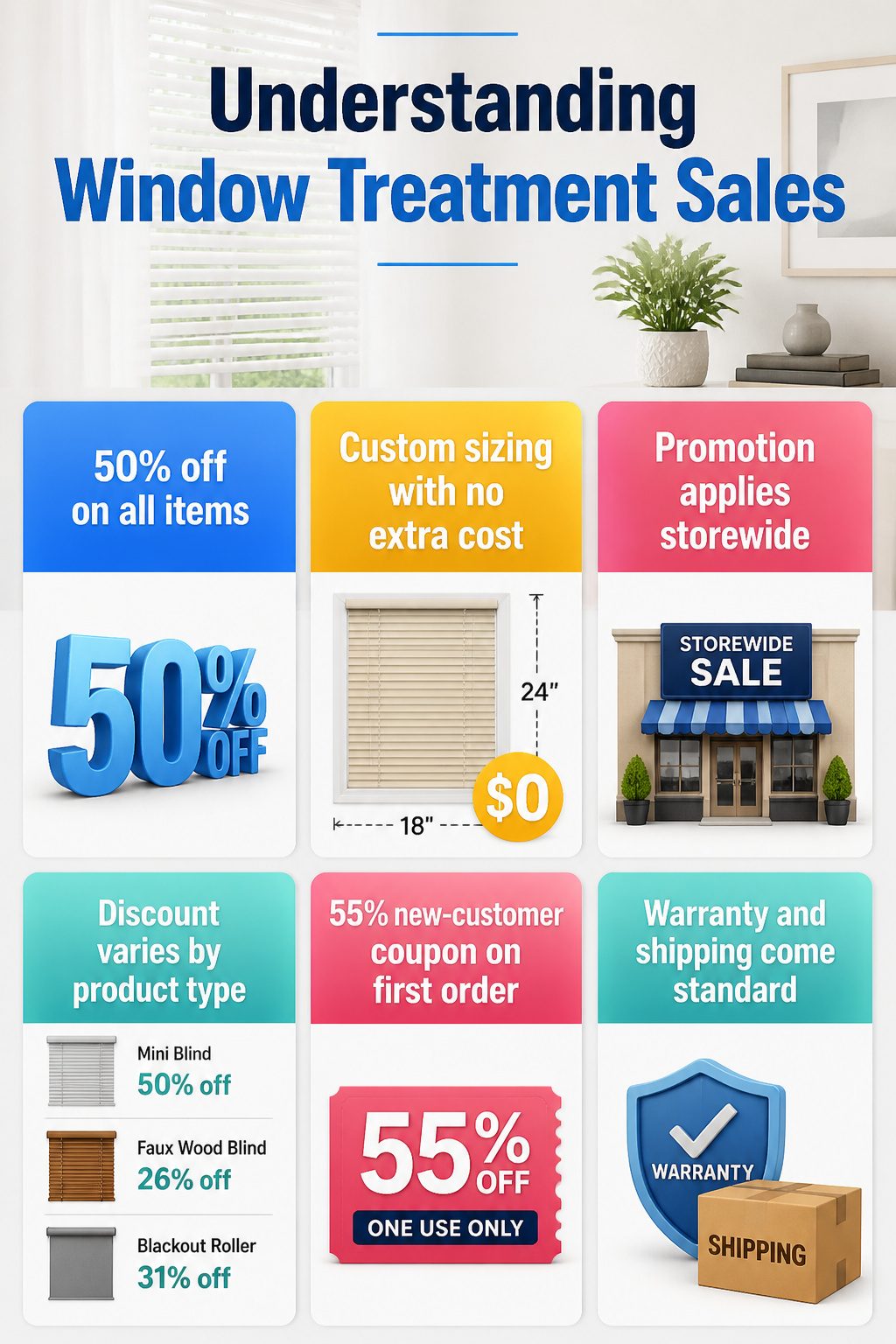
The first time I ran the numbers on a sitewide sale, I missed entirely. A promo code knocked 50% off the list price on every shade and blind in the cart, no exclusions. A custom mini blind measuring 18 by 24 inches landed under $20 at full discount. The custom sizing itself cost nothing extra, which is where the math actually bends in your favor.
Factory-direct sellers run these codes straight across the catalog, so the percentage hits the base price you would have paid for stock dimensions. My mistake was assuming "custom" would stack as an upcharge after the discount. It does not. You enter your exact width and drop, apply the code, and the cut-to-size blind still rings up at half off.
The real variation sits in the product tier. That $20 mini blind pulls the full 50%. A faux wood blind might show 26% off, a blackout roller 31%. The sitewide language means the promotion is active storewide; the depth of discount per item depends on what the factory already marked down. Read the struck-through price beside the sale price before you trust the top banner. A 55% new-customer coupon can beat the sitewide offer on a first order, but it limits you to one use. Locking a quote for 30 days, which some sellers allow, lets you sample first and still catch the rate if the sale ends before you decide.
The warranty and shipping come standard at either price, so the only question is whether your window’s odd dimension costs you extra. It does not.
Frequently Asked Questions
What types of window treatments are available?
Blinds, shades, draperies, shutters, and motorized options all work for both standard and odd-sized windows. Blinds include faux wood, aluminum, and mini styles cut to custom dimensions from 20 x 24 inches up to 115 x 120 inches. Shades range from cellular and roller to Roman, solar, and bamboo, with fifty-plus material options for cellular styles alone.
How do I measure for window treatments?
Measure width in three places, top to bottom, and height at left, center, and right, recording to the nearest 1/8 inch. For inside mounts, use the smallest width so the treatment does not bind; for outside mounts, add two inches of overlap per side and three inches above to block light gaps. Hold the tape flat against the surface and write each number before moving to the next spot.
What are the best window treatments for energy efficiency?
Cellular shades insulate best because their honeycomb pockets trap air in layers, keeping heated or cooled air from leaking through the glass. The reviewer cut a winter heating bill after installing them, and recycled-content versions improve insulation further without sacrificing even dye coverage. Layer velvet drapes over sheer shades if you want to control light through the day while adding another thermal barrier.
Are there child-safe window treatment options?
Cordless and motorized lifts meet child-safety standards by default at most custom shops, with no dangling loops for a child to become entangled in. Budget Blinds builds every custom blind cordless, and the price gap over corded has narrowed enough that the safety upgrade is no longer expensive. Motorized options eliminate pulls entirely, running on rechargeable batteries for roughly six months between charges.
How much do custom blinds cost?
A custom mini blind at 18 x 24 inches runs under $20, and custom sizing itself costs nothing extra at factory-direct sellers. Promotions often apply straight across the catalog, so a 50% off code hits the base price even for cut-to-size orders. Faux wood and blackout roller shades may show smaller percentages off depending on existing factory markdowns, but the custom dimension never stacks as an upcharge.