The right living room bookshelves in 2026 are the ones you can actually assemble without a meltdown. The Article Krossa demands two people and thirty minutes, or paid white-glove service for anyone under five-foot-four, because seventy inches of tapered oak becomes a balancing act fast. That height is the filter that decides whether a shelf works in your space or becomes a weekend regret.
1. Article Krossa Shelving Unit

The Article Krossa Shelving Unit stands 70.5 inches high, 32.5 inches wide, and 15 inches deep, with a shorter option at 35.5 inches high, 36 inches wide, and 16 inches deep. White oak, walnut, and wood veneer give it the warm, light-washed look that reads Scandi or Japandi without trying too hard.
Assembly is where this unit makes you earn it. The joinery is more interesting than a standard ladder shelf, tapered so bottom shelves run wider and deeper while top shelves narrow, but that size works against you when the box arrives. Two people and about thirty minutes gets it upright if you pay for white-glove service, which I would for anyone under about five-foot-four or anyone short on patience for balancing acts. The pieces themselves are not overly complex; the height is what complicates the solo build.
Wall-mounting hardware is included, though the unit feels sturdy enough that many owners skip it. The tapered shape turns practical fast: baskets or bulkier items on the bottom, books and display pieces up top where depth matters less. It wants breathing room, so apartment renters should measure twice; open plans or suburban spaces wear it better.
"The shelf is taller than I am (5’2"), so I’d especially recommend paying for assembly if you are on the shorter side."
That height is the real filter here. Budget for help, or recruit a tall friend.
2. West Elm Pierce Narrow Storage Shelf Unit
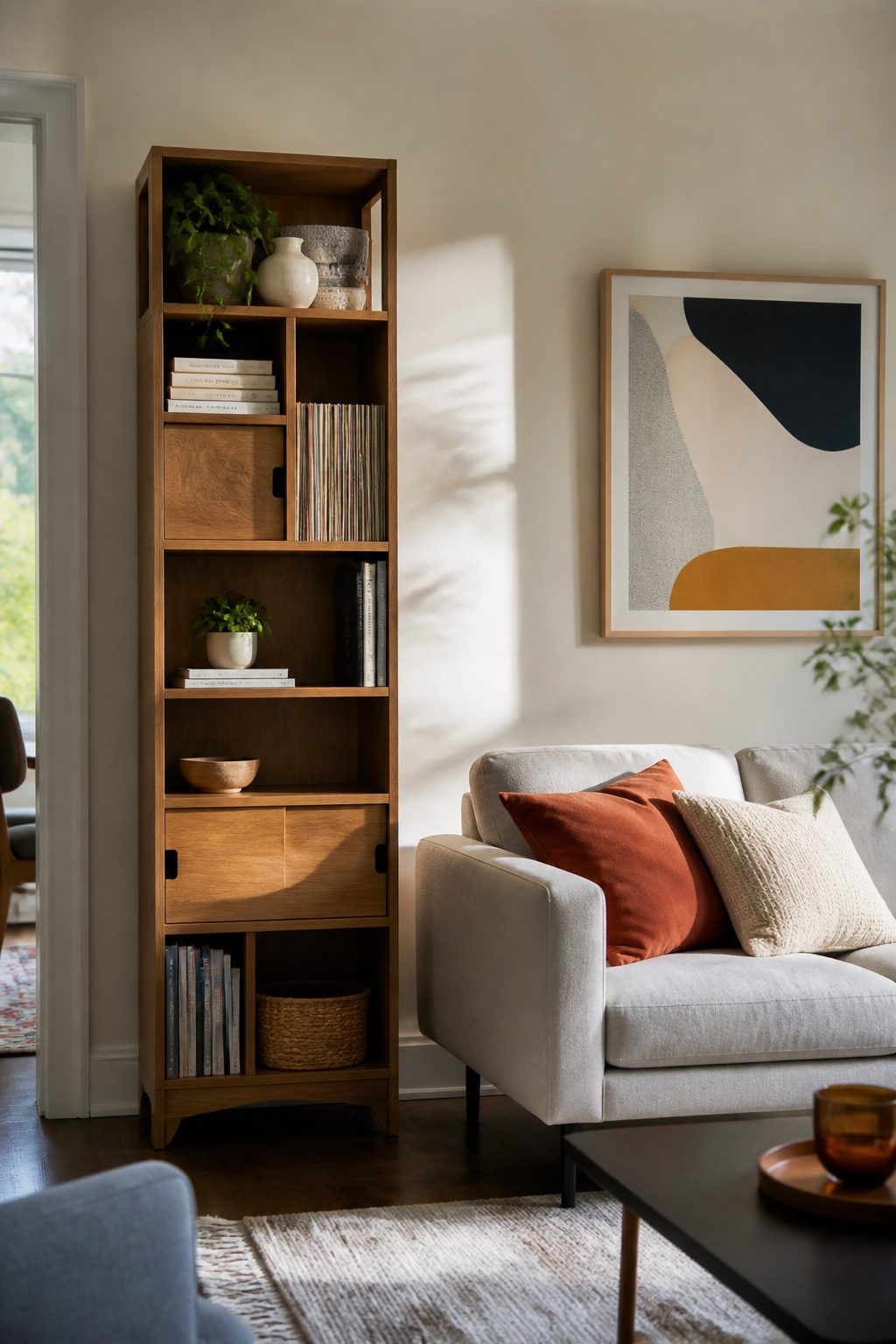
The 42"W x 17"D x 78.75"H footprint of the West Elm Pierce Narrow Storage Shelf Unit reads like a standard vertical bookshelf until you live with the shelf heights. Each level carries a different clearance, which turns out to matter more than the metal frame or the oak-veneer finish once you start loading it.
The shorter shelves suit paperbacks stacked flat or standing in single rows. The taller bays swallow things you would not normally park on a bookshelf: a record crate, a stand mixer, the awkward objects that collect in living rooms because they have nowhere else to go. One shelf sits behind sliding doors, which I would use for the cables, candles, and snack overflow that otherwise colonize every open surface.
West Elm offers in-home delivery on this piece, and the difference is real. The unit arrives assembled enough that you are not threading cam locks on your living room floor. You pick the window, the team shows, and the shelf stands in place without the usual Sunday afternoon of deciphering which hex key goes where. For anyone who has abandoned a half-built flat-pack at 10 p.m., that alone shifts the math on whether this project happens this weekend or lingers on the to-do list for another month.
3. Design Within Reach Story Bookcase
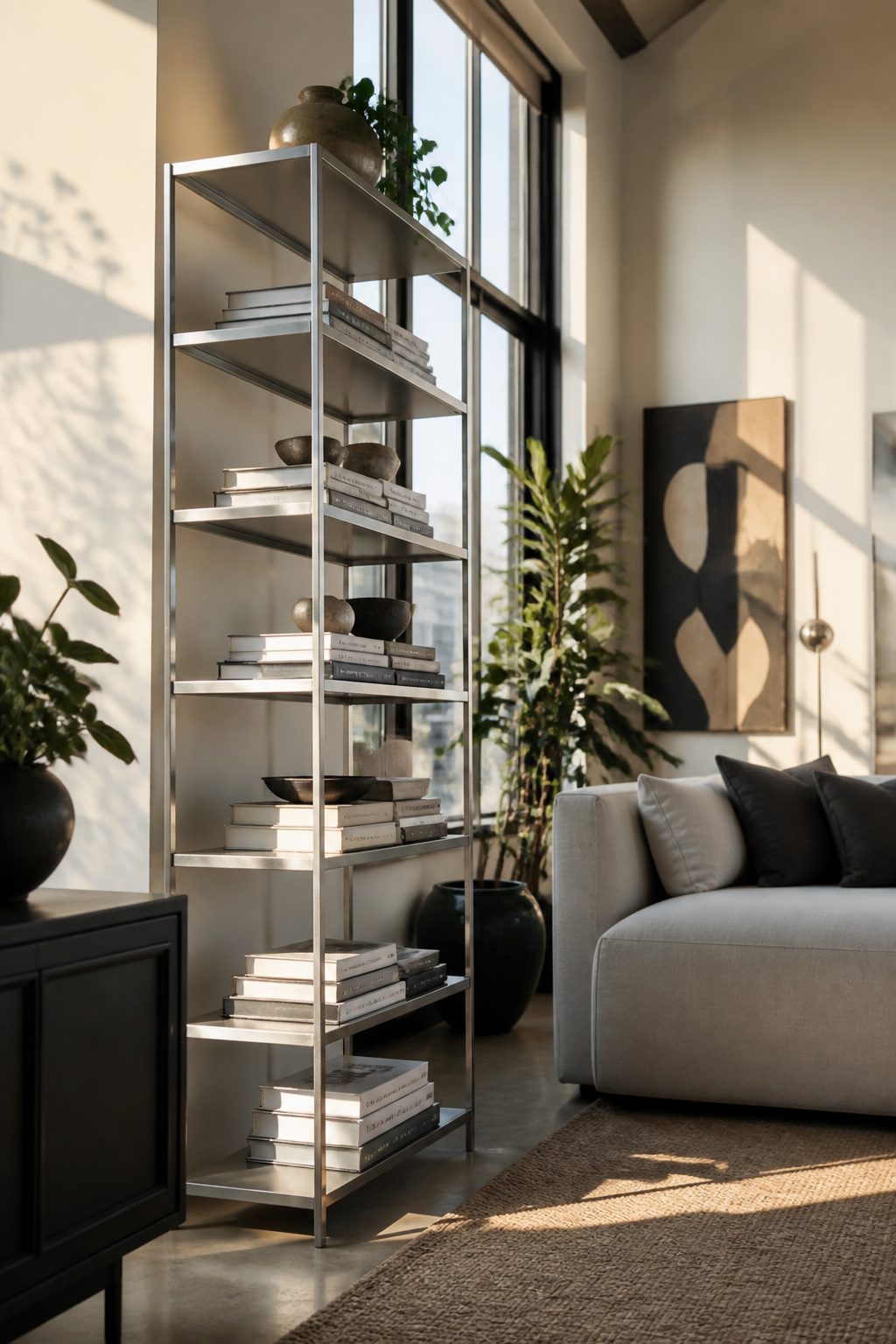
A 15¾-inch square footprint is what makes the Design Within Reach Story Bookcase workable in living rooms where every inch counts. Two sizes exist: Standard at 62½ inches high, and Tall at 75⅜ inches. Both keep that same narrow base, which in city apartments means you can park one beside a sofa or float it mid-room without blocking flow.
The vertical pole is galvanized steel with powder-coated aluminum sleeves, and the shelves thread onto it. Books lie flat, spines up, stacked in piles rather than lined upright. That changes daily use more than you might expect. You browse by lifting a stack to see what sits below, so the piece rewards people who already know what they own and where it lives. Dusting means moving each pile; the reviewer who lived with one for four years called that part tedious.
Shelves rotate on the center pole, so the silhouette can stay disciplined or flare at different angles. The unit is heavy enough that relocating it feels, in one user’s phrasing, like moving a tree. DWR recommends wall-anchoring for safety, though at least one owner in a child-free home left theirs freestanding for years without incident.
4. IKEA IVAR Shelving Unit
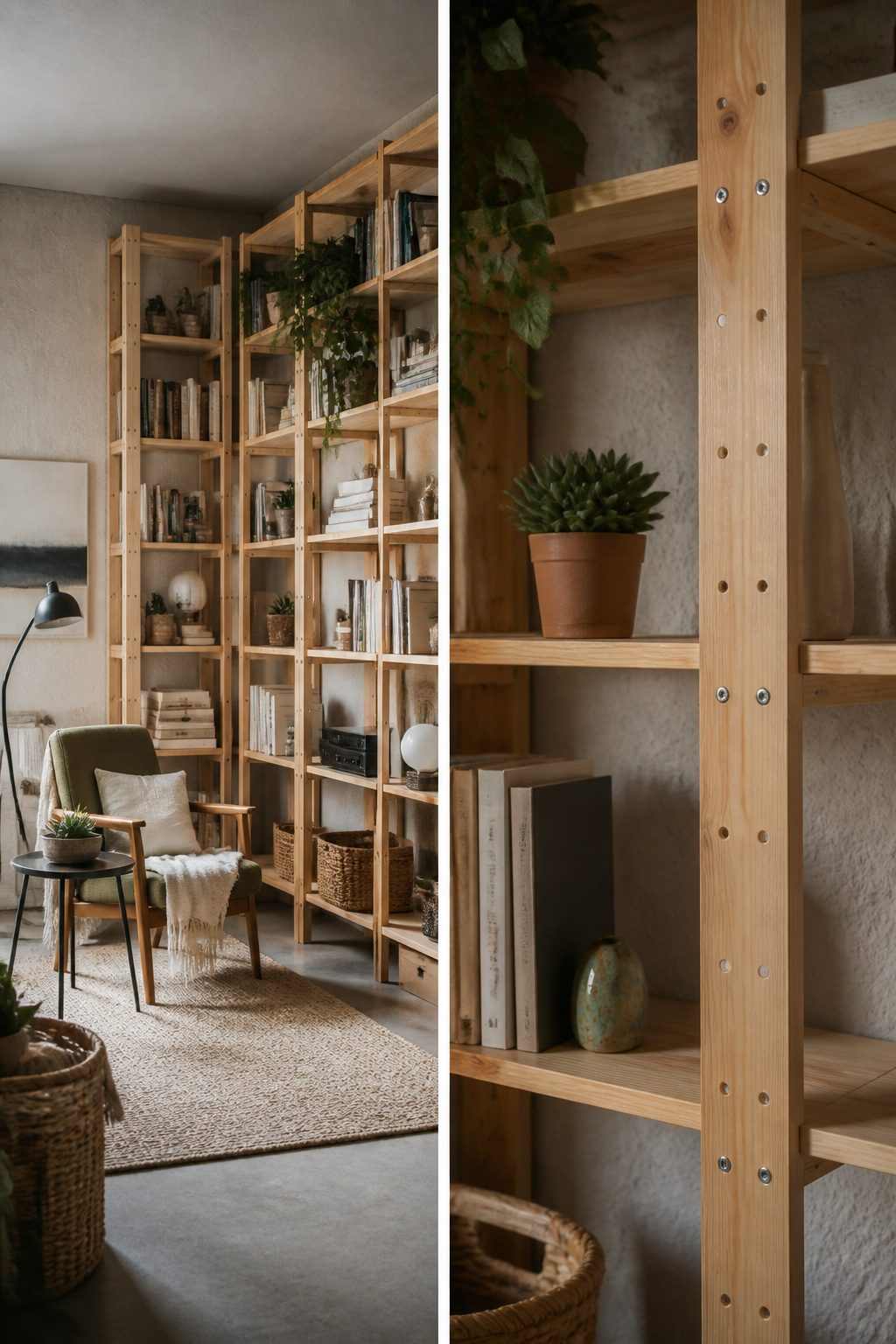
The IVAR system has been in the IKEA catalog since 1967, and that longevity matters when you are trying to fill a wall without filling a landfill. Originally the shelves were designed as industrial storage for the Swedish Post Office, which explains the raw pine and the visible hardware that reads utilitarian rather than polished in most living rooms.
Modularity is where IVAR earns its keep. You start with a single section, add width with extra bays, stack vertically with height extensions, or angle the units around a corner. A senior design editor at Architectural Digest has moved a large IVAR setup through multiple apartments, using it to hold what she calls a truly massive book collection. The same system wrapped her living room and later got rebuilt into a closet; a friend uses stacked units for kitchenware.
The industrial bones mean two practical things. Weight capacity is serious, so the sag you get from particleboard alternatives does not happen here. But the legs are bare pine posts, and on old floors with a crown or a dip you will want screw-in feet to adjust the height bay by bay. Assembly runs toward the involved, and the finished look is more workshop than west-elm. That is either the point or the dealbreaker, depending on whether your living room aesthetic tolerates exposed joint hardware.
5. Castlery Esther Bookshelf
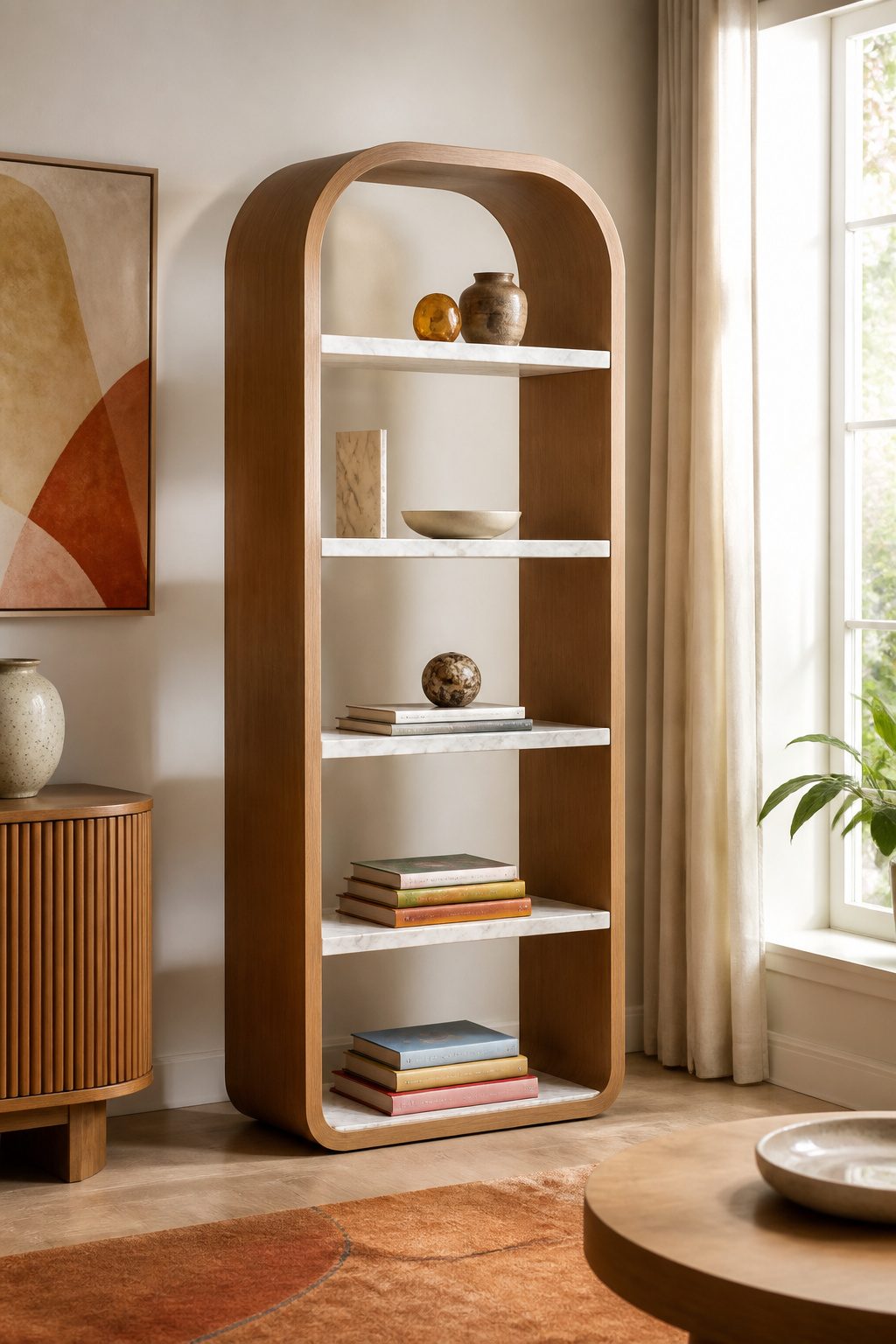
The Castlery Esther Bookshelf measures 64.2"H x 47.2"W x 13.4"D, a footprint that reads as substantial without dominating a wall. Its curved shelves are the first thing that changes how you use it. Flat shelves let books sit spine-out in rows; these arcs create natural valleys where larger objects settle in place. Coffee table books that slide on straight boards stay put here, and the curve gives each shelf its own stage for a single piece rather than a lineup.
The marble shelves account for most of the weight. Two able-bodied adults are the practical minimum for assembly, not because the frame fights you but because maneuvering a marble slab to its bracket without chipping an edge takes four steady hands. The engineered wood with walnut veneer on other surfaces keeps the piece from becoming unlivable heavy; the marble is concentrated where it counts, in the horizontal planes that take direct use. Assembly runs about thirty minutes once you sort which side of each shelf faces up, a detail the instructions do not flag as clearly as the weight demands.
6. CB2 Tesso Chrome Wall Mount Bookcase
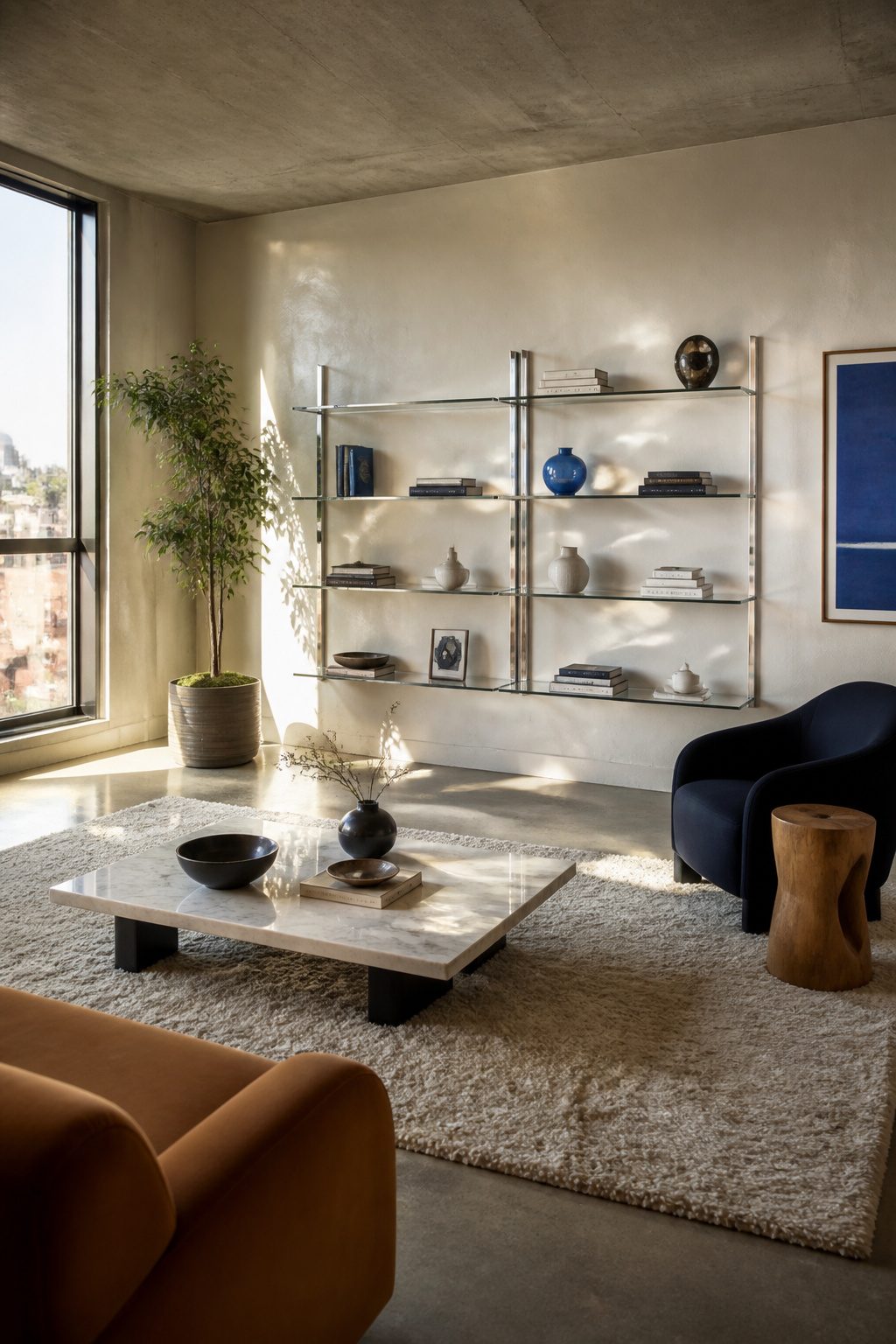
Wall mounting this unit means finding studs or using toggle anchors rated for the load, because tempered glass shelves weigh more than they look and the whole frame hangs cantilevered from a single metal rail. The rail hides the hardware, so the chrome, brass, or black finish reads as floating once it is up. I have watched a friend install the black version in a rental where drilling was allowed; she spent longer locating studs than hanging the frame itself, and the 10-inch depth meant paperbacks fit fine but deeper art books overhang.
Tempered glass behaves differently from solid wood or laminate. It carries plenty of weight, but a sharp corner impact can spider the whole shelf rather than dent it. The transparency also means whatever wall sits behind it becomes part of the look, for better or worse. A sloppy paint job or unmatched outlet plate will show through every level. The three finishes give some room to match existing metal elsewhere in the room, though in a small living room the 84-inch height can read as more vertical statement than storage solution.
7. Cattelan Italia Tokyo Revolving Bookcase
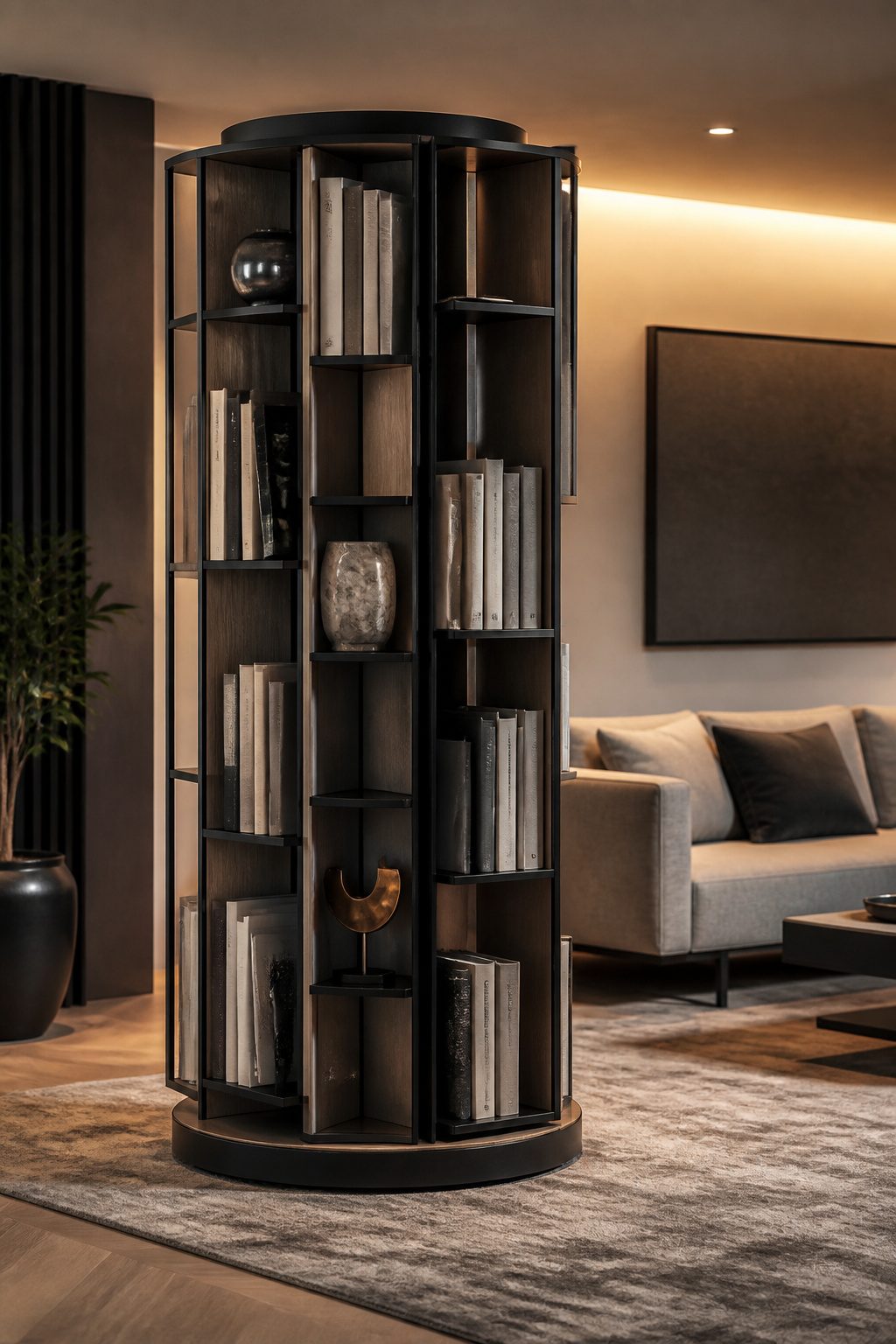
A vertical bookcase that spins changes how you actually use your living room. The Cattelan Italia Tokyo Revolving Bookcase sits on a central pole and rotates 360 degrees, so one gentle push brings the back row of shelves to the front. In a tight space, that means no more squeezing beside furniture to reach a spine. The footprint stays fixed at roughly 16 inches square, same as the Story Bookcase from Design Within Reach, but the rotation turns a static tower into something you interact with.
At $3,509, this sits in the upper middle of the Cattelan Italia line. The DNA Bookcase runs $1,659, the Fulham $2,789, and the Wally $3,629. The Tokyo costs more than most of the BDI systems and doubles the Story Bookcase, yet it undercuts the Nautilus Bookcase at $5,289 by a wide margin. For that price you get movement rather than more shelves. The question is whether your living room benefits from a piece people physically turn, or whether the money buys more storage in a conventional unit.
8. BDI Eileen 5166 Shelf
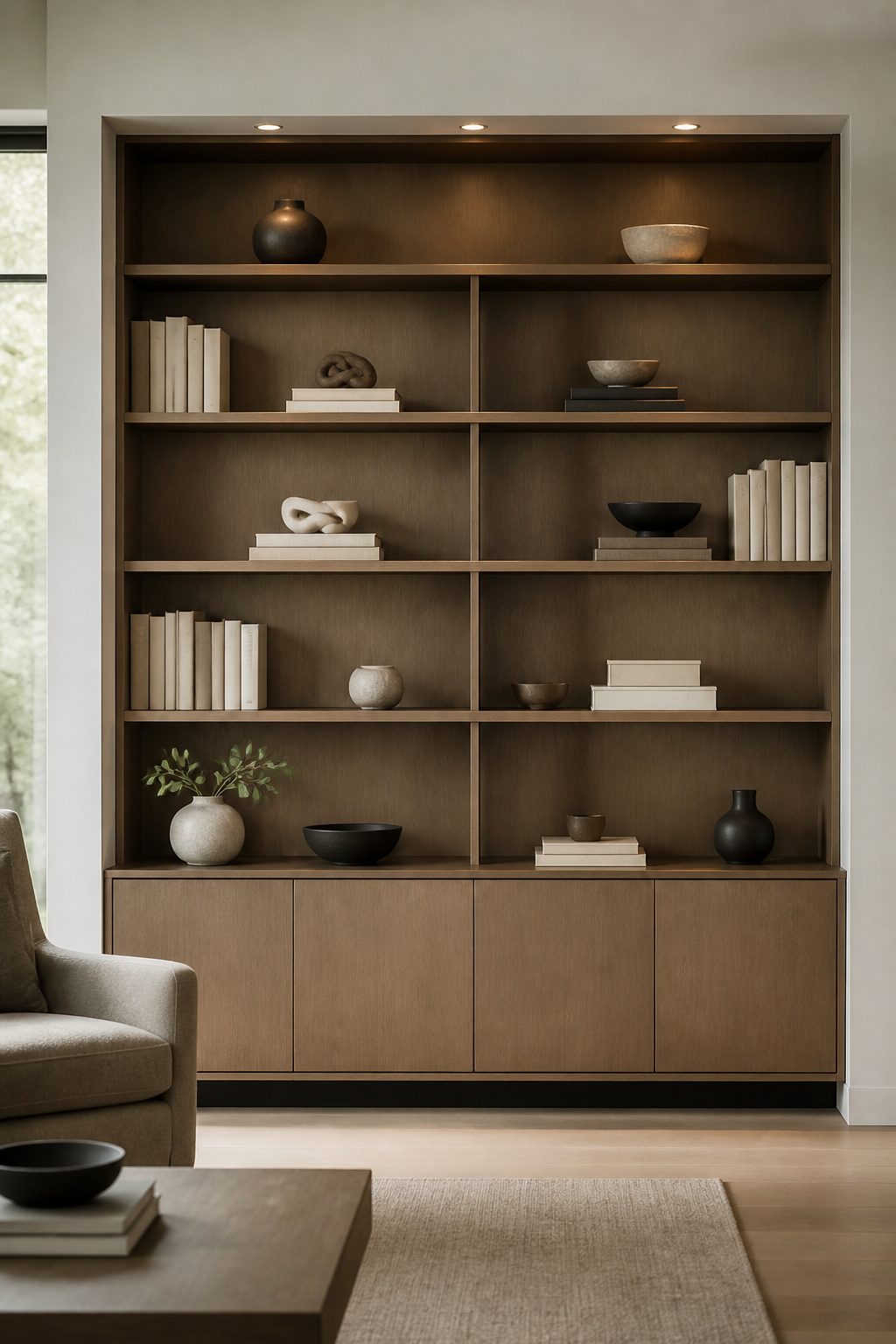
The BDI Eileen 5166 Shelf sits at $1,199, a price that puts it in conversation with pieces like the West Elm Pierce Narrow Storage Shelf Unit rather than the Italian imports that climb past $3,000 on the same showroom floor. What "sleek" means here is a commitment to thin profiles and minimal visual weight, the kind of shelf that reads as built-in even when it is not.
At this tier, competitors often bulk up with thicker shelves or visible hardware. The Eileen 5166 goes the other direction, trading storage volume for a footprint that does not dominate a wall. That choice matters in a living room where the shelf needs to hold books and objects without becoming the only thing a visitor notices.
The risk is the same as with any restrained design: it lives or dies on execution. A slight warp or a gap that would hide on a farmhouse unit shows immediately here. For the $1,199, the buyer is not paying for cubic feet of storage. The value is in proportion and the restraint to stop adding before the lines get busy.
9. Qeeboo Turtle Carry Bookcase
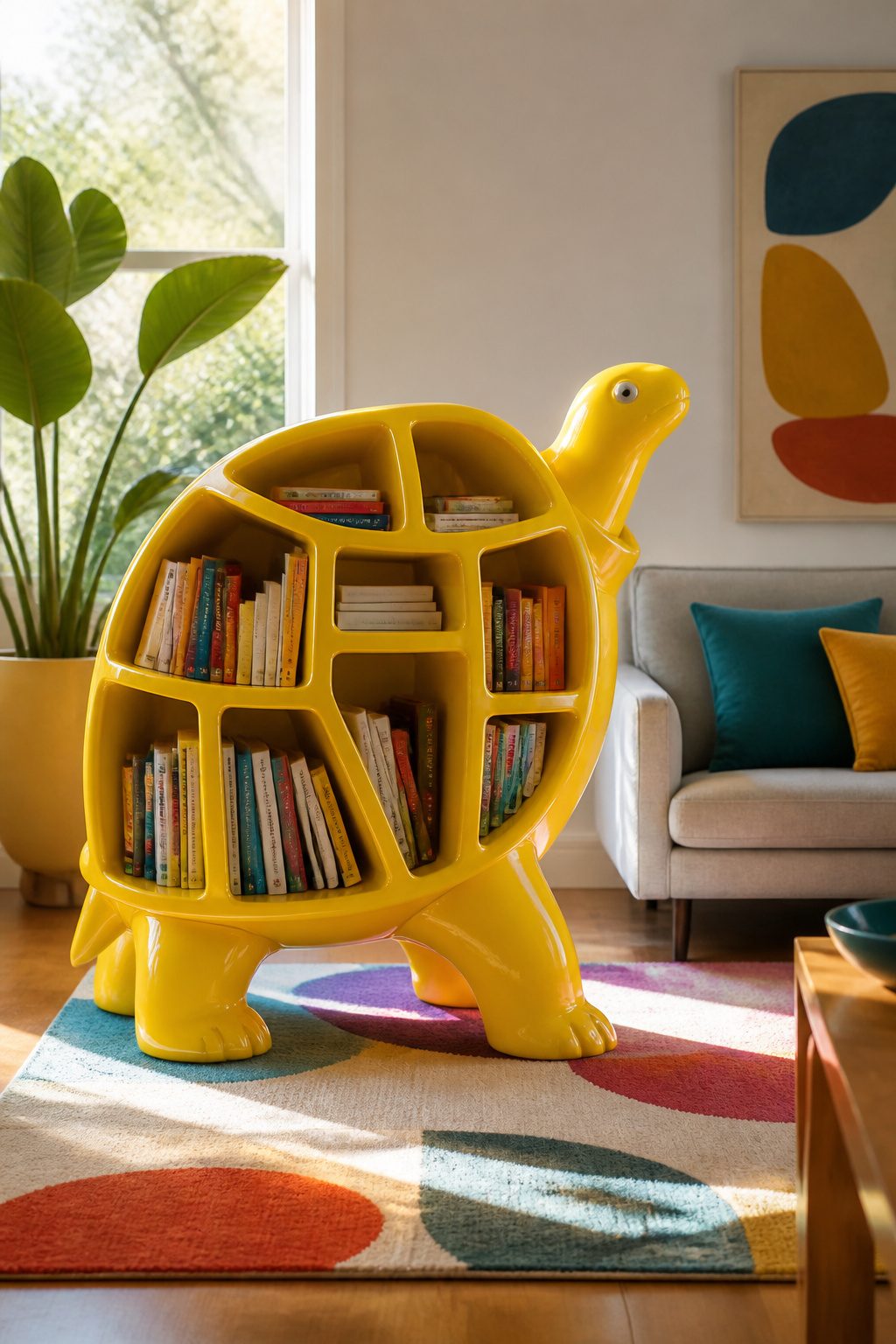
A turtle carrying your books on its back sounds like a furniture store fever dream, but the Qeeboo Turtle Carry Bookcase lands at $829 and somehow works in practice. Whimsy at this scale is a commitment: the shell becomes your shelving, which means the storage surface curves and the usable depth varies from spot to spot. Standard paperbacks sit fine. Coffee table books need testing before you buy.
I have watched statement pieces like this swallow a room or save it. The difference is what surrounds them. A neutral sofa, plain walls, and this turtle becomes the one conversation starter you planned. Add a second sculptural piece and the room turns into a gift shop. The $829 price sits well below designer gallery furniture and well above anything mass-market. You are paying for Italian design licensing and rotational-molded plastic that weighs less than it looks, not for heirloom joinery.
For renters, the upside is visual impact without wall damage. The downside is footprint: this turtle needs floor space and a sightline from the entry or seating area to earn its keep. Tuck it behind a sectional and you have spent eight hundred dollars on a joke no one sees.
10. Cattelan Italia Nautilus Low Bookcase

A low display bookcase sits below eye level, which changes what it does in a room. The Cattelan Italia Nautilus Low Bookcase at $2,389 works as a surface for objects you want seen from above: a ceramic bowl, a stack of art books laid flat, a trailing plant. It divides space without blocking sightlines, so it reads open even in a smaller living room where a standard unit would feel like a wall.
Contemporary here means clean vertical supports and shelves that read as floating planes rather than traditional boxes. In person that translates to light catching the edges and the objects on display doing the visual work, not the frame.
The standard-height Nautilus Bookcase runs $5,289, more than double the low version. That taller unit wants a different job: holding a full library, anchoring a high ceiling, acting as architecture. The low one suits renters and first-home owners who need flexibility. It can back a sofa, line a hallway, or sit under a window without sacrificing daylight. My take after weighing both: unless you own the space and know exactly where it lives for the next decade, the low version gives you more places it can work.
11. BDI Linea 5802 Double Shelf
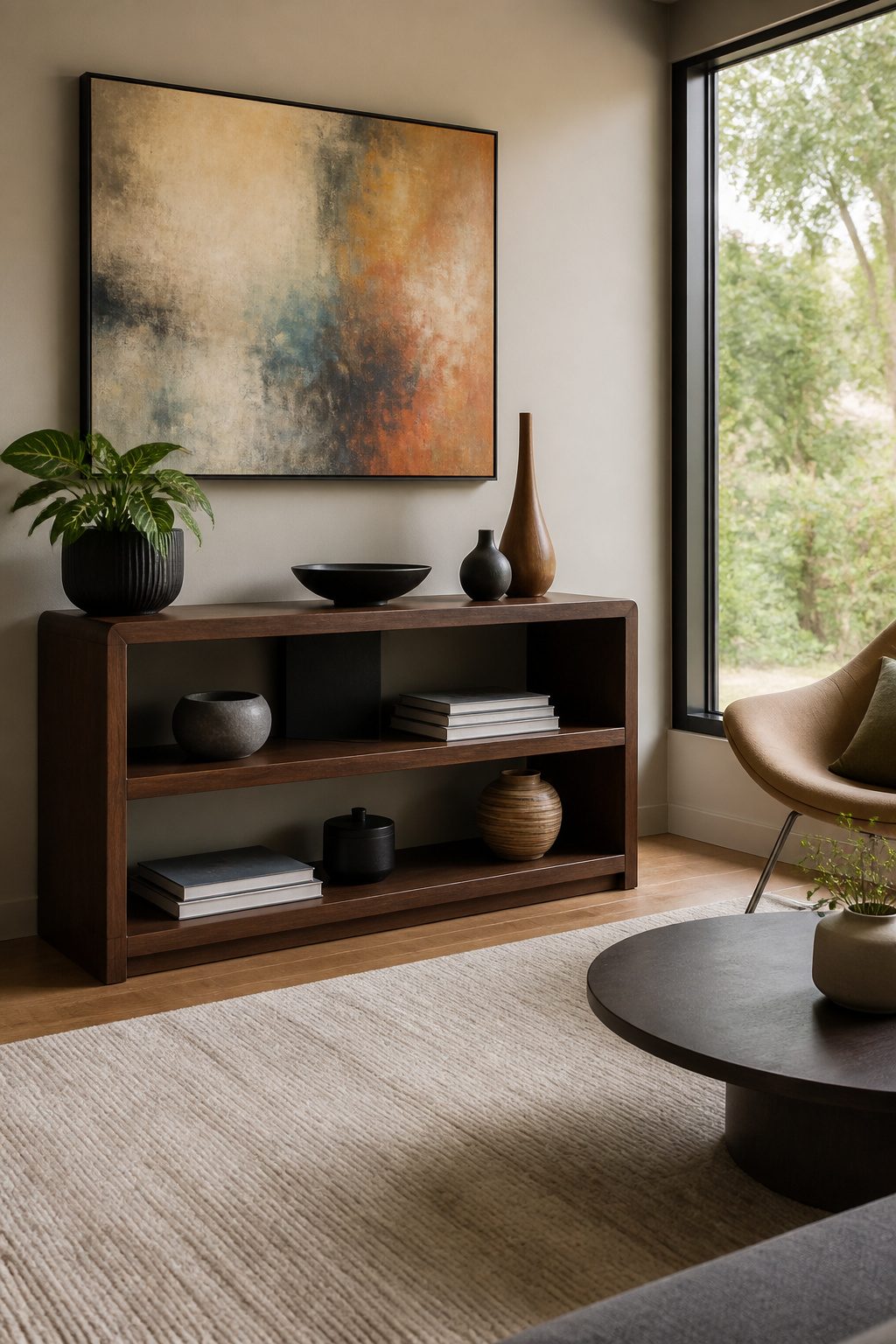
A double shelf keeps two surfaces at the same depth, stacked vertically with open air between them rather than a cabinet box. The BDI Linea 5802 runs $2,299, which puts it well past particleboard territory and into hardwood veneer over engineered core, plus the hardware to cantilever those planes without sag. At that price the finish work should be invisible at the joints, and in this line it usually is.
The modern aesthetic here reads cleaner than BDI’s Eileen series. Where Eileen leans mid-century with tapered legs and warm walnut tones that nod to 1950s shelving, the Linea strips back to rectangular volumes, thinner profiles, and a cooler palette. Think less "statement piece" and more "wall that happens to hold books."
Whether that restraint is worth the premium depends on what else lives in your room. The Linea wants to disappear into a contemporary space; the Eileen would anchor one.
12. Cattelan Italia Fulham Bookcase
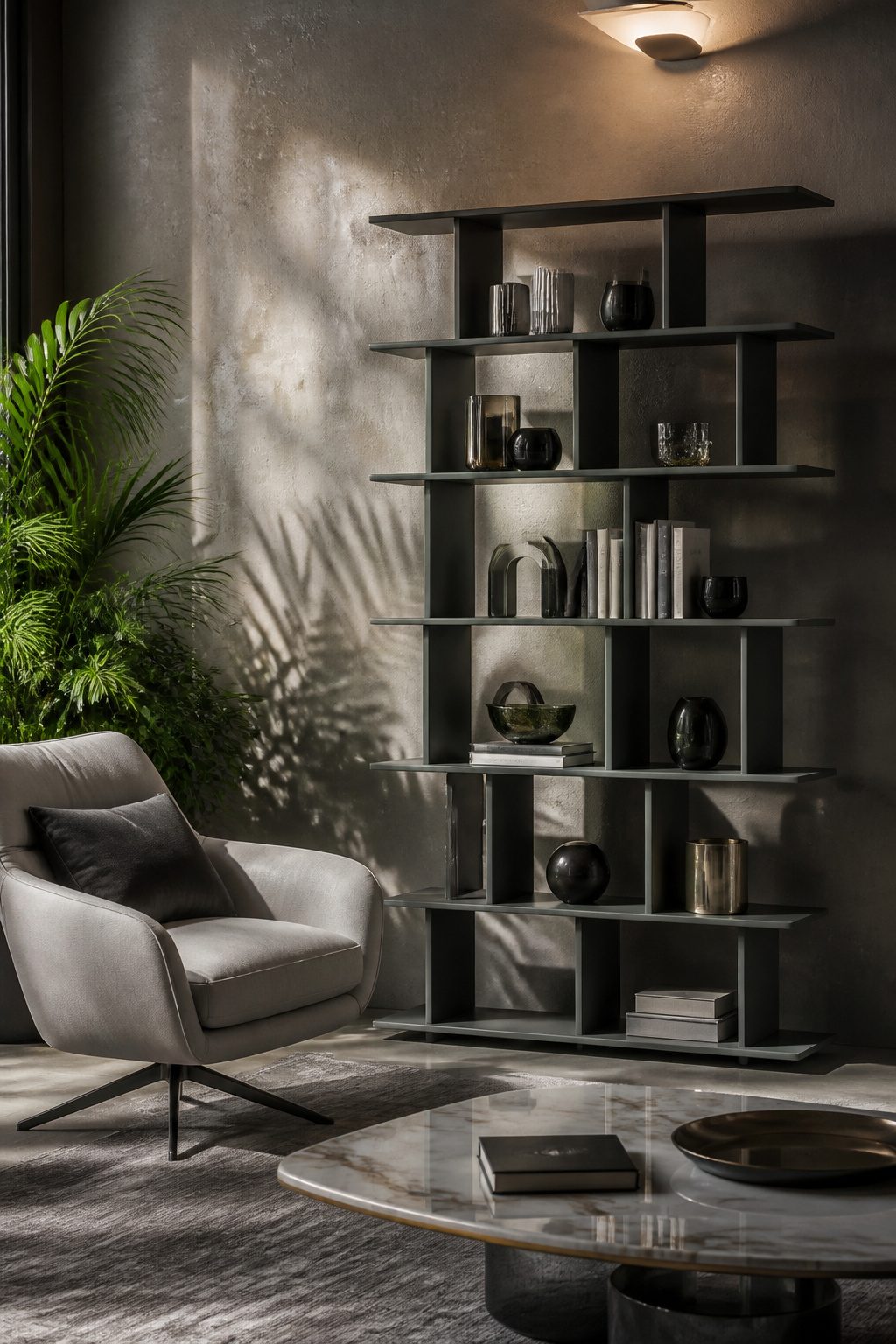
The Cattelan Italia Fulham Bookcase sits at $2,789, about $1,000 above their DNA Bookcase and $400 above the Nautilus Low. That gap buys restraint. Where other Cattelan pieces in this bracket get busy with angles or revolving mechanisms, the Fulham keeps to a simple vertical rhythm: upright sides, flat shelves, nothing that reads as a gimmick.
Stylish here means proportion first, material second. The silhouette stays narrow enough to work beside a sofa without commanding the wall, and the finish options (typically lacquered wood or matte lacquer in Cattelan’s standard range) let it read as furniture rather than storage. I have seen the same footprint fail when a manufacturer thickens the shelves to look substantial; the Fulham’s shelves stay slim, so the unit stays light visually even when loaded.
At this price you are paying for Italian manufacture and the Cattelan name rather than exotic materials. The construction is engineered wood with veneer or lacquer, not solid hardwood. That is standard for the brand at this tier, and it holds up fine in climate-controlled living rooms. Skip it if you need something that survives a move every year; the finish corners will chip. For a permanent or semi-permanent placement, the proportions justify the cost against cheaper options that look heavier.
13. Cattelan Italia Wally Bookcase
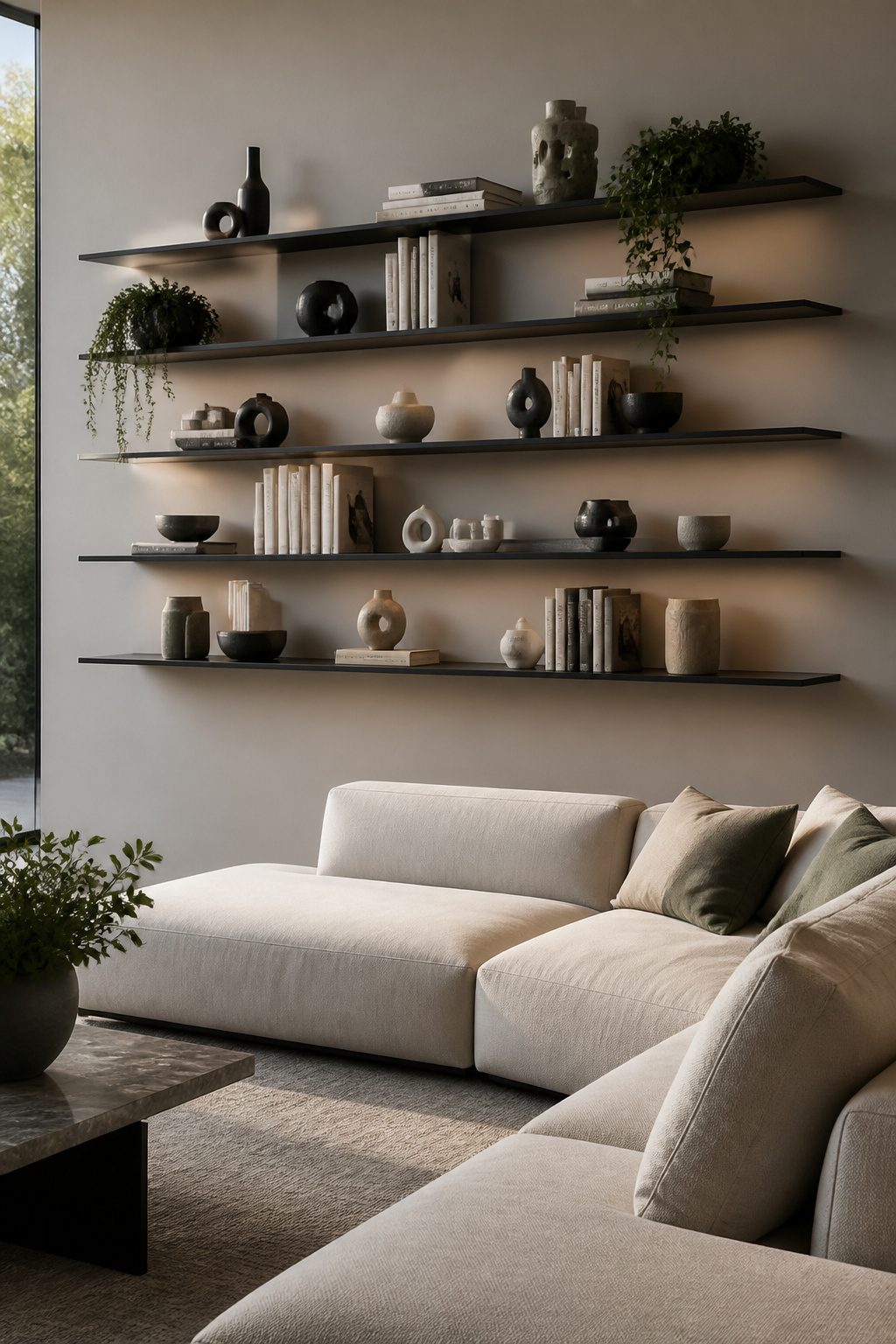
The Cattelan Italia Wally Bookcase sits at $3,629, making it the second-priciest piece in their lineup behind the towering Nautilus. That number signals what you’re actually paying for: not raw storage, but a wall-mounted system that reads as floating architecture rather than furniture. Cantoni lists it at full retail with no quickship tag, which usually means made-to-order lead times.
Compared to the DNA Bookcase at $1,659, the Wally abandons the freestanding sculptural tower approach entirely. DNA stacks vertical shelves in a helix you walk around; Wally spreads horizontally across the wall plane. The Fulham at $2,789 splits the difference as a standing unit with open framing, and the Tokyo Revolving Bookcase at $3,509 keeps the kinetic gimmick of spinning tiers. Wally does none of that. Its design move is restraint: thin shelves, minimal visible support, the wall itself becoming the back panel.
This is where the price either justifies itself or doesn’t. For renters, the Wally demands permanent mounting and a landlord conversation. For first-home owners with plaster and studs they actually own, it offers the inverse of the Story Bookcase’s 15¾-inch footprint: instead of occupying floor space, it consumes wall real estate you weren’t using anyway. The comparable spend from BDI’s Linea line buys you a multi-shelf system with extension options; the Wally buys you a single gesture. Whether that gesture is worth nearly four times the DNA depends on whether your living room needs storage or a signature.
14. Cattelan Italia DNA Bookcase
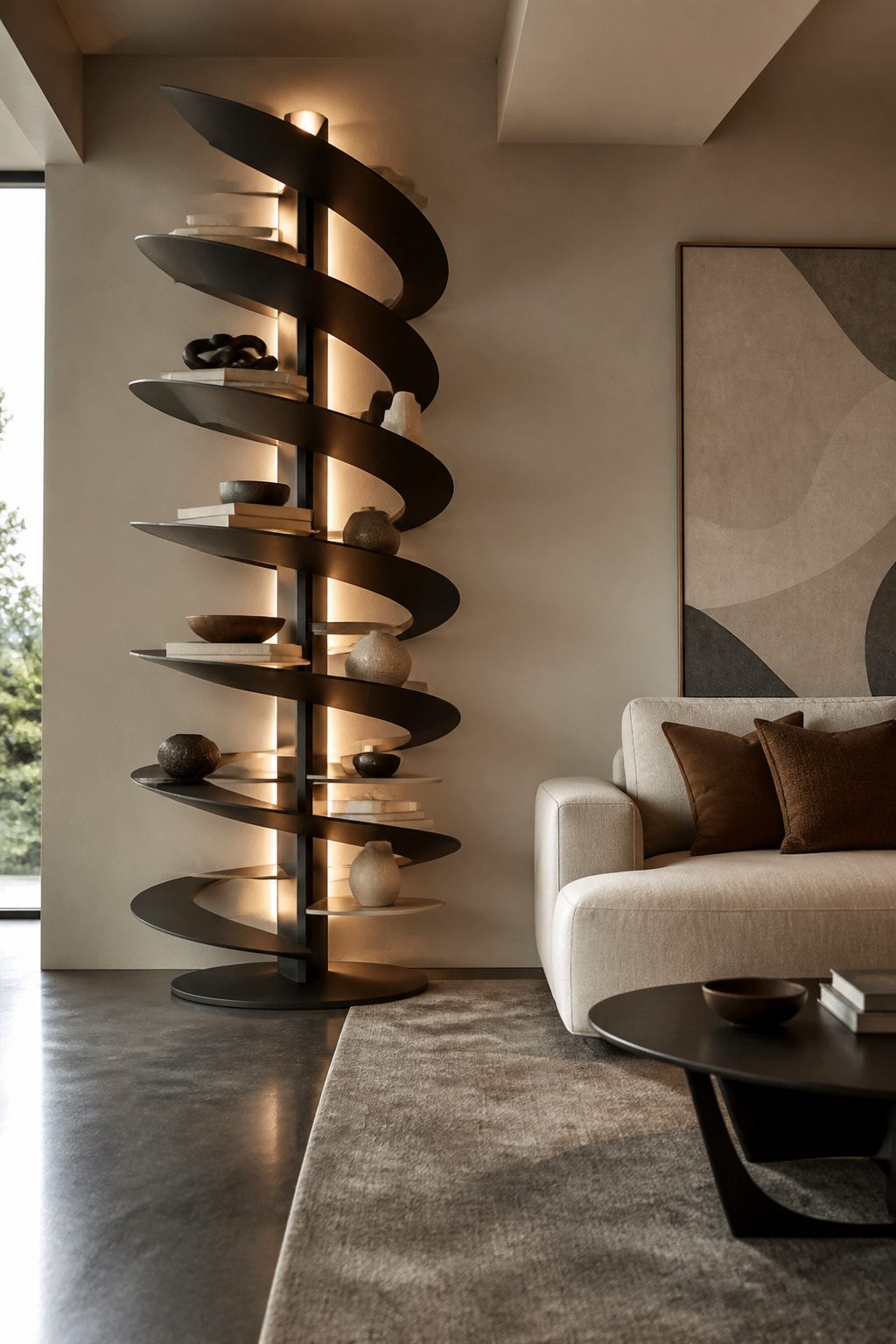
The Cattelan Italia DNA Bookcase sits at $1,659, making it the brand’s most accessible statement piece. That is roughly half the price of the Wally Bookcase at $3,629, though both carry the same Italian DNA in name and manufacture. Where the Wally spreads wide and low, the DNA goes vertical and twisting, a single steel column with shelves that splay like a helix. It is the bookcase you buy when you want guests to ask where you found it, not when you need to store a full library.
In the Cattelan range, this is the entry point for their sculptural work. The Nautilus Low runs $2,389, the Fulham $2,789, and by the time you reach the Freeway Suspended at $13,879 you are in another category entirely. The DNA keeps you in conversation with that world without the five-figure commitment. The tradeoff is capacity: those angled shelves hold objects well, but rows of standard books sit awkwardly. I would treat it as display furniture first, storage second, and plan the wall behind it as carefully as the piece itself.
15. Lago Pentagram Bookshelf With Lights
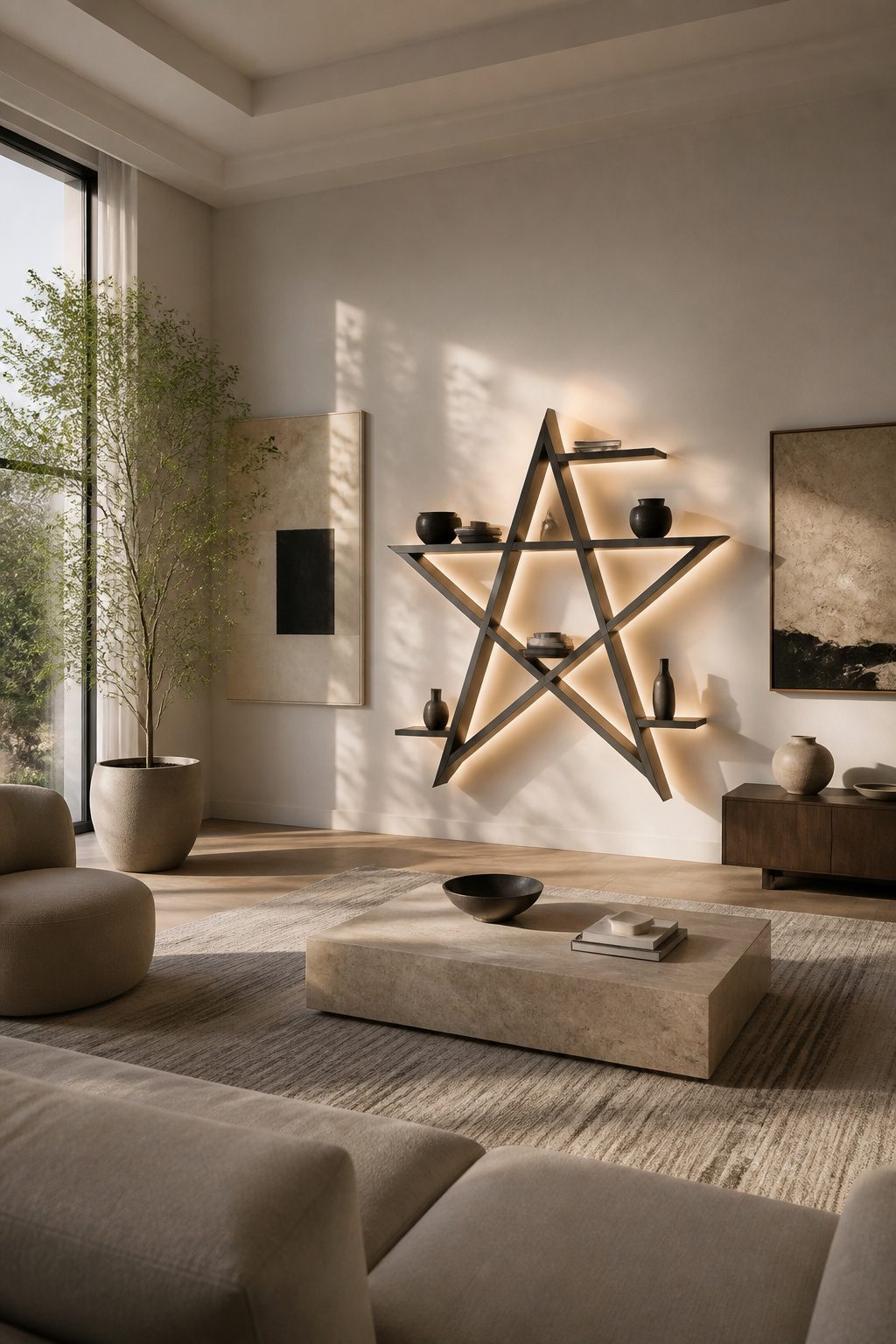
Integrated lighting on a bookshelf changes where you can put it. A unit like the pentagram frame with built-in LEDs needs to sit within reach of an outlet or get wired into the wall, and that second option means cutting drywall and hiring an electrician if you want it clean. Most renters end up with a visible cord routed behind the unit or a floor outlet they already have.
The lights themselves are usually LED strips framed into the underside of each shelf. They throw upward across whatever you display, which looks dramatic against books but can read as harsh if the shelf sits opposite a window or TV. Placement matters more than with standard shelving: too close to a seating area and the glow competes with lamps you actually read by.
Cost is where the style premium shows. Integrated lighting adds roughly $200–400 over an unlit equivalent, and replacement parts tie you to the manufacturer once the original strips dim. The fixture looks designed in showrooms; in a lived-in room, the effect depends entirely on what you put on those shelves. Empty, the lights emphasize dust and the geometry of the frame itself.
16. Fiam Magique Totem Bookcase
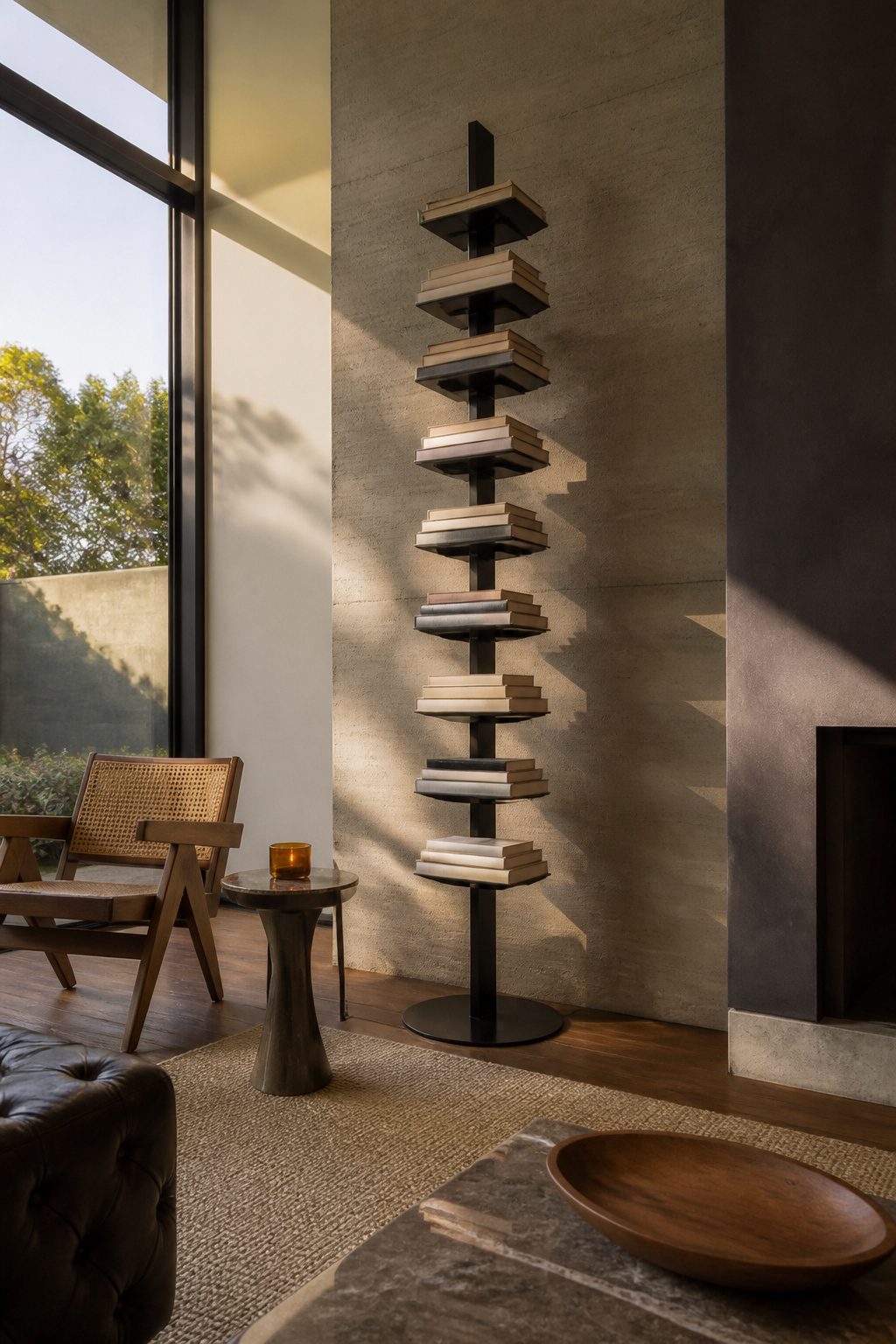
A totem-style bookcase stacks its storage straight up, not out, which changes how you actually use it. The Fiam Magique Totem works like a vertical spine: shelves thread onto a central pole and your books lie flat in stacks rather than standing spine-out. That footprint stays tight, roughly 16 inches square, so it reads more like a column than furniture.
The catch is what flat-stacking costs you. Dusting means lifting every stack off its shelf, and browsing titles means reading the top book or pulling piles apart. The construction runs heavy, galvanized steel with powder-coated aluminum sleeves, so once it is planted it stays planted. Some units recommend wall-anchoring for safety; others sit freestanding without issue, though small children change that math.
What "unique" translates to here is adjustability. Each shelf rotates on that center pole, so the column can stay disciplined and straight or splay at angles. It is a specific look, and a specific chore, but the vertical logic wins when floor space is the thing you do not have.
17. Cattelan Italia Freeway Wall Supported Shelf
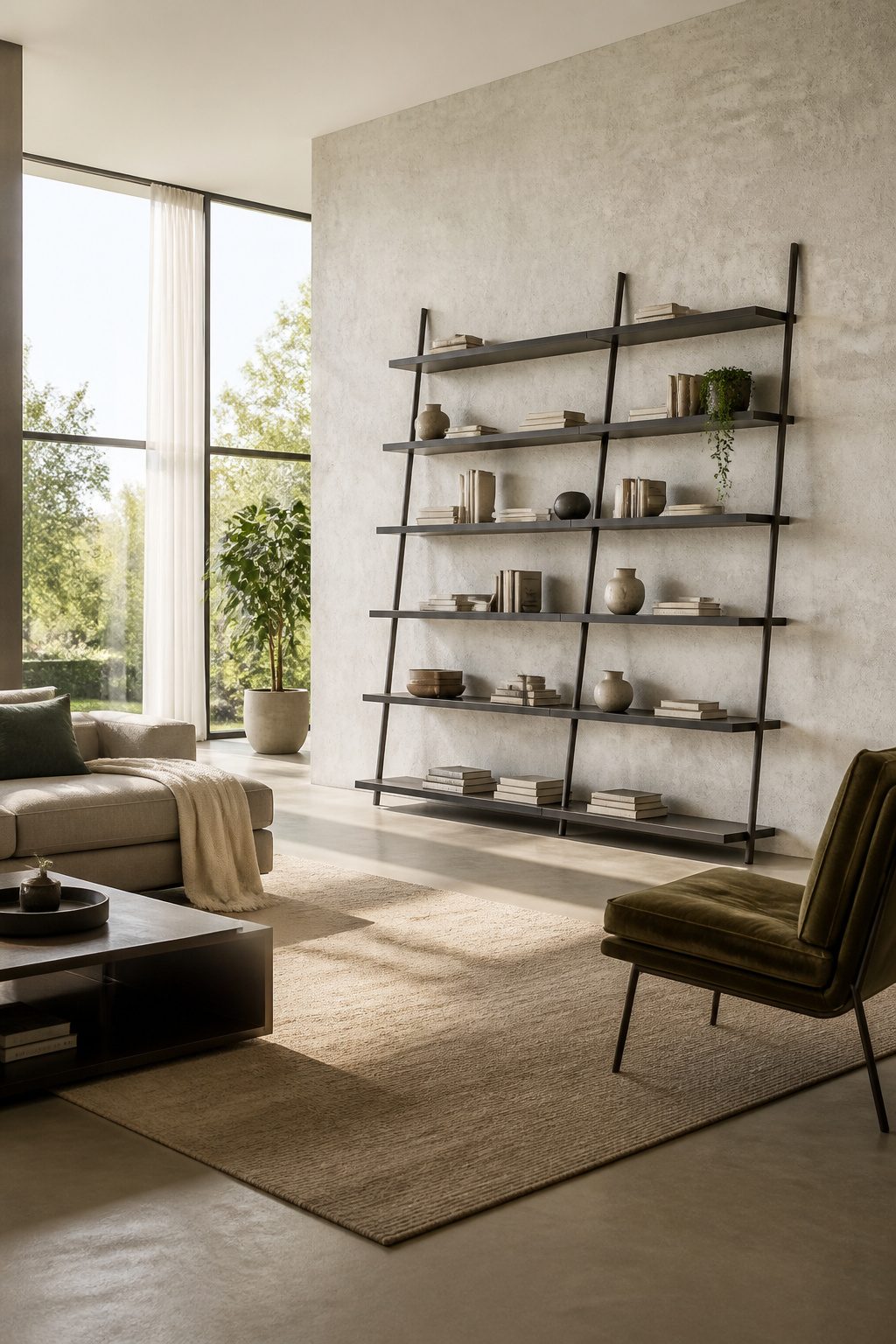
Wall-supported shelving sits on the floor and leans back against the wall rather than hanging from it, which changes the install entirely. The Cattelan Italia Freeway Wall Supported version needs only a few anchor points near the top to prevent tipping; the rest of its weight rests on the floor itself. That makes it friendlier to renters who cannot drill the full grid of holes a true wall-mounted unit demands, and it leaves the wall surface largely intact when the piece eventually moves.
The Freeway Suspended variant, by contrast, hangs entirely from above and requires substantial ceiling or wall structure to carry every pound of books and display objects. The wall-supported model trades that floating look for simpler logistics and a lower visual center of gravity, which reads as grounded rather than airy in a typical living room.
At this price level, "modern aesthetic" means clean planes, thin metal uprights, and open storage without backing panels so the wall color becomes part of the composition. The engineering is visible: joints are minimal, finishes are matte or lightly brushed, and the overall impression is intentional restraint rather than ornament. You are paying for the proportion, not the ornament; the shelves read as architecture rather than furniture, which works best in rooms where the surrounding pieces are equally quiet.
Assembly What to Expect
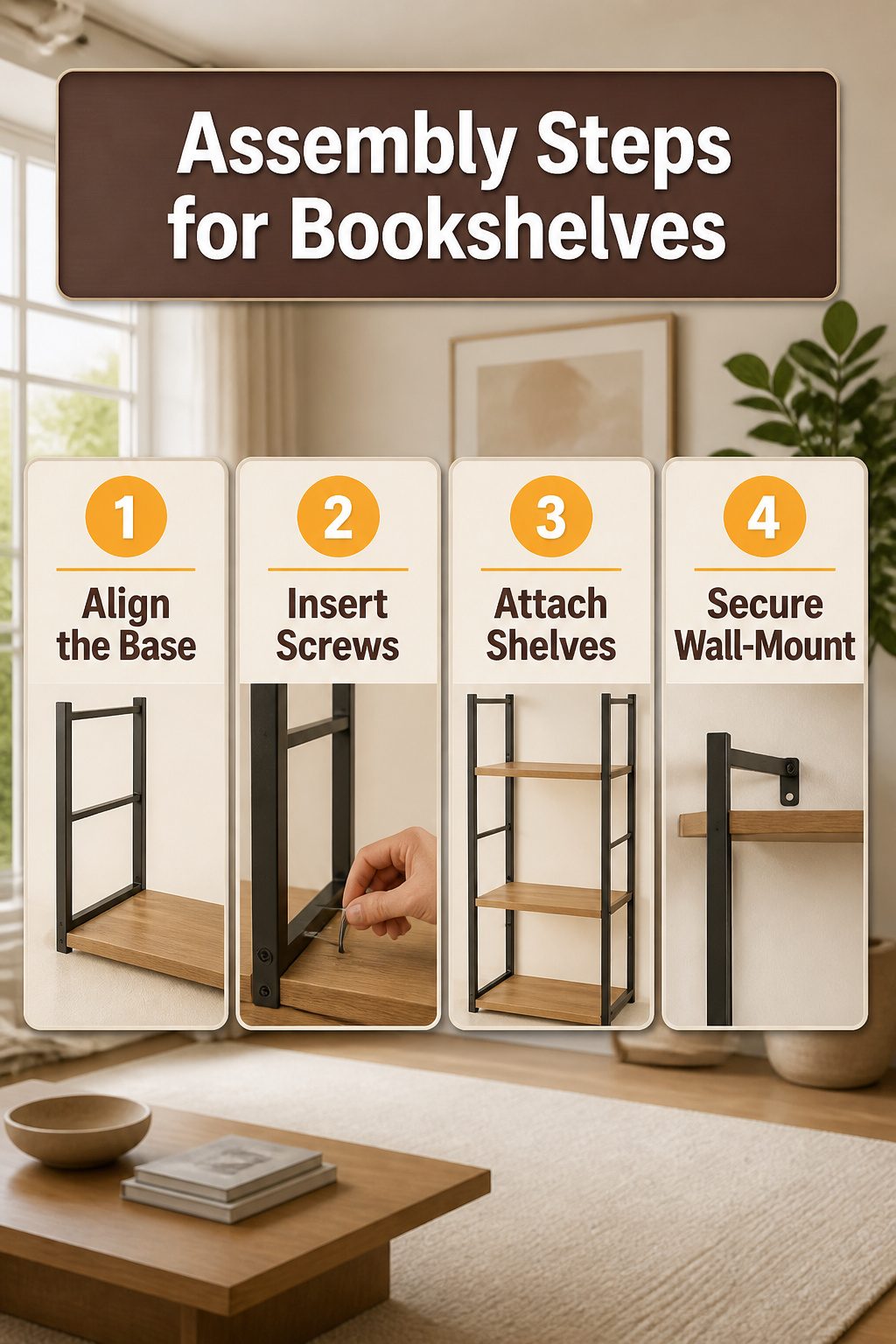
Assembly reality sits somewhere between the marketing photos and the panic of a Sunday evening with half the hardware missing. The Krossa, at 70.5 inches tall in its full height, is the one that tests your patience. Two delivery people needed about thirty minutes to get it standing even with white-glove service, and the tester who tried it admitted the size alone justified the extra cost. At 5’2", she could not have managed the lift herself. The shorter 35.5-inch Krossa option exists precisely because not everyone has the ceiling clearance or the second pair of hands.
The Pierce runs the opposite way. West Elm’s in-home delivery option meant assembly was, in the tester’s words, a non-issue. The metal frame and oak-veneer shelves arrived ready to live with.
What you actually need depends on which route you take. The Krossa has wall-mount capability, which means a stud finder and level if you use it. The Pierce, with its 78.75-inch height and mixed materials, likely needs nothing more than the included Allen key and an hour of your evening.
My own rule after reading too many of these accounts: if the unit is taller than you are and the brand offers assembly, pay for it. The thirty-dollar savings evaporates the moment you strip a screw or scratch the veneer against a doorframe.
Materials and How They Hold Up
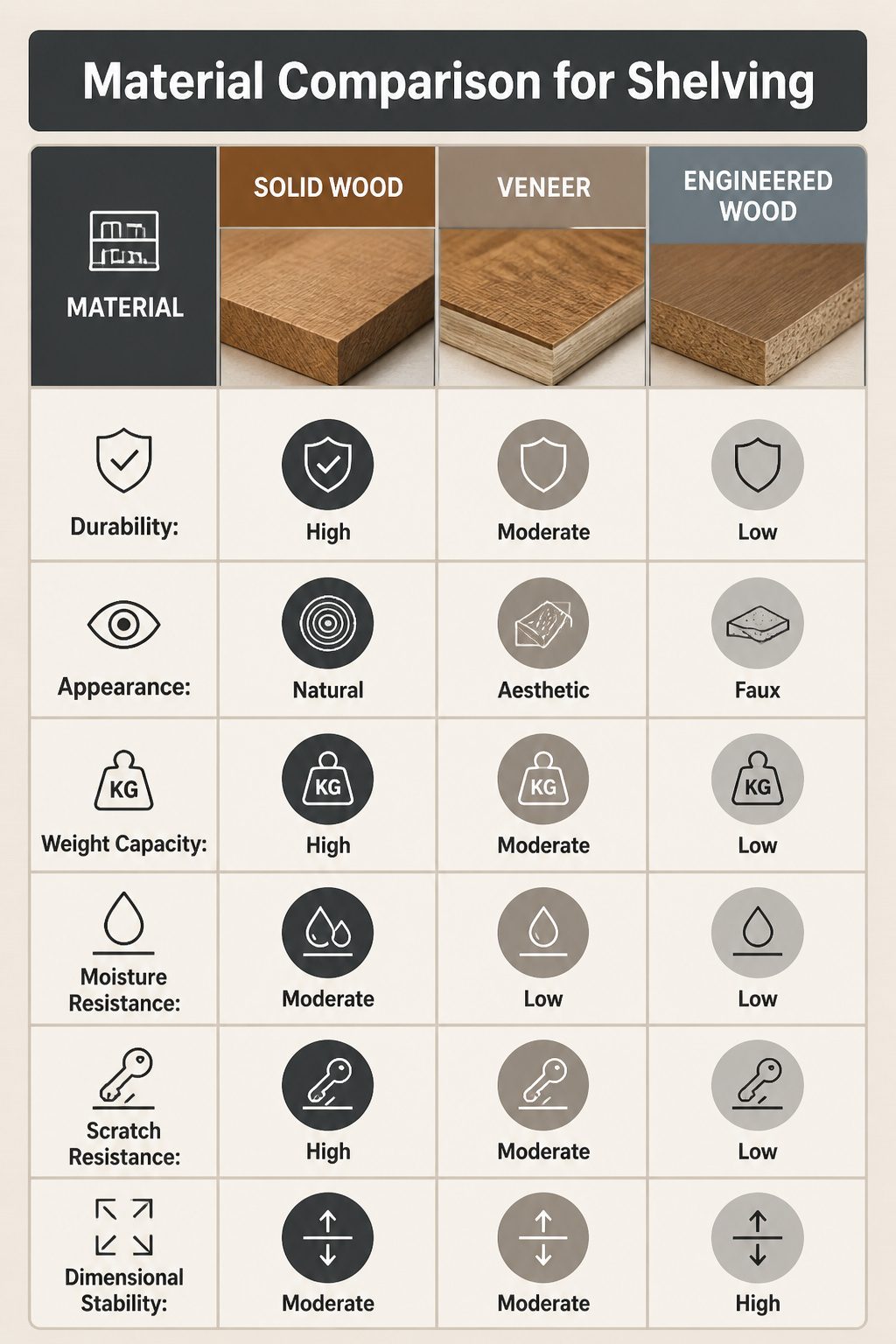
Solid wood, veneer, and engineered wood behave like three different animals once you load them up. White oak and walnut hold their shape under real weight, which matters when your shelf spans more than thirty inches and the books start leaning. Veneer is a thin slice of that good wood glued over something cheaper; it looks right until someone scratches it or water sits on the surface. Engineered wood, the particleboard or MDF core you see in most ready-to-assemble units, stays flat better than solid wood in dry winter air but swells fast if moisture gets past the finish.
Metal frames divide into two camps for living room bookshelves. Galvanized steel with powder-coated aluminum sleeves, like on vertical designs, weighs enough that moving one feels like relocating a tree. Tempered glass shelves look clean and disappear, which is the point, but they force books to lay flat rather than stand spine-out. Marble slabs, at roughly 47 inches wide in one unit I tracked, need two people to maneuver and ask serious questions about your floor load. Powder-coated aluminum resists the nicks that bare steel collects, and the finish keeps the industrial look without the rust risk.
Design Styles From Minimalist to Statement
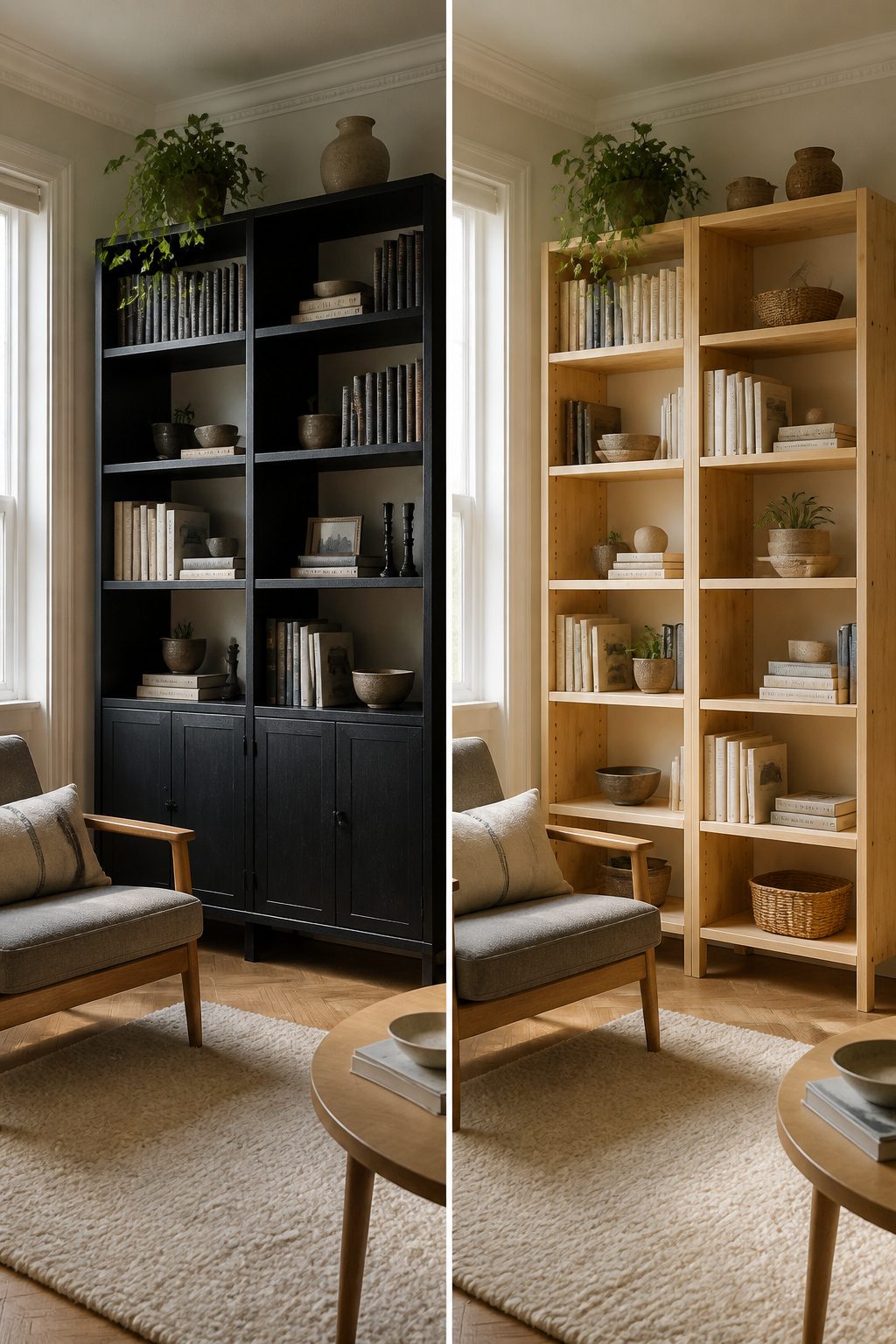
A living room bookshelf is either background or it is the room. The IVAR system has been in the IKEA catalogue since 1967, originally designed as industrial storage for the Swedish Post Office, and that utilitarian DNA matters for renters: modular units that wrap around a corner can come apart and reassemble in the next apartment. Hannah Martin, a senior design editor, has moved hers through multiple apartments, adding screw-in feet to address uneven floors. The pieces carry serious weight once assembled, though the process itself can feel slightly daunting.
Owners with permanent walls can take the opposite approach. The Tokyo bookcase revolves; the Turtle Carry shapes itself into a small animal hauling your books on its back. These pieces start at $829 for the Turtle and run to $2,987 for the Tokyo, which places them in the statement category rather than the modular one. The Esther, with its curved silhouette, sits somewhere between: elegant enough to anchor a wall, compact enough to leave behind without guilt if you move.
The choice maps to how long you plan to stay. Renters need systems that expand and travel. Owners, or anyone settled for the foreseeable future, can treat the shelf as sculpture. One warning from experience: a revolving bookcase in a rental means patching wall anchors later, and landlords notice that.
What These Actually Cost
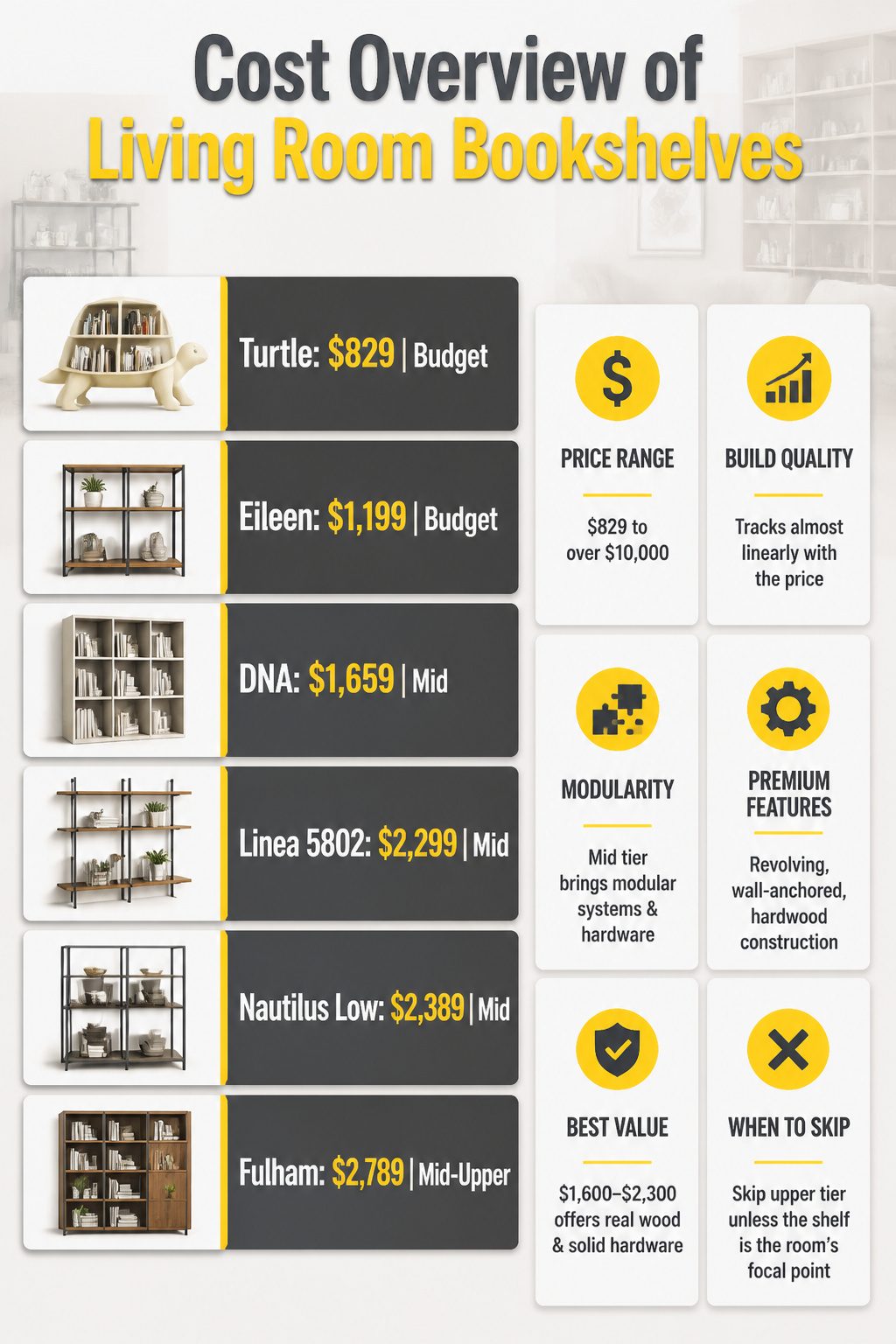
A living room bookshelf can land anywhere from $829 to over $10,000, and the build quality tracks almost linearly with the price. The budget tier, roughly $800–$1,200, gets you molded resin or basic veneered composite. The Turtle at $829 and Eileen at $1,199 both sit here: the Turtle is a sculptural resin piece shaped like a tortoise, while the Eileen uses simpler steel and wood construction.
| Shelf | Price | Tier | Typical Build |
|---|---|---|---|
| Turtle | $829 | Budget | Molded resin |
| Eileen | $1,199 | Budget | Steel, wood veneer |
| DNA | $1,659 | Mid | Lacquered wood, modular |
| Linea 5802 | $2,299 | Mid | Engineered wood, hardware system |
| Nautilus Low | $2,389 | Mid | Painted steel, open frame |
| Fulham | $2,789 | Mid-Upper | Wood and metal mix, finished back |
| Tokyo | $3,509 | Upper | Revolving mechanism, hardwood |
| Wally | $3,629 | Upper | Lacquered wood, wall-anchored |
The $1,600–$2,300 mid tier is where modularity and hardware start to matter. The DNA at $1,659 stacks and reconfigures; the Linea 5802 at $2,299 is built as an extension system that grows with wall rails. Above $2,500, you are paying for refined materials and mechanical features: the Tokyo revolves, the Wally mounts with hidden fixings, and both use hardwood rather than veneer.
I would skip the upper tier unless the shelf is the room’s focal point. For most living rooms, the $1,600–$2,300 range covers real wood enough of the time and hardware that does not flex under books.
Unique Shapes Worth the Risk
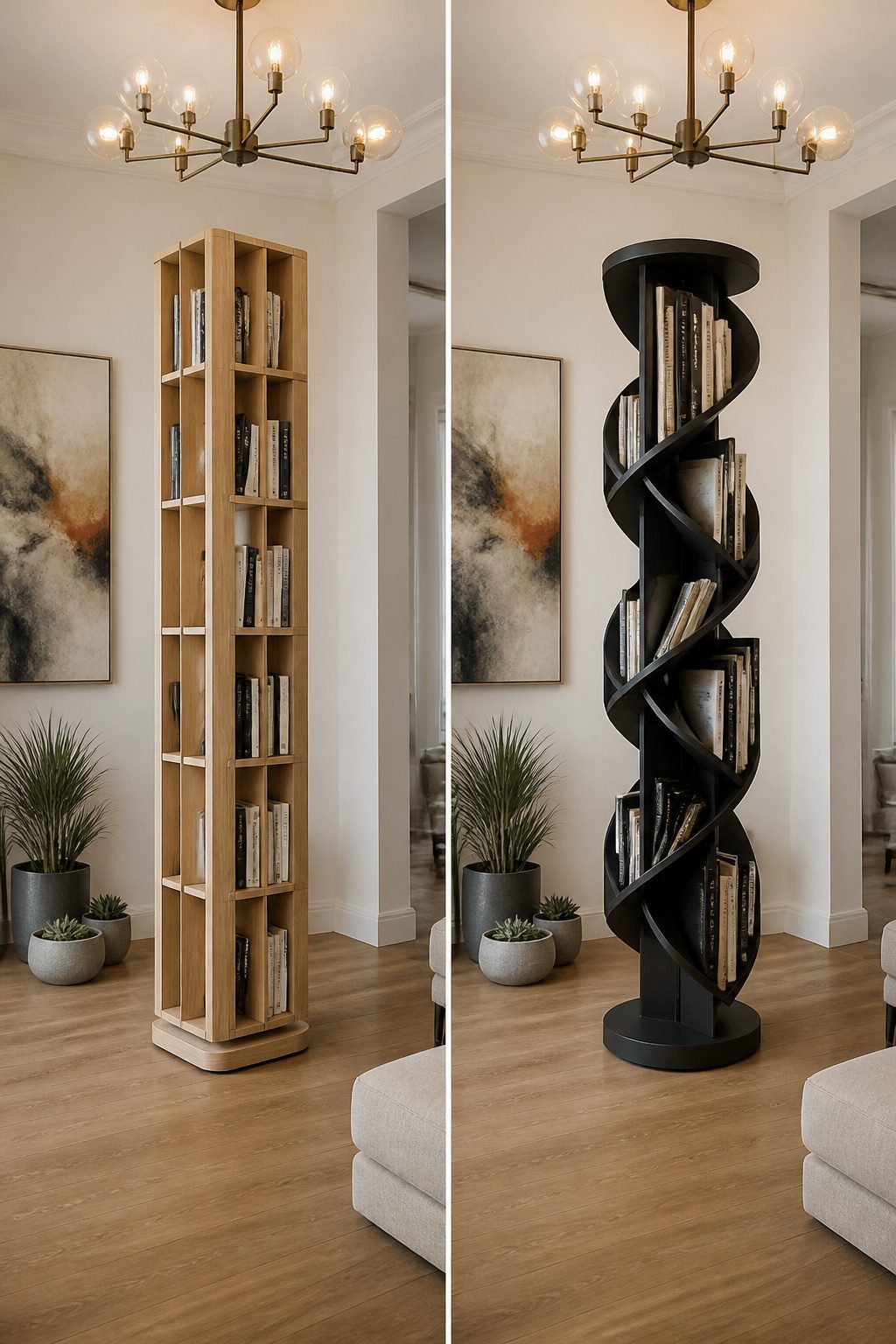
A $3,509 revolving bookcase sounds dramatic until you try moving it through a 30-inch doorway. The Tokyo from Cattelan Italia spins on a central axis, which means it needs clearance on all sides and a floor that can handle 150-plus pounds without complaint. I have watched friends fall for pieces like this, then spent Saturday helping them angle it down a stairwell with a landing too small for the turn.
The DNA bookcase, also from Cattelan Italia at $1,659, twists into a double-helix profile that reads as sculpture from every angle. It works when your living room is the destination, not a stop along the way. The same goes for the Wally at $3,629 and the Magique Totem at $5,989, both of which sacrifice flat-backed placement against a wall in favor of a silhouette that demands center stage. The Qeeboo Turtle Carry at $829 sits lower and lighter, shaped like a tortoise with a shell that holds books; easier to justify as a renter because it moves like accent furniture, not built-in architecture.
The risk with any of these shapes is not the price tag alone. It is the future Tuesday when your lease ends or your partner wants the sofa on the other wall. A vertical spine shelf like the Design Within Reach Story at 15¾ inches square can at least float in a room, though even that one ships in two boxes and threads together like a mechanical puzzle. The Turtle Carry or a standard rectangle lets you change your mind. The Tokyo, DNA, or Wally make the decision for you, permanently, in a footprint you cannot revise without selling the piece.
Frequently Asked Questions
What are the best living room bookshelves?
The best living room bookshelves include the Article Krossa Shelving Unit, West Elm Pierce Narrow Storage Shelf Unit, and Design Within Reach Story Bookcase for tighter spaces. For higher budgets, the Cattelan Italia line offers sculptural options like the DNA Bookcase and Tokyo Revolving Bookcase, while the IKEA IVAR system remains a modular, budget-friendly staple that has been in production since 1967.
How much do living room bookshelves cost?
Living room bookshelves range from around $829 for the Qeeboo Turtle Carry Bookcase to well over $10,000 for Italian designer pieces like the Cattelan Italia Freeway Suspended Bookcase at $13,879 or the Lago Pentagram Bookshelf With Lights at $34,169. Mid-range options from BDI and West Elm typically fall between $1,199 and $2,299, while Cattelan Italia’s entry point sits at $1,659 for the DNA Bookcase.
What materials are used in living room bookshelves?
Common materials for living room bookshelves include solid woods like white oak and walnut, wood veneers over engineered cores, metal frames and legs, and tempered glass. Some pieces mix materials, such as the Castlery Esther Bookshelf with marble shelves and walnut-veneer surfaces, or the Design Within Reach Story Bookcase with galvanized steel and powder-coated aluminum.