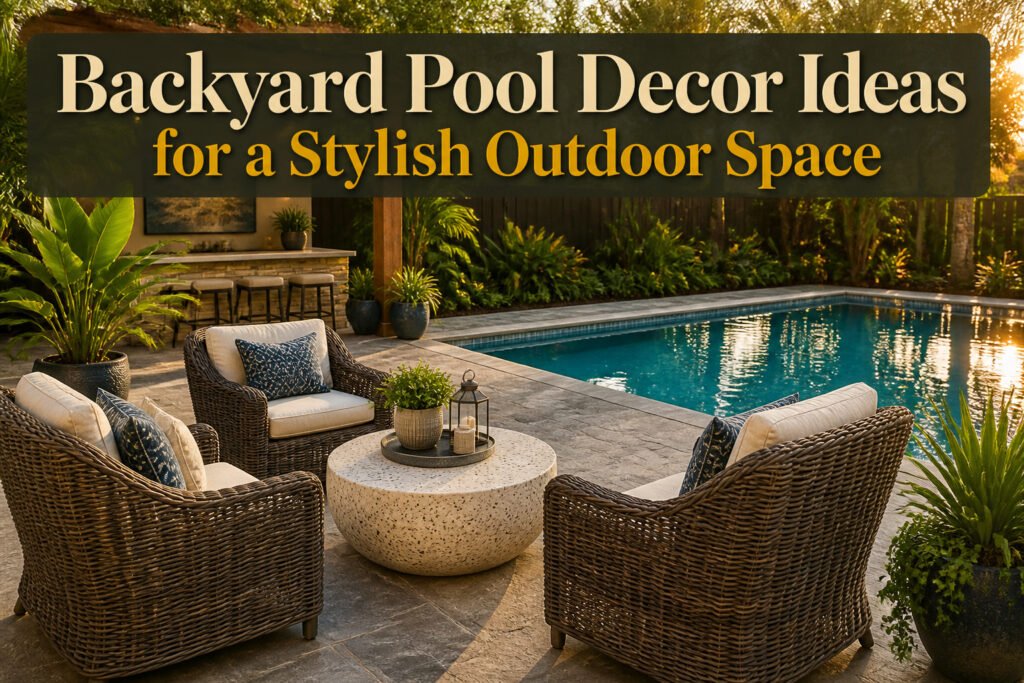
The right backyard pool decor depends on whether you need pieces that stay put through chlorine, sun, and rearranging or ones you can roll away before the first storm. What separates the options is not style but survival: composite chairs outlast wood, synthetic wicker outlasts real rattan, and a thirty-pound ceramic stool beats the concrete one you cannot lift. I learned each of these thresholds the hard way, starting with a wood dining set that warped to wobbling by Labor Day.
1. Poolside Dining
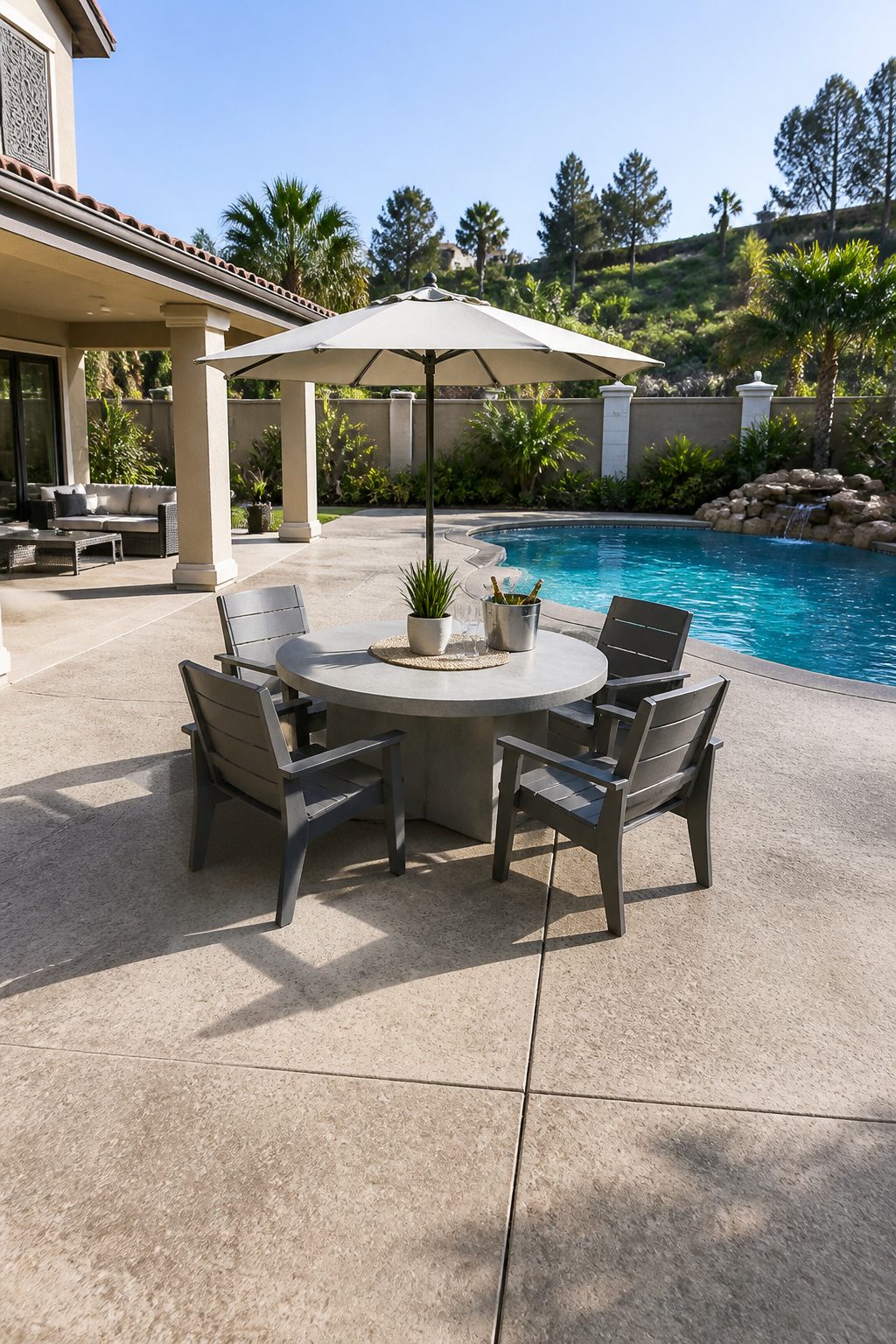
A dedicated eating area near the pool keeps wet feet out of the house and gives weekend gatherings a landing spot. The table and chairs have to handle direct sun, chlorinated splashes, and the occasional spilled drink without turning into a maintenance project.
I learned that the hard way with my first set. Untreated wood looked warm and cost less upfront, but a single humid summer warped the boards and left the chairs wobbly by Labor Day. Composite or concrete are the only materials that held up for me after that mistake. Concrete tables stay cool enough to touch even in July afternoon sun, and composite decking built into chair frames won’t warp the way natural wood does near water and wet feet.
My concrete pad is twelve feet across, and a table that seats four comfortably leaves enough walk-around room without crowding the pool edge. Waterproof cushioning is non-negotiable, and a quick-dry placemat or runner under serving dishes catches the drips before they slide onto someone’s lap.
2. Outdoor Living Room
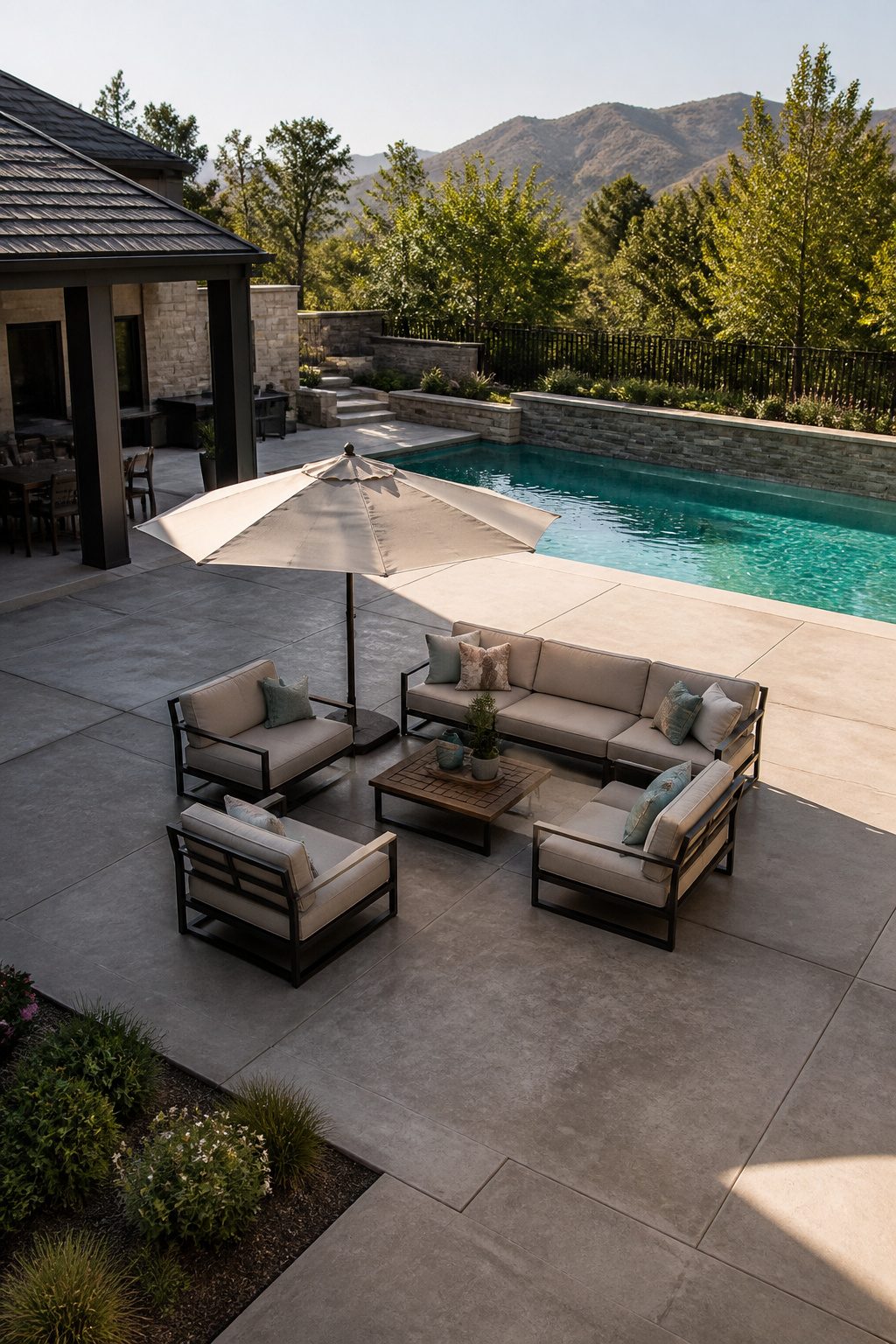
A conversation circle reads completely different than a single chaise pointed at the water. Last summer I arranged four chairs and a small sectional into a U-shape on the concrete apron, and suddenly people stayed out past sunset instead of drifting back inside.
The sectional came from a Facebook Marketplace listing: $180 for an aluminum frame with sun-faded cushions. New outdoor upholstery would have cost more than the whole setup, so I bought a $12 can of fabric waterproofing spray and applied three coats on a Saturday morning, letting each dry two hours in direct sun. The cushions bead water now for about a season before needing a touch-up.
The arrangement matters more than what you spent. Face the seats toward each other across a low table, not the pool, and people actually talk. My first layout had everything aimed at the water like theater seating, and guests sat in parallel silence. The fix cost nothing but an hour of dragging furniture.
3. Poolside Bar Cart
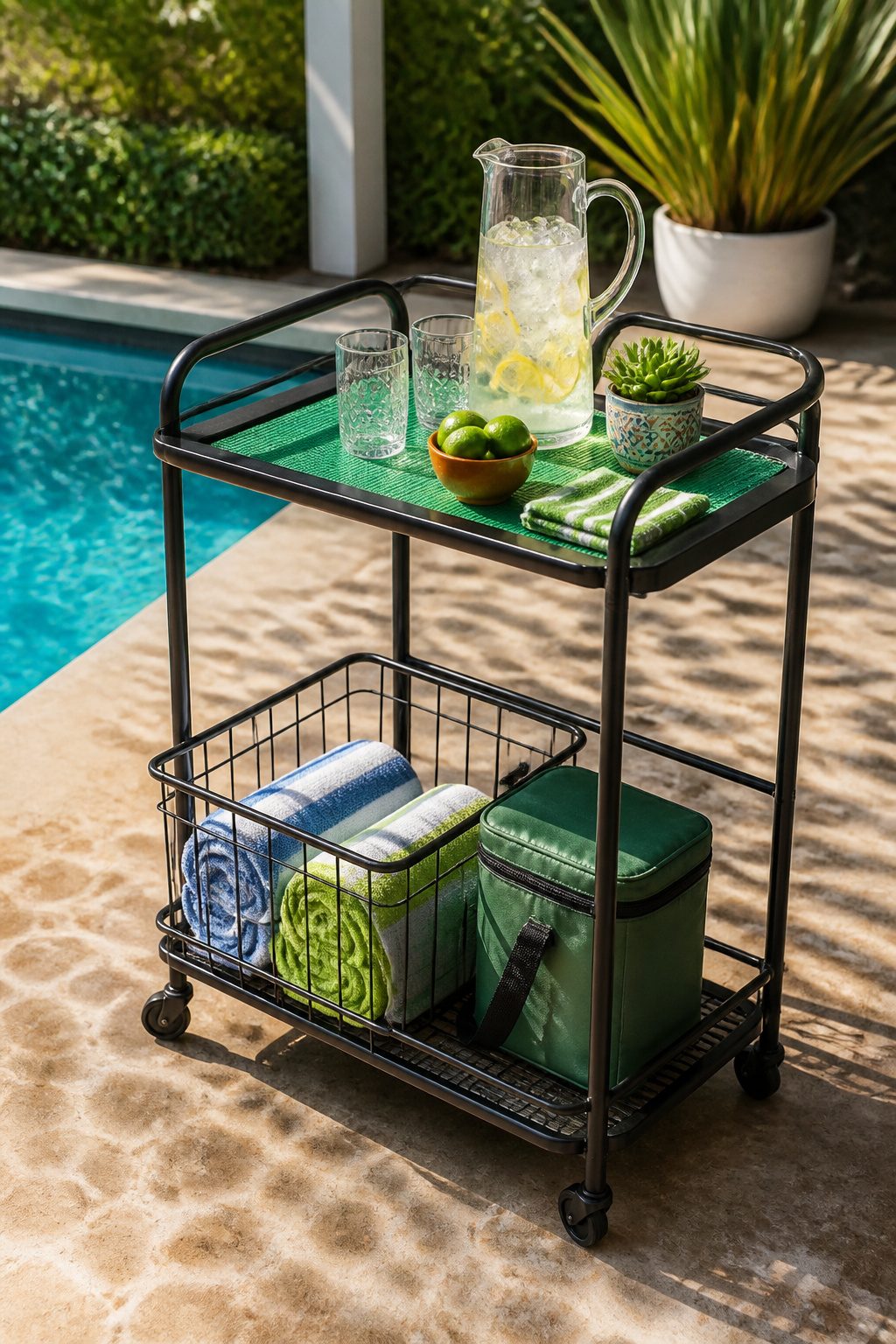
A rolling cart by the pool sounds like a gimmick until you try living without it. I bought a cheap metal utility cart on sale, swapped the wheels for locking casters with rubber tread, and suddenly had a mobile station that stayed put on textured concrete. The IKEA hack was the top shelf: I lined it with a silicone baking mat cut to fit, which keeps pitchers and glassware from sliding and wipes clean after sticky spills. Middle shelf holds rolled towels in a wire basket; bottom shelf gets sunscreen, a small cooler bag, and a stack of plastic cups.
The change happened the first heat wave. My daughter wanted a refill, and I realized I had not stood up. Locking casters on textured surfaces matter more than the cart’s looks, because a wobbly cart on wet concrete ends up in the pool. Rain still means wheeling it to the garage, but that single trip beats the kitchen runs that used to break up every afternoon.
4. Colorful Poufs and Cushions
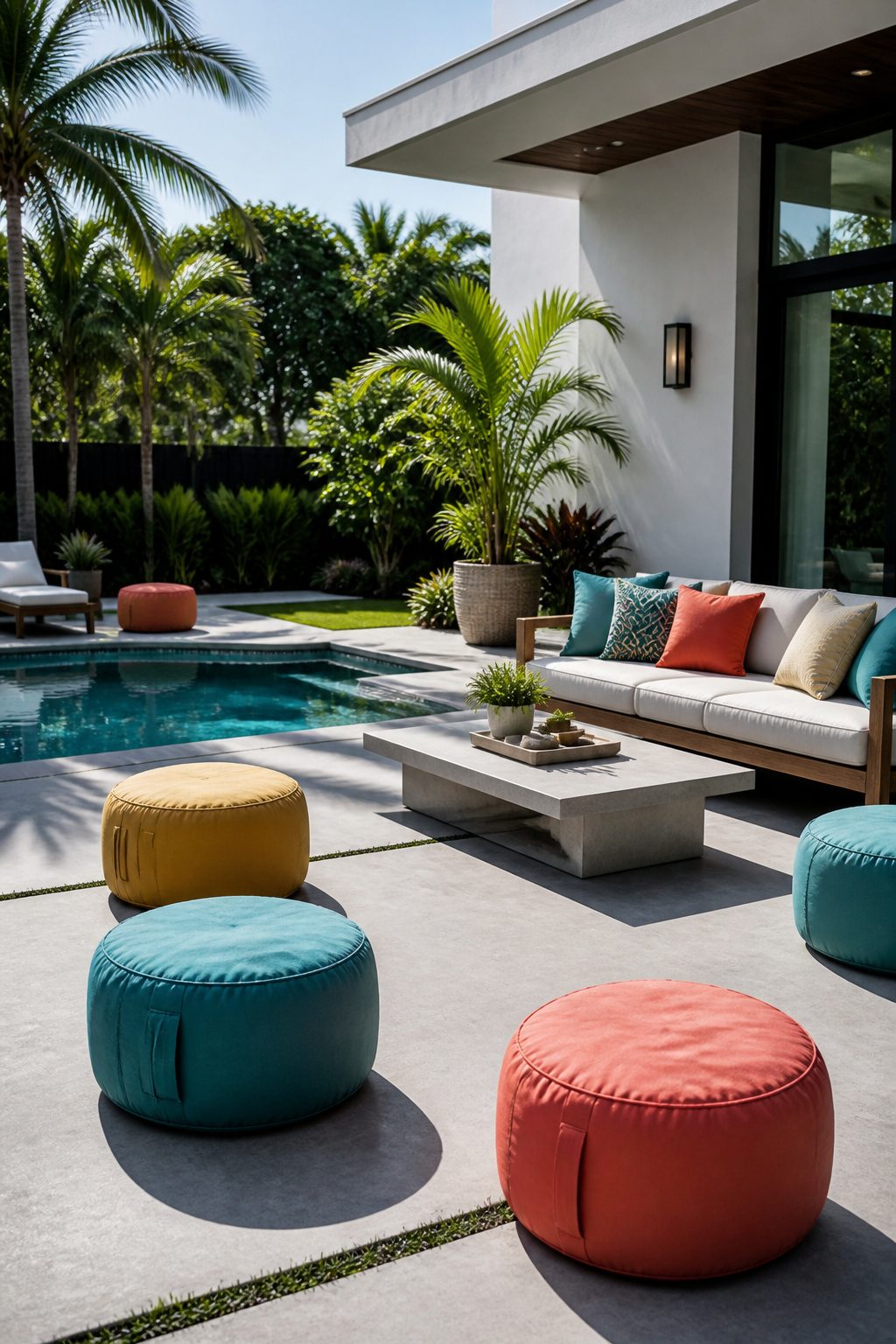
Movable seating around a pool beats fixed furniture for anyone who actually uses the space. I bought three canvas poufs at $35 each instead of one $200 lounge chair, and for the first summer the arrangement worked: guests dragged them into sun or shade, kids stacked them like blocks, and the teal, coral, and mustard blocks tied together the neutral concrete deck. The colors were gone by August. Chlorine spray and direct sun bleached the canvas to a dusty pink, cream, and pale yellow that no longer matched anything.
The second summer I switched to Sunbrella cushion covers in the same palette. The fabric costs more than standard outdoor canvas, but it withstands both sun and chlorine without fading, and it wipes clean after someone sits down wet. Two years later the teal is still teal. For poufs that will live poolside, the cover material matters more than the shape or the print.
5. Fire Feature
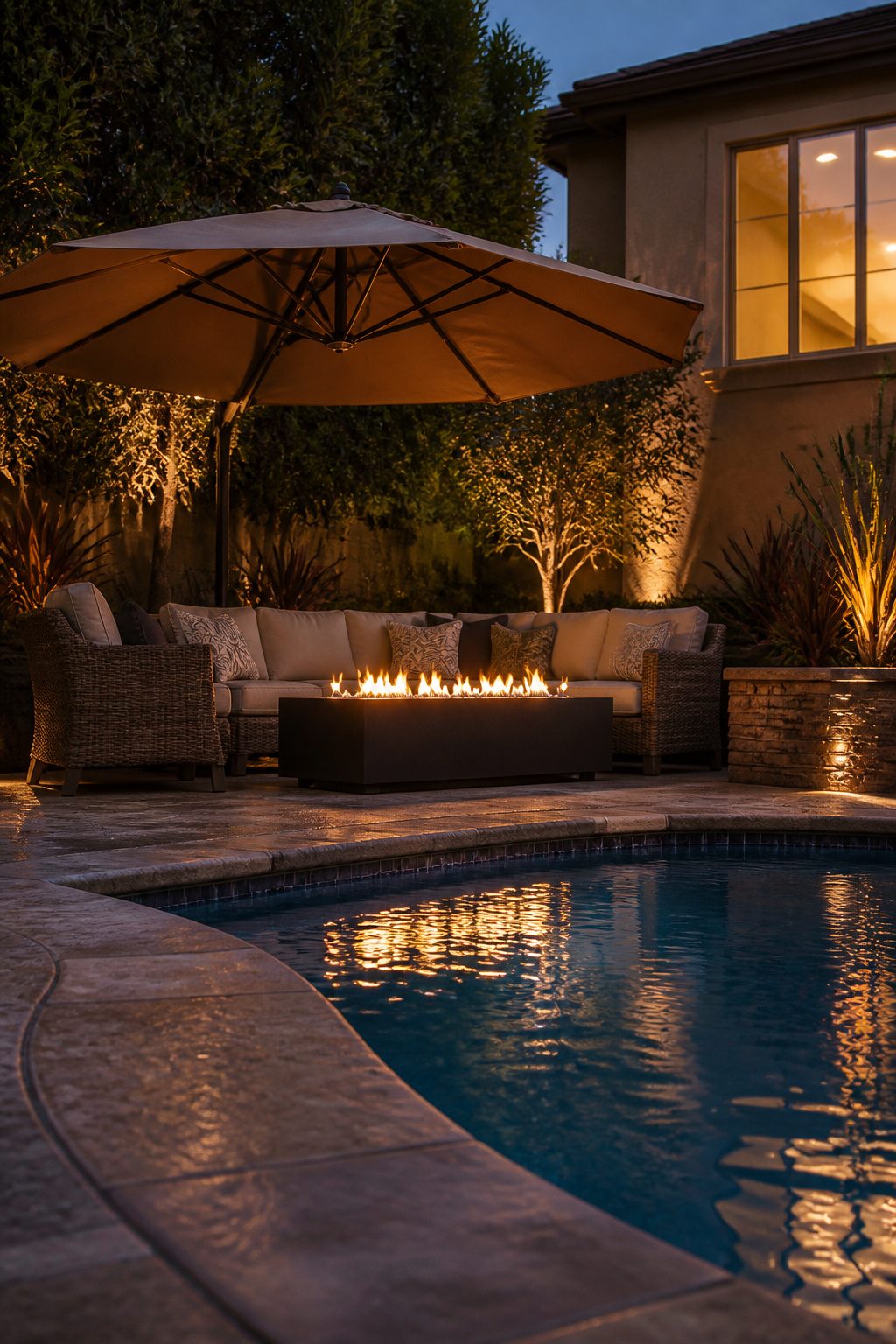
A propane fire table changed how long people actually stay by the pool. I bought one after watching guests shiver through a September sunset, and the first night I lit it, the same group stayed until eleven. The propane trade-off is simple: instant flame, no smoke in your eyes, and no ash drifting into the water. A wood fire costs less to run and throws more heat, but the spark risk and cleanup make it a harder sell when the pool is ten feet away.
The bigger issue was clearance. My town follows the International Fire Code, which generally wants at least ten feet of open space between a fire feature and any combustible structure or fence, though local amendments vary. I measured from the vinyl pool fence to the table edge and landed at twelve feet, mostly so nobody had to think about it.
What surprised me was the reflection. The table sits low enough that the flame doubles in the pool surface after dark, which does more for the space than the underwater lights alone. That visual warmth is what keeps people rooted to their chairs. The heat is secondary; the sociable mood is what sells it.
6. Cottage Chic Decor
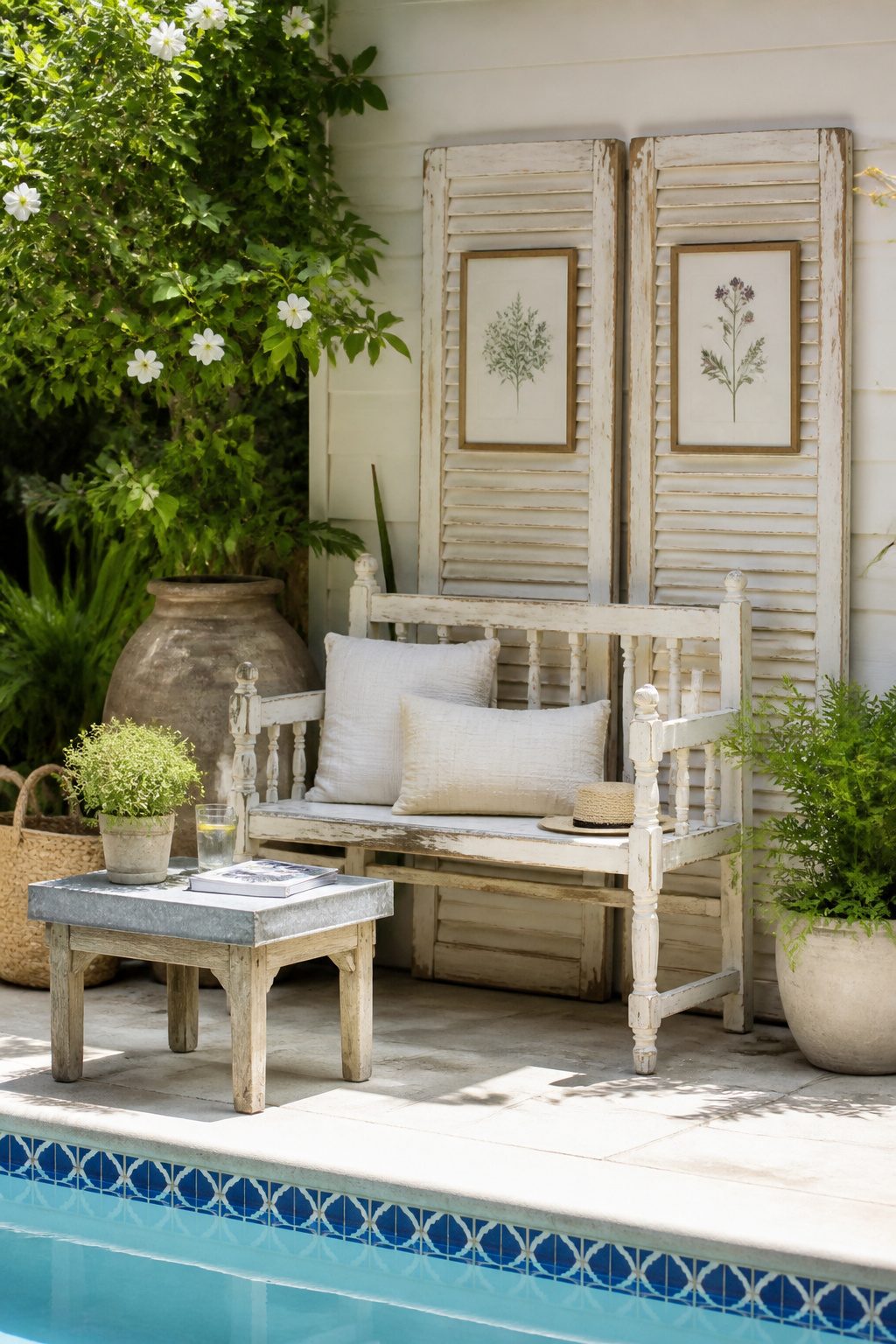
Whitewashed wood and soft patterns hide the mess that pool life actually brings. I built my cottage chic look around rummage sale finds: a spindle-back bench, two shutter panels, a zinc-topped table, all of which I repainted in layers of white and sanded back until the wood grain ghosted through. The style works because chips and water spots read as patina instead of damage. A distressed finish forgives what high-gloss punishes.
The one piece I lost was a carved wall panel I left bare. It molded within a season because I forgot the clear matte seal the finish needed. Seal every porous surface you bring poolside, even the ones that will live under cover. The memory still stings: thirty dollars and a morning of sanding, gone to fuzz and must. Now I seal before the first splash hits, every time.
7. Styled Serving Vignettes
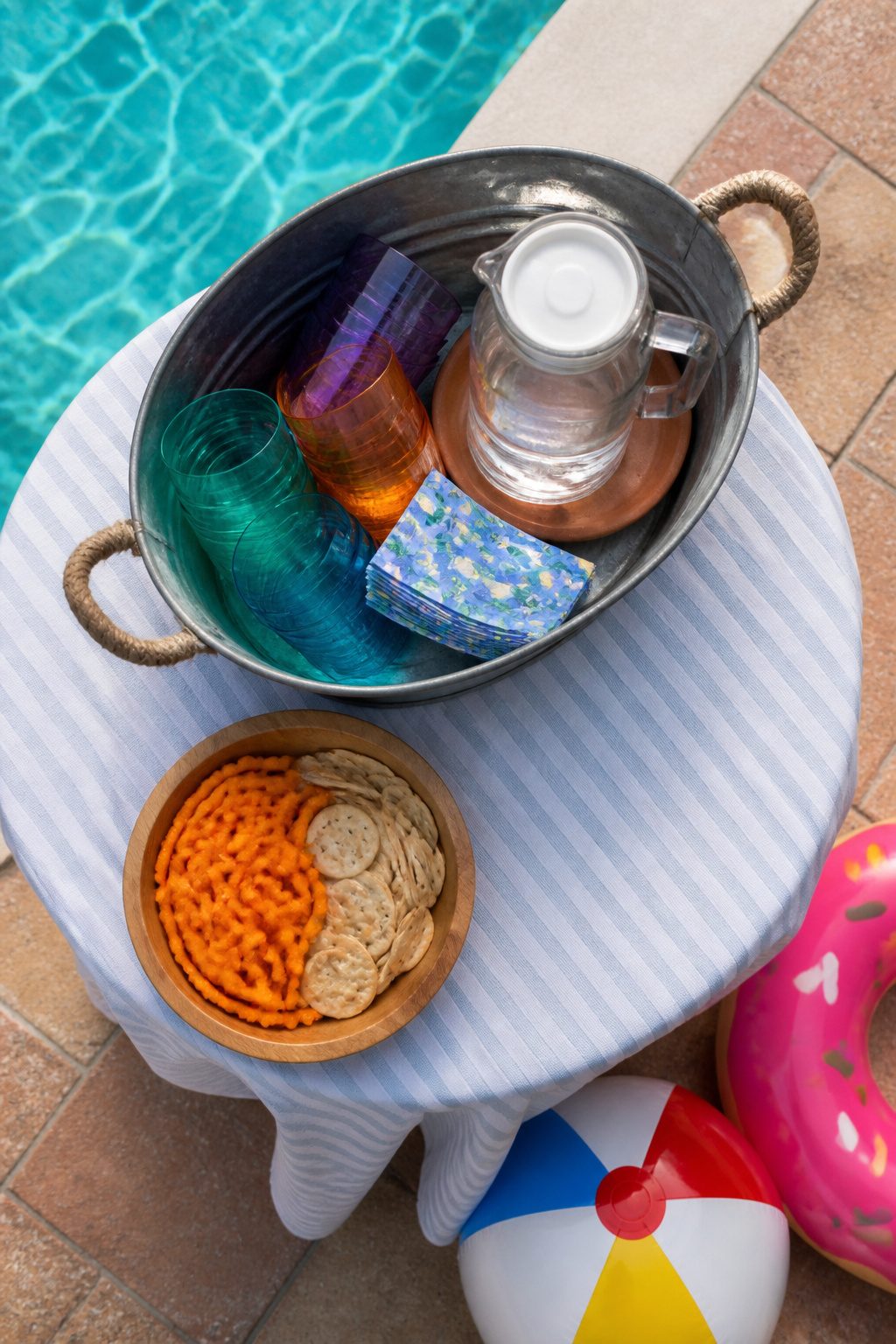
Small, ready-to-go arrangements of pitchers, glasses, and snacks by the pool saved me from my old habit of hauling the kitchen out every single time someone wanted a drink. I keep the core setup in a galvanized tub: a stack of acrylic tumblers, a lidded pitcher, napkins, and a wooden bowl that usually holds chips or sliced fruit. The tub itself lives on a covered side table between swims, so everything stays dry and within reach.
The mistake I made early on was setting the sweet stuff directly on that same table. Ants found the lemonade within an hour the first warm Saturday. Elevating the pitcher and any open fruit bowl onto a small overturned terracotta saucer, nothing fancy, broke their trail completely. They cannot seem to bridge the gap, and I stopped needing to wipe down sticky rings every twenty minutes.
8. Ceramic Tiles
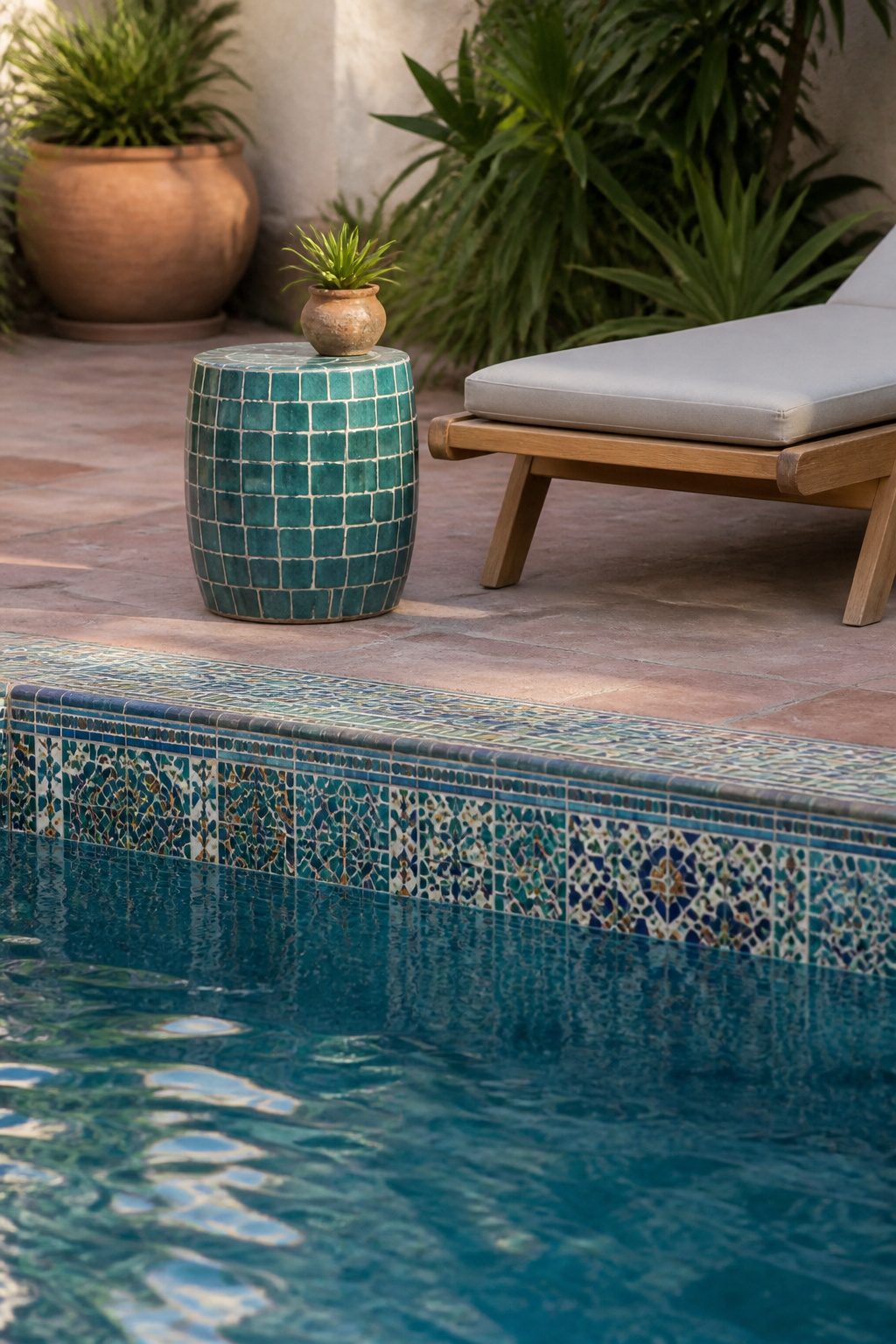
Ceramic tile belongs anywhere water and bare feet meet. The pool edge is the obvious spot: small patterned mosaics catch morning sun and shift tone when wet, giving the perimeter a different mood at 7 AM than at 7 PM. Textured surfaces add traction that smooth tile can’t match, and sealing the edges with clear outdoor epoxy blocks the grit that otherwise works underneath during heavy weekends.
Accent walls and side tables stretch the same material further out. I found remnant tile at $2 a square foot, enough to cover a small tabletop with some left for a planter base. The install on the table went to a pro; poolside grout lines take real abuse from splashing and temperature swings, and I did not trust my thin-set timing in July humidity. That decision saved the surface. What changed the finished look entirely was grout color. I had sampled warm gray against the blue-green glaze and it flattened everything into mud. Switching to a near-white pulled the pattern forward and made the tabletop read like intentional pool decor rather than leftover kitchen tile pushed outdoors.
9. Tropical Planter Corners
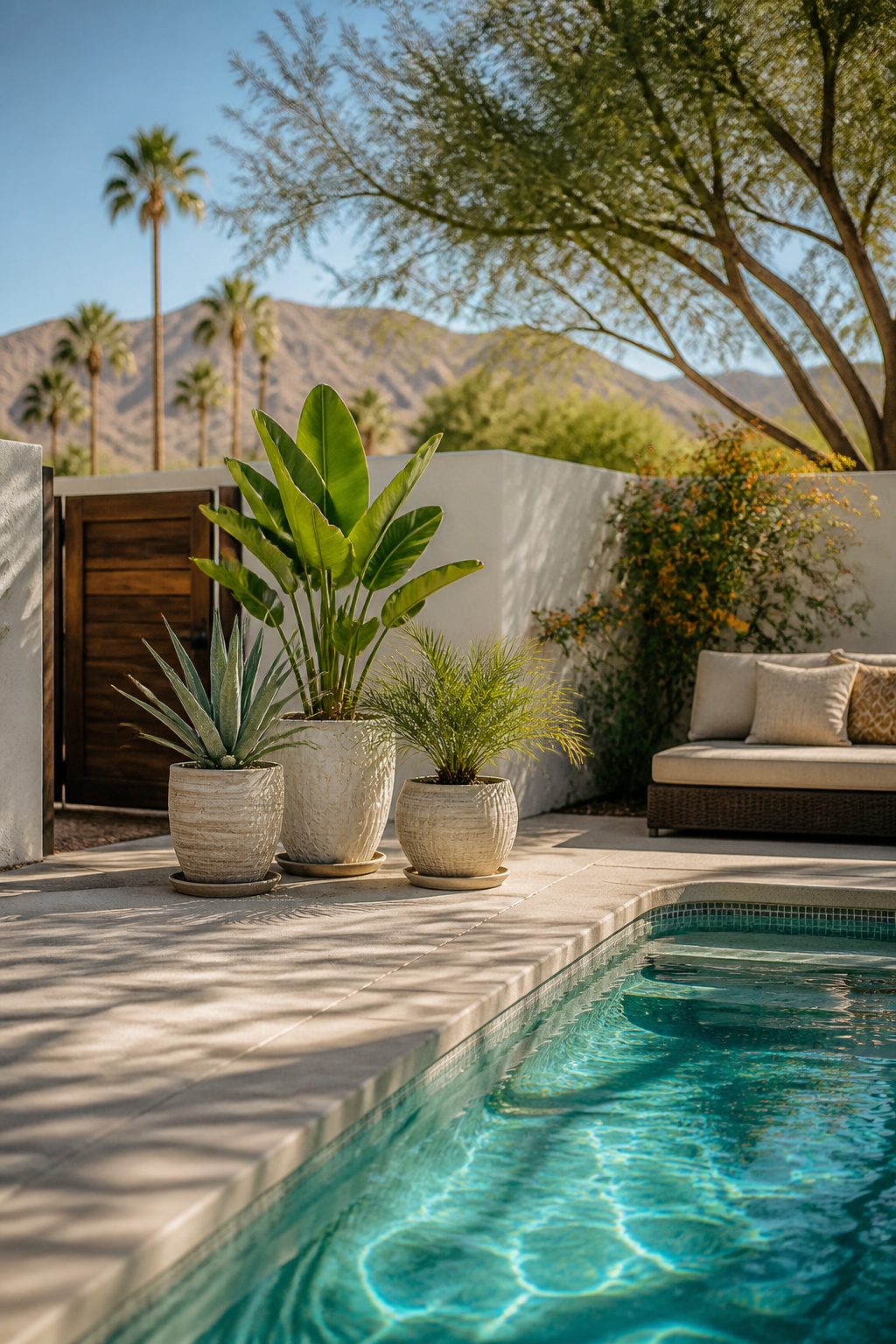
Large planters in the corners of a pool deck frame the space with height and green where the fence line feels flat. I group mine in threes, two tall and one mid-height, and keep them on drainage trays so runoff does not stain the decking.
For full sun and the dry heat of my zone, I use agave, bird-of-paradise, and a dwarf palm variety recommended as drought-hardy. The agave and bird-of-paradise have held through two summers with almost no attention. The palm did not. I watered it on the same schedule as the others, and the soil stayed too wet; the roots rotted inside six weeks. That was the plant that taught me the self-watering trick, which is not a reservoir but a finger check: if the top two inches are dry, water. If not, do not.
The tall specimens break the horizon line the way a hedge would, without the commitment of planting in ground. For renters or anyone who might move the layout next year, planters that roll or lift are the practical choice.
10. Decorative Fountain Features
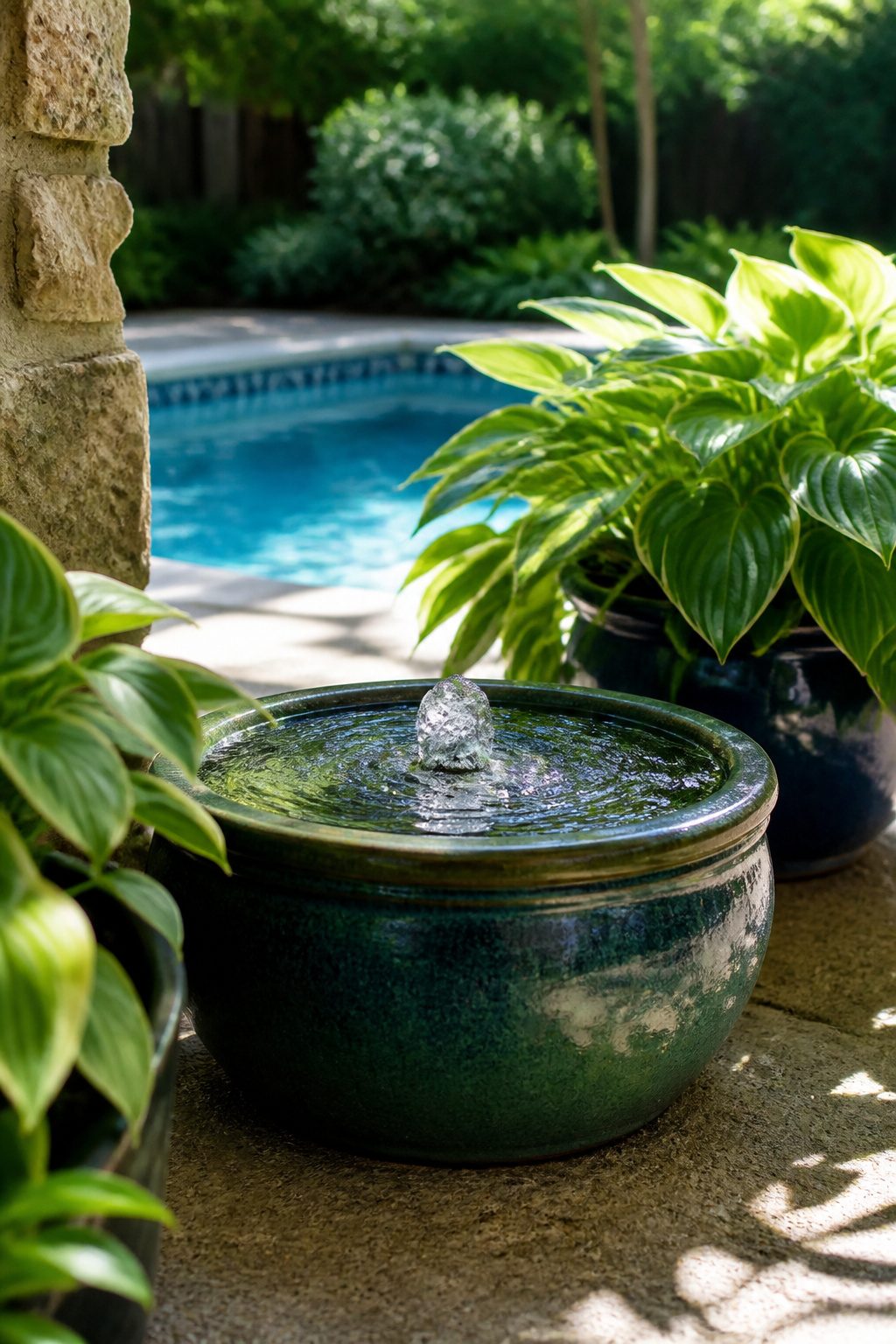
The sound of moving water does more for a pool area than any static piece of decor. I learned this after adding a small solar-powered fountain to the far end of my deck, a few feet back from the pool coping. The pump sits in a glazed ceramic bowl I found at a garden center, and the solar panel is tucked behind a potted hosta where it still catches afternoon light. What I got wrong was the placement at first. I set it in full sun for maximum power, which worked until a week of July heat turned the bowl into a green soup. Algae needs sun more than the pump does. Now the bowl lives in partial shade from a patio umbrella, and the panel is on a short stake six inches away where it still charges. The trickle reaches the seating area just enough to cover road noise from the street behind us. I rinse the pump intake every two weeks and swap the water when it starts to smell like a pond, which is more often than the packaging suggested.
11. Driftwood Accents
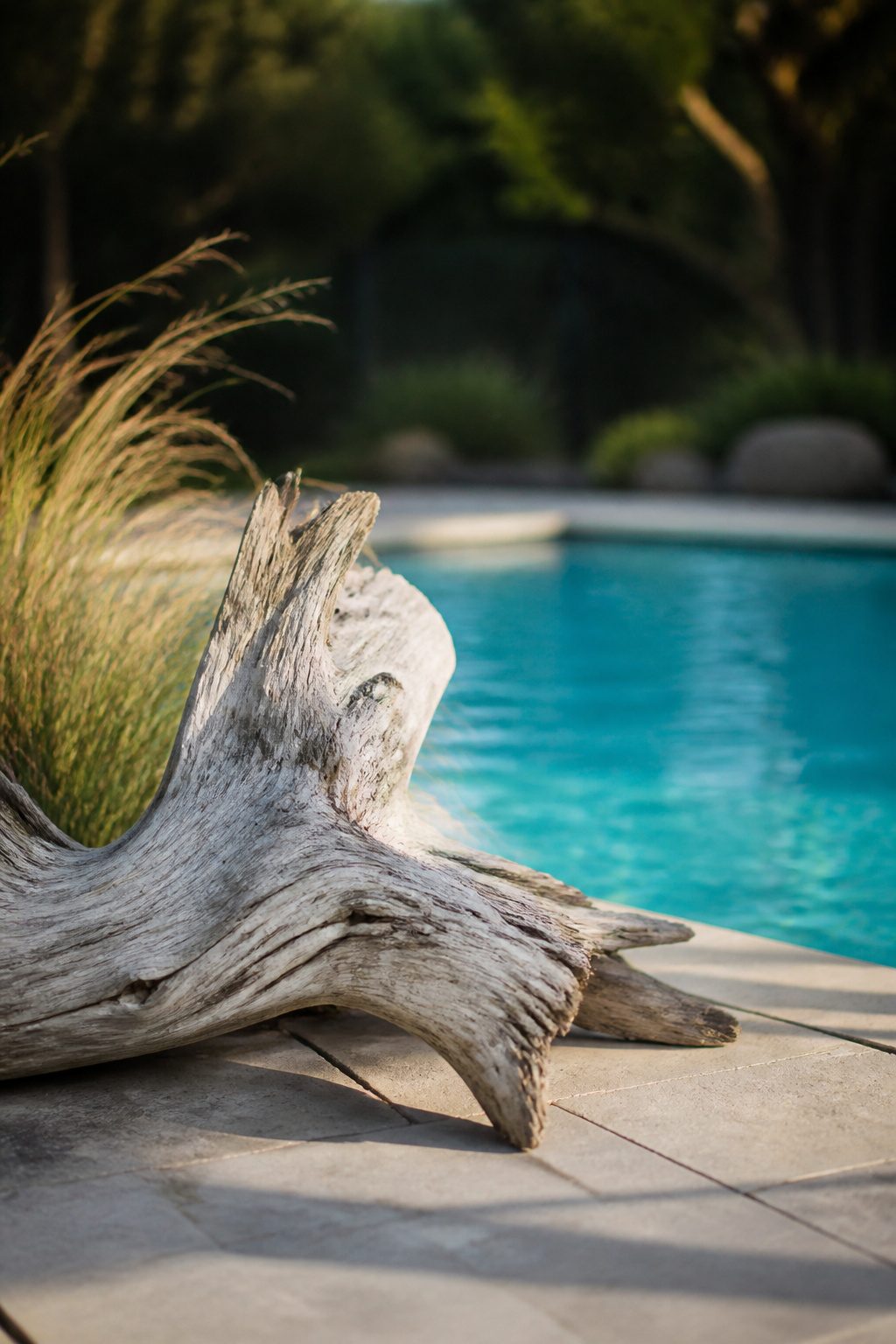
Driftwood around a pool reads as found sculpture instead of purchased decoration, which matters when the rest of the yard already looks like a catalog. My first attempt came from a beach trip up the Oregon coast, hauling back six or seven arm-sized pieces that seemed manageable. One large piece works better than many small ones; the cluster of smaller chunks looked like yard sale debris against the waterline, while a single weathered trunk the next summer anchored the whole shallow end without competing.
The preservation went wrong the first time. I soaked everything in a bleach solution, scrubbed off the soft rot, and called it finished. The wood grayed further in the sun but started splintering within two months, shedding fibers into the filter. Sealing came too late; the bleach had opened the grain past where oil could penetrate evenly. Now I skip bleach entirely on pieces that will sit uncovered, scrub only with a stiff brush and fresh water, then seal with a marine-grade penetrating finish while the wood is still slightly damp. The piece beside my lounge chair has held three summers this way, silvering but not fraying.
12. Poolside Decor Mirroring the Pool
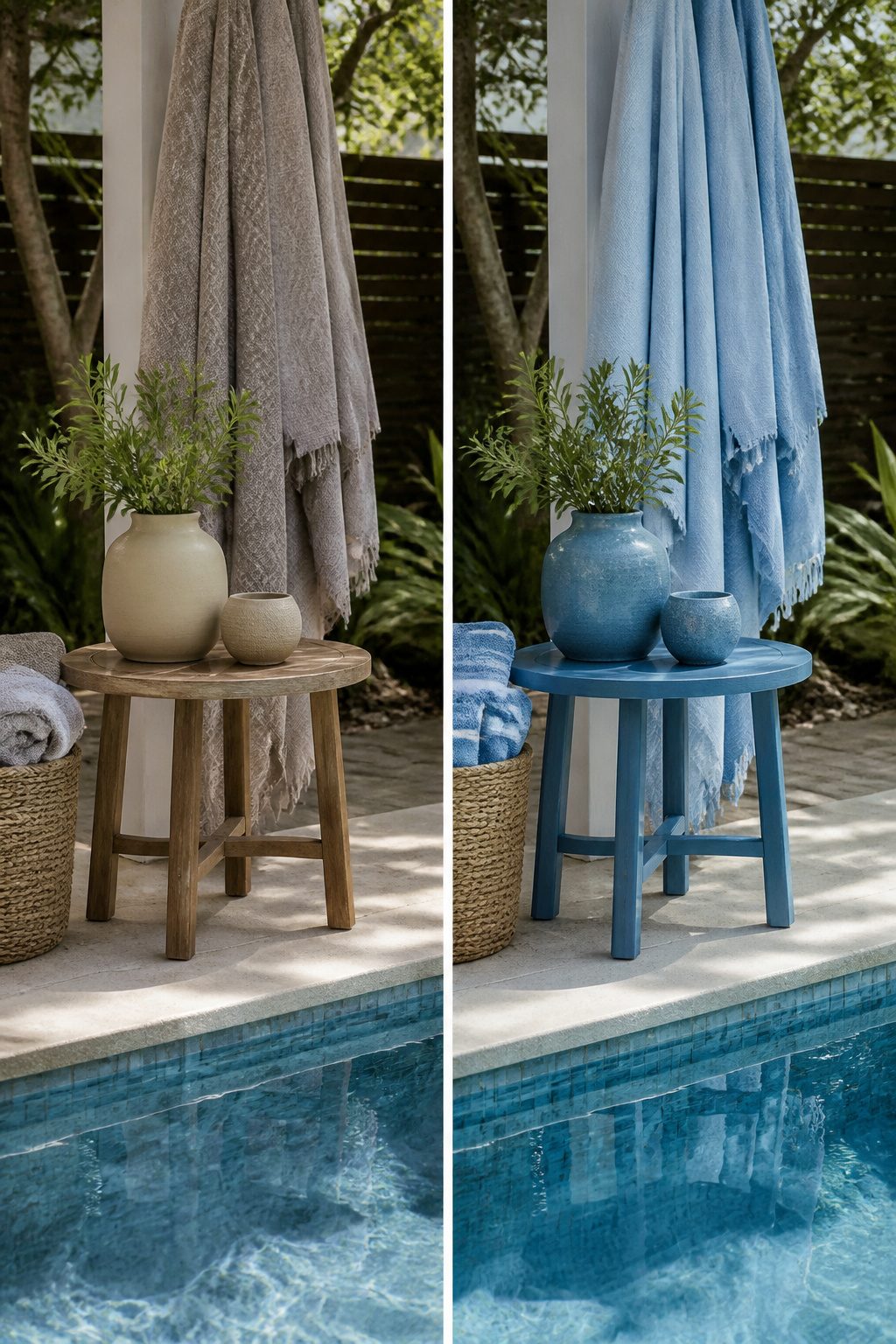
Blue accessories can look oddly cold inside a house but settle right once the pool itself is doing the reflecting. I learned this the hard way with a side table I painted to match the pool’s liner, a color that read as electric and wrong under kitchen fluorescents. Outside, the same paint shifted toward teal in daylight and seemed to pick up depth from the water beside it. The trick is testing the chip outdoors at the hour you actually swim, not in morning overcast or noon glare.
I bought towels in a shade just a step lighter than the table, not identical, and that slight gap kept the match from feeling staged. Cotton fades fast in chlorine and sun, so I budget for replacement every two seasons and buy off-season when the colors are half price. The visual thread runs from the water to the furniture to the textile without any single piece screaming for attention.
13. Layer Textures and Soft Accessories
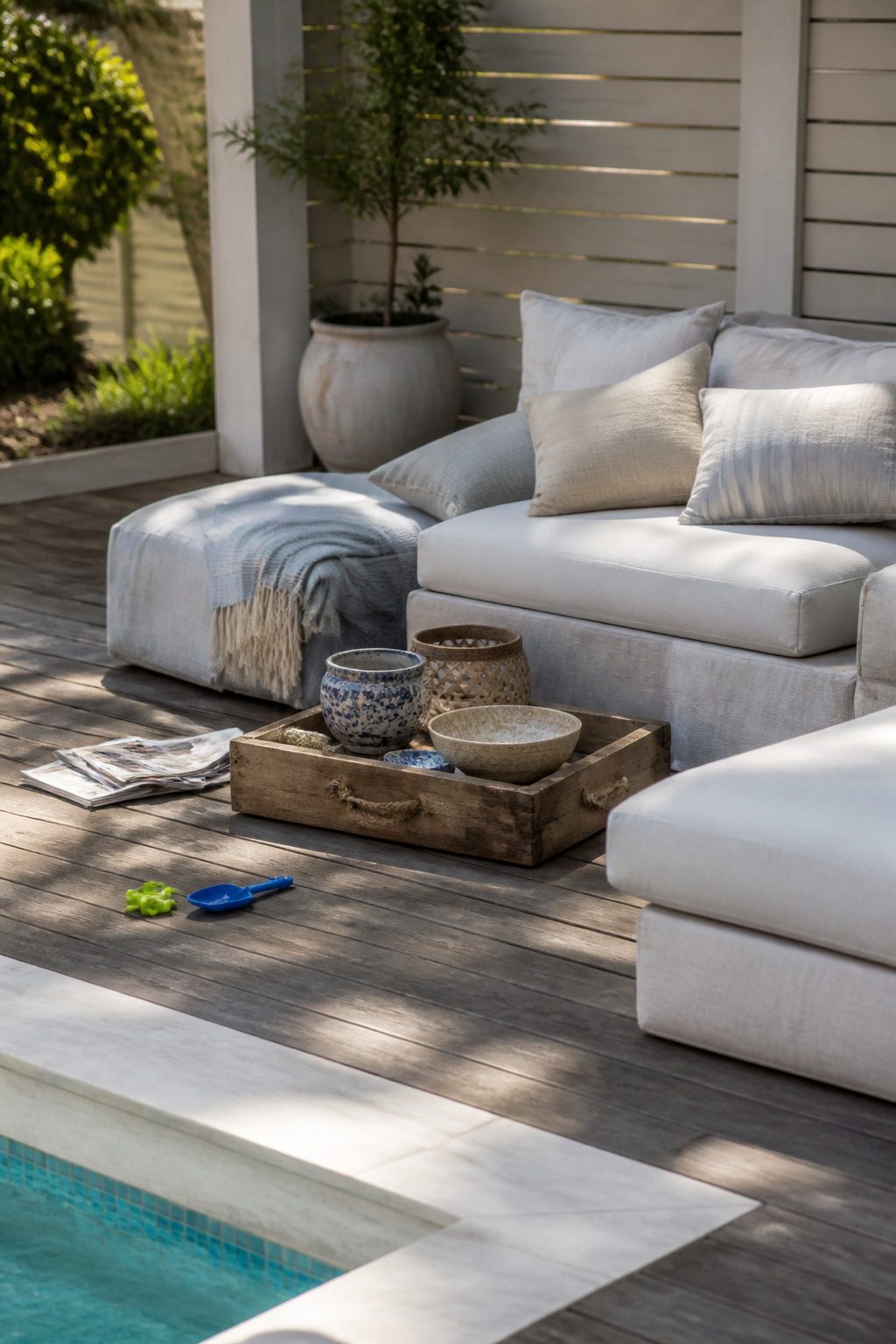
Flat pool decks feel like showrooms, not backyards. Rope handles on a weathered wood tray, linen napkins beside hand-thrown pottery bowls, a cushion with the slight slub of outdoor fabric remnant: these are what break that sameness. The one texture to skip for midday lounging is dense synthetic weave; I learned that the hard way on a July afternoon when a pillow left in direct sun hit 140 degrees against my shoulder. By August those pieces lived under the bench, swapped for breathable cotton-linen covers I could throw in the wash. Come September the layers reversed again: the heat-holding pillows back out for golden-hour reading, a folded throw within reach for when the air cooled. The trick is keeping the palette quiet, natural tones that let you mix distressed wood and painted ceramics without the eye fighting for a place to rest. A clear matte sealant on the tray took ten minutes and bought me two seasons before the wood grayed further.
14. Candles and Floating Candle Bowls
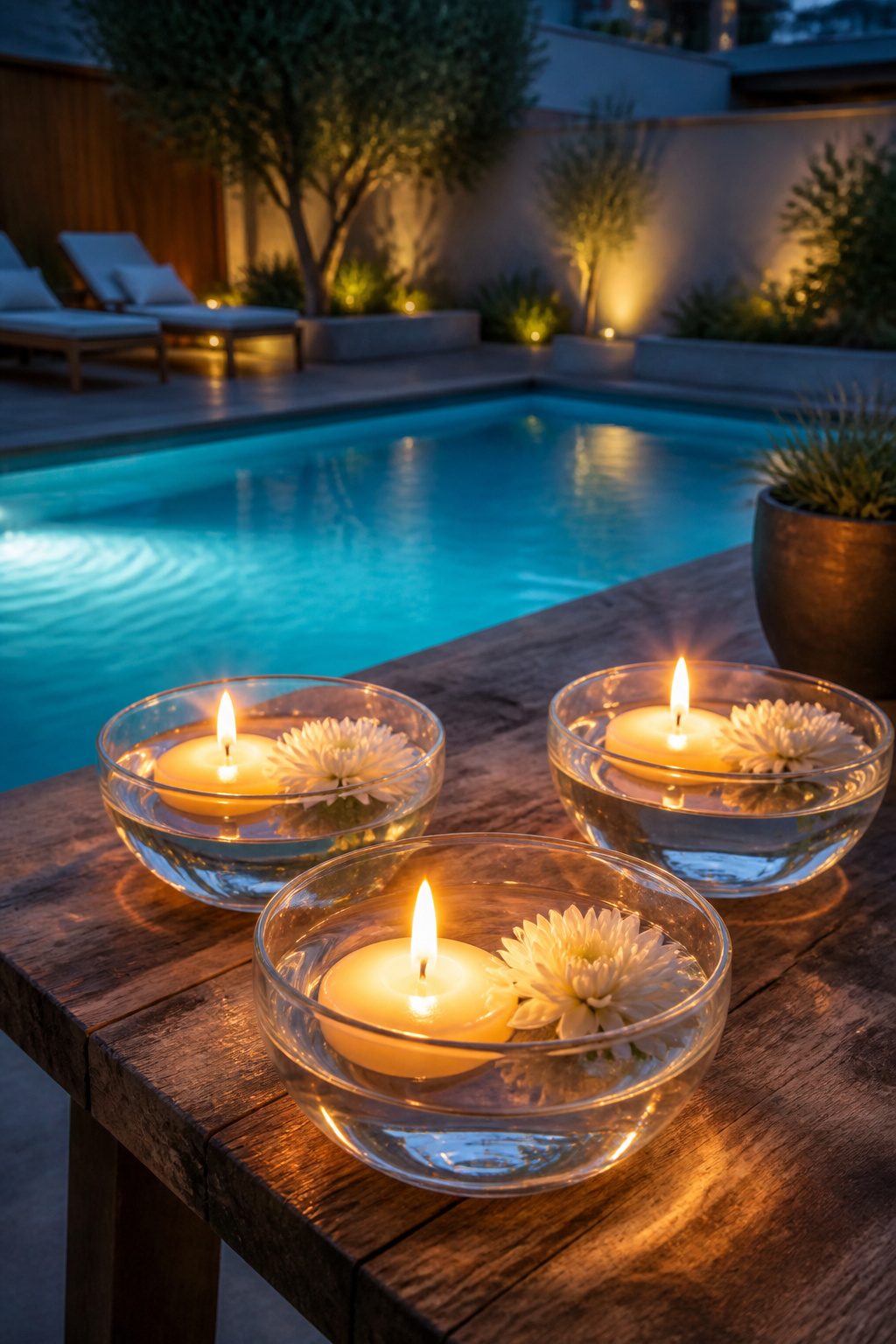
Flame on water looks magical until the wind shows up and every candle gutters out in thirty seconds. I learned that the hard way with real tealights in glass bowls, which also taught me about temperature shock when one bowl cracked from the contrast of cool pool water and hot wax. Battery-operated candles are the only version that survives an actual evening outside, and the ones with warm-toned LEDs and a subtle flicker pattern beat the cheap blinking kind by miles.
The setup that finally felt worth the effort used three or four shallow glass bowls, each about six to eight inches across, with one floating candle apiece and a single-stem bloom clipped short enough to stay put. Unscented is the right call unless you want synthetic vanilla fighting with whatever your neighbor is grilling. Trim the wick to a quarter inch if you do use real flame; it keeps the soot off the glass and the burn steadier. The light ripples across the surface in a way that flat deck lighting never manages, and for a ten-dollar evening that takes five minutes to set up, that reflected glow is the closest my backyard has come to the boutique hotel look without the boutique hotel budget.
15. Creative Privacy Solutions
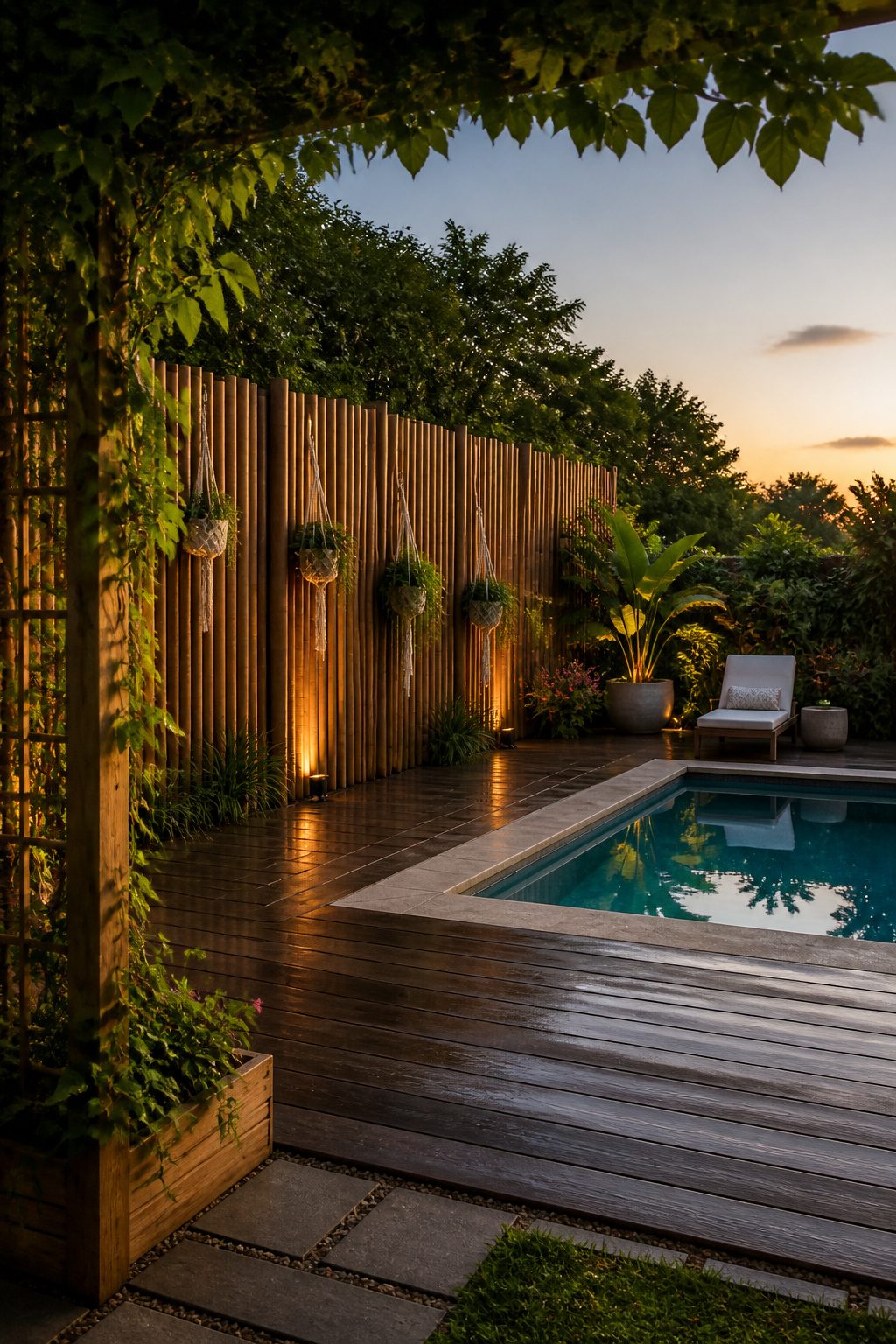
A bamboo screen blocks sightlines in about two hours without a single permit. The one I put along the property line had to hit roughly eight feet to clear the neighbor’s second-story windows, which meant buying poles already that tall rather than trying to extend shorter ones. Standing them in a trench with quick-set concrete held them steady the same afternoon. Macrame hangers or woven panels soften the hard edge if the tropical look feels too uniform.
Vines on a trellis do the same job slower but prettier. The trumpet vine I trained along the back fence took two full growing seasons to fill in enough that I could drop the temporary cloth panels. A fence or trellis draped with curling vines and flowers gives you the privacy plus the depth that a flat wall never manages. Layering helps: small bushes in front of taller backing, whether that backing is trees or the screen you just built, keeps the eye from reading the whole thing as one flat plane.
16. Sculptural Side Tables
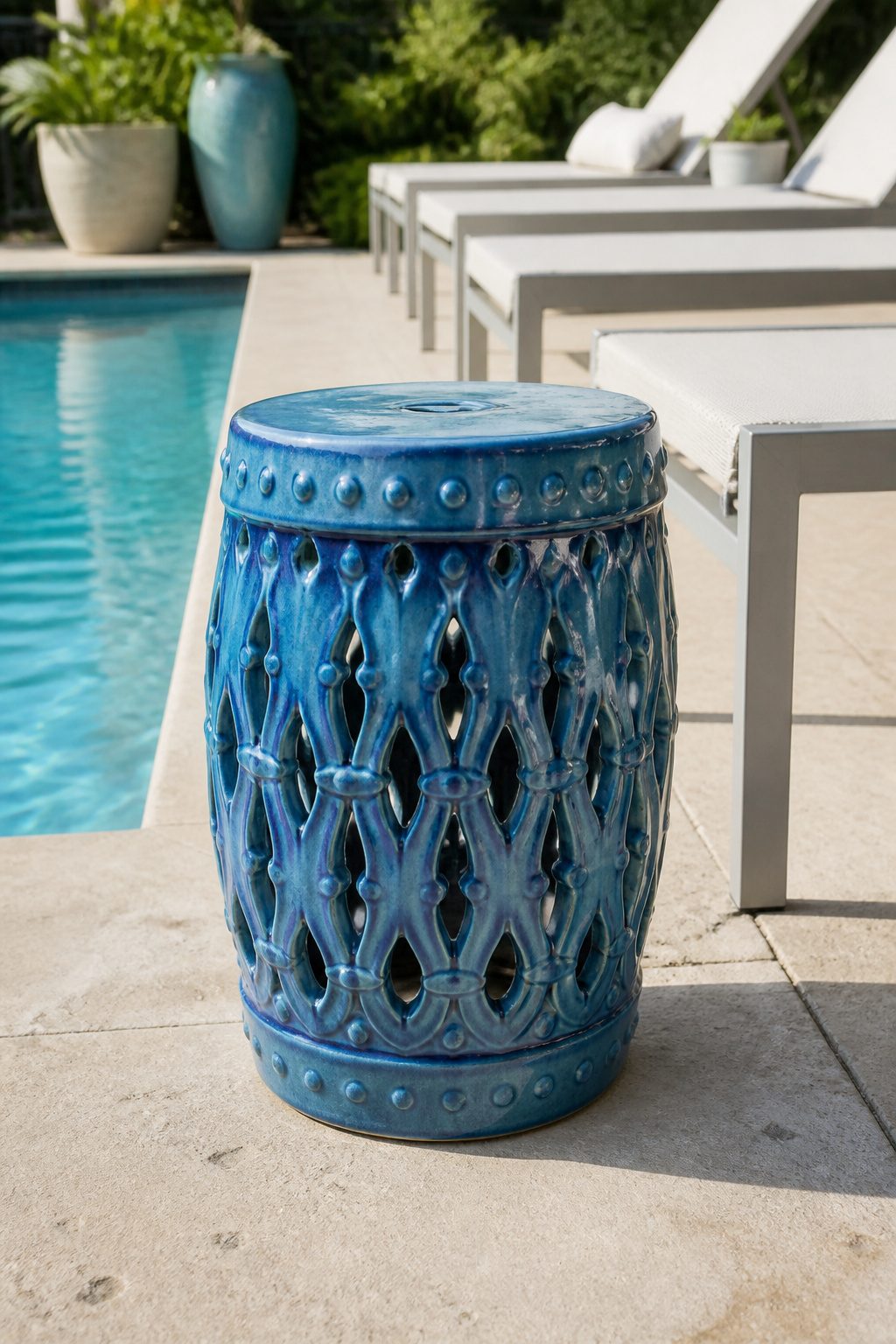
A ceramic garden stool sits beside my lounge chair, glazed in a blue that picks up the waterline tile. It holds a drink, a phone, a paperback, then flips to seating when someone else wanders over. I bought it after the concrete one I liked online arrived at the store and I physically could not lift the box. Thirty pounds is the ceiling for anything I want to move myself, and the ceramic piece comes in under that while the concrete version would have stayed put through a tropical storm. Wind matters more than people think. My last metal side table spent one April afternoon in the neighbor’s hydrangeas. The stool’s weight keeps it grounded without anchoring it permanently, which matters when I rearrange the deck every few weekends. The shape reads as intentional from the pool, a curve against all the straight lines of coping and fencing, and the hollow center means it dries fast after rain.
17. Outdoor Rug Islands
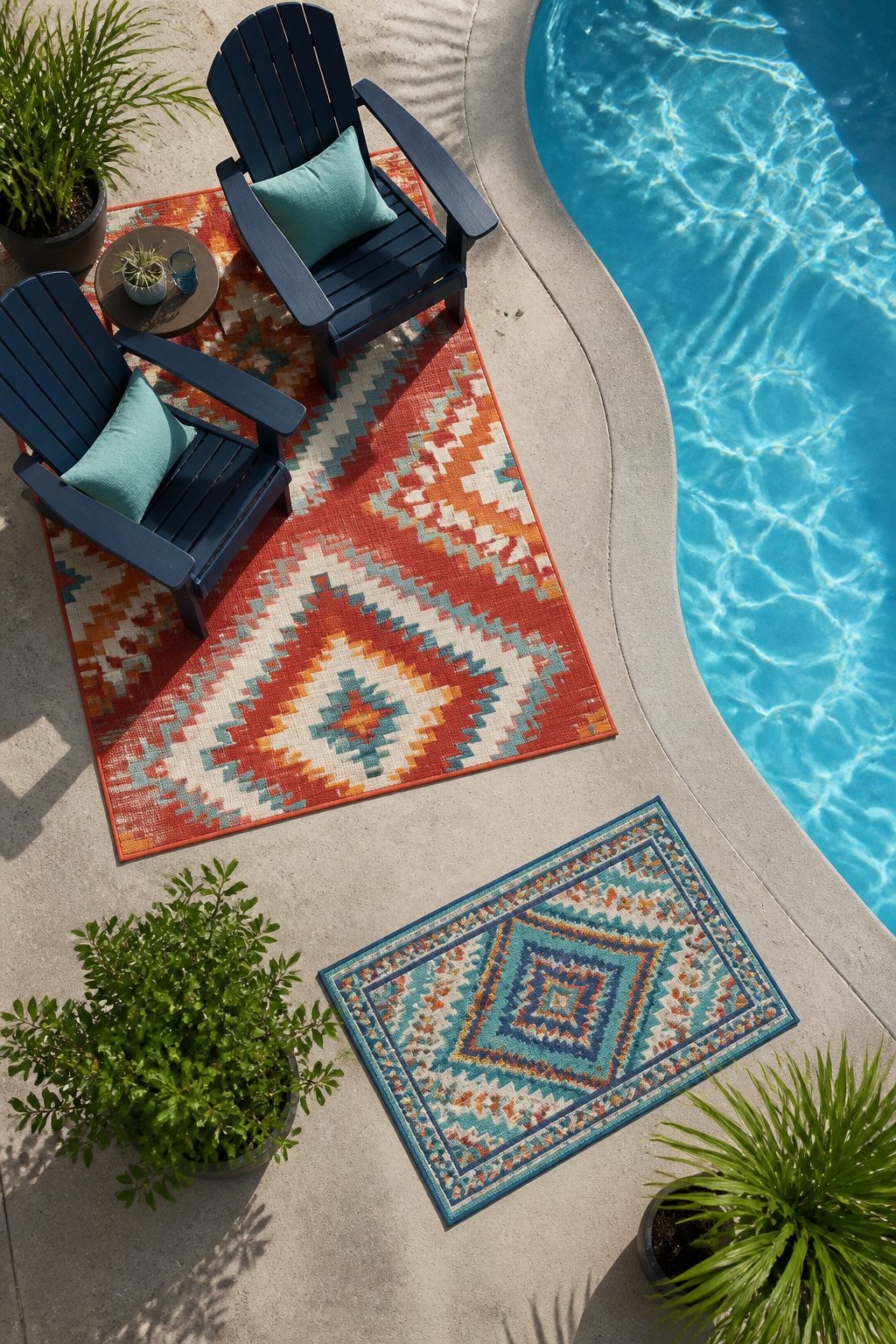
Polypropylene rugs are the only material that survives a season of wet feet and full sun without turning into a science experiment. I bought two for my deck: a 5-by-7 for under the Adirondack chairs and a 3-by-5 squeezed between the grill and the shallow end. The smaller rug shrank the space in the right way, carving out a spot that feels intentional instead of accidental, like a room you happened to build outside.
The downside showed up in October. I left them down through a week of rain and got mildew threading through the backing where the deck boards hold water. Now they roll up the first weekend the pool cover goes on, stored flat in the garage so they keep their shape. Quick-drying fibers only help if you actually let them dry.
18. Tropical Woven Furniture
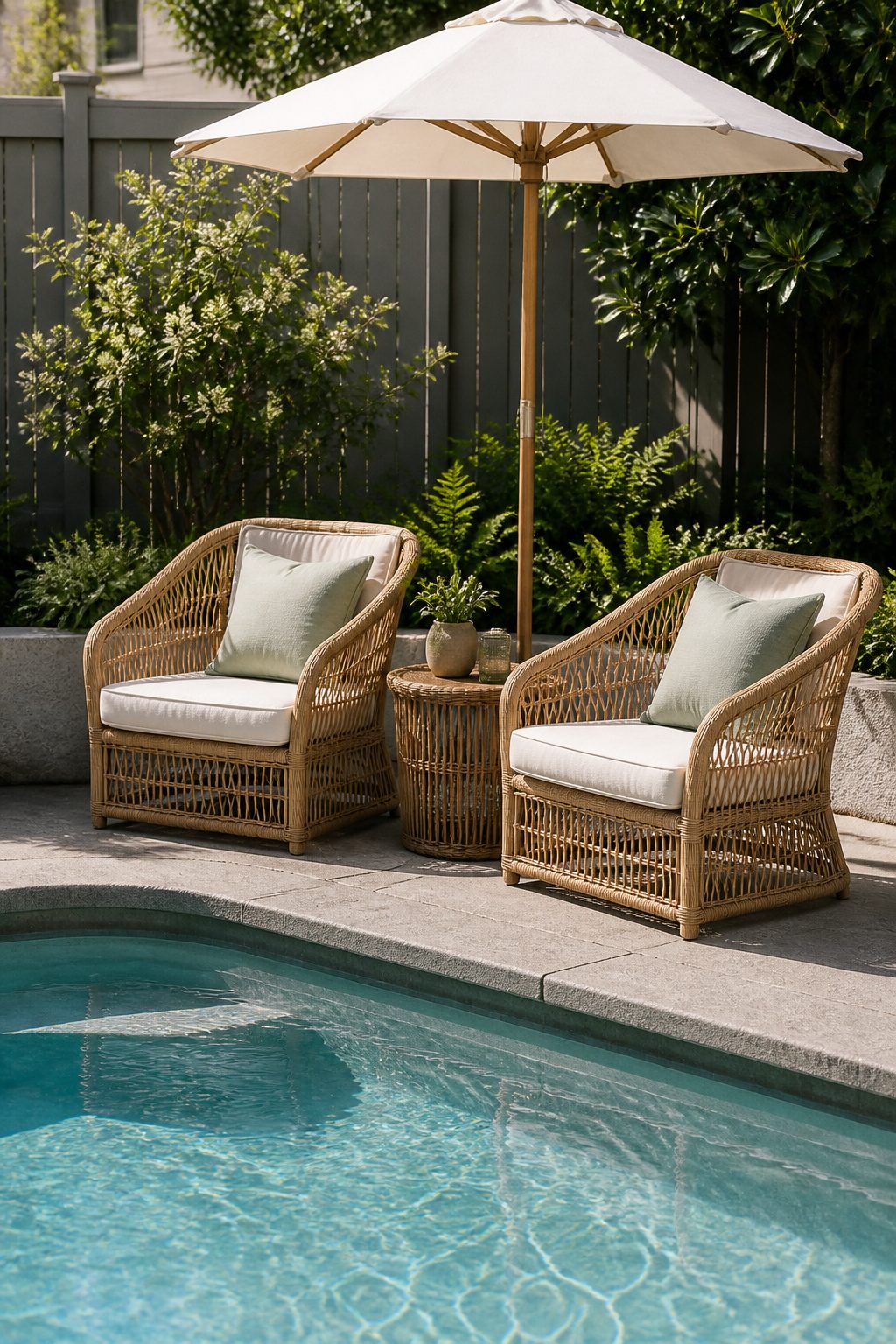
Rattan and wicker have been poolside staples long enough that the hardware store now stocks three kinds: real rattan harvested from climbing palms, natural wicker woven from reed or bamboo, and polyethylene resin made to mimic both. The difference shows up fast. A neighbor two doors down bought real rattan loungers in late spring; by August the frames had darkened unevenly and one armrest started splitting where water pooled. Synthetic weave costs roughly half what natural rattan does for a comparable chair, and the gap widens if you factor in replacement.
I went with resin wicker for the two armchairs and the small loveseat that face the shallow end. The weave is looser than natural wicker, which lets air through on humid afternoons, and the aluminum frames underneath do not rust where chlorinated splashes collect. Real rattan has a warmth and slight color variation that photographs beautifully, so I kept one genuine piece: a narrow side table under the umbrella where it stays mostly dry. For seating that sits open to the weather, the math tilts hard toward the fake stuff.
Picking a Color Palette That Holds
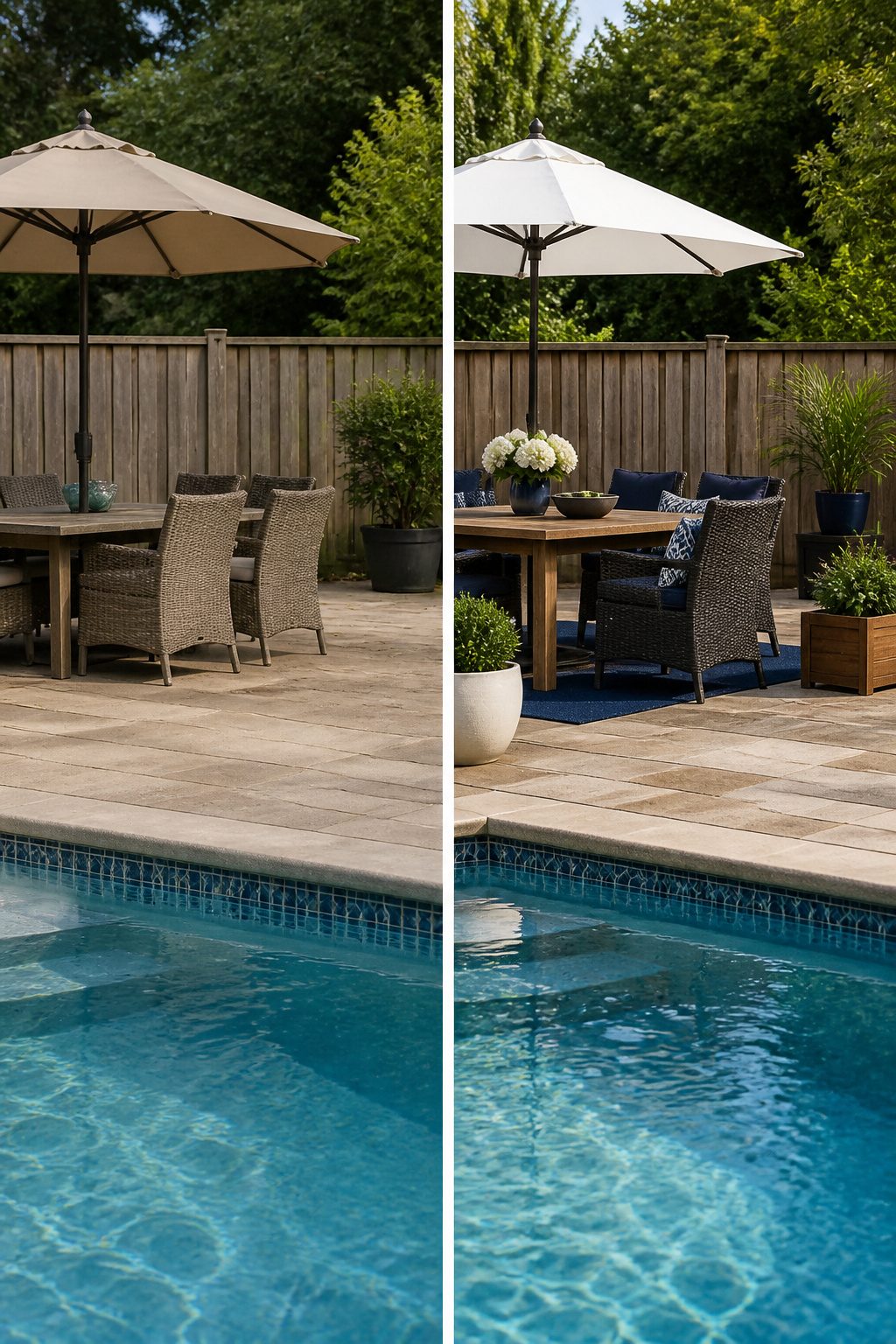
My first summer with the pool, the deck looked like a yard sale in progress: a red umbrella, teal cushions, a terracotta planter I’d convinced myself was "earthy." Nothing talked to anything else. The space felt smaller than it was because the eye kept landing on new colors instead of resting anywhere.
Two to three colors, repeated everywhere, is the only rule that actually holds up outdoors. I settled on navy, white, and natural wood. Navy on the seat cushions, white on the umbrella and outdoor dishes, wood on the planters and the folding table I sanded down. The repetition does the work of making the space feel designed without designing anything.
I tried adding sage green as a fourth color in a ceramic planter. In morning light it read as soft and interesting. By four in the afternoon, with the sun hitting it full, it turned muddy against the navy and the whole corner looked like a dirty puddle. That planter moved to the front porch where the light is different, and I learned to test colors at the hour I actually sit outside.
Furniture Materials for Chlorine and Sun
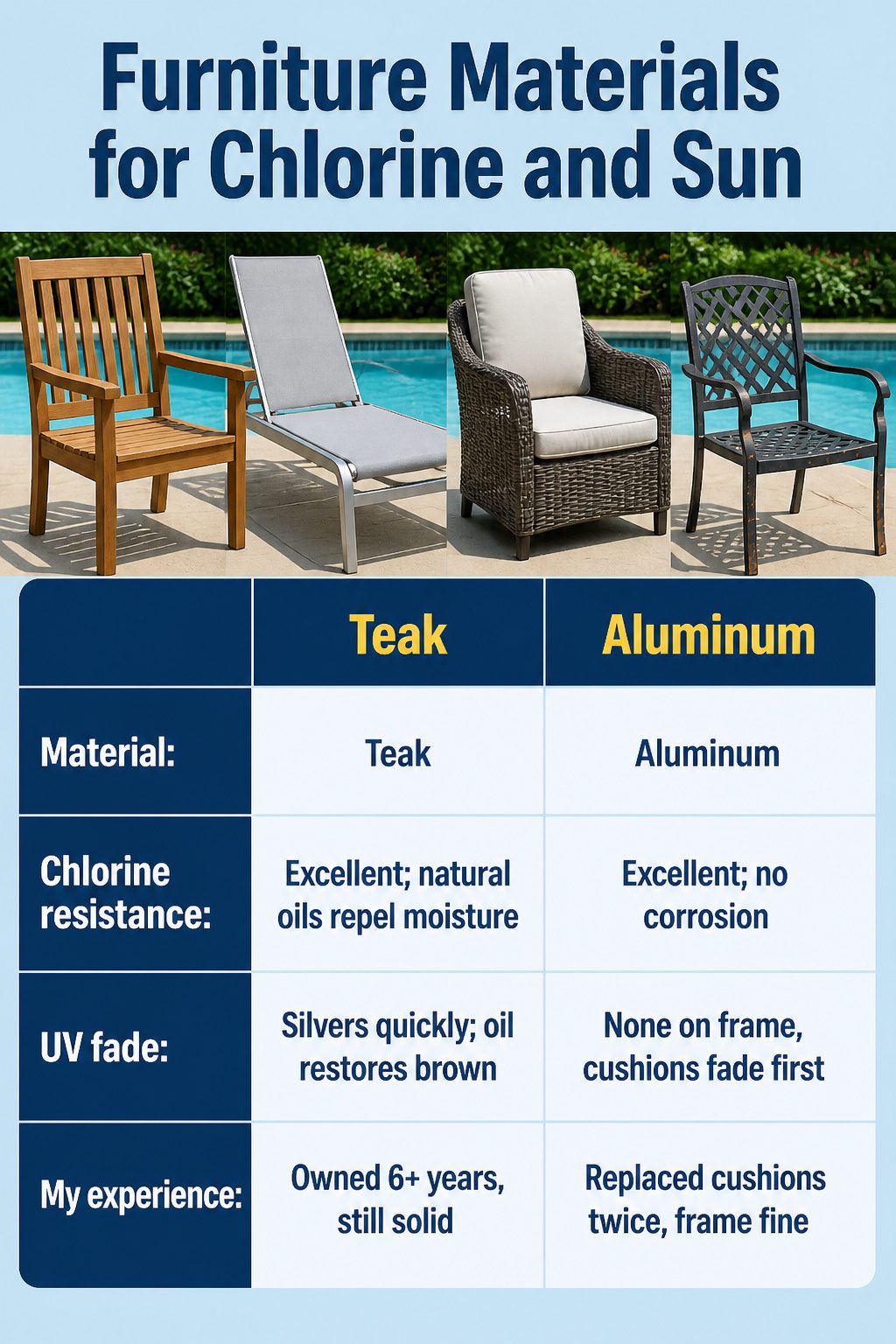
Teak held up longest in my own setup, though the color silvered to gray within a season unless oiled. Aluminum never rusted, but the frame on one lounge chair wobbled where the hardware loosened after a winter outside. Resin wicker stayed comfortable and clean, which surprised me; I expected the plastic weave to feel cheap and it never did. Powder-coated steel was the mistake. The finish peeled in year two, starting at the feet where pool water splashed and dried, and the spots underneath bloomed with rust that stained the patio. Powder-coated steel needs touch-up paint the season you buy it, not after you see damage.
| Material | Chlorine resistance | UV fade | My experience |
|---|---|---|---|
| Teak | Excellent; natural oils repel moisture | Silvers quickly; oil restores brown | Owned 6+ years, still solid |
| Aluminum | Excellent; no corrosion | None on frame, cushions fade first | Replaced cushions twice, frame fine |
| Resin wicker | Good; hose-clean | Minimal; color stays even | Replaced a teak set with this, no regrets |
| Powder-coated steel | Poor once finish cracks | Finish chalks, then peels | Replaced entirely after year three |
For a few hundred dollars and a weekend timeline, resin wicker or aluminum buy you peace of mind. Teak costs more upfront and needs annual oiling. Powder-coated steel only works if you are diligent about draining and drying.
Lighting I Actually Use
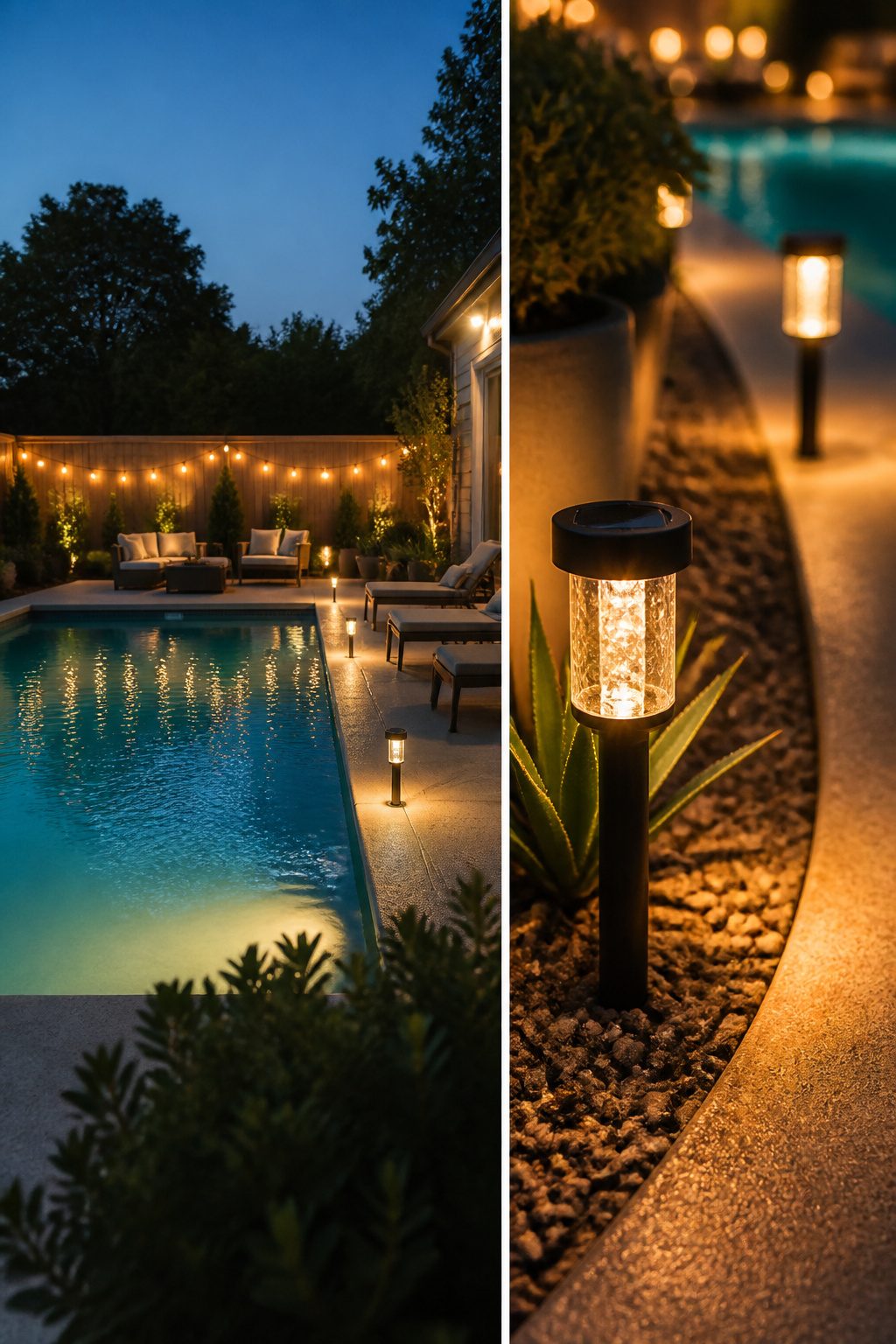
String lights along the back fence cost me about eleven cents a night to run, less than a load of laundry, and they throw enough glow that I can still see who is in the pool after dark. I hung them on galvanized guide wire so sagging has not been an issue through two summers.
Solar path lights line the concrete strip from the patio to the gate. They were cheap to buy, they cost nothing to run, and the warm ones, not the blue-white ones, keep the yard from looking like a parking lot. Skip the cool-white temperature; it reads harsh against water.
I looked hard at recessed deck lights, the kind that sit flush in the coping and run on low-voltage cable. The install meant trenching, a transformer, and cutting into concrete that was only four years old. Instead I set one hardwired flood on the house eave, aimed at the far fence so it backlights swimmers without shining in their eyes. It draws about sixty watts, runs through a switch in the kitchen, and gives me the safety check I wanted without the deck surgery.
When people actually swim at night, the string lights and the path lights stay on for mood, the flood stays off unless someone needs to spot a kid’s goggles at the bottom. The combination works out to roughly three dollars a month in summer, and nothing I installed required a permit.
Plants That Survive Poolside
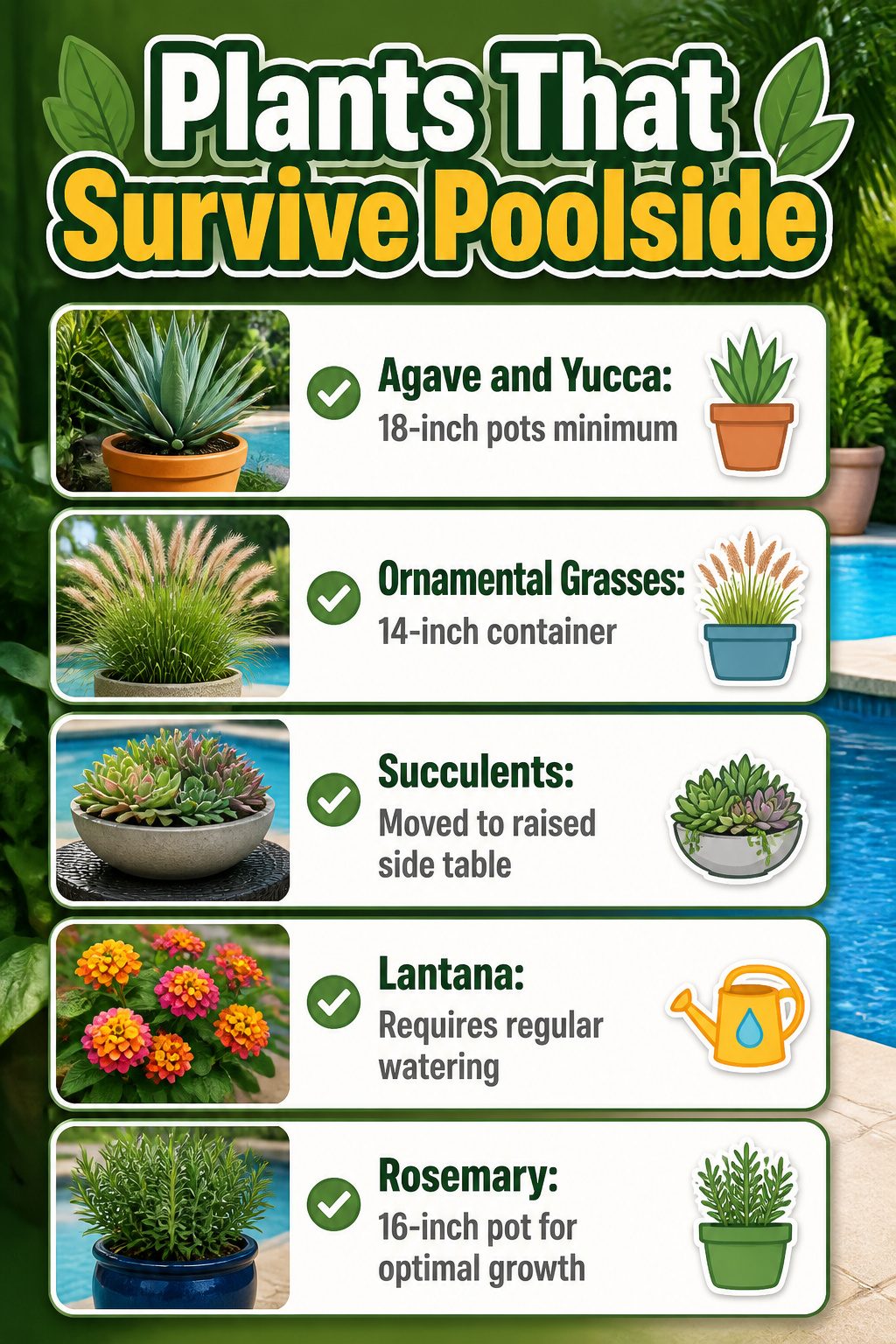
Reflected heat and chlorine will cook or bleach most things you love, so the plants that actually survive poolside are the ones you almost cannot kill. I learned this after two seasons of replacing fried hostas and browned-out ferns that looked lush in the nursery and tragic by August.
Here is what held up for me:
- Agave and yucca took the worst of the afternoon bounce-off and never flagged. I started them in 18-inch terracotta pots, which was the minimum; anything smaller dried out before I got home from work.
- Ornamental grasses (I used fountain grass) handled splashing fine and looked better slightly tousled. The clump filled a 14-inch container by midsummer.
- Succulents in a shallow bowl on the coping died when kids cannonballed. Moved to a raised side table, they thrived. Placement mattered more than the plant.
- Lantana bloomed through reflected heat that turned my hydrangea crisp. It wanted water more often than the agave but forgave a missed day.
- Rosemary in a 12-inch pot sulked; same plant in a 16-inch pot grew woody and dense. Root room was the whole story.
What I pulled out: anything with soft, broad leaves within splashing distance. The water itself was not the killer; the chemicals in it were.
Functional Zones That Work
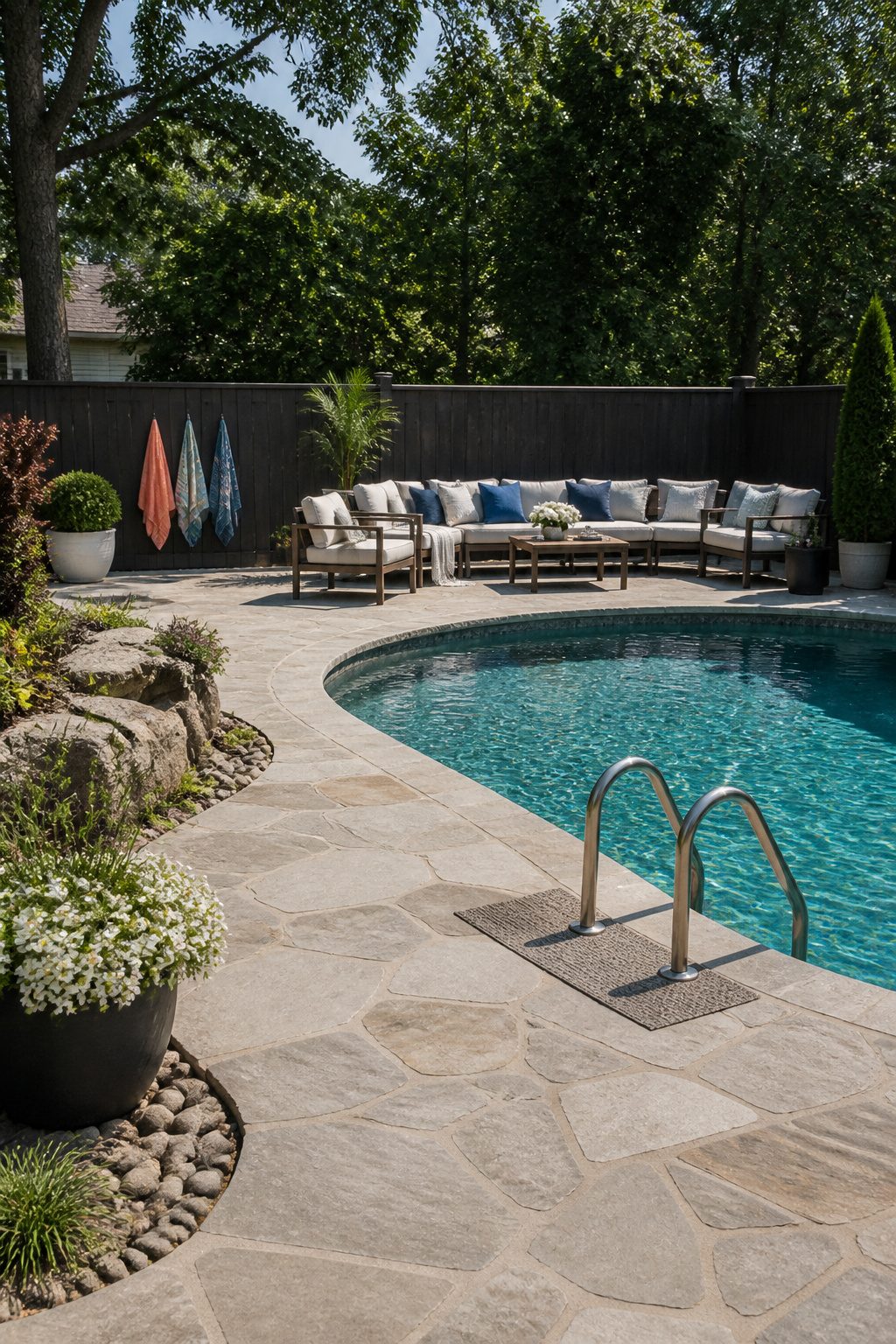
My first summer with the pool, I set chairs in a neat circle like a patio showroom. Towels ended up on the concrete, drinks sat on the ground, and every wet footprint tracked straight across the one dry path to the house. The layout looked balanced in a photo and failed completely by noon.
The fix cost nothing. I dragged the seating so it faced the pool from one side, not the full ring, which left a clear corridor from the steps to the back door. A single low table, already in the garage, went between the two chairs people actually used. Towels now drape on the fence slats I added hooks to last spring; the hooks were spare hardware from a closet project, screwed in where the fence meets the house wall. Drinks stay on that table, which is close enough to reach from the water but far enough that splashing does not matter.
The only purchase was a rubber-backed bath mat, $12, laid flat where the pool ladder meets the deck. Wet feet stop there. The mat dries in an hour and has not moved once. The zone that matters is the three feet between ladder, drink table, and towel hook; everything else is decoration.
Frequently Asked Questions
How do I decorate my backyard with a pool?
Start by designating separate zones for dining, lounging, and conversation, then keep the color palette to two or three colors repeated throughout. Use materials that survive chlorine and sun: composite or concrete for tables, Sunbrella for cushion covers, and polypropylene for outdoor rugs. Supplement pool lights with string lights or recessed deck lighting if you plan to use the space after dark.
What are some easy ideas to decorate a patio and pool area?
Divide the space into functional zones like a conversation circle, a dining spot, and a bar cart station. Face seating toward each other across a low table so people actually talk. Add movable poufs for flexible seating, a rolling cart with locking casters for drinks, and small vignettes with pitchers and acrylic glassware so you stop running to the kitchen. Keep the look cohesive by treating the backyard like one open-concept room.
What plants are best for poolside decor?
Choose varieties that handle full sun and dry heat in your zone, such as agave or bird-of-paradise. Group planters in threes, two tall and one mid-height, and set them on drainage trays to protect decking. Always check soil moisture with your finger before watering; a palm in the same article rotted in six weeks because it was watered on the same schedule as drought-hardy neighbors.