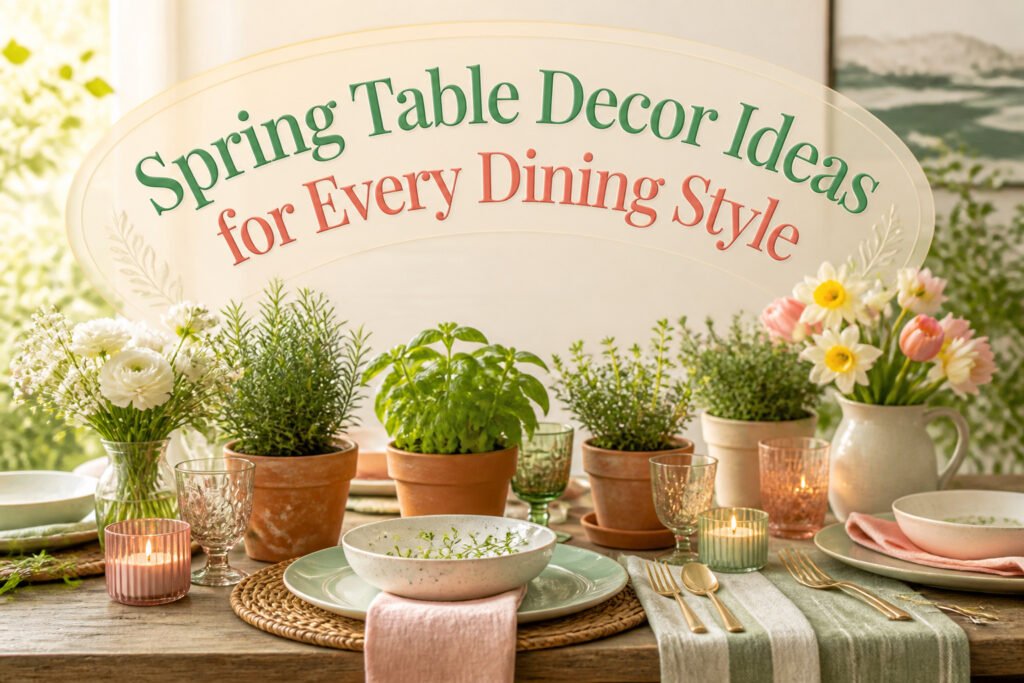
Spring table decor works on any budget, but the right choice depends on whether your guests are staying for an hour or taking something home.
The cheapest living centerpiece, mini potted herbs in terracotta, only succeeds if you leave six inches between each pot and the nearest plate; the first time I tried it, guests knocked soil into the bread basket.
1. Potted Plants
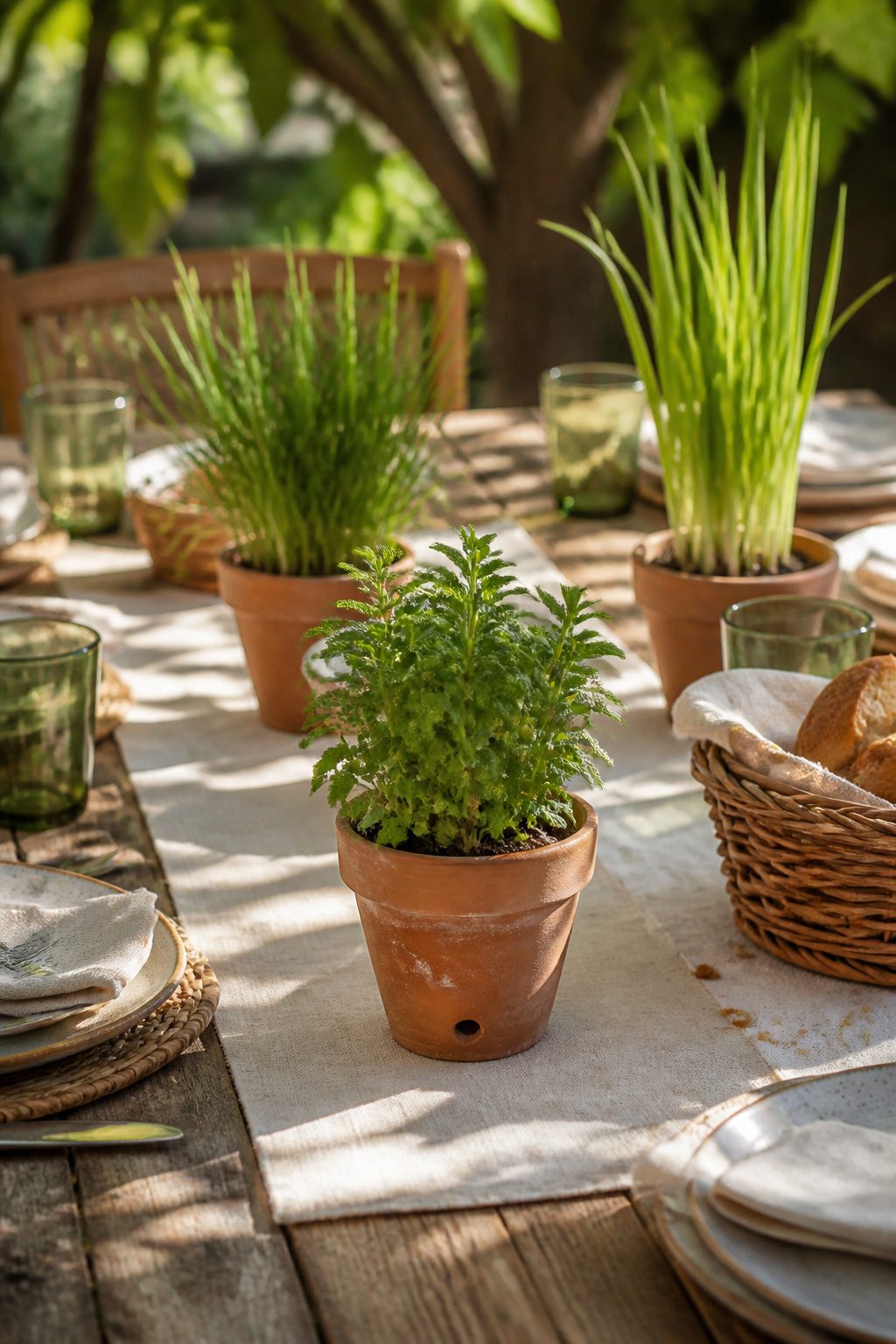
Live plants last longer than cut stems that wilt by dessert. Mini potted herbs, chives, mint, and lemongrass, pull double duty as place settings and guest favors that survive the car ride home.
Small terracotta pots work best because they have drainage holes and fit a real table without crowding the plates.
The first time setting this up, I spaced them too close and guests knocked soil into the bread basket: leave six inches between pots and the nearest plate or glass.
Early bloomers like daffodils or crocuses read more floral if herbs feel too casual for the crowd, though they will not last the way a potted plant does.
Either way, guests leave with something growing instead of something wilting, which matters more than the arrangement looking magazine-ready at hour one.
2. Floral Centerpieces
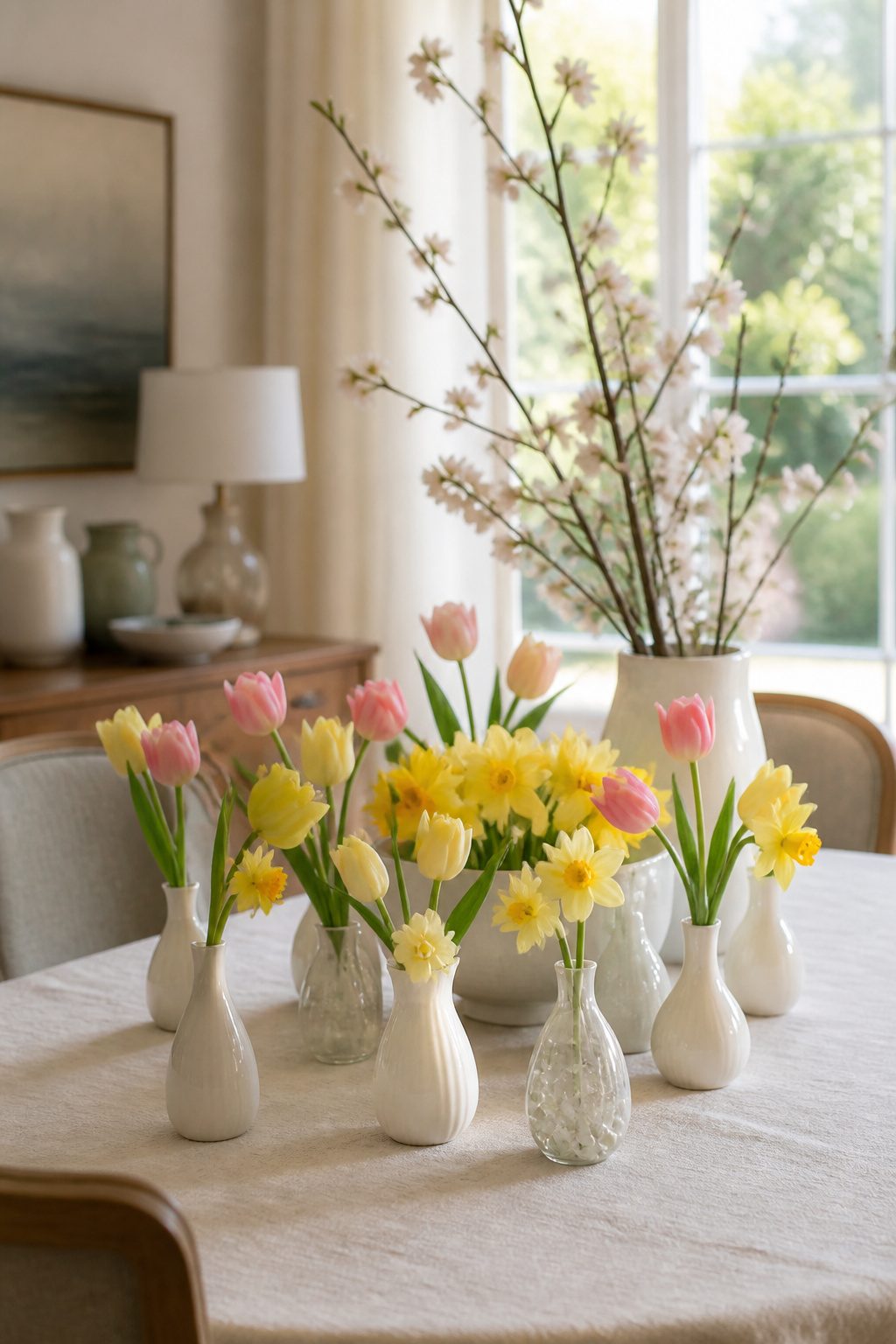
Tulips, daffodils, and hyacinths are the flowers that actually read as spring on a table, not generic grocery-store blooms that could show up any month.
Last year I tried forcing hyacinths in a low bowl and the scent alone carried the whole room; the stems stayed short, so the arrangement sat below eye level and never blocked anyone across the table.
Depth comes from mixing vessel heights, not crowding one tall vase. I cluster a few bud vases at staggered heights with single stems, then set a wider low container of daffodils beside them.
The varied shapes keep your eye moving instead of landing on one obvious focal point.
White ceramic works for this because it steps back and lets the color do the work; sea-glass tones feel right for spring too, though I would skip anything dark or metallic-heavy until the light changes in fall.
Three to five stems per small vase is enough. More than that and the flowers compete instead of breathe.
If a stem droops, a smooth glass stone at the bottom of the vase will prop it to the height you need.
Cherry blossom branches or quince cuttings in a taller vessel behind the cluster add height without costing much; one grocery-store bunch of forced branches usually splits across two or three settings.
3. Layered Table Linens
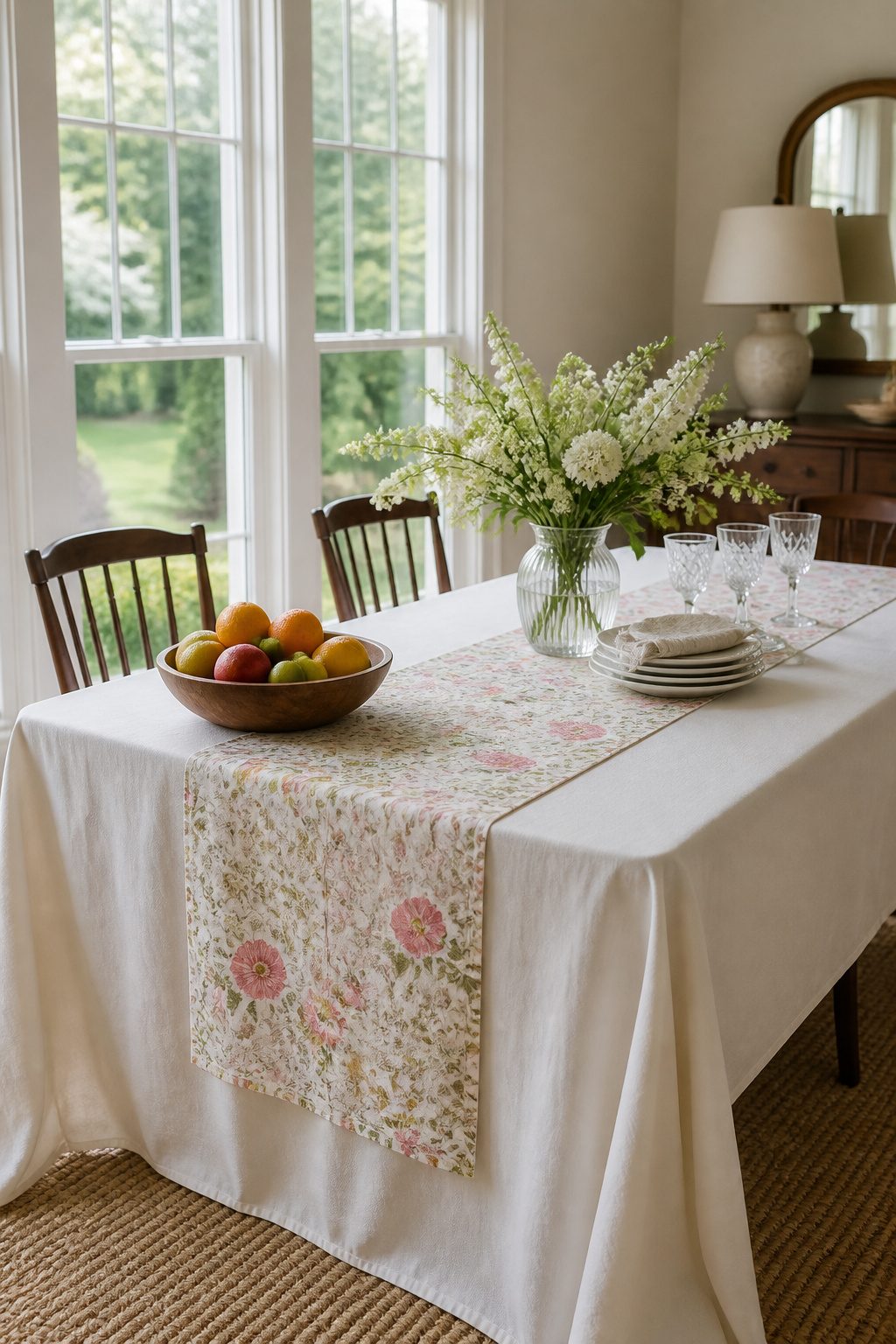
A solid base layer sets up everything that follows, and for spring table decor that usually means linen or cotton against the table surface.
Linen gives that slightly rumpled, lived-in texture that softens a room, while cotton takes more abuse and washes out easier after a weekend brunch. The sources lean toward neutral grounds: a cream tablecloth, a black-and-white gingham that reads year-round.
The neutrality is the point. It lets the seasonal layer on top do the actual talking.
That top layer is where the print goes. Floral runners across a plain cloth, or lace laid wide over a contrasting ground, build depth without adding clutter you have to move around come dessert.
The technique is simple. The base cloth hangs to its natural drop, maybe something suited for everyday use if the table sees kids or outdoor dining.
The runner sits centered, shorter in the drop or with none at all, so it reads as a deliberate band rather than a second tablecloth fighting the first.
What convinced me, reading through the setups that worked, was the restraint: two layers, not three, and the busier print always on top where the eye lands first.
4. Colorful Dinnerware
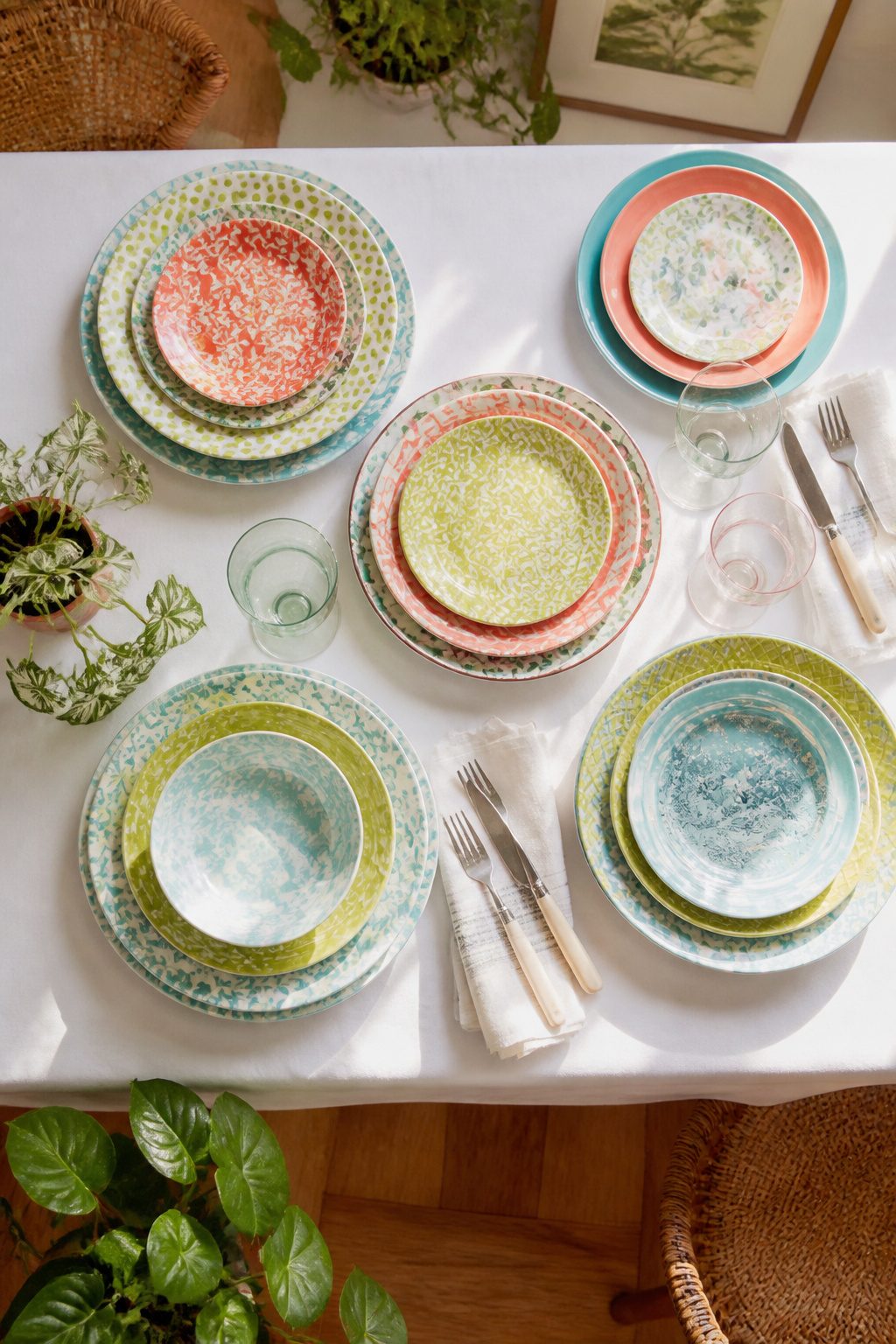
Patterned dishes do the heavy lifting on a spring table when the tulips are still tight buds and the grocery store daffodils have already drooped.
Soft pinks, serene blues, lush greens, and sunny yellows on a plate read as the season even without a centerpiece.
I keep enough dinner and salad plates for eight to twelve people, which means two or three standard four-place sets stacked in the cabinet. The investment sits there year-round, but April through June it earns its shelf space.
Aqua, chartreuse, or coral against a white tablecloth carries the whole color story when nothing outside your window has bloomed yet.
The patterns themselves matter less than the hue saturation; a busy floral print and a simple color-blocked rim both work if the tone reads spring rather than winter jewel. The risk is collecting singles that never stack neatly.
Two matching sets in different colors mix better than six orphaned plates from six clearance aisles, and storage for a small apartment kitchen demands that discipline.
5. Natural Materials
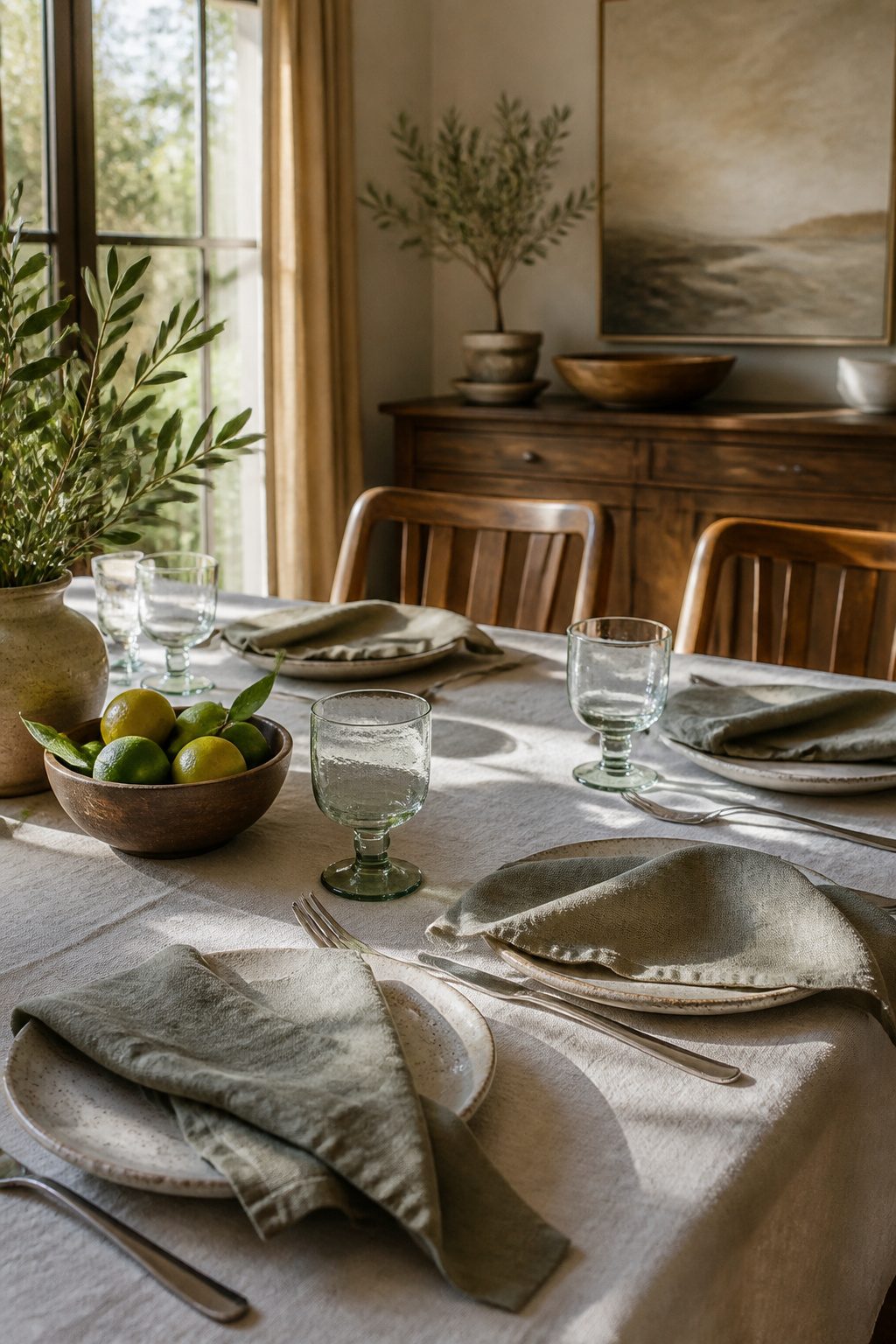
Bamboo and linen read as spring because they carry the visual noise of the natural world: slight irregularity in the weave, a matte surface that drinks light instead of bouncing it back like polyester satin.
I pair linen napkins with cotton tablecloths when I want the table to feel tended-to but not staged, the kind of setting where a guest can spill something and the fabric only looks more lived-in.
Linen wrinkles, so I steam the napkins the morning of rather than the night before, or I skip the press entirely and let the soft creases do the work of saying this was handled, not bought as a kit.
Birchlane’s napkin layout, laid flat across the plate, keeps the silverware where it sits and gives the fabric center stage without a ring; when I do use a holder, rattan or galvanized metal reads warmer against the pale fiber than anything lacquered.
Bamboo skews casual in a way that suits brunch better than a seated dinner, but as a charger or utensil rest it brings in the same earthy note without the wrinkle problem.
The eco-friendly angle is real, though for a weekend project the sell is practical: these materials age visibly and well, so the table looks intentional even when the rest of the room is still winter-drab.
6. Candle Accents
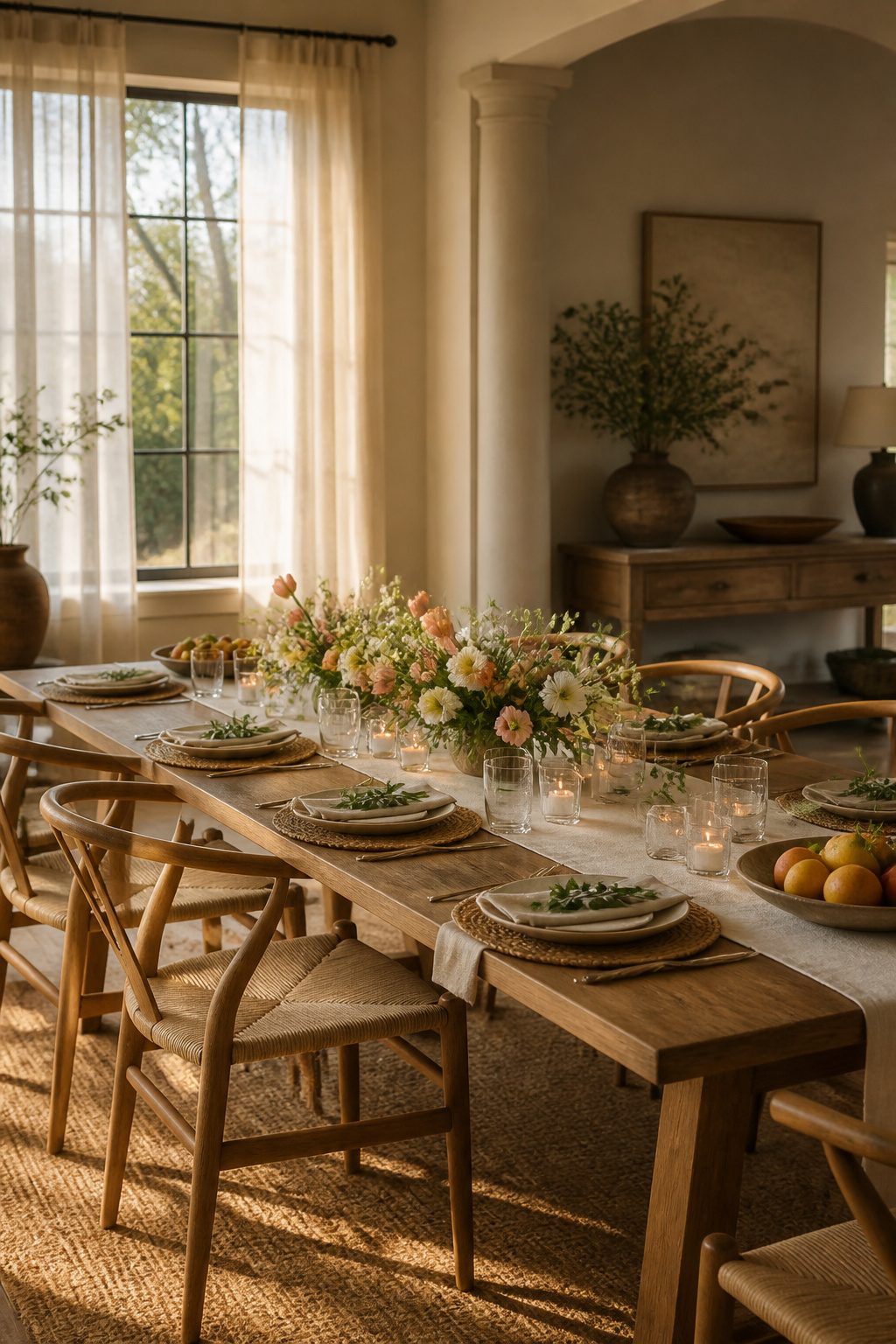
Candles on a spring table need restraint, or the room starts smelling like a department store candle aisle the minute food hits the plate.
Unscented glass votives solve this cleanly: they give warmth without fighting whatever floral or herbal notes are already in the centerpiece.
Placement matters more than height. A cluster of five or six spread down the center of a six-person table reads spring; the same number massed in one spot feels like February.
Glass holders catch and multiply the light, so you need fewer than you would with opaque cups. Two inches of clearance from napkins or greenery is the minimum I’ve stuck to after one too many rushed dinners.
Skip the tapers. Their vertical lines pull the eye upward and away from the low, spreading shapes that read seasonal right now.
Tea lights in shallow metal cups do the opposite problem, disappearing into the tablescape and burning out fast. The votive is the middle ground that stays useful.
7. Seasonal Fruits
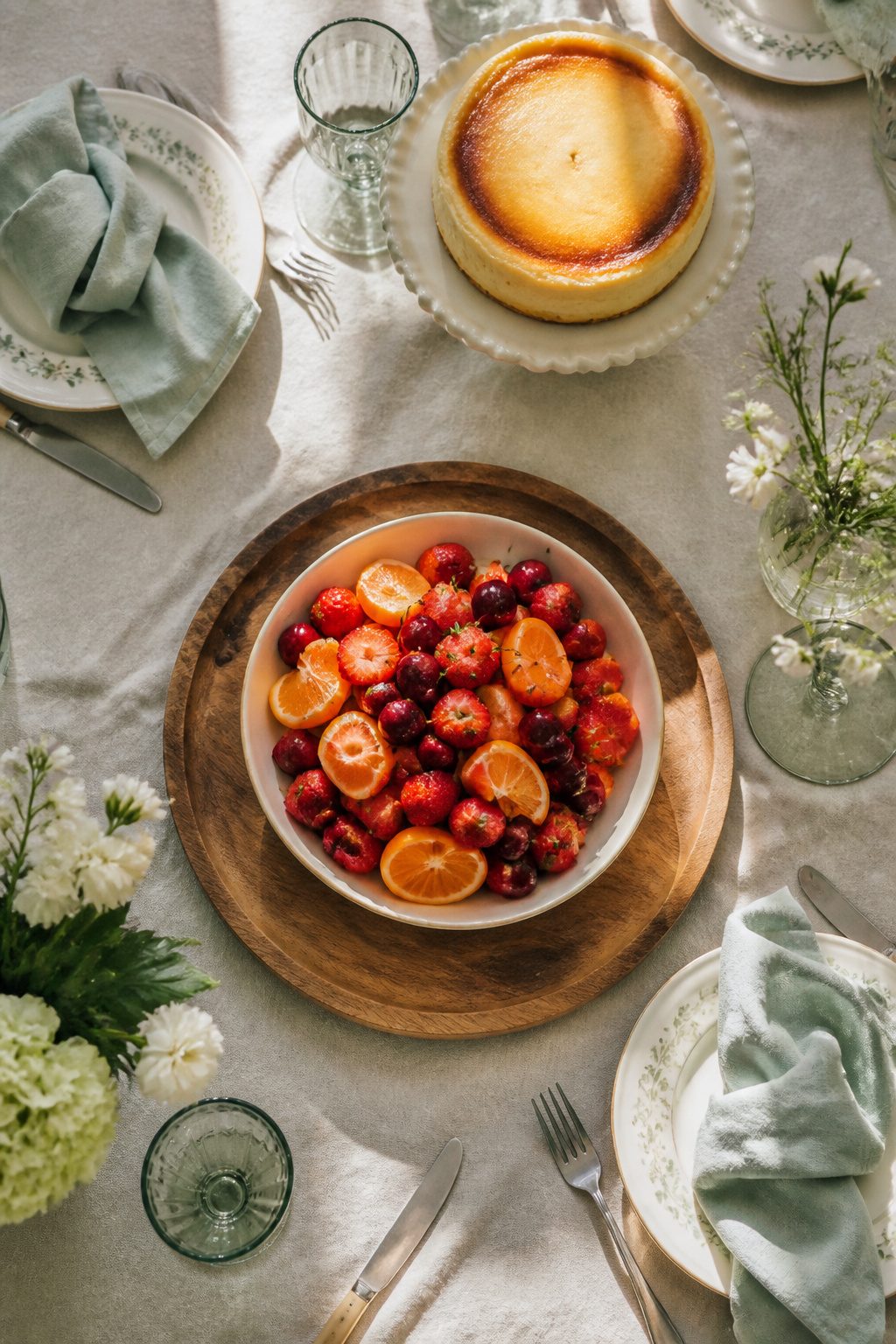
Strawberries, cherries, and citrus read as spring because they hit the market right when the weather turns, and their color does what flowers do without the wilting.
A bowl of them in the center of the table gives you a centerpiece and dessert in one move, which matters when the kitchen is already crowded and the oven is full.
The trick is keeping them from turning sticky. A cake stand or shallow ceramic bowl with a lip keeps juice from wandering, and setting the fruit out just before guests arrive, not hours ahead, stops the skin from dulling.
I have learned to leave whole fruit whole until the last minute; sliced strawberries weep, and citrus wheels dry to leather.
A lemon blueberry cheesecake on a small pedestal stand turns the fruit into architecture.
The height draws the eye across the table the way a vase would, and when dinner ends, the thing the guests have been admiring is already the thing they eat.
No one has to clear a centerpiece to make room for something sweet, and that practical overlap is what makes fruit the smartest spring decor you can buy.
8. Whimsical Touches
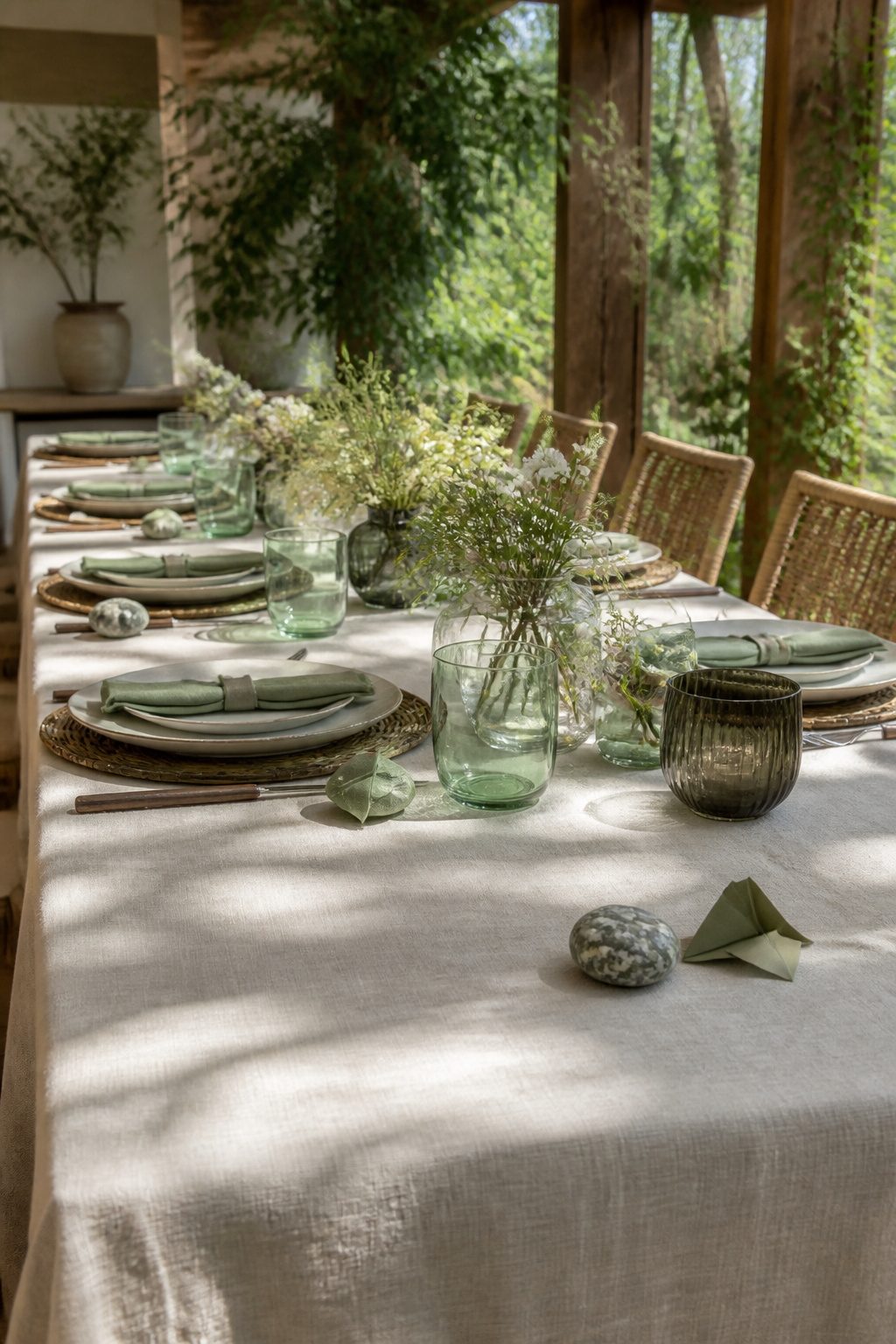
Playful touches on a spring table walk a narrow line. Colorful straws in drinks or a small spring-themed trinket tucked beside a plate start conversation without making guests feel seated at a children’s table.
The key is restraint: one oddity per place setting, not a theme park.
Last Easter I watched a host set porcelain bunnies at every seat, each with a tiny numbered tag. Guests spent the first ten minutes trading guesses about the numbers.
The opener worked because the bunnies were antique, not plastic, and the tags were handwritten, not printed. Whimsy ages up through material quality.
Small toys can serve the same function if they read as collected rather than purchased in a set.
A single vintage tin car parked by the bread plate, a polished stone with a face drawn in marker, a folded-paper frog that actually hops when you press it: these reward attention without demanding it.
The goal is a guest noticing, leaning to a neighbor, asking where it came from. That exchange is the decoration working.
9. DIY Elements
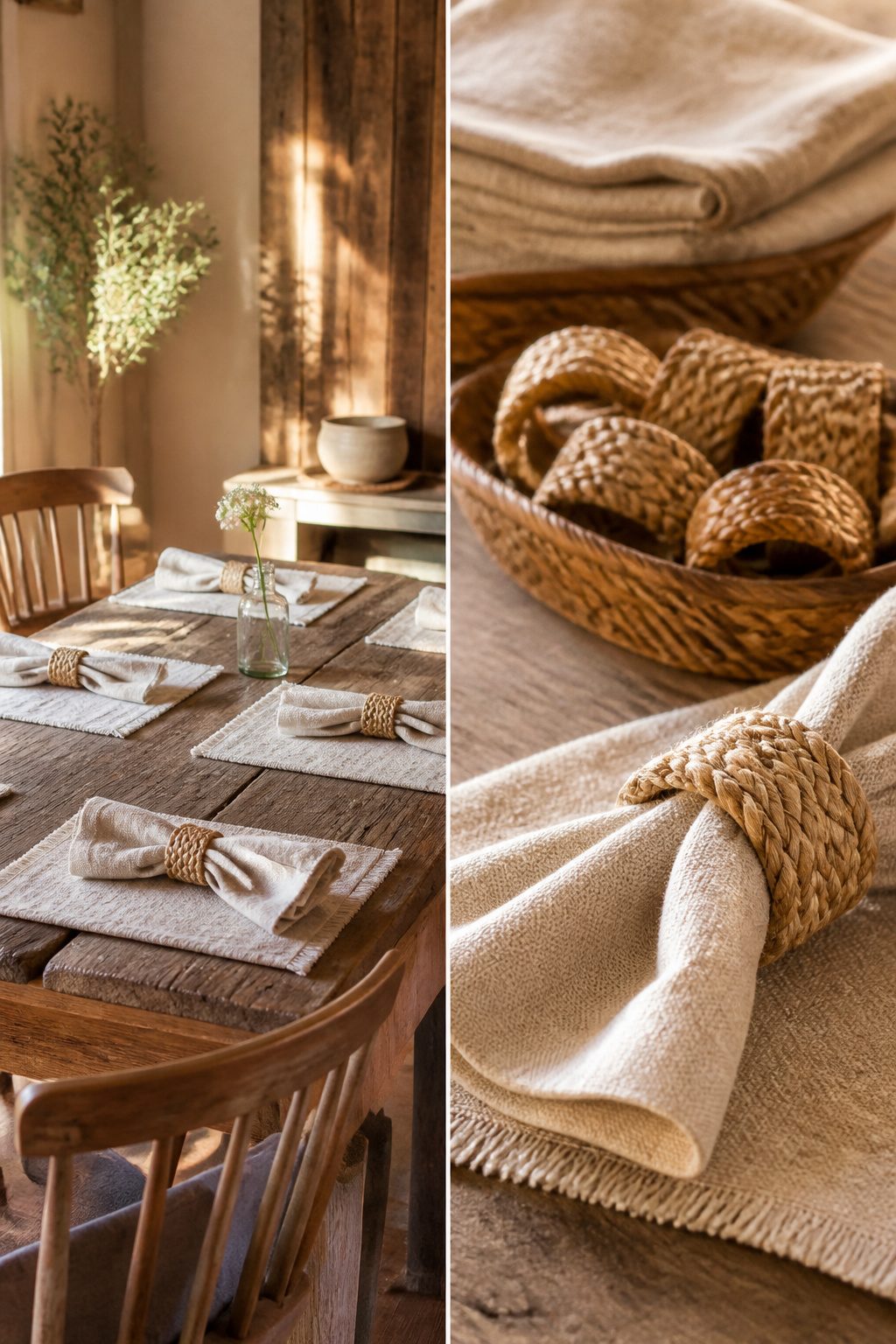
Every spring table decor roundup mentions rattan or galvanized metal napkin rings, and most stop right there. The gap between "buy these" and "here is how" is where a weekend project lives or dies.
I spent one Saturday on woven jute rings after seeing the rattan idea.
Wrapping jute cord around a toilet paper tube took about twenty minutes per ring, but the cord frayed at the ends until I switched to a quick whipstitch instead of glue.
Galvanized metal rings are easier: a 1-inch split ring from the hardware aisle, slipped through a punched hole in a linen napkin, gives the same industrial note without the hunt for matching sets.
Placemats are the other DIY entry point. Cotton or linen placemats from a bolt of fabric run half the cost of finished ones if you own a sewing machine, but the hemming eats a full afternoon.
For a faster route, a 14-inch square of raw linen with pinked edges works for a single dinner; it will fray in the wash, so treat it as disposable or commit to hemming later.
Chargers tempted me until I checked care instructions. Most metal or resin ones wipe clean but do not survive a dishwasher, which means hand-washing after every spring brunch.
I skipped them.
10. Interactive Centerpieces
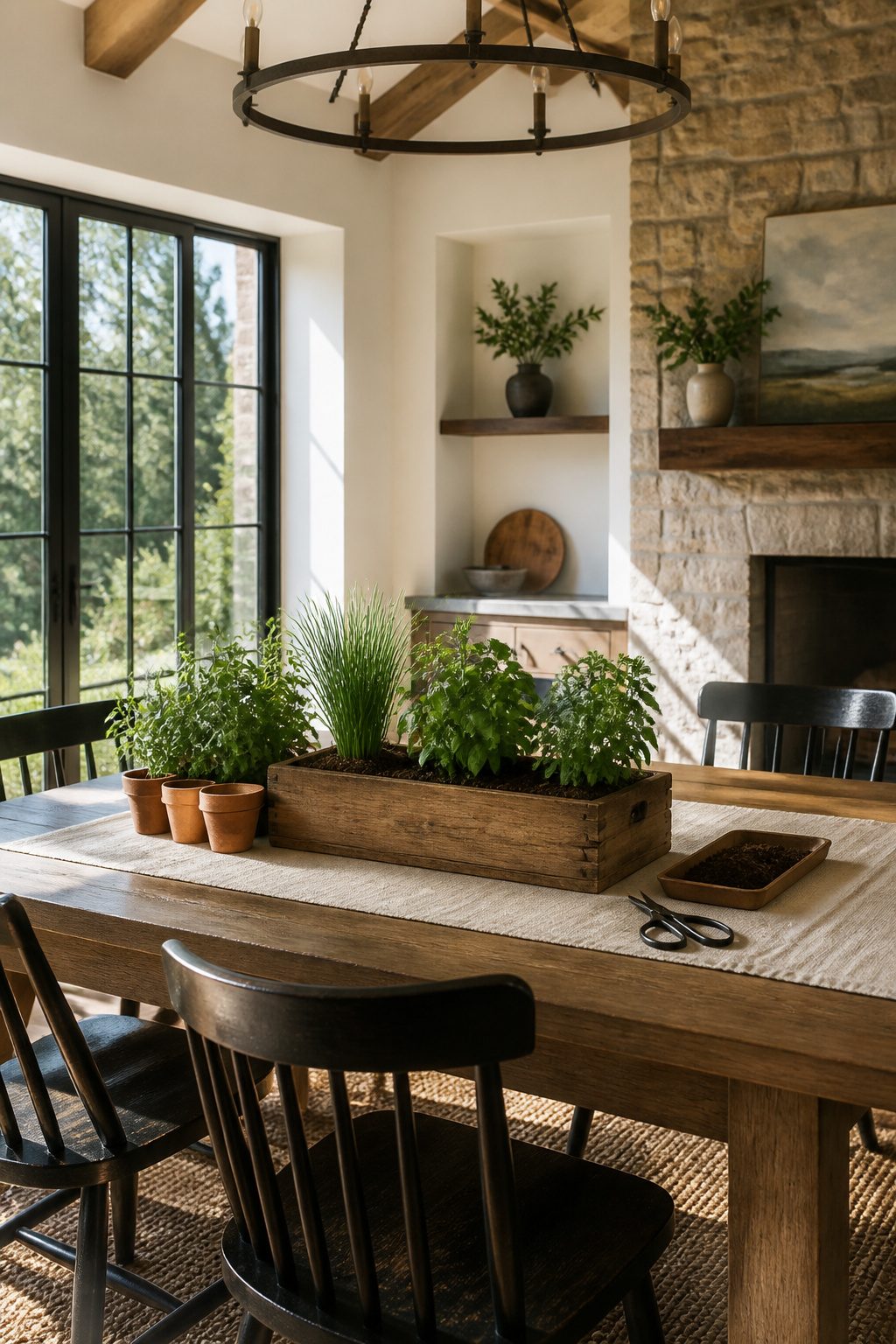
A small herb garden set dead center on the table turns the centerpiece into something guests actually use.
I set mine in a long wooden planter box lined with a few inches of soil, with chives, mint, and lemongrass spaced far enough apart that picking one plant does not uproot its neighbor.
Small terracotta pots work too, and most have drainage holes that keep the roots from sitting wet through a long dinner.
The trick is keeping the plants presentable while people tear at them. Water lightly the morning of so the soil holds together, and set the planter on a tray that catches loose dirt before it hits your cloth.
Tuck a pair of kitchen scissors nearby; guests who tear stems with their fingers make a mess and bruise the leaves.
If three people reach for mint before the soup course, that stem goes bare and the visual balance tilts.
I plant two of the most popular herbs at either end, or sometimes double up on mint entirely and treat the second pot as backup.
The gap where a plant was picked becomes part of the look by evening, proof the table saw actual use rather than sitting untouched like a museum piece.
Spring Color Palette
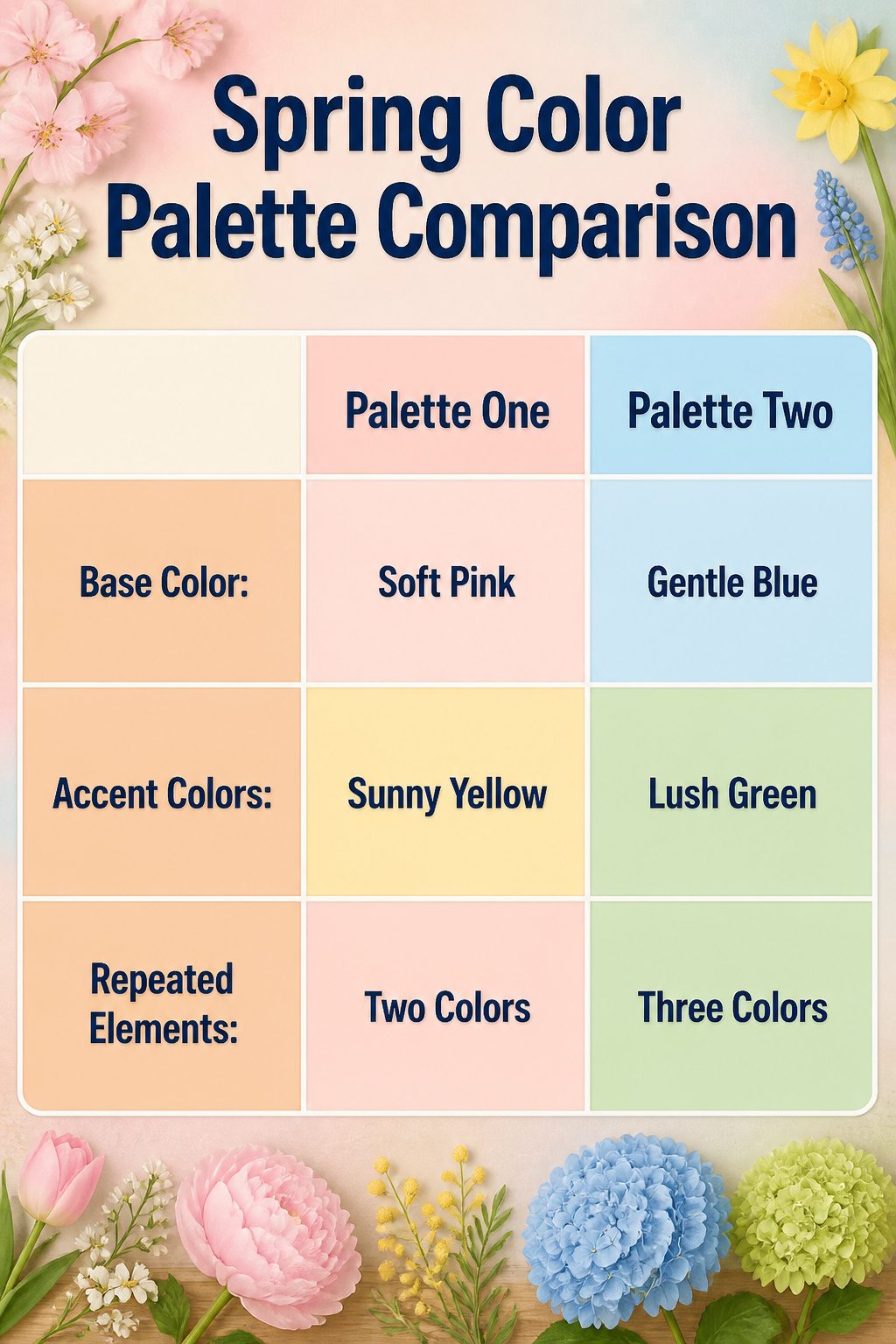
Soft pinks, serene blues, lush greens, and sunny yellows are the colors that read as spring without trying too hard. The mistake is using all four at once.
Two or three, locked in before you pull a single napkin, keep a table from looking like a garden center exploded across it.
A base in a gentle pastel, say a runner or cloth, lets the second color come through plates or napkins and the third through whatever sits in the middle.
The sources that hold up best mimic a field of wildflowers: yellows blending with pinks, greens grounding blues, never every hue competing for attention.
Limit yourself to three colors and repeat each at least twice so the eye finds them again across the table.
A green napkin fold, a green tumbler, a stem of green in the center: that repetition knits together pieces that share nothing else.
I learned this the hard way on a table where the blue plates fought the pink runner because I had added yellow candles on a whim without planning where else yellow would appear.
The result felt accidental, which is the opposite of seasonal. Coherence comes from commitment, not from matching sets.
Table Setting Techniques
A spring table lives or dies on whether guests can still talk across it. Keep the centerpiece below 14 inches tall, or move it off-center so sightlines stay open through the middle.
I learned this the hard way after a dinner where a tall vase of branches turned six people into three isolated pairs.
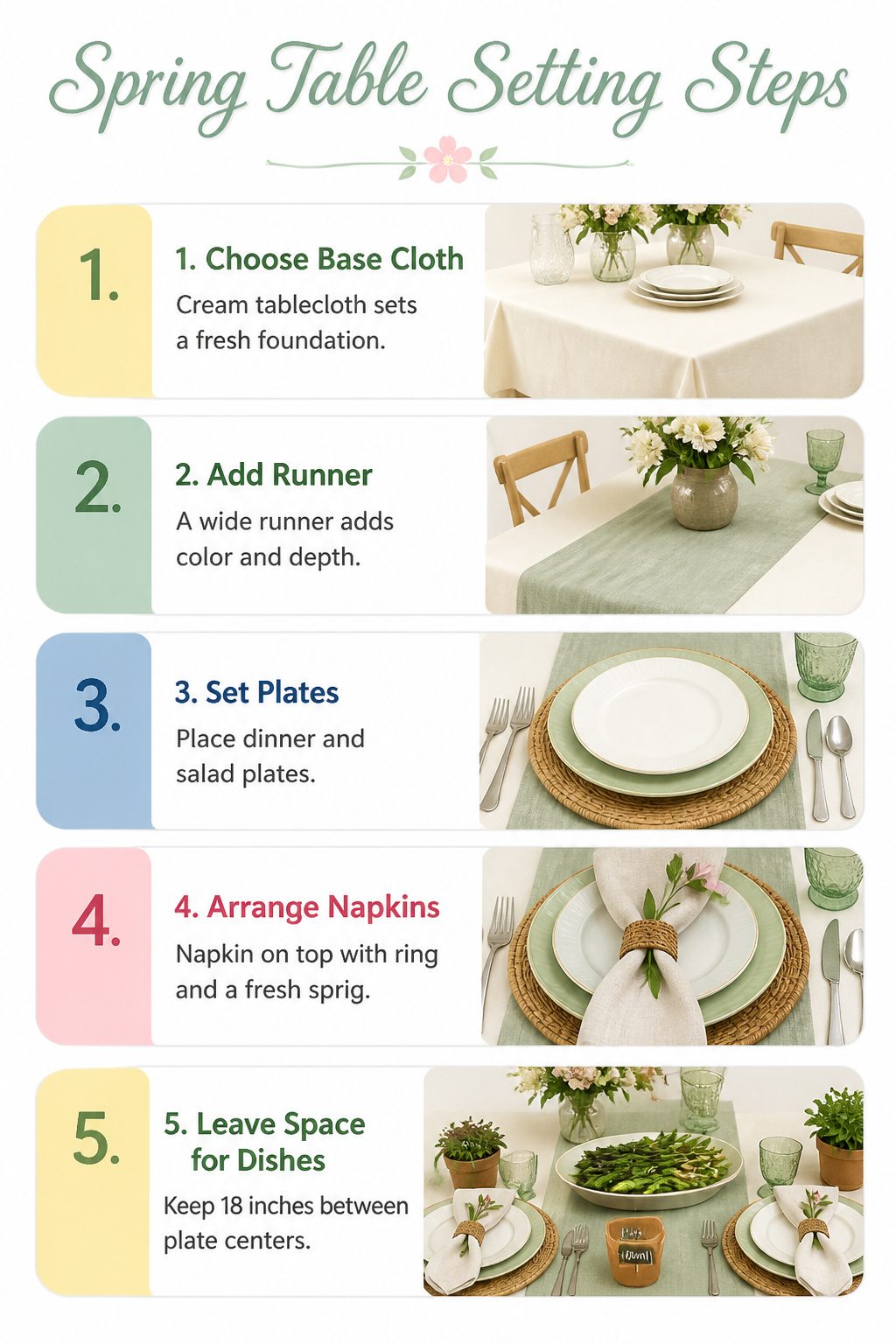
Layering starts with the base cloth, then the runner, then the plate. A cream tablecloth gives spring colors something to pop against, and a wide runner on top adds depth without competing for plate space.
Linen napkins across the top of the plate mean guests never have to shift silverware just to sit down. Rattan or galvanized metal rings hold them in place, with a single flower or herb sprig slipped between napkin and ring.
Spacing matters once serving dishes enter the picture. Leave at least 18 inches from plate center to plate center; anything tighter and the platter of asparagus becomes a demolition derby.
Mini potted herbs at each seat, chives or mint in small terracotta pots, double as place cards and parting gifts, so the table stays functional even when it looks decorated.
Outdoor Spring Tables
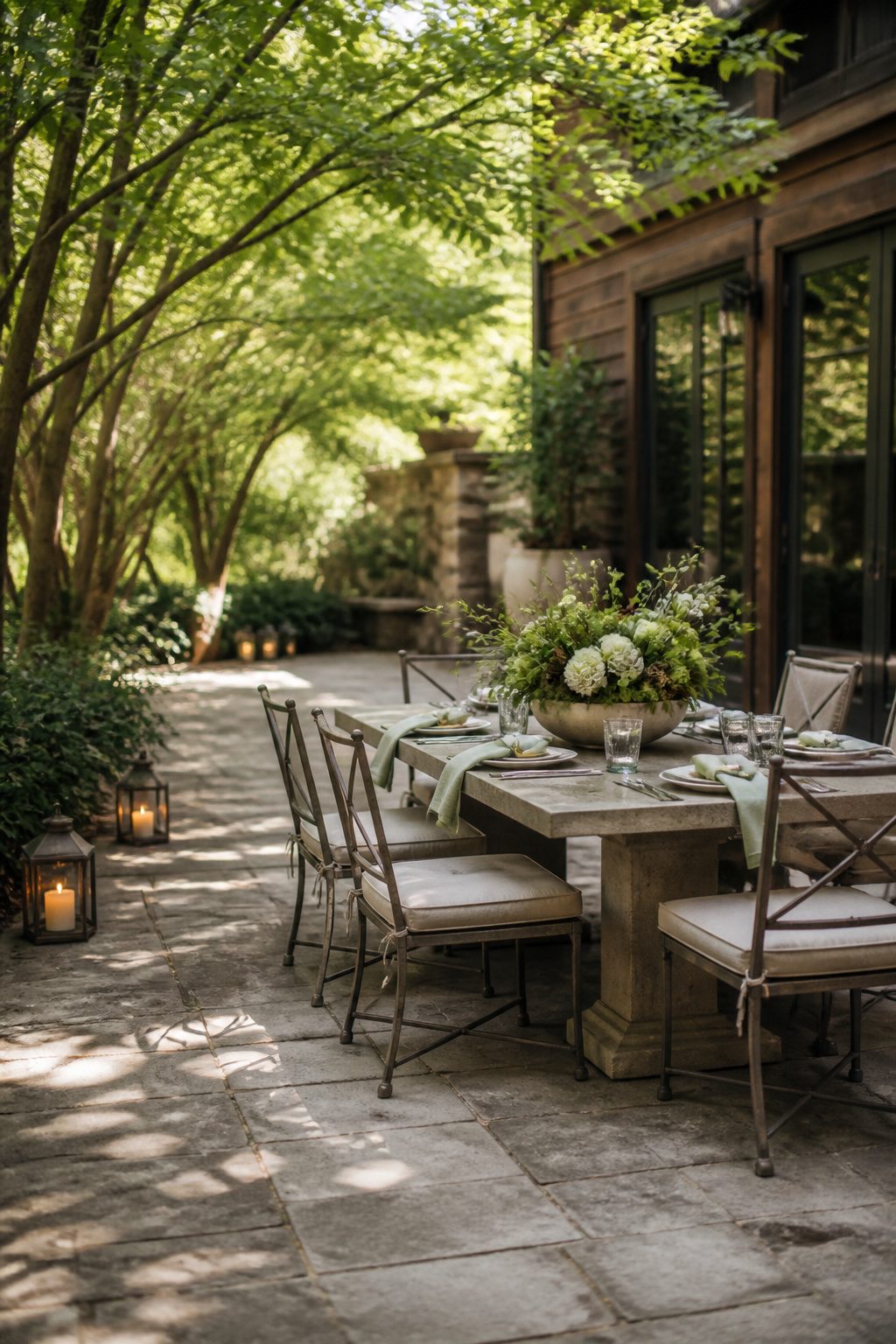
Wind is the first thing that kills an outdoor spring table. A tablecloth becomes a sail, napkins scatter, and weighted centerpieces matter more than height.
A shallow bowl of wet floral foam, hidden under moss, holds stems steady without a tall vase to catch gusts.
Sun fading is slower but real; dyed linens and painted ceramics left out all summer will bleach to a different color by August. Bugs are easier to manage than most people think.
Citronella votives placed at knee level, where the vapor hugs the table, work better than the jar candles sold for the job.
Surfaces make or break the move outside. Painted wood swells, metal heats, and glass tops show every water ring.
Concrete, sealed teak, or powder-coated aluminum handle the shift without babying. Natural elements should look chosen, not fallen.
A runner of pressed fern fronds between plates reads intentional; loose clippings from the hedge read like cleanup. The same branch laid flat becomes structure, standing upright becomes clutter.
DIY Project Reality Check
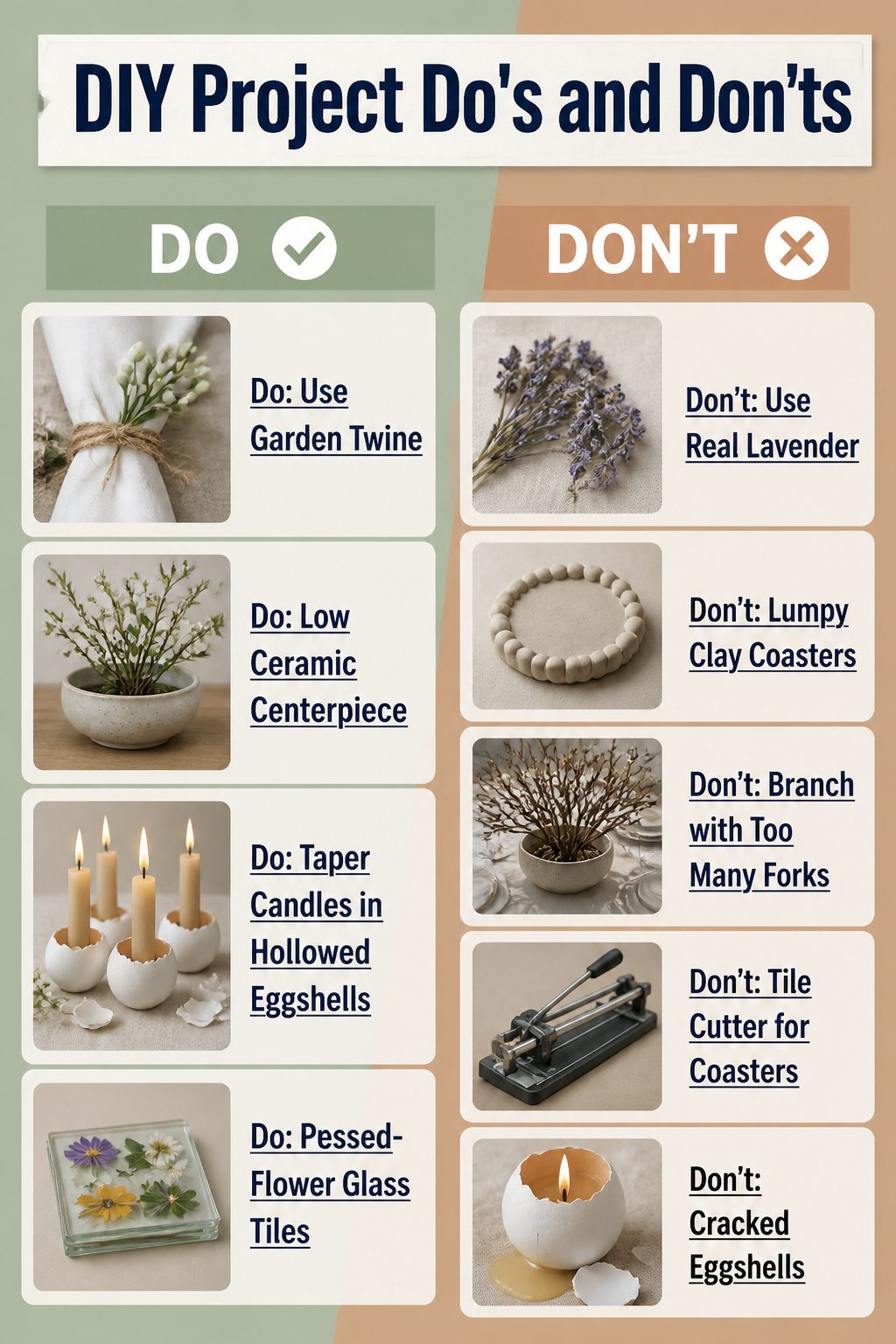
Not every DIY spring table idea survives contact with a real Saturday afternoon. After a few years of trial runs, here is what actually worked and what sat half-finished in a drawer until July.
- Napkin rings from garden twine and faux buds took forty minutes, needed only scissors and a glue gun I already owned, and looked intentionally rustic. The same technique with real lavender wilted by the second seating.
- Beaded clay coasters looked handmade in the wrong way: lumpy, uneven, and the polymer needed a full hour of kneading before it would roll flat. Without a pasta machine dedicated to craft use, the surface never smoothed out enough for a dinner guest to set a glass on without hesitation.
- A foraged branch centerpiece in a low ceramic bowl finished in under an hour and cost nothing. The mistake was choosing a branch with too many forks; it cast jagged shadows across the plates and the whole table felt crowded.
- Pressed-flower glass tiles for coasters required a tile cutter I borrowed, then bought, then never used again. The cutter paid for itself only after the third project, which never came.
- Taper candles in hollowed eggshells looked delicate and seasonal but needed a steady hand with a paring knife and a dozen eggs to get four clean halves. The ones that cracked mid-meal dropped wax straight onto the linen.
Frequently Asked Questions
What are some ideas for spring table decor?
Potted herbs that double as guest favors, floral centerpieces with tulips and daffodils, layered linen or cotton table linens, and colorful dinnerware in soft pastels all work well.
Natural materials like bamboo and linen napkins add texture, while unscented glass votives and seasonal fruits such as strawberries can round out the table without adding clutter.
How can I create a spring centerpiece?
Mix vessel heights rather than crowding one tall vase: cluster bud vases with single stems at staggered heights, then set a wider low container beside them.
Three to five stems per small vase is enough; more and the flowers compete instead of breathe. White ceramic or sea-glass toned vessels let the color do the work.
What colors are best for spring table decor?
Soft pinks, serene blues, lush greens, and sunny yellows read as spring, but limit yourself to two or three and repeat each at least twice across the table.
Aqua, chartreuse, or coral against a white tablecloth carries the whole color story even before anything outside has bloomed.
What materials should I use for spring table linens?
Linen and cotton are the standard choices. Linen gives a slightly rumpled, lived-in texture that softens a room, while cotton takes more abuse and washes out easier after brunch.
Use a solid neutral base layer and put the busier print on top where the eye lands first.