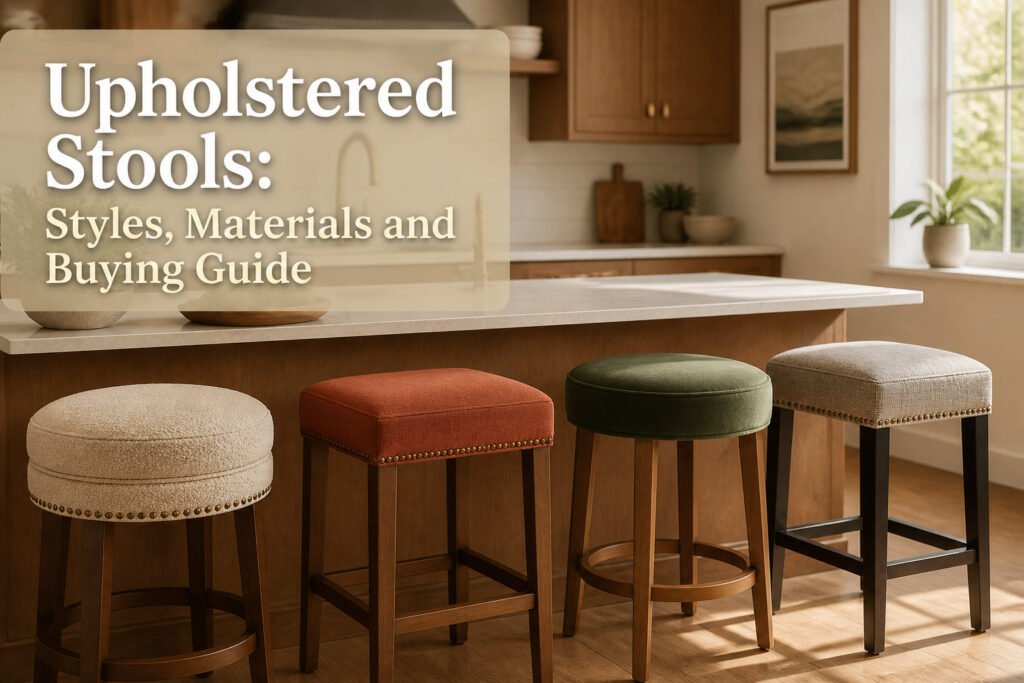
An upholstered stool is a seat built around a padded cushion fixed to a frame, with the fabric or leather doing the visual work that exposed wood or metal usually handles. The catch is maintenance: velvet demands immediate blotting, vinyl forgives juice boxes but looks like a diner booth, and leather needs conditioning twice a year to avoid cracking. A backless model at a kitchen island keeps sightlines open, yet without a backrest your core does all the work past twenty minutes.
Backless Upholstered Stools
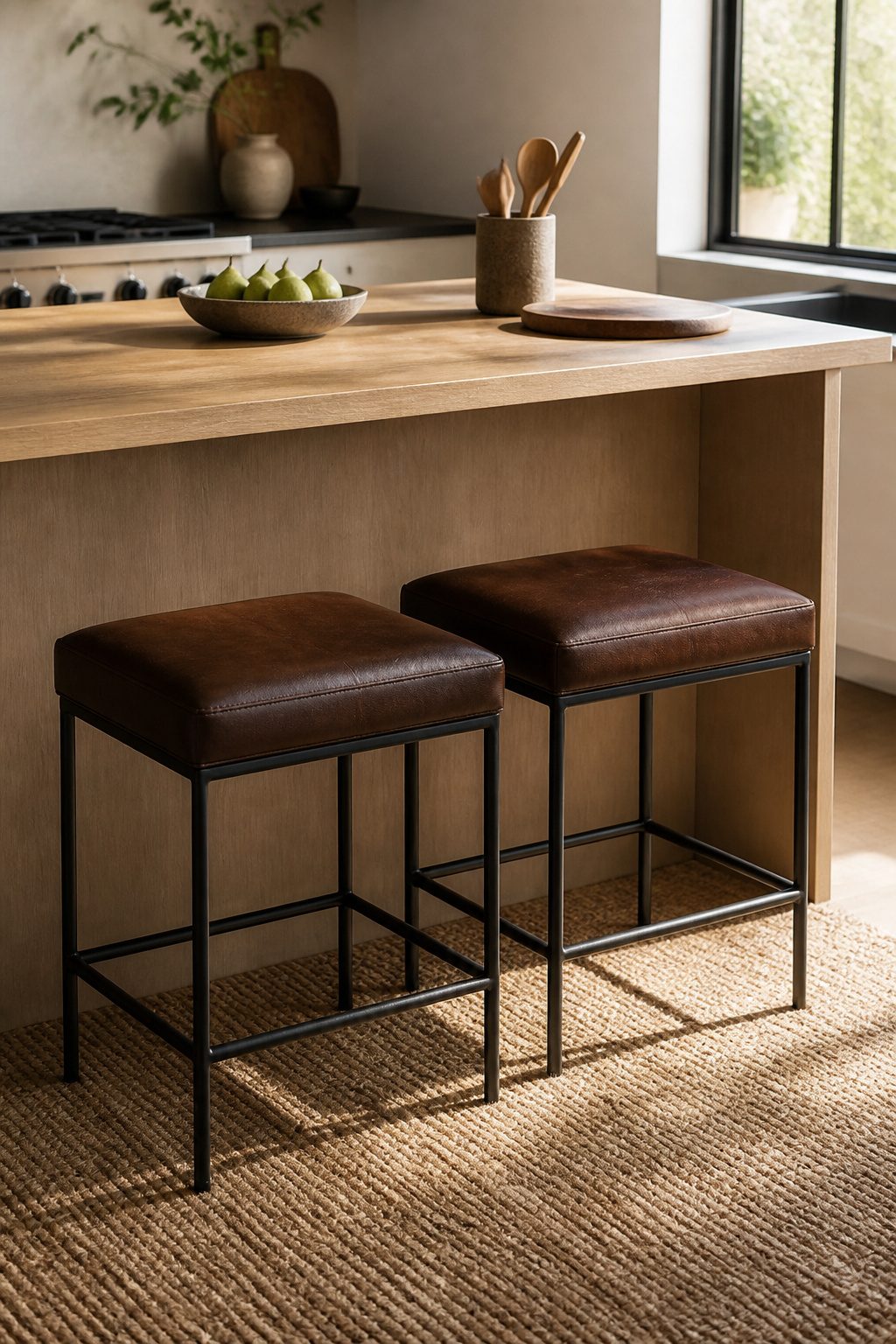
Backless upholstered stools are the simplest form: a padded seat on legs, nothing above the apron line. The clean silhouette works anywhere you need to tuck seating away completely. Kitchen islands are the obvious fit, since the stool slides under the counter and the sightline stays open across the room. Vanity tables and compact home bars follow for the same reason. In a small space, the absence of a back keeps the visual weight low.
The tradeoff is real support. Without a backrest, your core does all the work, and a long breakfast or an evening of drinks becomes a slow slump. The upholstery itself becomes what you actually look at, so the fabric choice carries more weight than it would on a stool where the frame dominates. Leather, suede, or a tight satin weave each reads differently against the wood or aluminum base.
Heights tend to cluster around counter height and bar height, though the exact measurement varies by maker. What convinced me, reading through the options, is that a backless stool lives or dies by the seat padding. A thin cushion on a hard frame defeats the purpose when there is no back to lean into. The foam needs to hold up through repeated short sits, not just the first test in the store.
Upholstered Stools with Backs
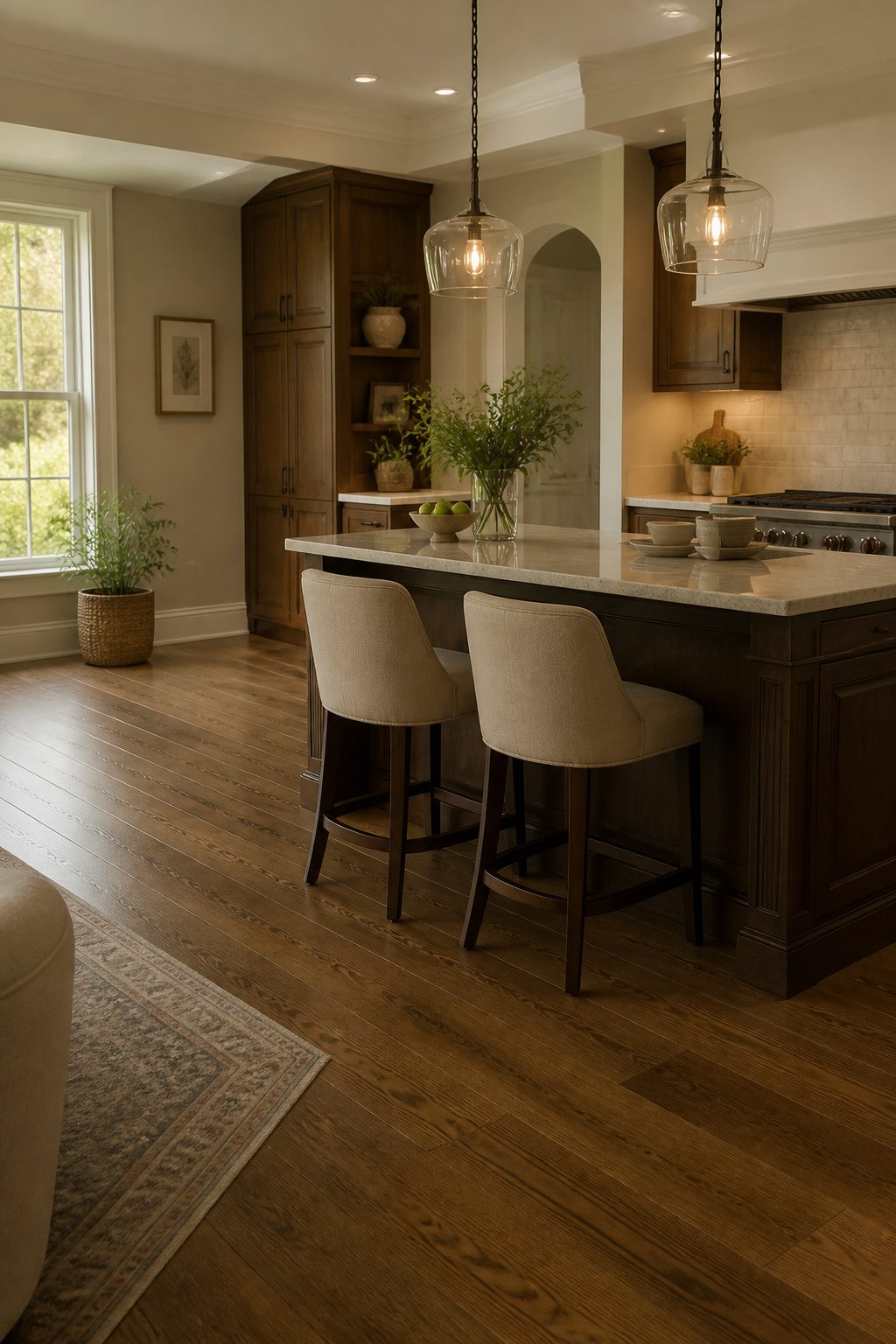
A back changes where an upholstered stool actually lives in your house. The low ones, barely rising above the seat, let you tuck the stool nearly flush against a counter when no one is sitting. Full-height backs turn the same piece into something you can settle into for an hour with a laptop or a second drink. That shift matters for kitchen islands that double as homework stations or home bars where guests linger.
The back itself comes upholstered or left bare. Foam-cushioned backs in leather or suede match the seat and keep the silhouette soft all the way up. Wood or metal backs, sometimes contoured, read leaner and wipe down faster behind a busy counter. Either way, the back adds depth you cannot ignore. A backless stool might slide in at 18 inches front to back; the same seat with a full back can push past 22. Measure your counter overhang and your traffic lane before ordering, or the stool blocks the walkway every time someone stands up.
Upholstered Swivel Stools
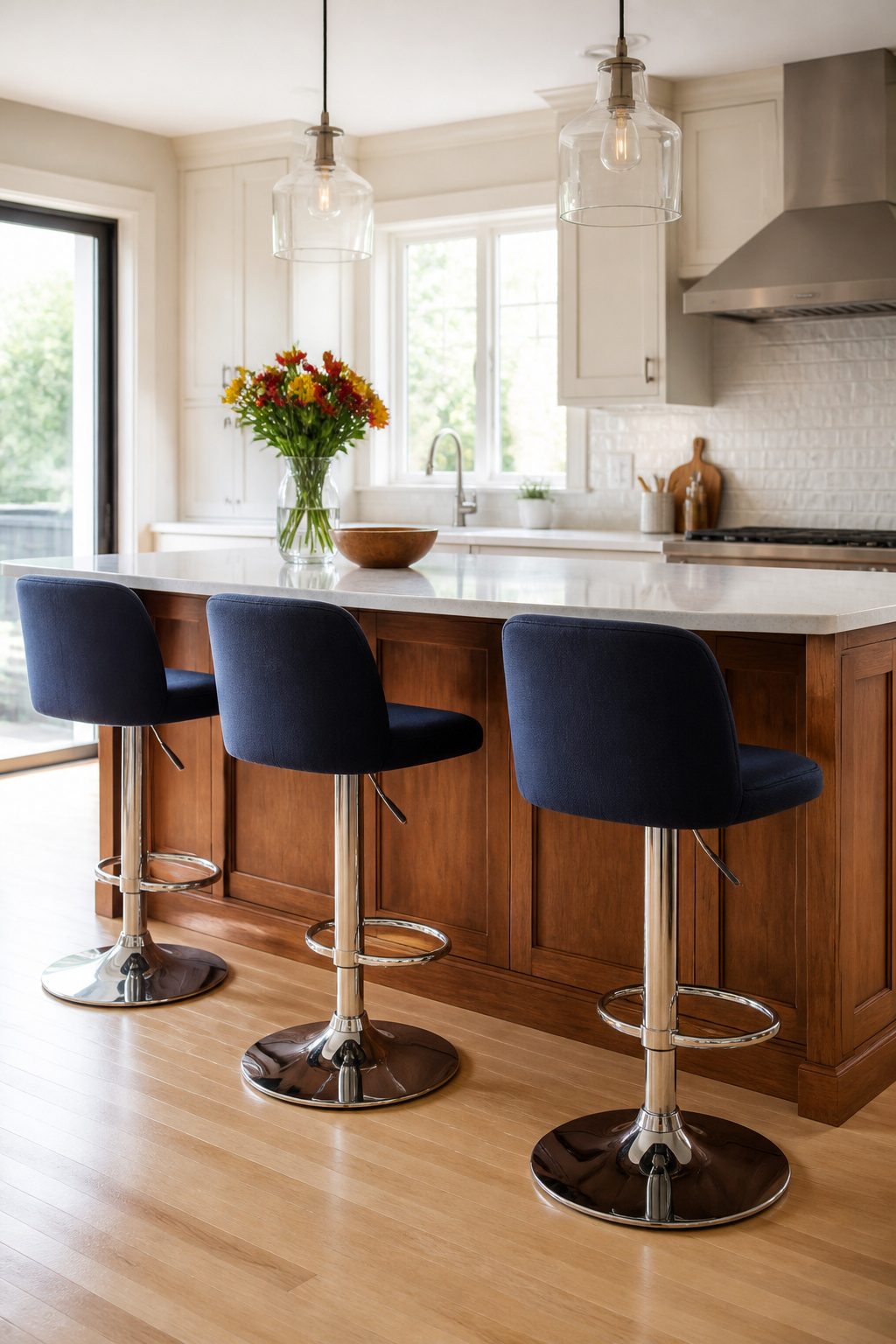
Ball-bearing swivels spin freely in either direction and feel smooth after years of use, while memory-return mechanisms spring back to center when you stand up. That return feature matters more than most buyers expect in a kitchen island setup, where you turn to grab a pan or talk to someone at the sink and want the seat facing forward again when you leave. The rotation becomes a liability with small children, who treat a spinning seat like playground equipment, or on uneven floors where the base rocks and the swivel amplifies the wobble. Moving parts wear out: bearings collect dust and grit, lubricant dries, and the metal-on-metal contact eventually squeaks unless you maintain it. I have passed on swivel stools for rental units because tenants rarely report a squeak until it is loud enough to bother them, by which point the mechanism has scored itself and needs replacement rather than oil. For a primary home where you will notice and fix small problems early, the convenience of turning to serve or converse is worth the extra maintenance. For a tight space or a household with toddlers, a fixed base removes one variable from daily life.
Adjustable Height Upholstered Stools
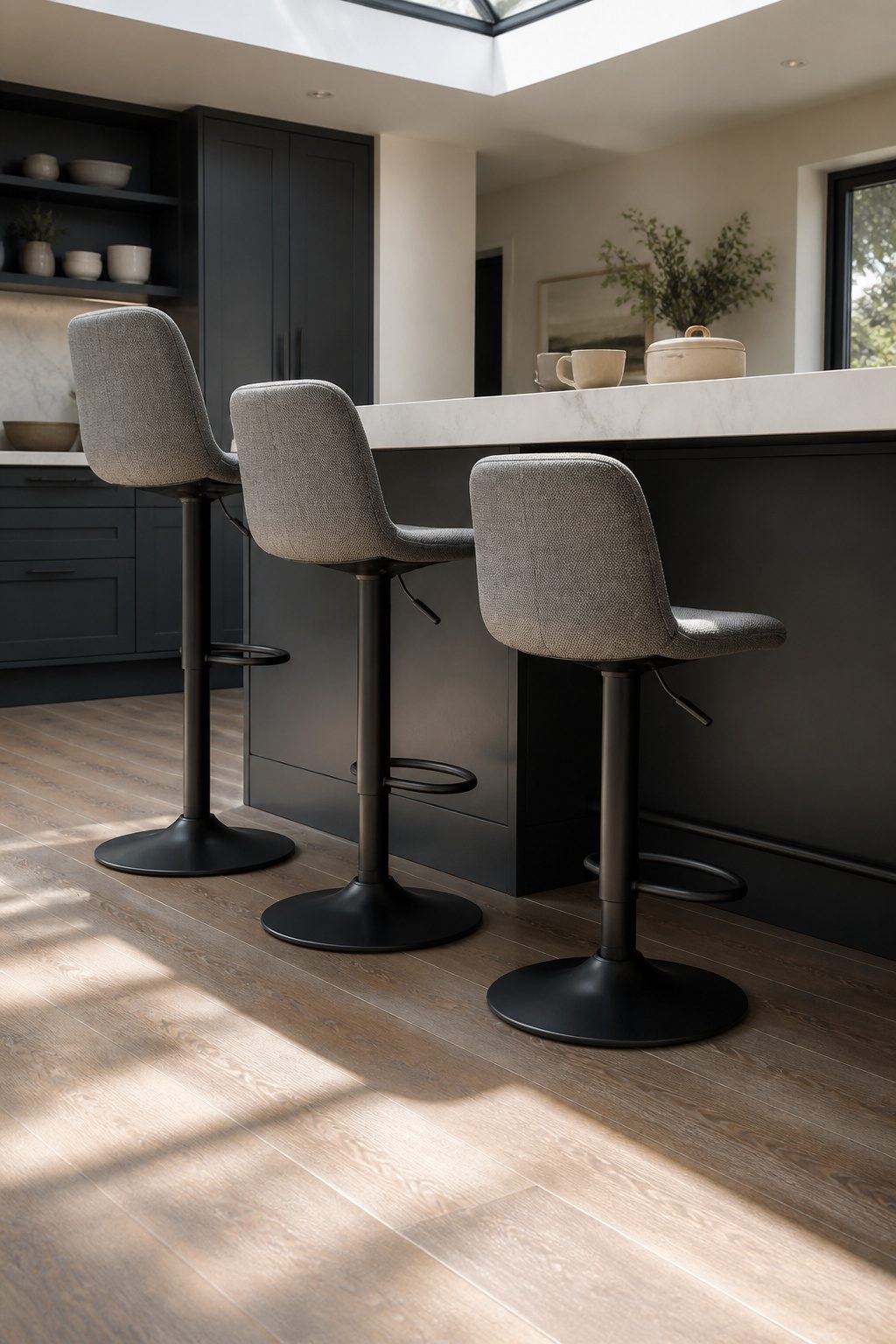
A gas-lift or screw mechanism changes seat height on upholstered stools, usually across a 24–30 inch range that bridges counter and bar height in one piece. That flexibility matters most in spaces where the counter itself is non-standard, or where the people using it keep changing. A friend with a kitchen island built at 36 inches bought three adjustable stools rather than gamble on fixed counter height; two years later her son, then ten, raises his seat to match his growth spurts without her buying twice.
The trade sits in plain sight. A metal column runs from the seat down to the base, and on most models that hardware is polished chrome or matte black, not fabric. In a fully upholstered stool where every line softens into padding, that visible post reads as an afterthought. I think the compromise is worth it in rental properties, where the next kitchen might have a bar ledge three inches taller, but for a permanent setup with a known counter height a fixed stool looks more resolved. Backless adjustable models tuck cleaner than ones with backs because there is less visual mass fighting that column, though the same sources note backless seats suit smaller spaces better anyway.
Fully-Upholstered Stools
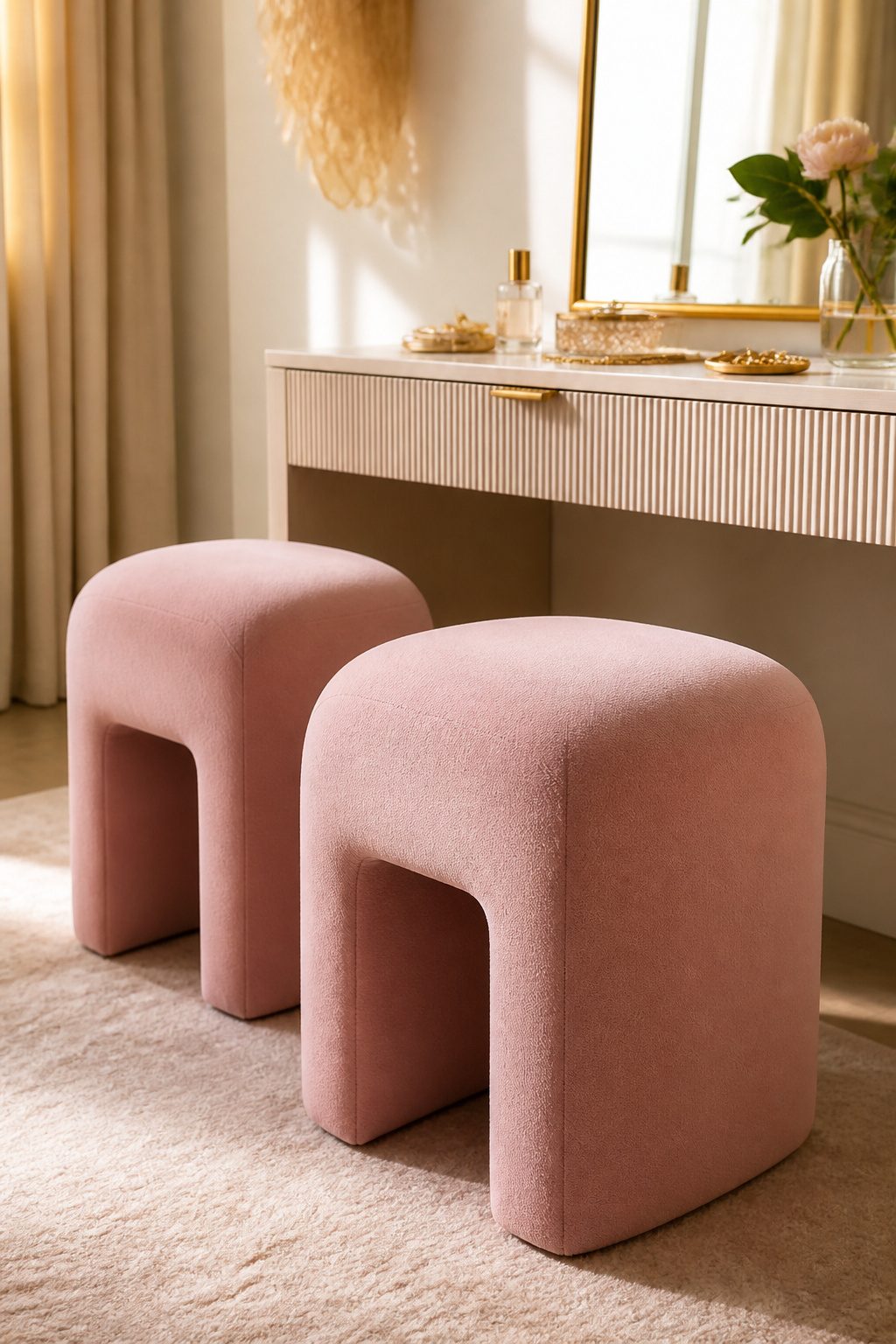
A fully-upholstered stool reads as living-room furniture that wandered into the kitchen. Every surface, legs included, wears the same fabric, so the piece looks soft from every angle and anchors a space the way an ottoman does. That completeness costs more than a stool with exposed wood or metal legs, sometimes by half again, because the maker is essentially building a small armchair without arms.
The plush effect works best where the stool sits away from traffic and mess. In a dressing area or a corner reading nook, the wrapped legs feel intentional, almost sculptural. Under a kitchen counter where tomato sauce splatters and feet kick, the same choice starts to look like a maintenance burden. Fabric on legs picks up floor dust, vacuum scuffs, and the damp marks from mopping that wood would shrug off.
Cleaning is the real tradeoff. Spot-cleaning a seat is straightforward; spot-cleaning a leg seam where grime collects means working around hardware and puckered corners. Some fabrics clean better than others, but no fully-upholstered stool is truly wipeable the way vinyl or leather on a partial frame can be. For households that actually cook daily, the look is usually too much commitment for too little seat time.
Leather Upholstered Stools
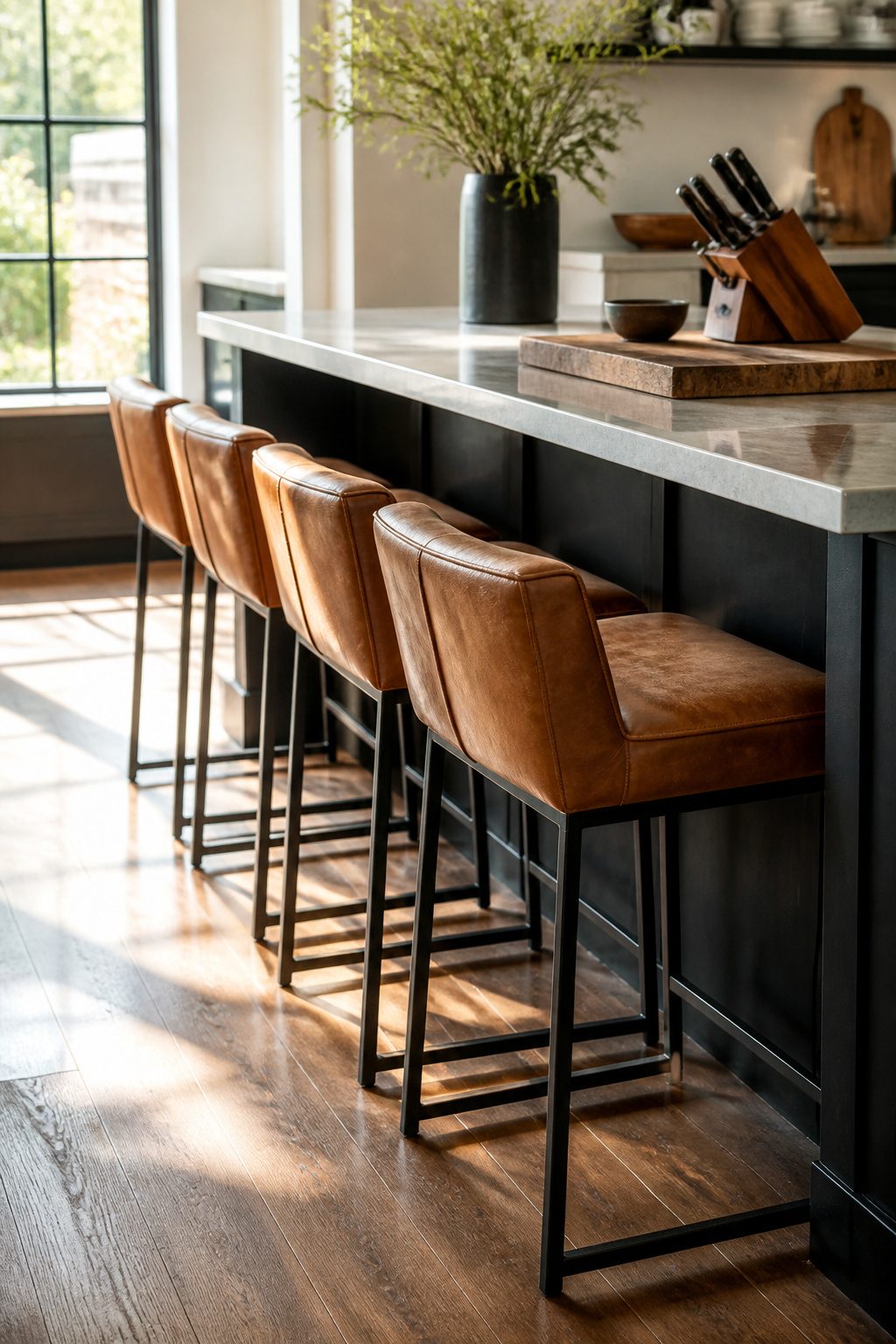
Leather upholstered stools carry a visual weight that fabric rarely matches. A row of them at a kitchen island reads as furniture, not padding, and that presence comes with a real price jump from fabric options. The tradeoff is durability. Spills wipe off with a damp cloth, and regular conditioning keeps the surface from cracking as it ages. Over years, genuine leather develops a patina that bonded leather never quite achieves; bonded layers can peel where the real thing softens and darkens.
The feel shifts with the season. Leather runs cold in winter and can turn sticky against bare legs in summer humidity. Some bar stools built with leather upholstery hit 500+ lb weight capacity, a figure worth checking if the stool sees heavy daily use. For renters who move often, leather’s heft and cost make it a commitment. For someone staying put and willing to condition it twice a year, the maintenance is light compared to the lifespan it buys.
Vinyl Upholstered Stools
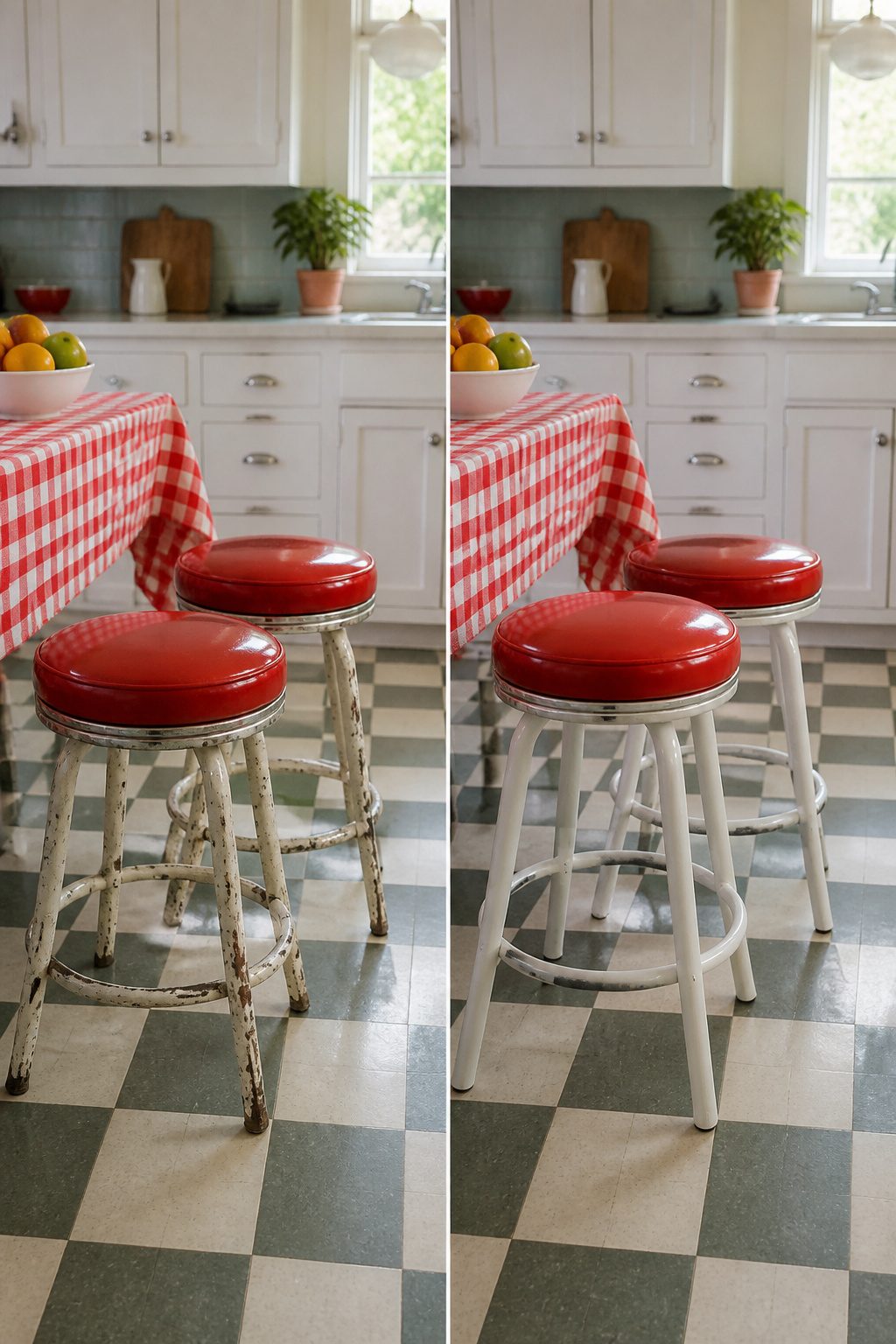
Vinyl and faux-leather upholstered stools carry a slight sheen that real leather loses after a few years of use. The surface feels less supple, more like a well-worn diner booth than a softened hide, but that stiffness is what makes it so easy to clean. A damp cloth handles most spills without any special conditioner or upholstery cleaner, which is why these stools tend to end up in rental properties and homes with young children. The price point sits lower than fabric or leather across most lines, and the durability holds up in commercial settings where chairs see turnover after turnover. The tradeoff is unmistakable up close. Under direct light, vinyl has a plastic warmth rather than leather’s depth, and the seat doesn’t breathe on hot days. Custom orders in this material can stretch to 30–49 days shipping, so a weekend project timeline needs to account for that wait. For a kitchen that sees juice boxes and coffee splashes, or a landlord furnishing four units at once, the practicality usually wins out over the aesthetic compromise.
Velvet Upholstered Stools
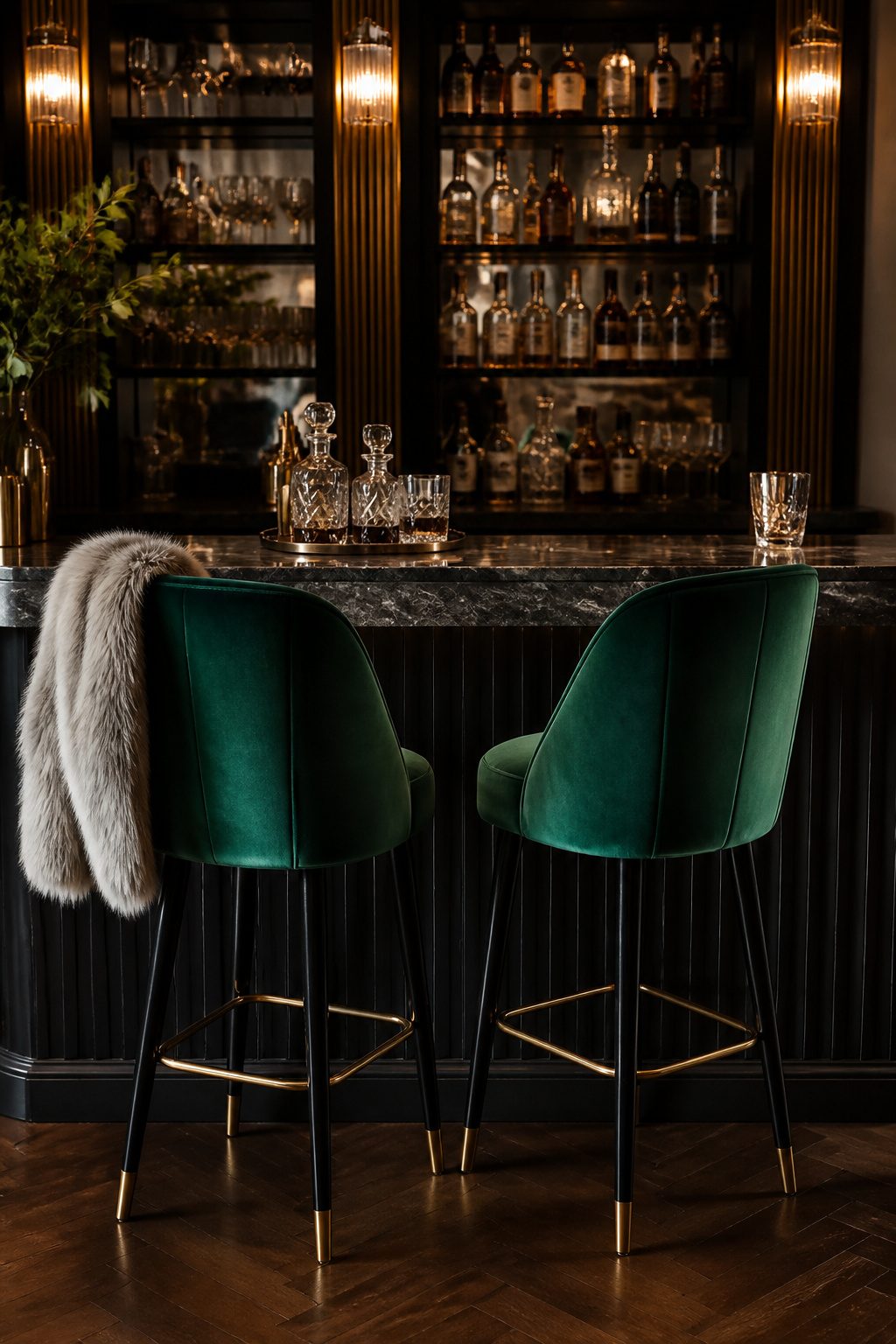
Velvet catches light the way no other upholstery does, and that plush texture against your legs is the first thing guests notice when they pull up a stool. The nap runs in one direction like grass under wind, which means wear patterns show fast if everyone slides onto the seat the same way. Flip the cushions when you can, or at least brush them with the pile, not against it. Water spots darken the fibers permanently, so blotting a spill immediately matters more than with any other fabric. Wool blends feel nearly as soft and forgive more daily abuse, but they do not announce themselves the way velvet does. In a small apartment where the stools sit under a counter most of the time, velvet reads as trying too hard. At a dressing table or a bar area you actually use for entertaining, the glamour pays for itself. The maintenance is real: gentle vacuuming, brushing, and the constant low-grade anxiety about red wine. I would not put velvet anywhere the stools get daily breakfast traffic unless you enjoy owning a clothes brush for furniture.
Fabric Upholstered Stools
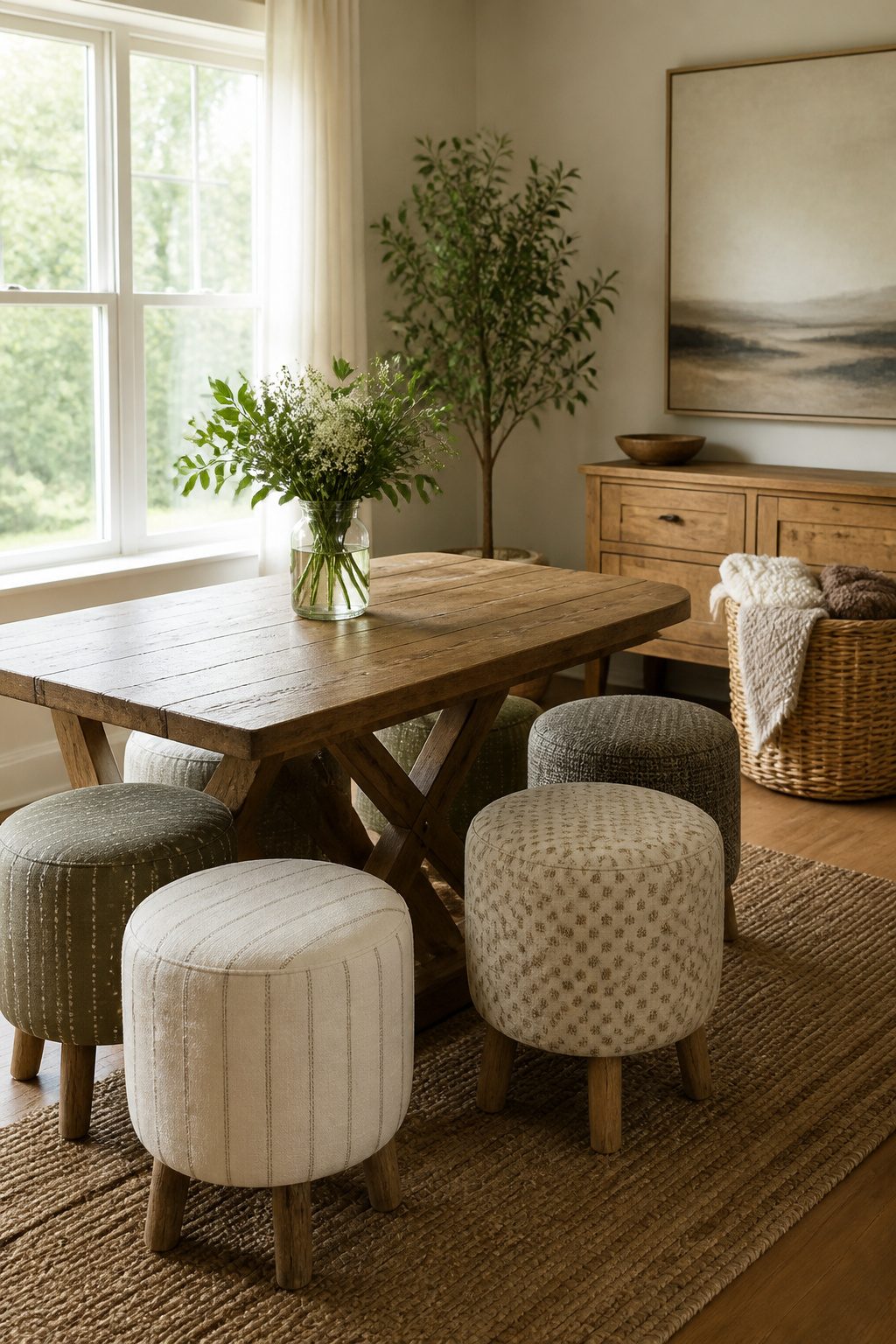
Fabric pulls the widest range of any upholstered stool category. Linen, cotton, polyester blends, and the newer performance fabrics each land at a different point on the texture–durability map, and the gap between them matters more than most shoppers expect.
Double-rub counts are the number to check before buying anything that will see daily use. A standard residential fabric might hold up to 15,000 double rubs; a high-traffic kitchen stool needs something closer to 30,000 or above. Without that figure, you are guessing at how the seat will look in year three.
Performance fabrics have become the practical default for a reason. They mimic the hand of linen or cotton while carrying built-in stain resistance, and they clean up without the panic that follows a spilled glass of red wine on plain cotton. The trade is subtle: the best ones cost more per yard, and some have a slight synthetic hand that reads as "practical" rather than "luxurious." For a stool that gets used every morning with coffee, that trade usually wins.
Regular vacuuming and treating spills when they happen will extend any fabric’s life. Performance fabrics just buy you more margin on the second part.
Material Choices
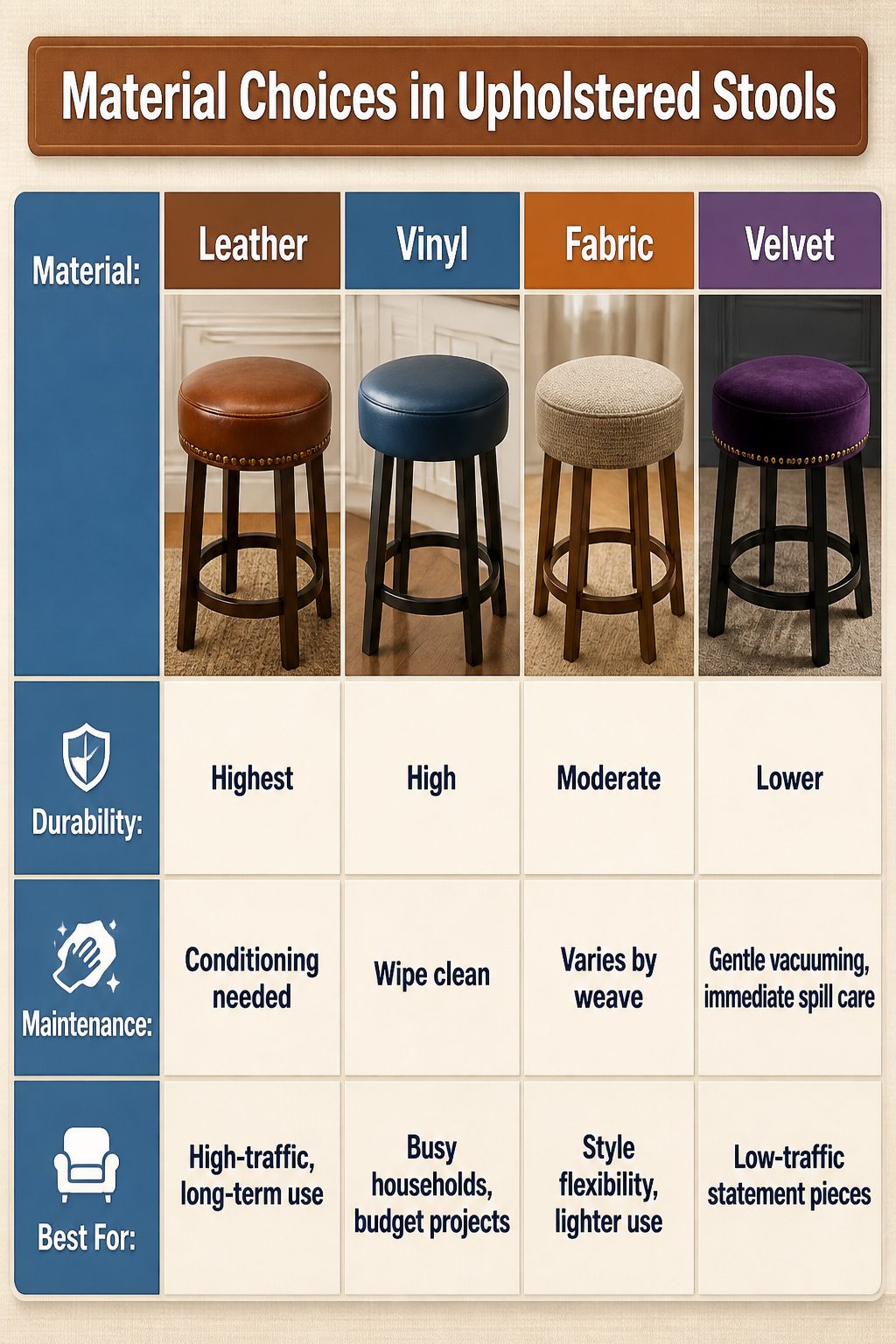
Leather, vinyl, fabric, and velvet each carry a different maintenance contract. Vinyl asks the least: a damp cloth handles most spills, and daily wear barely registers. Leather holds up longest against abrasion and carries the luxury weight, though it needs conditioning to prevent cracking. Fabric stretches across patterns and price points, forgiving in style but porous against red wine. Velvet delivers the plush, saturated look that photographs well, yet the pile crushes under pressure and demands immediate attention to any spill.
| Material | Durability | Maintenance | Best For |
|---|---|---|---|
| Leather | Highest | Conditioning needed | High-traffic, long-term use |
| Vinyl | High | Wipe clean | Busy households, budget projects |
| Fabric | Moderate | Varies by weave | Style flexibility, lighter use |
| Velvet | Lower | Gentle vacuuming, immediate spill care | Low-traffic statement pieces |
Vinyl wins for hands-off upkeep, but leather repays its higher cost in years of service. Velvet belongs where someone will notice it daily and protect it accordingly: a dressing stool, not a kitchen island perch.
Comfort and Ergonomics
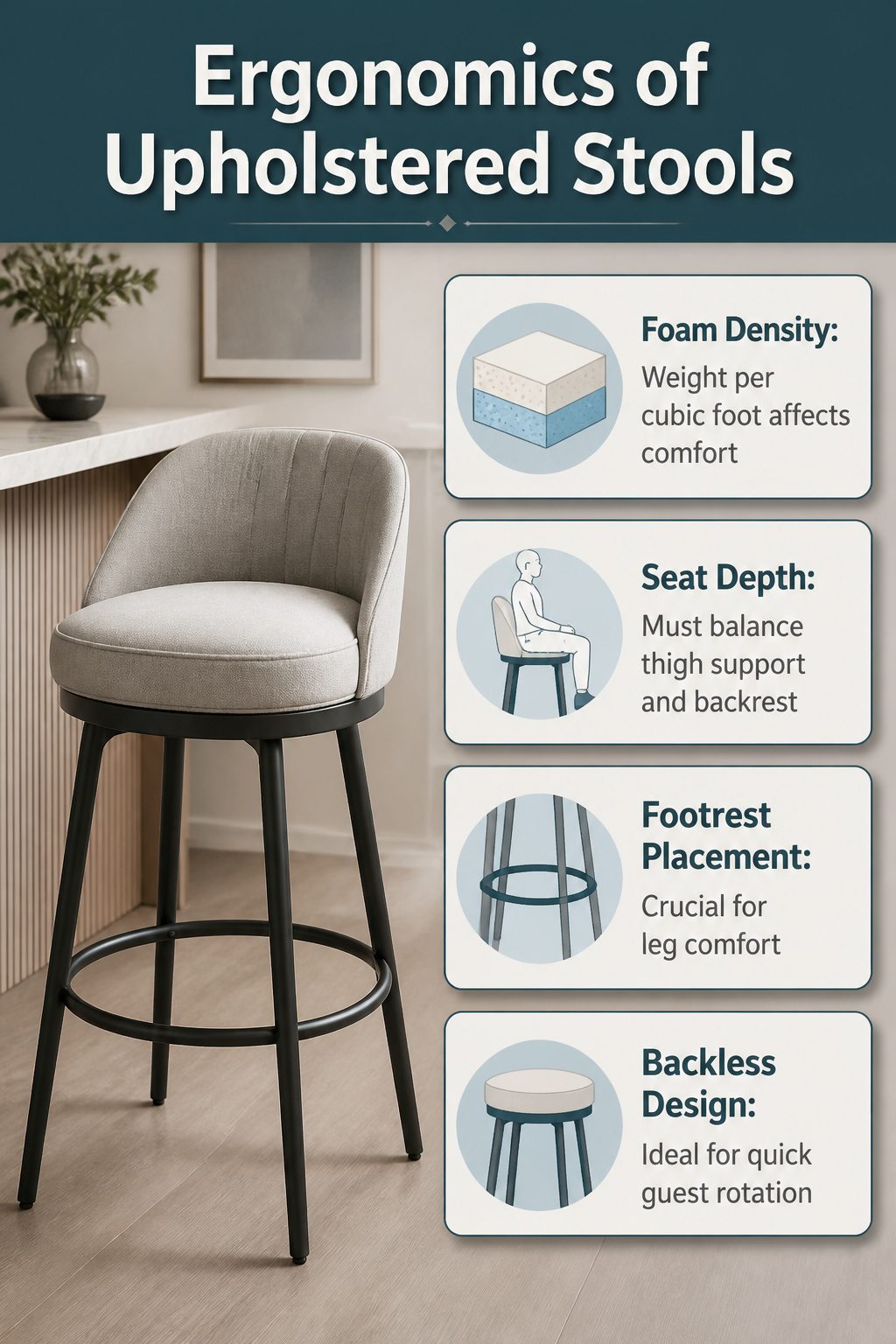
The foam itself only tells part of the story. A seat that feels plush for twenty minutes can flatten to the frame inside an hour, and the difference usually sits in foam density measured by weight per cubic foot. Lower densities break in fast and feel inviting at first sit; higher densities resist that sink and hold shape through actual meals, not just appetizers.
Seat depth matters more than most buyers notice. Too shallow, and the front edge cuts into the thighs; too deep, and the lower back leaves the support of any backrest present. A low back, like the one on the Chevy PSPB Bar Stool SR, buys you enough support for a stretched evening without the visual weight of a dining chair. The Clegane PS2 takes a different path with its contoured back, shaping the foam rather than adding height.
Footrest placement determines whether legs dangle or press. A shielded footrest, as on the Chevy, keeps the bar from scuffing where shoes hit, but the diameter of that rail and its distance from the seat decide if knees sit at a right angle or strain upward. For two-hour use, that angle should let feet rest flat without lifting the heel.
Backless upholstered stools trade all of this for clean sight lines. They work where people stand more than sit, or where seating rotates through guests quickly. The comfort story there is purely foam and width, and it runs out faster.
Style Versatility
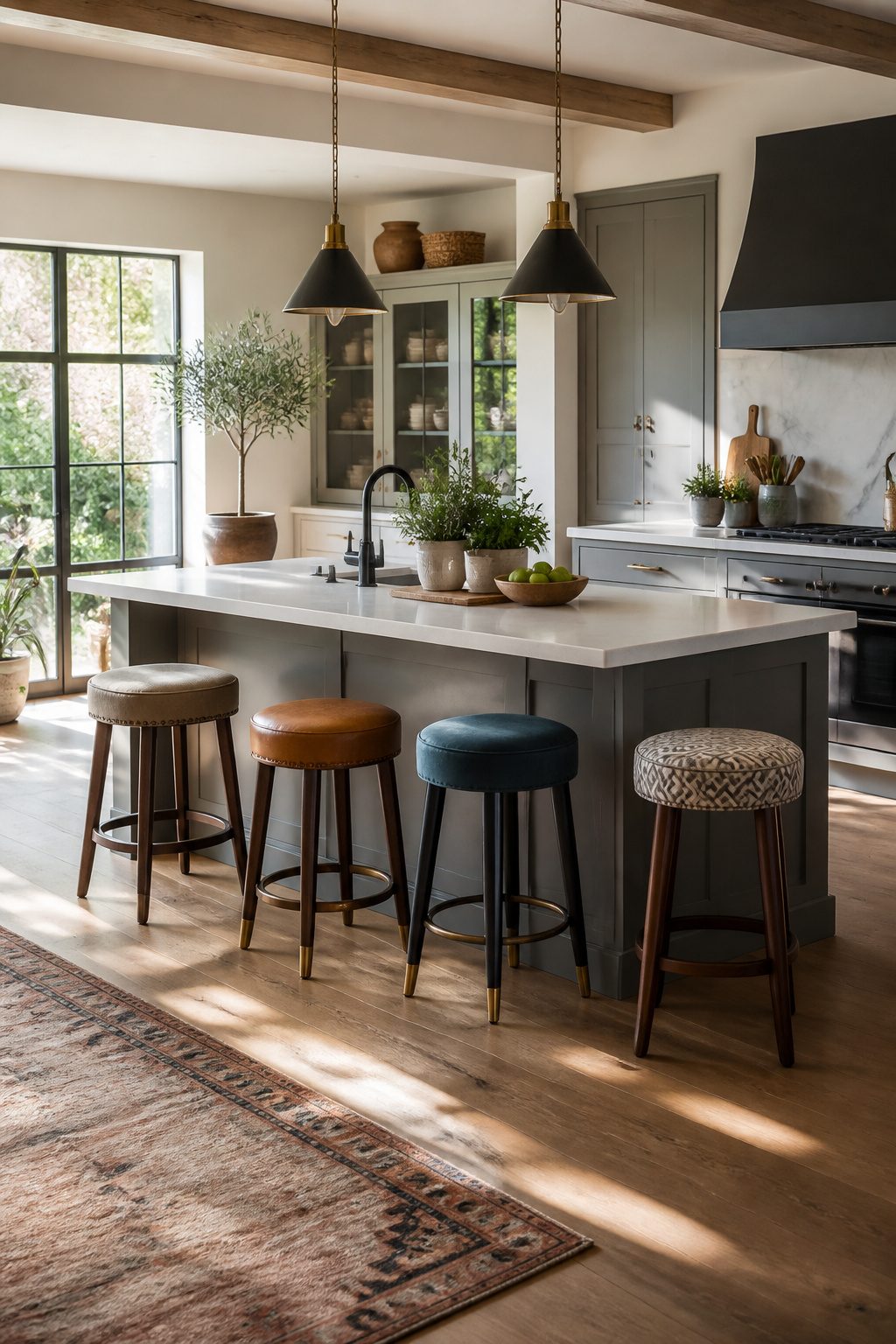
An upholstered stool can read as Sunday-morning casual or reservation-only formal depending on two choices you control: the fabric face and the leg beneath it. A nubby cotton or synthetic blend in a light color feels right pulled up to a kitchen island where kids do homework. The same silhouette in deep leather with a satin sheen turns a corner of your living room into the quiet booth of a place that takes reservations. I have watched this shift happen in my own rooms just by swapping the textile, not the furniture.
Wood legs warm the look and lean traditional; beechwood frames in particular carry that pub-and-parlor character and clean up fast. Metal legs, especially aluminum, read lighter and more current, and they suit spaces where you already have steel appliances or open shelving. The real advantage is customization. Most manufacturers let you pick the upholstery color and the finish separately, so you can echo the oak of your existing dining table or match the matte black of a metal bed frame you already own. That coordination is what keeps a small room from feeling like a showroom floor, and it costs nothing extra beyond the time to order.
Frequently Asked Questions
What is the best fabric for bar stools?
Performance fabrics are the practical default for upholstered stools that see daily use, because they resist stains and wear while still mimicking the texture of linen or cotton. Check the double-rub count before buying: a high-traffic kitchen stool needs 30,000 or above, not the 15,000 typical of standard residential fabric. Leather and vinyl each win in their own lane, leather for lifespan and vinyl for wipe-clean ease, but performance fabric splits the difference for actual households that cook and spill.
How do I clean and maintain my upholstered bar stools?
The method depends entirely on the material. Vinyl needs only a damp cloth; leather wants regular conditioning to prevent cracking; velvet demands gentle vacuuming, brushing with the pile, and immediate blotting of any spill before water spots set permanently. Fabric stools vary by weave, though performance fabrics buy you more margin on stain cleanup than plain cotton. Always check what the manufacturer recommends first.
Are upholstered stools only made of wood?
No. Aluminum bases are common, especially for swivel and adjustable-height models where the metal column carries the mechanism, and the finish often reads as matte black or polished chrome. Metal legs in general suit spaces with steel appliances or open shelving, while wood legs lean warmer and more traditional. Most manufacturers let you pick the upholstery and the leg finish separately.