
Coastal chic decorating is a refined, subtractive style that creates atmosphere through material and light rather than literal beach references. The trap is adding too much: a jar of collected shells reads gift-shop clearance, while one large clamshell on a console carries the whole mood. Warm whites, jute, and linen do the work; the ocean stays implied, never illustrated.
Natural Woven Textures
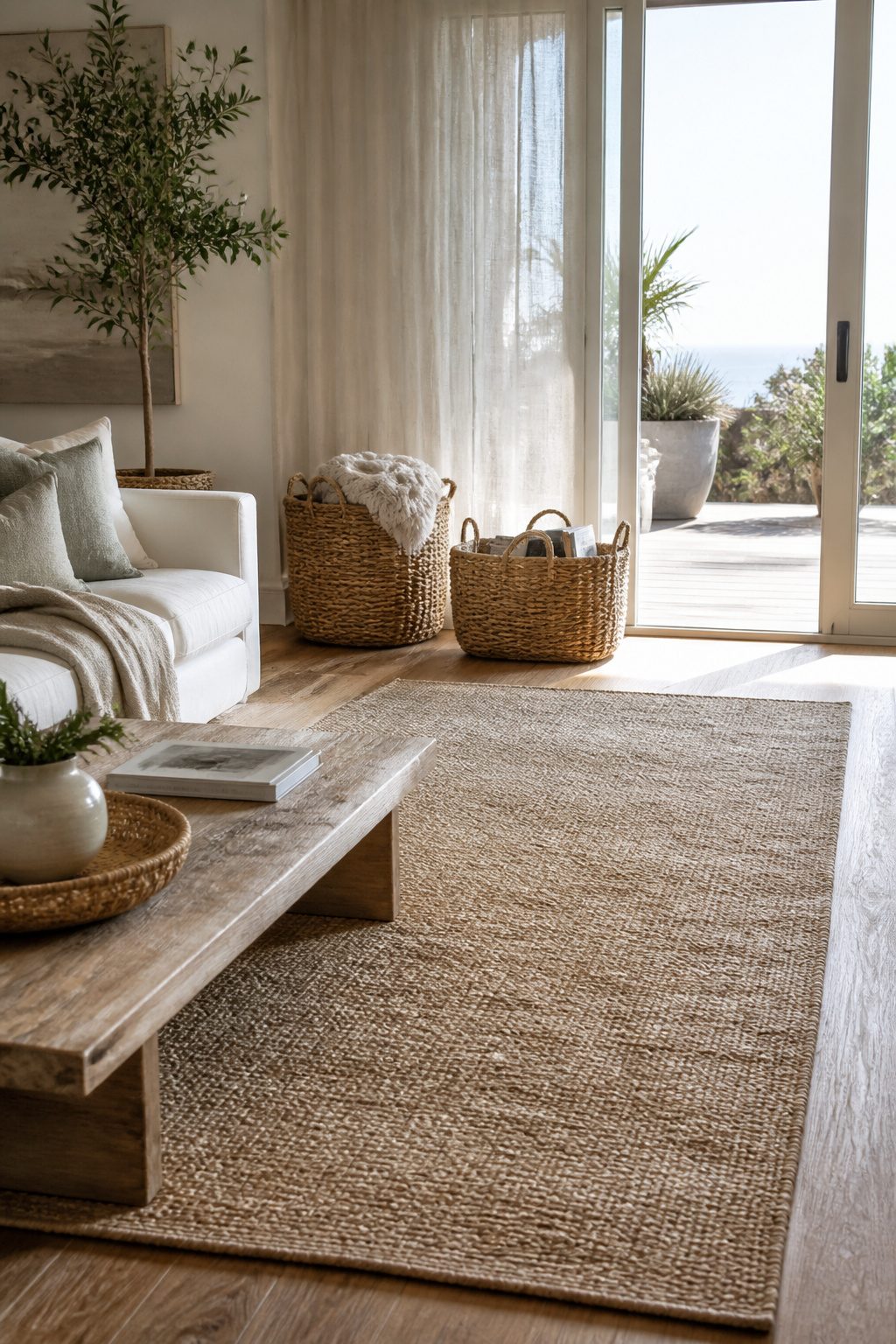
Jute reads as an extension of the floor rather than a decorating decision. The fiber carries a naturally sandy, warm color that grounds a room without introducing visual noise. In my own reading on this style, jute and sisal rugs are the closest thing to a default choice for coastal chic interiors, and that low-profile flat weave suits living rooms and dining rooms with moderate foot traffic.
For covered terraces or any space where the line between inside and out blurs, natural jute is the wrong call. Those zones need UV and moisture resistance instead. A hand-loomed polypropylene weave that mimics sisal’s structure and color resists fading under direct sun and dries quickly after coastal humidity or rain.
Smaller woven pieces layer in the same warmth without demanding floor space. Rattan baskets, water hyacinth storage bins, or a scalloped jute doormat at the entry add tactile depth that keeps the overall feel relaxed rather than staged. The trick is mixing scales: a large rug anchors the seating area, while a lidded basket corrals throws or laundry in a spot you actually use.
Soft Light Color Palette
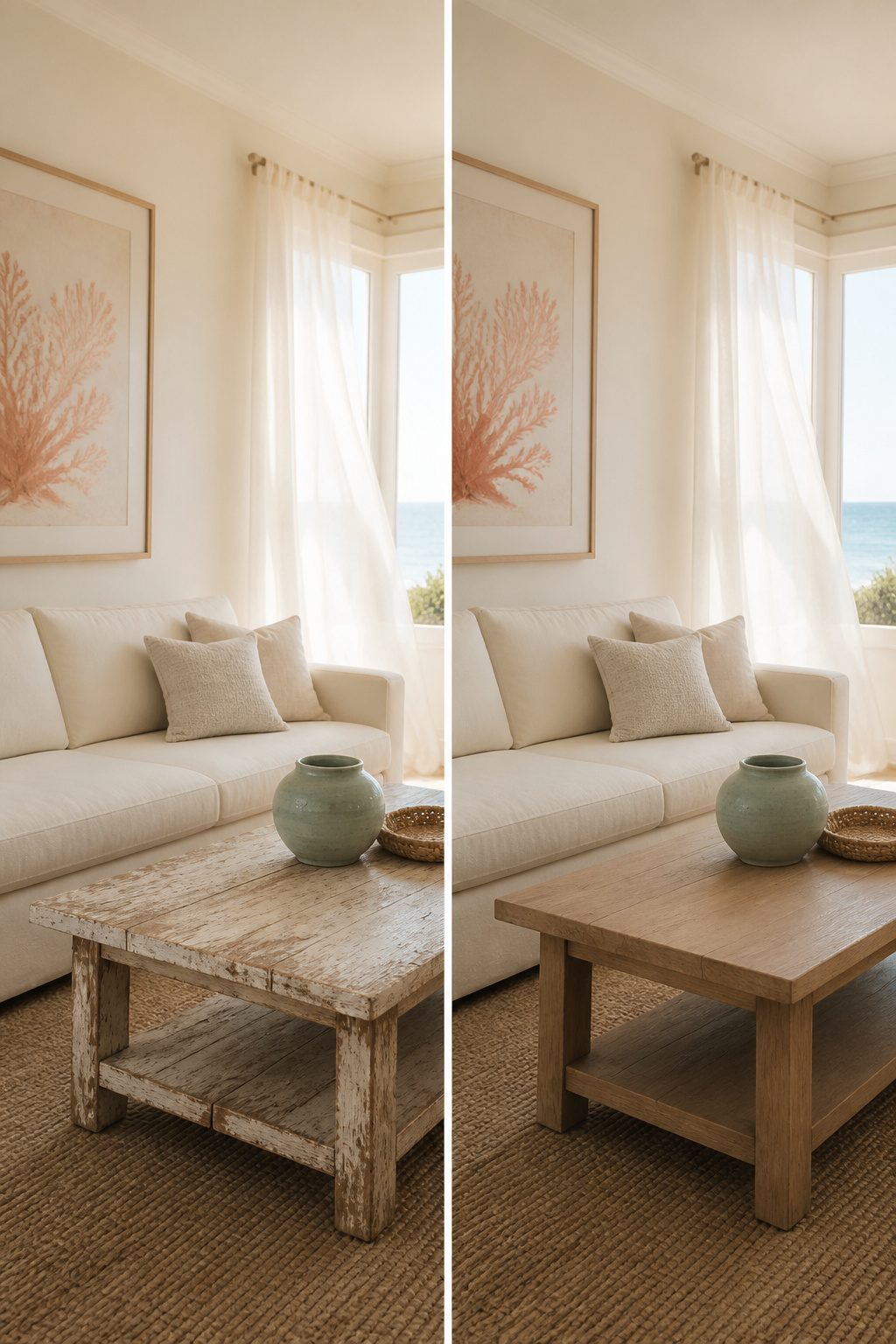
Warm whites, soft ivories, and sandy beiges form the backbone of a coastal chic palette because they mirror what you actually see on a shoreline: bleached sand, dried grasses, pale limestone. These tones do the heavy lifting on walls and large upholstered pieces, so the room feels sun-washed rather than decorated.
The restraint is what elevates the look. Accent colors arrive sparingly: sea-glass blue, soft sage, muted coral, maybe a warm stone gray. A ceramic cluster, a single textile, a piece of art. No stripes, no anchors, no navy-and-white contrast that reads beach rental.
Paint names that consistently show up in this conversation: Benjamin Moore Simply White for walls that stay warm and airy, Benjamin Moore Beach Glass for that muted aqua-green that reads like actual sea glass under afternoon light, and Sherwin-Williams Sea Salt for a soft sage that shifts with the day. The effect is calm because the palette stays narrow; what you leave out matters as much as what you include. Cool grays, stark whites, jewel tones, high-gloss finishes, strong black contrasts all break the spell.
Natural Materials
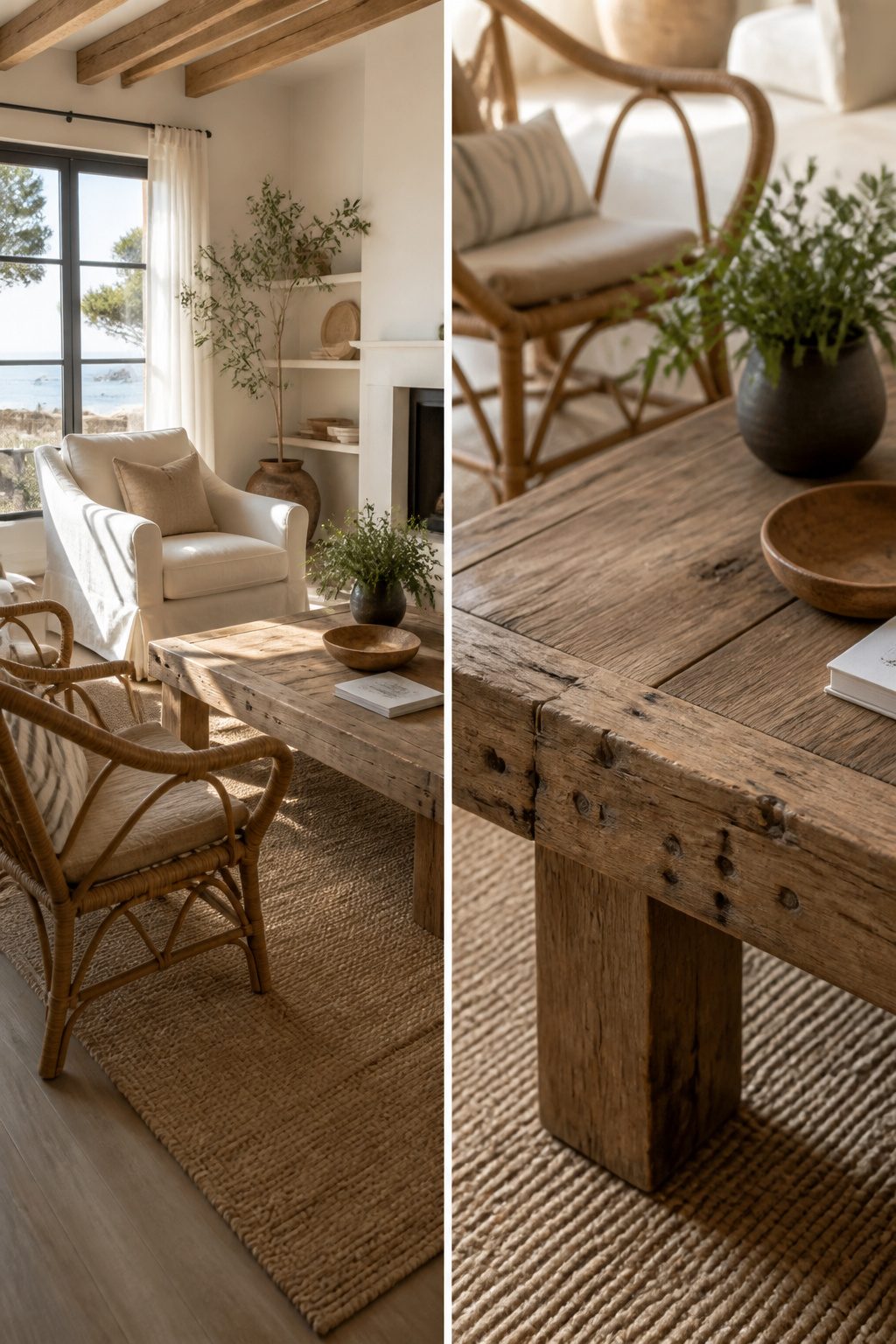
Rattan, driftwood, jute, linen, and reclaimed wood are the materials that separate coastal chic from a beach souvenir shop. I noticed this distinction only after trying both paths, the cheap one first.
A rattan chair with actual grain showing through its weave anchors a living room far better than a matching set of seagrass baskets lined on a shelf. The reclaimed wood or bleached timber should read as furniture first, story second: a driftwood-inspired side table with visible joinery, a whitewashed console where the old nail holes still show. These pieces carry the relaxed feeling without drifting into theme-park territory.
Linen slipcovers on an armchair you already own shift the mood for the cost of fabric alone, maybe two yards if you keep the skirt simple. Jute rugs layer underneath at a price that rises fast with room size, so a 6 ft round under a breakfast table hits the look without the four-figure tag of wall-to-wall.
The refined part comes from pairing. Rattan and linen together read timeless; rattan with bamboo and more rattan reads catalog. One substantial piece in a natural material does more work than six small ones.
Subtle Nautical Touches
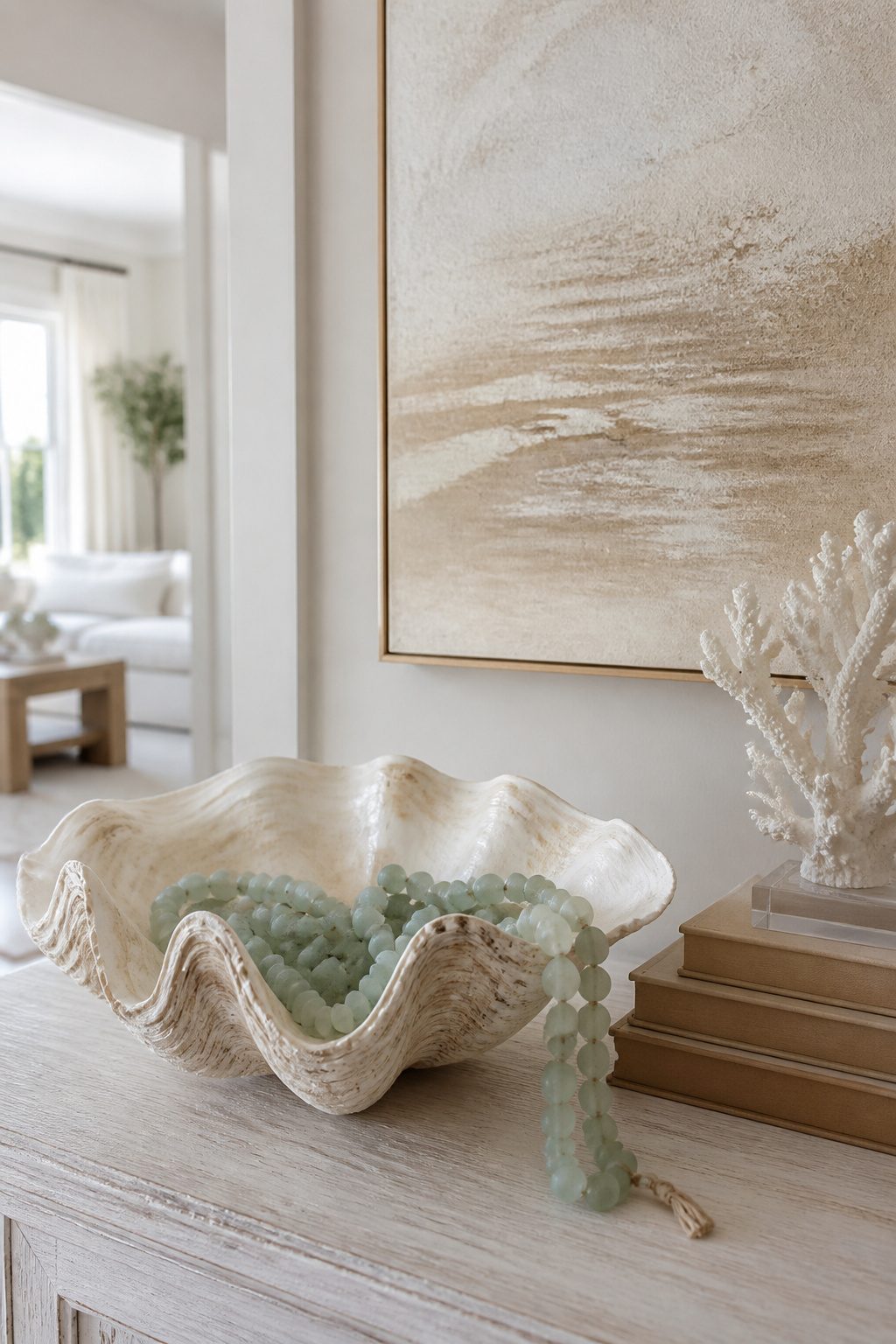
Seashells are where coastal decorating goes to die, and I have watched it happen in my own living room. A row of collected shells across a mantel reads less like seaside memory and more like a gift-shop clearance rack. The one large clamshell on a console, filled with a single strand of sea-glass beads, carries more atmosphere than a jar of twenty mixed shells ever could.
Faux coral works the same way. One substantial piece on an acrylic base, set on a stack of books, holds the eye without announcing itself. Two pieces, and you have started a collection. Three, and the room becomes a seafood restaurant.
The distinction between coastal chic and beach-house kitsch lives entirely in this editing. Beach-house style leans into stripes, anchors, navy contrast, the full vocabulary of nautical reference. Coastal chic subtracts all of that. Warm whites, sandy beiges, organic materials like jute and linen do the work instead; the ocean stays implied, never illustrated.
If you already own shells from a trip, treat them like photographs: choose the one with the best shape, the most interesting negative space, and let the rest live in a drawer. The chic is in the restraint.
Layered Patterns
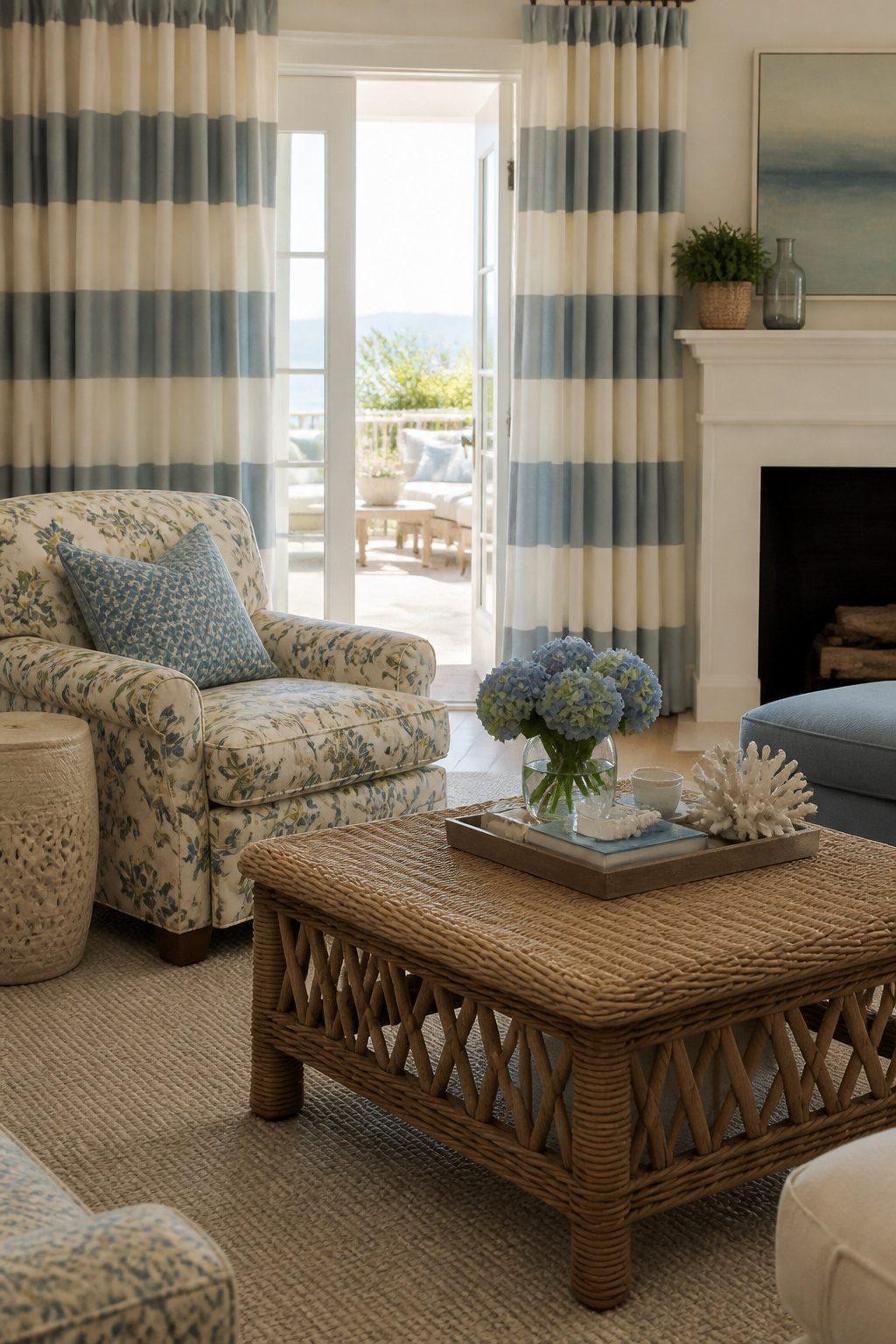
Stripes, geometrics, and florals can share the same room in coastal chic decorating if you obey one rule: each pattern needs its own scale. A wide cabana stripe on the curtains reads as texture from across the room, which leaves room for a small-scale geometric on a pillow and a loose, medium floral on an armchair. Where I have seen this collapse is when someone pairs a bold awning stripe with an equally bold large floral; both patterns shout at the same volume, and the eye has nowhere to rest.
The collected look comes from treating patterns like found objects rather than a matching set. A vintage ticking stripe, a hand-blocked floral picked up at a flea market, and a simple lattice from the discount bin gain credibility when they share a color temperature, cool or warm, rather than an exact palette. I learned this the hard way after buying three "coastal" pillows that were technically blue and white but clashed because one leaned gray-cool and another read almost turquoise. The set looked purchased; the mismatched pieces look lived with.
Small repeats read as solids at a distance, so they function as neutrals in the mix. Save the single large-scale statement for one hit per room: a wallpapered ceiling, an oversized floral on a single panel, a wide stripe on an ottoman. Any more and the room starts to feel like a fabric showroom, which is the opposite of the easy, thrown-together quality that makes coastal chic feel like home.
Elegant Decor Pieces
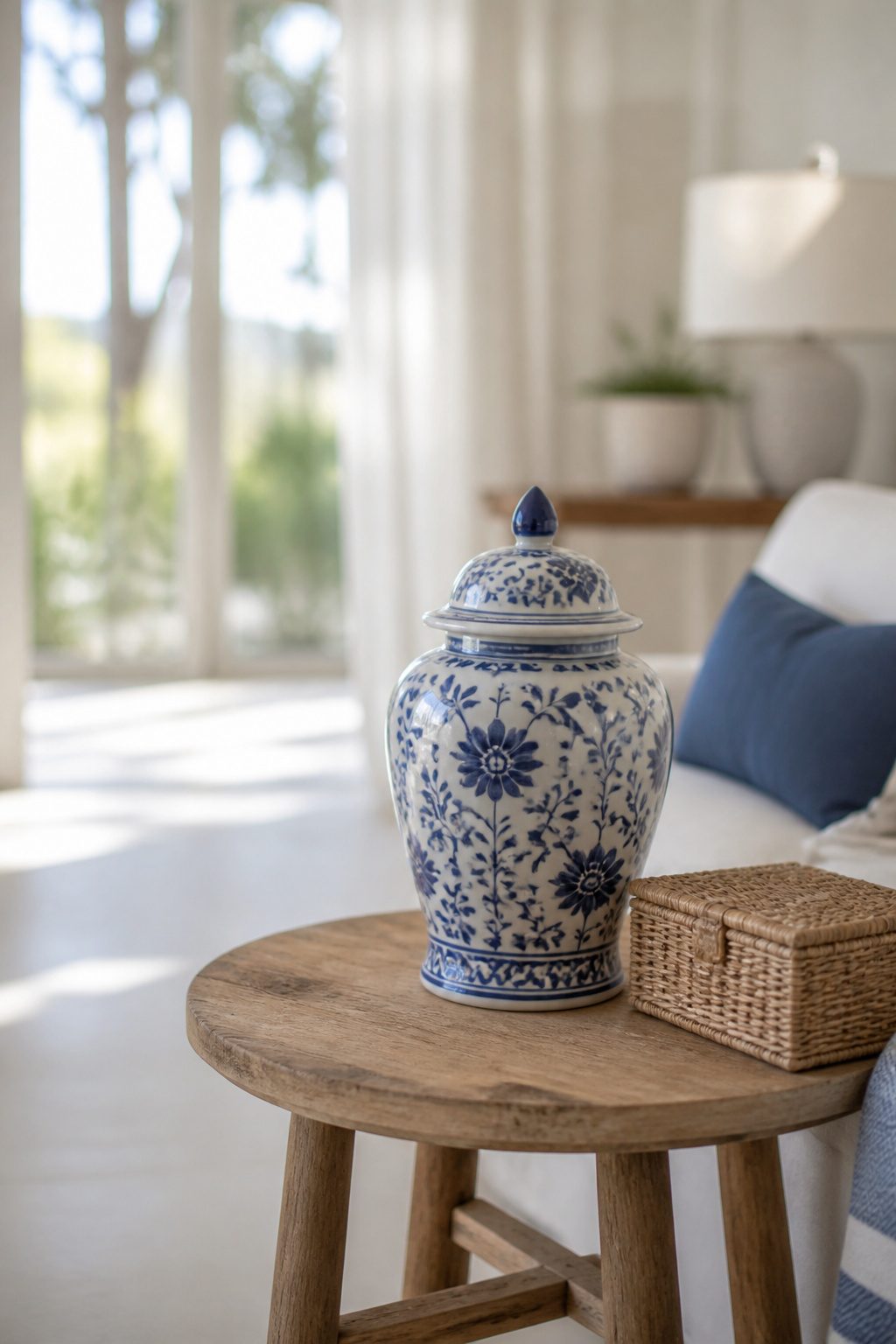
Ginger jars sit at the center of coastal chic decorating because they do two jobs at once: the blue and white glaze reads nautical, and the chinoiserie silhouette reads collected-over-time. A single $40 to $80 ginger jar on a mantel signals intention in a way a cluster of shells does not. The sources split on how far to take this. One route keeps the palette restrained, soft blues and whites with the occasional coral pop; the other layers in bolder greens and batik prints for a Palm Beach feel. Both work, but the first is easier to walk back if you overbuy.
Decorative boxes in rattan or grasscloth do the same quiet work. They hide remotes and mail while adding the woven texture that separates coastal chic from plain beachy. A lidded box on a coffee table looks like a choice; a driftwood bowl full of trinkets looks like accumulation. The line is thin and worth guarding. My own tendency is to add one small object, then another, then wake up to a shelf that looks like a gift shop. The discipline is buying fewer pieces and letting the form do the talking: a coral sculpture, a single blue and white vase, a box with a lid that actually closes.
Natural Light and Airy Spaces
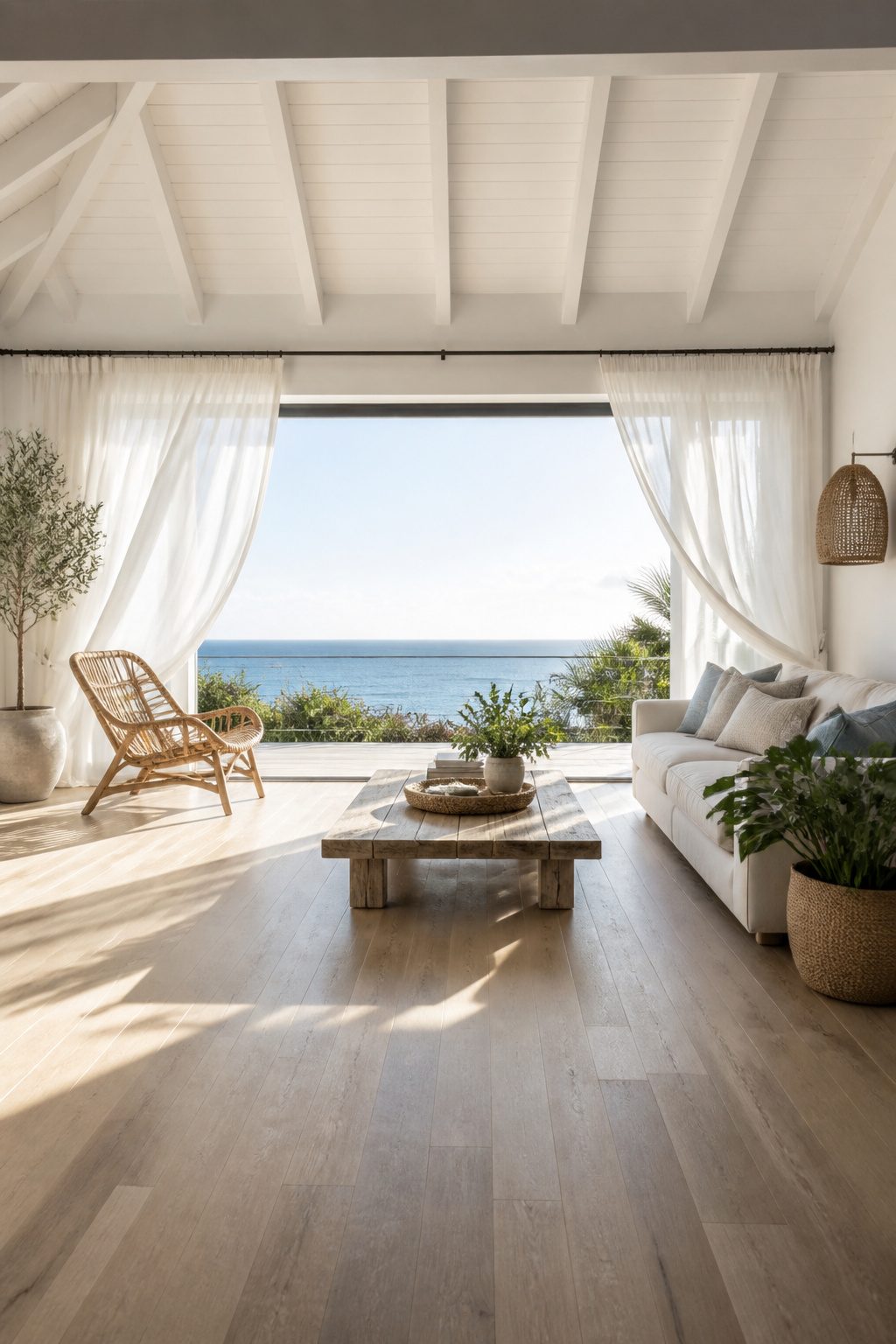
Sheer cotton or linen curtains are the usual starting point for coastal chic decorating, but the rod matters almost as much as the fabric. Extending the rod about 13 inches past the window molding on each side lets you pull the panels completely clear of the glass, so the light pours through unobstructed. In a rental with cheap vertical blinds, this swap takes twenty minutes and the old hardware goes back up at move-out.
For windows tight to a corner, pinch-pleat curtains stack back tighter than rod-pocket styles, which saves that last few inches of reveal. Painted plantation shutters or rattan blinds work if you need privacy without the fabric, though they read slightly more cottage than chic.
The furniture you place in that light needs to keep the openness you just built. Clean-lined, low-profile pieces let your eye travel across the room instead of stopping at every bulky silhouette. An open console table or a round kitchen table with slim legs continues the movement. The mistake is buying the airy curtains, then blocking the window with a high-backed sofa that eats the light you worked to free.
What Coastal Chic Actually Means
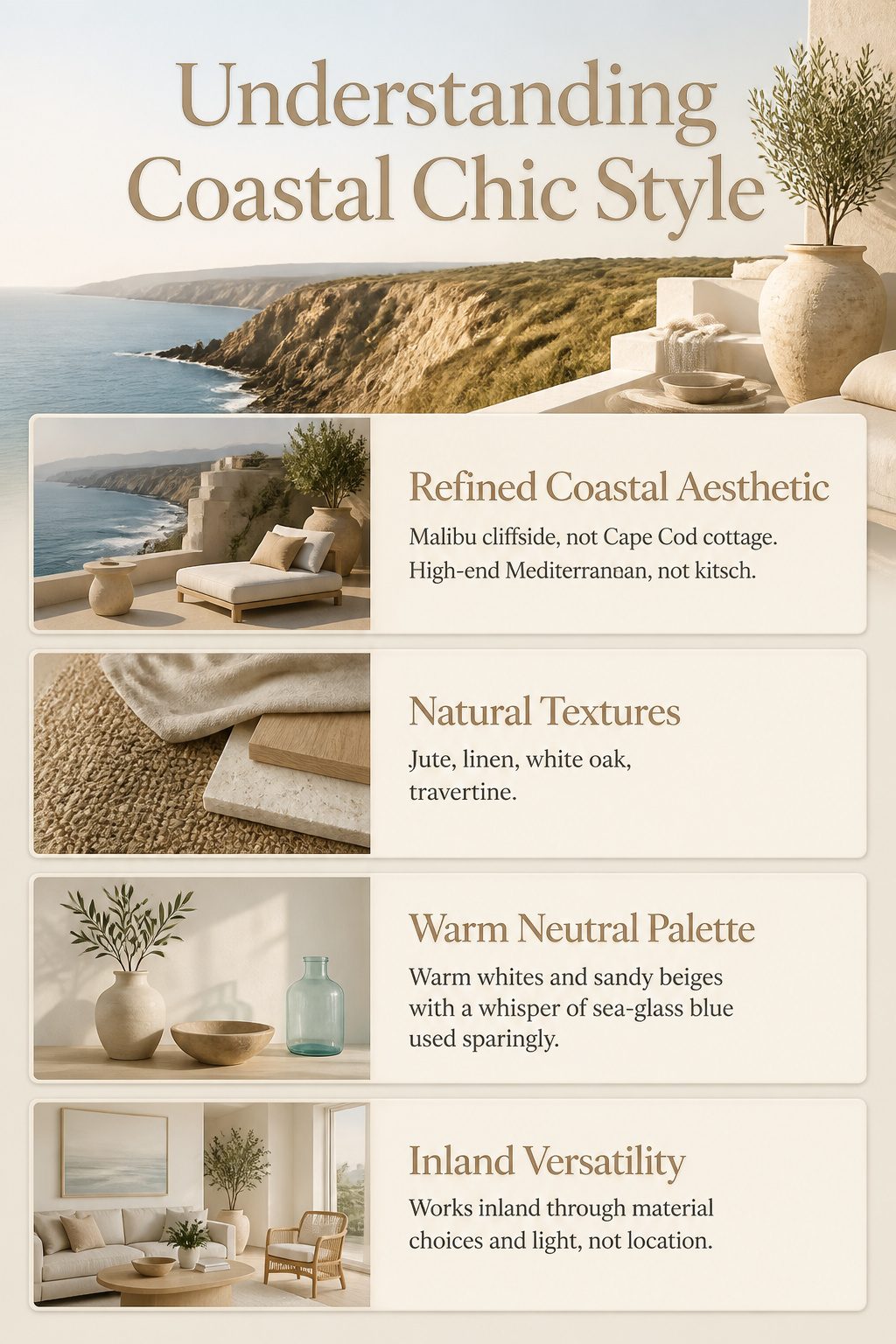
Coastal chic decorating is a refined take on coastal style that keeps the relaxed feeling but strips away the kitsch. Natural textures, warm neutrals, and what reads as relaxed luxury replace nautical motifs, bright blues, and beach-house clutter. Think Malibu cliffside rather than Cape Cod cottage, or closer to a high-end Mediterranean villa than a seaside cottage with anchors on the pillows.
The restraint is what separates it from both ends of the spectrum. Traditional beach-house decor leans on stripes, navy-and-white contrast, and literal ocean references. Hamptons formality brings in polished surfaces and a stricter, more expensive rigidity. Coastal chic lives in the space between: edited down, not built up. The palette stays narrow, warm whites and sandy beiges with maybe a whisper of sea-glass blue used sparingly. Every material feels organic: jute, linen, white oak, travertine.
What convinced me, reading through how this actually gets put together, is that the style works inland precisely because it is subtractive. You are not recreating a location. You are creating an atmosphere through material choices and light. The seven elements that follow each do one specific job in that system, and they work together because none of them overperforms.
Furniture That Holds the Look
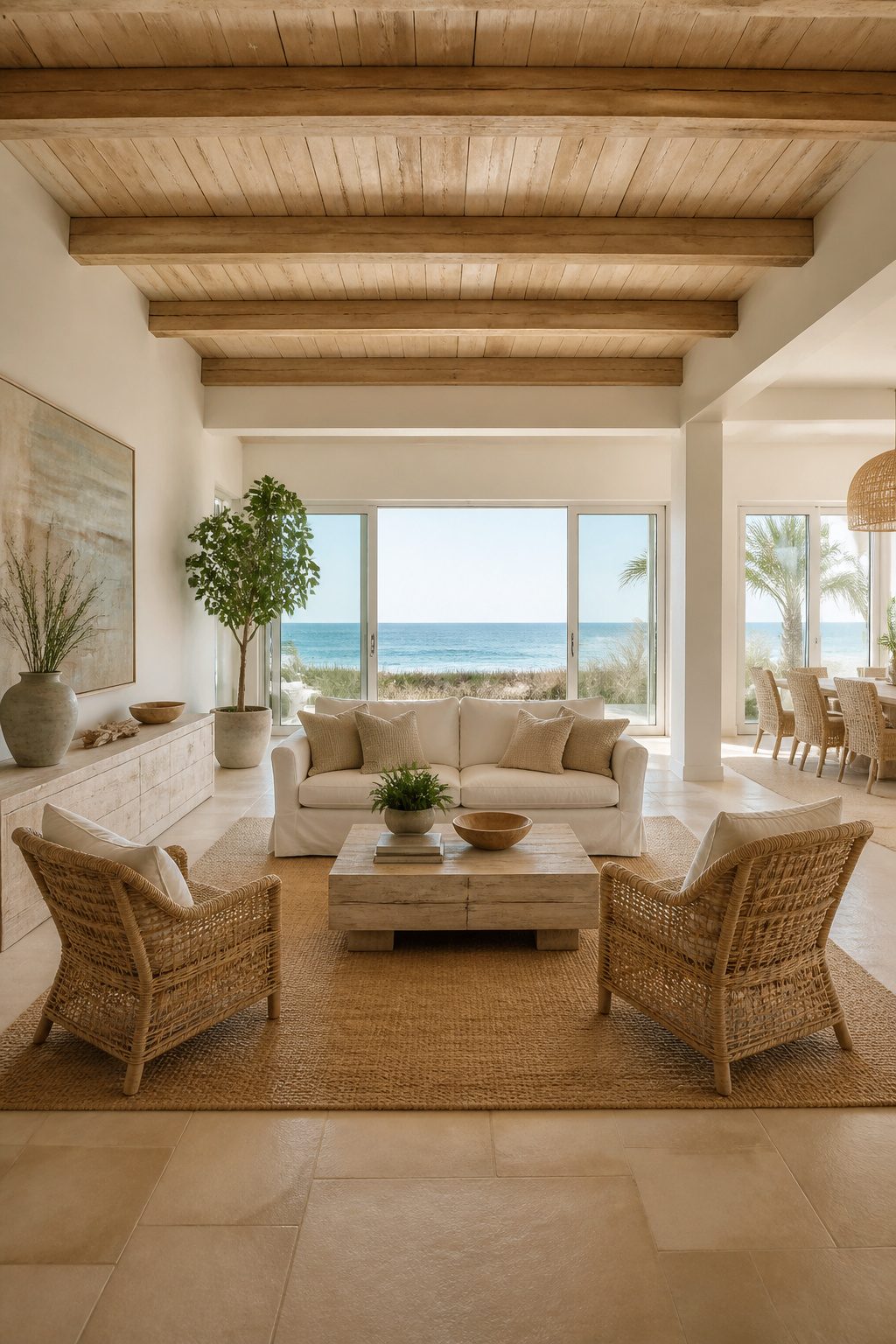
Ornate furniture fights the whole point of coastal chic. Clean lines and simple shapes let your eyes travel through a room without stopping, and that openness is what reads as air.
The sofa is where this matters most. A slipcovered piece in cotton or linen, with each cushion fitted to its own cover, hits the right note between relaxed and intentional. Baggy one-size-fits-all throws lean shabby; tailoring keeps it chic. Performance fabric is worth the upgrade if you actually sit on it.
For seating beyond the sofa, rattan chairs or a teak side chair add texture without pattern. Low-profile oversized pieces, especially low to the ground, stretch the sightline and settle the room. A console with woven doors or a stripped timber bench does the same job in smaller footprints.
Whitewashed or bleached wood, stump stools, driftwood finishes: these develop patina over years and keep the space from feeling staged. The restraint is the style. Skip carved details, skip contrast, skip anything that competes with the calm.
Getting Started Without Overwhelm
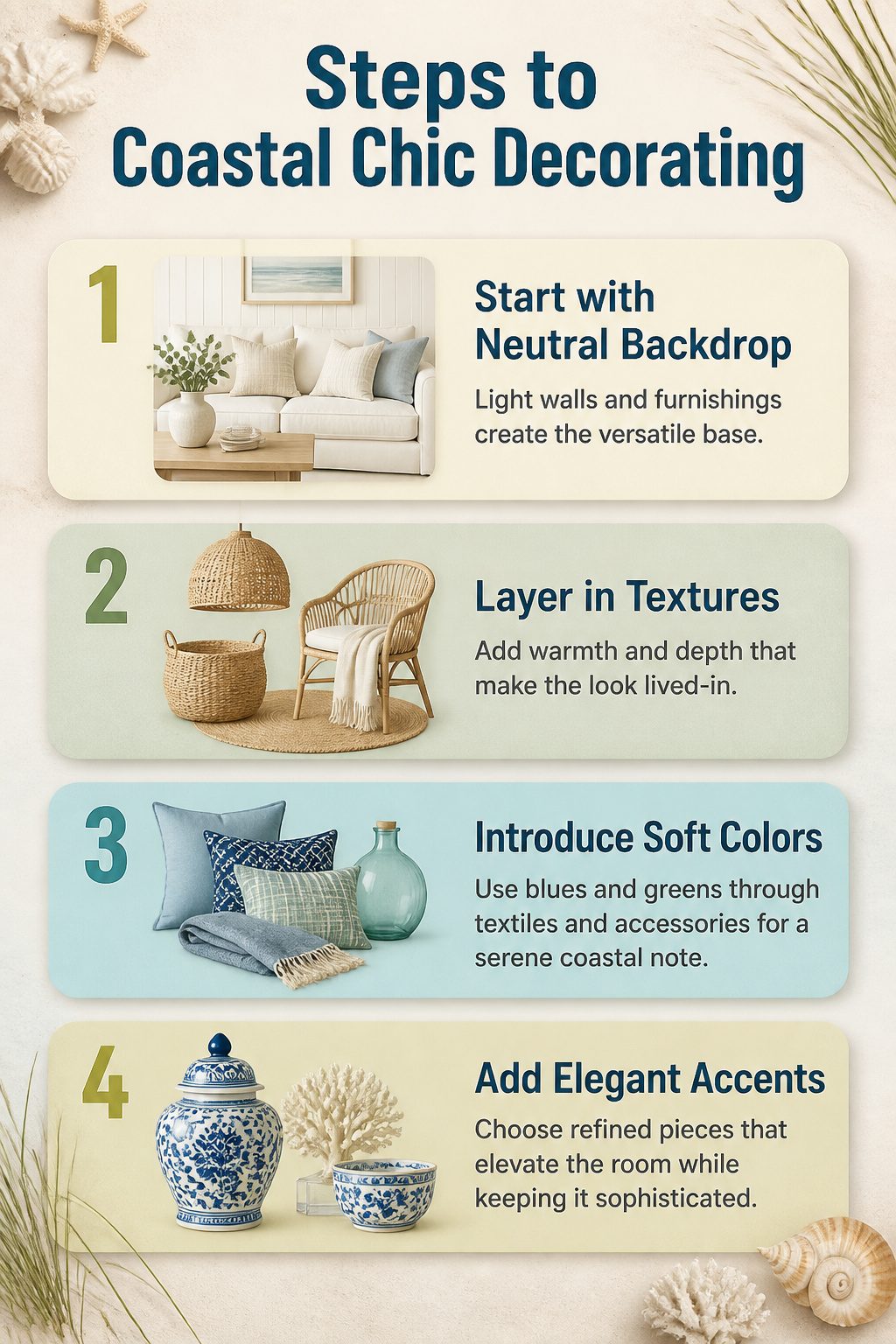
- Start with a neutral backdrop. Light walls and furnishings give the versatile base everything else layers onto. Warm whites like Benjamin Moore Simply White or Sherwin-Williams Classic Light Buff keep a room soft and airy; if you want more color, Benjamin Moore Beach Glass or Sherwin-Williams Languid Blue on the walls still reads coastal when balanced with crisp whites and natural textures in the furniture.
- Layer in textures before color. Linen slipcovers, jute or sisal rugs, wicker baskets, and rattan accents add the warmth and depth that make the look lived-in rather than decorated. Woven pendant lights, driftwood-inspired side tables, or weathered wood flooring carry the same relaxed feel through the whole room.
- Bring in soft blues and greens through textiles and accessories. Varying shades of blue, from pale to navy, plus sea-glass greens and celadon, add the serene coastal note without committing a whole wall. Pillows, throws, rugs, and small decorative pieces let you test how much color the space actually needs.
- Finish with elegant pieces that keep it sophisticated. Ginger jars, coral sculptures, blue-and-white pottery, or chinoiserie accents elevate the room without tipping into theme territory. The restraint is what separates coastal chic from beach house kitsch; one or two refined pieces do more work than a shelf of collected shells.
Where Coastal Chic Meets Other Styles
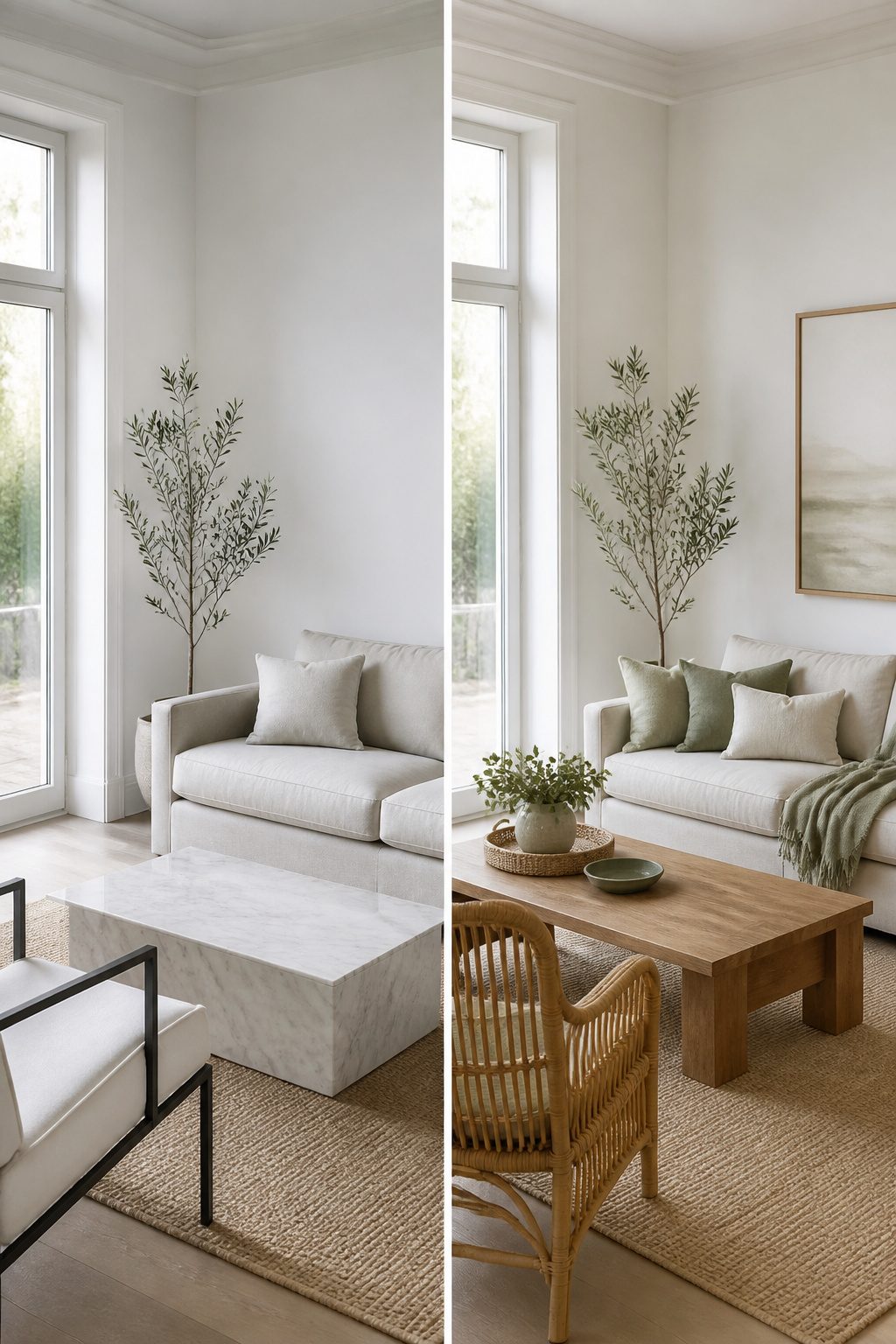
Coastal chic decorating bends toward other styles more easily than traditional beach decor because it starts from restraint rather than theme. A minimalist foundation, clean lines and simple furniture, lets you pull in warmth through rattan accents or natural textures without the room shouting about weekends at the shore. That same foundation works with modern: the low-profile, oversized pieces and narrow palette already share DNA with contemporary minimalism, so the blend stays coherent.
Traditional is the trickier marriage, and the one I would approach with tighter limits. The risk is driftwood painted white, rope lamp bases, anchor motifs on throw pillows, the whole nautical catalog creeping back in. What keeps coastal chic intact against traditional furniture is material discipline: wool, jute, sisal, linen, travertine, white oak. Let a rolled-arm sofa in linen sit against bare plaster. Add a single sisal rug. The texture carries the coastal reference; the pattern and color contrast stay out of it. The wrong rug, too bright or too blue, undoes every other decision in the room.
Sustainable Materials Worth Considering
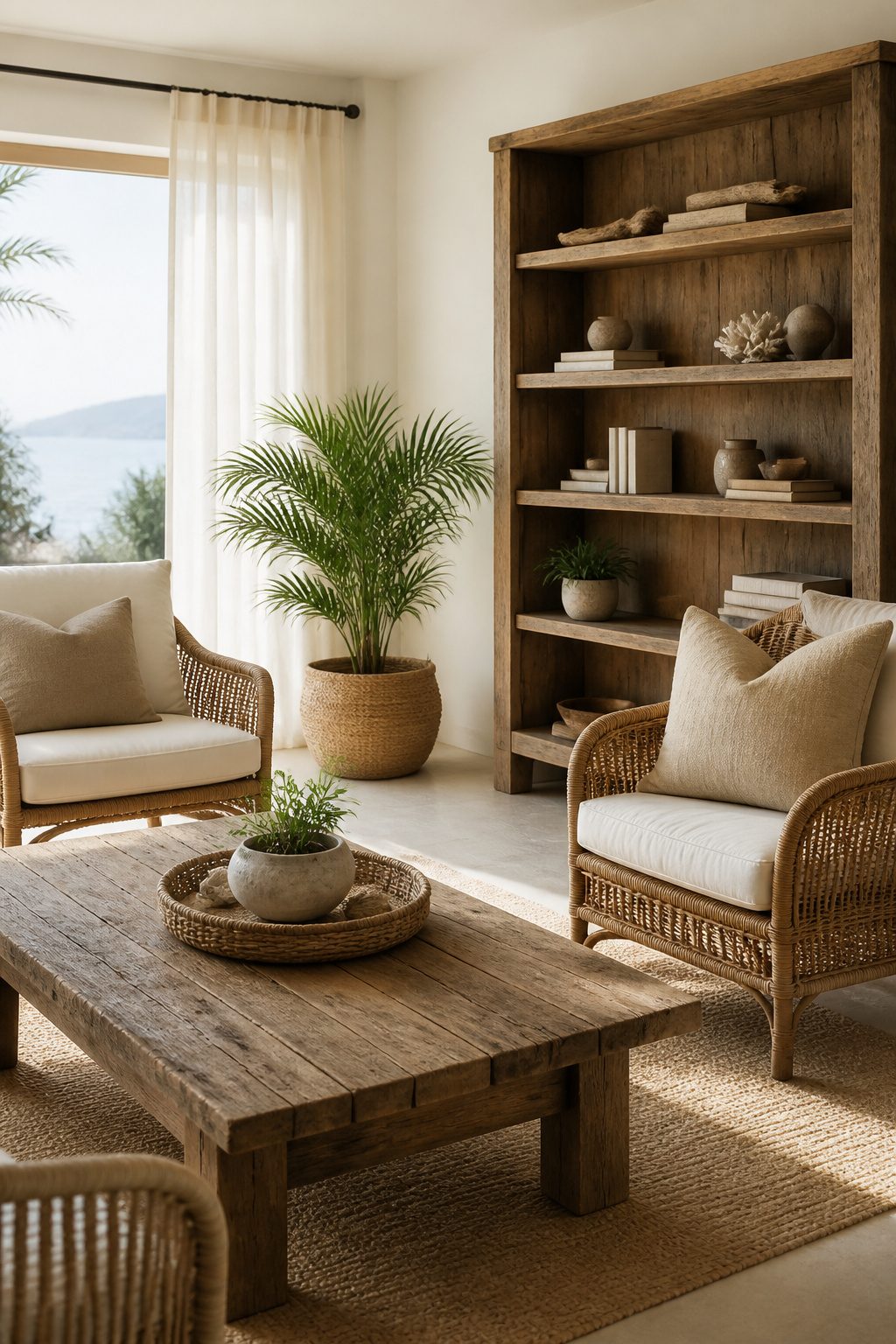
Reclaimed wood and organic fabrics fit the coastal chic direction without turning sustainability into a separate project. The sources mention cotton, linen, and calico for slipcovers and upholstery, plus whitewashed or stripped timbers and driftwood furniture. These materials already read as coastal; choosing versions with reclaimed or organic credentials is a swap, not an addition.
Two ways to play this. One: buy new organic cotton or linen from a standard source and accept that the fabric itself carries the story. Two: hunt vintage slipcovered pieces in those same fibers, where the patina and the reuse both show. Vintage Indian teak daybeds or grey-wash rattan chairs from the sources already lean this way if you find them secondhand.
The catch is cost and time. Reclaimed wood with enough character to stand in for driftwood takes searching, and vintage upholstered pieces often need new foam or re-stitching. For a weekend project with a few hundred dollars, new organic cotton curtains or a single reclaimed-wood shelf over a sofa is the practical scope. Leave the full vintage overhaul for when you have longer than a weekend to chase pieces and fix what sags.
Frequently Asked Questions
What is coastal chic design?
Coastal chic decorating is a refined, subtractive approach that replaces nautical kitsch with natural textures, warm neutrals, and relaxed luxury. The palette stays narrow with warm whites, sandy beiges, and sparing accent tones, while materials like jute, linen, white oak, and travertine do the atmospheric work. It reads closer to a Malibu cliffside or high-end Mediterranean villa than a Cape Cod cottage with anchors on the pillows.
What colors are used in coastal chic decor?
Warm whites, soft ivories, and sandy beiges form the backbone, mirroring bleached sand and dried grasses. Accent colors arrive sparingly: sea-glass blue, soft sage, muted coral, warm stone gray. Benjamin Moore Simply White, Beach Glass, and Sherwin-Williams Sea Salt are paint names that consistently show up for this look. Cool grays, stark whites, jewel tones, and strong black contrasts all break the spell.
How can I achieve a coastal chic look in my home?
Start with light walls and furnishings as a neutral backdrop, then layer in textures before color: linen slipcovers, jute or sisal rugs, wicker baskets, rattan accents. Bring soft blues and greens through textiles and accessories so you can test how much color the space needs. Finish with one or two elegant pieces like a ginger jar or coral sculpture; restraint separates coastal chic from beach-house kitsch.