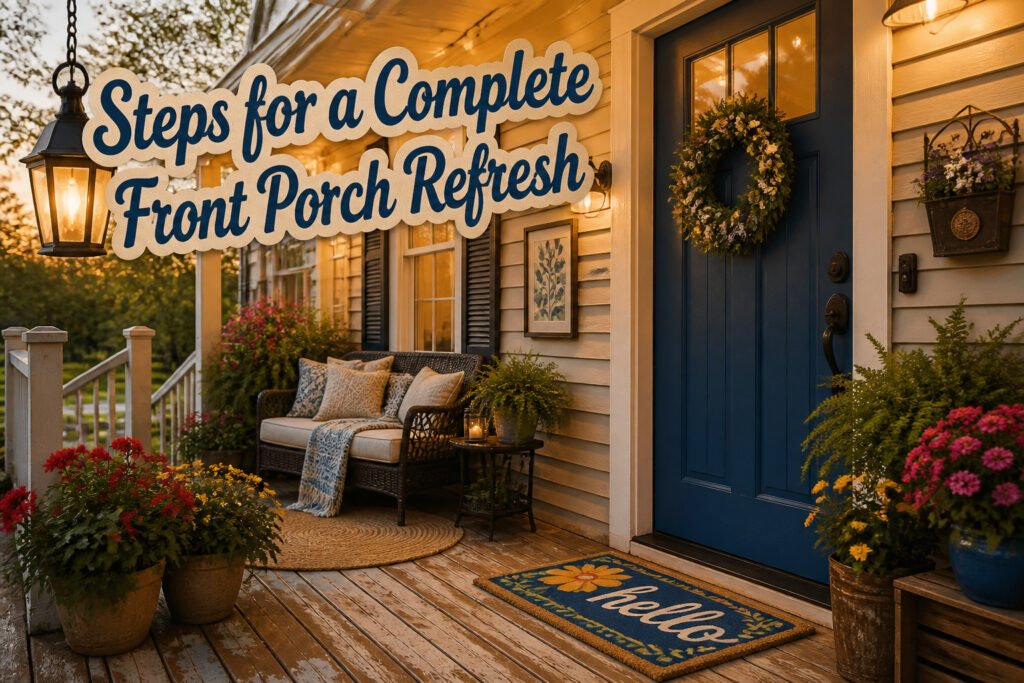
A front porch refresh in 2026 can run from a single afternoon with a broom and a new doormat to a full weekend of staining, hardware swaps, and power-tool assembly. The deciding factor is whether you own the door you are standing in front of. Renters skip anything that drills new holes; owners can swap handlesets, mount sconces, and cut plywood seats for flea-market finds without asking permission. The 12-inch vertical minimum for exterior fixtures comes from a designer’s rule I now follow after years of buying lanterns that disappeared against the siding.
1. Clear Out and Clean
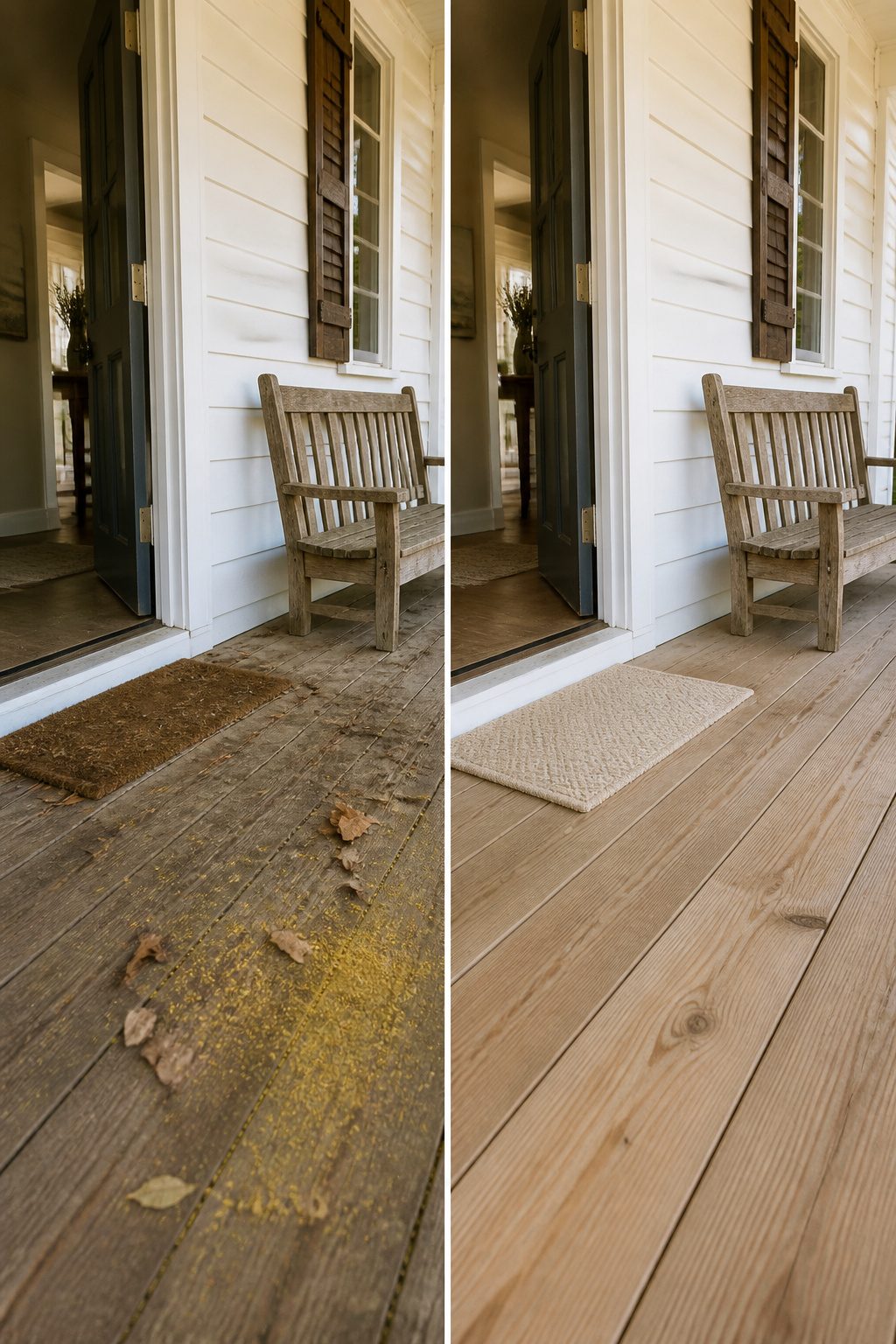
A front porch refresh starts with subtraction, not shopping. Every guide I read put this first, and after years of starting projects in the wrong order, the logic finally clicked: new pillows on a dirty porch just look like new pillows on a dirty porch.
- Pull everything off the porch. Furniture, pots, the dead fern, the wind chime that hasn’t chimed since 2019. Sweep the floor, then power wash or hose it down. Work top to bottom if you’re washing siding: siding, then windows, then the porch floor itself, so grime doesn’t drip onto what you just cleaned.
- Wipe down doors, trim, light fixtures, and railings. Spring pollen and winter grit dull everything. A battery blower handles leaves and pollen fast if you’re maintaining between deep cleans.
- Replace the doormat. In high-traffic areas, this means two to three times a year. The old one traps more dirt than it stops. A slightly larger mat reads cleaner and frames the entry better.
- Dry everything before you put anything back. Screens off, windows dried, screens replaced. Only then does decor return.
2. Paint or Stain What Needs It
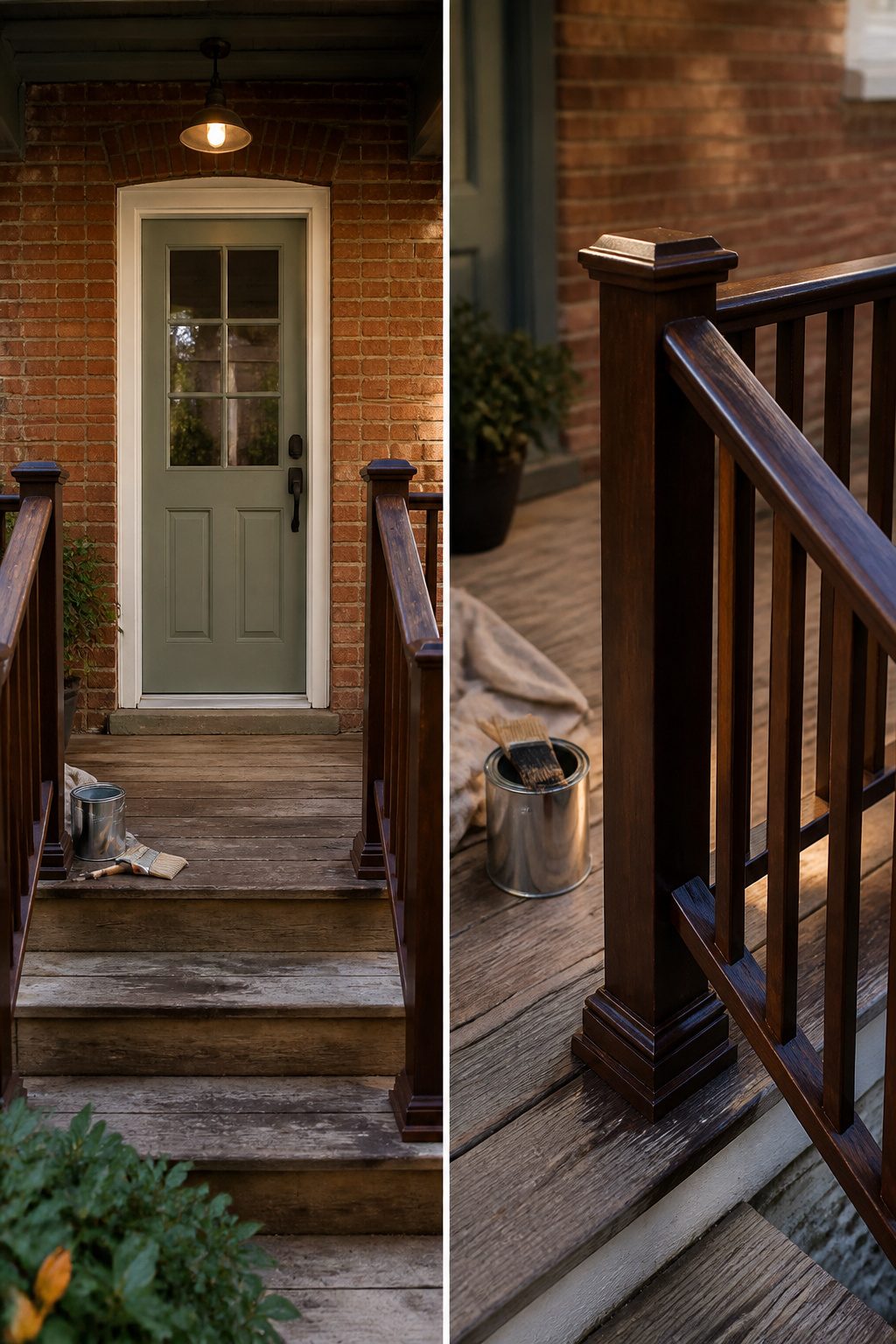
New paint or stain fixes the surfaces that weather hits first. Floors, railings, and the door itself all dull at different rates, so I check each separately instead of defaulting to a single coat everywhere.
The front door is where color earns its keep. Evergreen Fog by Sherwin Williams works against red brick or painted siding without shouting, and it still reads as a deliberate choice rather than a safe default. On my own porch I’d pair it with crisp white trim to keep the line clean between old and new.
Railings and floor boards take the harder abuse. Re-staining wood protects it from the next season of rain and sun, while porch floors, wood or concrete, can carry a solid color or a pattern if the architecture handles the busyness. Work in sections: one face of railing, one corner of floor. The finish dries while you start the next, and you avoid trapping yourself in wet corners.
3. Update the Hardware
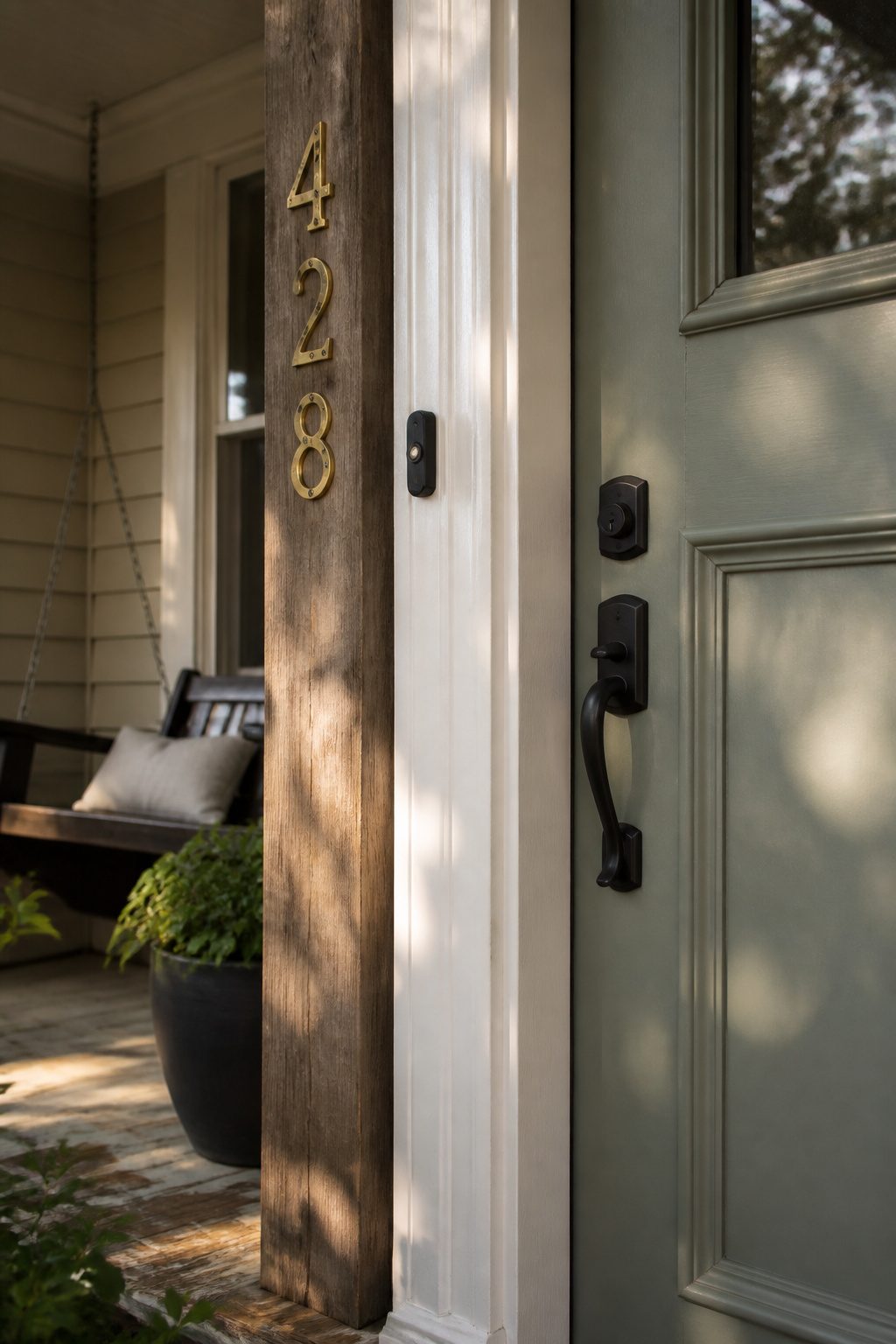
Peeling house numbers and a tarnished knob are the kind of detail that makes a whole porch feel ignored, even when everything else is clean. Replacing them reads expensive from the curb for the least effort of any step in this refresh.
New hardware should match itself, not your existing finish. If the deadbolt is brass and the doorbell is nickel, pick one and replace the other. A full handleset with integrated lock and lever looks more deliberate than a separate knob plus deadbolt, though it costs more and takes longer to install. House numbers can mount directly to a porch post or sit on a custom sign; either way, fresh lacquer over faded digits is a quick DIY fix, but new numbers in a modern font do more to tie your interior style to the exterior. Door knockers, updated mail slots, and even the doorbell button fall into the same category: small, seen up close, and memorable when they are finally right. I would skip anything that requires drilling new holes in a door you do not own; stick to pieces that fit the existing bore or mount to siding and trim you can patch later.
4. Add or Upgrade Seating
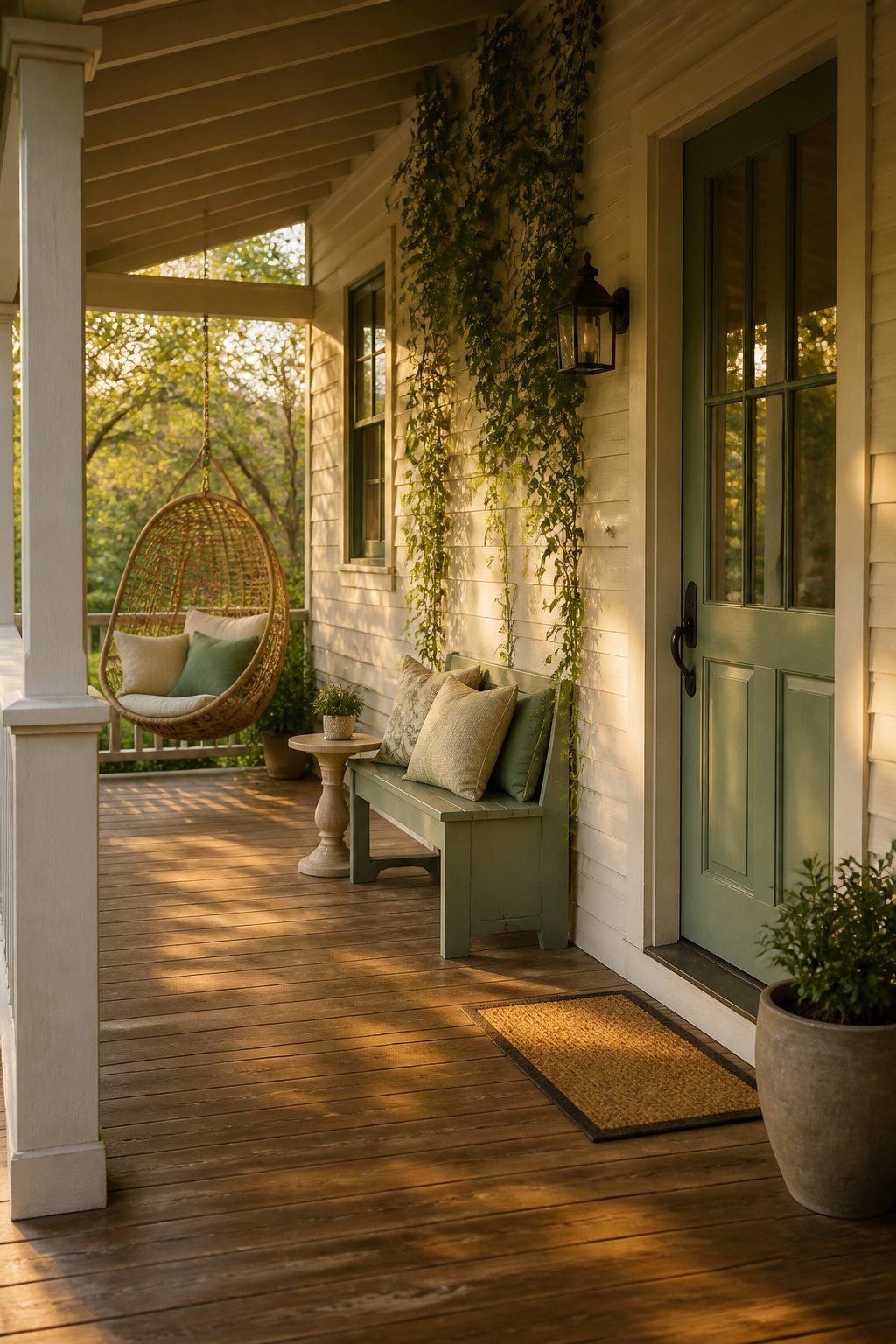
Benches earn their keep on a porch in ways rocking chairs never quite match. Packages land there, shoes come off there, and two people can sit without the synchronized sway that makes conversation feel like a dance routine. For a small porch, a single bench keeps the floor open; for a wider one, a pair flanking the door reads as intentional rather than crowded.
The mistake most people make is buying furniture they would want in a backyard and wedging it onto a 6-by-6 landing. Scale the piece to the porch, not the dream. A slender rocker or a compact bench leaves walking room; a deep lounge chair turns the entrance into an obstacle course. If the space is so tight that even a potted plant competes for square footage, skip the floor entirely and hang a swinging chair from the beam.
Color works the same way. Match the bench to the door for a quiet, pulled-together look, or run a shade or two off for depth. Throw pillows do the heavy lifting if you want to change with the season without repainting anything. The seating should invite someone to stay for coffee, not block the path of whoever is carrying groceries.
5. Layer Outdoor Rugs
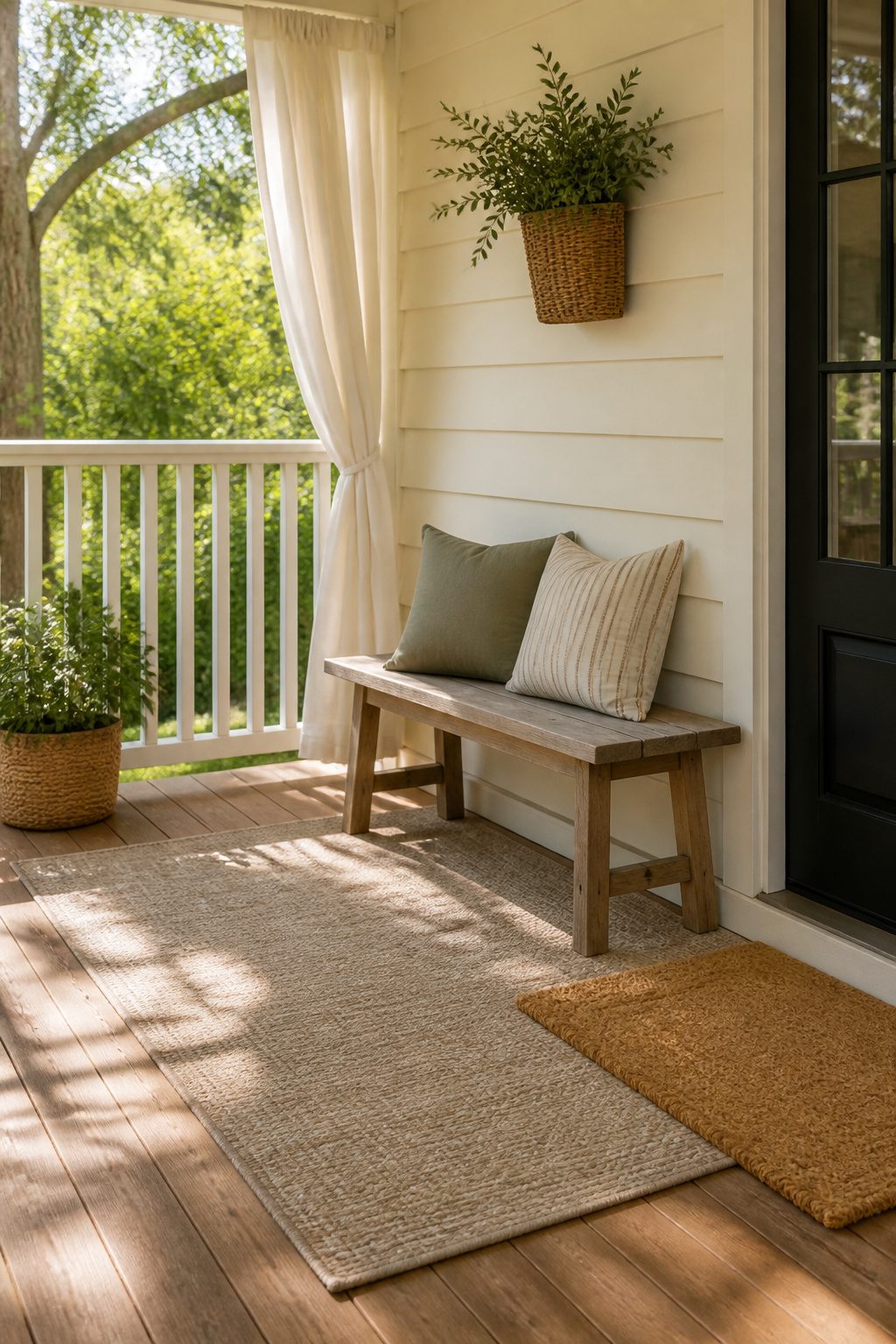
An outdoor rug does more than cover concrete. It gives bare feet something soft to land on and turns a narrow stoop into a space that feels finished. On a small porch, a 5×7 rug is the size that usually works: large enough to sit under a chair or two without swallowing the whole floor.
Material choice matters more than pattern. Polyester and polypropylene rugs are made to take rain and sun without rotting or fading, and they hose off clean when pollen season hits. Natural fibers look warmer but hold moisture, which means mildew if your planters drain underneath or your roof drips. One layered look that actually fits a tight space is a thin outdoor rug in a stripe or small pattern with a plain coir doormat set at the door. The doormat catches grit; the rug underneath defines the seating spot and keeps the visual weight low. Two full rugs stacked reads heavy on a four-by-six landing. The rug-under-mat trick gives you the texture without the bulk.
6. Incorporate Greenery
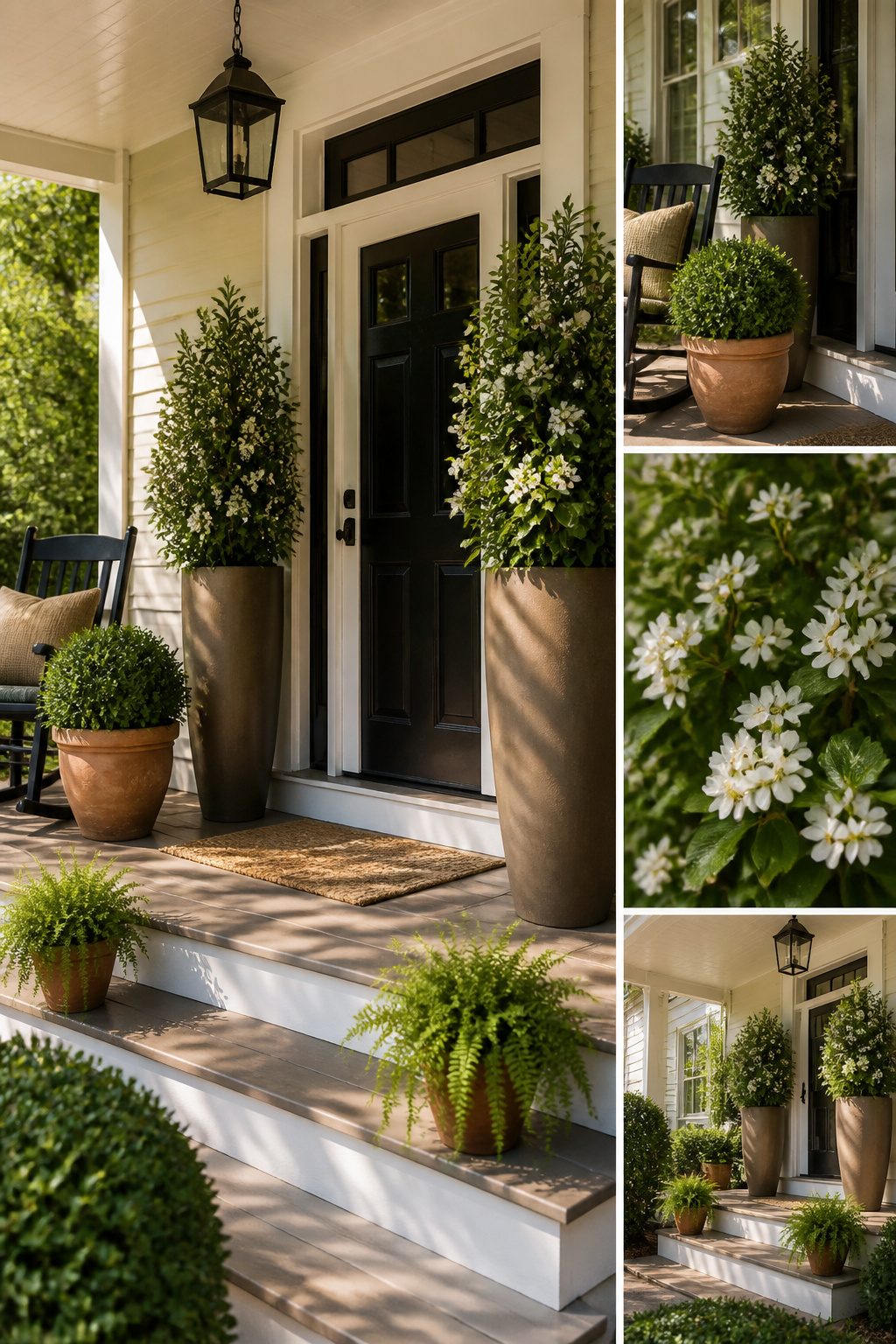
Greenery brings life to a porch faster than anything else, and the layering is what separates a refresh from a couple of random pots. Tall planters near the door give you height and frame the entry, medium pots near seating fill the middle ground, and small accent planters on the steps catch the eye from the sidewalk. Keep the planters in similar tones or the collection turns chaotic; too many finishes fight each other instead of reading as one deliberate choice.
For shaded porches, Spring Sonata Indian Hawthorns in large white planters on each side of the door handle low light without much attention and throw white blooms in spring. Boxwoods and ferns are the other low-maintenance workhorses; they do not ask for frequent watering or precise sun angles. If keeping anything alive feels like a gamble, high-quality faux plants in a covered spot still read as beautiful from the curb, and no one stops to check the soil. Real or not, the mix of height and softness is what makes the porch feel welcoming.
7. Add Lighting
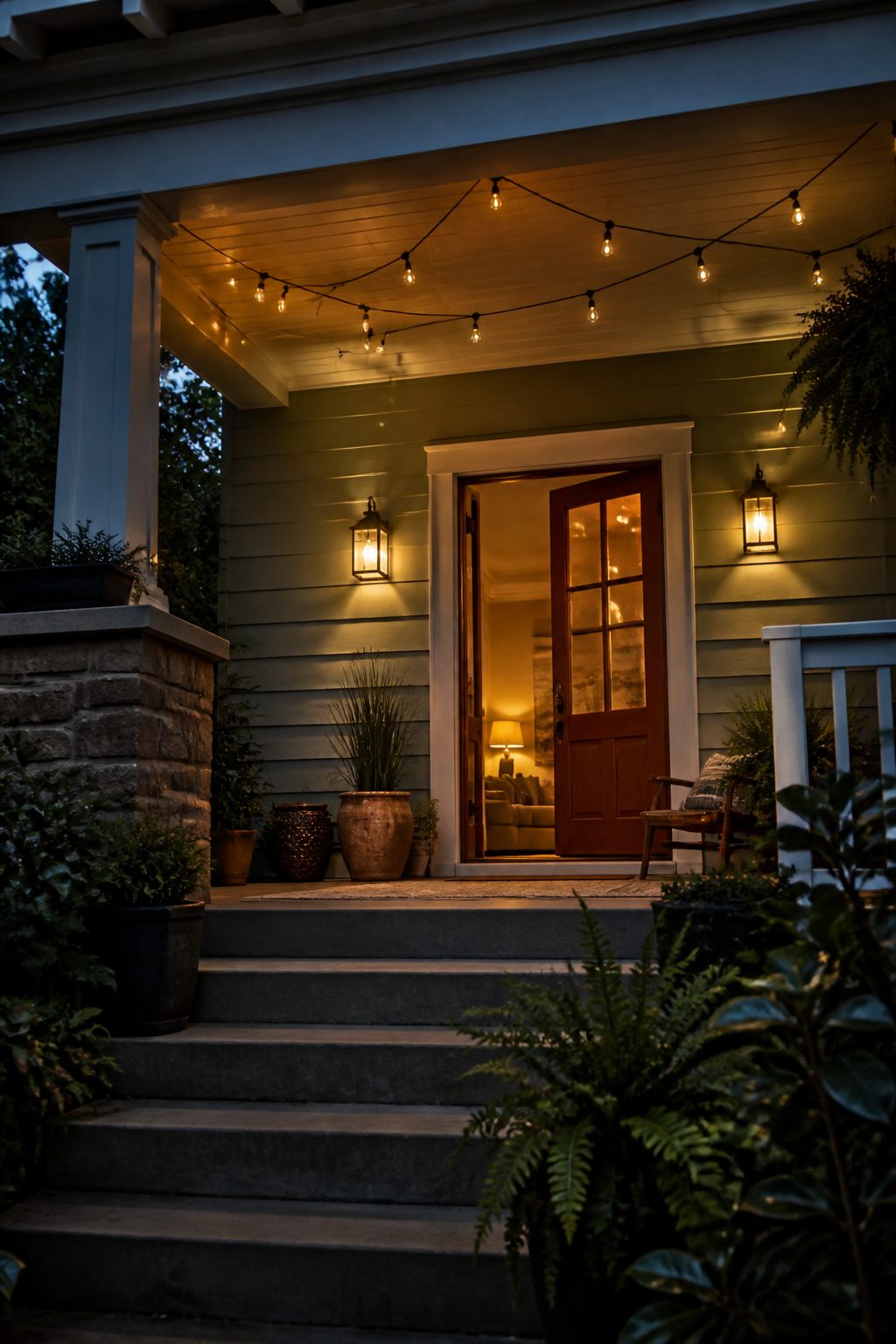
Lighting is usually the last thing people think about on a porch, and it shows. Most fixtures I see are too small for the space they’re meant to anchor. The rule I follow now came from a designer who pointed out that anything under 12 vertical inches disappears against most front elevations. Scale matters because these are the first things people notice walking up.
Sconces flanking the door beat overhead lighting for creating an entrance that feels intentional. Two matching fixtures at proper scale frame the doorway without the institutional look of a single ceiling mount.
For evening use, string lights across the ceiling turn a dark porch into usable space. Warm bulbs keep the mood residential, not commercial. Solar pathway lights can carry the same tone down the walkway, though they’re supplemental, not the main event.
I used to buy the lantern first and make it work. Now I measure the wall, check the vertical dimension, and accept that the right size almost always costs more than the small one. The difference is what reads as finished versus what reads as an afterthought.
8. Decorate the Door
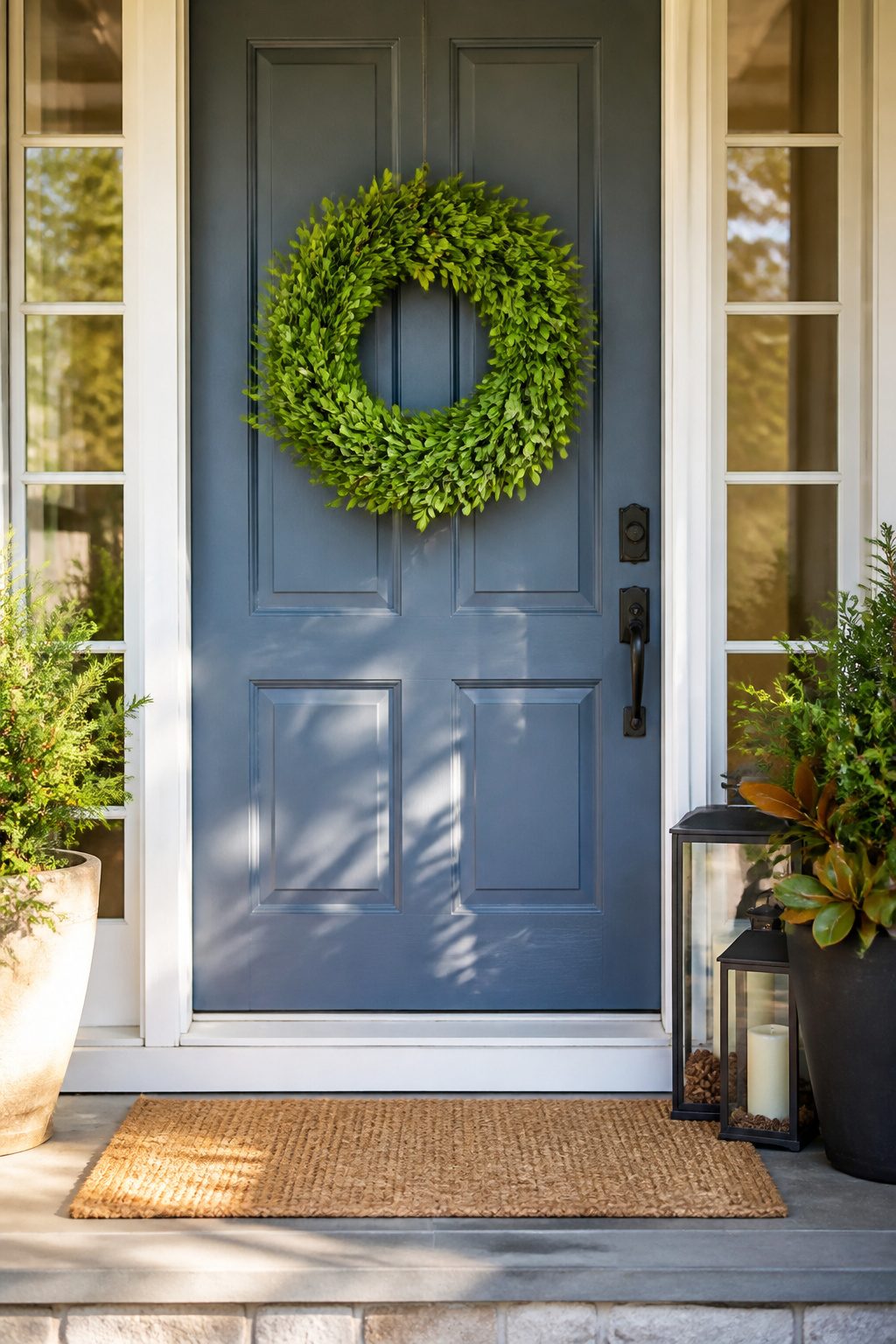
A wreath is the fastest way to give your door a sense of occasion without touching a paint can. I started with a faux leafy green wreath against a blue door, and the contrast alone made the entrance feel finished. Faux greenery has the advantage of surviving summer heat and winter rain without browning at the edges, which matters when your weekend budget does not include a replacement every season.
A $40 DIY wreath can stand in for a $200 catalog version if you are willing to spend an hour with wire and stems. For summer, a wooden bucket filled with damp floral foam and yard clippings, refreshed weekly, costs nothing but the initial bucket and gives the same textured look. If maintenance is not your style, a single summery wreath left up all season still reads as intentional.
The door color and the wreath should talk to each other, not compete. A dusty navy or sage green door pairs with almost anything; a brighter blue like mine needs restraint so the entrance does not become visual noise. Jute or braided natural fiber in the doormat below echoes the wreath’s organic tone and keeps the whole entry from feeling like a collection of separate purchases.
9. Use Symmetry
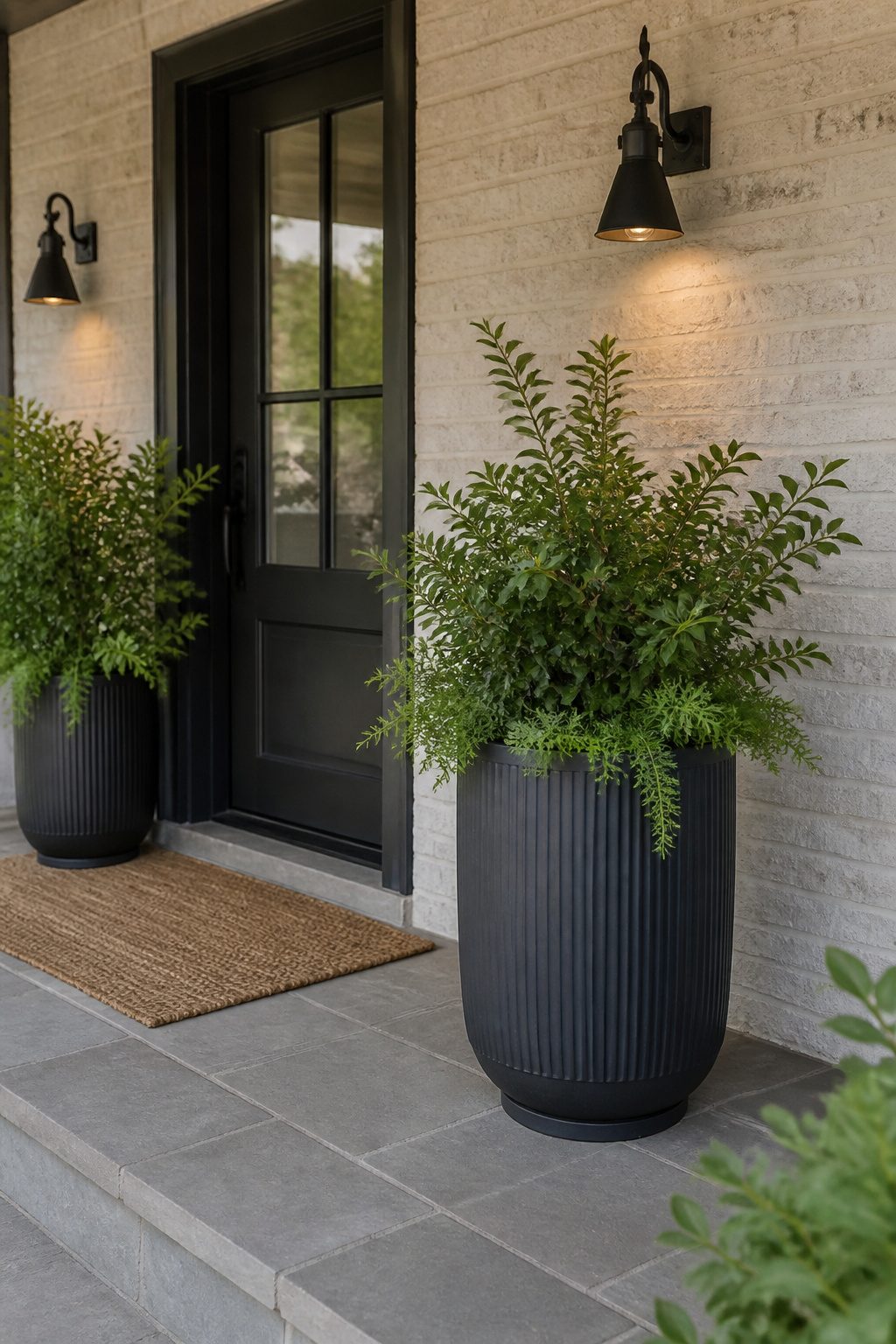
Matching planters on either side of the door read as intentional even when the rest of the porch is a mess. Two lanterns, two chairs, two sconces: the eye settles immediately. Grace in My Space layers two different pot heights on each side for extra depth, and that small move does more than doubling the same pot twice.
Asymmetrical porches need the same discipline, not less. One source pins a single oversized olive tree against a layered rug and a statement chair; the balance comes from visual weight, not mirrored placement. My own porch has the door offset to the left, so I keep the right side clean: one large planter, nothing below knee height, and the left side carries the pair. Small porches can repeat the pot style in two sizes on one side of the door instead of both, which uses less floor space while keeping the pulled-together feel.
The calm is the point. Clutter fights symmetry and loses every time.
Small Porch, Same Rules
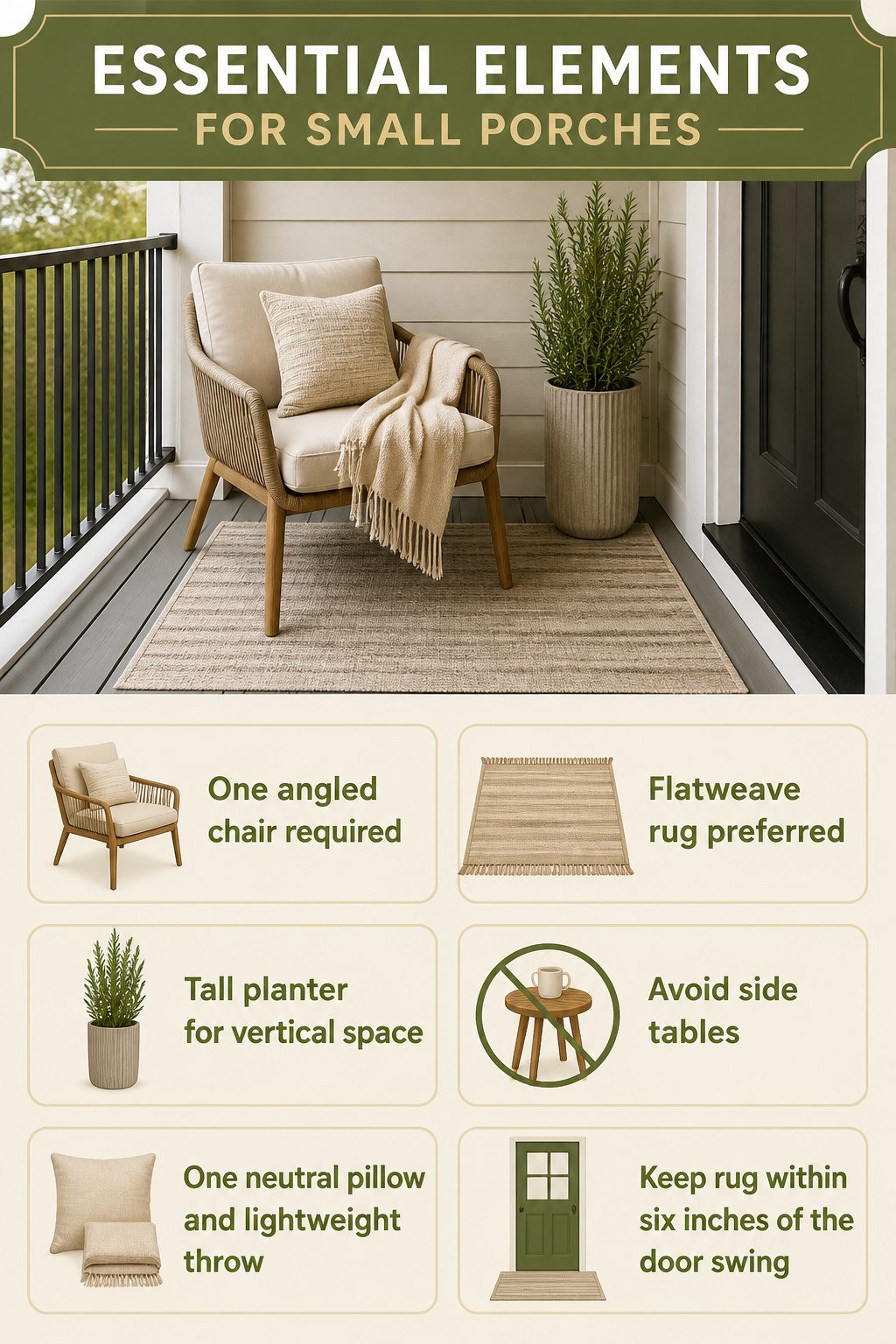
A small porch does not get a pass on the rules that govern bigger ones. One chair, a layered rug, and a tall planter can be enough if each piece earns its spot.
The chair should sit at an angle rather than hugging the wall. That single shift turns a 4-foot depth into a space that invites someone to stay. A petite bench works too, though two bistro chairs will crowd most city stoops. One neutral pillow and a lightweight throw add the comfort signals without the clutter.
The rug is where renters often overdo it. One flatweave layer beats a thick pile that traps leaves and never dries. Keep it within six inches of the door swing on all sides or you will fight it every time you leave.
Tall planters draw the eye up, which matters when floor space is gone. A single slender container with vertical growth reads as greenery without the footprint of a bushy arrangement.
Side tables tempt, but most small porches lose them to the first windy night. Skip it unless the chair arm cannot hold a mug.
DIY Projects That Personalize
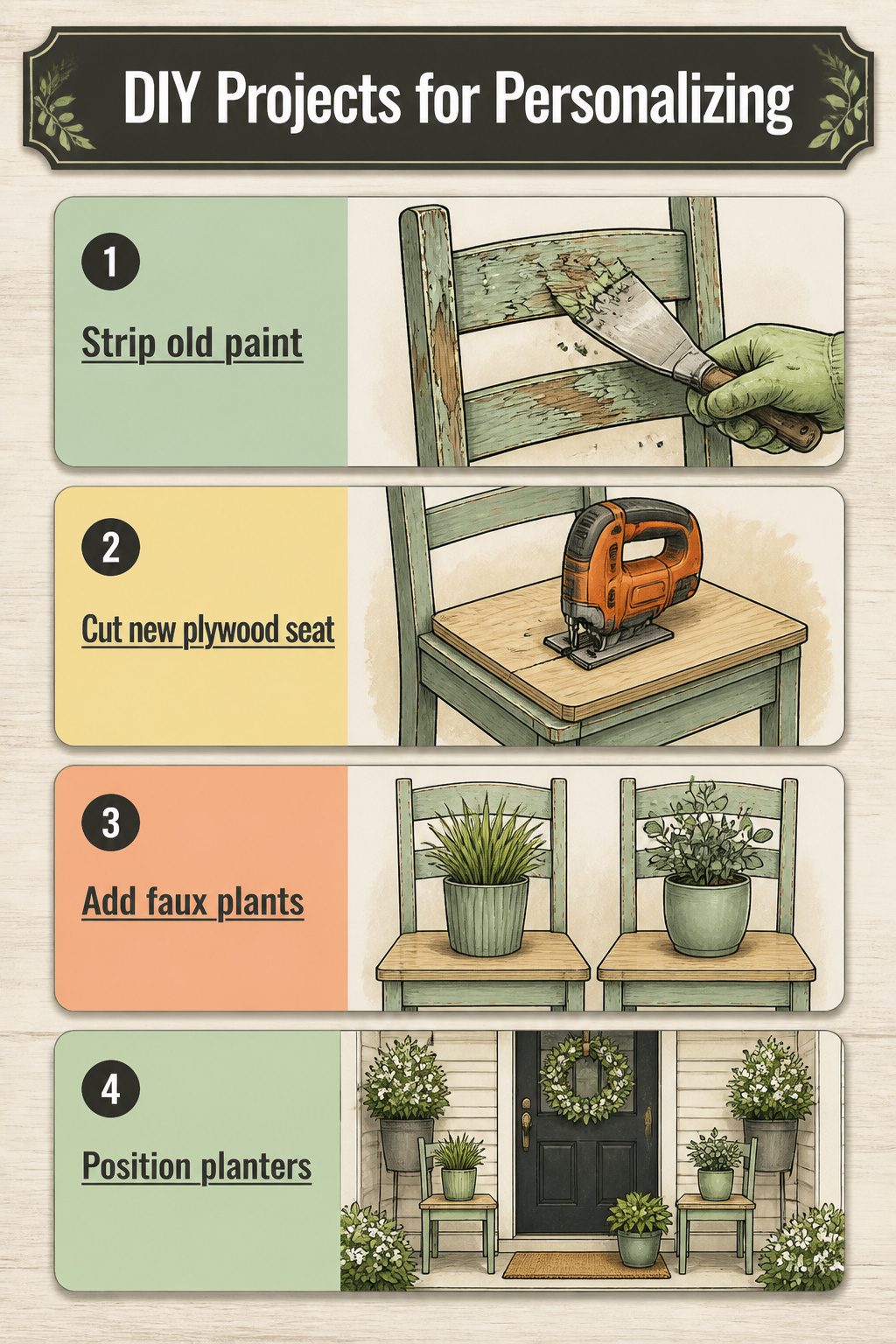
The planters flanking my door started as a pair of flea-market chairs I almost threw out. Stripped the old paint, cut a plywood seat to replace the rotted cane, and suddenly I had side tables that cost nothing but an afternoon. Faux plants in similar-toned planters keep the look cohesive without the watering schedule; mixing finishes is where porches start to look like yard sales. For actual greenery, Home Depot organizes by care instructions, which is how I found plants that tolerate covered-porch shade. Spring Sonata Indian Hawthorns frame the entry with white blooms in spring and need so little attention that my self-proclaimed black thumb has kept them alive three years running. The chairs-turned-tables sit just below the tall planters, a medium pot by the steps, and the whole thing reads as layered height without any single piece being precious.
Seasonal Rotations
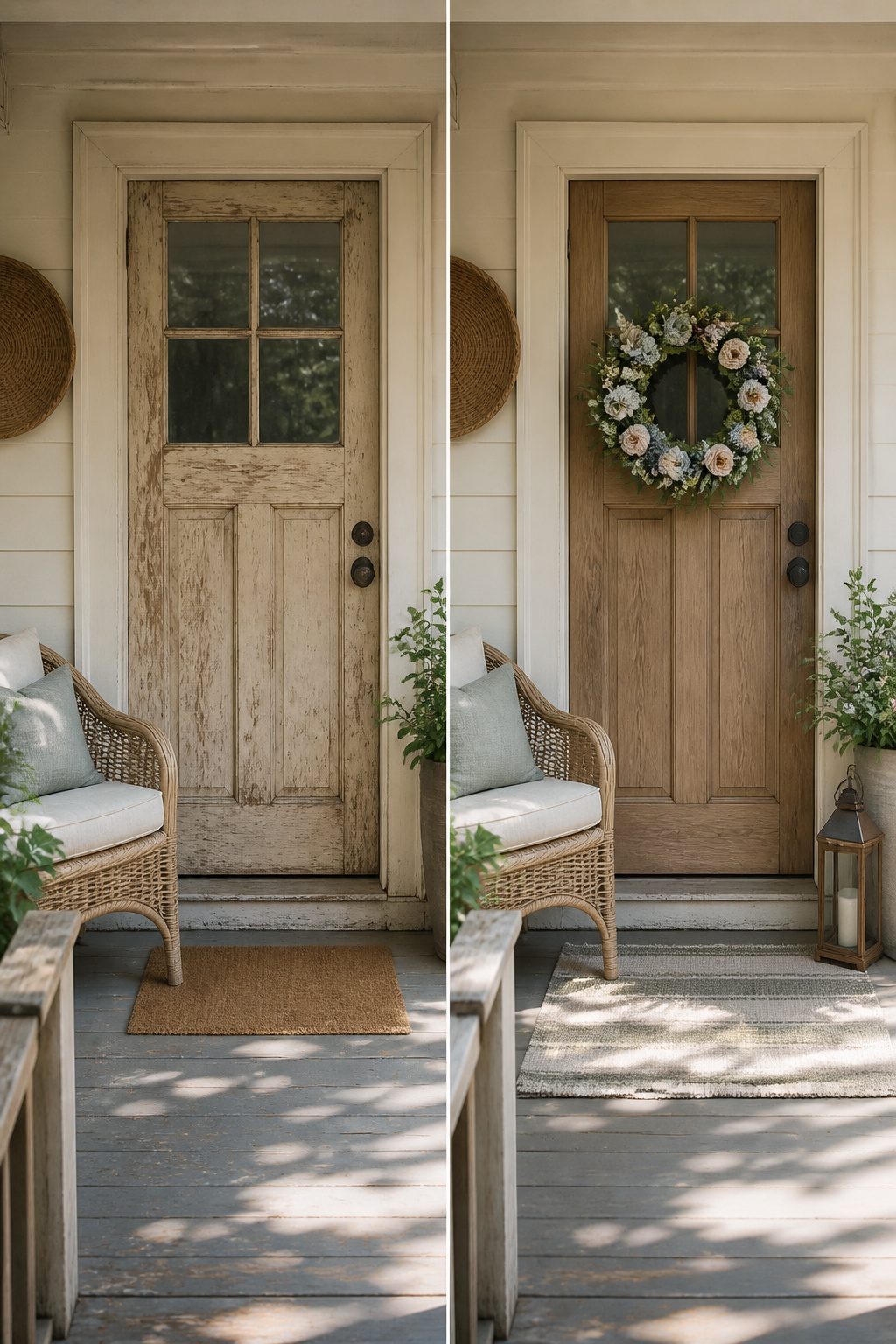
Wreaths work harder than almost anything else on a porch because they turn over four times a year without requiring storage bins the size of a sedan. A greenery-based wreath with soft florals and neutral tones reads fresh from March through May without screaming "spring display," and that restraint is what keeps the whole porch from looking like seasonal overkill. The blush, sage, and dusty blue palettes that dominate spring porch boards right now pair naturally with woven textures and natural wood tones, so the door decoration and the seating area talk to each other instead of competing.
The mistake most people make is loading every surface with themed pieces. One wreath, one clean doormat, and maybe a subtle sign if the wall space allows it. That trio outperforms a cluttered setup every time. Literal bunnies and literal pumpkins age fast; light, airy, and welcoming stays readable for months. Your front door color and your exterior paint should already be doing some of the work, so the wreath’s job is to echo, not to shout over them.
What Expensive Porches Get Right
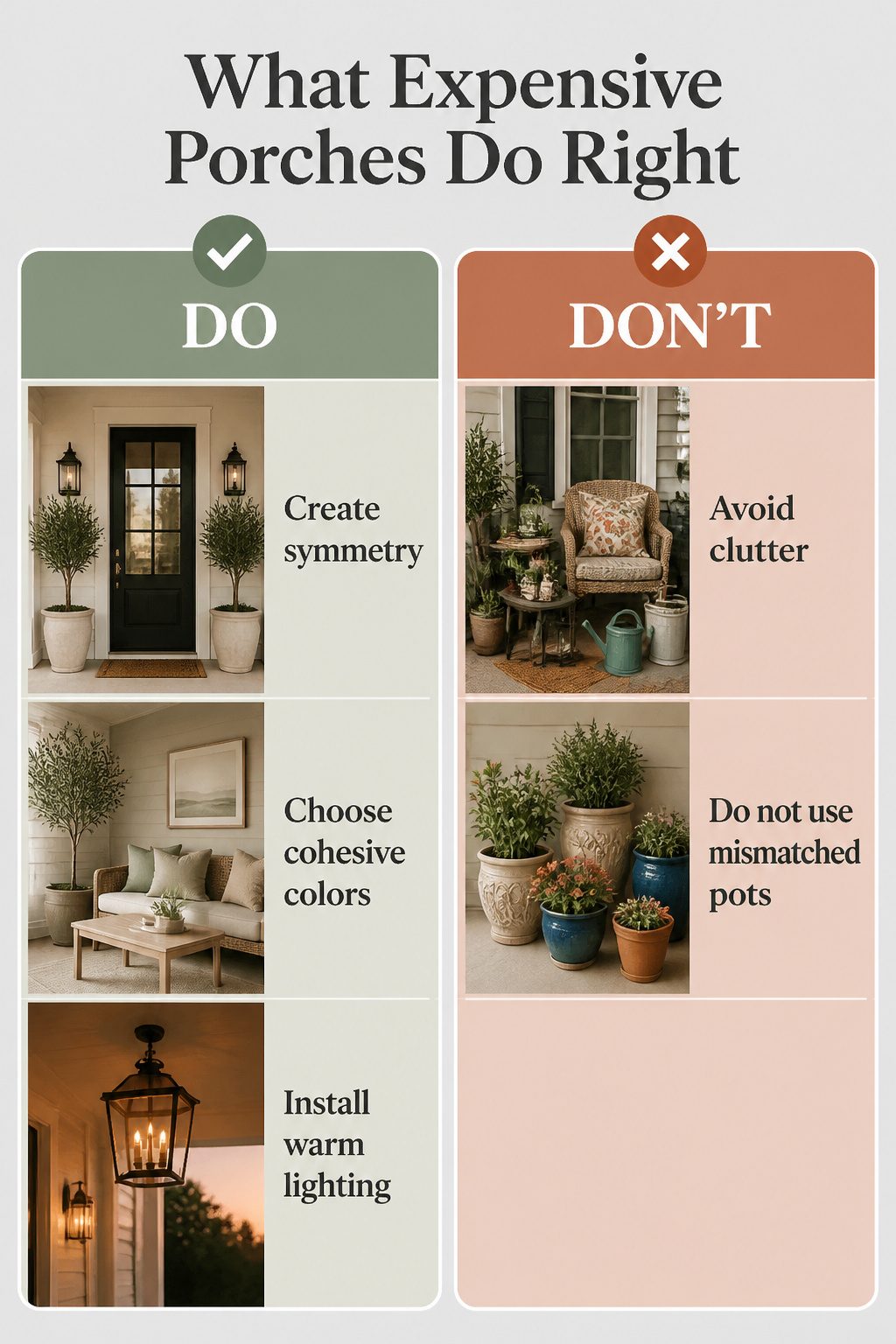
Symmetry reads as money even when it isn’t. Two matching planters flanking the door, a pair of lanterns at matching heights, sconces that mirror each other: the eye registers balance as intention, and intention as budget. Oversized planters carry that signal further than clusters of small pots that look collected by accident. One large olive tree or a single statement fern in a substantial pot reads deliberate; six mismatched containers read yard-sale even if they cost more in total.
Cohesive color does the same work. Soft neutrals, sage, blush, dusty blue, white, and natural wood tones hang together without demanding constant curation. Restraint here is the tool: fewer pieces with breathing room between them look more considered than a fuller arrangement where nothing has space to register.
Warm lighting finishes it. The glow from a lantern or a soft sconce at dusk hides what the daylight shows too honestly, and it extends the hours when the porch feels finished. Asymmetry can work, one chair and a layered rug can feel modern rather than underfunded, but the balance has to be intentional. Clutter is what makes a budget read cheap; every piece needs a reason for its exact spot.
Spring Refresh Order of Operations
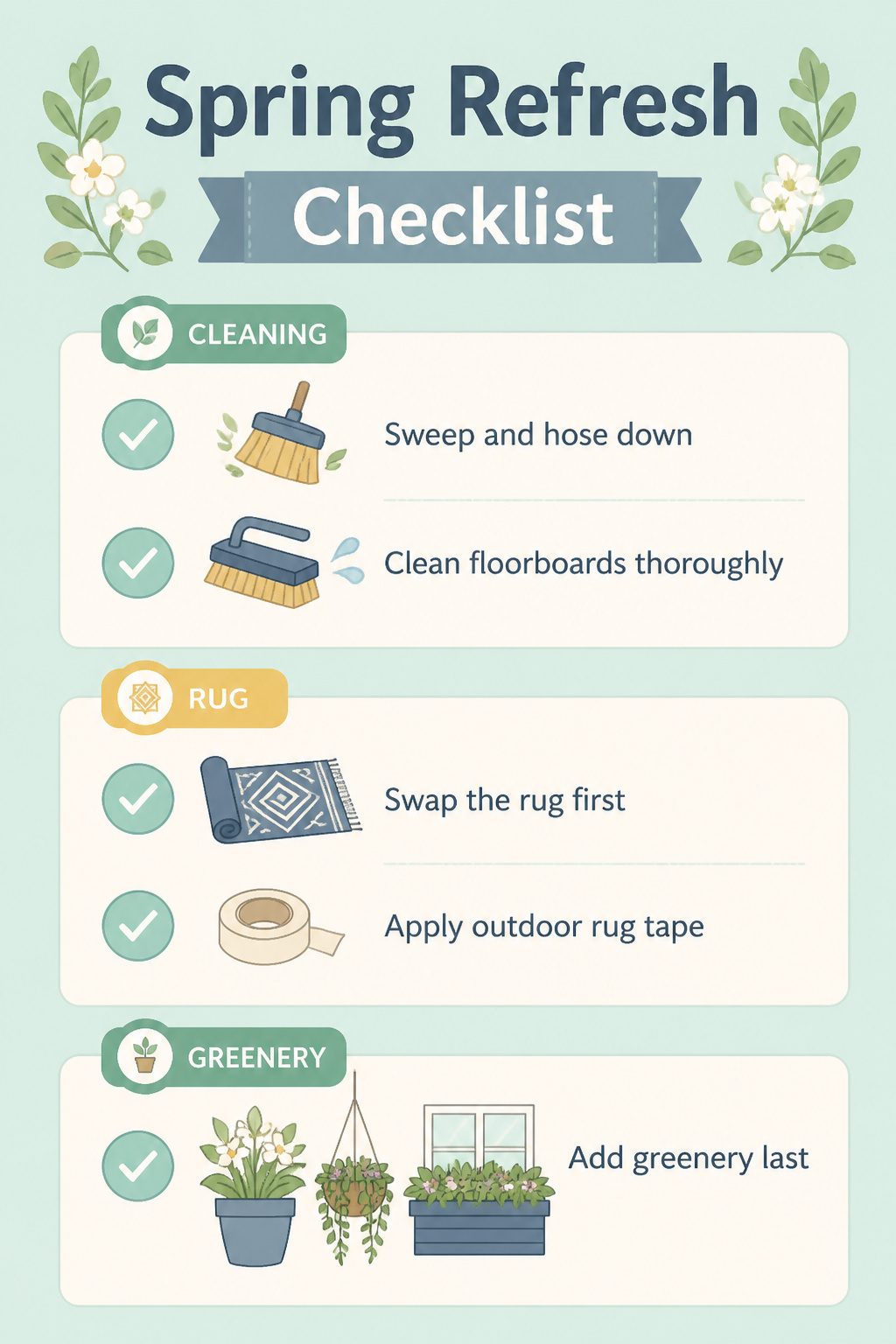
Dirty porches read as neglected porches, so the first move is always a broom, a hose, and a stiff brush on the floorboards. I learned this the hard way after laying a new rug over pollen-stained concrete; the grime worked its way up through the weave in two weeks. Once the surface is actually clean and fully dry, swap the rug before anything else — it sets the color story and defines the footprint for everything that follows. Outdoor rug tape matters here, especially in high-traffic spots where corners curl. Greenery comes last: planters, hanging baskets, or a window box placed after the rug and any seating are locked in, so you are filling gaps rather than reshuffling heavy pots. Real and faux plants mix fine; the point is height variation and something alive-looking against the door.
Frequently Asked Questions
What is the easiest way to update a front porch for spring?
Start with a full cleanout: pull everything off, sweep, power wash, and dry the space before anything goes back. Swap in a new doormat and an outdoor rug next to set the color story and define the footprint. Finish with greenery, whether real plants or high-quality faux options, to add height and softness against the door.
How do I decorate a small front porch?
One chair angled away from the wall, a flatweave rug kept within six inches of the door swing, and a tall planter drawing the eye up is usually enough. Skip side tables unless the chair arm cannot hold a mug, and keep pillows and throws lightweight so the space does not crowd.
What colors are best for spring porch decor?
Soft neutrals, sage, blush, dusty blue, white, and natural wood tones read timeless and hang together without constant curation. These palettes pair naturally with woven textures and let your door color and exterior paint do part of the work.
How can I make my front porch look expensive?
Symmetry signals intention and budget: two matching planters flanking the door, paired sconces at matching heights, lanterns that mirror each other. Oversized single planters read more deliberate than clusters of small pots, and warm evening lighting hides what daylight shows too honestly.