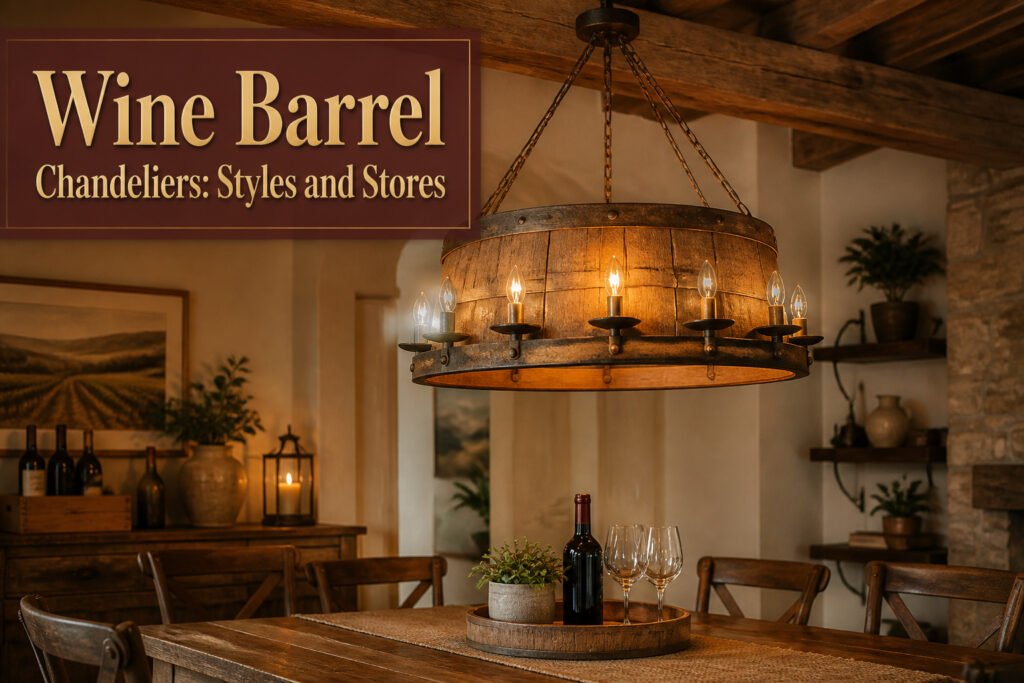
Wine barrel chandeliers are pendant fixtures built from the curved staves and metal hoops of actual wine barrels, though the category now stretches far beyond literal reclaimed oak. The catch is that a true full-barrel piece weighs enough to demand ceiling structure most rentals lack, which is why the market has split between mass-market interpretations starting around $249 and artisan reclaimed pieces climbing past $3,200. At Pottery Barn, the Venola chandelier uses sustainable hardwood and genuine rusted-metal candle cups to hit that entry-level price without the engineering headache, keeping the visual reference clear even in rooms with standard 8-foot ceilings.
Pottery Barn Venola
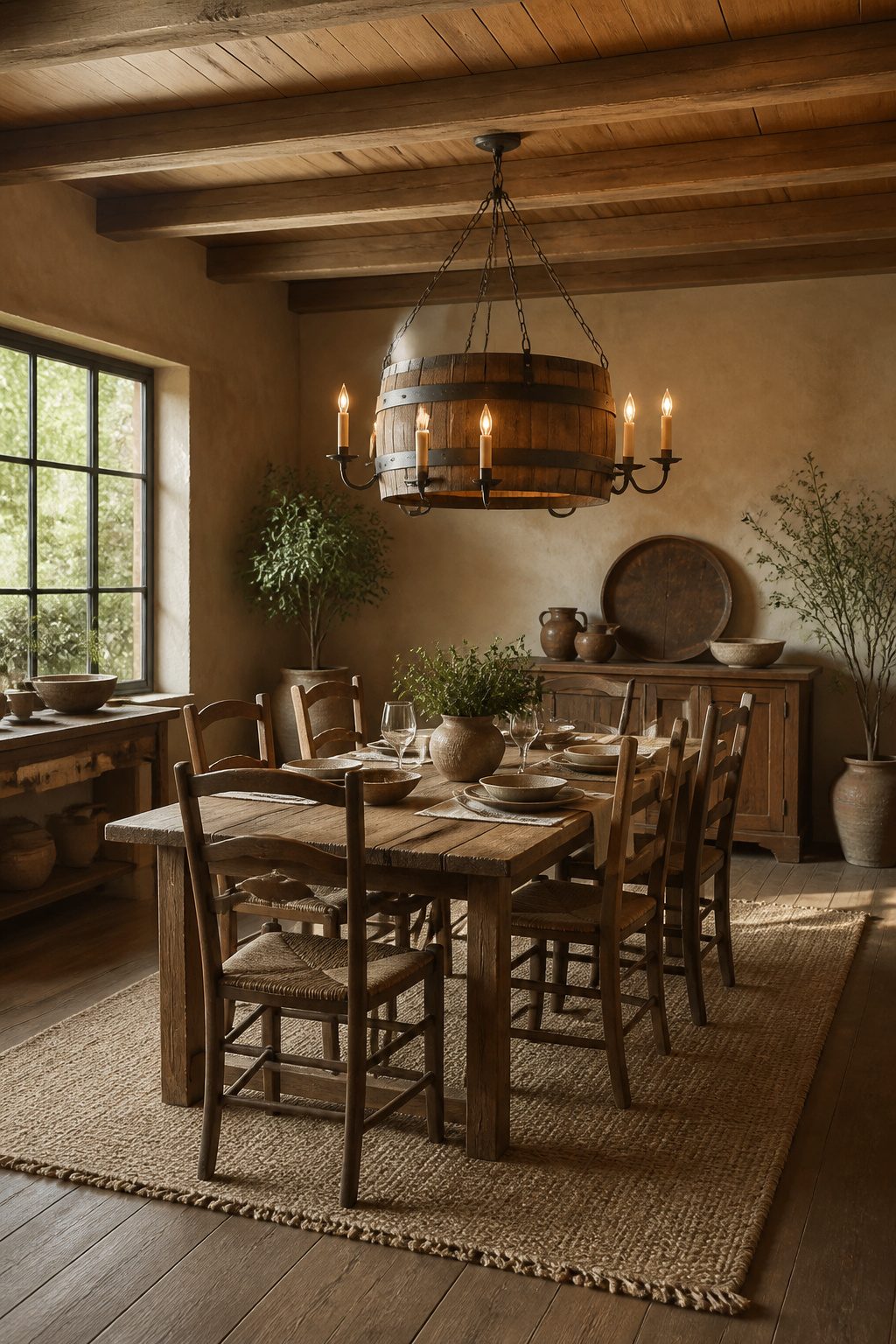
The Venola reads as a wine barrel chandelier that wants to be taken seriously. Sustainable hardwood forms the stave body, and the rusted-metal candle cups sit low enough that the whole thing keeps a horizontal, grounded look even when the chain is fully extended. That matters in rooms with standard 8-foot ceilings, where a more vertical fixture can feel like an obstacle.
$249 on sale from $349 places this in the upper-mid range. You are paying for the hardwood construction and the hand-finish on the metal, not for scale or complexity. The six-light layout suits a rectangular dining table or a compact living room where you want the material story without the bulk of a full barrel hoop design.
The rusted finish on the cups is genuine, not painted, which means variation piece to piece. For some buyers that inconsistency is the point; for others it reads as aged rather than finished. The sustainable sourcing is noted on the product page, though in practice most shoppers will choose this for the visual warmth of the wood rather than the certification.
This fixture works best for buyers who need the wine barrel reference to read clearly from across a room but do not have the ceiling height or the budget for the larger reclaimed options. The sale price is competitive against other hardwood chandeliers with hand-applied metal finishes, but at full price the gap narrows enough that waiting for a promotion is the smarter move.
Crate & Barrel Norwood
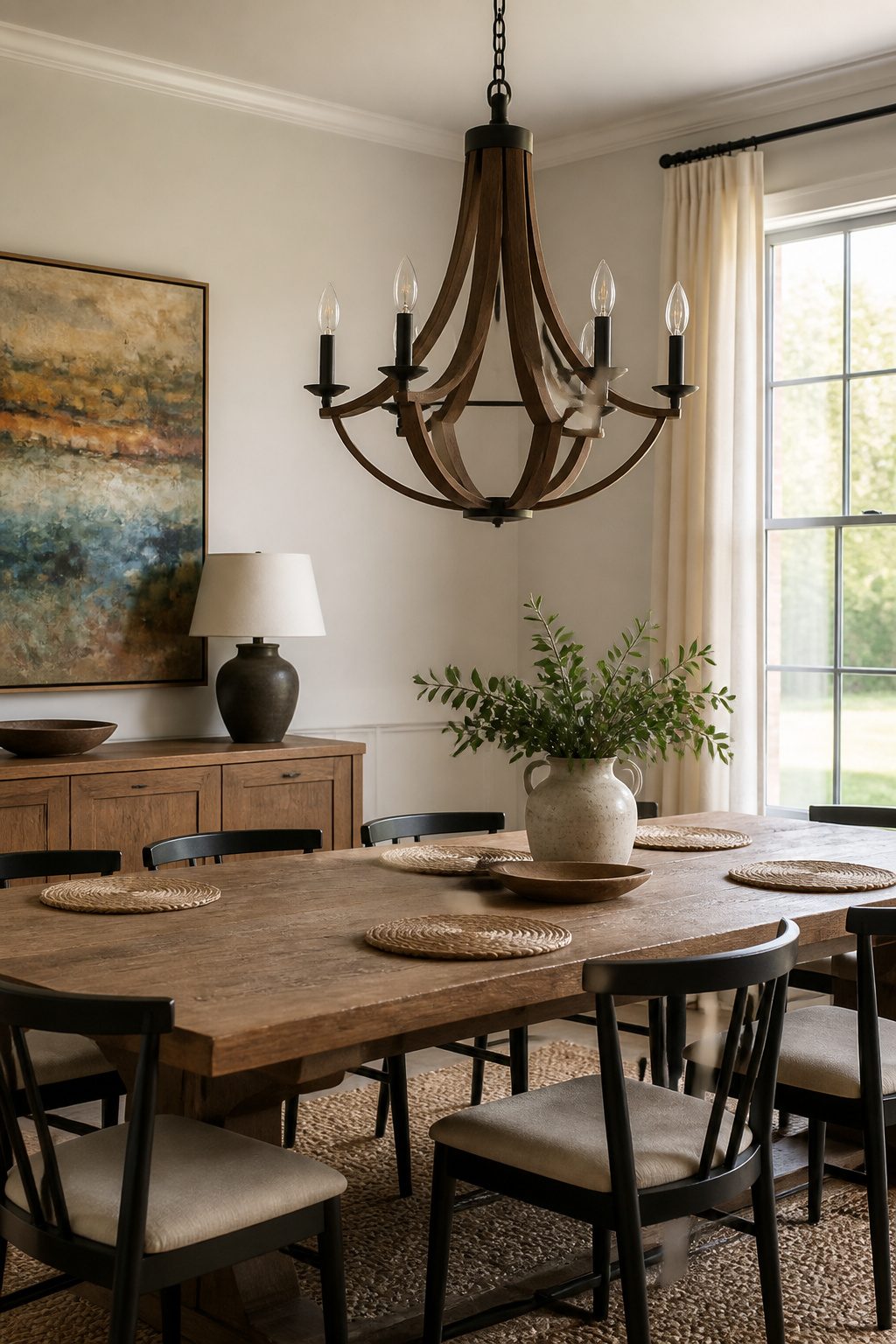
The neoclassical shape of the Norwood chandelier takes some getting used to if you walked in expecting staves and hoops. Walnut-finished arms curve outward in a formal symmetry, more Federal dining room than Sonoma tasting room. That tension is the whole point. Crate & Barrel is betting that most buyers want a hint of barrel reference without the full rustic costume, and at $449 on sale from $549, the price lands where that compromise starts to feel practical.
Whether the hybrid works depends on what else is in the room. The arms read as traditional woodwork, so the fixture plays fine with a real farmhouse table or a clean-lined walnut credenza. Against actual reclaimed wood, though, the finish can look studied, like a restaurant chain’s idea of heritage. I would hang this where the ceiling itself supplies the character: exposed beams, a sloped attic conversion, anything that does the rustic work so the chandelier does not have to. The sale price makes that experiment tolerable if the gamble misses.
Ballard Design Chablis
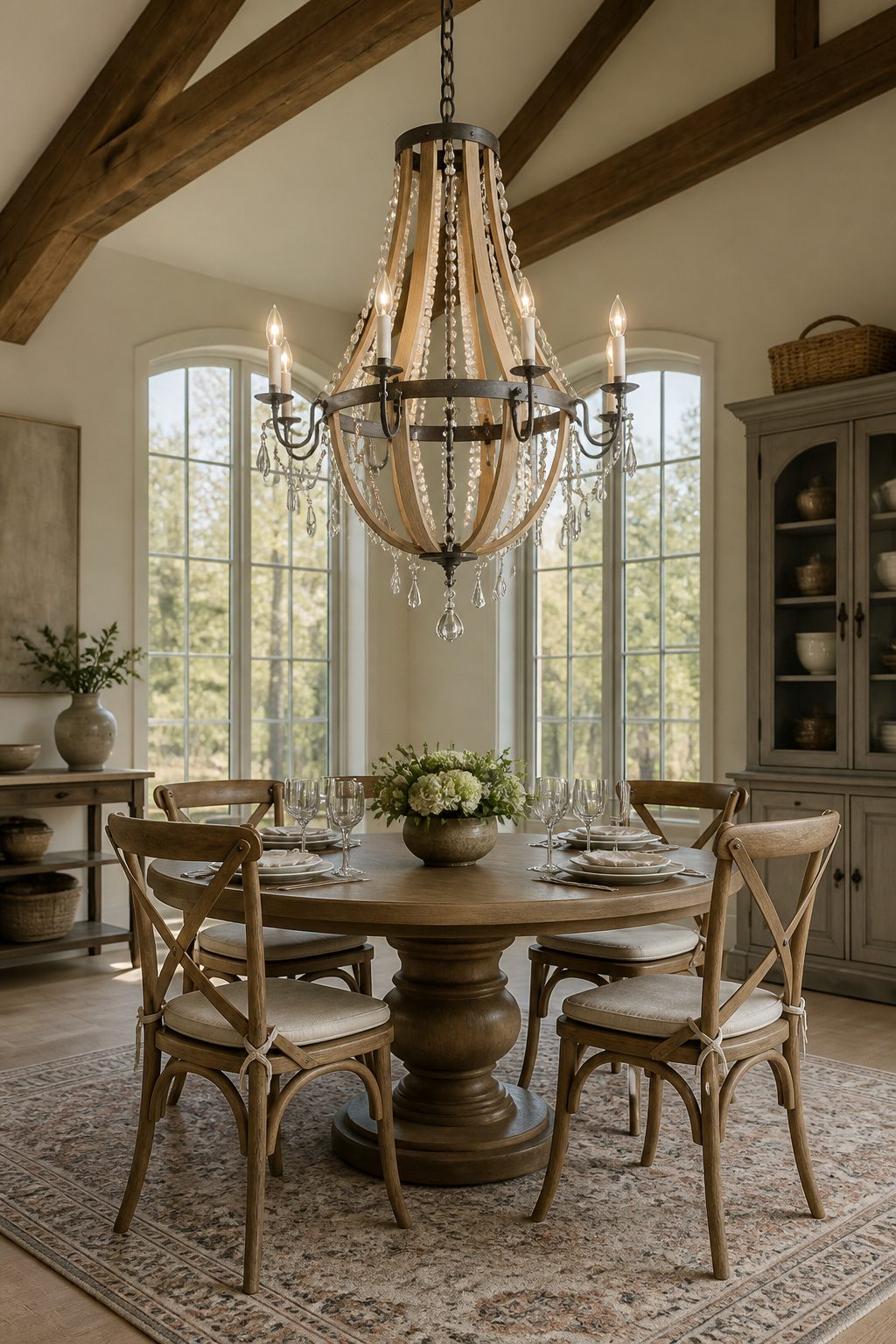
The Ballard Design Chablis lands at $1,139, which is more than double what most wine barrel chandeliers cost. That gap buys handcrafting and beaded drops, not just a washed wood finish and a longer chain. The piece includes a 5 1/2-inch canopy and six feet of hanging chain, sized for a 60W max candle bulb.
Whether the craftsmanship justifies the leap depends on what you notice from below. Beaded drops catch light differently than plain wood, creating movement a static fixture cannot manage. In a room with high ceilings or a dining table that needs its own moment, that detail changes the whole installation. In a low-ceilinged breakfast nook, the beads read as clutter and the price as regret.
The buyer here is someone who has lived with a $400 fixture long enough to know what it lacks, not someone stretching the budget for a first apartment. You are paying for the decision not to upgrade twice.
Layla Grayce Arteriors Louis
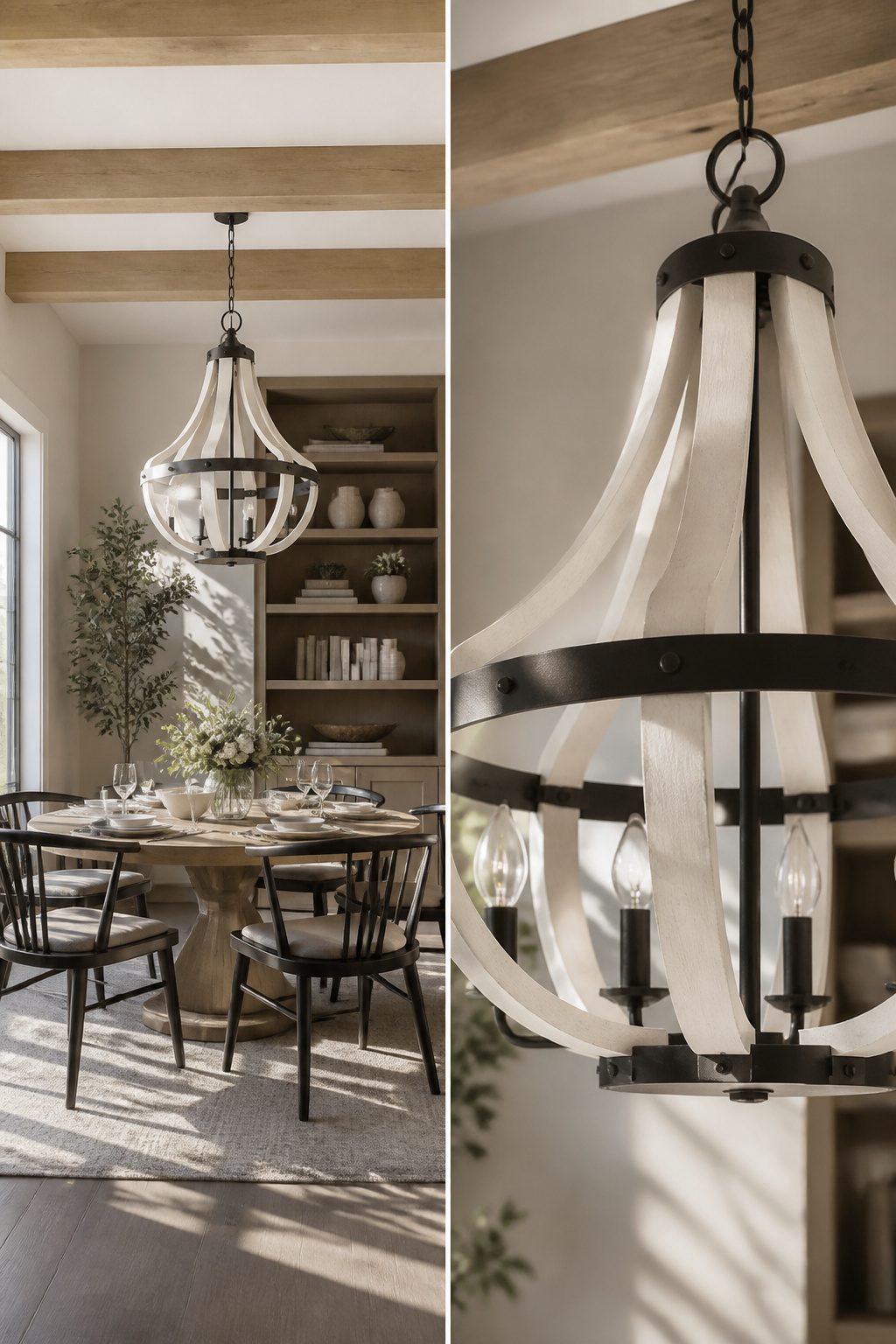
Painted wood with iron hardware changes how a wine barrel chandelier carries itself in a room. The $1,398 price sits roughly $250 above the all-wood Ballard Design Chablis and about $100 below Plantation Design’s wood-and-crystal mix, so the Layla Grayce Arteriors Louis occupies a middle ground where the metal becomes the deciding factor.
Iron adds weight, both literal and visual. Where a fully wood fixture reads rustic start to finish, the iron here introduces a cooler, more transitional note that keeps the piece from defaulting to farmhouse territory. That matters in rooms with cleaner lines or mixed-era furniture, where pure rustic can feel like a costume. The painted wood softens the industrial edge, but the iron still anchors the piece visually; it draws the eye downward and gives the fixture a silhouette that reads more designed than found.
For weekend-project budgets, this is where the jump starts to feel real. The Chablis at $1,139 is already a stretch for most renters. The extra $259 here buys material contrast and a more flexible style register, not more light or more size. Whether that trade works depends on whether your room needs the iron to bridge other metal finishes already in play.
Plantation Design Wood and Crystal
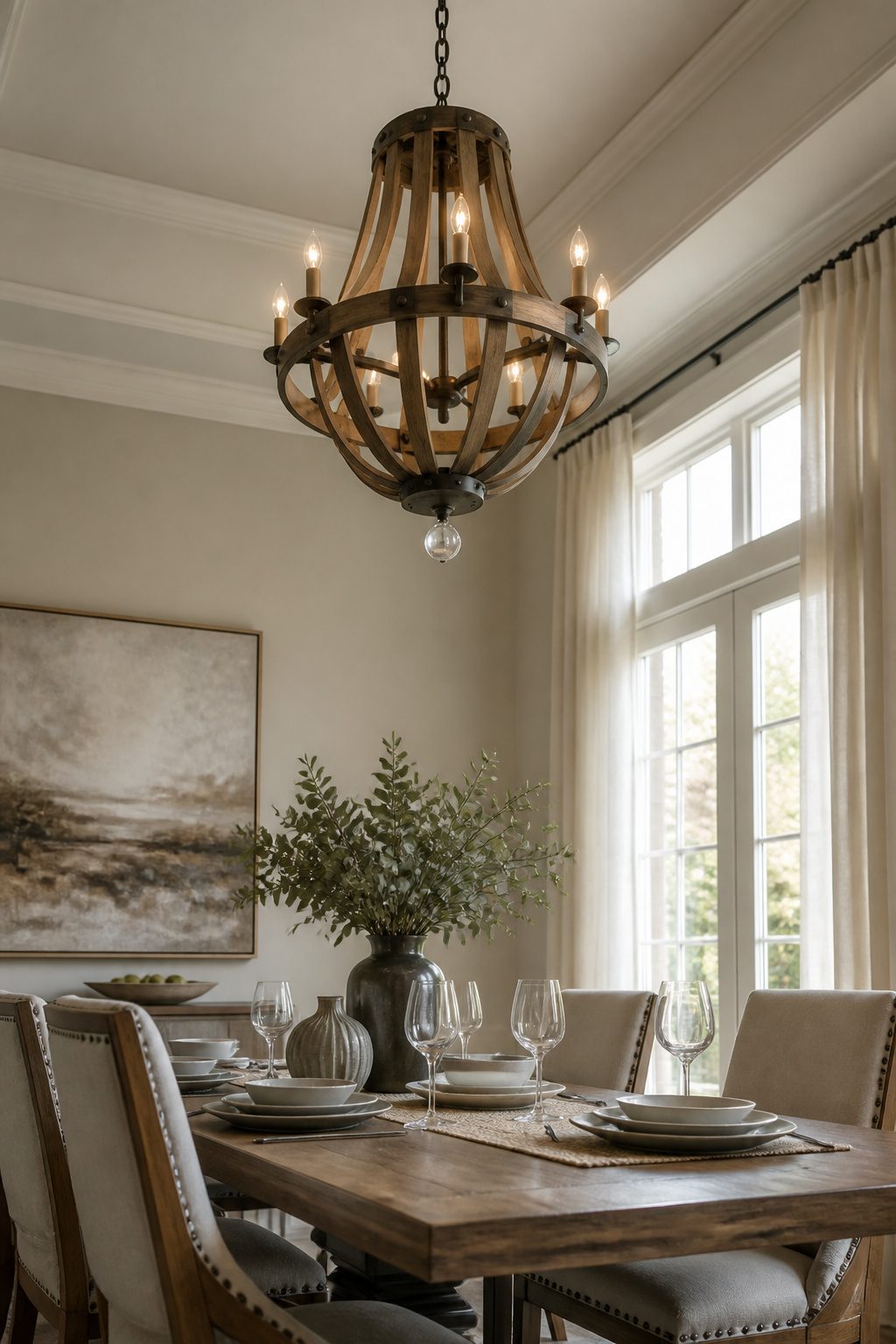
The Plantation Design Wood & Crystal Chandelier sits at $1,495, and that price matters because it is the first point where crystal enters this category without jumping to the $1,950 Beaded Empire or beyond. Six lights, a crystal finial, and barrel-wood bones: the mix sounds like a risk.
Rustic fixtures usually hide their seams under weight and shadow. Sleek lines do the opposite, pulling the eye to every joint. The question is whether the two temper each other or fight for attention. My read, having watched this style land in a friend’s converted garage dining room, is that the crystal finial tips the balance toward modern. The wood keeps it warm, but the overall effect reads transitional more than farmhouse.
That means the room itself has to choose a side. Exposed beams, rough plaster, or a reclaimed table underneath will feel like a costume change mid-scene. Cleaner walls, maybe a single steel window frame or a low-profile dining set, let the fixture do its job without staging a debate. The ceiling height matters too: the sleek lines need room below them, so an eight-foot ceiling will crowd the gesture.
At $1,495, you are paying for the crossover moment. It works if your space already lives there.
Mecox Gardens Beaded Empire
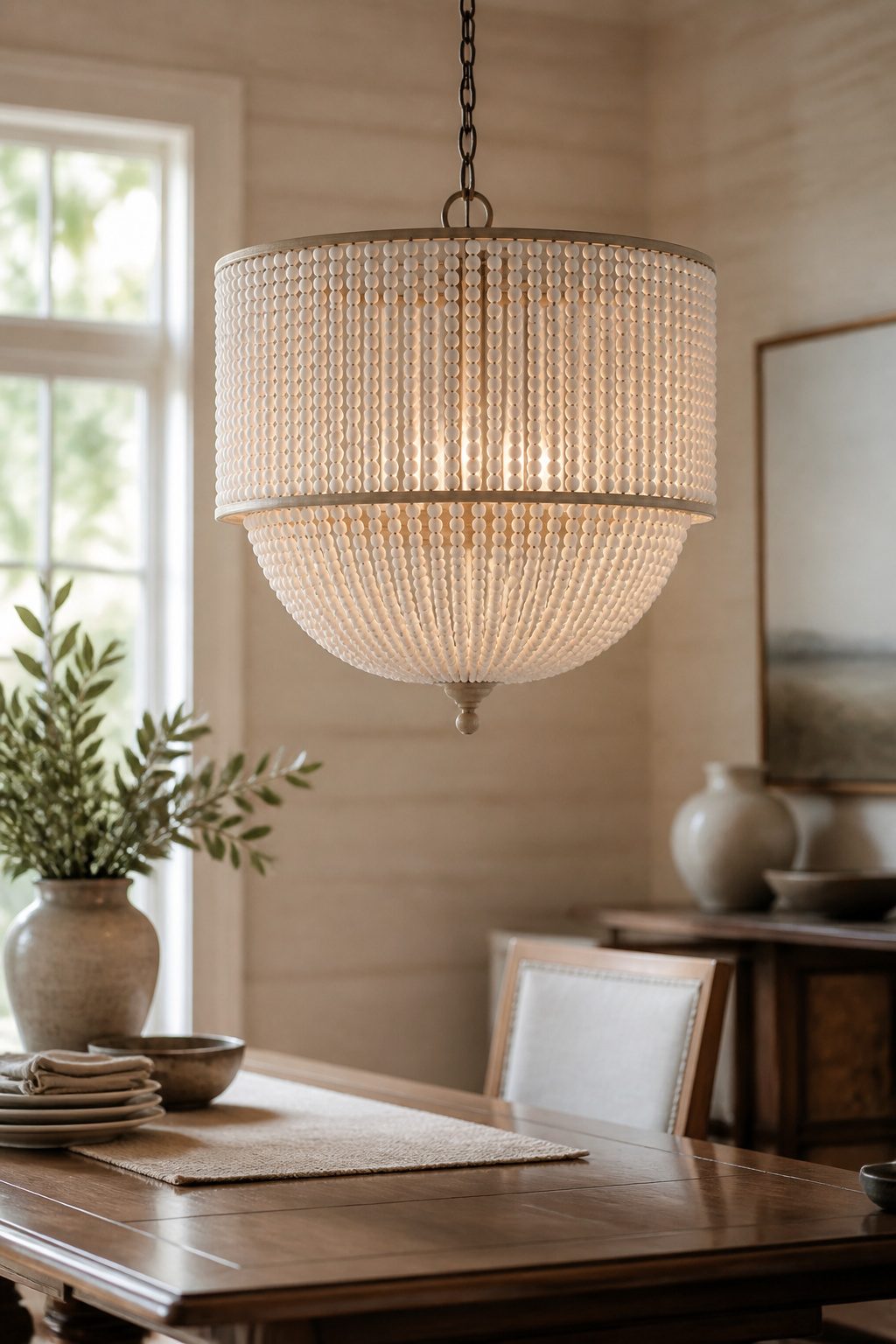
The Empire silhouette reads immediately as something pulled from a French château, and that European lineage is exactly what separates it from the usual barrel-stave look. Where most wine barrel chandeliers spread oak staves outward like ribs, this one keeps a drum shape, tight and vertical, with beads layered in tiers that narrow toward the top. The barrel connection becomes almost abstract: you recognize the scale and the warmth, but the object has crossed into formal lighting rather than reclaimed-rustic statement.
At $1,950, it sits at a price that assumes the fixture will carry a room on its own. The beaded texture catches light differently than bare wood, softer and more diffused, which matters in a dining space where you actually want to see faces across the table. Whether that shift away from obvious barrel-source material helps or hurts depends on the house. In a room already full of reclaimed pieces, this reads as polished counterweight. In a space without other wine references, nobody will guess the origin, and that may be exactly the point.
Mecox Gardens Reclaimed French Oak
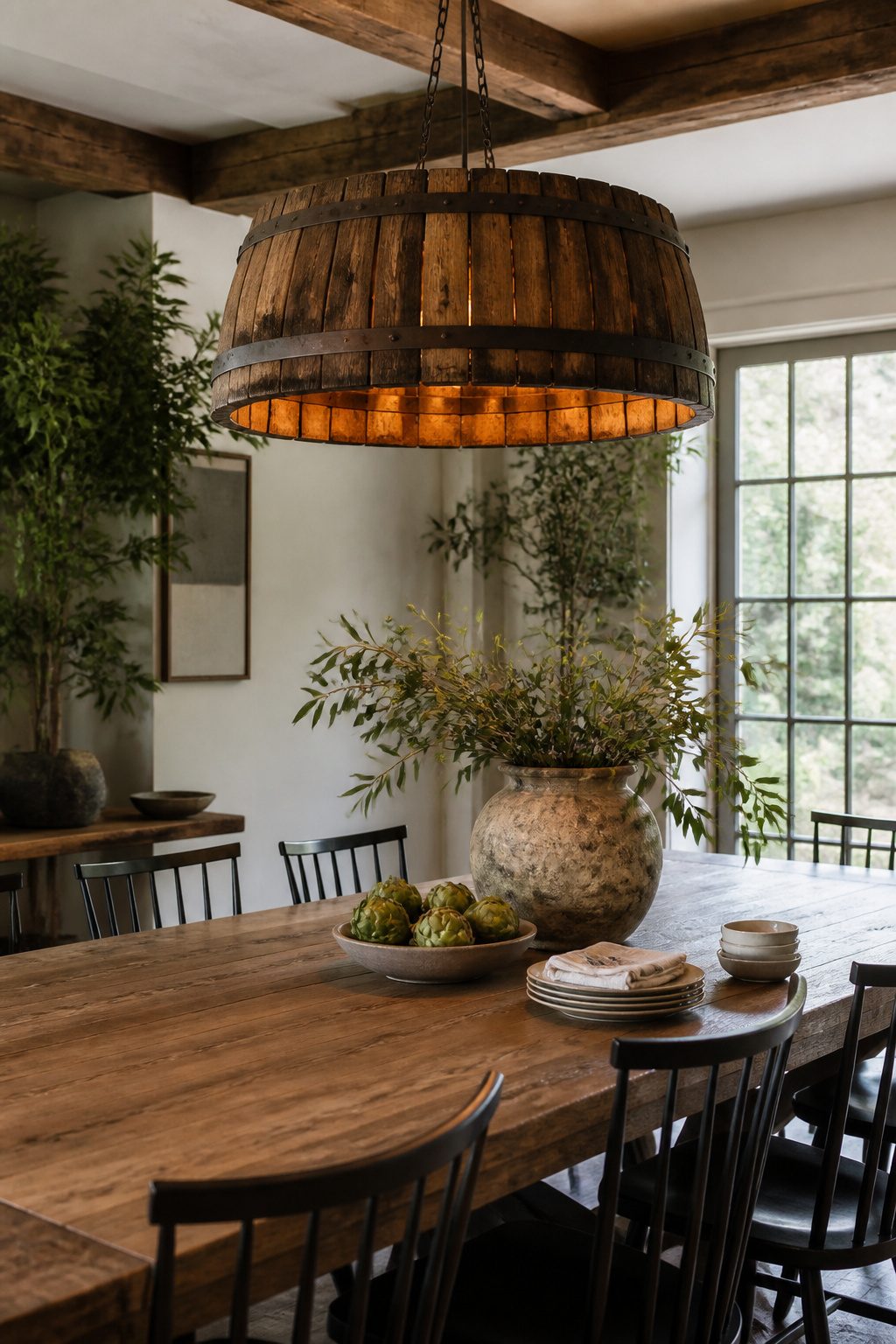
Reclaimed French oak carries a story the new stuff never quite matches. The grain tightens over years of holding wine, and the staves pick up faint stains from the barrel’s life before. Mecox Gardens builds this one from those actual staves, not fresh oak with a dark finish, so the color variation runs real and irregular.
$3,200 puts it well past what most renters spend on a single fixture, and honestly past what most first-home owners do too. The buyer here is someone staying put long enough to amortize the cost, or someone who treats lighting as the one splurge in an otherwise careful room. For a rental, this only makes sense if you own the fixture and plan to take it with you; the landlord is not reimbursing oak staves.
Durability is not the question. French oak in barrel thickness outlasts the hardware that holds it. The risk is style fatigue: a piece this specific can start to feel like a theme restaurant if the rest of the room competes with it. The ones that work keep everything else quiet.
What Wine Barrel Chandeliers Actually Are
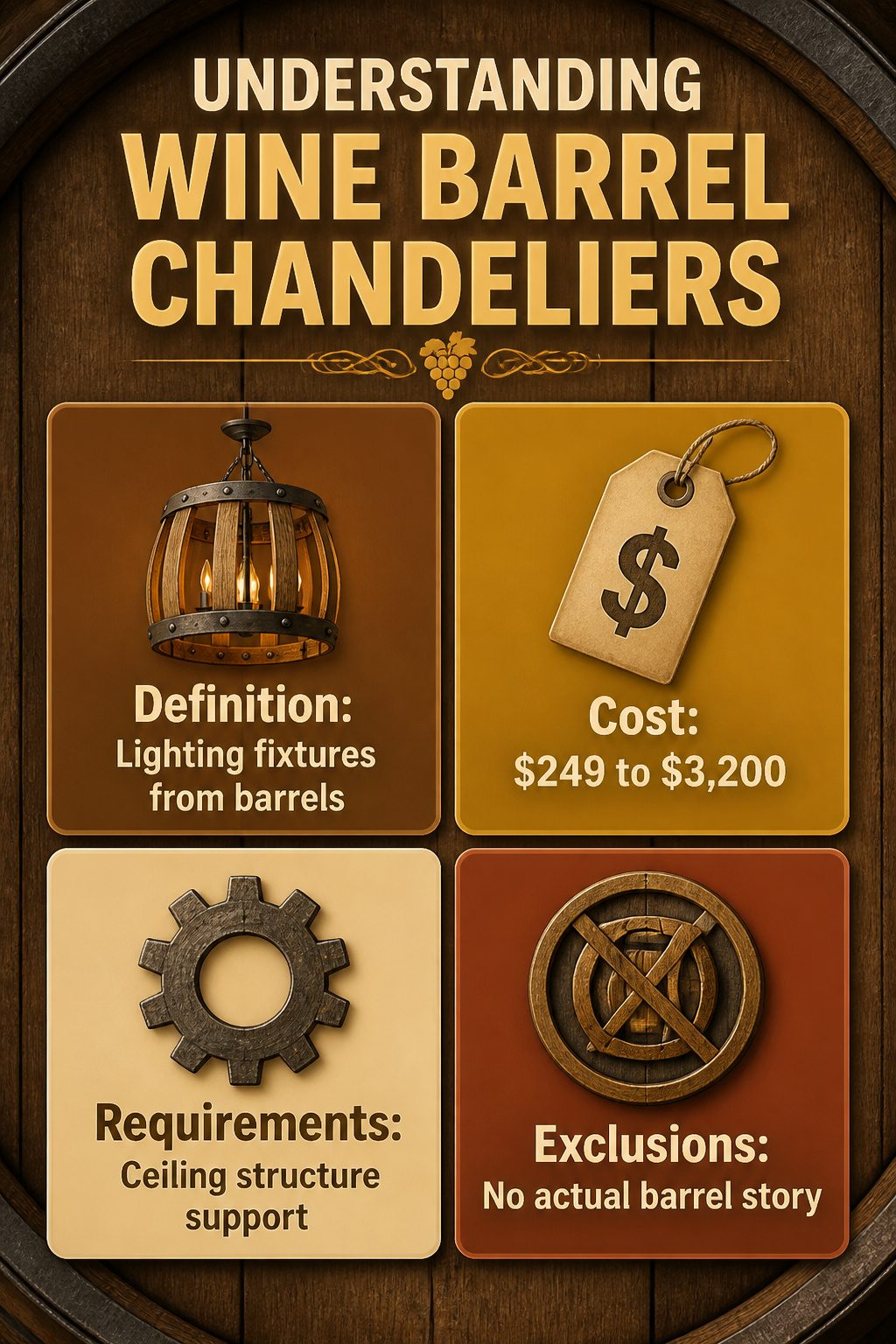
Wine barrel chandeliers are lighting fixtures built from the curved staves and metal hoops of actual barrels that once held wine. The staves form the shade or body, the hoops become the frame, and the whole thing hangs like any pendant light. That literal definition is where the category starts, not where it ends.
I spent an afternoon once sorting through listings and realized how far the term has stretched. Makers now build from reclaimed barrel wood cut into rings, from new oak distressed to look aged, from metal shaped to mimic hoop lines without any wood at all. Some keep the rustic knotty grain front and center; others pair barrel wood with crystal drops or matte black hardware for something closer to industrial farmhouse. The common thread is the visual cue of those curved staves and the story they carry, not a rule about origin.
The expansion makes sense once you shop for one. A true full-barrel fixture is heavy, usually custom, and needs ceiling structure that rental leases do not encourage. Interpretations using barrel wood as an accent, or the shape as inspiration, hit the same mood without the engineering headache.
Where to Buy Them
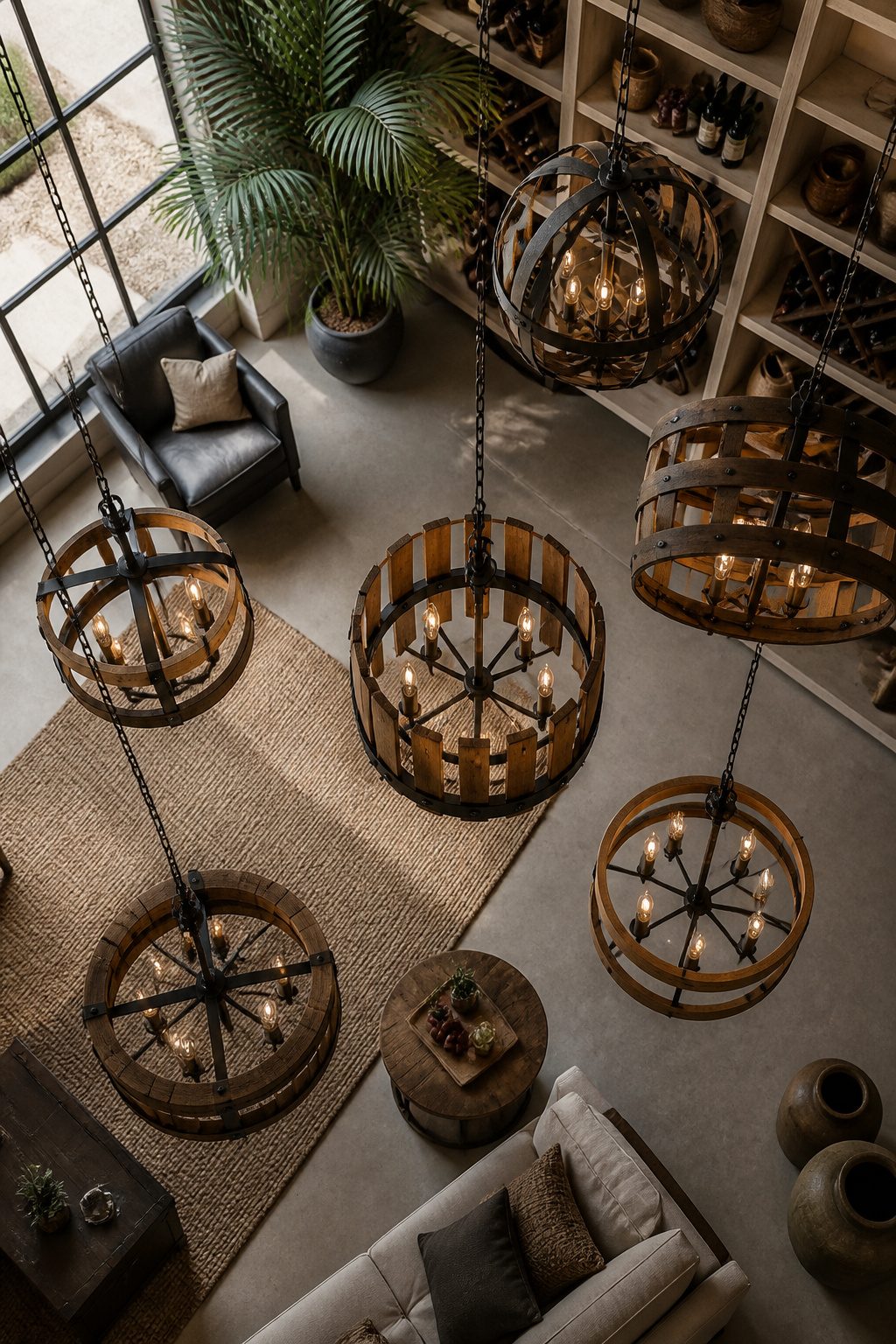
The big-box names still carry wine barrel chandeliers, but Pottery Barn, Crate & Barrel, and Ballard Design stock them less predictably than they used to. I have watched these pieces rotate in and out of seasonal catalogs for a few years now, and the pattern is clear: they land as a limited collection, sell through, and disappear for six months. Crate & Barrel’s last run leaned cleaner, more stripped-down staves; Ballard Design went heavier on the iron banding. Neither keeps them in the standing furniture lineup anymore.
Smaller regional home stores and wine-country gift shops picked up the slack, especially around Napa and the Kentucky barrel belt. That Kentucky connection matters if you are thinking about building one yourself. The same cooperages that supply distilleries sell staves and full heads by the lot, often rough-sawn and still smelling of char. I have priced them against finished chandelier kits and the gap is real, though you are committing to a full weekend of sanding, wiring, and figuring out how six curved boards meet in a circle without collapsing.
Online, the style has fragmented into two lanes: the mass-market reproductions that flood every decor site after a Pinterest spike, and the one-off reclaimed pieces on Etsy and Facebook Marketplace from actual dismantled barrels. The reclaimed ones vary wildly in ring diameter and stave thickness, which is half the point and half the headache. My read is that availability follows the bourbon boom, not the lighting trend, so when distilleries are buying new oak aggressively, the reclaimed market tightens and prices jump.
The Real Price Spread
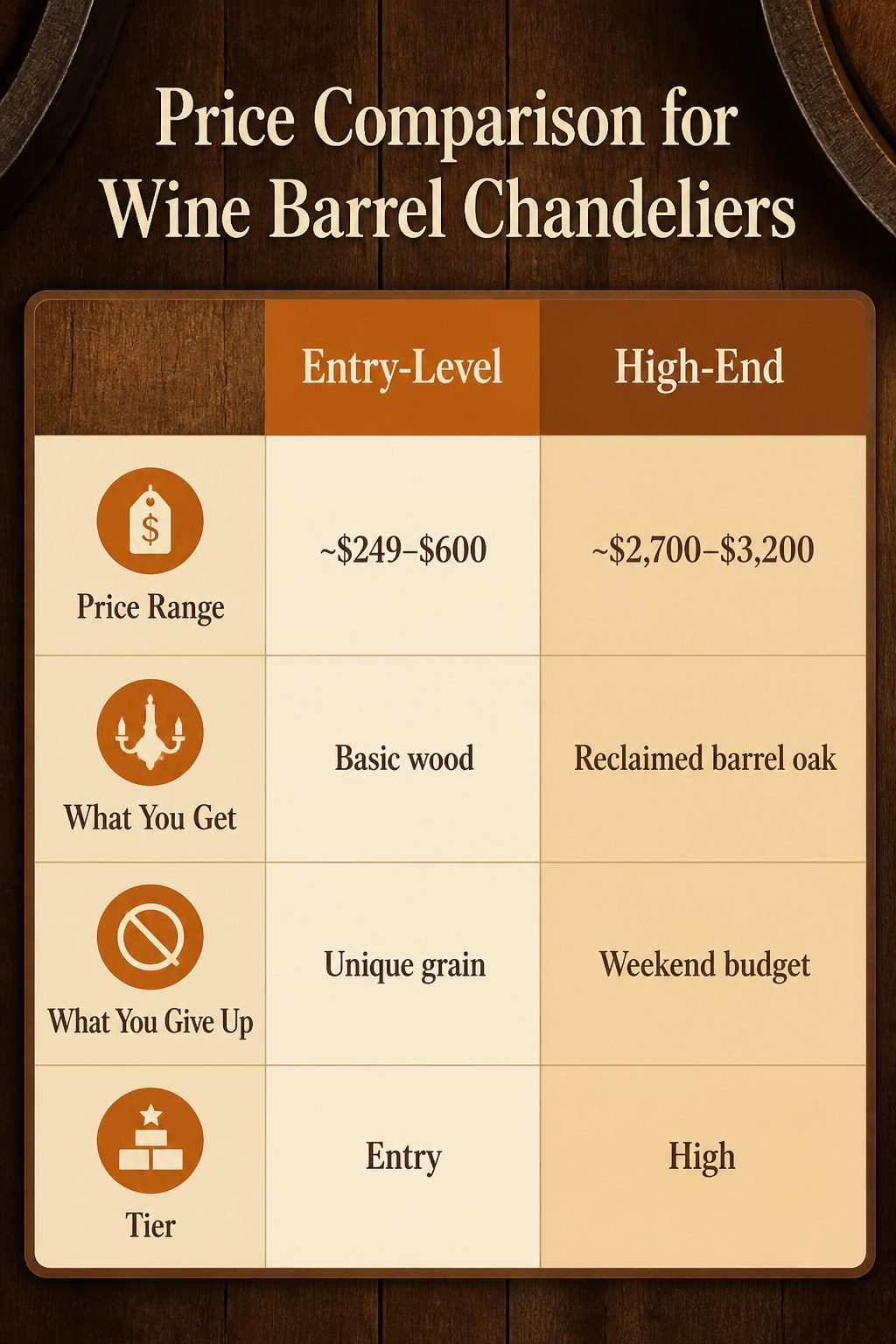
Wine barrel chandeliers sit in a price band so wide it almost loses meaning without context. $249 to $3,200 is the spread I kept seeing, and the gap comes down to four things that are easy to spot once you know to look.
Reclaimed French oak from actual wine barrels drives the top end. The Mecox Gardens 6 Candle piece at $3,200 uses staves and hoops with a waxed rust finish, and that sourcing story costs money. Solid wood construction with turned pendants, like the Maison Luxe Isa at $2,700–$3,075, sits in the same tier even without barrel provenance, because the labor is manual and the material is thick.
Mid-range fixtures trade the reclaimed narrative for design complexity. The Plantation Design Wood & Crystal at $1,495 keeps the rustic frame but adds crystal and cleaner lines. The Layla Grayce Arteriors Louis at $1,398 mixes painted wood with iron in a transitional style. These are factory-made with hands-on finishing, not hand-built from salvaged stock.
At the entry level, simpler construction and less costly materials drop the price. Machine-turned wood, standard metal hardware, and no heritage story gets you under $500.
| Tier | Price Range | What You Get | What You Give Up |
|---|---|---|---|
| Entry | ~$249–$600 | Wood-look or basic wood, standard metal, factory build | Reclaimed materials, hand finishing, unique grain |
| Mid | ~$1,100–$2,000 | Mixed materials, design detail, brand warranty | Provenance story, solid hardwood throughout |
| High | ~$2,700–$3,200 | Reclaimed barrel oak, hand-turned solid wood, artisan construction | Any pretense of a weekend budget |
For a dining room where guests actually look up, I would stretch to the mid tier. The crystal or iron details read intentional from twelve feet below, and the construction holds up to real installation. The top tier pays off only if the barrel story matters to you personally, because the light quality itself does not double with the price.
Frequently Asked Questions
What are wine barrel chandeliers?
Wine barrel chandeliers are lighting fixtures built from the curved staves and metal hoops of actual barrels that once held wine, though the term has broadened to include pieces made from reclaimed barrel wood, new oak distressed to look aged, or even metal shaped to mimic hoop lines without any wood at all. The common thread is the visual cue of curved staves and the story they carry. A true full-barrel fixture is heavy and usually custom, so most ready-made versions use barrel wood as an accent or the barrel shape as inspiration.
Where can I buy wine barrel chandeliers?
Pottery Barn, Crate & Barrel, and Ballard Design still carry them but rotate them in and out of seasonal collections rather than keeping them in standing inventory. Smaller regional home stores and wine-country gift shops around Napa and Kentucky stock them more reliably, and Kentucky cooperages that supply distilleries sell raw staves and heads if you want to build your own. Online, the market splits between mass-market reproductions and one-off reclaimed pieces on Etsy and Facebook Marketplace, with availability tracking the bourbon boom rather than lighting trends.
How much do wine barrel chandeliers cost?
Expect a spread from about $249 to $3,200. Entry-level fixtures in the $249–$600 range use machine-turned wood and standard hardware without a heritage story. The mid tier at $1,100–$2,000 adds mixed materials like crystal or iron plus design detail and a brand warranty. The high end at $2,700–$3,200 buys reclaimed French oak from actual wine barrels, hand-turned solid wood, and artisan construction. For dining rooms where guests look up, the mid tier offers the clearest value; the top tier only pays off if the barrel provenance matters to you personally.