A christmas dining room can run from a $4 thrifted ceramic church to a $50 statement vase that stays until spring, and the deciding factor is whether you need the room to still work for actual dinner.
The pieces that last past New Year’s share one trait: they do not crowd the sightlines. Last year I learned that a 24-inch vase alone outperformed eight scattered accents I ended up boxing before Christmas Eve.
1. Simple Christmas Figurines
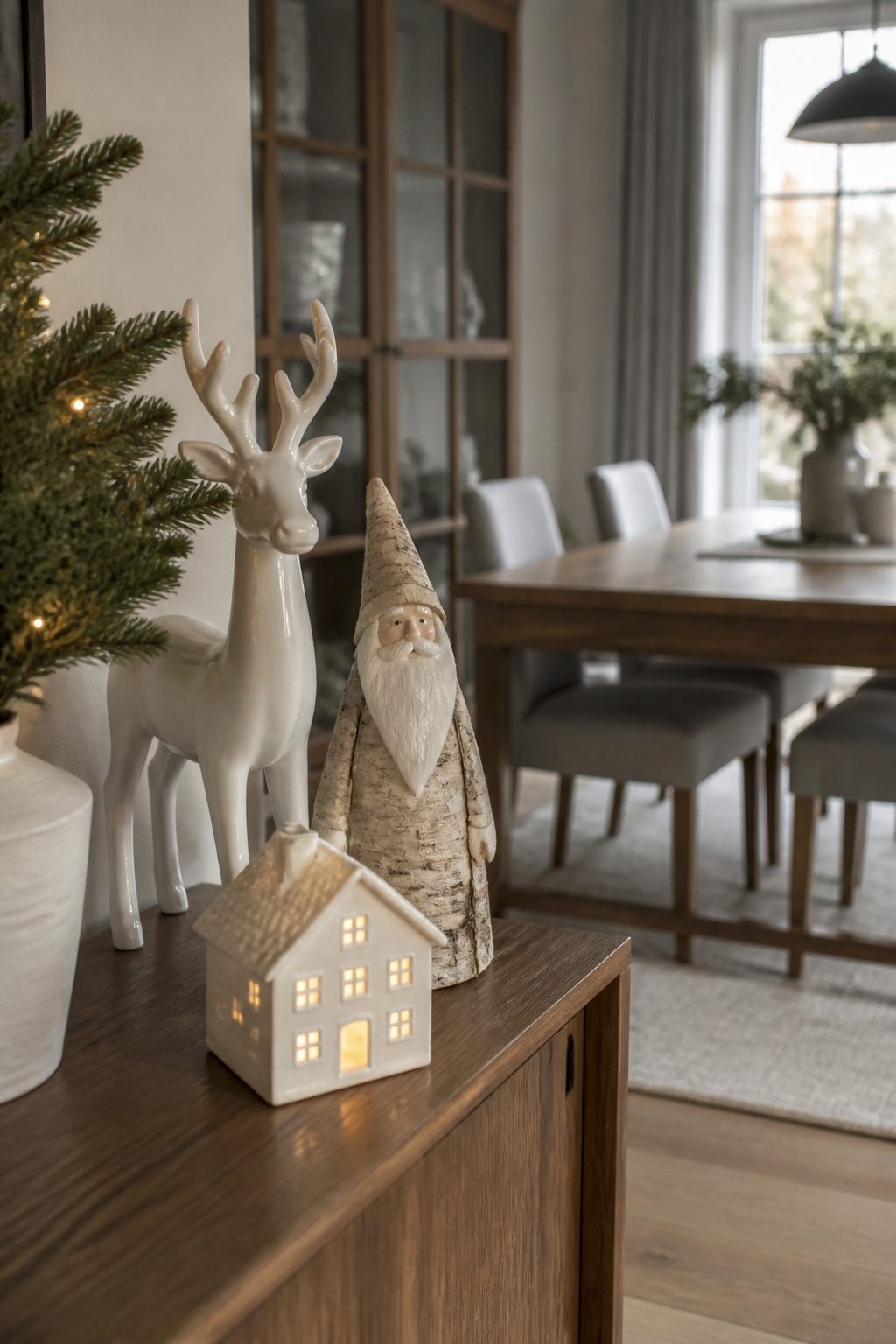
Small figurines do not need to dominate a table to read as festive. A ceramic reindeer, a small birch Santa, a tiny house with a light inside, these pieces sit quietly between plates and glasses without asking for center stage.
I keep mine to three or five, always odd, and always grouped rather than spread out like a parade.
A cluster of three at varying heights on a sideboard draws the eye across the room better than the same pieces scattered down the middle of the table.
The tallest goes in back, the smallest up front, the middle one slightly off-center. That triangle is the whole trick.
Target carries small resin and wood figures for about $5 to $8 apiece each fall, and thrift stores in December are full of ceramic villages and old snowmen for $2 to $15.
I bought a tiny painted church at a Salvation Army last year for $4, and it anchors the grouping now. The mismatched paint and slightly chipped roof read as history, not damage, next to cleaner new pieces.
The limit is real: past five figurines in one room, even a dining room, and the eye stops resting anywhere. I tried a full mantel lineup once and ended up boxing half of it before Christmas Eve.
Three on the sideboard, maybe one small piece on a window sill if the room is large, and the table itself stays clear for actual dinner.
2. Large Statement Pieces
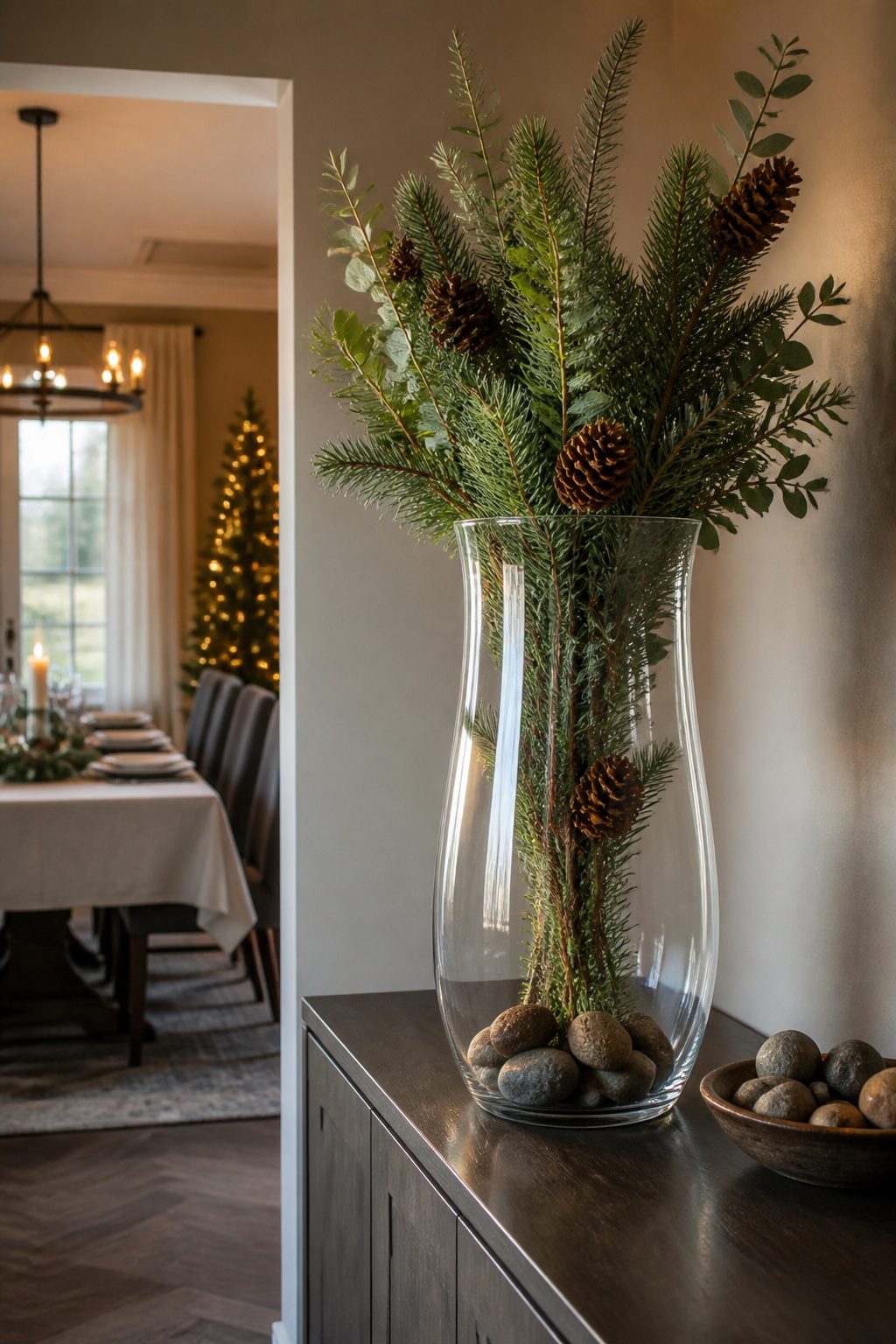
A single oversized piece anchors a christmas dining room better than a cluster of small ones crowded across the sideboard. Last year I tried the scatter approach: a tiny reindeer, two taper holders, a ceramic tree, a framed print.
The result looked like a yard sale that happened indoors. This season I switched to one 24-inch vase that cost $50 and left everything else in storage.
The eye goes straight to it. The rest of the room stays clean, and the piece works past New Year’s without a wreath or holly anywhere near it.
Eight $10 accents would have run the same money and needed packing by January. The vase stays until spring.
3. Ambient Lighting
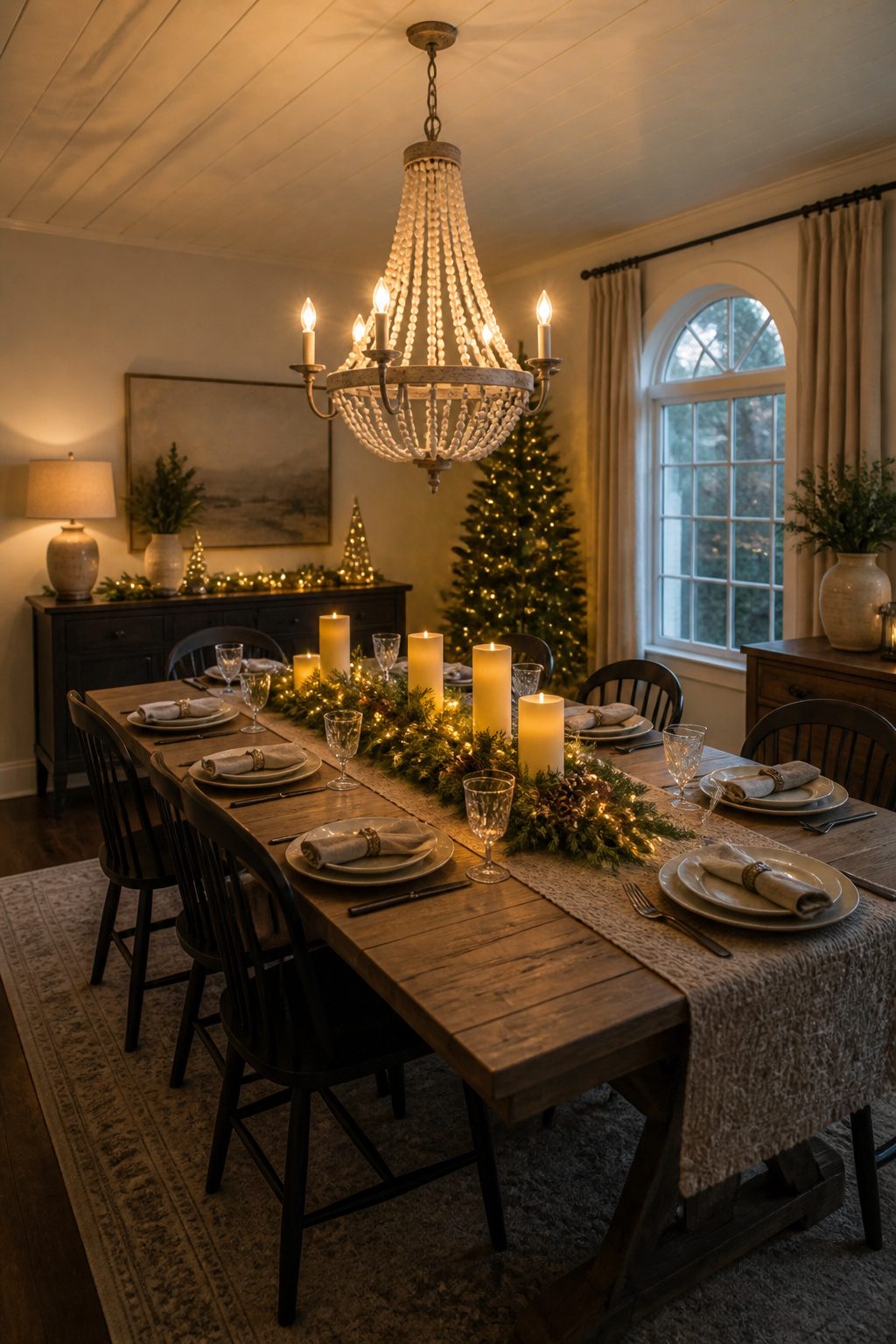
A lamp on the sideboard does more for a dining room at Christmas than most ornaments ever manage. Soft light against winter darkness is the whole point.
I keep a pair of cheap plug-in dimmers in my holiday bin for exactly this: renter-friendly, no wiring, and the difference between a room that glows and one that glares is about six dollars.
Overhead, the Distressed White Sadie Beaded Chandelier handles the heavy lifting if your rental came with something builder-grade and sad.
The beads catch light sideways, so the room feels lit from everywhere at once instead of one hot spot in the center.
On the table itself, 15 to 20 tree candles is the workable range for most dining rooms, maybe fewer if your table seats four, a few more if you regularly feed ten.
Battery-operated ones have improved enough that I stopped fighting the real thing; no wax on the runner, no one leaning over open flame to pass potatoes.
String fairy lights through a bare tree in the corner if you have one, skip the ornaments, call it done. The Christmas police will not arrive.
4. Minimalist Tree Decoration
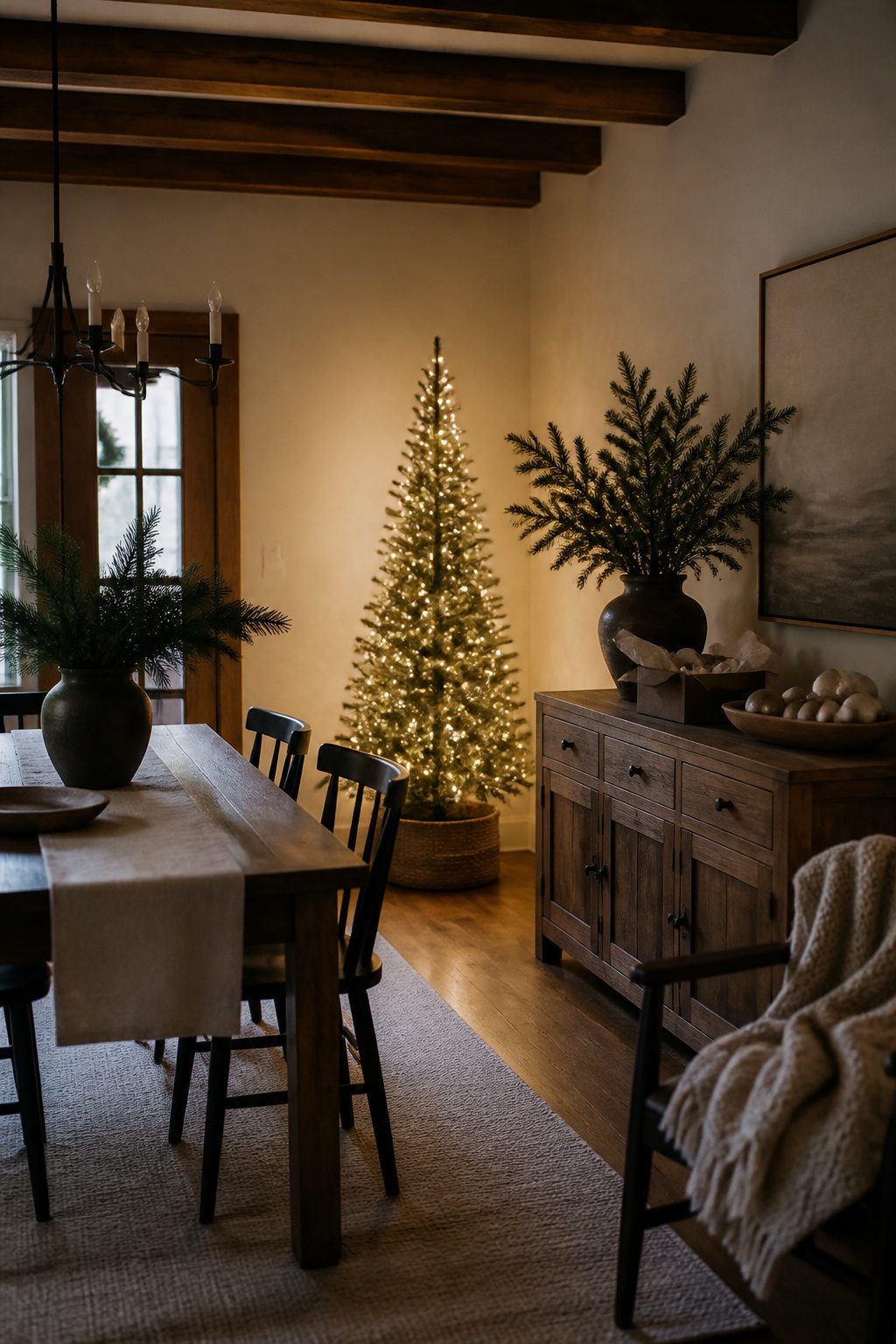
A full-size tree in the corner of a dining room pulls the eye up and gives the whole space a center of gravity without touching the table.
I have seen this work best when the ornaments stay simple: a single color of ball, or nothing but lights. The Christmas police will not show up if you skip ornaments entirely.
Twinkly fairy lights and maybe a few battery-operated candles do the job, and the result is ambience without the fuss of a crowded surface.
If the room is small or the table needs to stay open for actual meals, a mini tree on a sideboard or cabinet keeps the sightline clear. For something even more compact, a potted tabletop version works as a centerpiece.
The plastic pot it comes in looks cheap; wrapping it in fabric or hessian takes two minutes and reads intentional.
Either scale keeps the dining room functional, which matters more than it sounds when you are trying to pass potatoes across a table half-blocked by branches.
5. Low Centerpieces
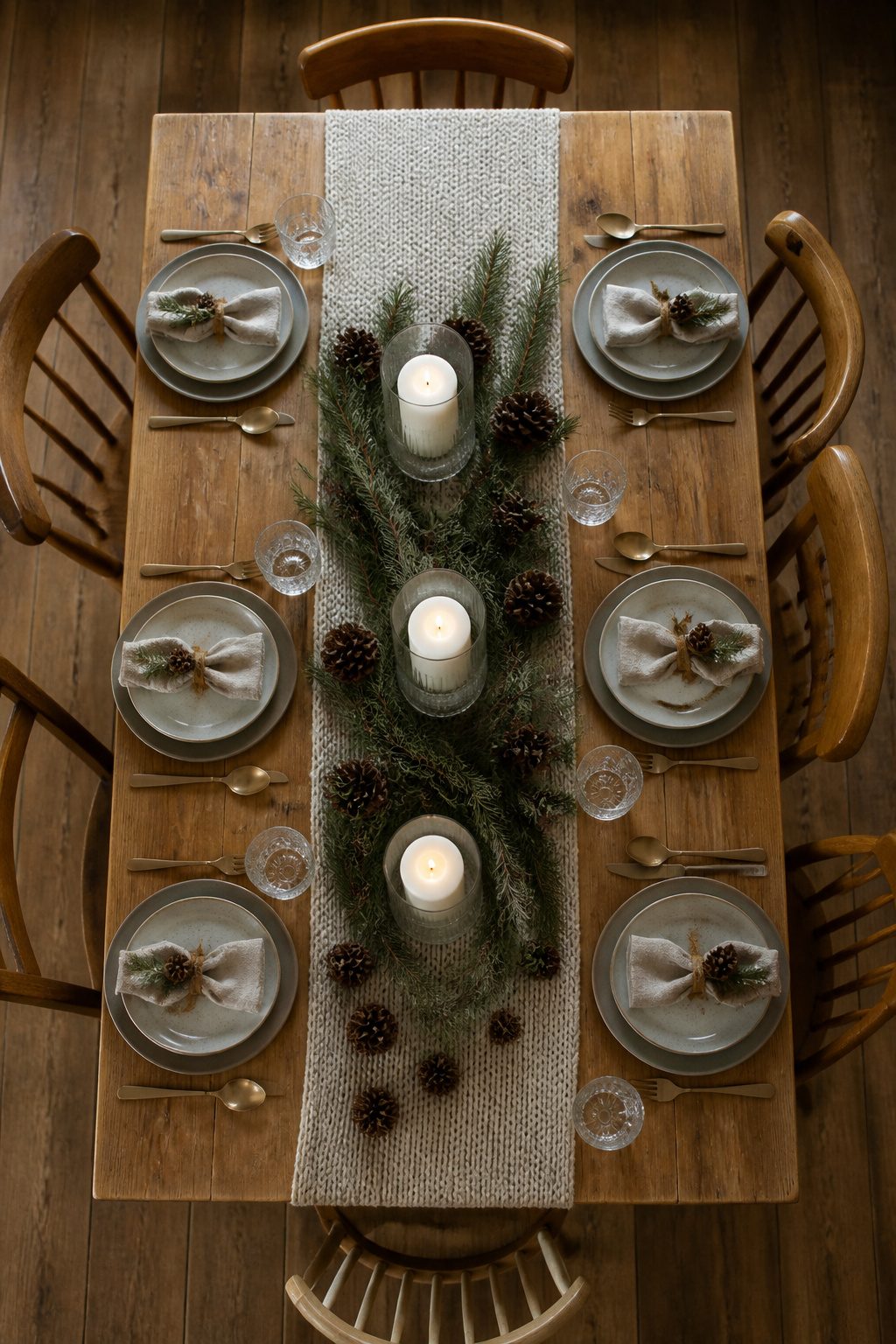
A centerpiece that blocks the person across from you defeats the whole point of gathering at a table. Keep it under 14 inches tall and the conversation flows without anyone bobbing around a floral tower.
Last year I laid a faux Norfolk pine garland straight down the middle of my table, no shaping required, and dropped three white pillar candles in glass holders at uneven intervals.
The greenery gave height without bulk, and the knit table runner underneath added the kind of texture that reads winter without shouting holiday. Nothing to dust, nothing to water, nothing to store carefully in a box marked "fragile."
Small ornaments on a cake stand or in a low bowl work the same way. Spread the visual weight horizontally instead of building it up, and you still get a focal point that leaves faces visible.
The reindeer plates I pull out each year sit right on top of the runner, and the whole setup takes maybe ten minutes. Practical first, pretty second, or the decor starts working against the room.
6. Everyday Dinnerware
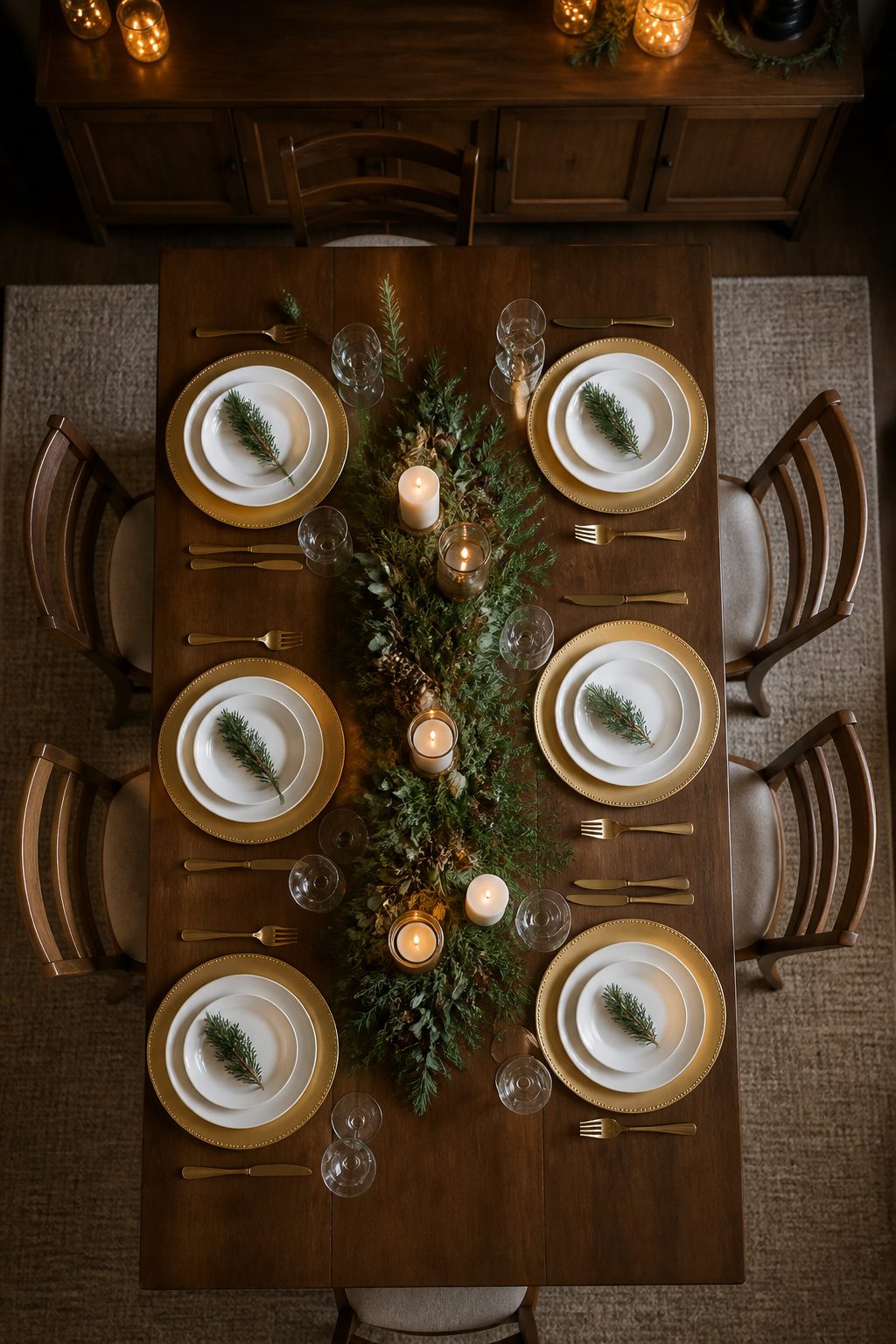
White or cream dinnerware already lives in most cabinets, so the question is how much holiday-specific storage you really need.
A single gold charger under each plate, picked up for a few dollars apiece at estate sales or thrift stores, shifts the same dishes into December mode without demanding a second set.
Vintage wine glasses with a little weight to the stem do the same work; they read festive against a neutral plate even without a Christmas tree printed on the rim.
The tradeoff is real. A full holiday china set runs about the same hundred dollars as a quality neutral set, then sits in a box eleven months of the year.
One charger and a glass you already own cuts that to storage space you almost cannot measure. I have watched friends unpack boxes of themed dishes on December first and repack them exhausted by January second.
The neutral route skips both rituals.
A sprig of greenery tucked through a napkin ring or laid across the charger finishes the place setting. That single living element does more to signal the season than printed holly ever managed, and it compostes when the meal ends.
7. Cohesive Foliage
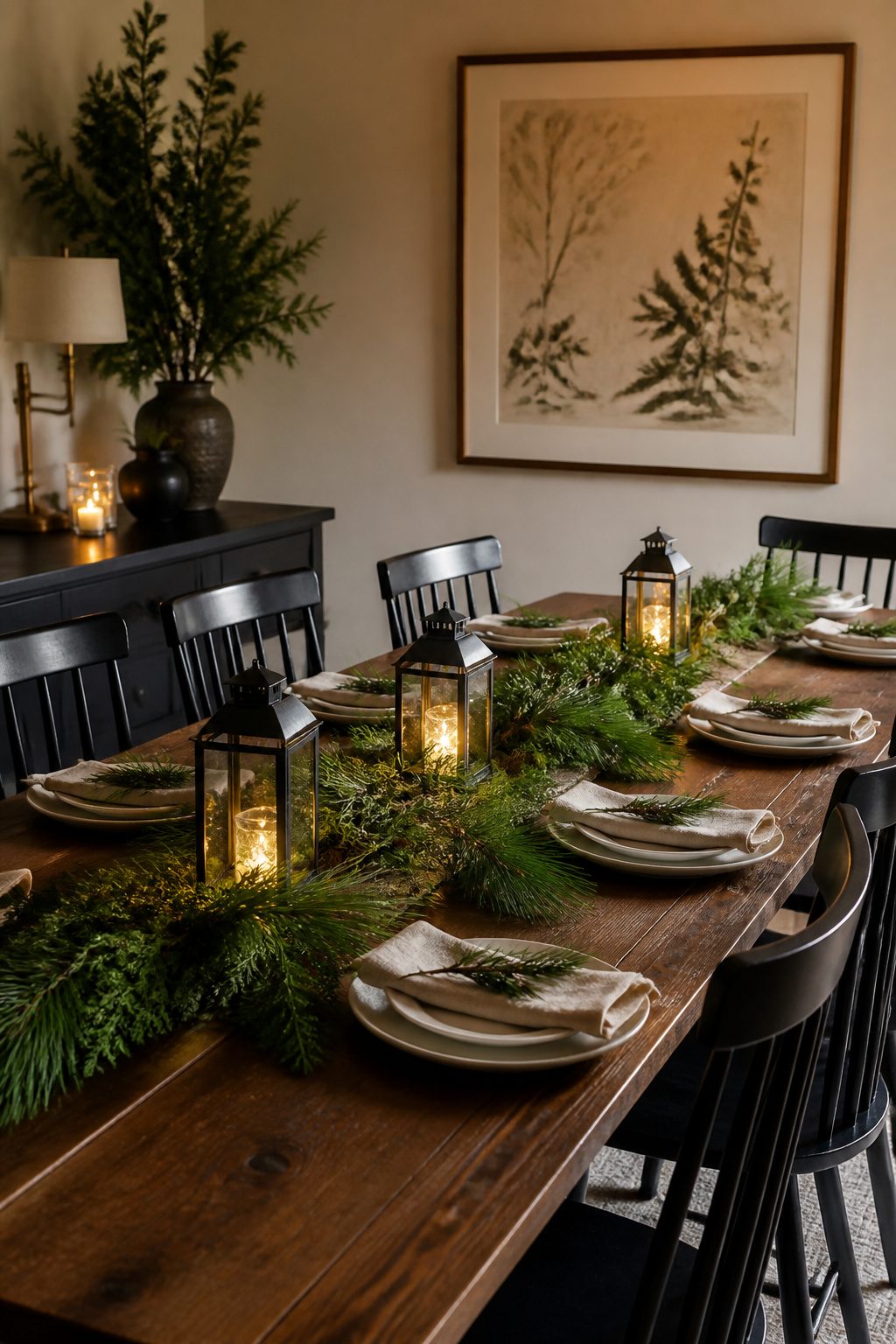
A faux Norfolk pine garland running the length of the mantel, echoed by fresh pine branches down the center of the table, reads as one gesture instead of two competing ideas. The trick is one type of green, repeated.
Mixing real and faux works only when the eye cannot tell where one stops and the other starts, and that happens when the variety stays narrow.
I learned this the hard way one year with cedar, boxwood, and eucalyptus all fighting for attention; the room felt like a garden center, not a dining room.
Storm lanterns with battery-operated fairy lights wound through the same garland extend the foliage onto windowsills without adding new textures. A sprig tucked into each napkin ring carries the thread to every place setting.
The faux picks hold up for years, while the fresh branches give the scent and slight irregularity that keeps the arrangement from looking plastic.
Replace the large display with something lower when guests sit down; the greenery stays, but the sightlines open up.
8. Red Ribbons and Wreaths
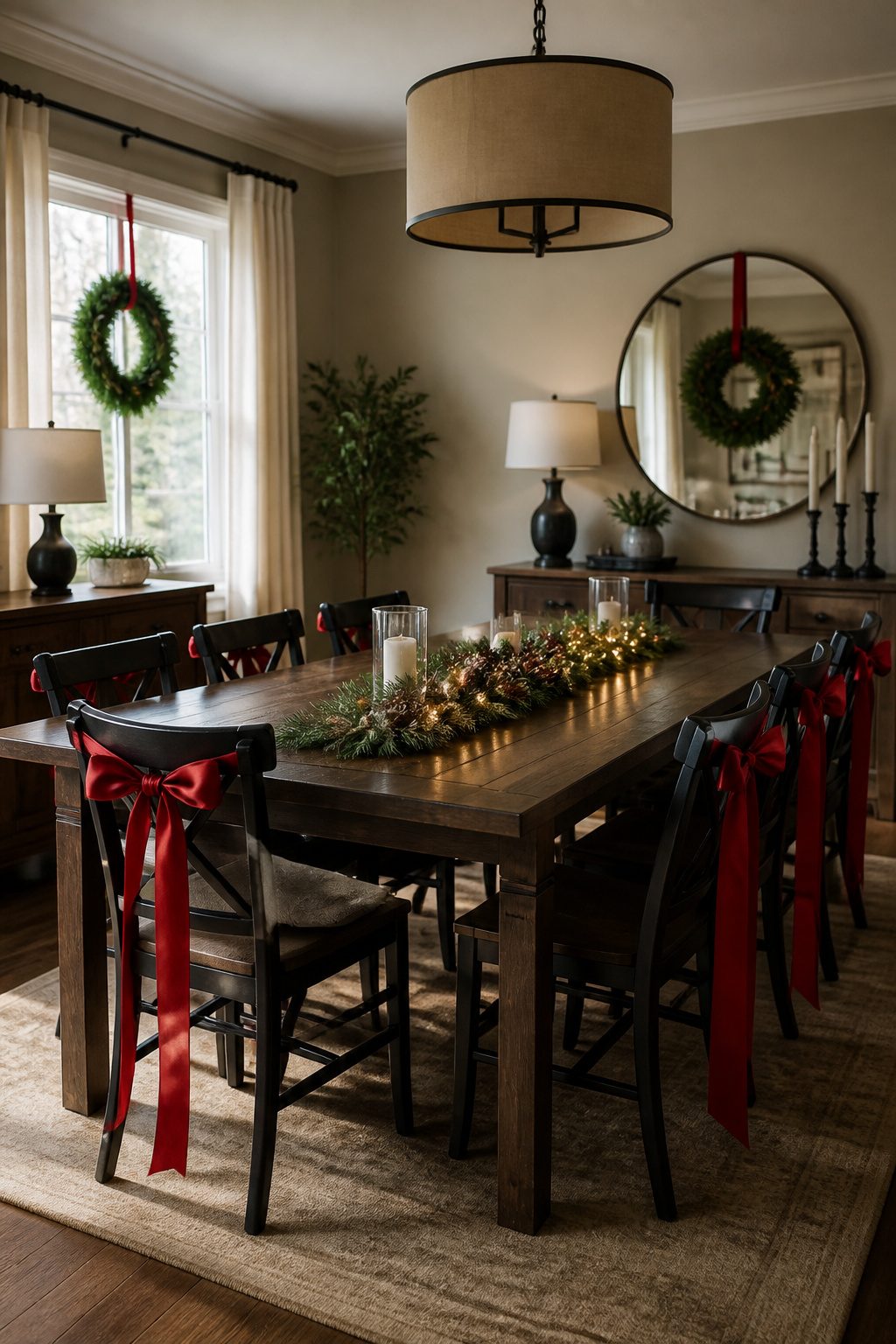
A single red, used three times or more, turns scattered holiday items into a plan.
The first year I tried this, I tied scarlet ribbon on every chair back and hung nothing else; the room still felt finished because the color carried.
Wreaths work the same way. One on the window, another on the mirror, a smaller one on the cabinet door: the repetition reads intentional, not leftover.
Chair-back wreaths secured with matching ribbon pull the eye around the room instead of leaving it stuck at the table.
White ribbon from the light fixture to match the wreath is another route, though I lean toward red for the warmth it throws against winter light.
Faux greenery keeps the weekend timeline real; fresh branches demand water and drop needles by New Year’s.
The pared-back look, the one that avoids clutter, comes from restraint in the greenery and commitment to that one color carried through three placements minimum.
9. Rustic Natural Theme
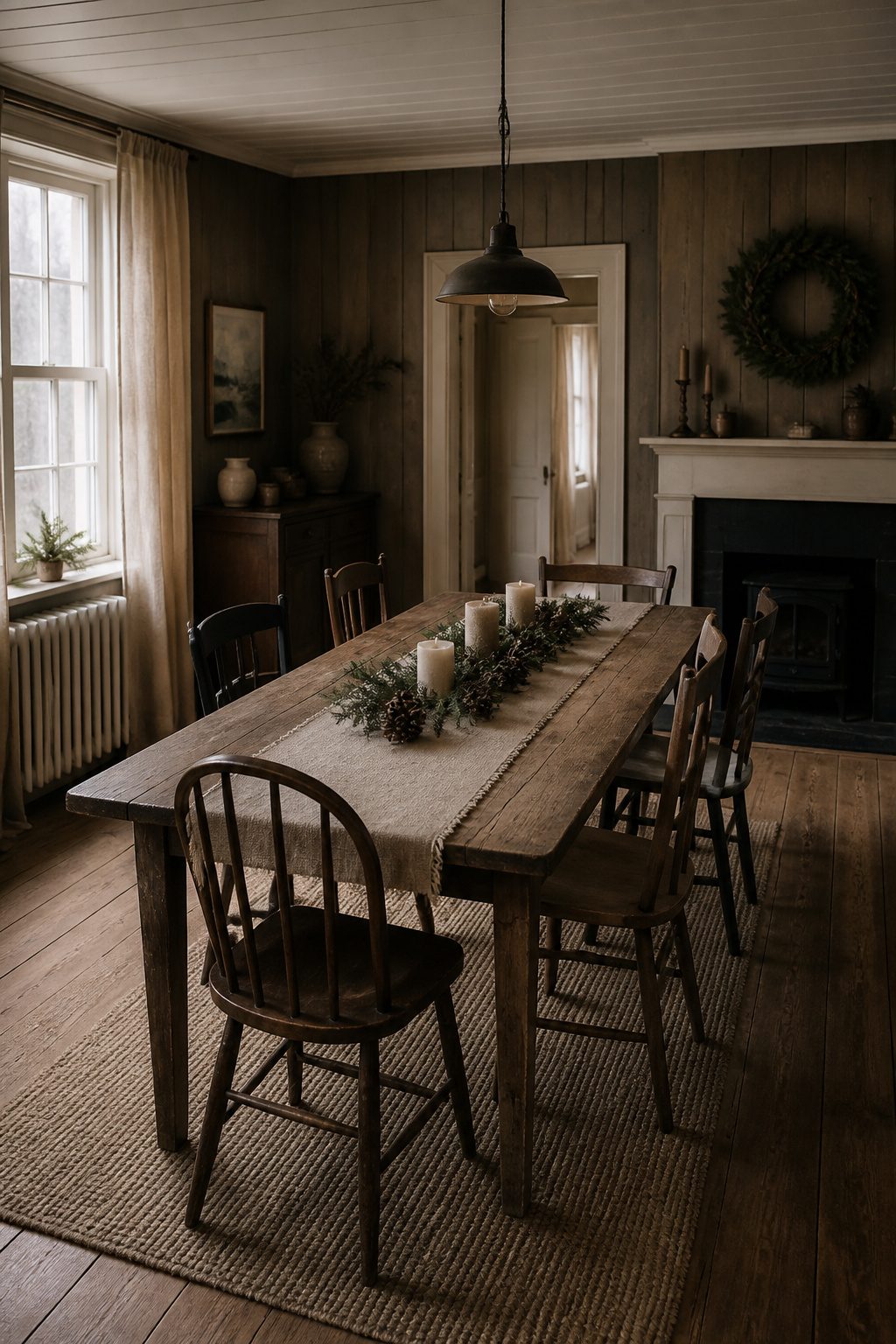
Raw wood surfaces and unbleached cotton read as intentional rather than unfinished, which is what makes this style forgiving.
A cotton table runner with a loose weave costs about twelve dollars at most craft stores and looks better after a few washes, not worse.
Pinecones gathered from any yard do the heavy lifting for texture; I scatter them down the center of the table with a few sprigs of fir and call the centerpiece done.
The trick is matte finishes on every surface, including candles. Glossy pillar candles fight the whole point.
Thrifted wooden bowls or cutting boards fit here without apology. Their knife marks and water stains become the story, not a flaw to hide.
I skip anything that needs to match. Two chairs from one estate sale, a third from another, all in different stains, work fine if the finishes are all low-sheen.
This is also the style where handmade elements survive best. Paper garlands cut from brown grocery bags, strung with twine, look like you meant the rough edge.
They do not look like a compromise. That distinction matters when the budget is real and the timeline is Saturday morning to Sunday evening.
10. Hanging Centerpieces
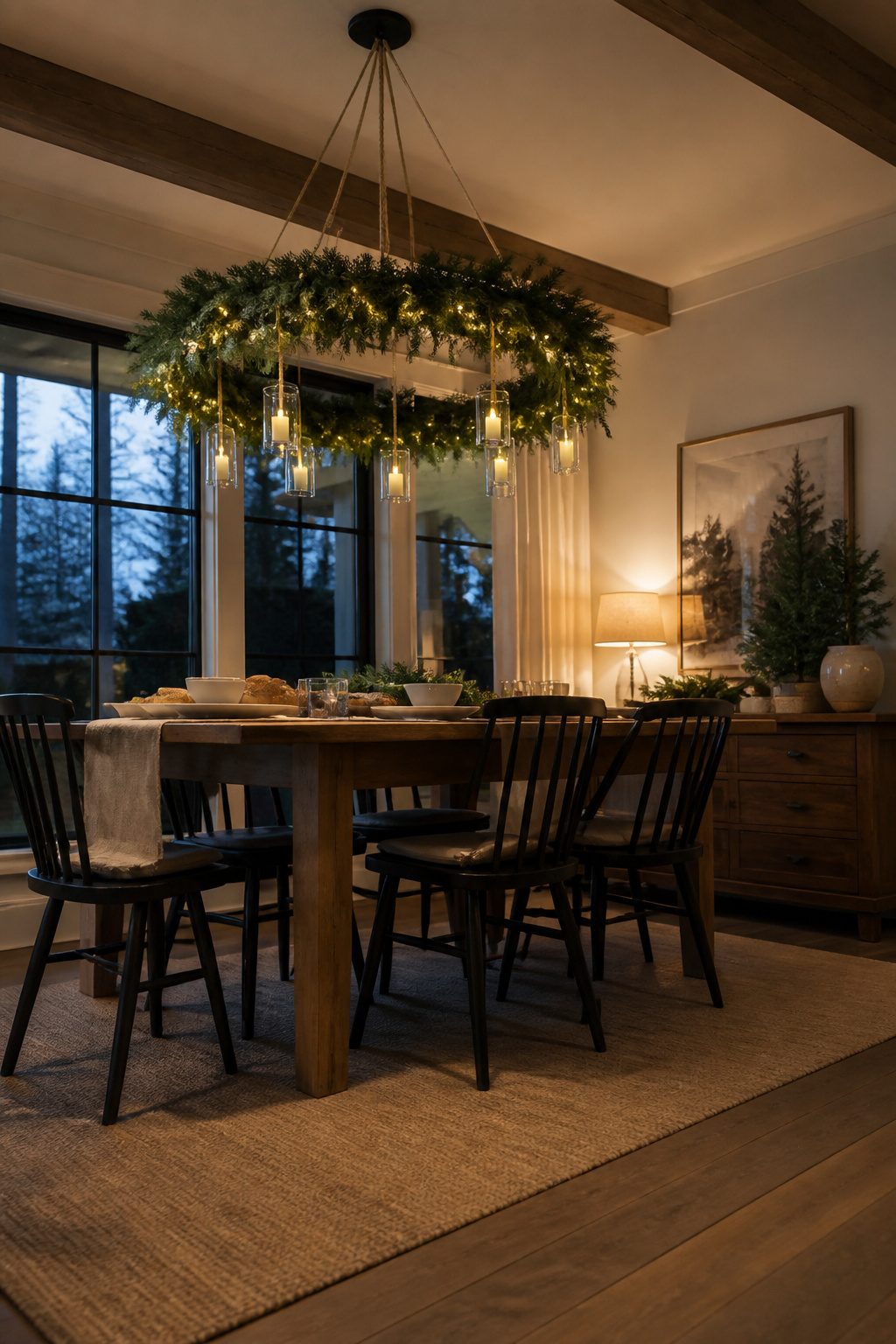
A suspended centerpiece over a small table is the single best way to keep Christmas dinner from turning into a game of peek-a-boo around a vase.
Claire Hornby at Barker & Stonehouse suggests stringing fresh greenery and twigs overhead, accented with glittery baubles and twine, while fairy lights and layered candlelight on the table itself handle the glow below.
The surface stays clear for plates, serving dishes, and the actual business of eating.
A simple wooden hoop or a found branch from the yard gives you the armature; wire the greenery in place rather than trusting it to drape naturally.
Over-the-table rods exist too, and one blogger wrapped hers with lights and garland for the same effect.
The trick is weight: keep it light enough that a ceiling hook or a tension rod between walls can take the load without drama.
Candles suspended in glass holders look magical, but the open flame overhead makes me nervous; battery-operated tapers or the fairy-light route win for anyone who plans to relax during the meal.
The whole arrangement stays up through New Year’s if you want it to. Swap the table settings underneath for everyday meals and the room still reads festive without fresh effort every Saturday night.
11. Seasonal Flowers and Candles
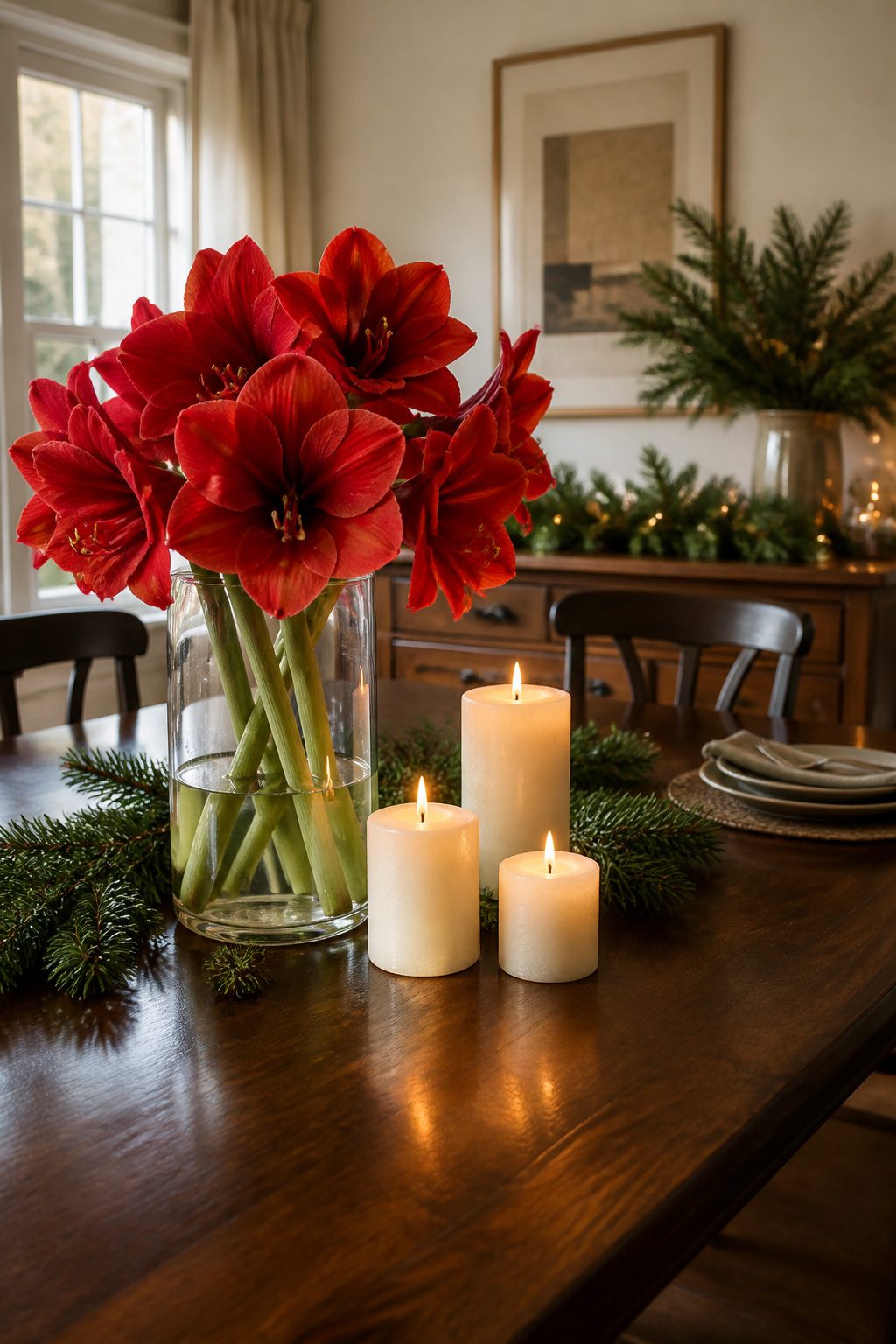
Living flowers and candlelight together do something neither manages on its own.
The flame picks up the depth in a dark red amaryllis or makes paperwhite petals look almost translucent, and the plant keeps the candles from feeling like a staged restaurant table.
A $12 grocery carnation bunch in deep red, dropped into a plain cylinder vase, reads as intentional against two or three white pillar candles.
The candles do not need to match in height; a two-inch difference between them stops the setup from looking too arranged.
Paperwhites force easily in any shallow dish with pebbles and water, though their smell divides rooms sharply.
Amaryllis takes longer to open but gives you two weeks of bloom once it starts, and the bare stem works with minimal containers that disappear on the table.
Cost lands around $20–$40 total, depending on whether you already own basic pillar candles. The living element means you are not storing another decoration come January.
12. Christmas Tree Placement
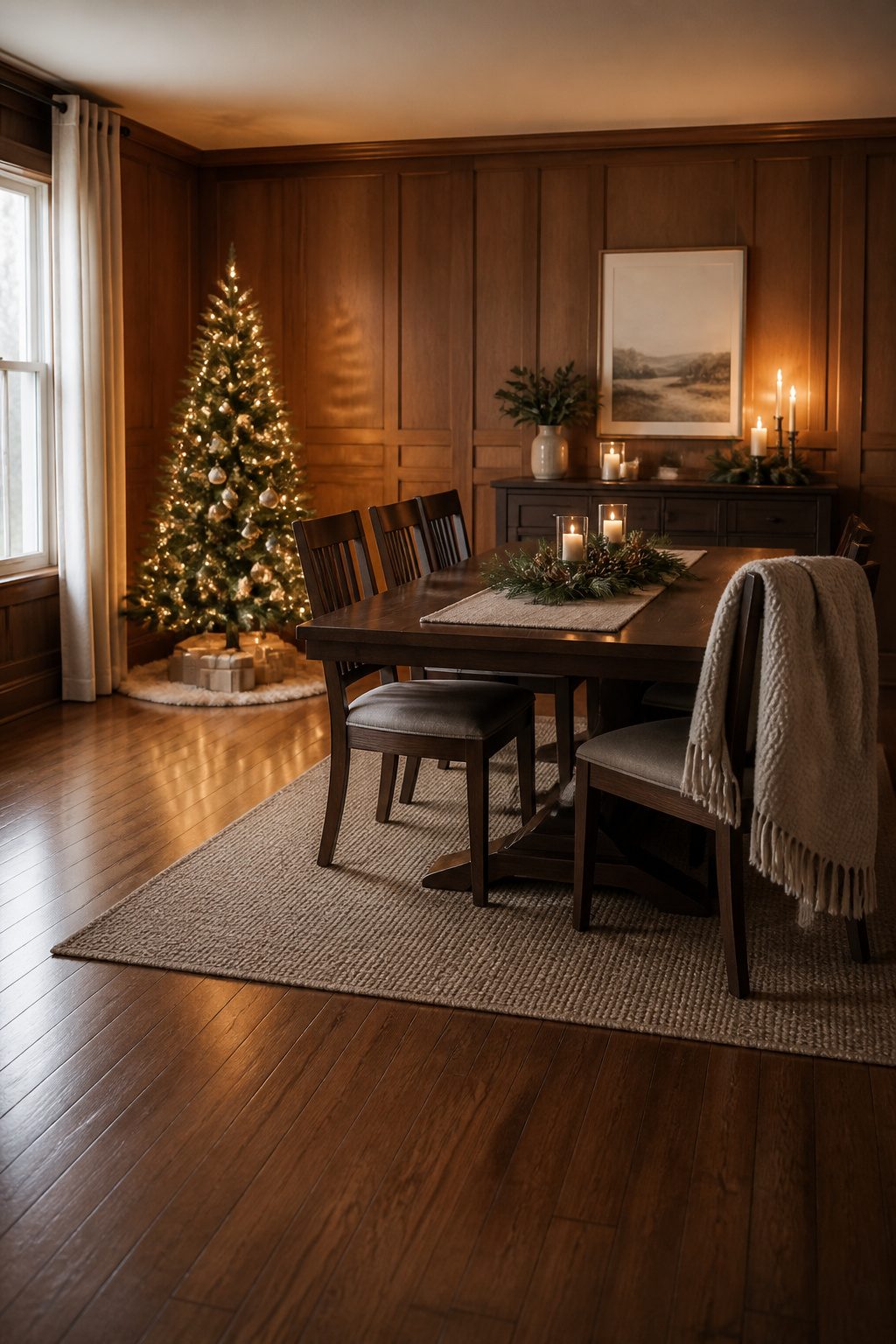
A corner near a window is where a Christmas tree actually earns its place in a dining room.
The sightline from the table stays open, and you are not running extension cords across the floor where someone will trip with a gravy boat in hand. That last part happened to me, or nearly enough.
Small dining rooms do not get ruled out. A slim 4-5 foot tree fits the same corner without swallowing the room, or a half-tree flat against the wall gives you the silhouette from the side that people actually see.
Mini trees on a sideboard or windowsill work too, though I would skip the plastic pot as it comes; wrap it in fabric or hessian so it does not look like you grabbed it from the grocery store on the way home.
Before buying anything, measure the floor space at home and compare it to the tree’s listed footprint, not its height.
A six-footer with a thirty-inch base in a twenty-four-inch corner means the thing lists all season or you are pruning branches to make it stand straight. The numbers take two minutes.
Guessing is what leaves you wedging furniture into odd angles to compensate.
13. Decorative Swags for Seating
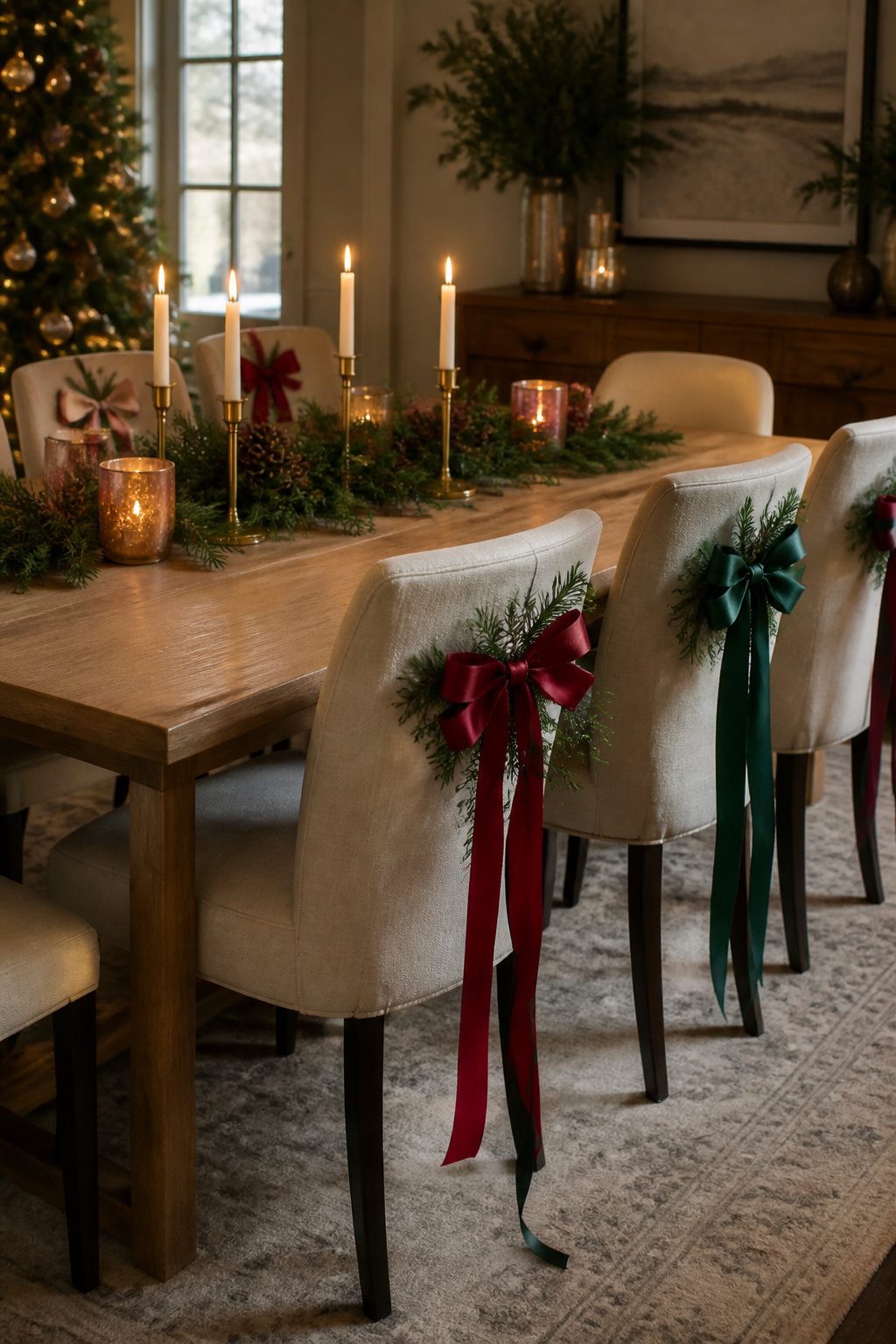
A wired ribbon swag on the back of every chair turns a plain dining set into something guests photograph without you asking.
Florist wire is the only fastening that leaves zero mark on rental upholstery, which matters more than I thought until my last lease inspection.
Three to five dollars of ribbon or an eight-dollar faux greenery swag per chair covers the whole effect.
The wired edge matters; cheap ribbon flops against the chair back like a limp handshake, and guests notice up close precisely because they are sitting there, bored, waiting for the potatoes to pass.
I tie mine slightly off-center so the tails hang at different lengths, which reads as intentional rather than sloppy. Faux greenery saves the headache of needles dropping into seat cushions by dessert.
The whole job takes ten minutes once you cut everything to length, and it stores flat in a shoebox until next year.
Color Schemes That Actually Work
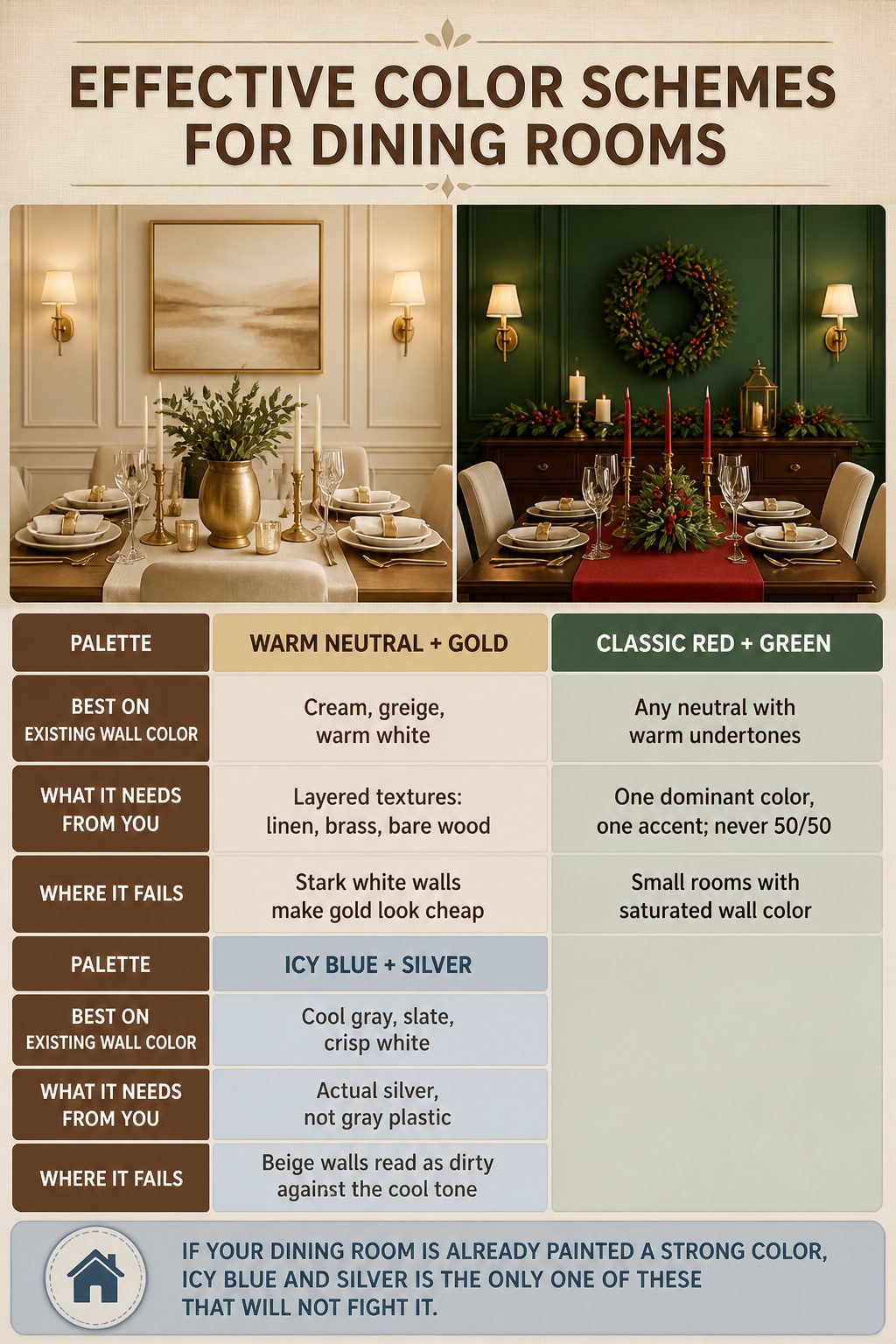
The wall color behind your table matters more than the ornaments on it.
A warm neutral room with cream or greige walls turns a gold-accented scheme into something that glows after sunset, but the same gold reads gaudy against stark white.
Red and green needs at least one neutral surface to rest on; two saturated walls plus a red table runner and the room starts to vibrate.
Icy blue and silver is the most forgiving on beige or gray rooms, though it can look rented if your trim is already bright white.
| Palette | Best on existing wall color | What it needs from you | Where it fails |
|---|---|---|---|
| Warm neutral + gold | Cream, greige, warm white | Layered textures: linen, brass, bare wood | Stark white walls make gold look cheap |
| Classic red + green | Any neutral with warm undertones | One dominant color, one accent; never 50/50 | Small rooms with saturated wall color |
| Icy blue + silver | Cool gray, slate, crisp white | Actual silver, not gray plastic | Beige walls read as dirty against the cool tone |
If your dining room is already painted a strong color, icy blue and silver is the only one of these that will not fight it.
What I Spend and Where I Shop
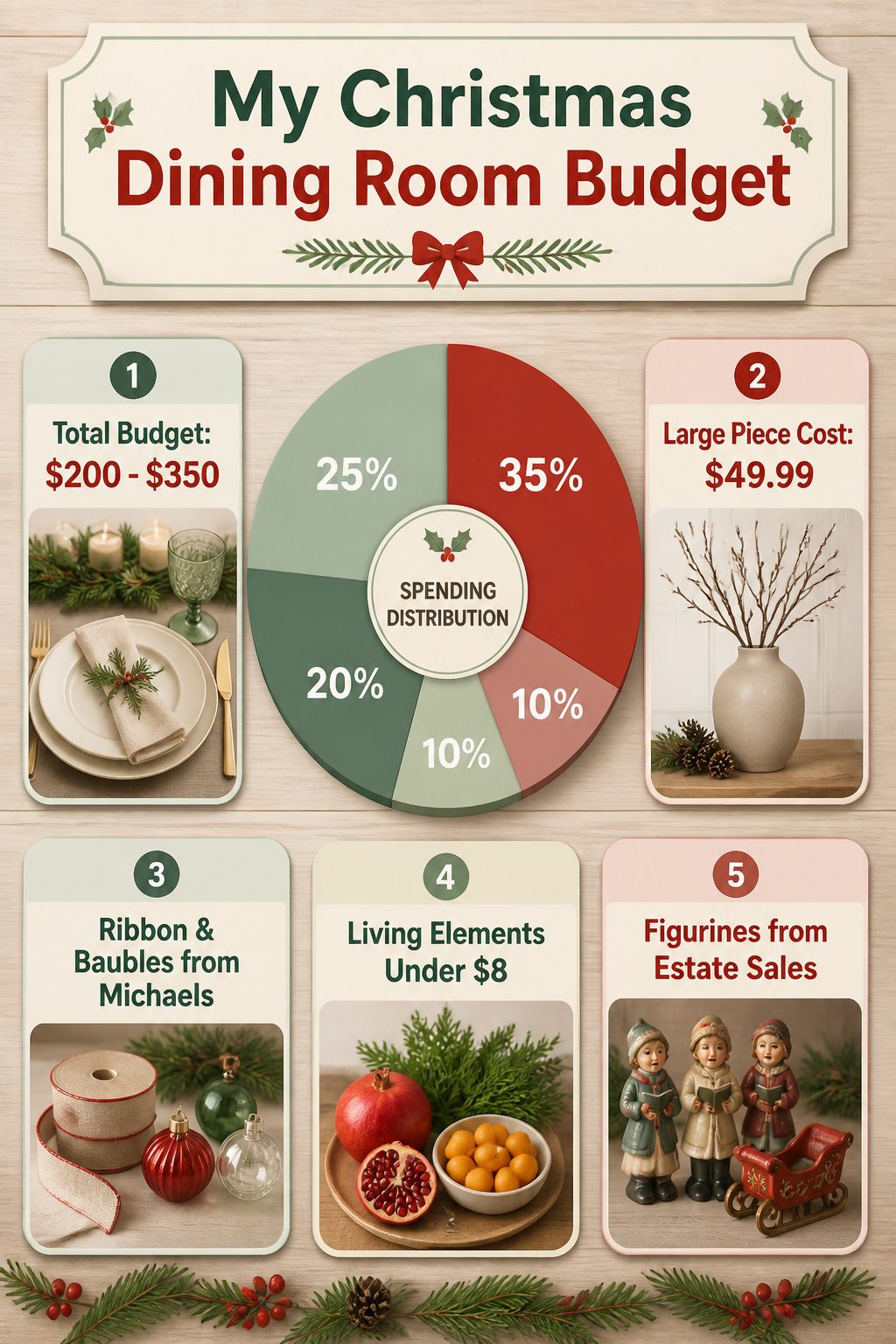
A full Christmas dining room reset runs me about $200 to $350, and the spread matters more than the total.
The single biggest bite is always one large piece: last year, a matte ceramic vase from Target’s Hearth & Hand line that sat $49.99 and now holds bare birch branches every January through March. Everything else clusters under $15.
Michaels gets my ribbon, wire-edged linen in two widths and any glass baubles that read more hand-blown than craft-bin. Their seasonal coupons cycle weekly; I buy nothing there at full price.
Grocery stores supply the living elements: pomegranates, kumquats, clipped cedar from the floral case at Trader Joe’s, usually under $8 a bundle. The cedar dries nicely and gets tucked into storage bins for next year’s base layer.
Estate sales are where the $3 to $5 figurines live. Ceramic carolers, a small painted sleigh, the kind of thing that would cost $22 new and look identical.
I keep these in a labeled bin with the cedar, and that reuse is what drops the annual spend closer to $200. The vase never gets stored; it just shifts contents.
Without that year-to-year carryover, the same look would push past $400 fast.
Weekend Setup Order
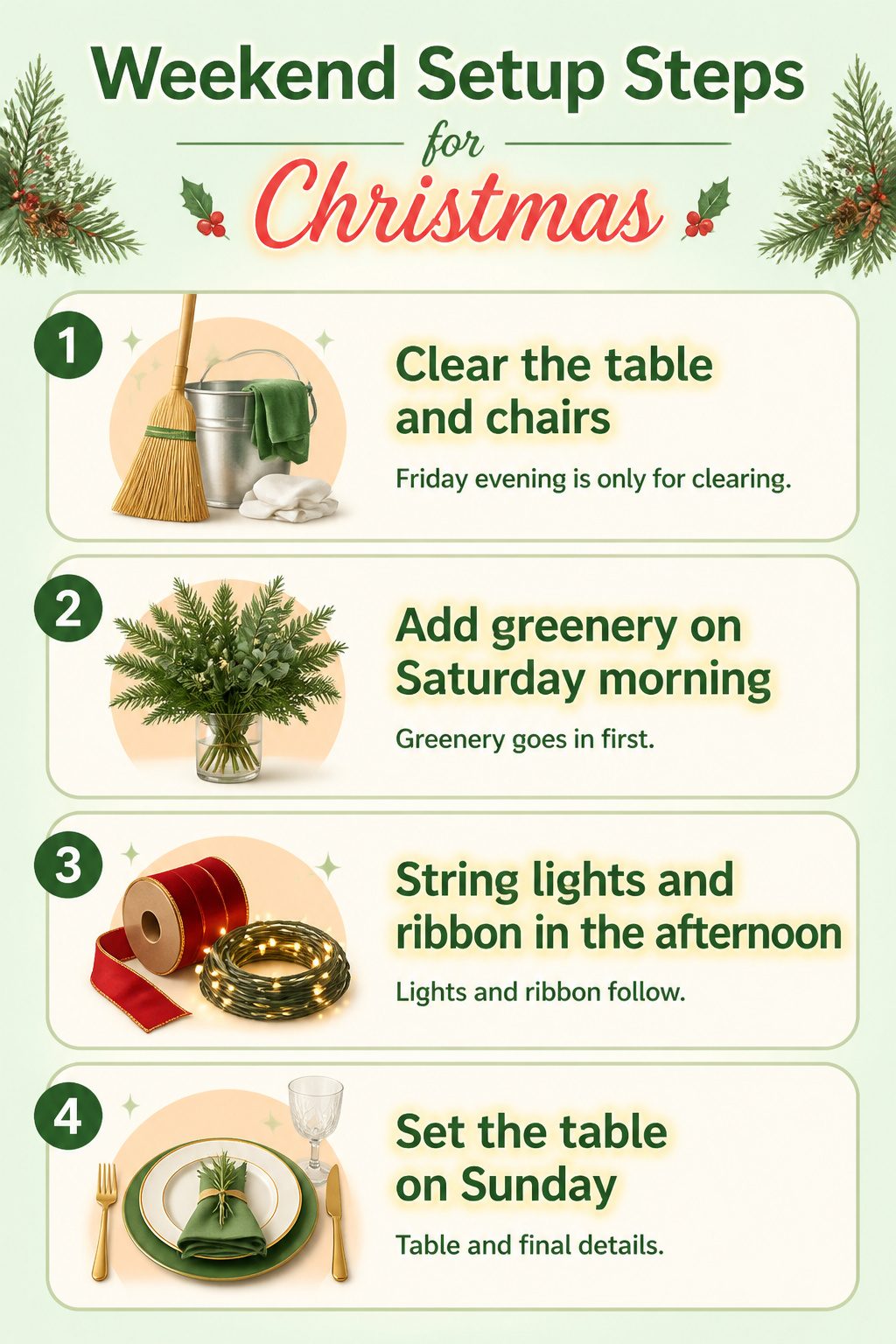
- Friday evening is only for clearing. The table gets stripped, chairs get wiped down, and the floors get swept. Any centerpiece from ordinary life goes into a closet, not pushed to a sideboard where it competes with what comes next. Two hours of honest cleaning beats four hours of decorating around dust.
- Saturday morning, greenery goes in first. The tree comes up, garlands get draped on the mantel or sideboard, and any branch arrangements sit in their vessels. Fresh cuttings need the day to open up and shed the field dust; faux stems need the light to hit them so you see the plastic shine before guests do.
- Saturday afternoon, lights and ribbon follow. By now the tree has settled enough that strands hang where they will actually stay. Ribbon gets its twist while you can still step back to the doorway and judge the whole room, not just the branch in front of your face.
- Sunday is table and final details. Linens, plates, the candle you forgot. Anything glued, sprayed, or wired needs Saturday night to dry; anything living needs Saturday morning to drink. Four hours Sunday feels generous only because the hard decisions happened Friday.
Mistakes I Have Made
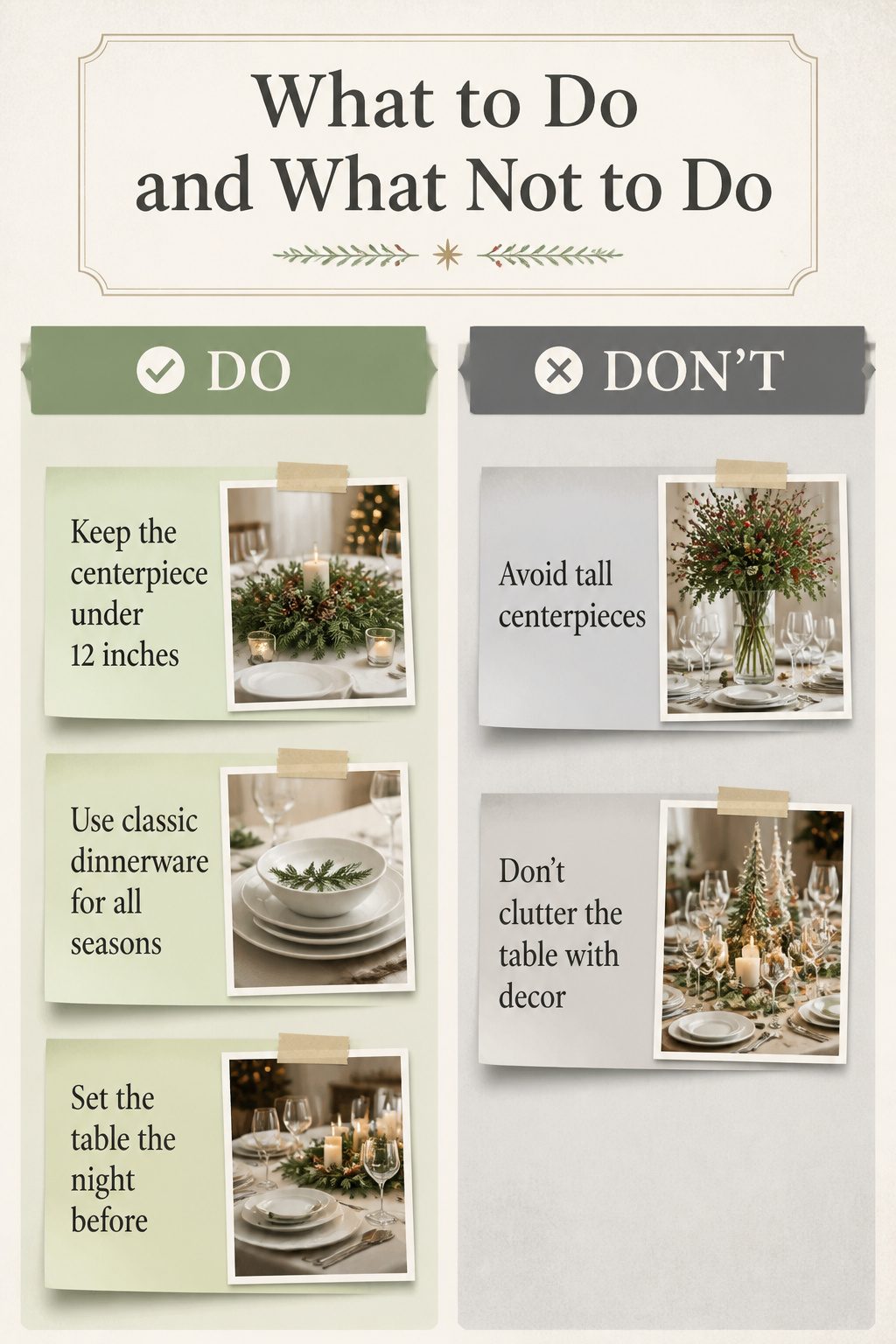
A few missteps have taught me what actually matters at a holiday table.
- The centerpiece blocked the whole room. I once built an arrangement tall enough that guests had to lean around it to talk. Anything above eye level when seated turns a dinner into a game of peekaboo. These days I keep the middle of the table under twelve inches or move the drama to a sideboard where it does not interrupt sightlines.
- Holiday plates with trees and Santas seemed festive until January, when they filled an entire cabinet shelf for eleven months. Classic white dinnerware with a few evergreen stems costs the same to buy but earns its keep year-round.
- The room looked beautiful in photographs and barely functioned for actual meals. Chairs scraped against a too-full display, and the hot dish had nowhere to land. Now I set the table the night before and walk through serving every course before anyone arrives.
Frequently Asked Questions
What can I put on my dining room table for Christmas?
Keep centerpieces under 14 inches tall so conversation flows without anyone bobbing around a floral tower. A faux Norfolk pine garland straight down the middle, with three white pillar candles in glass holders at uneven intervals, works well.
Small ornaments on a cake stand or in a low bowl spread visual weight horizontally instead of building it up.
Can I put my Christmas tree in the dining room?
A corner near a window is where a Christmas tree actually earns its place. The sightline from the table stays open, and you avoid running extension cords across the floor where someone might trip.
If space is tight, a slim 4-5 foot tree fits the same corner, or a half-tree flat against the wall gives you the silhouette from the side people actually see.
Mini trees on a sideboard or windowsill work too; wrap the plastic pot in fabric or hessian so it looks intentional.
How do I create a cohesive Christmas dining room decor?
Use one type of green, repeated, rather than mixing varieties that fight for attention.
A single color used three times or more turns scattered items into a plan; scarlet ribbon on every chair back, for example, can be enough on its own.
Match this with wreaths on the window, mirror, and cabinet door so repetition reads intentional, not leftover.